Siem Reap's Other Story: Khmer Rouge's 2 Million Deaths, Tonlé Sap's Reversing River & Apsara Dance's Revival
Cambodia's history and recovery alongside Angkor—the Khmer Rouge's 1975–1979 forced evacuation of every city and execution of 25–33% of the population (Pol Pot's regime abolished money, education, and religion simultaneously), Siem Reap's post-1993 tourism boom from 7,600 to 2.6 million visitors with land grabbing displacing families to build hotels, Pub Street's $0.50 Angkor draft beer economy that collapsed completely in 2020 when migrant workers lost jobs and family remittances simultaneously, Tonlé Sap Lake's reversing river that expands to 6 times its size in monsoon flooding 70% of Cambodia's protein supply, Cuisine Wat Damnak's French-trained Khmer tasting menu, and Aki Ra's Cambodia Landmine Museum from a former child soldier who now detonates the mines he once planted.
- 1
The Khmer Rouge – Cambodia's 20th-Century Catastrophe
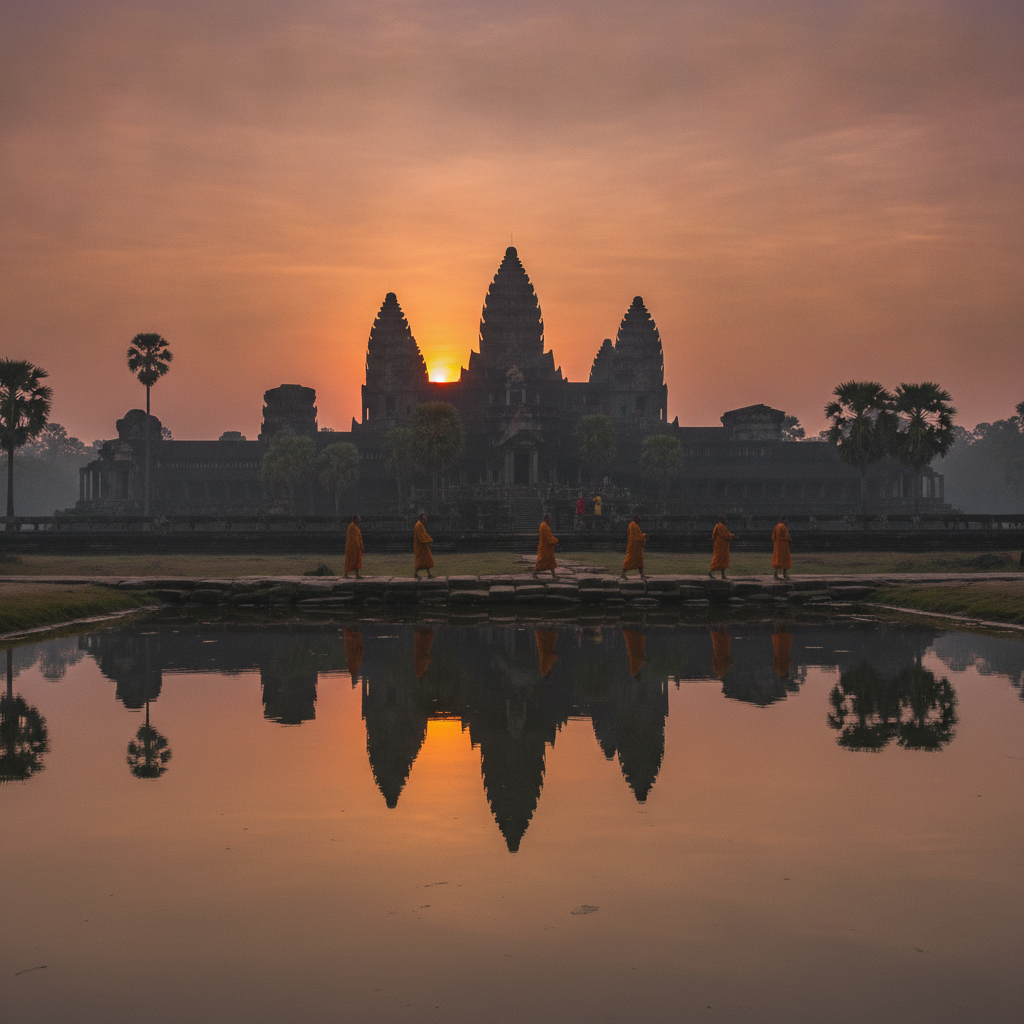
The Democratic Kampuchea regime of the Khmer Rouge (April 1975–January 1979)—under the leadership of Pol Pot (born Saloth Sar, 1925–1998)—implemented one of history's most extreme experiments in social engineering and produced one of the 20th century's worst genocides: approximately 1.7–2.5 million deaths from execution, starvation, disease, and forced labour out of a pre-genocide population of approximately 7–8 million (25–33% of the population). The Khmer Rouge program: the immediate evacuation of Phnom Penh and all cities (forcing the entire urban population to labour in agricultural communes), the abolition of money, markets, formal education, and religion, the classification of the population into 'base people' (rural peasants, trusted) and 'new people' (evacuated urbanites, suspect), and the systematic execution of anyone with education, professional skills, or family connections to the previous government. The Siem Reap area suffered heavily: Angkor Wat was used briefly as a revolutionary symbol (appearing on the Khmer Rouge flag) before temples were largely abandoned and used as labour camp locations.
- 2
Siem Reap's Recovery – Tourism, Land Rights & Development
Siem Reap's transformation since the 1990s—from a war-damaged provincial town to Cambodia's second city and primary tourism destination—has been one of the fastest urban economic transformations in Southeast Asian history. The UN-administered period (UNTAC, 1992–1993), which oversaw Cambodia's first post-war elections, began the process of security stabilisation; the last Khmer Rouge holdouts surrendered in 1999. Tourism to Angkor grew from 7,600 visitors in 1993 to 2.6 million in 2019. The economic growth has come with severe costs to local communities: land grabbing (wealthy investors, connected to government, have displaced poor families from land around Angkor and central Siem Reap to develop hotels and resorts—a process extensively documented by Cambodian and international human rights organisations); the distribution of tourism revenue (most ticket revenue has historically flowed to the Sokimex Group, a private company given a controversial concession to manage Angkor entry fees; this concession was restructured in 2023 with management returned to APSARA).
- 3
Siem Reap's Pub Street & Nightlife Economy
Pub Street (Sivatha Street)—the 200-metre entertainment strip at the heart of Siem Reap's tourist district—has become one of the most economically significant nightlife streets in Southeast Asia proportionally: a town of 200,000 people generating a pub-crawl economy that once attracted 2 million international visitors per year. The street: a dense concentration of bars, restaurants, fish-foot-massage operations, and markets (the Night Market adjacent to Pub Street, the Old Market/Psah Chas across the river)—with a second cluster around the 'Alley' (an adjacent lane with bars and budget guesthouses). The economics: a '$0.50 beer' culture (Angkor draft beer, the national brand) coexisted with a rising craft beer and cocktail bar scene by the late 2010s. The pandemic (2020–2021) devastated Siem Reap's tourism-dependent economy with extraordinary severity: most Pub Street businesses closed, the young Khmer workers who had migrated from rural areas to work in the tourism economy lost jobs, and the informal support networks (remittances to family in rice-farming provinces) collapsed simultaneously with tourism revenue.
- 4
Tonlé Sap Lake – Southeast Asia's Great Lake
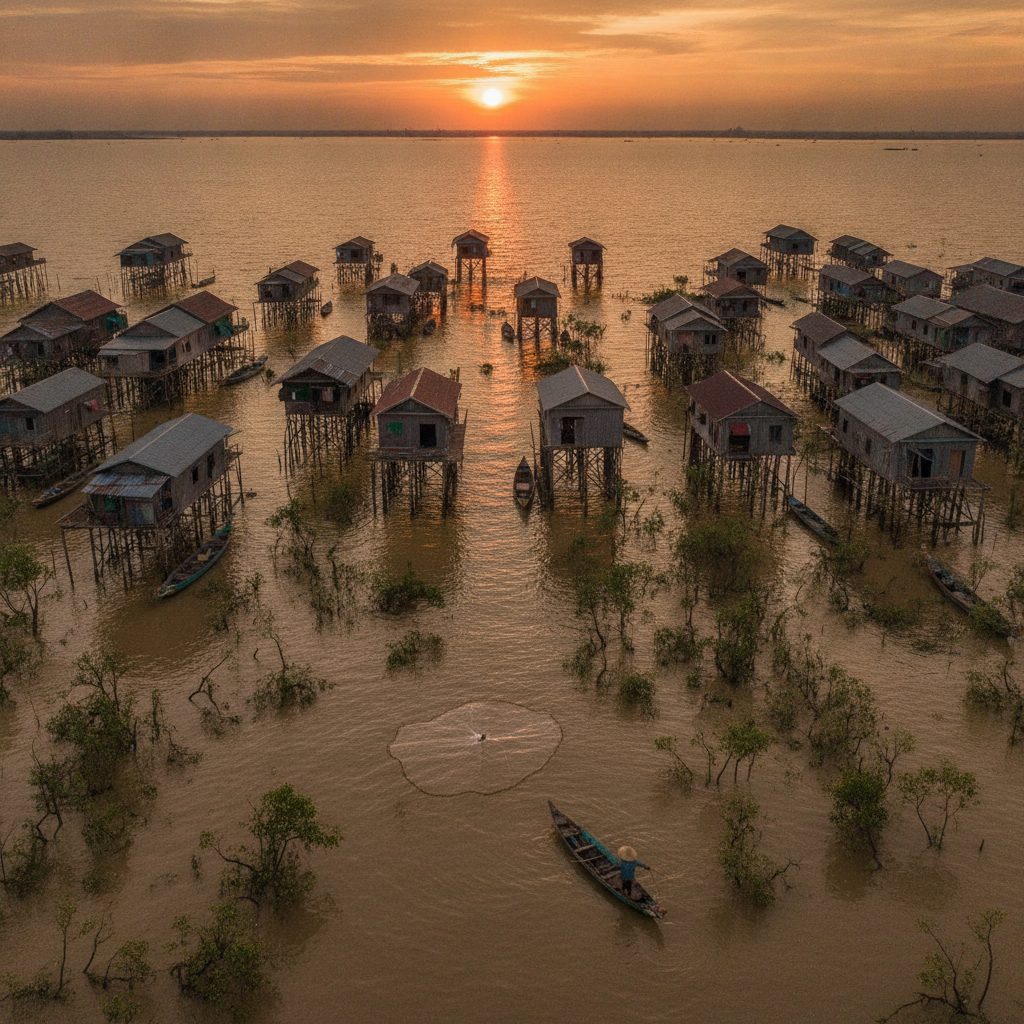
Tonlé Sap Lake—17 km south of Siem Reap—is one of the most ecologically extraordinary freshwater bodies in the world: it is the largest freshwater lake in Southeast Asia (approximately 2,700 km² in the dry season, expanding to 16,000 km² during the monsoon when the Tonlé Sap River reverses flow and Mekong floodwaters fill the lake to six times its dry-season size). This annual reversal—the only large river in the world to regularly flow in both directions—supports a fish productivity that makes Tonlé Sap one of the most fish-rich inland waters on Earth (producing 500,000 tonnes of fish annually, 70–75% of Cambodians' animal protein). The floating villages on Tonlé Sap (Kampong Phluk, Kampong Khleang, Chong Kneas—the most visited from Siem Reap)—communities of fisherfolk who live year-round on boats, floating houses, and stilt houses that adjust to the annual 8-metre water level fluctuation—are the most unusual inhabited landscapes in mainland Southeast Asia.
- 5
Siem Reap's Craft Beer, Fine Dining & the Tourism Economy's Evolution
Siem Reap's restaurant and food scene has evolved from the backpacker-era $1 fried rice to a genuinely sophisticated dining landscape—partly driven by the wealth of international NGO workers who were stationed in Siem Reap during the post-conflict development period (1990s–2010s) and created demand for quality food at affordable prices, and partly by the ambitions of Khmer and international restaurateurs who recognised the opportunity in a captive tourism audience. The standout establishments: Mahob Restaurant (Khmer food elevated to a sophisticated dining context, the best Cambodian cuisine in the city), Haven Restaurant (NGO-affiliated training restaurant employing at-risk youth), Cuisine Wat Damnak (French-trained Khmer tasting menu—the most ambitious fine dining in Cambodia), and Embassy Angkor (cocktail bar in a converted shophouse). The craft beer scene: Embargo Collective (locally brewed craft beer in a colonial villa setting), Kingdom Breweries (the first Cambodian craft brewery). The food scene is recovering more slowly than the temples after COVID—the trained Khmer chef and hospitality worker pipeline needs reconstruction.
- 6
Cambodian Silk, Landmines & the Arts Recovery
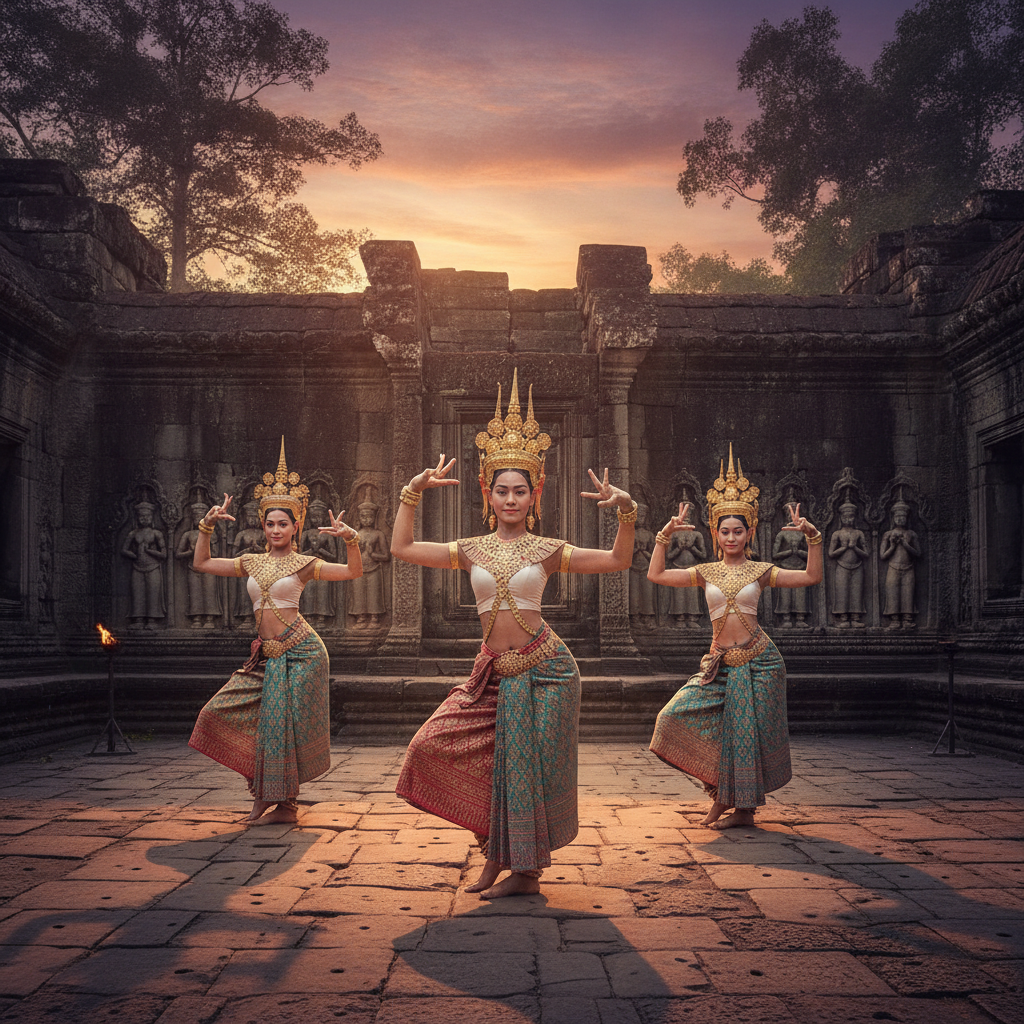
Two of Cambodia's most significant post-conflict economic and cultural stories are connected to Siem Reap: the landmine clearance effort and the revival of Cambodian traditional arts. Landmines: Cambodia has one of the world's highest per-capita landmine contamination rates—a legacy of the Vietnam War-era bombing (more tonnes of bombs were dropped on Cambodia than on Germany in World War II), the civil war, and the Khmer Rouge's extensive mine-laying. The CMAC (Cambodian Mine Action Centre) and international organisations (Halo Trust, Mines Advisory Group) have cleared millions of mines since the 1990s, but contamination remains in rural areas; the Cambodia Landmine Museum (founded by Aki Ra, a former child soldier who became a deminer) is 25 km north of Siem Reap. The arts revival: Apsara dance (the classical Khmer court dance, almost exterminated under the Khmer Rouge who killed the majority of Cambodia's trained artists) has been revived through the Apsara Arts Association and is performed for tourists at temples and in dedicated theatre shows; the Artisans Angkor cooperative employs Cambodian craftspeople in silk weaving, stone carving, and lacquer production.
Walk this route with audio
Stories play automatically as you reach each stop — no tapping needed.
More in Siem Reap
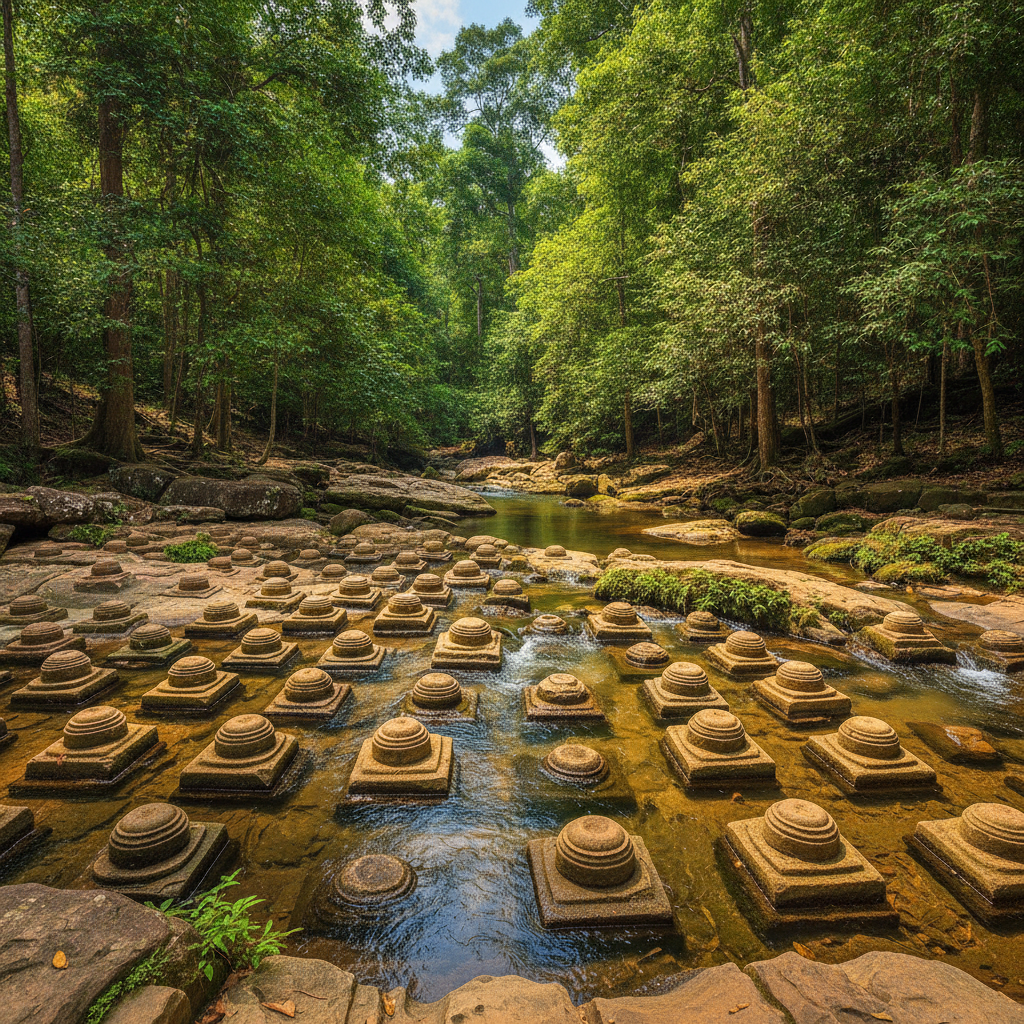
Angkor Deeper: 1,000 Lingas in Phnom Kulen's Sacred River, Preah Khan's Dancer Colonnade & the Sunrise Photo Circuit
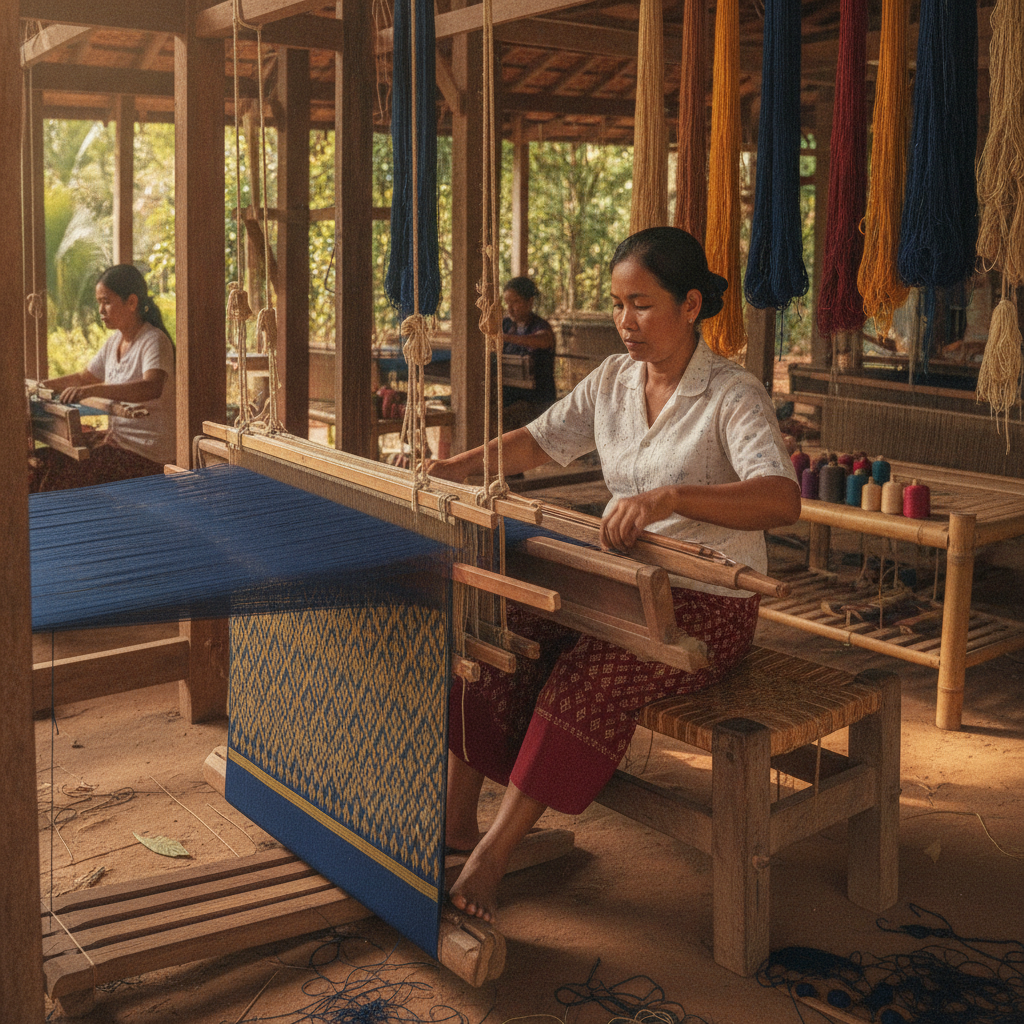
Leaving Siem Reap: Artisans Angkor's Ikat Silk Revival, Buddhist Monks at Dawn & Angkor's Civilisational Weight
Siem Reap's Foundations: The 1,000 km² Hydraulic Empire, Apsara Dance Surviving Genocide & Henri Mouhot's Useful Myth
Siem Reap Grounded: Fish Amok and Prahok Fermented Fish, Tuk-Tuk Drivers' COVID Crisis & Bamboo Train to Battambang