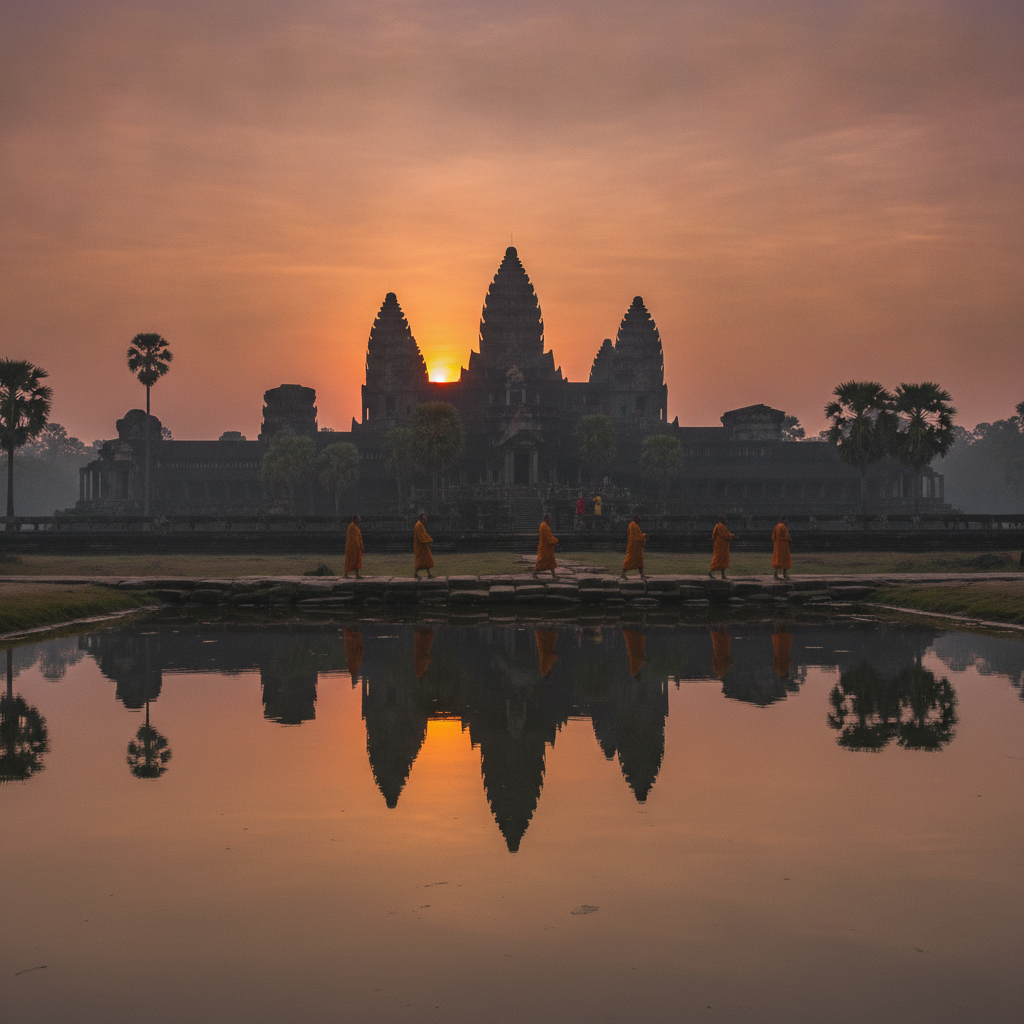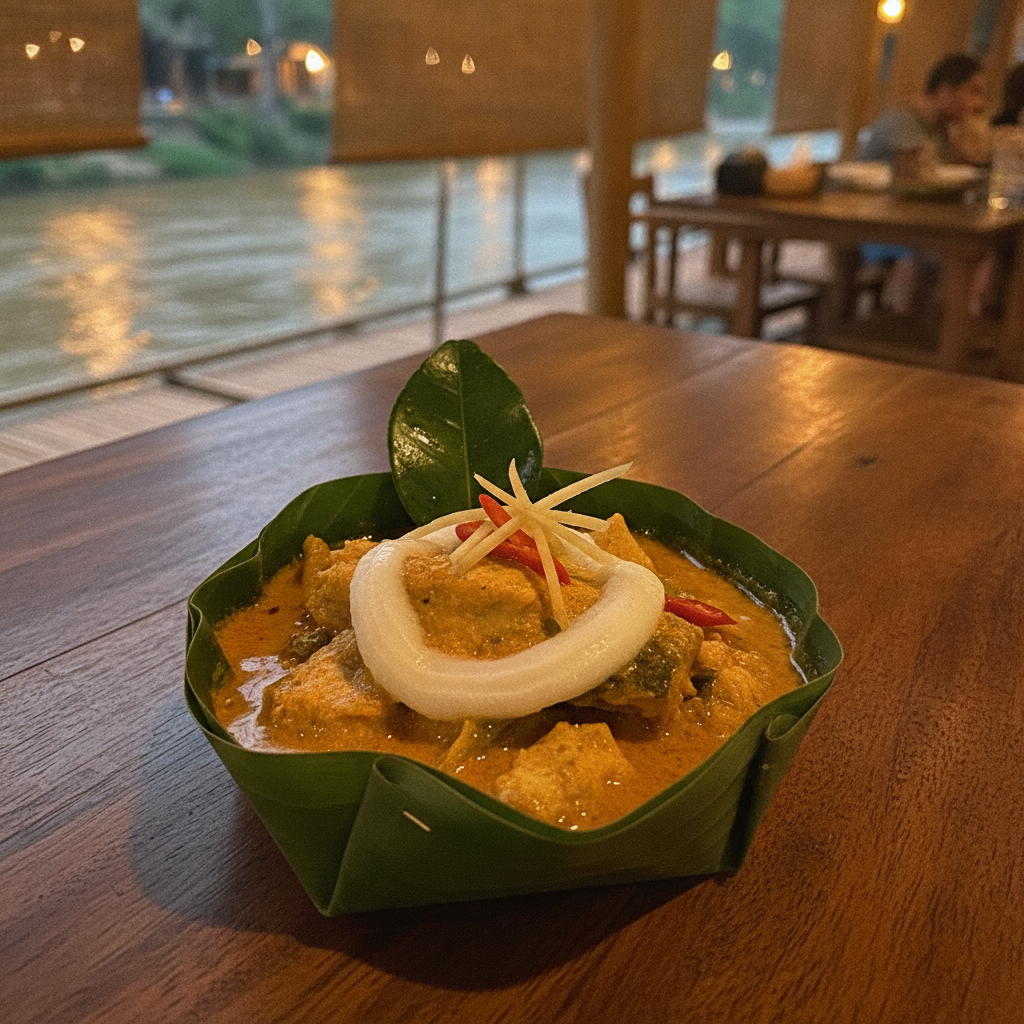
Siem Reap Grounded: Fish Amok and Prahok Fermented Fish, Tuk-Tuk Drivers' COVID Crisis & Bamboo Train to Battambang
The human and culinary Siem Reap—prahok fermented fish paste as the Cambodian Parmesan (present in everything, identifiable by nothing), fish amok steamed in banana leaf as the national dish that requires the Tonlé Sap's freshwater fish ecosystem to exist, France's EFEO scholarship that systematically restored Angkor from 1907 while sending artefacts to Paris, the tuk-tuk driver who learned English from tourists over a decade and lost everything in 2020 when zero visitors arrived, Battambang's bamboo platform on rail wheels, the post-COVID conservation debate about whether to cap Angkor entry below the 6.6 million 2019 peak, and why hiring your driver directly (not through the hotel) is the most impactful $5 decision in Cambodia.
- 1
Khmer Cuisine – Fish Amok & the Taste of Cambodia
Khmer cuisine—one of Southeast Asia's least internationally known major food traditions—is built around the flavours of the Tonlé Sap ecosystem (freshwater fish, river crabs, snakehead, and the fermented fish paste prahok that is the defining flavour compound of Cambodian cooking) and the spice palette brought by Indian traders and the Hindu-Buddhist court cuisine of the Angkor period. Prahok (fermented fish paste)—made from mud-fish pressed, salted, and fermented for months—is the equivalent of Parmesan in Italian cuisine: an umami backbone present in sauces, dips, and stews throughout Cambodian cooking, essential but usually not immediately identifiable by visitors. The defining dish: fish amok (trey amok)—fish fillet steamed in a curry of coconut cream, lemongrass, galangal, and kaffir lime leaves inside a banana leaf cup, with a whipped coconut cream layer; the technique is unique to Cambodia. Other essentials: nom banh chok (Khmer noodles—rice noodles in a green fish-herb broth, the most common breakfast across Cambodia), lok lak (stir-fried beef or chicken with oyster sauce, served on a bed of lettuce with lime-pepper dipping sauce).
- 2
The French Colonial Legacy in Siem Reap & Cambodia
France's presence in Cambodia (Protectorate 1863–1953, interrupted by Japanese occupation 1941–1945) left a physical and institutional legacy that is more visible in Phnom Penh than Siem Reap, but shapes the Siem Reap experience significantly through the EFEO's Angkor scholarship and the colonial-era buildings in the town centre. The French motivations for the Cambodian protectorate: primarily the desire to control the Mekong River as a trade route to Yunnan province of China (the project failed—the Mekong's rapids above Cambodia made it unnavigable by steamship for most of its length). The EFEO (founded 1900) conducted the systematic mapping, clearing, and partial restoration of Angkor from 1907 onward—the 80 years of French-led work produced the scholarly foundation of Angkor archaeology but also a colonial appropriation of the Khmer heritage (artefacts went to Paris, restoration aesthetics reflected French preferences). The legacy is genuinely mixed: without the EFEO, much of Angkor's condition would be significantly worse; with the French protectorate, Cambodia lost sovereignty and its royal court lost direct agency over its own heritage.
- 3
Siem Reap's Tuk-Tuk Drivers – The Human Economy of Tourism
Siem Reap's tuk-tuk drivers—the most visible workers in the city's tourism economy, numbering in the thousands (estimates range from 3,000 to 10,000 registered and unregistered drivers)—are the human face of the transformation from agricultural poverty to tourism-service employment that characterised Cambodia's development in the 2000s. Most drivers: men from rural Cambodian provinces (particularly Kampong Thom, Battambang, and Kandal) who migrated to Siem Reap during the tourism boom, often learning English through informal conversation with tourists over years of guiding. The COVID collapse: in 2020–2021, Siem Reap's tuk-tuk driver community was among the hardest-hit in any sector globally—the complete disappearance of tourist arrivals left thousands of drivers with no income, no savings (the informal economy has no unemployment insurance), and debts from the vehicle purchase or lease. Many returned to their home provinces; some did not return to Siem Reap when tourism recovered (2022–2023) because rice farming was preferable to rebuilding from zero in the tourist economy. The driver-tourist relationship, when it works well, is Siem Reap's most human connection.
- 4
Battambang & the Bamboo Train – Cambodia's Second City
Battambang—Cambodia's second city, 3 hours southwest of Siem Reap by bus (170 km, frequent departures from Siem Reap bus station)—is the most complete intact French colonial town in Cambodia (Phnom Penh lost more of its colonial architecture in the post-Khmer Rouge reconstruction and Vietnamese-era development). The bamboo train (norry)—a locally engineered rail transport consisting of a bamboo platform on sets of wheels powered by a small engine, operating on the deteriorated French-era rail line between Battambang and O Dambong—was the most original tourist experience in Cambodia for two decades until the restoration of the standard rail line made it obsolete on its original route; it now operates on a short tourist-only section. Battambang's attractions: the colonial riverside district, the hilltop temple of Wat Ek Phnom, the orange groves that produce Cambodia's most celebrated mandarins, and the smaller Angkor-era temple sites of Prasat Banan and Prasat Phnom Sampeu (a hilltop temple with a 'killing cave' where Khmer Rouge executed prisoners—the bones visible in the cave below the temple).
- 5
Siem Reap's Relationship with Tourism Volume – The Numbers Problem
Siem Reap's 2019 tourism peak—6.6 million total visitors to the Angkor Archaeological Park (2.2 million foreigners, the remainder domestic Thai, Vietnamese, and Cambodian visitors)—created conditions at the most popular sites that have been extensively documented as a visitor experience problem and a conservation problem simultaneously. Angkor Wat at peak (December–February): 10,000+ visitors per day, crowds at the reflection pool from 05:00, queue times of 30+ minutes for the inner sanctuary, significant footfall damage to the sandstone causeway. The response: APSARA has implemented timed entry for some sections, visitor limits at Phnom Bakheng, and access restrictions on the upper levels of several temples. The COVID interruption (zero visitors for 18 months) provided an opportunity to observe the temples without visitor pressure: conservation teams reported measurable improvements in structural stability, air quality in enclosed spaces, and even the return of wildlife (wild pigs, monitor lizards, macaques) to previously crowded areas. The post-COVID visitor numbers have recovered but not yet reached 2019 levels; there is an active policy debate about whether to encourage the return to 2019 volumes or to cap entry for conservation reasons.
- 6
Practical Siem Reap – Getting There, Moving Around & Staying Responsibly
Siem Reap International Airport (REP)—3 km from the town centre—receives direct flights from Bangkok (1 hour, ₹3,000–8,000 baht/€82–219 from BKK), Singapore (2.5 hours), Kuala Lumpur, Hong Kong, and Hanoi. Overland options: bus from Phnom Penh (6 hours, $5–12—the most travelled bus route in Cambodia, with multiple operators), bus from Bangkok (8 hours to the Thai border, then Cambodia side, total 14 hours—slower but cheaper than flying). Getting around: tuk-tuk (negotiate price—$15–25/day for a single driver for full day Angkor circuit, the standard arrangement; agree on the day's itinerary before departure), bicycle hire ($2–5/day—the small circuit from Siem Reap to Angkor Wat and back is 15 km, entirely doable by bike on flat roads; the large circuit is 26 km). Responsible spending: use local Khmer restaurants rather than hotel restaurants for meals, hire local tuk-tuk drivers booked directly rather than through hotel intermediaries (the driver earns more), buy crafts from Artisans Angkor (a certified fair-trade operation) rather than temple souvenir stalls. Best season: November–February (dry, cool—25–30°C); March–May is hot and dry; June–October is wet season (green, fewer tourists, some roads flood).
Walk this route with audio
Stories play automatically as you reach each stop — no tapping needed.
More in Siem Reap
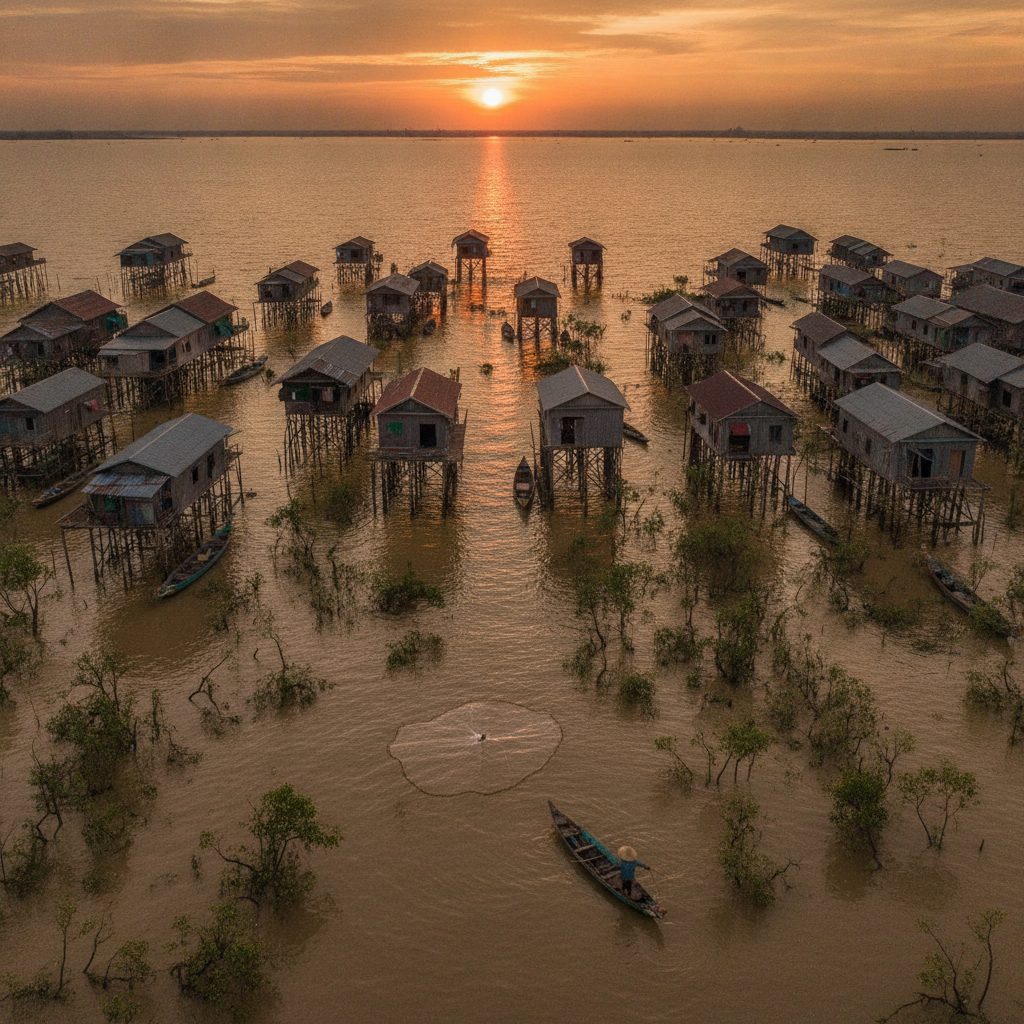
Siem Reap's Other Story: Khmer Rouge's 2 Million Deaths, Tonlé Sap's Reversing River & Apsara Dance's Revival
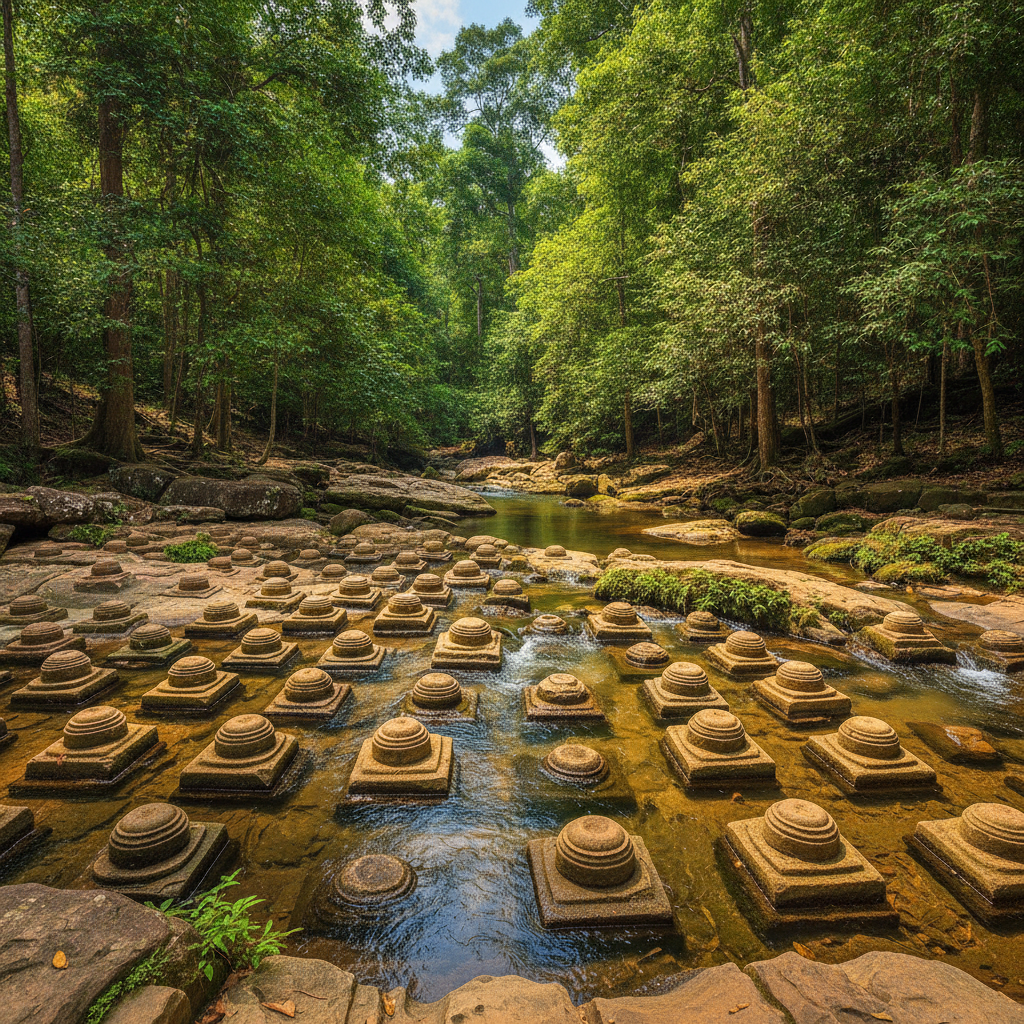
Angkor Deeper: 1,000 Lingas in Phnom Kulen's Sacred River, Preah Khan's Dancer Colonnade & the Sunrise Photo Circuit
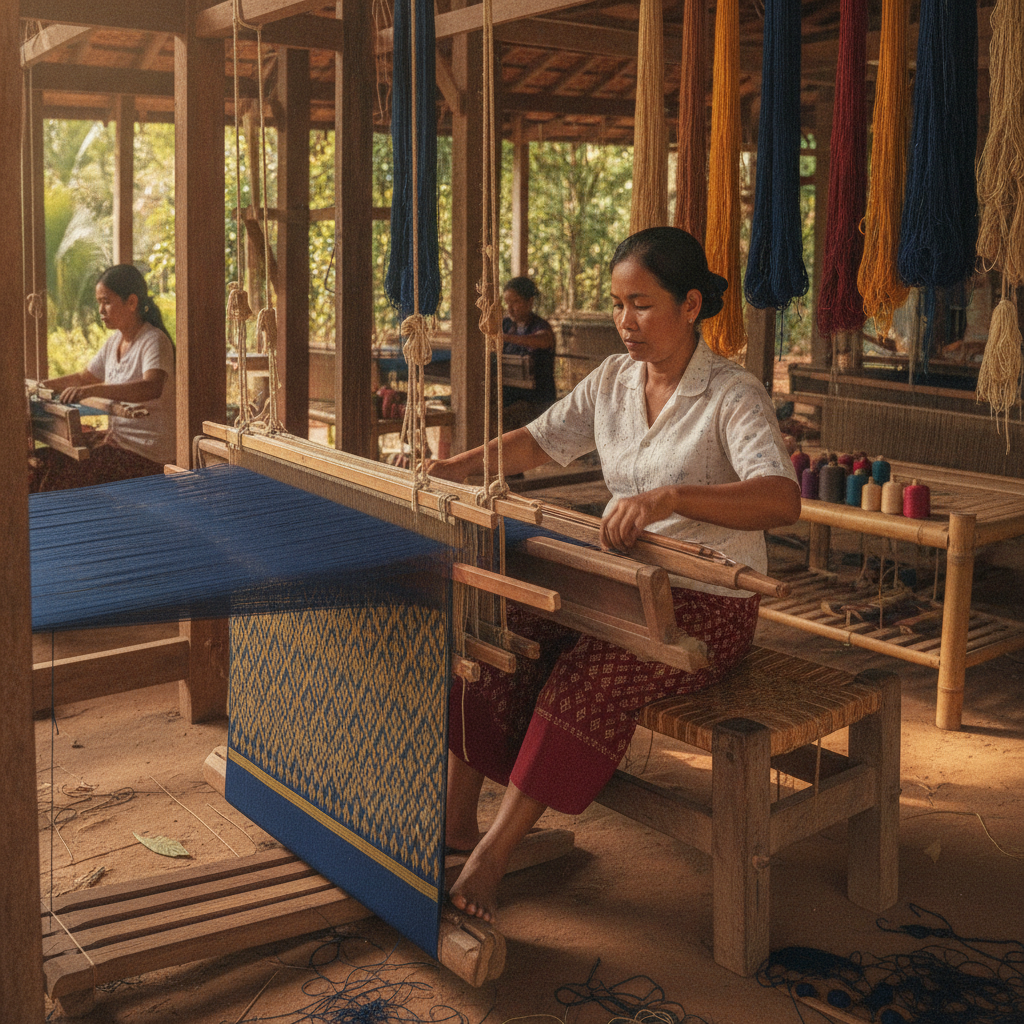
Leaving Siem Reap: Artisans Angkor's Ikat Silk Revival, Buddhist Monks at Dawn & Angkor's Civilisational Weight

Siem Reap's Foundations: The 1,000 km² Hydraulic Empire, Apsara Dance Surviving Genocide & Henri Mouhot's Useful Myth