Angkor: Sunrise at the World's Largest Temple, 216 Stone Faces of the Bayon & Jungle-Swallowed Ta Prohm
The full Angkor experience—Angkor Wat's 800 metres of continuous bas-relief carved by Suryavarman II's 12th-century court as cosmic mountain and royal mausoleum (west-facing, toward the realm of the dead), the Bayon's 54 towers and 216 giant smiling faces that are simultaneously the bodhisattva Avalokitesvara and Jayavarman VII's claim to near-divinity, Ta Prohm's strangler figs whose roots have grown through the walls of a Buddhist monastery that housed 2,740 officials in 1186, the hydraulic barays that supported 750,000 people making Angkor potentially the world's largest pre-industrial city, and Banteay Srei's pink sandstone carvings so fine that Malraux was arrested for attempting to steal them.
1. Angkor Wat – The World's Largest Religious Monument
- 1
Angkor Wat – The World's Largest Religious Monument
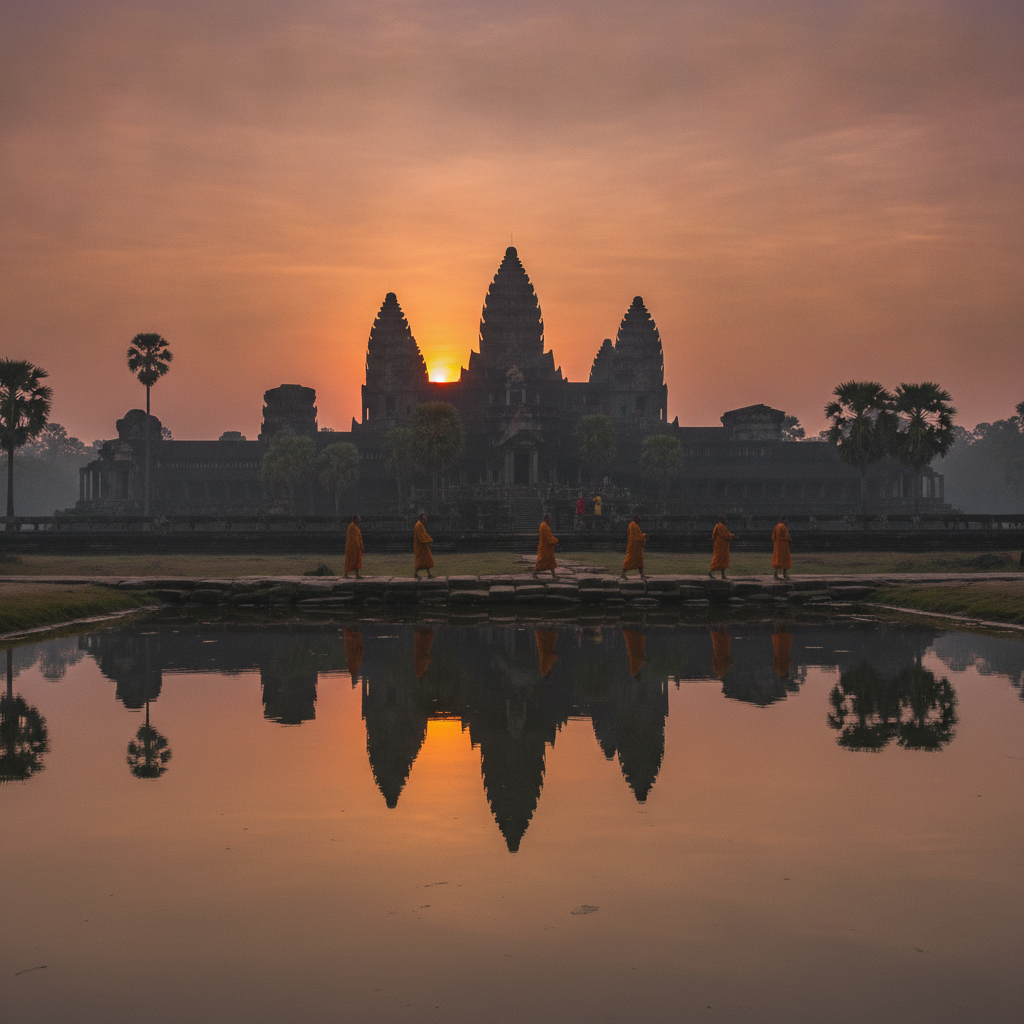
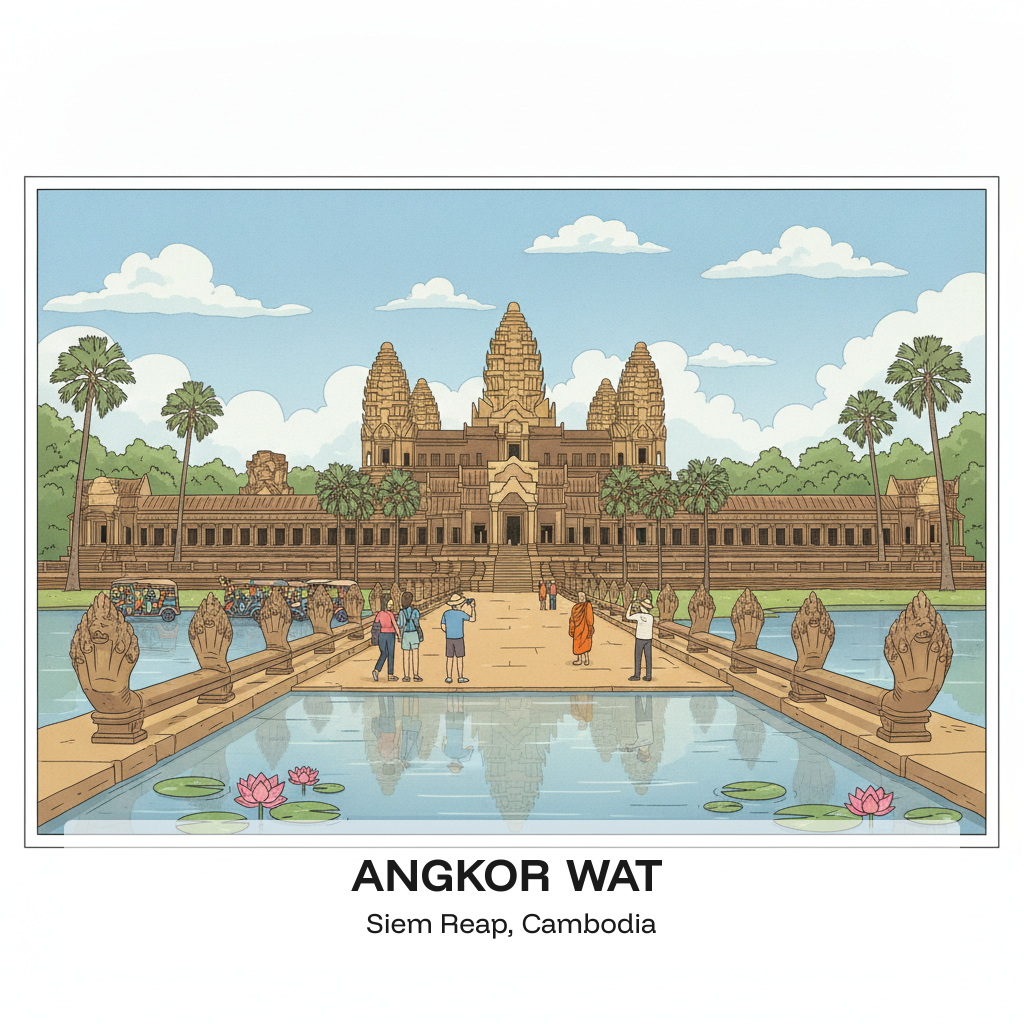
Angkor Wat—the 12th-century Hindu-Buddhist temple complex built by the Khmer King Suryavarman II (reigned 1113–1150) as both a state temple and royal mausoleum—is the largest religious monument in the world: the central temple alone covers 1.6 km² and is surrounded by a 190-metre-wide moat; the total complex including the outer enclosure wall measures approximately 400 hectares. The architectural achievement: the temple rises in three rectangular terraces to the central tower group (five towers representing the five peaks of Mount Meru—the cosmic mountain at the centre of Hindu-Buddhist cosmology), connected by galleries covered in 800 metres of continuous bas-relief carvings depicting scenes from the Hindu epics Ramayana and Mahabharata and historical scenes from Suryavarman II's court and military campaigns. The west-facing orientation (unusual in Hindu temples, which typically face east)—pointing toward the sunset and the realm of the dead—suggests the temple was designed as a mausoleum from the beginning. The sunrise view from Angkor Wat's reflection in the water is one of Asia's most iconic travel images.
- 2
Angkor Thom & the Bayon – The City of a Million Faces
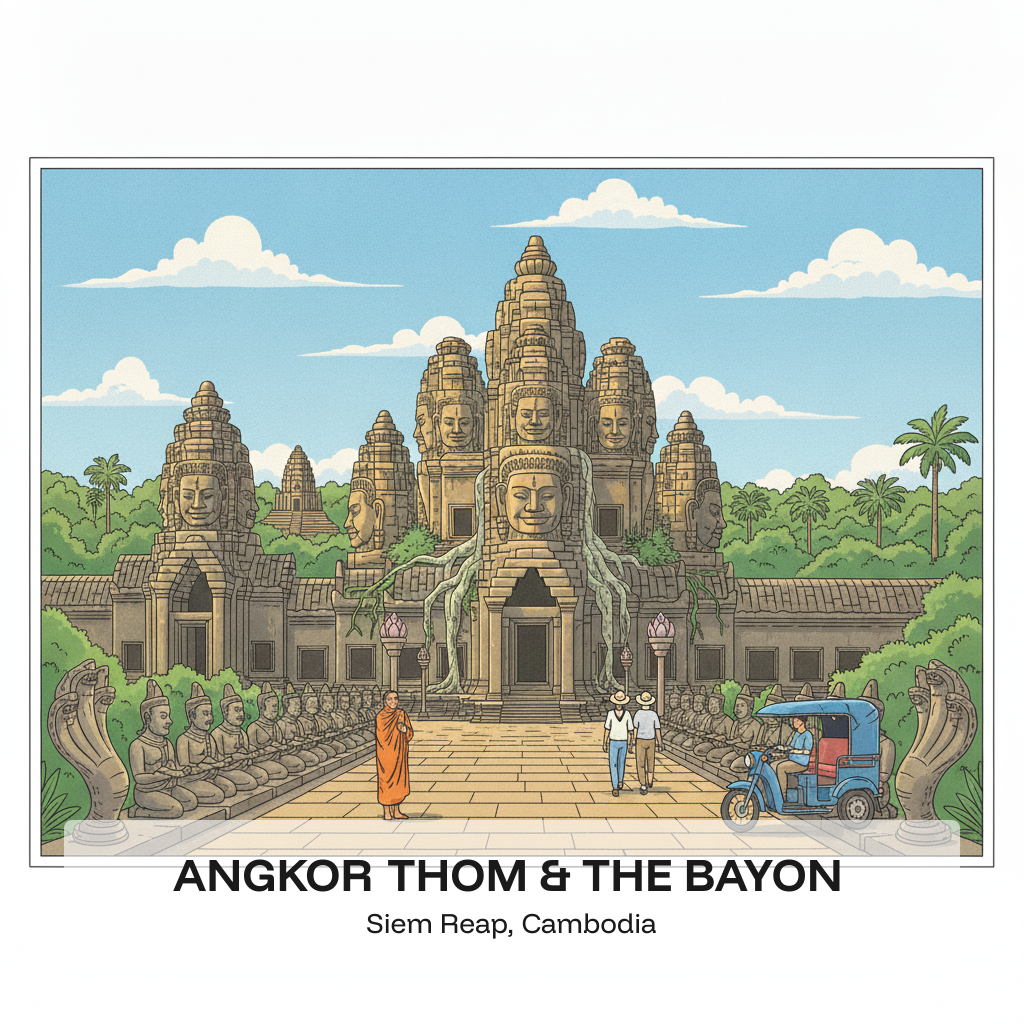
Angkor Thom ('Great City')—the last and most enduring capital of the Khmer Empire, built by King Jayavarman VII (reigned c. 1181–1218) and covering an area of 9 km²—is enclosed by an 8-metre-high wall with five elaborately carved gateways (each topped by four giant stone faces). At its centre: the Bayon—Jayavarman VII's state temple and the most psychologically extraordinary monument in the Angkor Archaeological Park. The Bayon's 54 towers are carved with 216 giant stone faces (each approximately 2 metres high)—smiling, enigmatic expressions that are among the most reproduced images in Southeast Asian art. The faces are generally identified as a combination of the bodhisattva Avalokitesvara (the Bodhisattva of Compassion) and Jayavarman VII himself—a theological claim of near-divinity by the king. The Baphuon (the 11th-century state temple of King Udayadityavarman II, a massive stepped pyramid currently accessible after a 50-year restoration project completed in 2011) and the Terrace of the Elephants and Terrace of the Leper King (ceremonial terraces on Angkor Thom's main square) complete the complex.
- 3
Ta Prohm – The Jungle Temple & Its Famous Trees
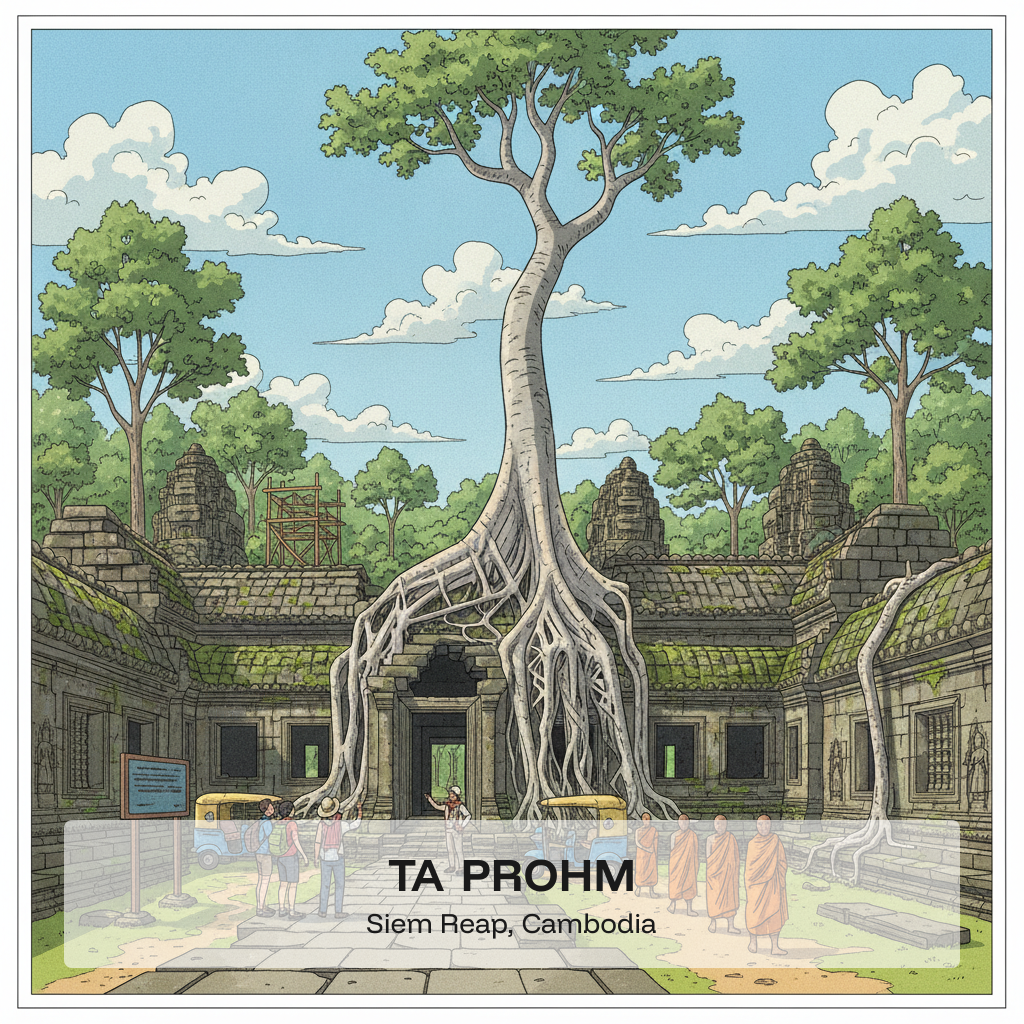
Ta Prohm—built by Jayavarman VII in 1186 as a Buddhist monastery and university (housing 18 high priests, 2,740 officials, 2,202 assistants, and 615 dancers, according to its foundation stele)—was left substantially unreconstructed when the École Française d'Extrême-Orient (EFEO) began Angkor archaeological work in the early 20th century, creating the jungle-reclaimed aesthetic that makes it the most photographed Angkor temple after Angkor Wat itself. The 'strangler fig' (Ficus gibbosa) and silk-cotton trees whose roots have grown over and through the temple walls—in some cases holding the structure together, in others slowly destroying it—create a visual metaphor for nature reclaiming human creation that has made Ta Prohm the defining image of Angkor's rediscovery. The Tomb Raider effect (the 2001 film was partly shot here) has made Ta Prohm the most tourist-crowded temple in the park after Angkor Wat; the best visit is at opening time (07:30) before the tour groups arrive.
- 4
The Khmer Empire – History of Southeast Asia's Greatest Civilisation
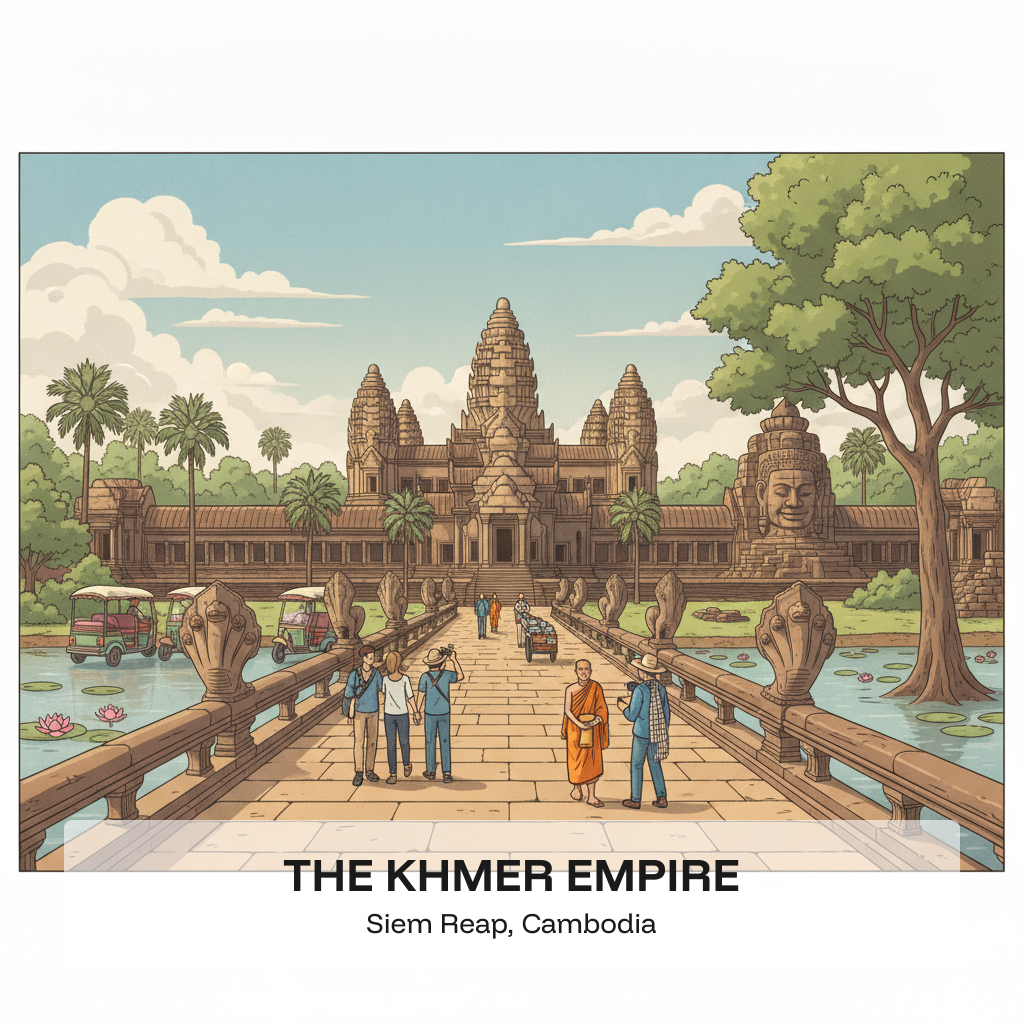
The Khmer Empire (802–1431 CE)—centred on the Angkor region near the modern Siem Reap—was the largest empire in Southeast Asia in its time: at its peak (11th–13th centuries), it controlled territory equivalent to all of modern Cambodia, most of Thailand, Laos, and parts of Vietnam and Myanmar. The engineering achievement behind Angkor was not architectural alone: the empire built an elaborate hydraulic engineering system (the barays—massive man-made reservoirs, including the West Baray, 8 km × 2.2 km, still containing water—connected by canals to manage water distribution across the agricultural hinterland) that supported a population of approximately 750,000 in the Angkor metropolitan area (making it potentially the largest pre-industrial city in the world by some estimates). The decline of Angkor (15th century)—the capital was abandoned by 1431 following a Thai (Ayutthaya) sack—is debated: drought and the hydraulic system's failure, changing trade routes (maritime over overland), and internal political fragmentation all appear in competing scholarly narratives.
- 5
The Angkor Archaeological Park – Logistics & Ethics
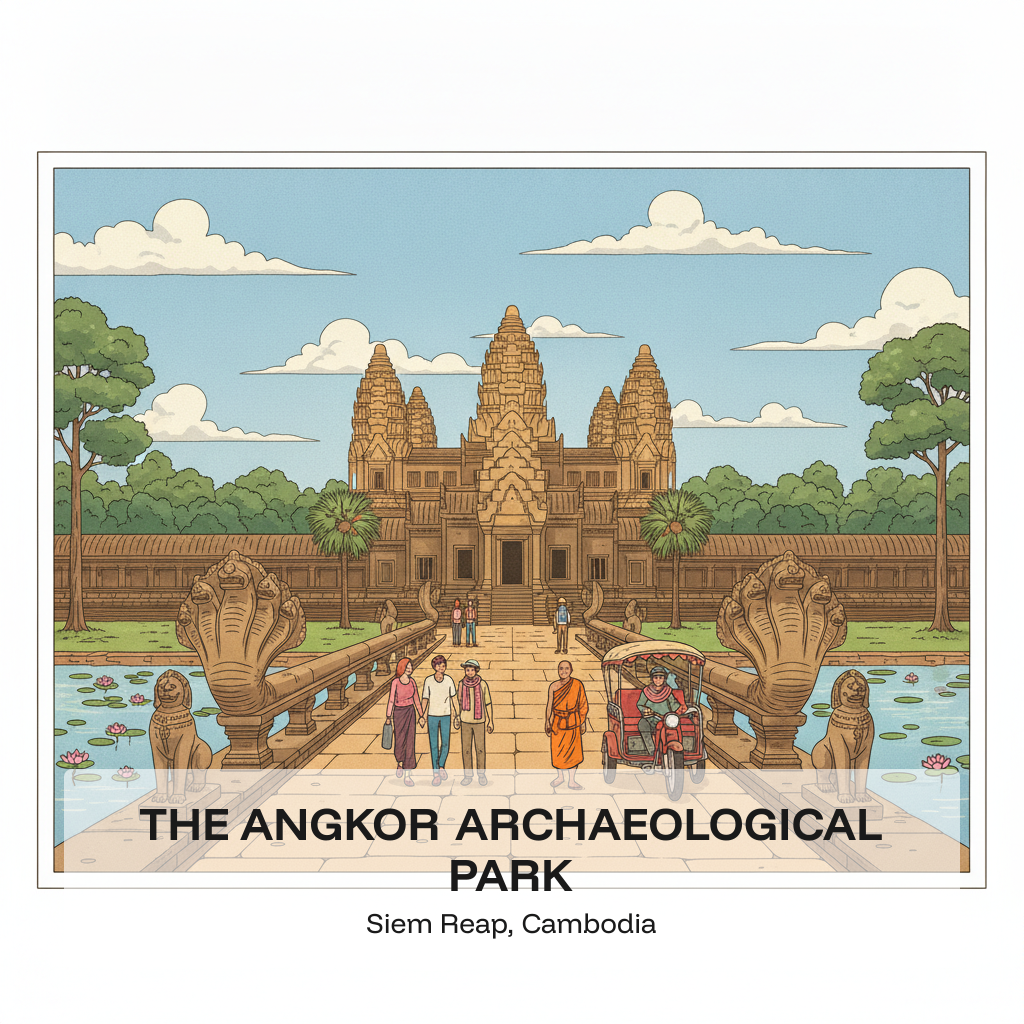
The Angkor Archaeological Park covers 400 km² and contains over 1,000 archaeological sites—from Angkor Wat and Angkor Thom to smaller temples scattered across the forested plain. The park is managed by APSARA (the Authority for the Protection and Management of Angkor and the Region of Siem Reap). The entry system: 1-day ($37), 3-day ($62), or 7-day ($72) passes, purchased at the official ticket centre on the highway north of Siem Reap. The sunrise at Angkor Wat: arguably over-touristed at peak season (January–February)—100+ tour buses arrive before dawn, and the famous reflection pool in front of the west entrance is crowded from 05:30; alternative sunrise viewpoints (Phnom Bakheng hill temple—also crowded, limited to 300 visitors at sunset) include the less-visited Pre Rup and Sra Srang for quieter experiences. The tuk-tuk circuit: most visitors hire a tuk-tuk driver for 1–3 days (standard rates: $15–25/day for the small circuit, $20–35 for the large circuit—Preah Khan, Ta Som, East Mebon, Pre Rup). Dress code: knees and shoulders covered at all temples.
- 6
Bantey Srei & the Outlying Temples – Beyond the Main Circuit
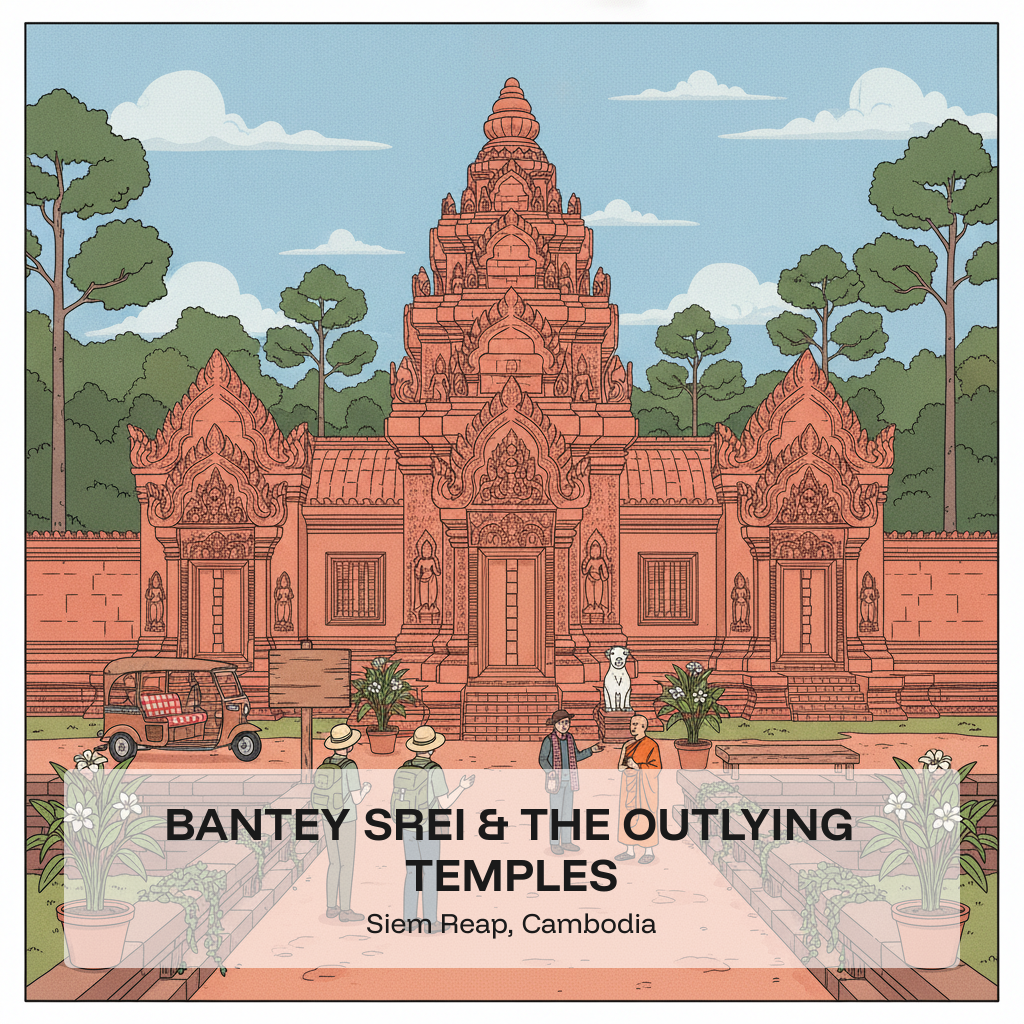
The outlying temples of the Angkor Archaeological Park—beyond the main circuits that most visitors complete—offer less-crowded encounters with extraordinary architecture. Banteay Srei ('Citadel of Women')—25 km northeast of Angkor Wat, built 967 CE, made of pink sandstone rather than the grey sandstone of most Angkor temples—is considered the jewel of Khmer art for the extraordinary intricacy of its decorative carving: the lintel and pediment carvings (scenes from the Hindu epics in micro-detail) are the finest in the Angkor corpus. In 1923, André Malraux (later French Minister of Culture) was arrested for attempting to remove several Banteay Srei carvings—the scandal that drew international attention to Angkor's vulnerability to looting. Beng Mealea ('Lotus Pond')—60 km east of Siem Reap—is an early 12th-century temple of similar scale to Angkor Wat, substantially unreconstructed, with trees and jungle growth throughout: the 'real' Ta Prohm experience without the crowds. Koh Ker (130 km northeast)—a remote 10th-century capital with a 36-metre-high stepped pyramid (Prasat Thom) and almost no visitors.
Walk this route with audio
Stories play automatically as you reach each stop — no tapping needed.
More in Siem Reap
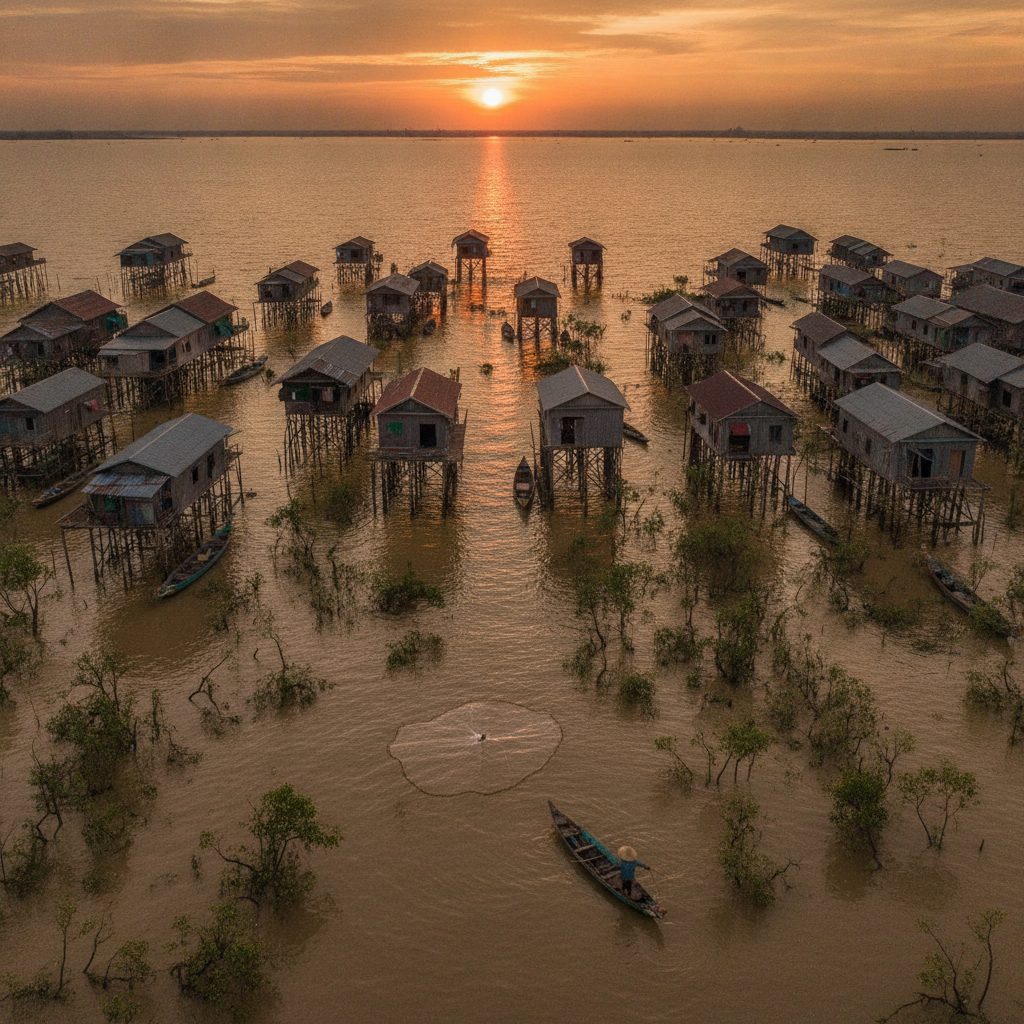
Siem Reap's Other Story: Khmer Rouge's 2 Million Deaths, Tonlé Sap's Reversing River & Apsara Dance's Revival
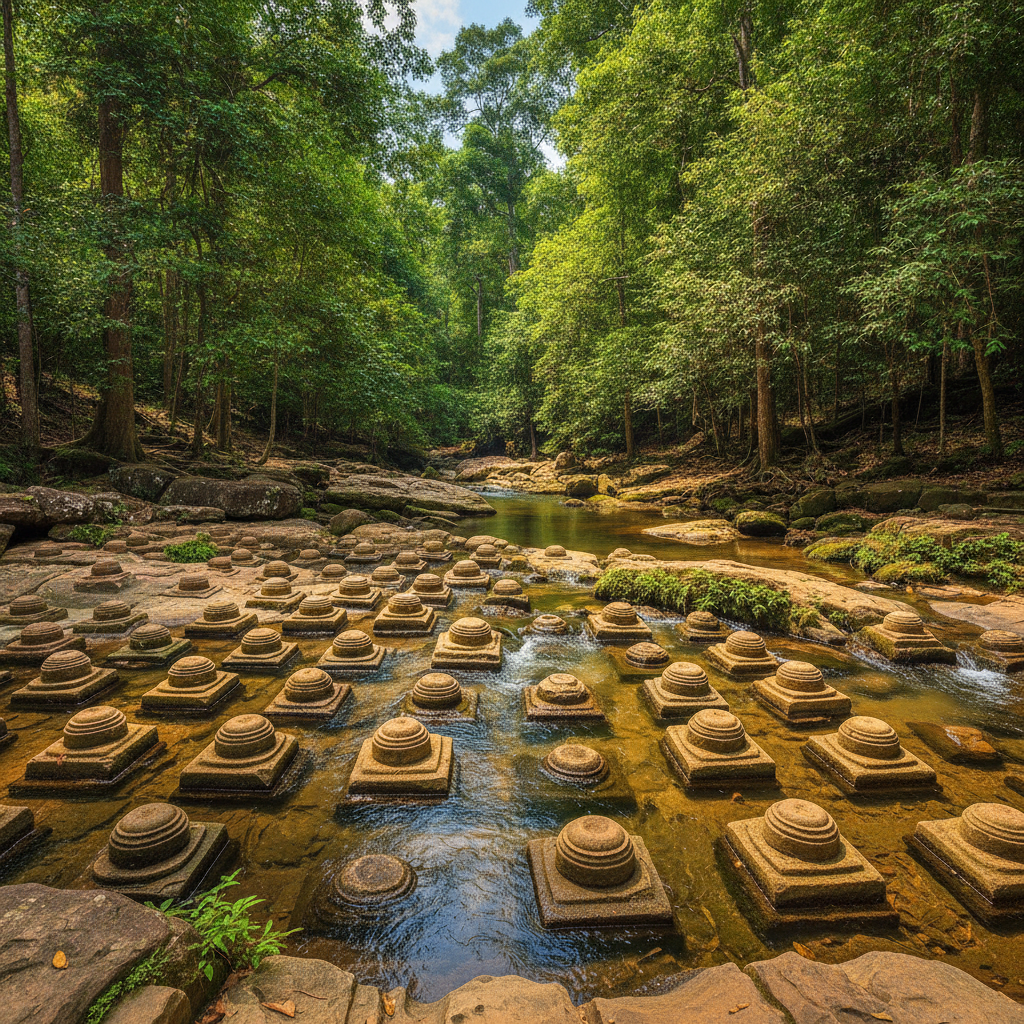
Angkor Deeper: 1,000 Lingas in Phnom Kulen's Sacred River, Preah Khan's Dancer Colonnade & the Sunrise Photo Circuit
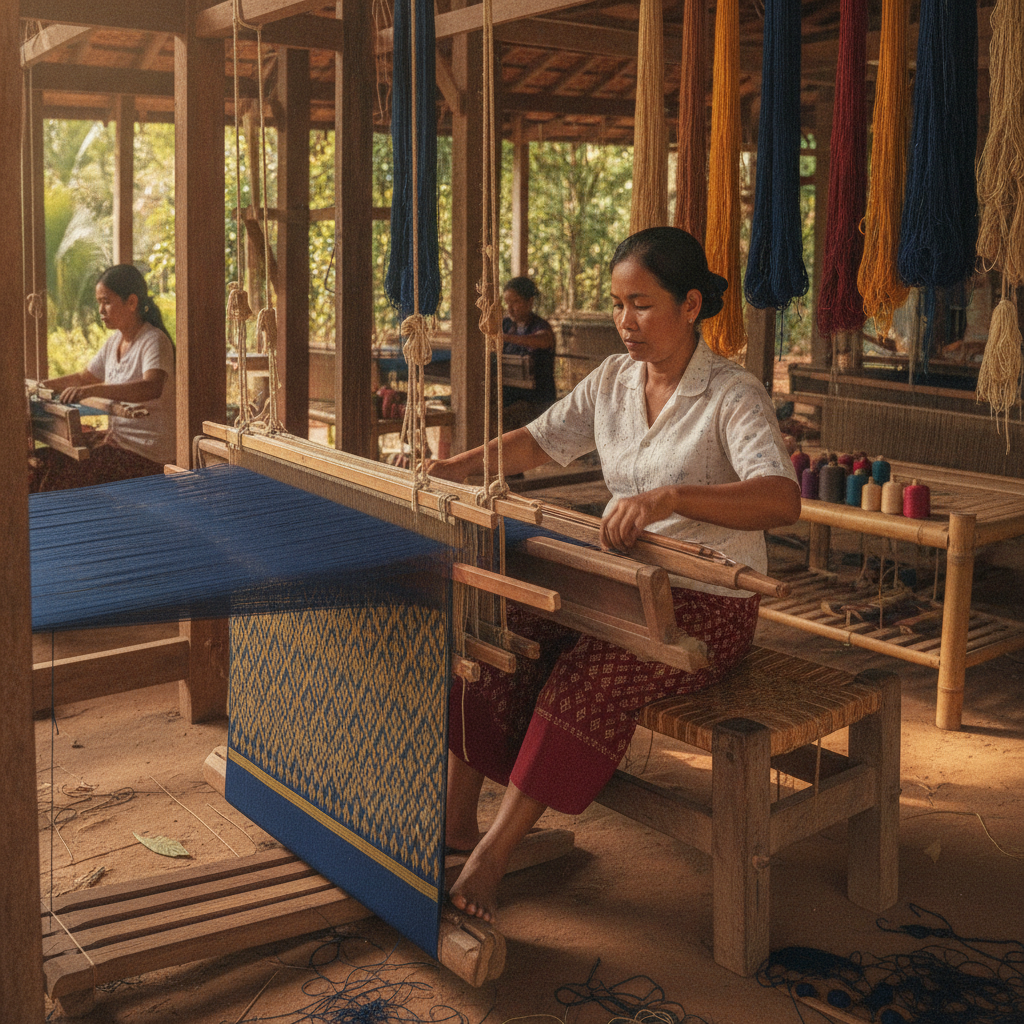
Leaving Siem Reap: Artisans Angkor's Ikat Silk Revival, Buddhist Monks at Dawn & Angkor's Civilisational Weight
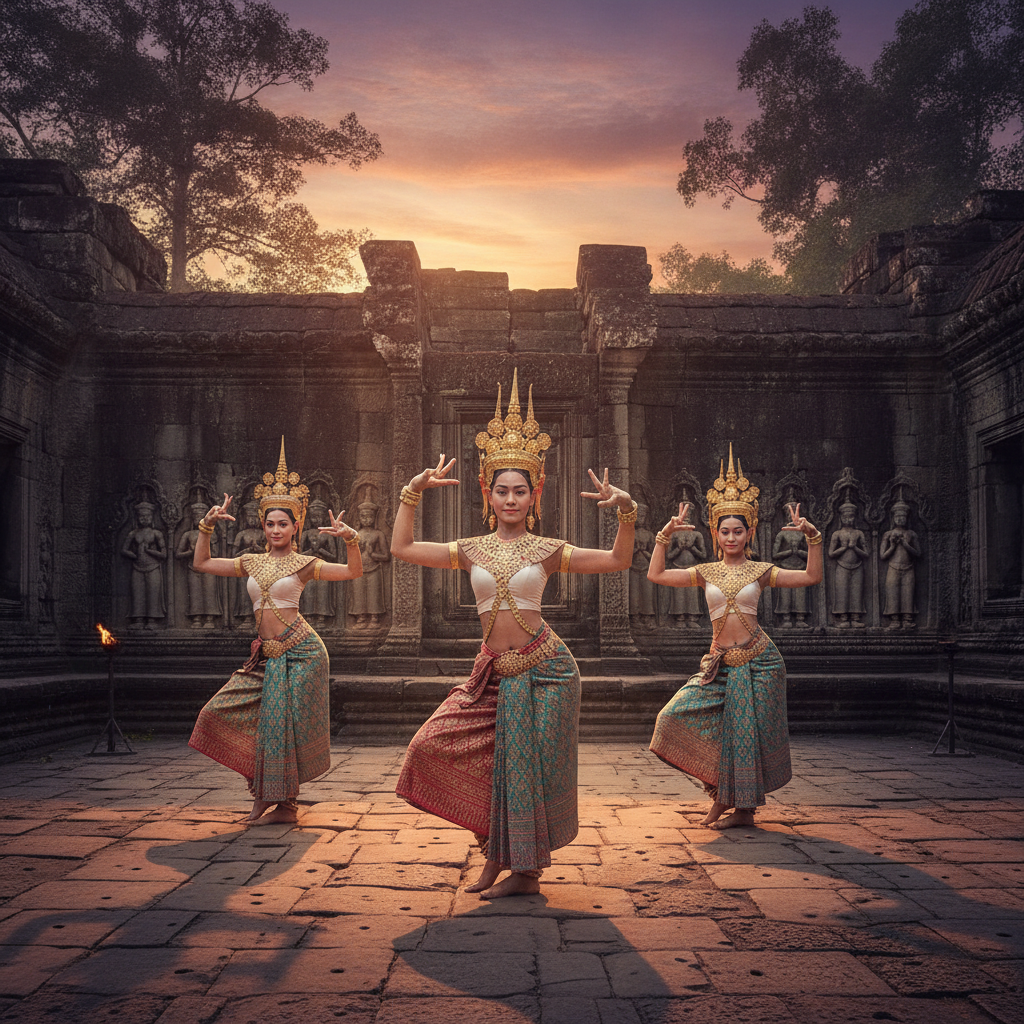
Siem Reap's Foundations: The 1,000 km² Hydraulic Empire, Apsara Dance Surviving Genocide & Henri Mouhot's Useful Myth