Hafez Memorized the Quran in 14 Recitations by Age 20 and His Divan Serves as the Oracle (Fal-e Hafez) for 85 Million Iranians Today, Saadi's Bani Adam Verse is Engraved at the United Nations, Karim Khan Built Shiraz as Capital but Refused the Title of Shah
Hafez memorizing the Quran in 14 recitations as a young man in Shiraz; his Divan of 500 ghazals serving as the divination oracle (fal-e Hafez) consulted by Iranians today; Saadi's Bani Adam verse ('Human beings are members of a single body') engraved at the United Nations General Assembly in New York; Karim Khan Zand building the Vakil complex while refusing the title Shah (choosing Regent of the People instead); the Persian garden paradise (pairidaeza) concept and UNESCO's 9 listed Persian gardens; the complete 3-day Shiraz itinerary and budget guide with open market USD exchange rates.
- 1
Persian Poetry – Hafez, Saadi, and the Lyric Tradition
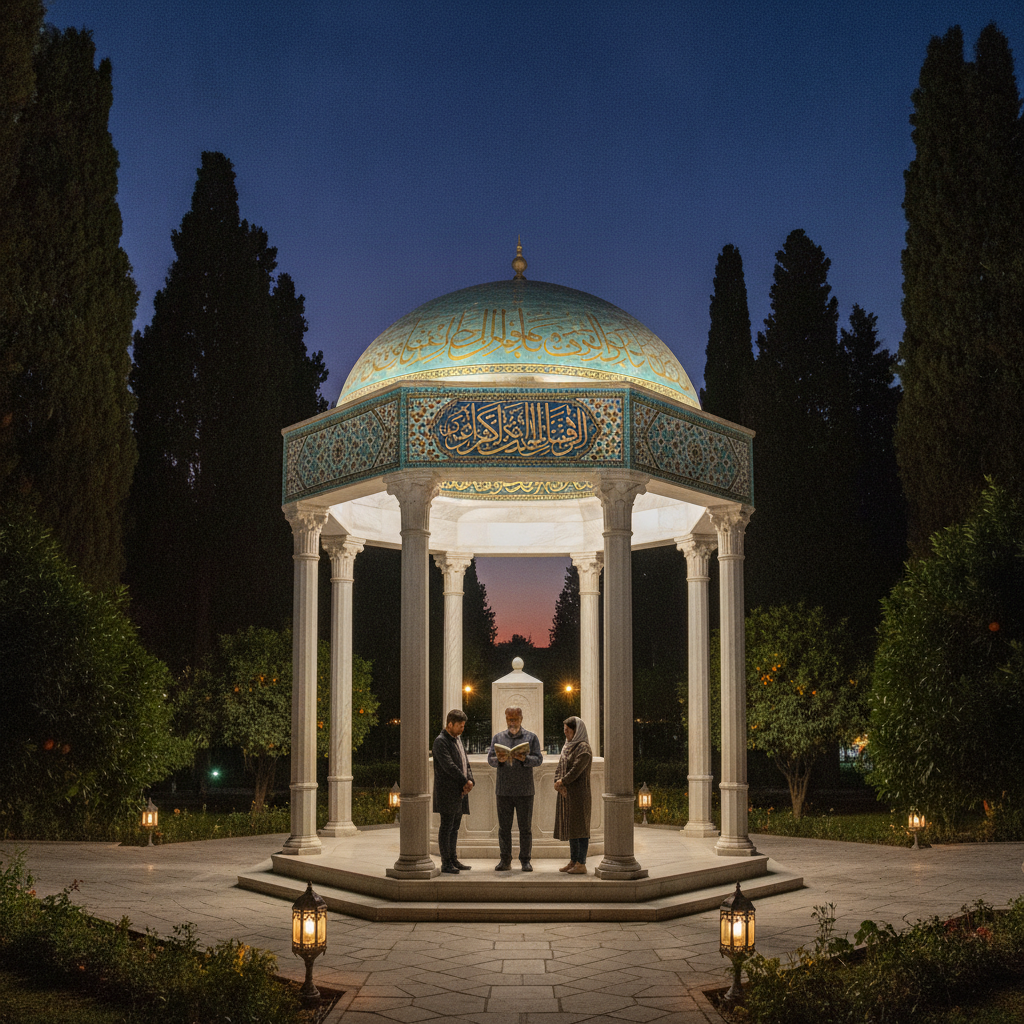
The Persian lyric poetry tradition centered in Shiraz (the Shirazi poets Hafez and Saadi — the two supreme figures of Persian classical poetry and among the most widely read poets in world history): the poetry guide. Hafez (the life of Hafez (Khwaja Shams-ud-Din Muhammad Hafez-e Shirazi — approximately 1315–1390 CE): the name Hafez means one who has memorized the Quran — Hafez memorized the Quran in 14 recitations as a young man in Shiraz: the Divan of Hafez (the Divan-e Hafez — the collected poems of Hafez — contains approximately 500 ghazals (lyric poems): the ghazal form (the ghazal — a lyric poem of 5–12 couplets (bayt) with a monorhyme: each couplet stands independent: the final couplet typically contains the poet's takhallus (pen name): the central theme of the Hafez ghazal is the paradox of divine love expressed through the language of human love — wine, the beloved, the tavern, and the nightingale are symbols of spiritual ecstasy: the Saadi (the life of Saadi (Sheikh Muslih-ud-Din Saadi Shirazi — approximately 1210–1292 CE): the two major works: the Bustan (Garden — 1257) — a collection of didactic poems on ethics and government written in the masnavi form (rhyming couplets): the Gulistan (Rose Garden — 1258) — a collection of prose passages interspersed with verse: the Bani Adam verse (the most famous verse of the Gulistan: Bani Adam azaye yek peykar and — Human beings are members of a single body: the verse is carved on the entrance to the United Nations General Assembly Hall in New York: the influence of Persian poetry on world literature (Goethe's West-Eastern Divan (1819) explicitly acknowledges Hafez as its primary inspiration: Emerson translated both Hafez and Saadi: Thoreau kept a copy of the Gulistan at Walden Pond).
- 2
Shiraz Gardens – Paradise on Earth from Persian Mythology
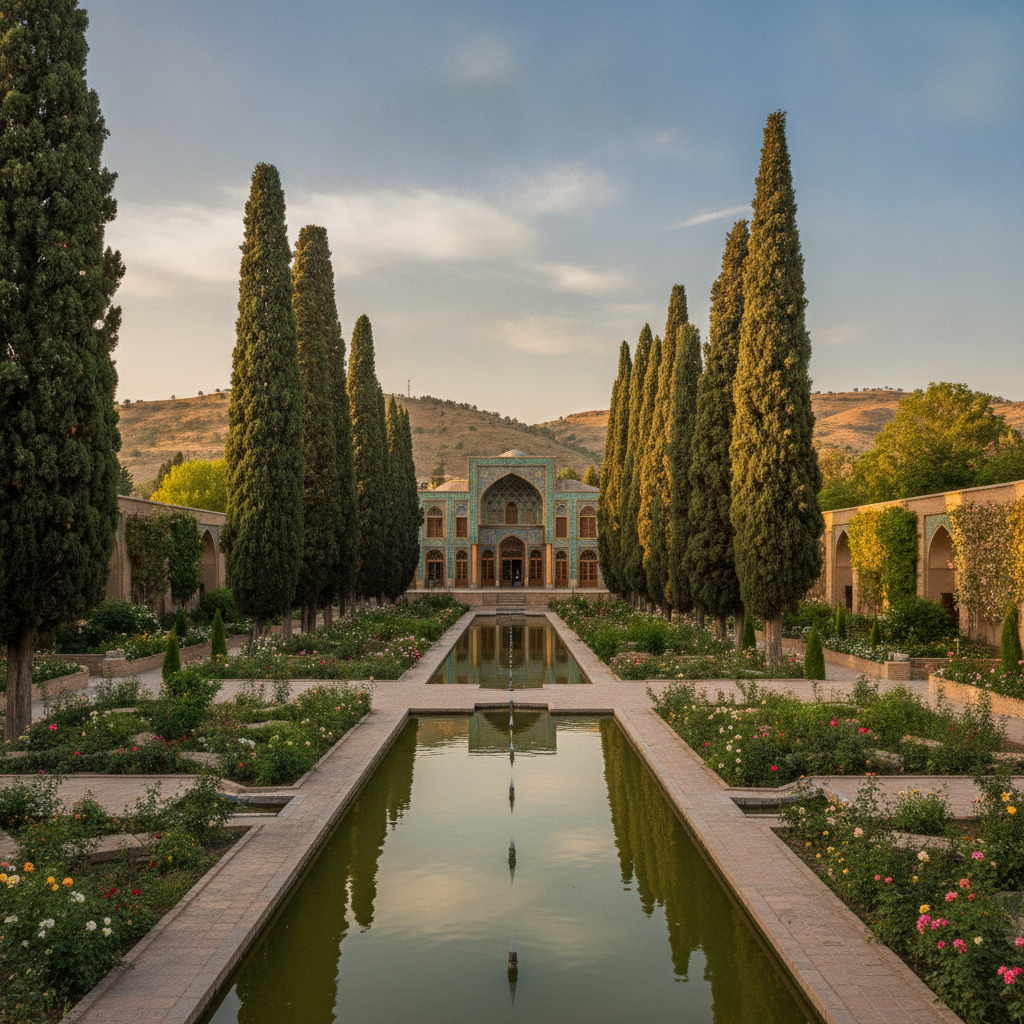
The Shiraz garden tradition (the Persian garden — the pairidaeza (Old Persian — walled enclosure) — the origin of the English word paradise): the garden guide. The pairidaeza concept (the concept of paradise (Persian: bihisht — the garden of the soul) derives from the Old Iranian concept of an enclosed royal garden or hunting park: the Achaemenid gardens (the first Persian gardens were enclosed royal parks at Pasargadae — the garden at Pasargadae is the oldest formal garden in Iran with archaeological evidence of stone channels and basins dating to Cyrus the Great (6th century BCE): the Sassanid legacy (the Sassanid palace gardens outside Ctesiphon (Taq-i Kisra near Baghdad) were described by Arab conquerors in 637 CE as the most magnificent gardens ever seen: the Bagh-e Eram (the Garden of Paradise — the most famous garden in Shiraz: the name Bagh-e Eram (باغ ارم) means Garden of Paradise or Garden of Heaven: the garden occupies 11 hectares and contains a formal three-sectioned Persian garden layout: the central pool is 100m long and flanked by cypress trees (Cupressus sempervirens — the Iranian cypress — a symbol of eternal life in Persian culture): the garden was redesigned in the Qajar period (early 19th century) and contains a Qajar-era mansion (Kakh-e Eram): the UNESCO recognition (the Persian Garden — a group of 9 Persian gardens inscribed on UNESCO World Heritage List in 2011: Bagh-e Eram in Shiraz: Fin Garden in Kashan: Chehel Sotun in Isfahan: Abbasabad Garden in Behshahr: Dolat Abad Garden in Yazd: Pahlavanpour Garden in Mehriz: Shah Goli Garden in Tabriz: Akbariyeh Garden in Birjand: Shazdeh Garden in Mahan).
- 3
Zand Dynasty – Karim Khan and the Last Great Builder of Shiraz
The Zand dynasty history (the Zand dynasty (1750–1794 CE) — the last dynasty to make Shiraz a major imperial capital and the builders of the Vakil complex): the dynasty guide. The founder (the Karim Khan Zand (Vakil-e Ra'aaya — Regent of the People — approximately 1705–1779 CE): the title (Karim Khan deliberately avoided taking the title Shah (king) — choosing instead the title Vakil-e Ra'aaya (Regent of the People) — a political choice that distinguished the Zand dynasty from the Safavid and later Qajar dynasties: the building program (the Karim Khan building program in Shiraz (1765–1779): the Arg-e Karim Khan (Karim Khan Citadel — a residential palace and fortress in the center of Shiraz): the Vakil Bazaar (the royal bazaar constructed adjacent to the citadel — the primary commercial center of 18th-century Shiraz): the Vakil Mosque (the royal mosque of the Vakil complex — famous for its 48 stone columns in the prayer hall): the Vakil Bath (Hammam-e Vakil — a functioning historical bathhouse now preserved as a museum): the reign character (the reign of Karim Khan was notable for its relative peace and prosperity in a period of otherwise extreme Iranian political instability: the reign came immediately after the violent collapse of the Safavid Empire and the brutal 20-year rule of Nader Shah Afshar (1736–1747): the fall (after Karim Khan's death in 1779 the Zand dynasty rapidly collapsed: the Qajar dynasty founded by Agha Mohammad Khan Qajar captured Shiraz in 1789: Agha Mohammad Khan Qajar had been kept at the Zand court as a hostage — after taking power he had Karim Khan's tomb desecrated and the body of Karim Khan moved to Tehran).
- 4
Shiraz Day Trips – Persepolis, Naqsh-e Rostam, Bishapur, and Firuzabad
The Shiraz day trip guide (the major archaeological sites within 2 hours of Shiraz — all accessible by shared taxi, tour, or rental car): the day trip guide. The Persepolis circuit (Persepolis (29.9340°N, 52.8891°E) is 57 km northeast of Shiraz on the road to Marvdasht: the full Persepolis visit (the Gate of All Nations (Xerxes Gate): the Apadana Palace (audience hall — 1,000 people capacity): the Throne Hall (Hundred Columns Hall): the Treasury (the payroll receipts of the Persepolis treasury workers were found here — the oldest known example of recorded wages): the Harem: the Tachara (private palace of Darius I): the combined Persepolis and Naqsh-e Rostam circuit (the two sites are 5 km apart and easily combined in a single day: the Naqsh-e Rostam (4 Achaemenid royal tombs cut into a limestone cliff: Darius I: Xerxes I: Artaxerxes I: Darius II: the Sassanid relief panels at the base of the cliff include Shapur I's triumphal relief showing the Roman Emperor Valerian kneeling before him: the Bishapur (125 km northwest of Shiraz on the road to Kazerun — the primary Sassanid city of Fars Province: founded by Shapur I in 266 CE: the Bishapur reliefs (6 Sassanid rock reliefs carved into the Shapur River gorge 6 km from the city site): the Firuzabad (115 km south of Shiraz — the site of Ardashir I's city (Ardashir-Khwarrah) and the palace (Qal-e Dokhtar) — the oldest surviving Sassanid monument): the Persepolis logistics (shared taxi from Shiraz to Marvdasht (12 km short of Persepolis): then local taxi to the site: total taxi cost approximately IRR 500,000–800,000 one way: tour agency prices (USD 30–50 per person for a full-day Persepolis-Naqsh-e Rostam-Pasargadae circuit).
- 5
Shiraz Budget Guide – Costs, Transport, Accommodation, and Cash
The Shiraz budget travel guide (the practical financial information for Shiraz in 2025 — a city that remains extremely affordable for visitors exchanging hard currency on the open market): the budget guide. The currency situation (Iran operates a dual exchange rate system: the official rate (approximately IRR 42,000 per USD — the rate used for government transactions and subsidized goods): the open market rate (approximately IRR 580,000–620,000 per USD in 2025 — the rate available at licensed exchange offices (sarafi) and major hotels): the practical consequence (at the open market rate Iran is among the cheapest travel destinations in the world for visitors from hard currency countries: the ATM situation (international credit and debit cards do not function in Iran due to US sanctions: all transactions are cash: visitors must bring sufficient USD or EUR in cash for the entire trip): the accommodation (the Shiraz budget options: the Niayesh Boutique Hotel — a restored Qajar-era house in the historic district (USD 25–40 per night at open market rates): the Saadi Hotel — a mid-range business hotel near Zand Boulevard (USD 35–60 per night): the transport costs (intercity transport costs at open market rates: the Shiraz to Isfahan VIP bus (7 hours — approximately USD 5–8): the Shiraz to Tehran flight (Iran Air or Mahan Air — approximately USD 25–45): the Shiraz to Yazd bus (5–6 hours — approximately USD 4–6): the food costs (a full restaurant meal (main course, rice, salad, drink) costs approximately IRR 500,000–1,200,000 — USD 0.80–2.00 at open market rates: the Vakil Bazaar food stalls (the cheapest eating option in Shiraz — ash-e reshteh (herb and noodle soup) and sandwiches at IRR 150,000–300,000).
- 6
Shiraz 3-Day Itinerary – Ancient Persia and the City of Poets
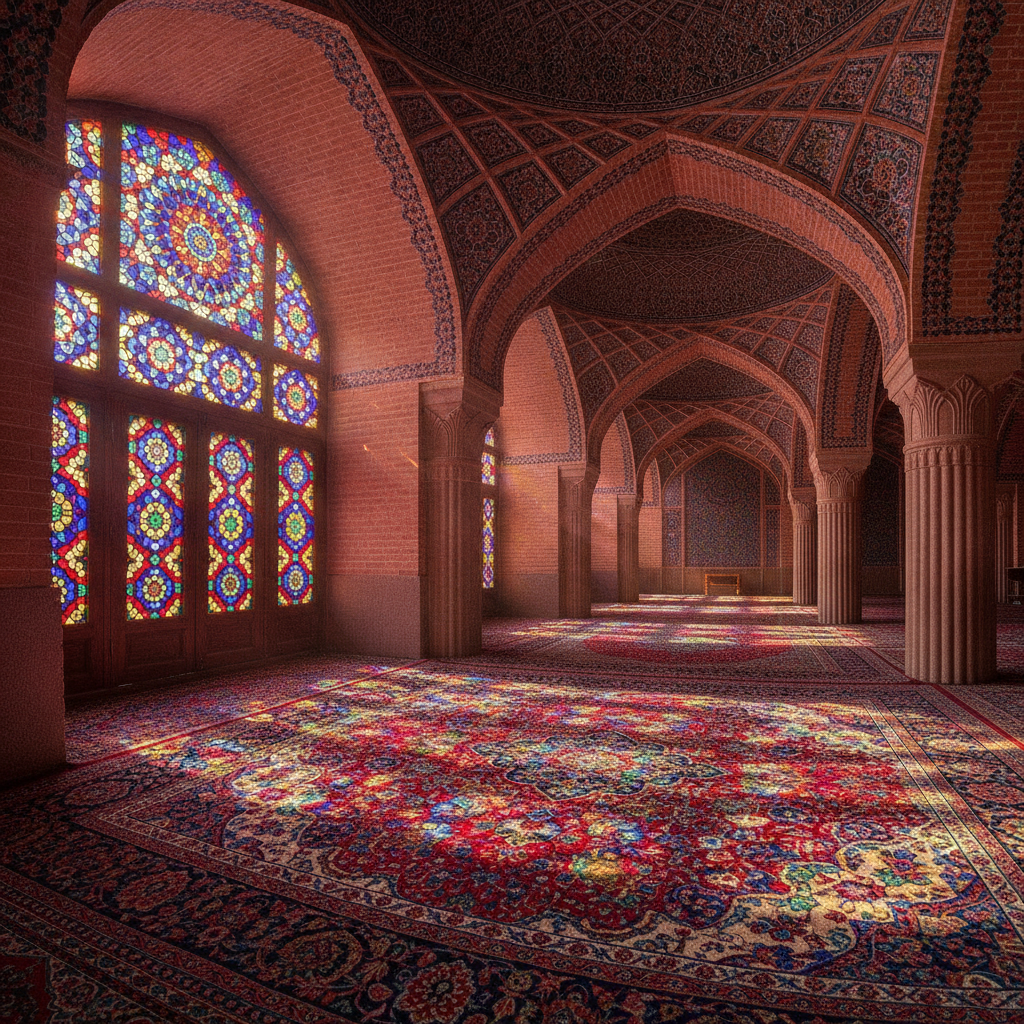
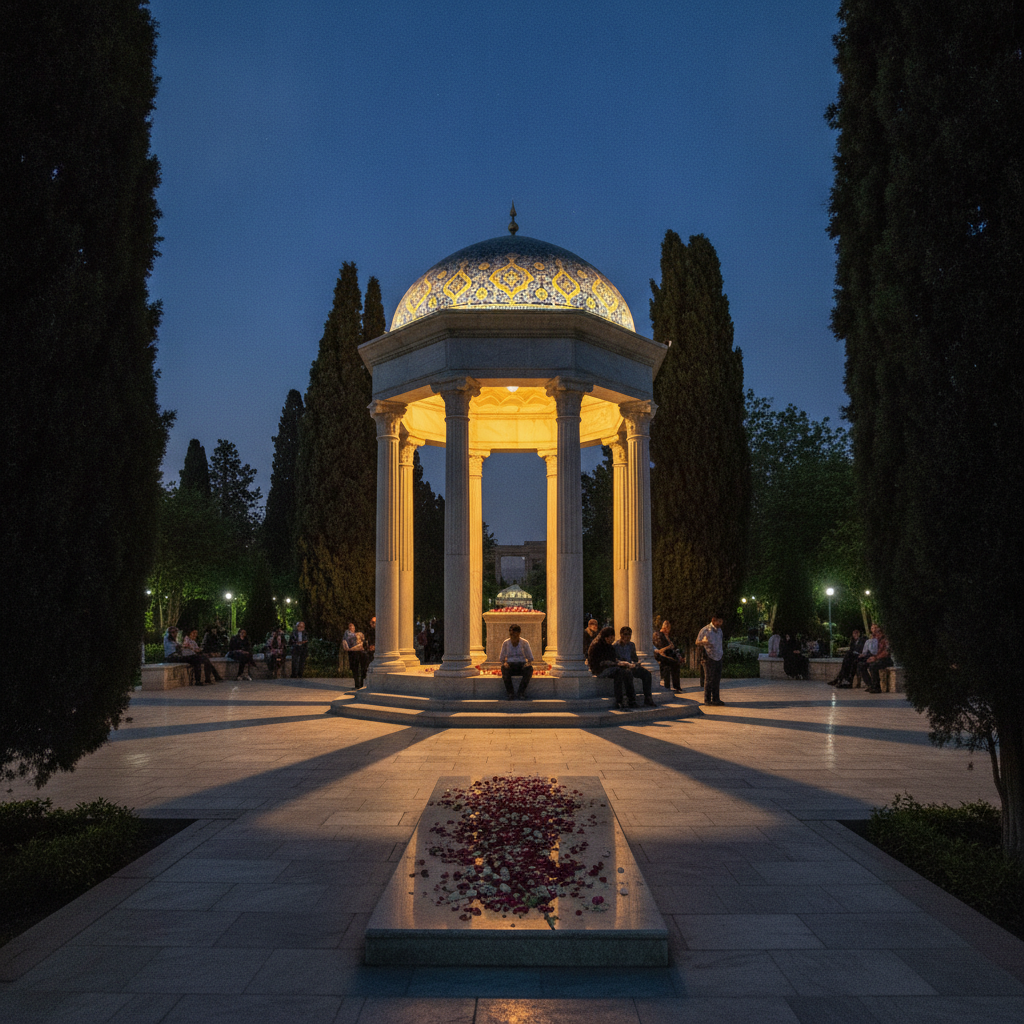
The Shiraz 3-day itinerary (the optimal 3-day sequence for first-time visitors to Shiraz combining the major archaeological, architectural, and cultural sites): the itinerary guide. Day 1 morning: Nasir al-Molk Mosque (08:00–10:00 — arrive at opening for the stained glass light effect in the winter prayer hall: the mosque is 400m from Masjid-e Vakil metro-adjacent: the Vakil Bazaar and Mosque complex (10:30–13:00 — the Vakil Bazaar (the most atmospheric traditional bazaar in southern Iran): the Arg-e Karim Khan (13:30–15:00): the Shah-e Cheragh Shrine (15:30–17:00 — the Shrine of Ahmad ibn Musa — the most important Shia shrine in Fars Province): Day 1 evening: the Hafez Tomb (19:00–21:00 — the tomb garden is most atmospheric after dark when the pavilion is illuminated and Iranians come to read aloud from the Divan: Day 2 (Persepolis day): the full Persepolis circuit (Persepolis — Naqsh-e Rostam — Pasargadae): depart Shiraz 07:30 by taxi or tour: Persepolis (09:00–12:30): Naqsh-e Rostam (13:00–14:30): Pasargadae (15:30–17:00): return Shiraz 18:30: Day 3: Saadi Tomb (09:00–10:30): Bagh-e Eram Garden (11:00–12:30): Qavam House (13:30–14:30): Delgosha Garden (15:00–16:00): the Shiraz departure logistics (Shiraz International Airport — 15 km south of city center: Iran Air, Mahan Air, and Zagros Airlines serve Tehran Mehrabad and Tehran Imam Khomeini with multiple daily flights: the airport taxi (approximately IRR 800,000 from the city center).
Walk this route with audio
Stories play automatically as you reach each stop — no tapping needed.
More in Shiraz
Shiraz Food: Kalam Polo, Faloodeh, the Local Persian Cuisine, the Traditional Teahouses, and the Most Culinarily Regional Single Iranian City
Shiraz Essential: Persepolis, the Pink Mosque, the Tomb of Hafez, Eram Garden, and the Most Poetically Beautiful Single Iranian City

Shiraz Zoroastrian Heritage: The Fire Temples, Pars as the Persian Heartland, the Ancient Religion, and the Most Historically Consequential Single Pre-Islamic Iranian Faith
The Persepolis Treasury Tablets the Primary Documentary Evidence for Achaemenid Administration, Saadi's Bani Adam Verse on the UN Headquarters Wall & the DNA Proof That the Shiraz Wine Grape Actually Originates in France Not Persia

Shiraz Wine and Poetry: The Grape Heritage, the Persian Garden Culture, Hafez and Saadi, and the Most Romantically Literary Single Iranian City