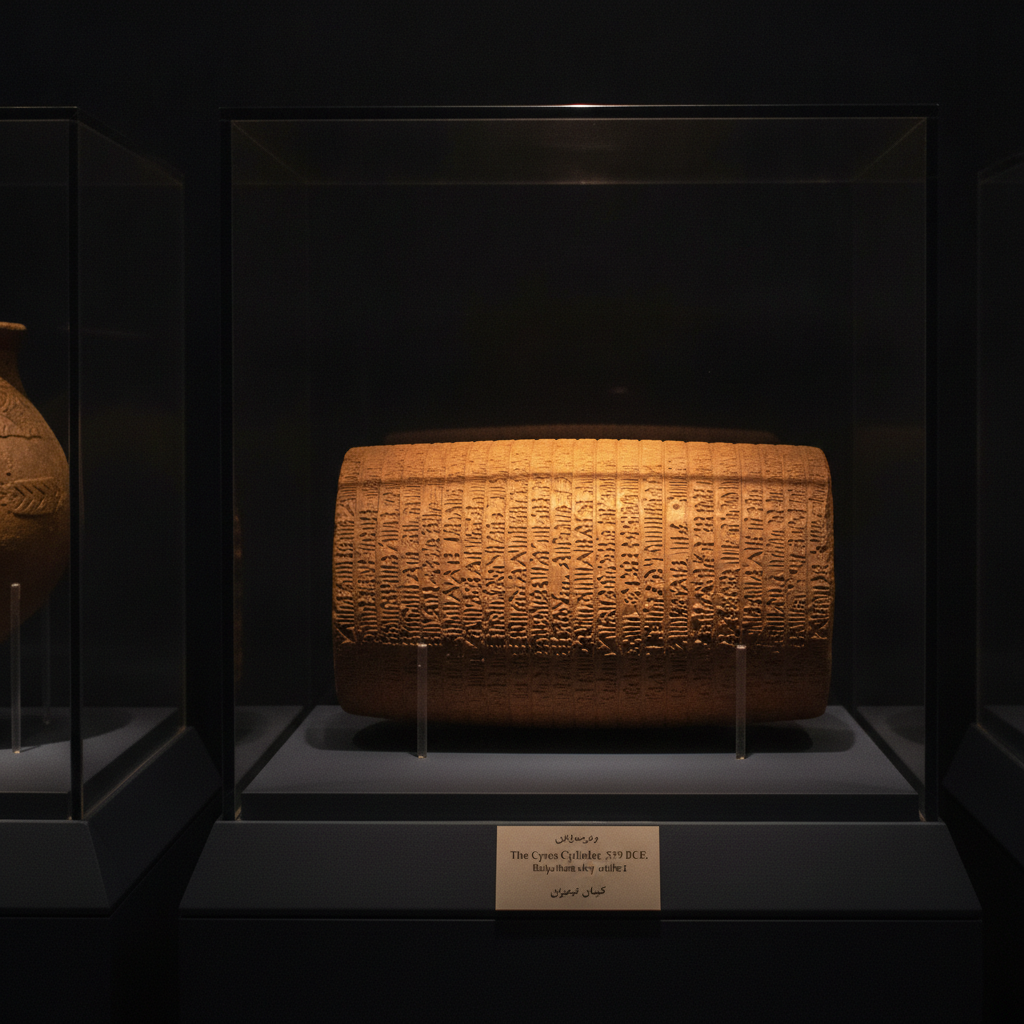
Cyrus the Great's Cylinder (539 BCE) Praised in the Hebrew Bible as the Messiah of Israel, Alexander Removed 180,000 Talents of Silver from Persepolis Requiring 20,000 Mules, and DNA Proves the Shiraz Wine Grape is Actually French Not Persian
Cyrus the Great's cylinder praised in Isaiah (44:28, 45:1) as the 'anointed one' (mashiach) of the Jewish God for freeing the Jews from Babylon; Alexander the Great removing 180,000 talents of silver from Persepolis requiring 20,000 mules and 5,000 camels; DNA analysis proving Syrah/Shiraz grape is a French variety (Dureza x Mondeuse Blanche) with no genetic connection to the city of Shiraz; the Shiraz School of miniature painting using lapis lazuli imported from Badakhshan; UNESCO designating Shiraz as a Creative City of Literature in 2015; and Hafez's Divan translated into 140+ languages including Goethe's West-Eastern Divan.
- 1
Cyrus the Great – The First Human Rights King?
Cyrus the Great and the Cyrus Cylinder (the historical debate over whether Cyrus the Great (r. 559–530 BCE) deserves the title of first human rights advocate — one of the most contested questions in ancient history): the historical analysis. The Cyrus Cylinder (the Cyrus Cylinder (British Museum — accession number 90920) — a baked clay cylinder approximately 23cm long inscribed in Babylonian cuneiform: discovered in Babylon in 1879 by Hormuzd Rassam (an Iraqi-British archaeologist): the content of the inscription: Cyrus presents himself as the legitimate successor to the Babylonian throne chosen by the Babylonian god Marduk to restore proper worship: Cyrus claims to have freed enslaved peoples brought to Babylon and allowed them to return to their homelands: Cyrus describes releasing political prisoners and restoring ruined temples: the debate (is the Cyrus Cylinder a human rights document or a standard ancient political propaganda text? the human rights argument (UN Secretary-General Kurt Waldheim called the cylinder the first human rights charter in 1971: the Iranian government (both Pahlavi and Islamic Republic) has promoted Cyrus as a symbol of Iranian humanitarian tradition: the counter-argument (the historian Amélie Kuhrt (UCL) argues the cylinder is a standard Babylonian royal inscription following a conventional template — not a unique human rights document: most Assyrian and Babylonian rulers made similar claims when taking the throne of Babylon: the Hebrew Bible connection (the Hebrew Bible (Isaiah 44:28, 45:1) calls Cyrus the anointed one (mashiach — the same root as messiah) of the god of Israel for releasing the Jews from the Babylonian Captivity in 539 BCE: the positive portrayal of a non-Jewish ruler as an instrument of the Jewish god is unique in the Hebrew Bible).
- 2
Alexander the Great in Persia – Conqueror, Student, and Successor
Alexander the Great and the Persian Empire (the conquest of the Achaemenid Empire by Alexander III of Macedon (356–323 BCE) and his complex relationship with Persian culture): the historical guide. The campaign (the Persian campaign (334–323 BCE): the Battle of Granicus (334 BCE — the first major victory: the Battle of Issus (333 BCE — Darius III fled leaving his family as prisoners): the Battle of Gaugamela (331 BCE — the decisive battle near Mosul: Darius III fled again: Alexander entered Babylon, Susa, and Persepolis (330 BCE): the Persepolis treasury (the Persepolis treasury contained the largest concentration of wealth in the ancient world: Alexander removed approximately 180,000 talents of silver — the equivalent of the entire Persian annual revenue for decades: the removal required 20,000 mules and 5,000 camels: the cultural program (Alexander's cultural policy toward the conquered Persians was more complex than standard conquest: Alexander wore Persian dress (the kandys — the long Persian robe): Alexander adopted the Persian court ceremonial including proskynesis (prostration before the king — a practice his Macedonian generals refused): Alexander married Roxana (a Bactrian princess) and later Stateira II (a daughter of Darius III): the mass marriage at Susa (324 BCE — Alexander and 90 of his generals married Persian noblewomen simultaneously in the Susa mass wedding: the Persian legacy (Alexander presented himself as the successor to Darius III rather than merely as a foreign conqueror: he appointed Persians as satraps: after Alexander's death in 323 BCE the Seleucid successors continued many Achaemenid administrative practices: the Persian cultural tradition survived Alexander's conquest by approximately 150 years of Hellenistic-Iranian cultural synthesis before the Parthian and Sassanid revivals).
- 3
Shiraz vs Persepolis – Two Names for the Same Heritage
The Shiraz and Persepolis historical relationship (how the modern city of Shiraz relates to the ancient Achaemenid site of Persepolis — and why the two names exist for the same regional heritage): the historical geography guide. The name Persepolis (Persepolis (Greek: Perses + polis — city of the Persians) is the Greek name for the site the Persians called Parsa (the same name as the wider region): the site was not called Persepolis in antiquity — the Greek name was applied by Diodorus Siculus and became the standard name in European languages: the name Shiraz (the name Shiraz (شیراز) first appears in the Arab-Islamic historical sources of the 7th century CE: the most likely etymology is from Old Iranian Tirazhish — though the exact original meaning is disputed: the city of Shiraz was founded as an Islamic garrison city (amsar) by Arab commanders in 693 CE at the site of a pre-existing smaller settlement: the geographical relationship (Persepolis is 57 km northeast of Shiraz on the edge of the Marvdasht plain: the plain (dast) of Marvdasht has been intensively cultivated since at least the 5th millennium BCE: the Achaemenid Persepolis was the ceremonial capital — the administrative capitals were Susa (winter) and Ecbatana-Hamadan (summer): Shiraz became the regional capital only after the Arab conquest when the older Achaemenid-era regional center (Estakhr — 5 km from Persepolis) was superseded: the Estakhr (the city of Estakhr — a major city in the Sassanid period that was the traditional center of Zoroastrian high priesthood: Estakhr was sacked by the Arab-Islamic armies in 649 CE and never recovered: Shiraz replaced it as the primary city of Fars Province).
- 4
Persian Miniature Painting – Shiraz School and the Art of the Book
The Persian miniature painting tradition and the Shiraz School (the Shiraz School of miniature painting — one of the two primary centers of Persian manuscript illumination in the 14th–16th centuries alongside the Herat School): the art history guide. The miniature tradition (the Persian miniature — a small painting (generally 10–30cm) executed on paper or vellum as illustration for literary manuscripts: the primary texts illustrated: Ferdowsi's Shahnameh (Book of Kings): Nizami Ganjavi's Khamsa (Quintet): the Koran: the primary pigments: lapis lazuli (ultramarine blue — imported from mines at Sar-e Sang in Badakhshan, Afghanistan): malachite (green): gold leaf: cinnabar (red): the Shiraz School (the Shiraz School of Persian miniature (14th–17th centuries): the characteristics (bright colors: dynamic compositions: narrative clarity: the Shiraz School was particularly noted for its animated battle scenes in Shahnameh manuscripts: the primary patrons (the Injuid rulers of Shiraz (1335–1357): the Muzaffarid rulers of Shiraz (1357–1393): the Timurid and Safavid governors of Shiraz: the Shiraz manuscripts (the most important surviving Shiraz manuscripts: the Great Mongol Shahnameh (1330–1340 — partially Shiraz attribution): the Peck Shahnameh (1341): the Stephens Shahnameh (1415): the Baysunghur Shahnameh (1430 — Herat but with Shiraz-trained artists): the modern continuation (the Shiraz traditional arts workshops (kargah-ha-ye sonati) in the Vakil Bazaar area continue to produce calligraphy and illuminated manuscripts in the traditional style).
- 5
Wine, Grapes, and the Surprising History of Shiraz Viticulture
The Shiraz wine history (the surprising connection between the city of Shiraz, the Syrah/Shiraz grape variety, and the world's oldest evidence of wine production in Iran): the wine history guide. The oldest wine evidence (the oldest archaeological evidence of wine production in the world comes from Iran: the Hajji Firuz Tepe site in the Zagros Mountains of northwestern Iran (5400–5000 BCE) — ceramic jar residue containing tartaric acid and resin consistent with wine storage: the Godin Tepe site in the Zagros (3500–2900 BCE) — additional wine storage jar evidence: the Shiraz grape (the Syrah grape (in the southern hemisphere and some old-world wine regions called Shiraz) is one of the most widely planted red wine varieties in the world — approximately 190,000 hectares globally: the DNA evidence (DNA analysis published in Nature Genetics (2019) by researchers at UC Davis identified the parent varieties of Syrah: the female parent: Dureza (an obscure variety from the Ardèche region of France): the male parent: Mondeuse Blanche (a variety from Savoie, France): the conclusion: Syrah is a French variety with no genetic connection to the city of Shiraz: the origin of the name (three historical theories for the Syrah-Shiraz connection: the Crusader theory (the grape was brought from Shiraz to France by crusaders — the oldest popular explanation — now definitively disproven by DNA evidence): the Persian merchant theory (Persian merchants trading wine grapes along the Silk Road brought the Shiraz grape variety to France): the toponymic coincidence theory (the grape was named after the town of Seyssuel in the Rhone Valley — the similarity to Shiraz is coincidental): the Iranian wine (Iran was a major wine-producing region from the Bronze Age until the 1979 Islamic Revolution — the shiraz grape was grown in the Shiraz region for millennia before prohibition: the Shiraz wine industry was completely destroyed after 1979).
- 6
Shiraz and the Literary Tradition – the UNESCO City of Persian Poetry
The Shiraz literary tradition and UNESCO recognition (Shiraz as the supreme city of Persian literature — the birthplace of two of the three greatest Persian poets and the city most associated with the Persian lyric tradition): the literary heritage guide. The three supreme Persian poets (the three poets universally recognized by the Iranian literary tradition as the supreme masters of Persian literature: Ferdowsi (940–1020 CE — epic: the Shahnameh (Book of Kings) — 60,000 couplets — the longest epic poem written by a single poet in world literature: Saadi (1210–1292 CE — lyric and didactic: born in Shiraz: the Bustan and Gulistan: Hafez (1315–1390 CE — ghazal: born in Shiraz: the Divan: two of the three supreme poets were born in Shiraz: the UNESCO recognition (UNESCO designated Shiraz as a Creative City of Literature in 2015 — one of only four Iranian cities to receive UNESCO Creative City designation: the tradition of fal-e Hafez (the practice of consulting the Divan of Hafez as a divination oracle — fal (فال) — is one of the most widespread cultural practices in contemporary Iran: the tradition works as follows: the person concentrates on a question: opens the Divan at random: reads the first complete ghazal on the right-hand page: a trained fal-khon (diviner) interprets the verse in relation to the question: the tradition is practiced at the Hafez Tomb garden where professional fal-khons sit with small caged birds that select the pages: the literacy rate (Iran has a literacy rate of 97.1% (2023 UNESCO data): the literacy is directly connected to the cultural centrality of Persian classical poetry — Iranian school children memorize Saadi, Hafez, and Ferdowsi from primary school onward: the Shiraz Book Fair (an annual book fair held in Shiraz in April — the largest in southern Iran: the poets in world literature (Hafez has been translated into more languages than any other Persian poet: 140+ languages: Goethe's West-Eastern Divan (1819) describes Hafez as his equal in spirit).
Walk this route with audio
Stories play automatically as you reach each stop — no tapping needed.
More in Shiraz
Shiraz Food: Kalam Polo, Faloodeh, the Local Persian Cuisine, the Traditional Teahouses, and the Most Culinarily Regional Single Iranian City
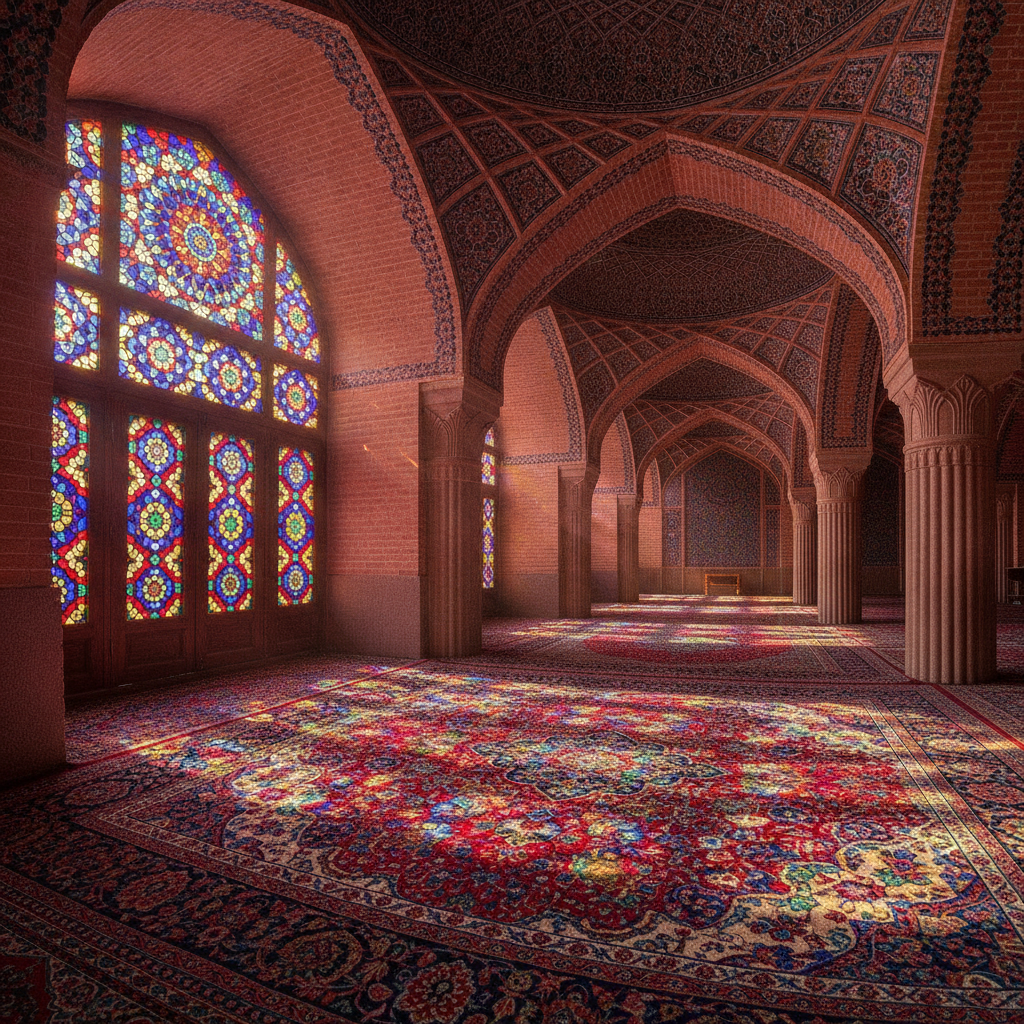
Shiraz Essential: Persepolis, the Pink Mosque, the Tomb of Hafez, Eram Garden, and the Most Poetically Beautiful Single Iranian City

Shiraz Zoroastrian Heritage: The Fire Temples, Pars as the Persian Heartland, the Ancient Religion, and the Most Historically Consequential Single Pre-Islamic Iranian Faith
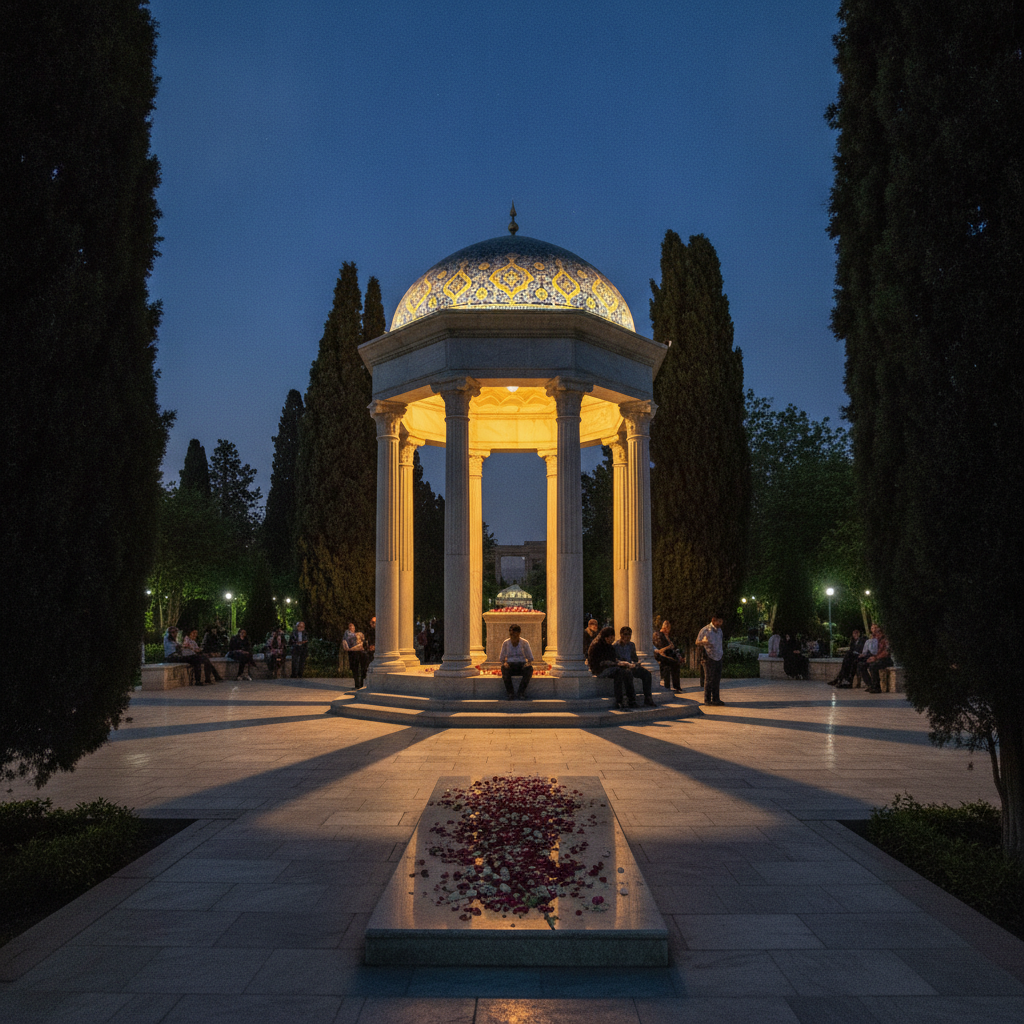
The Persepolis Treasury Tablets the Primary Documentary Evidence for Achaemenid Administration, Saadi's Bani Adam Verse on the UN Headquarters Wall & the DNA Proof That the Shiraz Wine Grape Actually Originates in France Not Persia
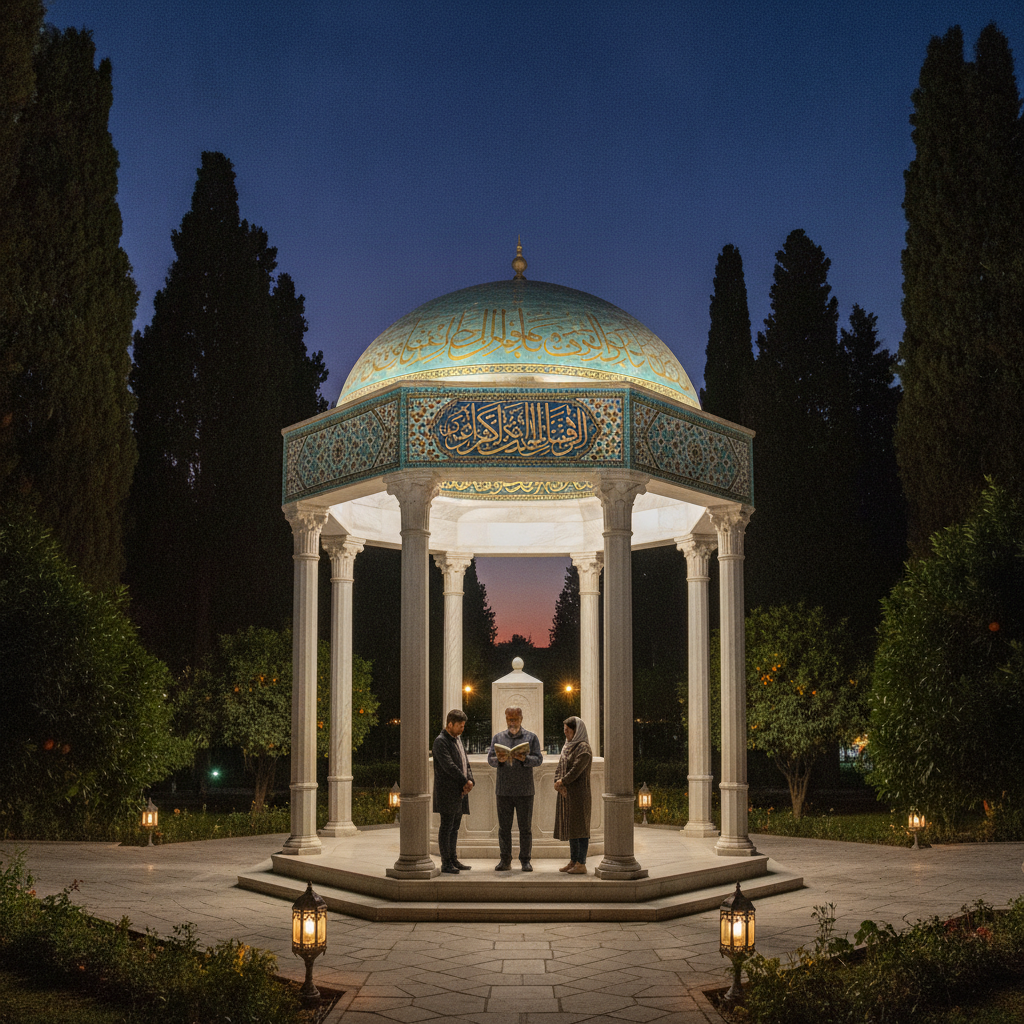
Hafez Memorized the Quran in 14 Recitations by Age 20 and His Divan Serves as the Oracle (Fal-e Hafez) for 85 Million Iranians Today, Saadi's Bani Adam Verse is Engraved at the United Nations, Karim Khan Built Shiraz as Capital but Refused the Title of Shah
