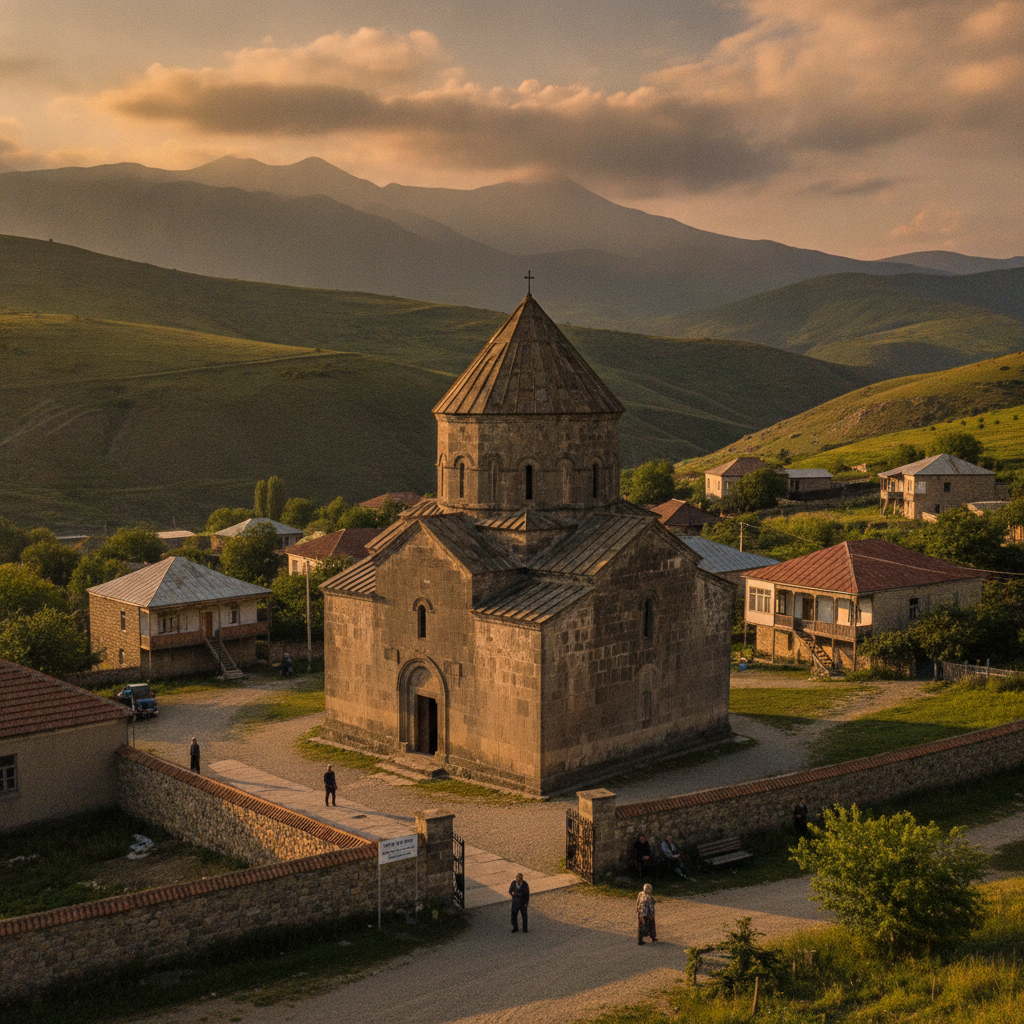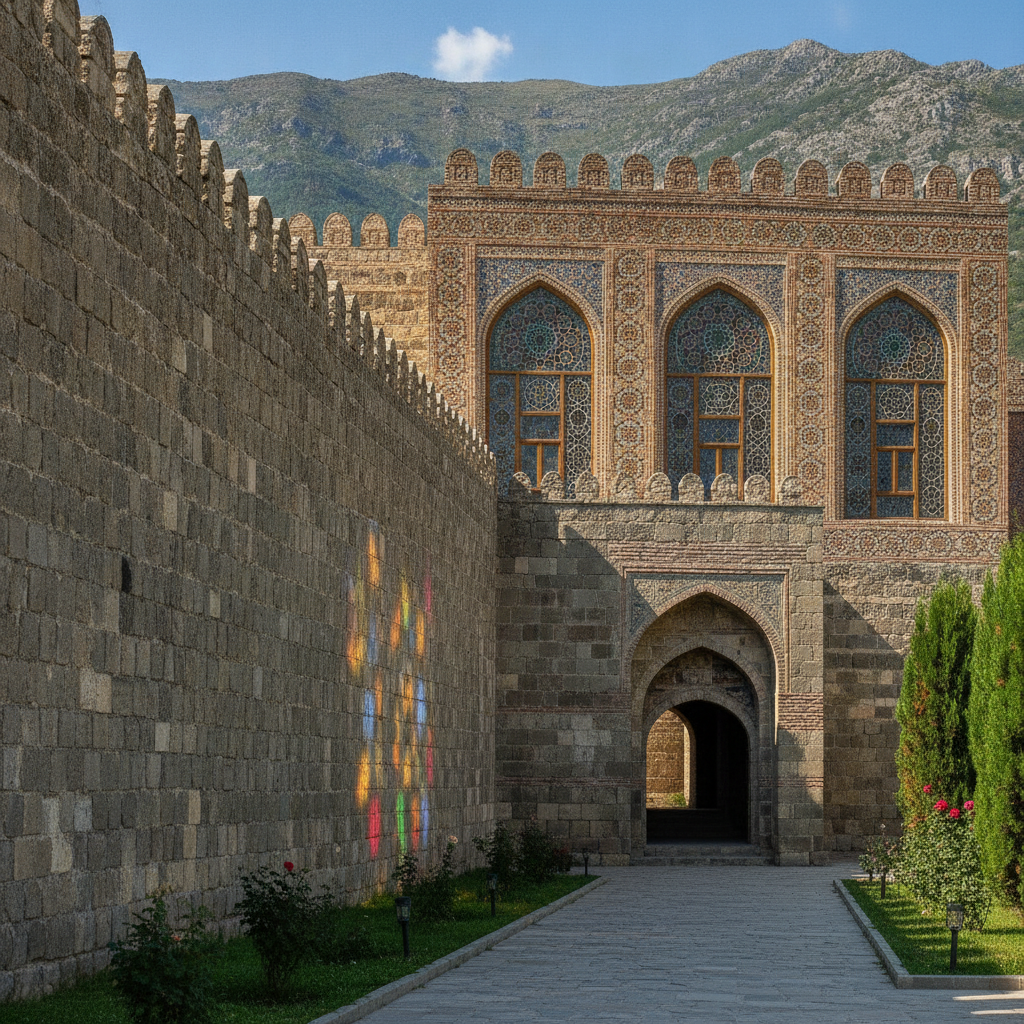
Sheki Khan's Palace Shebeke Stained Glass
Marvel at the Sheki Khan's Palace, a masterpiece of 18th-century Azerbaijani architecture whose walls and windows are covered with shebeke — intricate geometric stained glass assembled without glue or nails — and frescoes depicting hunting scenes and floral motifs.
- 1
Palace Outer Walls
Approach the Khan's Palace through the fortified walls of the Sheki citadel, the exterior already hinting at the extraordinary interior with its decorated facade of geometric brickwork patterns and the first glimpses of the colored glass windows that make this building unique.
- 2
Shebeke Window Panels
Stand before the shebeke window panels where thousands of pieces of colored glass are fitted into wooden frames using a geometric interlocking technique that requires no adhesive or nails, the craftwork assembling red, blue, green, and yellow glass into patterns of extraordinary complexity.
- 3
Hunting Scene Frescoes
Examine the interior frescoes depicting hunting scenes, battle episodes, and courtly life that cover the walls of the summer palace, the paintings combining Azerbaijani, Persian, and European artistic influences in a decorative program of the Sheki Khanate at its height of prosperity.
- 4
Floral and Geometric Ceiling
Look up at the elaborately painted wooden ceiling where interlocking geometric patterns in jewel-bright colors create a visual spectacle that combines the same mathematical aesthetic as the shebeke windows with the warmth of painted wood.
- 5
Palace Garden
Walk the formal garden surrounding the palace where the landscaping creates the setting the khans intended — a vision of paradise as defined in Persian garden tradition, with water channels, shade trees, and geometric planting beds complementing the architectural masterpiece.
- 6
Palace Museum Collection
View the museum collection within the palace complex displaying artifacts from the Sheki Khanate period — weapons, textiles, ceramics, and documents — telling the story of the semi-independent Azerbaijani principality that built this extraordinary palace in the 1760s.
Walk this route with audio
Stories play automatically as you reach each stop — no tapping needed.
More in sheki
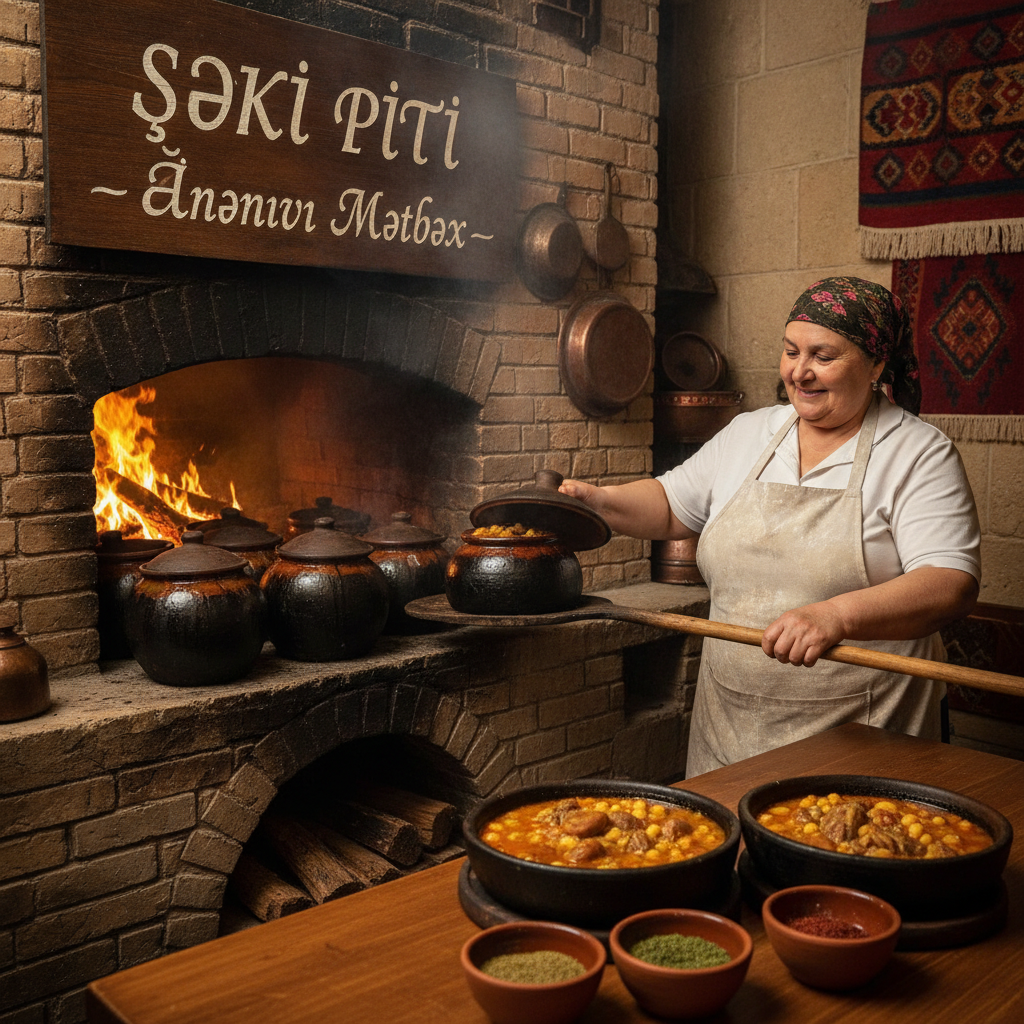
Sheki Cuisine Piti Slow-Cooked Traditional Cooking
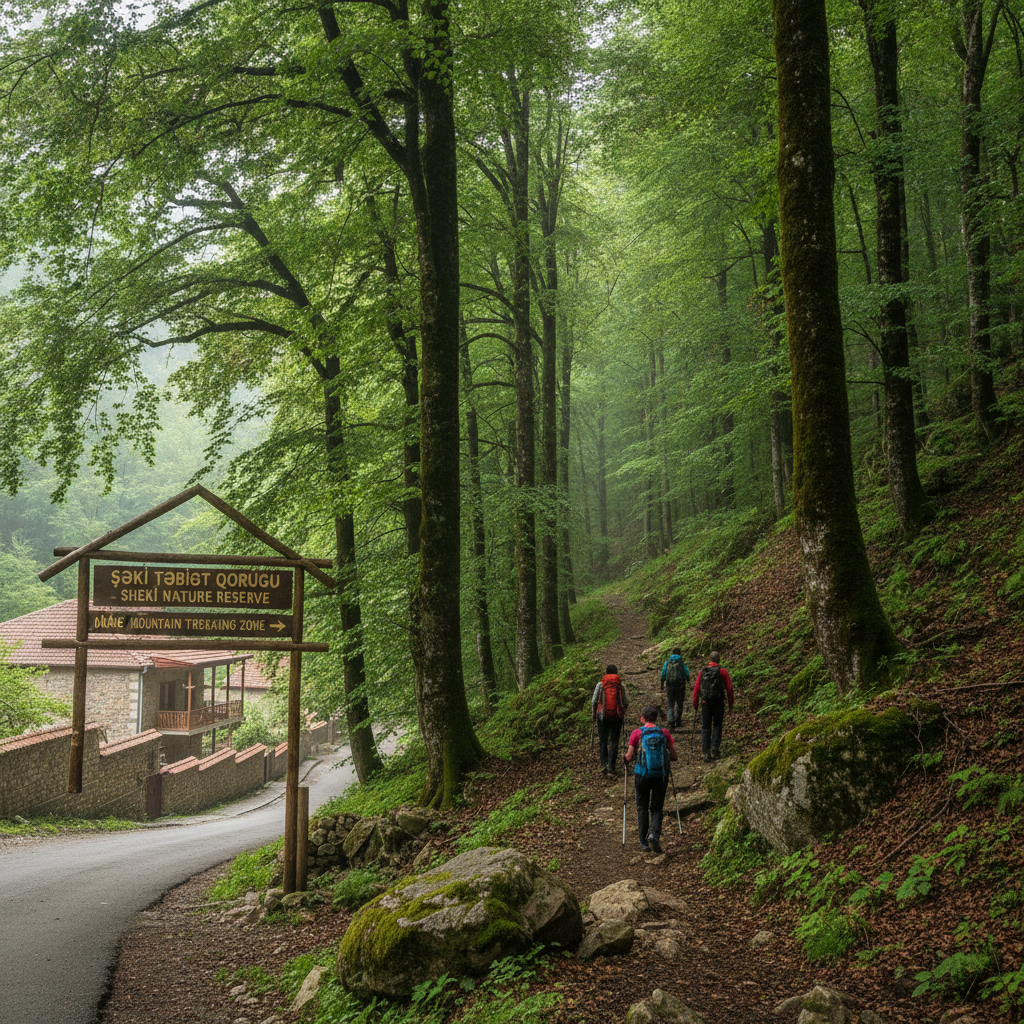
Sheki Nature Reserve Mountain Forest Trekking

Nukha Historical Neighborhoods Heritage Walk

Sheki Fortress Walls and Caucasus Mountain Views
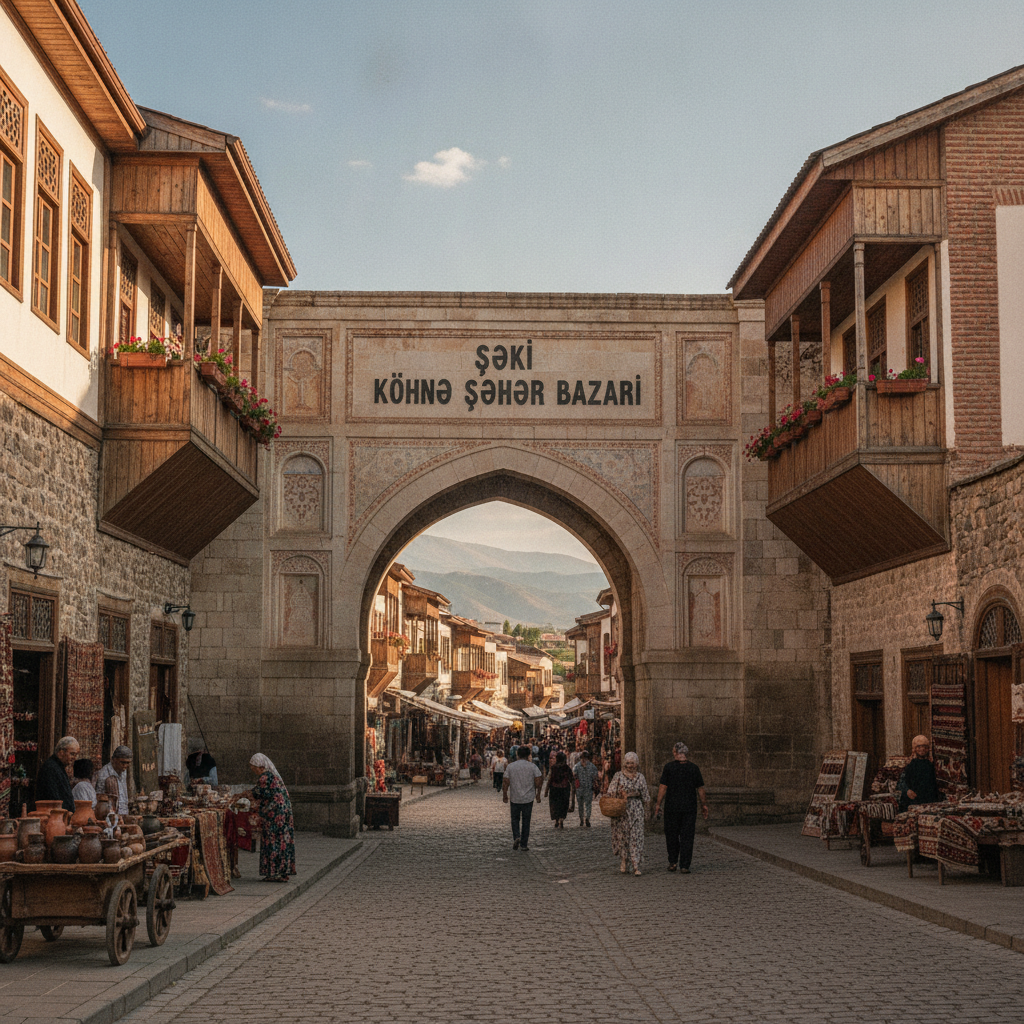
Sheki Old Town Bazaar and Traditional Crafts