Zhujiajiao & the Water Towns — Day Trips from Shanghai
The Jiangnan water towns (江南水乡 — the ancient canal towns of the Yangtze River delta (the area south of the Yangtze known as Jiangnan — 'south of the river') within day-trip distance of Shanghai — the most characteristic surviving examples of the traditional southern Chinese waterway civilization that developed in this region during the Tang, Song, Ming, and Qing dynasties): the water towns closest to and most easily accessible from Shanghai are Zhujiajiao (朱家角 — 48 km, 1 hour from central Shanghai) and Tongli (同里 — 80 km, in Jiangsu Province).
- 1
Zhujiajiao — Shanghai's Most Accessible Water Town
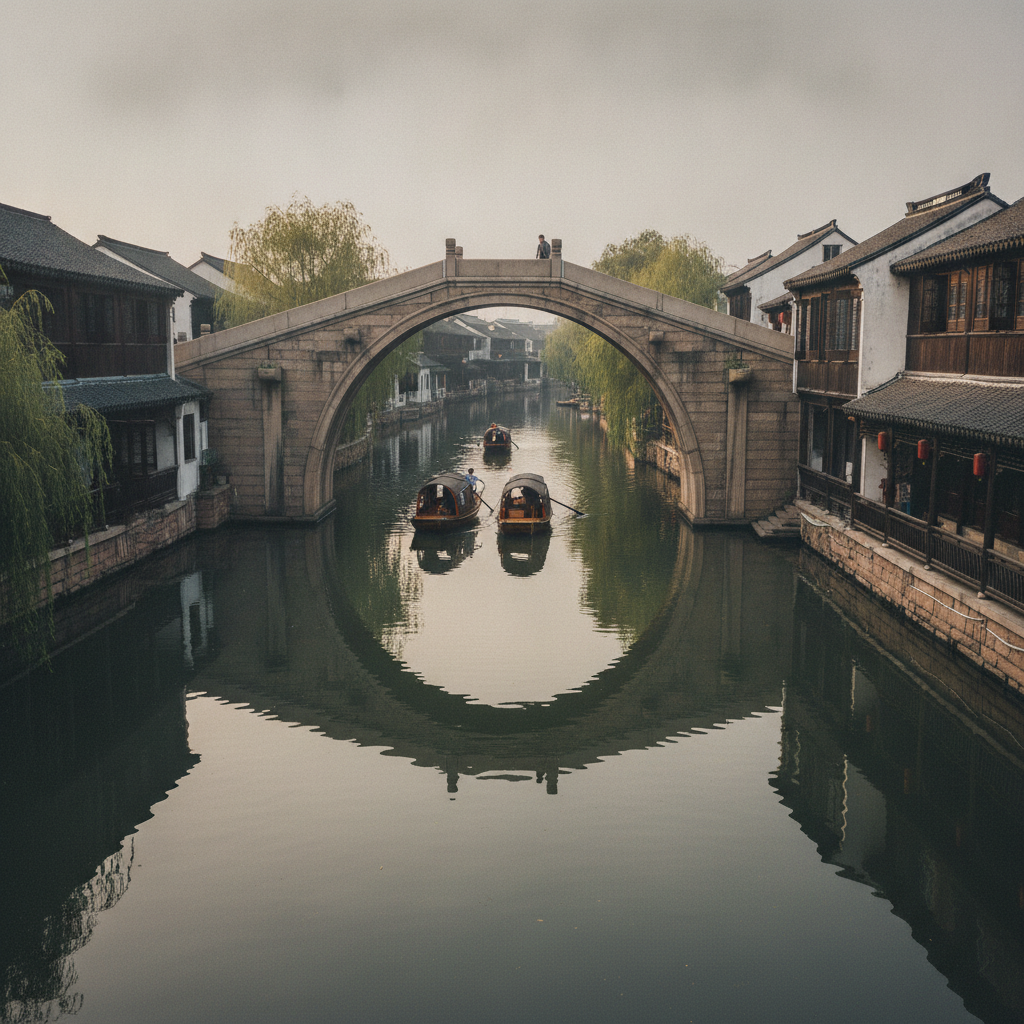
Zhujiajiao Ancient Water Town (朱家角古镇 — 'Pearls Village', in the Qingpu district of western Shanghai, 48 km from the city centre — the water town with the best combination of authentic Ming and Qing dynasty architecture, accessibility from Shanghai (approximately 1 hour by bus from People's Square), and managed tourist infrastructure): the town (established during the Song dynasty (960-1279 CE) as a market town on the canal network of western Shanghai, expanded during the Ming and Qing dynasties as a commercial centre for cotton trading) is built on a network of canals fed by the Dianshan Lake (淀山湖) to the west; the historic district (the old town area east of Caijing Road, covering approximately 1.5 km²) preserves approximately 0.5 km of Ming and Qing dynasty canal-front street (including the famous 'North Street' (北大街) — the best surviving example of a traditional Jiangnan canal-front commercial street in the Shanghai region, with unbroken frontages of wooden-screen shopfront buildings from the Qing dynasty), 36 stone bridges (the most famous being the Fangsheng Bridge (放生桥 — the five-arch Ming dynasty stone bridge built 1571, the largest stone arch bridge in the Shanghai region)), the City God Temple (城隍庙), and the Round Jin Ze Catholic Church (圆津禅院).
- 2
Tongli & the Classical Suzhou Water Town Experience
Tongli (同里 — the ancient water town in Wujiang County, Suzhou, Jiangsu Province, 80 km northwest of Shanghai — the water town generally considered the finest surviving example of the classical Jiangnan water town in the region accessible from Shanghai): Tongli (a town of approximately 1 km² enclosed within a network of rivers and canals, the 15 rivers creating an island town (a town built on 7 islands connected by 49 stone bridges) is famous for three gardens: the Tuisi Garden (退思园 — 'Retreat and Reflection Garden', built 1885-1887 by the disgraced Qing official Ren Lantang as a retirement retreat — the only garden in the Suzhou tradition built with the garden running from west to east in a horizontal layout rather than the conventional north-south orientation, a unique surviving example of the late Qing garden tradition — UNESCO World Heritage since 2000 as part of the 'Classical Gardens of Suzhou')), the Pearl Pagoda Garden (珍珠塔花园), and the Genggle Hall (庚乐堂); the town is also famous for the unique local tradition of 'Three Bridges' (走三桥 — Zǒu Sān Qiáo — the Qing dynasty custom of crossing the three bridges (Taiping Bridge (太平桥), Jili Bridge (吉利桥), and Changqing Bridge (长庆桥)) consecutively at weddings and important life events, said to bring peace, good luck, and long life).
- 3
Suzhou — The City of Gardens & Canals
Suzhou (苏州 — the city 100 km west of Shanghai in Jiangsu Province, accessible in 25-30 minutes by high-speed rail (G-train) from Shanghai Hongqiao Station — the city that Marco Polo called 'the Venice of the East', historically the most cultured and prosperous city in China for several centuries, famous for its classical private gardens (the finest collection of traditional Chinese gardens in the world) and its silk industry): the Classical Gardens of Suzhou (苏州古典园林 — UNESCO World Heritage since 1997, the four representative gardens: the Humble Administrator's Garden (拙政园 — Zhuōzhèng Yuán — the largest surviving Suzhou garden (5.2 hectares), built 1513 by the Ming official Wang Xianchen, the finest garden in China by general consensus), the Lingering Garden (留园 — Liú Yuán — the Qing dynasty garden famous for its 'Crown Rock' (冠云峰), the most celebrated Taihu limestone rock in China), the Master of the Nets Garden (网师园 — Wǎngshī Yuán — the smallest of the four UNESCO-listed gardens but considered the most perfectly proportioned (0.4 hectares)), and the Mountain Villa with Embracing Beauty (环秀山庄 — the garden famous for the greatest surviving example of the art of artificial rockery construction in China, the 7-metre artificial mountain created by the Qing master garden builder Ge Yuliang in 1806)) constitute the finest concentration of traditional garden art in the world.
- 4
Hangzhou & the West Lake — A One-Day Journey
Hangzhou (杭州 — the capital of Zhejiang Province, 180 km south-southwest of Shanghai, accessible in 1 hour by high-speed rail (G-train) from Shanghai Hongqiao Station — the city that Marco Polo called 'the finest and most splendid city in the world', the capital of the Southern Song dynasty (1127-1279 CE) and for 150 years the most populous city in the world (population estimated at 1.5 million in 1270 CE)): West Lake (西湖 — the freshwater lake on the western edge of the city of Hangzhou, approximately 6.5 km² (2.5 km × 3.2 km), encircled by wooded hills — UNESCO World Heritage since 2011 for its 'exceptional cultural landscape' — the most celebrated lake in China and one of the most celebrated in the world): the ten classic 'West Lake Views' (西湖十景 — the ten scenes of the West Lake identified in the Southern Song dynasty and commemorated in the ten stone tablets (each inscribed with the name of the view in the calligraphy of the Qianlong Emperor) placed around the lake) include 'Spring Dawn at Su Causeway' (苏堤春晓 — the willow-lined causeway built by the Song dynasty poet-official Su Dongpo in 1089), 'Curved Yard and Lotus Pool in Summer' (曲院风荷), and 'Autumn Moon on Calm Lake' (平湖秋月).
- 5
The Yangtze River Delta — Shanghai's Geographic Context
The Yangtze River Delta (长三角 — Cháng Sānjiǎo — the economic region centred on Shanghai encompassing the provinces of Jiangsu and Zhejiang and the city of Anhui): the Yangtze River Delta is the most economically productive region in China (GDP of approximately US$3 trillion as of 2024, larger than the GDP of the United Kingdom and equivalent to approximately 20% of China's total GDP), the most densely populated, and the most culturally and historically significant in terms of the traditional literati (文人 — wénrén) culture that defined Chinese civilization from the Song dynasty through the Qing; the geographic context (the flat, intensely cultivated, water-laced alluvial plain of the Yangtze Delta (the flattest large metropolitan region in the world, with a maximum elevation within the urban areas of approximately 4 metres above sea level), the network of rivers and canals (the Grand Canal (大运河 — the 1,776 km north-south artificial waterway linking Beijing to Hangzhou, the longest canal in the world, first completed in the Sui dynasty (589-618 CE) and still in use for freight today) running through Suzhou and passing near Shanghai, connecting the city to the historic water transport network of eastern China)) explains the historical importance of the region as the commercial and cultural heart of China.
- 6
Shanghai's Nightlife — Rooftop Bars, Jazz Clubs & the Night Economy
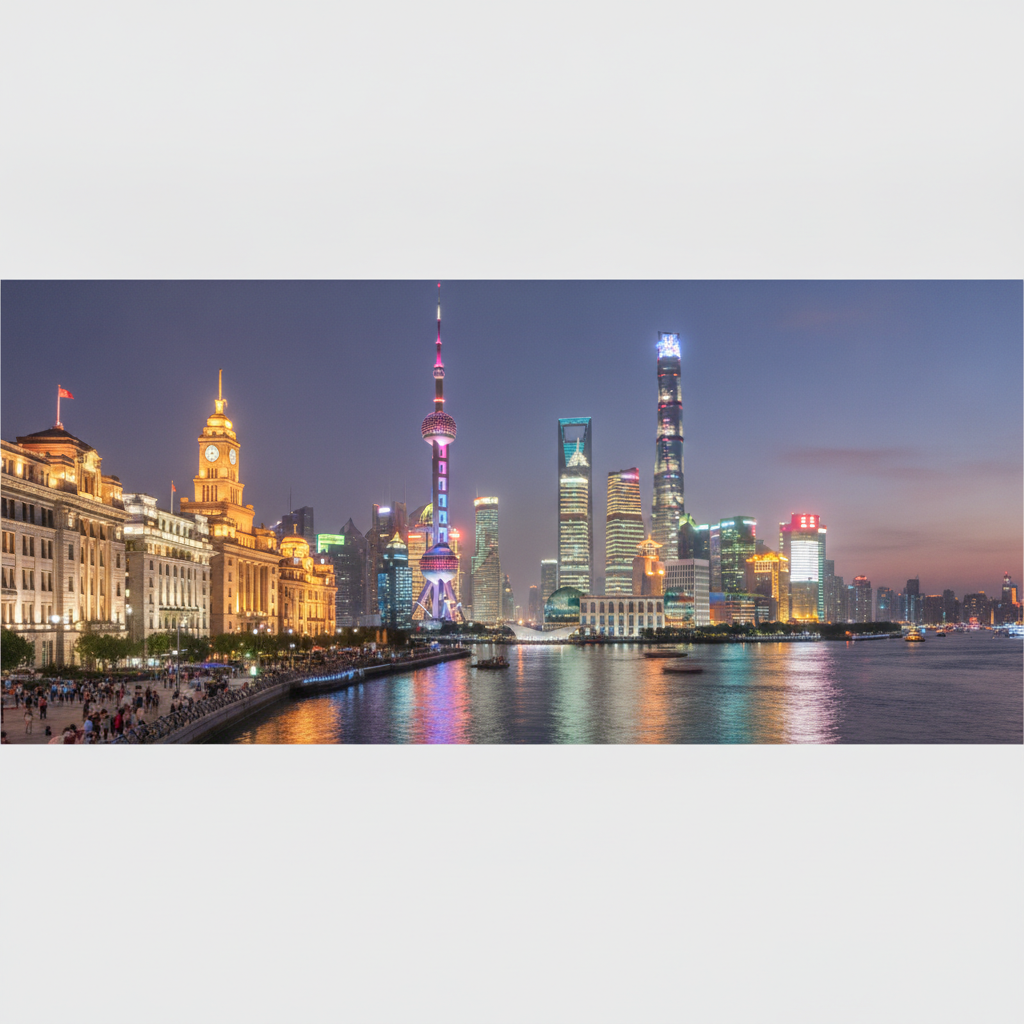
Shanghai's nightlife (the most developed urban entertainment economy in China, centred on three main areas: the Bund and Huaihai Road for upscale cocktail bars and rooftop venues, the Yongkang Road and Wulumuqi Road area in the French Concession for neighbourhood bars, and the Julu Road and Xintiandi area for clubs): the defining Shanghai nightlife experience is the cocktail bar with views of the Pudong skyline: Bar Rouge (on the 18th floor of Bund 18, the 1923 Chartered Bank Building on the Bund, open rooftop and indoor bar space with the most dramatic views of the Pudong skyline from the Bund), CHAR Bar (on the 33rd floor of the Hotel Indigo on the Bund), and The Vue Bar (the highest rooftop bar above the Bund, on the 32nd floor of the Hyatt on the Bund) are the most famous; the Peace Hotel Jazz Bar (the famous 'Old Jazz Band' (老年爵士乐队) playing 1930s American standards nightly in the ornate ground-floor bar of the historic Sassoon House (now the Peace Hotel) — the most famous bar in Shanghai, the essential historical entertainment experience); the Yongkang Road (永康路 — the 300-metre pedestrian street in the French Concession, lined with small bars, wine bars, and cafes opening onto the street — the most convivial outdoor drinking street in Shanghai) neighbourhood bar scene.
Walk this route with audio
Stories play automatically as you reach each stop — no tapping needed.
More in shanghai
Shanghai Disneyland, Century Park & the New Eastern Shanghai
Yu Garden, Old Town & City God Temple — Ming Shanghai
West Bund, M50 & Shanghai's World-Class Art Scene
Shanghai Cuisine — Hairy Crab, Red-Cooked Pork & the Art of Xiaolongbao
French Concession, Tianzifang & Xintiandi — Old Shanghai's Soul