French Concession, Tianzifang & Xintiandi — Old Shanghai's Soul
The French Concession (法租界 — Fǎ Zūjiè — the former French colonial district of Shanghai, covering approximately 10 square kilometres of the western part of the central city (Xuhui and Luwan districts)) is the most atmospheric and architecturally rich neighbourhood in Shanghai, famous for its Art Deco mansions, tree-lined avenues, shikumen lane houses, and the converted creative districts of Tianzifang and Xintiandi.
- 1
The French Concession — Shanghai's Most Beautiful Neighbourhood
French Concession (法租界 — established 1849, the French colonial district that operated under French administration until 1943 — the most affluent and architecturally distinctive of Shanghai's foreign concession areas): the French Concession (the area characterized by the French-inspired urban planning of broad, tree-lined avenues (梧桐树大道 — the platanus (Oriental plane tree, called 'wútóng shù' in Chinese) avenues that shade the main streets of the French Concession — Huaihai Road, Fuxing Road, Yongkang Road, Ferguson Lane) and the elaborate European-style villas, Art Deco apartment buildings, and shikumen lane house complexes built for the Chinese and Western elite during the 1920s-1940s) was the home of much of Shanghai's pre-1949 political, commercial, and cultural elite; it is now Shanghai's most desirable residential and dining neighbourhood, with the highest concentration of restaurants, cafes, boutiques, and bars per square kilometre in China; the principal avenues (Huaihai Road Middle (淮海中路 — the main commercial spine of the French Concession, lined with international flagship stores and the city's finest street-level retail), Fuxing Road Middle (复兴中路 — the more residential, tree-lined avenue famous for its surviving Art Deco and French Colonial mansions, now often converted to restaurants and boutique hotels), and Wukang Road (武康路 — the most photographed street in Shanghai, known for the Wukang Mansion (武康大楼 — the 1924 Normandie Apartments, the Art Deco curved-facade apartment building at the junction of Wukang Road and Huaihai Road — the most iconic building in the French Concession)) are the main streets of the district.
- 2
Tianzifang — The Shikumen Creative Quarter
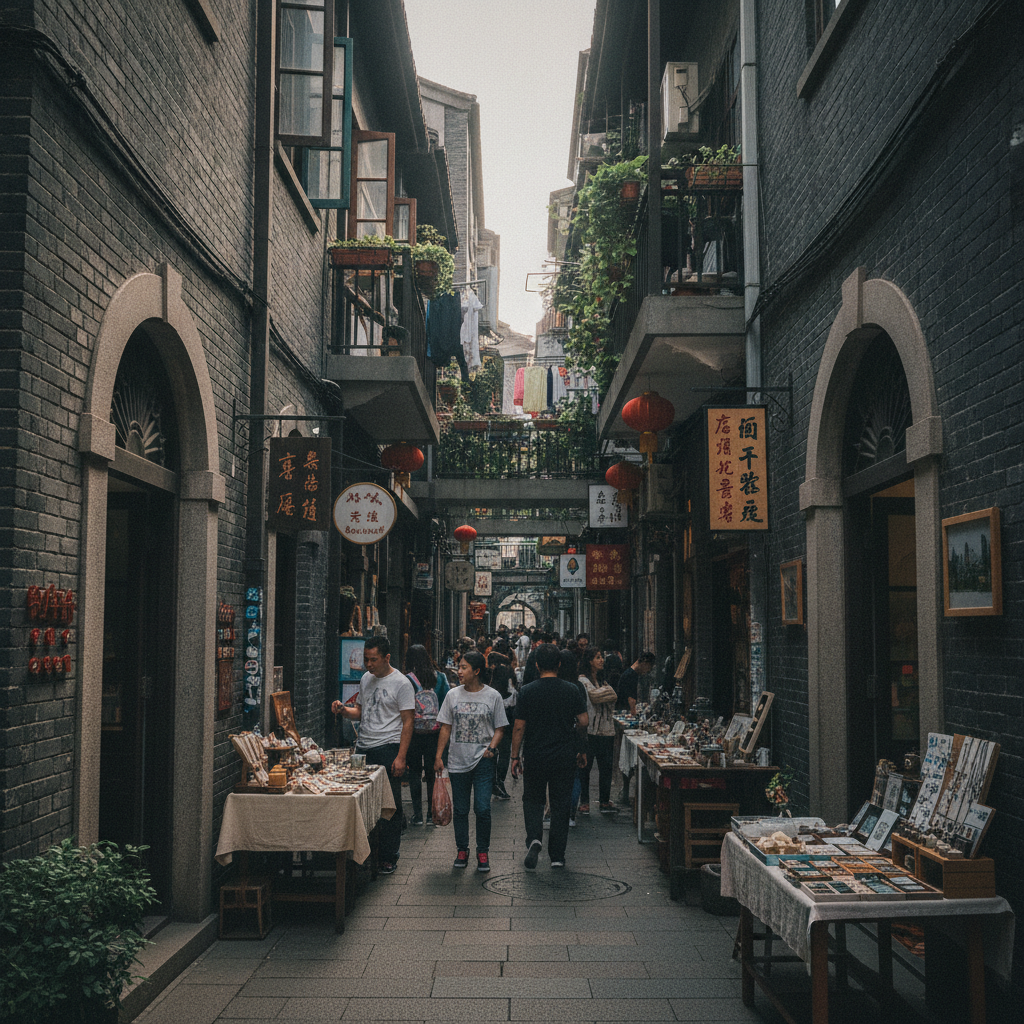
Tianzifang (田子坊 — the creative arts district in the former French Concession, in the lilong (里弄 — lane house) neighbourhood between Taikang Road (泰康路) and Jianguo Road (建国路) in the Luwan/Huangpu district — the most beloved neighbourhood in Shanghai): Tianzifang is built within a 1930s shikumen (石库门 — 'stone warehouse gate' — the hybrid Western-Chinese residential architecture type unique to Shanghai, characterized by the stone gate frame (石库门 — a stone arch with a decorated stone lintel above the wooden entrance door) set into a grey brick exterior wall, opening onto an interior lilong alleyway, the standard working-class and lower-middle-class residential form in Shanghai from the 1870s through the 1940s, of which approximately 1,000 lilong blocks survive in Shanghai — the surviving shikumen are a UNESCO-recognized endangered architectural heritage) lilong (lane house complex), where the original alleyways and buildings have been retained while the ground floors have been converted into boutique shops, art galleries, ceramics studios, photography studios, cafes, and restaurants; the three-dimensional maze of the Tianzifang alleys (the multiple levels, the narrow passages, the roof terraces, the balconies covered with plants and laundry above the shop fronts) is the most atmospheric and human-scale urban environment in Shanghai.
- 3
Xintiandi — The Restored Shikumen District
Xintiandi (新天地 — 'New Heaven and Earth' — the upscale entertainment and dining district in the former French Concession, in the Luwan district between Taicang Road (太仓路), Madang Road (马当路), Zizhong Road (自忠路), and Huangpi South Road (黄陂南路) — the pioneering urban heritage redevelopment project in China (the first major project in China to demonstrate that historic urban fabric could be commercially valuable rather than simply an obstacle to modern development)): Xintiandi (the 2001 development by the Hong Kong property company Shui On Land (瑞安集团), designed by the American architect Benjamin Wood) preserved the external stone and brick walls of the original 1920s shikumen lane house blocks while completely rebuilding the interiors as upscale restaurants, boutiques, entertainment venues, and a hotel; the North Block (北里 — the more retail and restaurant-focused block, with the largest concentration of international restaurant brands in Shanghai) and South Block (南里 — the more residential and cultural block, including the Shikumen Open House Museum (石库门屋里厢博物馆 — the only surviving complete interior of a 1920s Shanghai shikumen house, preserved as a museum showing the original layout and furnishings of the hybrid East-West domestic interior)) together form the most commercially successful heritage development in Chinese urban history.
- 4
Jing'an Temple & Nanjing Road West
Jing'an Temple (静安寺 — Jìng'ān Sì — the Buddhist temple in the Jing'an district of central Shanghai, on Nanjing Road West (南京西路) — the most historically significant Buddhist temple in Shanghai, originally built during the Three Kingdoms period (247 CE), rebuilt multiple times, and extensively restored in the 1990s-2000s in its current golden-roofed form): the temple (the only major Buddhist temple in central Shanghai that has continued active religious practice through the various political upheavals of the 20th century) is surrounded by the luxury retail and office district of Jing'an, with the Plaza 66 (恒隆广场 — the 2001 twin-tower luxury retail mall on Nanjing Road West, the most prestigious luxury shopping address in Shanghai, with the highest concentration of luxury brand flagship stores per square metre in China), the Jing'an Kerry Centre (静安嘉里中心), and the Shanghai Exhibition Centre (上海展览中心 — the 1955 Soviet-style 'Stalin Gothic' exhibition hall, one of the most architecturally distinctive buildings in Shanghai, built during the Sino-Soviet friendship period of the early 1950s with the characteristic golden spire and Soviet-era heroic sculpture programme) on adjacent plots; Nanjing Road West (the western section of Nanjing Road, running from People's Square to Jing'an Temple and beyond) is the most upscale retail corridor in Shanghai.
- 5
Former Jewish Ghetto & Hongkou District
Hongkou District (虹口区 — the former Hongkew Concession and International Settlement area in the northern part of central Shanghai, across Suzhou Creek from the main Bund): Hongkou is distinguished by the Tilanqiao Historic Area (提篮桥历史风貌区 — the only surviving example of the Jewish refugee settlement that housed approximately 18,000-20,000 European Jewish refugees who fled Nazi persecution to Shanghai between 1933-1941 (Shanghai was one of the very few places in the world that accepted Jewish refugees without requiring a visa during this period) — one of the most significant historical areas in Shanghai for 20th century history); the Ohel Moishe Synagogue (摩西会堂 — the 1927 Russian Jewish (Ashkenazi) synagogue in Huoshan Road (霍山路), now the Jewish Refugees Museum (犹太难民纪念馆 — the museum documenting the history of the Jewish refugees in Shanghai 1933-1949, including the 1943-1945 period when all 'stateless refugees' (Jews without citizenship documents) were required by the Japanese occupiers of Shanghai to live within the designated 'Restricted Sector for Stateless Refugees' (无国籍难民限定居住区) in Hongkou)) is the centrepiece of the Jewish heritage district.
- 6
Yu Garden & the Old Town — Ming Dynasty Shanghai
Yu Garden (豫园 — Yùyuán — 'Garden of Leisurely Peace', in the Huangpu district in the centre of old Shanghai — the finest surviving Ming dynasty private garden in eastern China): the garden (built 1559-1577 by the Ming dynasty official Pan Yunduan for his father Pan En to provide a tranquil retreat in old age) covers 2 hectares within the walls of the old walled city of Shanghai (the original oval city wall of Shanghai (南市 — Nánshì — the 'South City') was built in 1553 to defend against Japanese pirate raids and demolished in 1912, leaving the Old Town as the surviving historic urban core); the garden features the characteristic elements of the Suzhou/Jiangnan garden tradition (rockeries (假山 — the Grand Rockery (大假山) — a 14-metre artificial hill of yellow rockery stone, the largest Ming dynasty rockery in eastern China), ornamental ponds, corridor-galleries, and pavilions (the Hall of Heralding Spring (点春堂), the Jade Magnificence Hall (玉华堂))) arranged to create the illusion of a landscape journey; the surrounding Yu Garden Bazaar (城隍庙商业区 — the adjacent commercial area with traditional-style buildings selling crafts, snacks, and souvenirs) and the City God Temple (城隍庙 — the Taoist city deity temple at the centre of the old town, rebuilt in 1926) are essential context.
Walk this route with audio
Stories play automatically as you reach each stop — no tapping needed.
More in shanghai
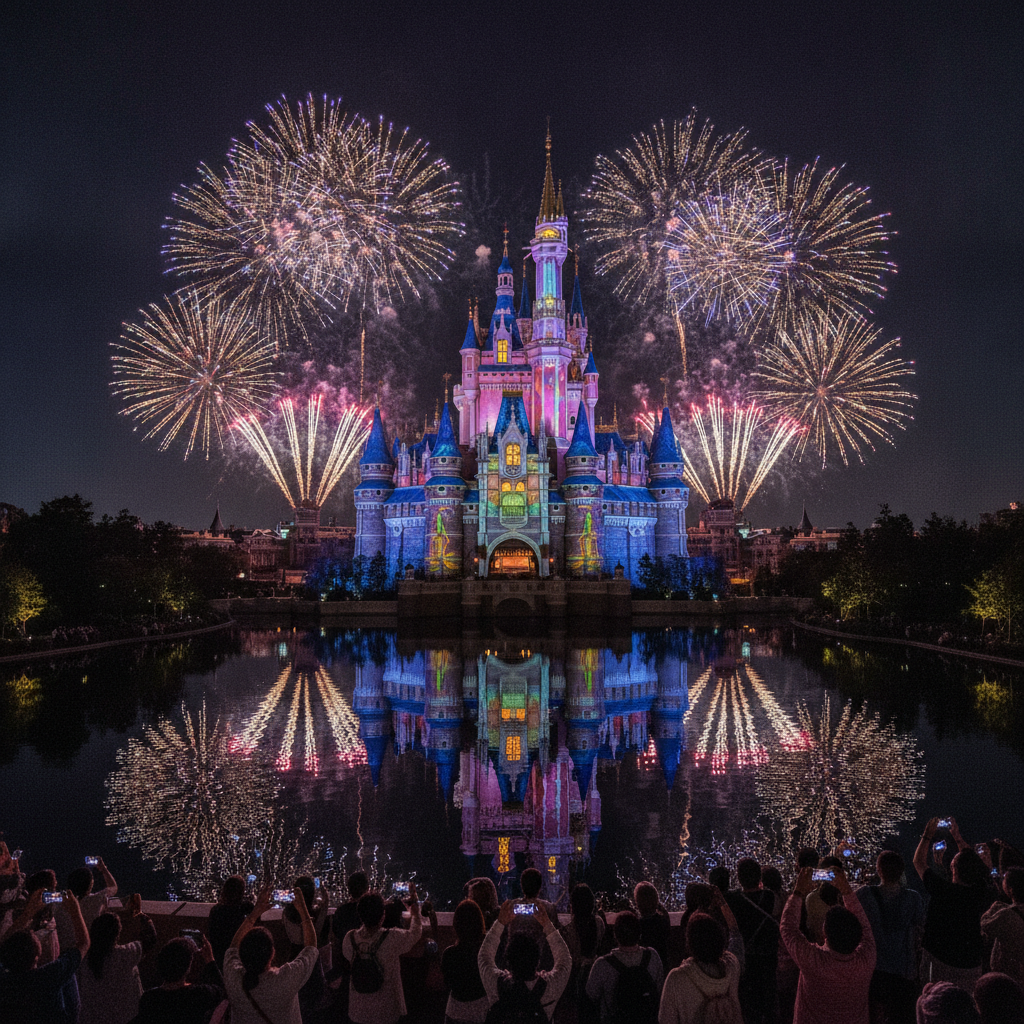
Shanghai Disneyland, Century Park & the New Eastern Shanghai
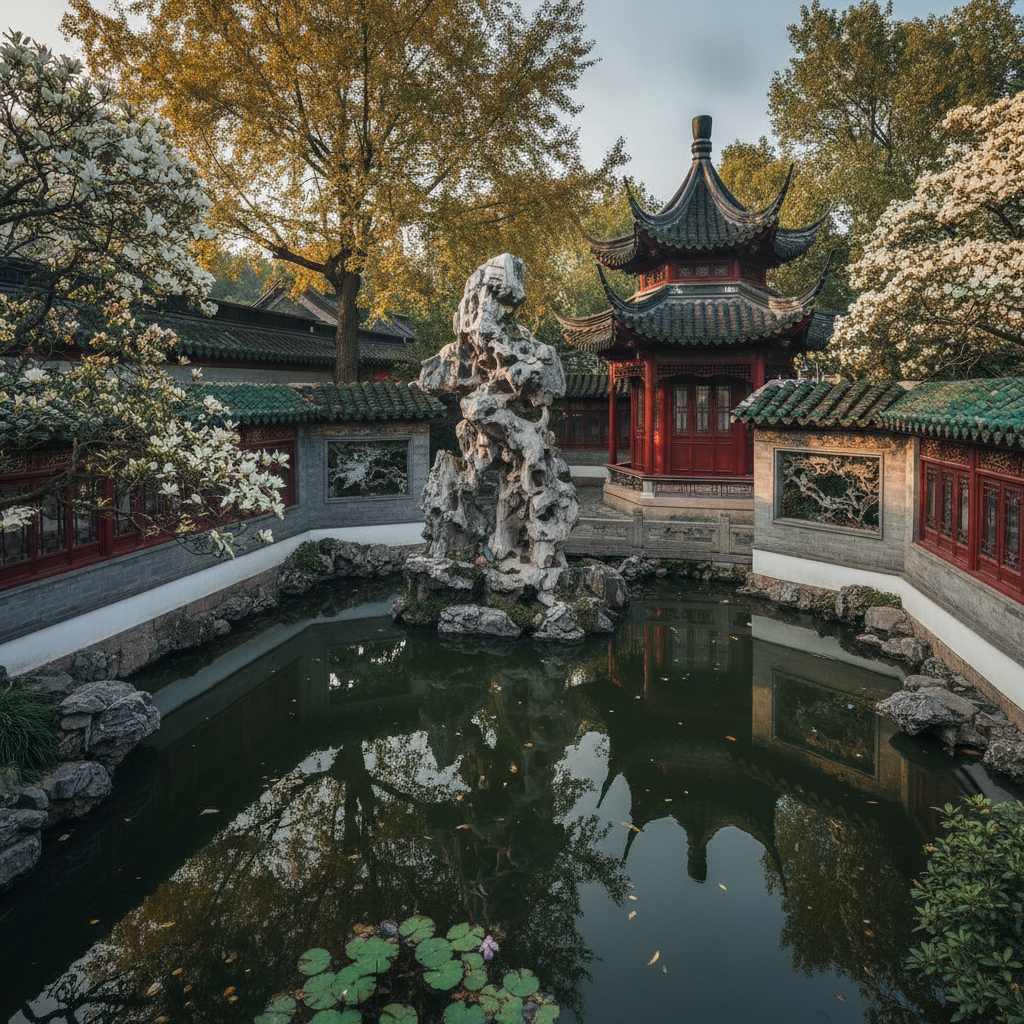
Yu Garden, Old Town & City God Temple — Ming Shanghai
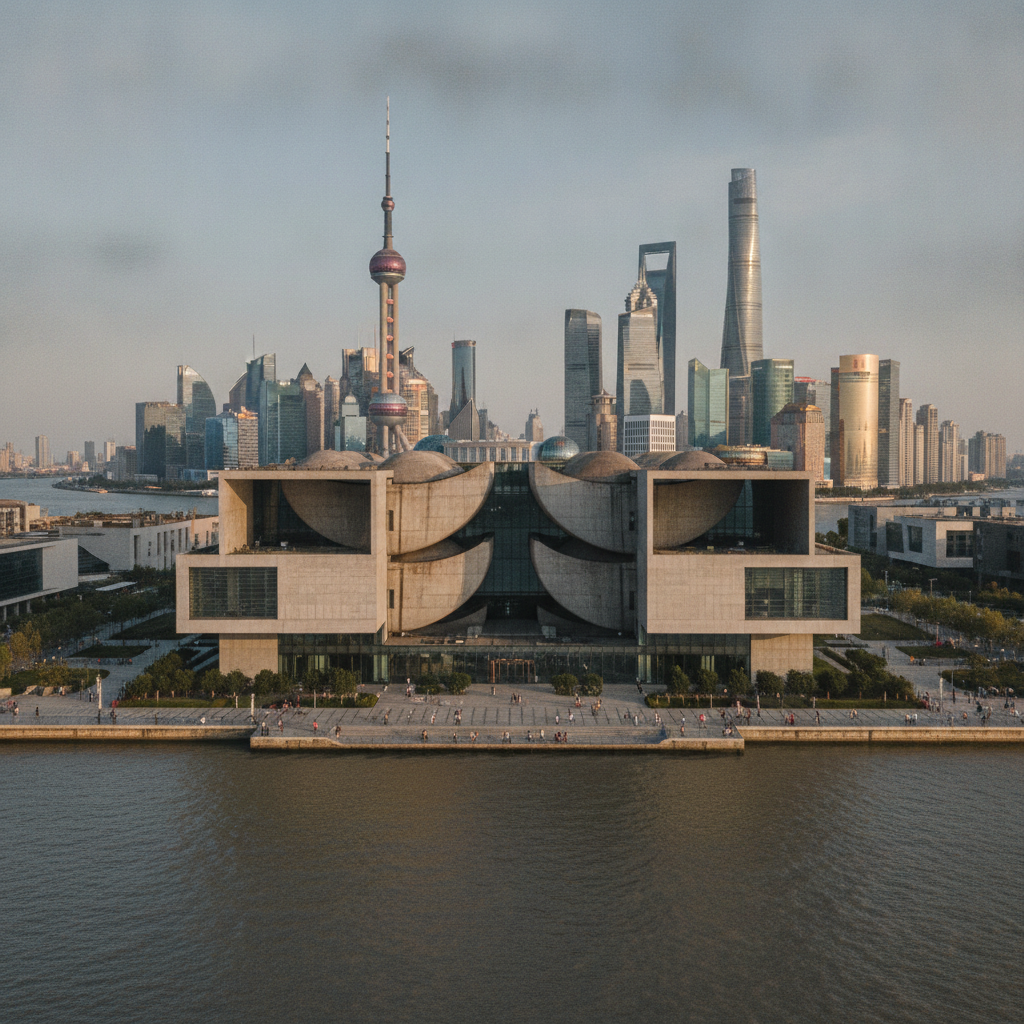
West Bund, M50 & Shanghai's World-Class Art Scene
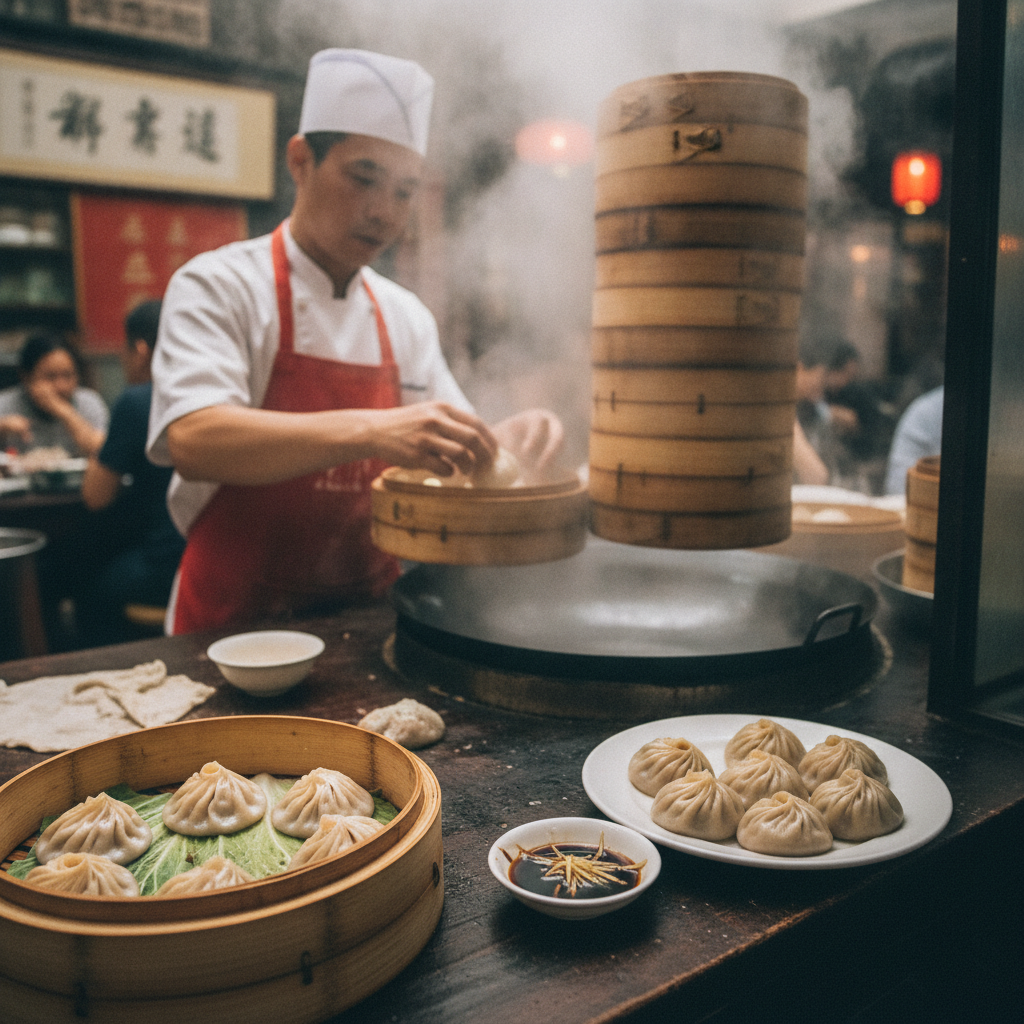
Shanghai Cuisine — Hairy Crab, Red-Cooked Pork & the Art of Xiaolongbao
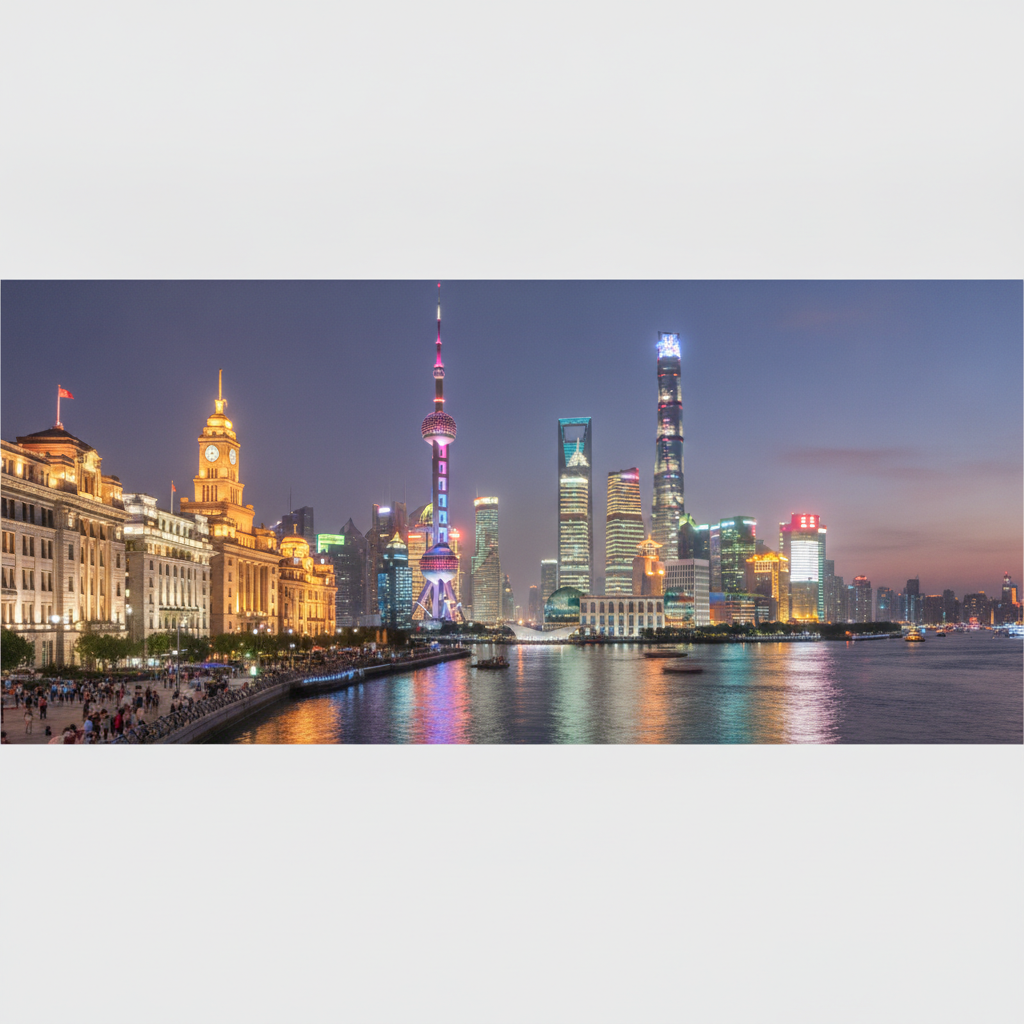
The Bund, Pudong & the Shanghai Skyline — East Meets West