Feria de Abril, Semana Santa & Seville's Great Festivals
The Feria de Abril (the 'April Fair' — the week-long spring festival held two weeks after Easter in the Los Remedios neighbourhood of Seville) and the Semana Santa (the 'Holy Week' — the Easter week processions of the Seville cofradías (the religious brotherhoods), the most elaborate and the most emotionally powerful religious spectacle in Spain) are the two supreme expressions of Seville's unique festive identity and the most celebrated annual events in Andalusia.
- 1
Semana Santa — Seville's Holy Week Processions
The Semana Santa de Sevilla (the 'Holy Week of Seville' — the Easter week (the week from Palm Sunday to Easter Sunday) in Seville, the most elaborate and the most celebrated Semana Santa in Spain and the most emotionally powerful religious spectacle in the world): the cofradías (the 'cofradías' (the religious brotherhoods) of Seville — the 58 cofradías that participate in the Seville Semana Santa, each cofradía processing through the streets of Seville on its designated day during Holy Week with its 'pasos' (the processional floats) and its penitent members ('nazarenos')): the pasos (the 'pasos' — the processional floats of the Seville Semana Santa, each cofradía processing with two pasos: the 'paso de misterio' (the first float — the carved wooden scene from the Passion of Christ, the group of life-size polychrome wooden figures depicting a scene from the betrayal, the trial, the flagellation, or the crucifixion of Christ) and the 'paso de palio' (the second float — the canopied float bearing the image of the Virgin Mary, the 'Dolorosa' (the 'Sorrowful Virgin'), the most beloved figure in the Seville Semana Santa — the Virgin elaborately dressed in the silk and velvet 'manto' (the embroidered mantle), the gold and silver embroidered 'saya' (the robe), and the 'corona' (the gold crown set with the precious stones)): the nazarenos (the penitent members of the cofradía — the 'nazarenos' processing through the streets of Seville in the traditional penitential costume: the 'túnica' (the long robe in the colour of the cofradía), the 'capirote' (the tall pointed hood), and carrying the 'cirios' (the wax candles) or the 'varas de insignia' (the silver processional staffs): the most affecting cofradías (the cofradías with the most celebrated pasos and the most devoted popular following — the 'La Macarena' (the cofradía of the Basílica de la Macarena, famous for the 'Virgen de la Esperanza Macarena' — the 17th-century polychrome wooden statue of the Virgin Mary that is the most beloved religious image in Seville, the image that Seville bullfighters dedicate their corrida to before the fight), the 'El Gran Poder' (the cofradía famous for the 'Señor de Gran Poder' — the 17th-century image of Christ carrying the cross), and the 'La Trianera' (the cofradía of Triana, the most beloved cofradía on the west bank of the Guadalquivir)).
- 2
Feria de Abril — The Week of the Casetas
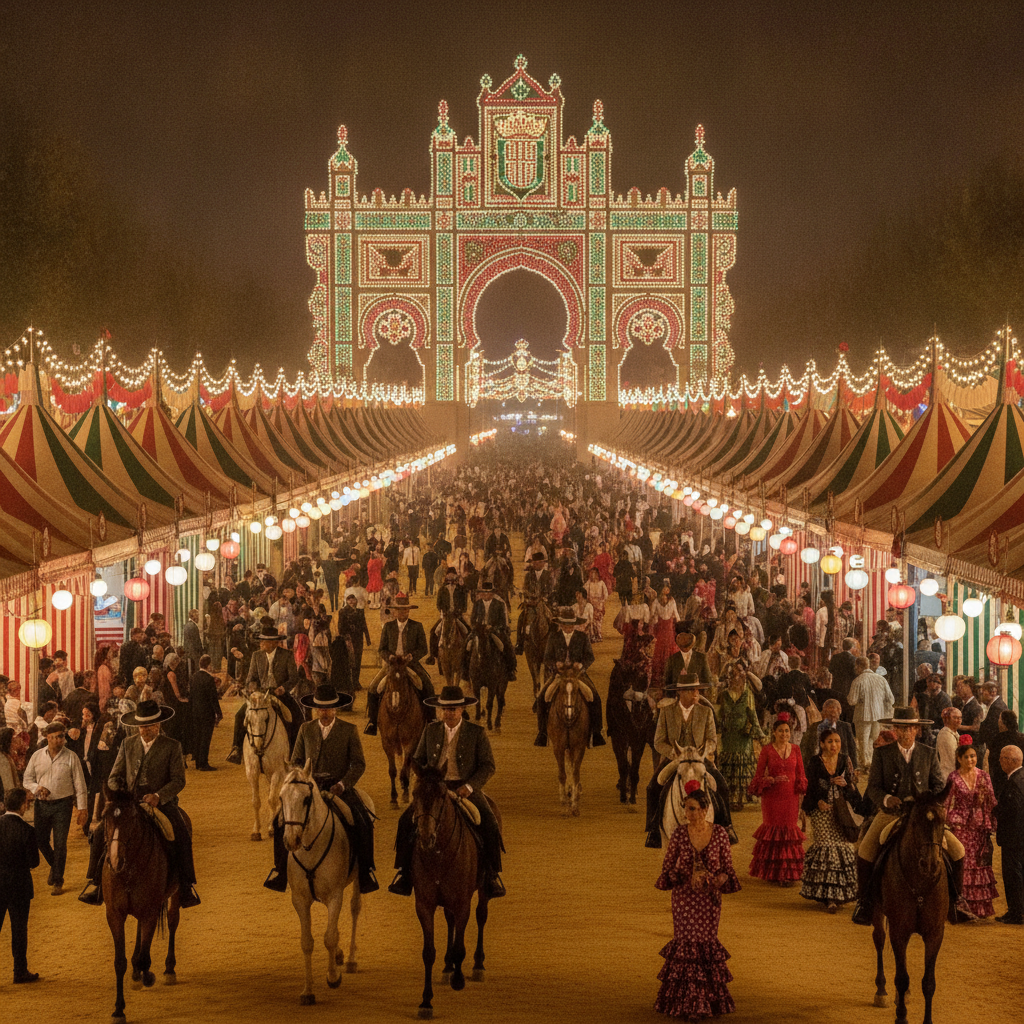
The Feria de Abril de Sevilla (the 'April Fair of Seville' — the annual spring fair held two weeks after Easter in the 'Real de la Feria' (the fairground in the Los Remedios neighbourhood of Seville, on the west bank of the Guadalquivir)): the history (the Feria de Abril — founded in 1847 as a livestock fair by the Basque entrepreneurs José María de Ybarra and Narciso Bonaplata (the first Feria de Abril was held on April 18-20, 1847, with 19 casetas and 25,000 visitors) and transformed over the next 150 years into the most spectacular urban festival in Spain): the casetas (the 'casetas' — the private marquee tents that are the centrepiece of the Feria de Abril, the tents erected on the fairground by the Seville families, social clubs, political parties, trade unions, and professional associations for the duration of the Feria week: the casetas range from the modest (a single tent with the wooden floor, the folding tables and chairs, and the bar) to the elaborate (the multi-room tents of the grandest Seville families, with the terracotta-tiled floor, the carved wooden furniture, the oil paintings on the walls, and the private kitchen), with the most celebrated casetas being those of the great Seville aristocratic families and the Real Maestranza de Caballería): the sevillanas (the 'sevillanas' — the Seville folk dance, the four-part couples dance that is the essential social dance of the Feria, the dance that is performed in every caseta throughout the day and night of the Feria week, the dance that every Sevillano child learns from earliest childhood): the alumbrado (the 'alumbrado' — the 'lighting up', the moment on the Monday evening of the Feria week when the mayor of Seville turns on the 1 million electric light bulbs that illuminate the fairground — the ceremony that officially opens the Feria de Abril each year).
- 3
Corpus Christi & Seville's Religious Calendar
The Corpus Christi of Seville (the festival of the Body of Christ — the moveable feast observed 60 days after Easter, celebrated in Seville with the most elaborate Corpus Christi procession in Spain): the Corpus Christi procession in Seville (the procession through the streets of the Seville historic centre on the morning of Corpus Christi — the procession led by the 'seises' (the choirboys of the Seville Cathedral, the 10 boys who perform the ancient 'danza de los seises' (the 'dance of the six' — the liturgical dance performed by the choirboys before the altar of the Seville Cathedral and in the Corpus Christi procession, one of the oldest continuing liturgical dances in the Catholic Church)) and followed by the 'Custodia Procesional' (the great silver monstrance of the Seville Cathedral — the 475 kg silver monstrance by Juan de Arfe (1587), the largest processional monstrance in the world, carried on the 'carroza' (the ceremonial carriage) through the streets of Seville): the other festivals of the Seville religious calendar (the cycle of Seville religious and civic festivals — the 'Inmaculada' (December 8 — the Feast of the Immaculate Conception, the most important Marian feast in Seville, celebrated with the 'danza de los seises' in the Seville Cathedral), the 'Velá de la Triana' (July — the neighbourhood festival of Triana, held on the bank of the Guadalquivir on the feast of Saints Anne and Joachim), and the 'Virgen de los Reyes' (August 15 — the feast day of the patronal image of the Seville Cathedral, the 'Virgen de los Reyes' (the Virgin of the Kings — the 13th-century image of the Virgin Mary given to King Ferdinand III of Castile (the 'San Fernando' — the conqueror of Seville in 1248)).
- 4
Plaza de España — Seville's Ibero-American Grandeur
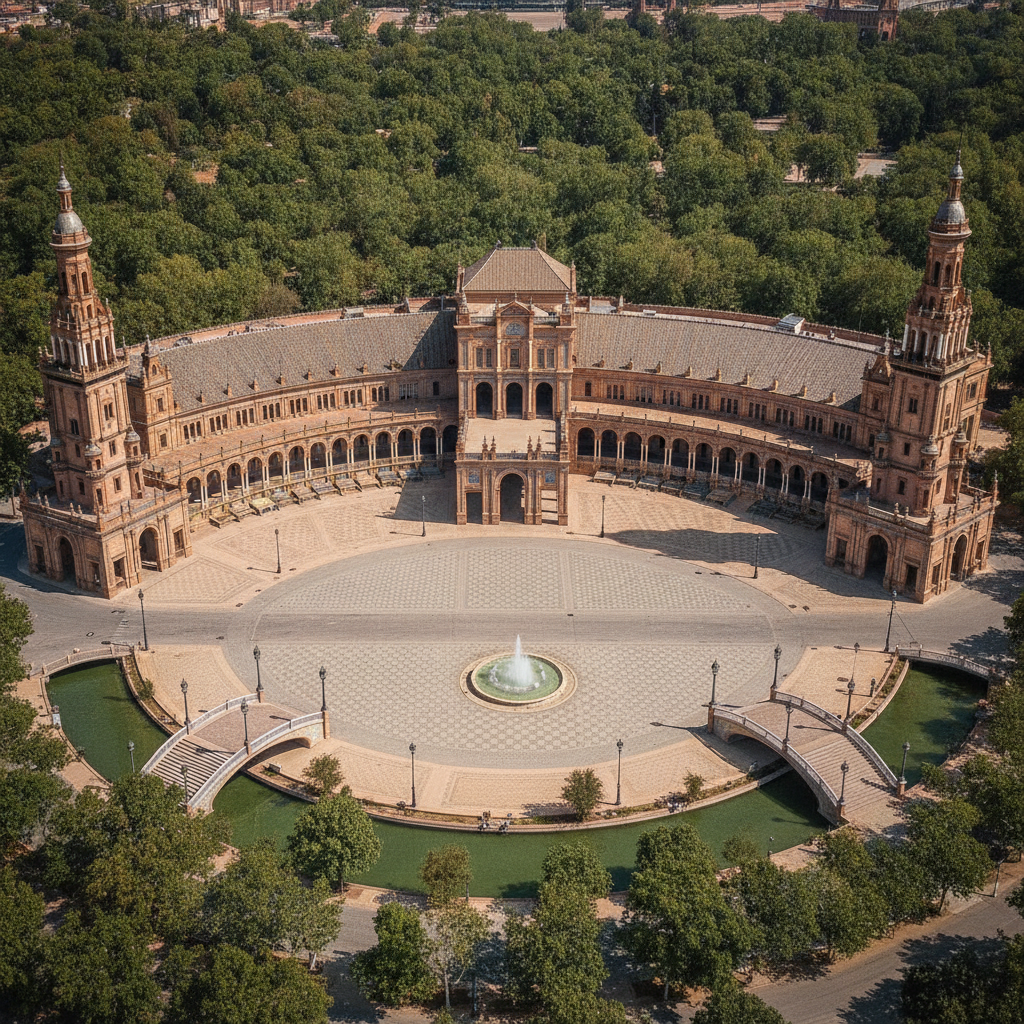
The Plaza de España (the 'Spain Square' — the semicircular monumental square in the María Luisa Park in the south of Seville, built 1914-1929 for the 1929 Ibero-American Exposition): the architecture (the Plaza de España — the most spectacular single building in Seville (it is technically a building, a great semicircular building around a half-circle plaza): the building designed by the Seville architect Aníbal González (1876-1929) in the 'Regionalist' style (the 'arquitectura regionalista' — the Spanish architectural style that combines the Renaissance, the Baroque, and the Moorish elements of Andalusian architecture in a monumental civic style): the dimensions (the Plaza de España — the semicircle of approximately 170 metres (558 feet) in radius, the building approximately 200 metres (656 feet) in diameter and 5 storeys tall, the building flanked by two 75-metre (246-foot) towers (the 'Torre Norte' and the 'Torre Sur'): the canal and the bridges (the moat-like canal that runs in a semicircle between the building and the central plaza — the canal with the rowing boats and the 4 baroque bridges (representing the 4 ancient kingdoms of Spain: Castile, Aragón, Navarre, and León) crossing the canal): the alcove tiles (the 48 alcoves ('hornacinas') at the base of the building — one for each province of Spain at the time of the Exposition, each alcove decorated with the azulejo tile panel depicting the map of the province and scenes from its history): the Star Wars connection (the Naboo scenes in Star Wars Episode II: Attack of the Clones (2002) were filmed at the Plaza de España — the plaza's unique architecture providing the backdrop for the Naboo city of Theed in the film).
- 5
María Luisa Park & Seville's Green Legacy
The Parque de María Luisa (the 'María Luisa Park' — the 34-hectare public park in the south of Seville, created from the gardens of the Palacio de San Telmo (the 18th-century palace of the Dukes of Montpensier) donated to the city of Seville in 1893 by Princess María Luisa Fernanda of Spain (1832-1897 — the infanta who was the Duchess of Montpensier, the wife of the Duke of Montpensier (the brother of the French King Louis-Philippe)) and redesigned for the 1929 Ibero-American Exposition by the French landscape designer Jean-Claude Nicolas Forestier (1861-1930)): the park (the Parque de María Luisa — the park with the elm trees, the orange trees, the rose gardens, the fountains, the lily ponds, and the ceramics fountains (the azulejo-covered fountains and benches that Forestier incorporated into the park landscape), the park that is the most important green space in the Seville historic centre): the Museo Arqueológico (the Archaeological Museum of Seville — the museum in the 1929 Renaissance Pavilion in the Parque de María Luisa, housing the most important collection of Roman and prehistoric artefacts from the province of Seville (including the 'Carambolo treasure' — the most spectacular pre-Roman Tartessian gold treasure ever found in Spain, discovered near Seville in 1958)): the birds (the birdlife of the Parque de María Luisa — the park that is inhabited by the large population of rose-ringed parakeets ('Psittacula krameri') (the feral parakeets that have established a colony in the Seville parks since the 1980s), the white wagtails, and, in the summer evenings, the large flocks of common swifts that wheel above the treetops of the park.
- 6
Las Setas de Sevilla — The Metropol Parasol
The Metropol Parasol (the 'Las Setas de Sevilla' — the 'Mushrooms of Seville', the wooden lattice structure on the Plaza de la Encarnación in the historic centre of Seville, built 2005-2011 to the design of the German architect Jürgen Mayer H. (b.1965)): the structure (the Metropol Parasol — the six interconnected lattice 'parasols' made of bonded timber ('glulam' — glued laminated timber), each shaped like a giant mushroom cap on a pillar, the tallest parasol reaching 28 metres (92 feet) above the plaza level — the structure is the largest wooden construction in the world (by some measures) and the most controversial recent work of architecture in Seville): the functions (the functions of the Metropol Parasol — the archaeological museum at the basement level (the 'Antiquarium' — the museum displaying the Roman and Moorish archaeological remains discovered during the excavation of the Plaza de la Encarnación in 1999-2006, the remains of the Roman-era 'Hispalis' (the Roman name of Seville) including the Roman house mosaics and the Moorish-period ceramics)), the market at the ground level (the weekly farmer's market on the Plaza de la Encarnación under the shade of the parasols), the restaurants and bars on the first level, and the rooftop walkway (the elevated walkway on the top of the parasols, offering a 360° view of the Seville skyline from 17 metres (56 feet) above the plaza): the controversy (the Metropol Parasol — the most discussed and the most debated work of contemporary architecture in Seville, the structure that was originally estimated to cost €36 million and ended up costing €102 million, the structure that divided Seville public opinion between those who admire its bold contemporary vision and those who find it incompatible with the historic character of the surrounding neighbourhood).
Walk this route with audio
Stories play automatically as you reach each stop — no tapping needed.
More in seville
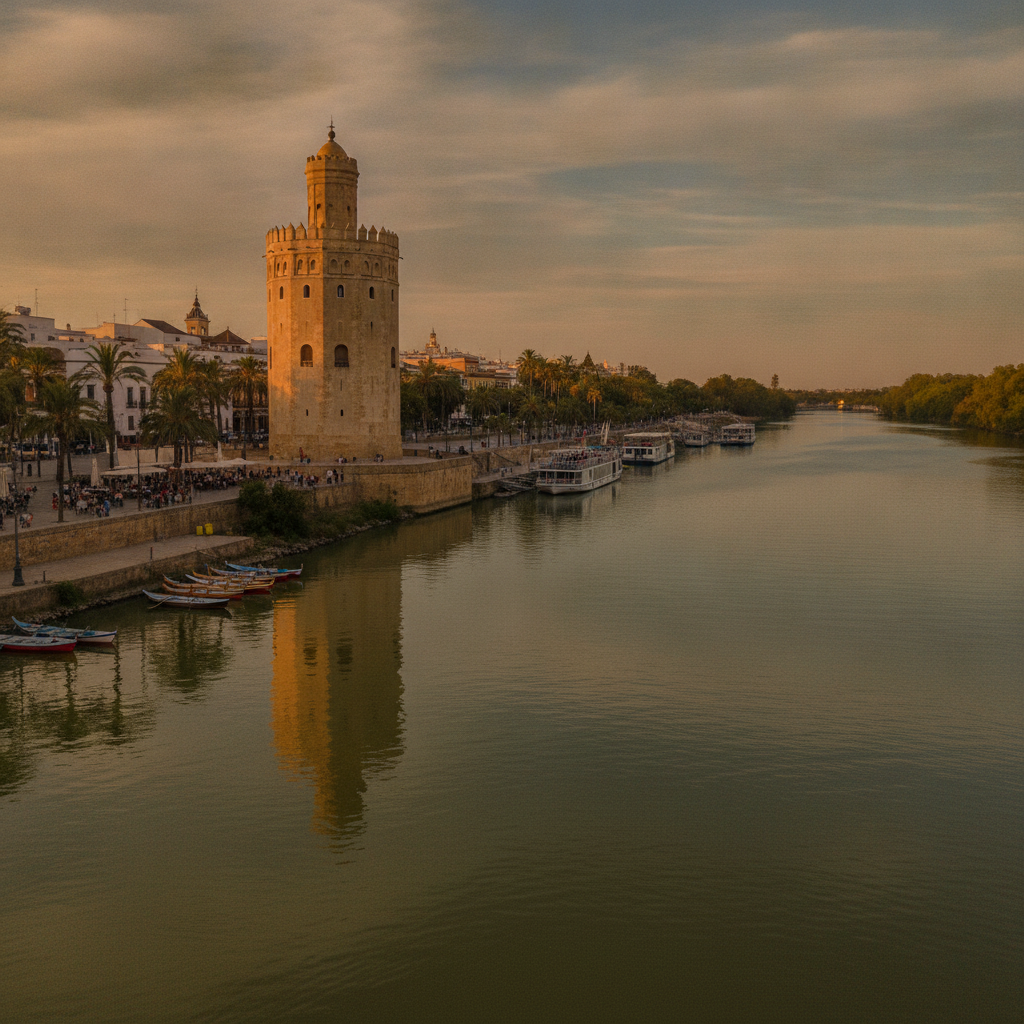
Guadalquivir River, Torre del Oro & Seville's Waterfront
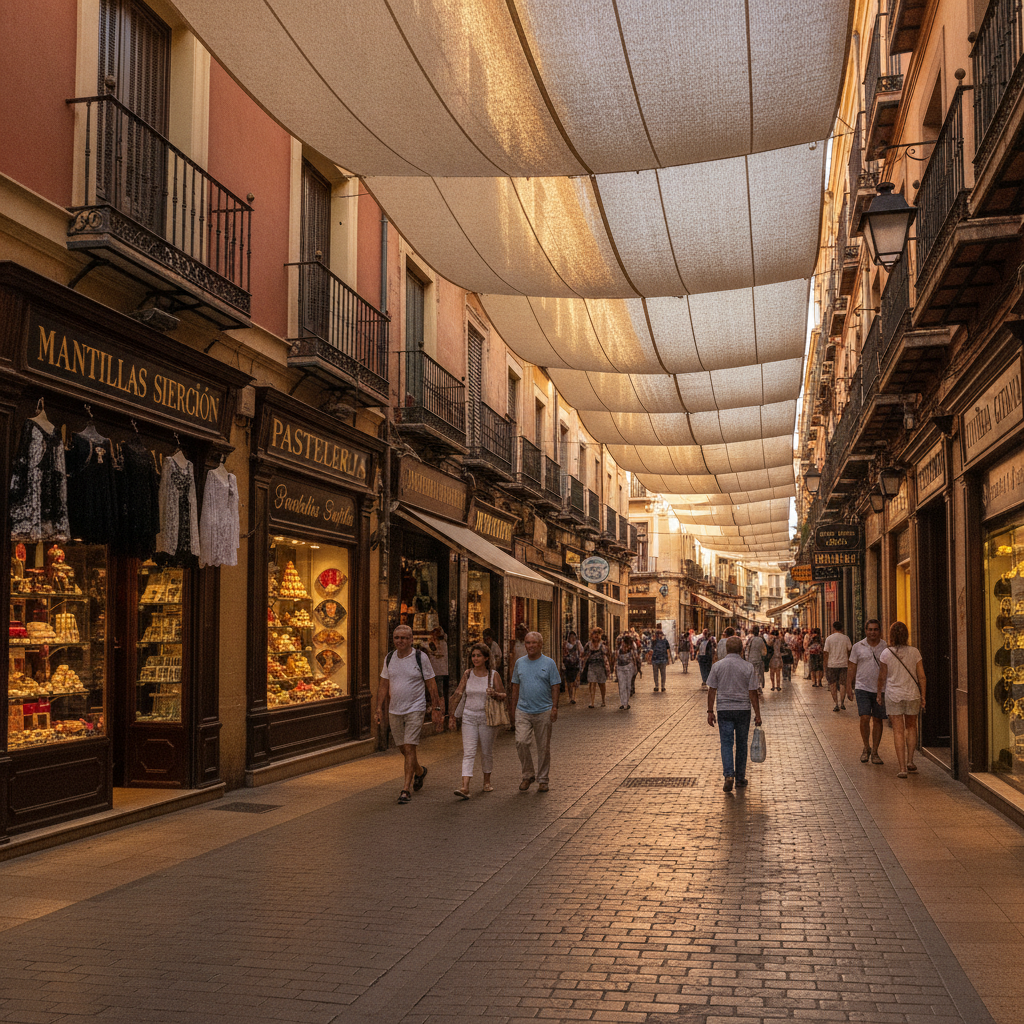
Calle Sierpes, Mantillas & Seville's Shopping Traditions
La Macarena, La Alameda & Seville's Working-Class Soul
1929 Exposition, Park Architecture & Seville's Modernist Legacy
Real Alcázar, Seville Cathedral & the Giralda Tower