Calle Sierpes, Mantillas & Seville's Shopping Traditions
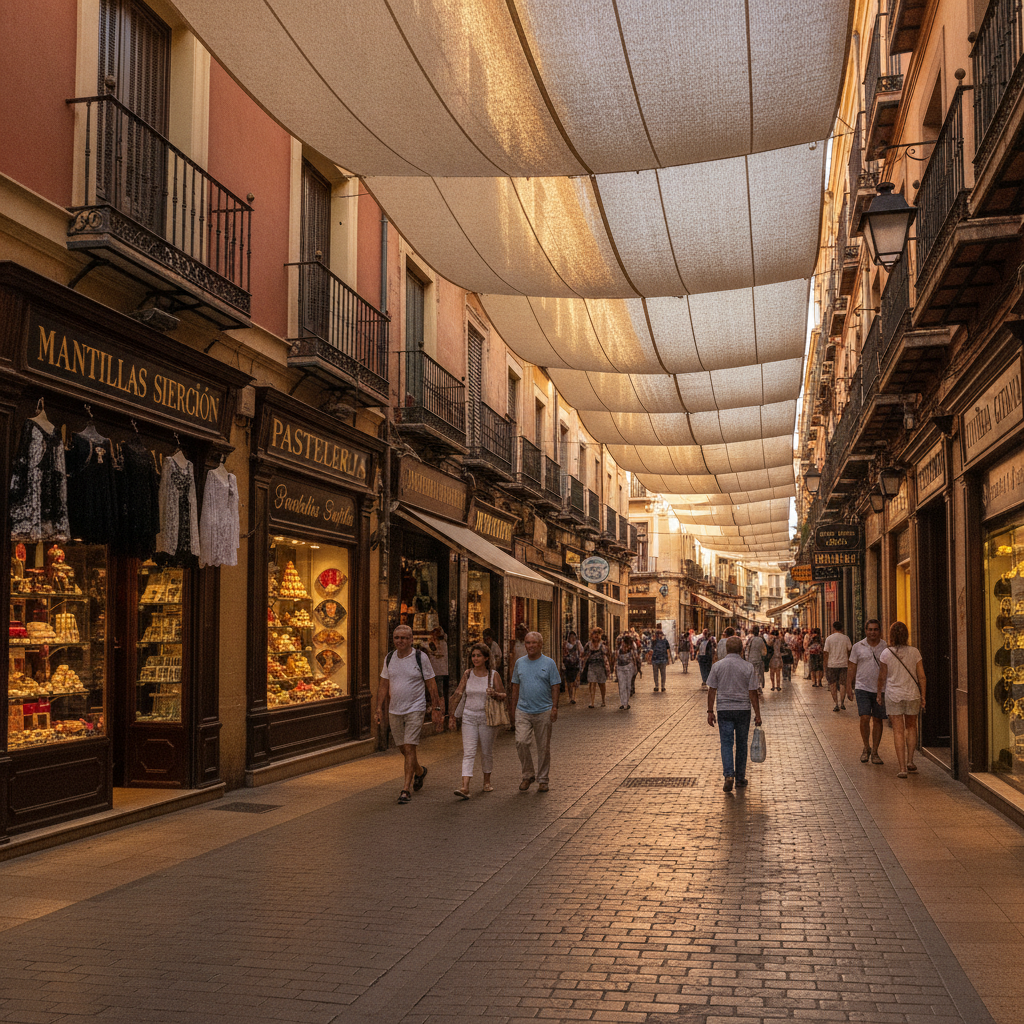
The Calle Sierpes (the 'Street of Snakes' — the main pedestrian shopping street of Seville, the most celebrated commercial street in the history of the city) and the adjacent Calle Tetúan and Calle Velázquez (together forming the pedestrian shopping heart of central Seville) are the place to find the traditional Seville crafts and fashion: the mantillas, the folding fans, the flamenco dress fabrics, and the pastries of the convent tradition.
- 1
Calle Sierpes — The Street of Snakes
The Calle Sierpes (the 'Calle de las Sierpes' — the 'Street of the Snakes', the name deriving from the sinuous curve of the street or from the heraldic serpents of the coat of arms of a noble family whose palace once stood on the street): the history (the Calle Sierpes — the most important commercial street in the history of Seville, the street where the great literary figure Miguel de Cervantes Saavedra (the author of 'Don Quijote de la Mancha') was imprisoned in the late 16th century (Cervantes was imprisoned in the 'Cárcel Real' — the Royal Prison that stood on the Calle Sierpes until the 18th century — for alleged financial irregularities as a tax collector for the Armada), the street where the Sevillian writer Antonio Machado (1875-1939) set some of the scenes of his literary evocations of Seville): the shops (the traditional shops of the Calle Sierpes — the 'mantillerías' (the shops selling the mantilla lace head-coverings for the Semana Santa and the Corpus Christi processions), the confiterías (the pastry shops with the traditional Seville confections — the 'yemas de San Leandro' (the egg yolk confections made by the Augustinian nuns of the Convento de San Leandro), the 'pestiños' (the fried dough pastries flavoured with anise and honey, the traditional Semana Santa pastry of Seville), and the 'torrijas' (the Spanish version of French toast, the traditional Semana Santa and Easter breakfast of Seville)): the Campana intersection (the intersection of the Calle Sierpes with the Calle Martín Villa — the 'Campana' (the 'Bell'), the busiest pedestrian intersection in Seville, with the 'El Corte Inglés' department store on the corner and the 'La Campana' confitería (the most famous pastry shop in Seville, established 1885) on the opposite corner).
- 2
Yemas de San Leandro — Seville's Convent Sweets
The convent sweets tradition of Seville (the 'dulces conventuales' — the traditional sweets produced by the cloistered nuns of Seville's convents, the confections sold through the 'torno' (the revolving wooden hatch in the convent wall through which the nuns sell their sweets without being seen by the customers, preserving the enclosure of the convent)): the Convento de San Leandro (the Convento de San Leandro de Sevilla — the convent of the Augustinian nuns on the Plaza de San Ildefonso in the Seville historic centre, founded in 1295, the convent famous for producing the 'yemas de San Leandro' (the most celebrated convent sweet in Seville — the confection made from the egg yolks and the sugar, shaped into small domed rounds and dusted with the caster sugar, the sweet that has been produced by the Augustinian nuns of San Leandro since the 16th century)): the other convent sweets (the other traditional convent sweets sold through the 'tornos' of the Seville convents — the 'mantecados' (the crumbly lard-based shortbread, the most characteristic Christmas confection of Andalusia), the 'polvorones' (the almond flour and lard shortbreads, the 'Estepa polvorones' — from the Seville town of Estepa (the polvorón capital of Spain)), the 'cortadillos de cidra' (the quince paste pastries of the Convento de la Encarnación), and the 'pestiños' (the honey and anise fried dough pastries of the Semana Santa season)).
- 3
Seville's Fan & Mantilla Tradition
The Seville fan tradition (the 'abanico' — the folding fan, the most characteristic traditional accessory of Seville and of Andalusian culture): the fan (the 'abanico' — the folding fan, the accessory that has been essential to the Sevillian woman's summer wardrobe since the 16th century (the fan essential in a city where the summer temperature regularly exceeds 40°C (104°F)), the fan that is both a practical cooling device and a social accessory with a complex language of signals ('el lenguaje del abanico' — the 'language of the fan', the system of fan positions and movements that communicated messages between the Seville ladies and their admirers in the 18th and 19th centuries)): the mantilla (the 'mantilla' — the traditional Spanish lace head-covering worn by women for the Semana Santa processions, the Corpus Christi procession, the bullfights, and the Feria de Abril: the 'mantilla blanca' (the white lace mantilla worn on Palm Sunday — the first Sunday of Holy Week) and the 'mantilla negra' (the black lace mantilla worn for the solemn processions of Holy Week): the mantilla shops of Calle Sierpes (the specialist mantilla shops on the Calle Sierpes that sell the handmade 'blonda' (the Chantilly-style silk lace) and the 'encaje de bolillos' (the bobbin lace) mantillas in the traditional styles, the shops that fill with the Seville women buying and renting the mantillas for the Semana Santa season in the weeks before Holy Week): the 'traje de flamenca' (the flamenco dress — the elaborate spotted or printed dress with the ruffled hem and the long train worn by the Seville women at the Feria de Abril, the dress that requires months of dressmaker preparation and that represents the most important fashion investment of the Seville woman's year).
- 4
Seville Gastronomy — The Finest Andalusian Table
Seville gastronomy (the food culture of a city that is the gastronomic capital of Andalusia and one of the great food cities of Spain): the pescaíto frito (the 'fried fish' — the most beloved Seville street food, the mixture of small fish ('pescaíto') fried in the olive oil until golden and crisp, served in the paper cone at the outdoor 'freidurías' (the fried fish shops) of the Triana neighbourhood and the Arenal: the mix includes the 'pijotas' (the small whiting), the 'boquerones' (the fresh anchovies), the 'acedías' (the small soles), the 'chopitos' (the tiny cuttlefish), and the 'cazón en adobo' (the dogfish marinated in the spiced vinegar and then fried)): the gazpacho (the 'gazpacho andaluz' — the cold, raw tomato and vegetable soup that is the most famous dish of Andalusian cuisine and the most refreshing dish in the summer heat of Seville (where the summer temperature regularly exceeds 40°C): the gazpacho of Seville — the thick, intensely flavoured cold soup made by blending the ripe tomatoes, the cucumber, the green pepper, the garlic, the sherry vinegar, the olive oil, and the white bread soaked in water, traditionally served with the garnishes (the diced tomato, the diced cucumber, the diced hard-boiled egg, and the croutons) at the tapas bars of Seville): the 'sopa de tomate' (the hot tomato soup — the cooked tomato soup with the fried bread and the green pepper, the warming version of the tomato soup served in the winter months at the Seville tapas bars): the jamón ibérico (the 'Iberian ham' — the cured leg of the Iberian pig (the 'cerdo ibérico' — the indigenous Spanish breed of pig fed on the acorns of the 'dehesa' (the cork oak and holm oak woodland of southwestern Spain (Extremadura and Andalusia)) during the 'montanera' (the autumn fattening season)), the finest product of the Spanish charcuterie tradition).
- 5
Seville's Modernist Architecture — Regionalism & Beyond
Seville's early 20th-century architecture (the 'arquitectura regionalista sevillana' — the Regionalist style of Seville architecture developed in the early 20th century by the architect Aníbal González (1876-1929) and his contemporaries, the style that drew on the historic architecture of Seville (the Mudéjar, the Renaissance, and the Baroque) to create a modern Sevillian architecture that expressed the civic pride and the cultural identity of Seville in the period of the 1929 Ibero-American Exposition): Aníbal González (the architect Aníbal González Álvarez-Ossorio (1876-1929) — the dominant figure of the Regionalist architecture of Seville, the architect of the Plaza de España (1929), the Pabellón Mudéjar (the 'Mudéjar Pavilion' of the 1929 Exposition — now the Museo de Artes y Costumbres Populares de Sevilla), the Pabellón de Bellas Artes (now the Museo Arqueológico de Sevilla), and dozens of apartment buildings and commercial buildings in the Seville historic centre in the Regionalist style (the buildings identifiable by the terracotta brick, the azulejo tile decoration, the Mudéjar arches and the Renaissance ornament)): the Hotel Alfonso XIII (the 'Hotel Alfonso XIII' — the luxury hotel adjacent to the Real Alcázar of Seville, built 1916-1929 by the architect José Espiau y Muñoz for King Alfonso XIII of Spain to serve as the royal guests' hotel for the 1929 Ibero-American Exposition — the hotel in the neo-Mudéjar style with the central courtyard ('patio') in the Mudéjar tradition, the most luxurious hotel in Seville and one of the most celebrated historic hotels in Spain.
- 6
Day Trip — Córdoba, the Mezquita & the Patio Festival
Córdoba (the city 150 km northeast of Seville, accessible in 45 minutes by the AVE high-speed train from Seville Santa Justa station to Córdoba station — the capital of the Umayyad Caliphate of Córdoba (756-1031 CE), the most important city in medieval Europe, the city whose UNESCO World Heritage Site is centred on the most extraordinary Islamic monument in the western world): the Mezquita-Catedral de Córdoba (the 'Mosque-Cathedral of Córdoba' — the UNESCO World Heritage Site monument that is the crowning achievement of Umayyad Islamic architecture in Iberia: the Great Mosque of Córdoba, begun by Abd al-Rahman I in 785 CE and expanded by three subsequent Umayyad rulers to reach its current size (the prayer hall of approximately 23,000 square metres) before the Christian reconquest of Córdoba in 1236 CE (after which the mosque was converted into a cathedral by the addition of a Gothic cathedral nave in the centre of the mosque prayer hall in 1523 CE)): the forest of columns (the most famous interior element of the Mezquita — the 'bosque de columnas' (the 'forest of columns') of the prayer hall — the 856 columns of jasper, onyx, marble, and granite supporting the distinctive double-tiered arches (the arches with the alternating red brick and white stone voussoirs) that cover the prayer hall in a seemingly endless repetition of the colonnaded space): the Judería (the Jewish quarter of Córdoba — the neighbourhood of narrow whitewashed streets and hidden courtyards around the Mezquita, with the 14th-century 'Sinagoga de Córdoba' (one of only three surviving medieval synagogues in Spain) and the famous flower-filled patios of the Córdoba Patio Festival (held each May).
Walk this route with audio
Stories play automatically as you reach each stop — no tapping needed.
More in seville
Guadalquivir River, Torre del Oro & Seville's Waterfront
La Macarena, La Alameda & Seville's Working-Class Soul
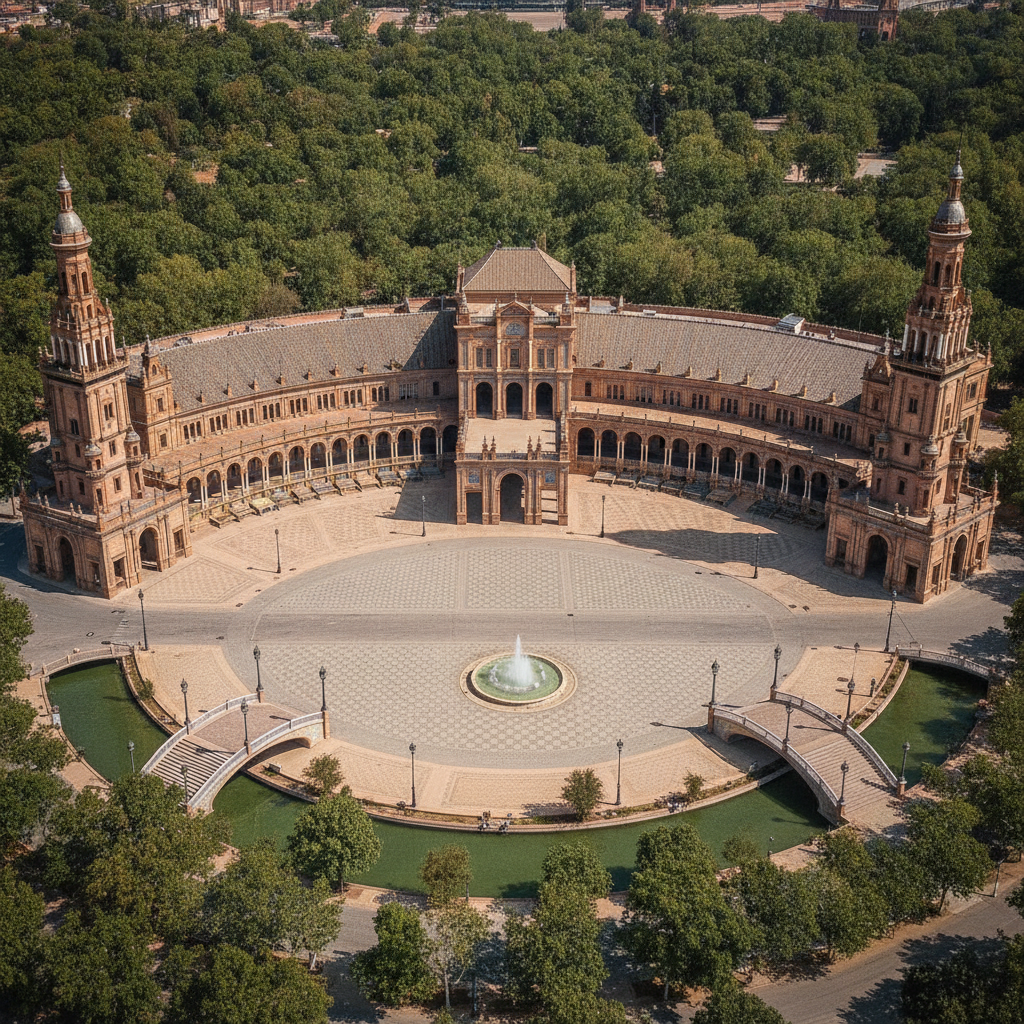
1929 Exposition, Park Architecture & Seville's Modernist Legacy
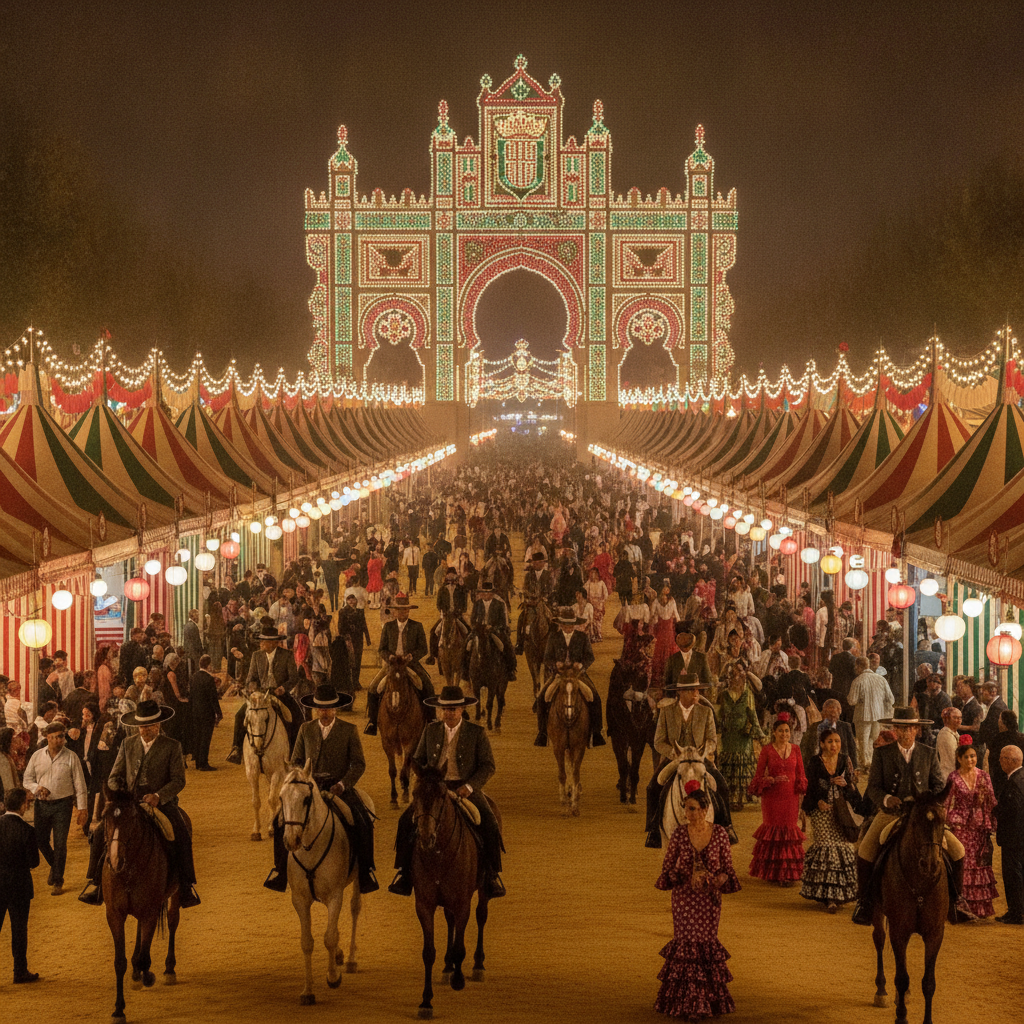
Feria de Abril, Semana Santa & Seville's Great Festivals
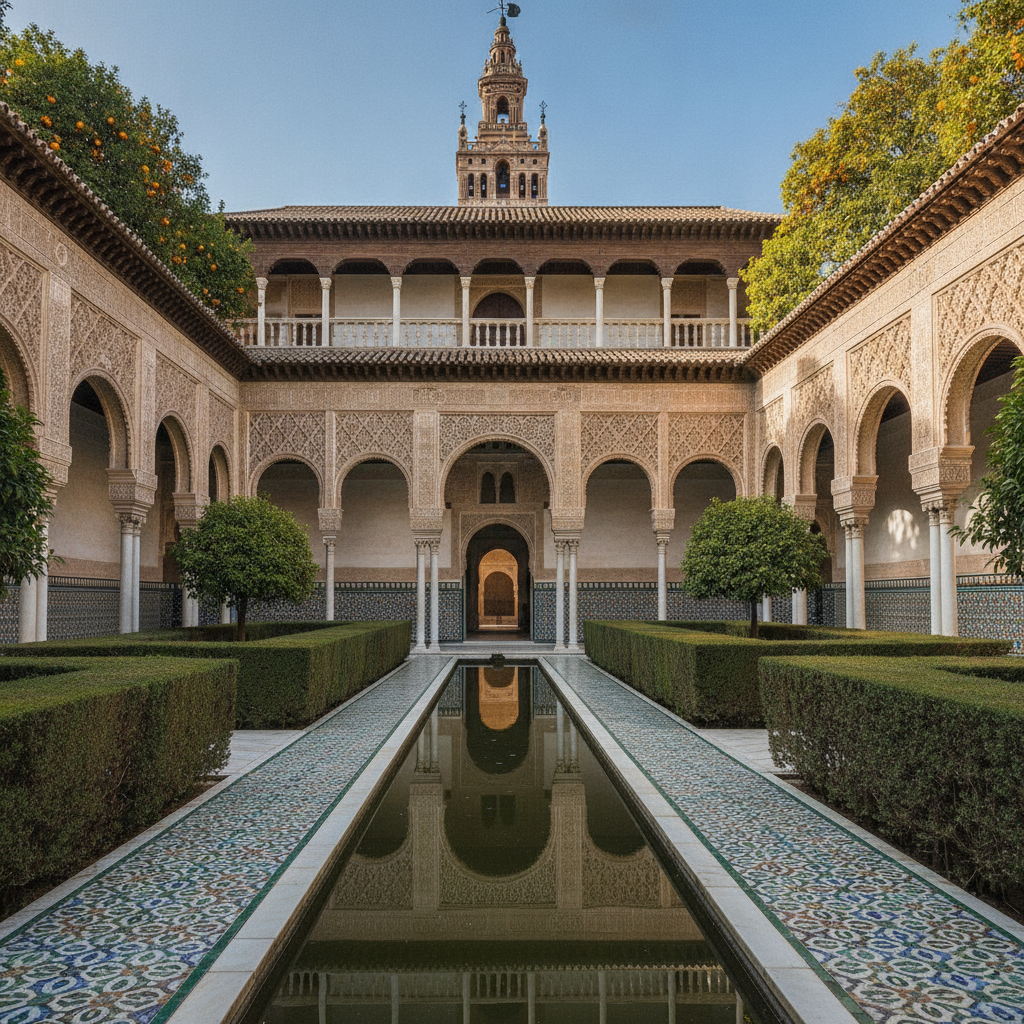
Real Alcázar, Seville Cathedral & the Giralda Tower