Myeongdong, Namdaemun Market, N Seoul Tower & Namsan
The triangle formed by Myeongdong (Seoul's premier shopping and K-beauty district), Namdaemun Market (the largest traditional market in Korea, operating continuously since 1414), and Namsan Mountain (with the N Seoul Tower at its summit) constitutes the most visited tourist corridor in Seoul — a seamless progression from hypermodern commercial culture to centuries-old market traditions to panoramic views over the Han River metropolis.
- 1
Myeongdong — K-Beauty, Street Food & the Seoul Shopping Experience
Myeongdong (명동, the central commercial district of Seoul, approximately 0.5 square kilometres enclosed by Myeongdong-gil, Toegyero, and the surrounding streets, easily accessible from Myeongdong Station on Line 4): Myeongdong is the highest-rent shopping district in Korea and one of the highest-rent retail streets in the world — the pedestrianised main street and its side alleys are packed with cosmetics (K-beauty brands including Innisfree, Etude House, Missha, The Face Shop, and the flagship stores of Amore Pacific and LG Household & Health Care), fashion, electronics, and international brands; Myeongdong is also the best location in Seoul for street food: the evening street food stalls along the main pedestrian street sell a rotating selection of Korean street food including tteokbokki (떡볶이, spicy rice cakes), hotteok (호떡, sweet pancakes filled with brown sugar and cinnamon), tornado potato (fried spiral-cut potato on a skewer), odeng (어묵, fish cake skewers in broth), Korean fried chicken, and Chinese-Korean dishes; the Myeongdong Catholic Cathedral (명동성당, 1898, the oldest gothic-revival Catholic church in Korea) stands on the hill above the district.
- 2
Namdaemun Market — Seoul's Oldest Continuously Operating Market
Namdaemun Market (남대문시장, 'Great South Gate Market', near Hoehyeon Station, Line 4 — the largest traditional market in Korea in terms of both scale and trade volume, with approximately 10,000 stalls and shops occupying the area around and within the large market complex near Namdaemun (Sungnyemun Gate)): Namdaemun Market has operated continuously on this site since approximately 1414, during the Joseon dynasty, making it one of the oldest continuously operating markets in Northeast Asia; the market's specialties include: imported goods (particularly clothing and accessories from China and Southeast Asia), wholesale and retail clothing (particularly children's clothing), kitchenware and cookware, eyeglasses and optical equipment, dried seafood, and Korean agricultural products; the best time to visit Namdaemun Market for the most authentic experience is between 2am and 5am, when the wholesale buyers arrive and the atmosphere is entirely different from the daytime retail experience; the adjacent Sungnyemun Gate (숭례문, also known as Namdaemun, 'Great South Gate' — rebuilt after being destroyed by arson in 2008, restored and reopened 2013) is National Treasure No. 1 of Korea.
- 3
Namsan Mountain — The Forested Heart of the City
Namsan (남산, 'South Mountain', the 262-metre forested mountain in the centre of the Seoul metropolitan area, immediately south of the historic inner city and north of the Hangang River): Namsan was historically the southern anchor of the Seoul city wall (Hanyangdoseong), the 18.6-kilometre granite wall that enclosed the Joseon capital — significant sections of the wall survive on Namsan's northern and eastern slopes and can be walked as the Namsan Circuit Trail; Namsan is connected to the surrounding city by cable car (from the Myeongdong side) and by multiple hiking trails and roads; the mountain's 86 hectares of forested parkland provide the closest natural green space to the centre of Seoul, with hiking trails offering views over the city in every direction; Namsan Seoul Tower (now N Seoul Tower, 남산서울타워) was built in 1969 as a broadcast transmission tower and opened to the public in 1980.
- 4
N Seoul Tower — Panoramic Views from the Summit
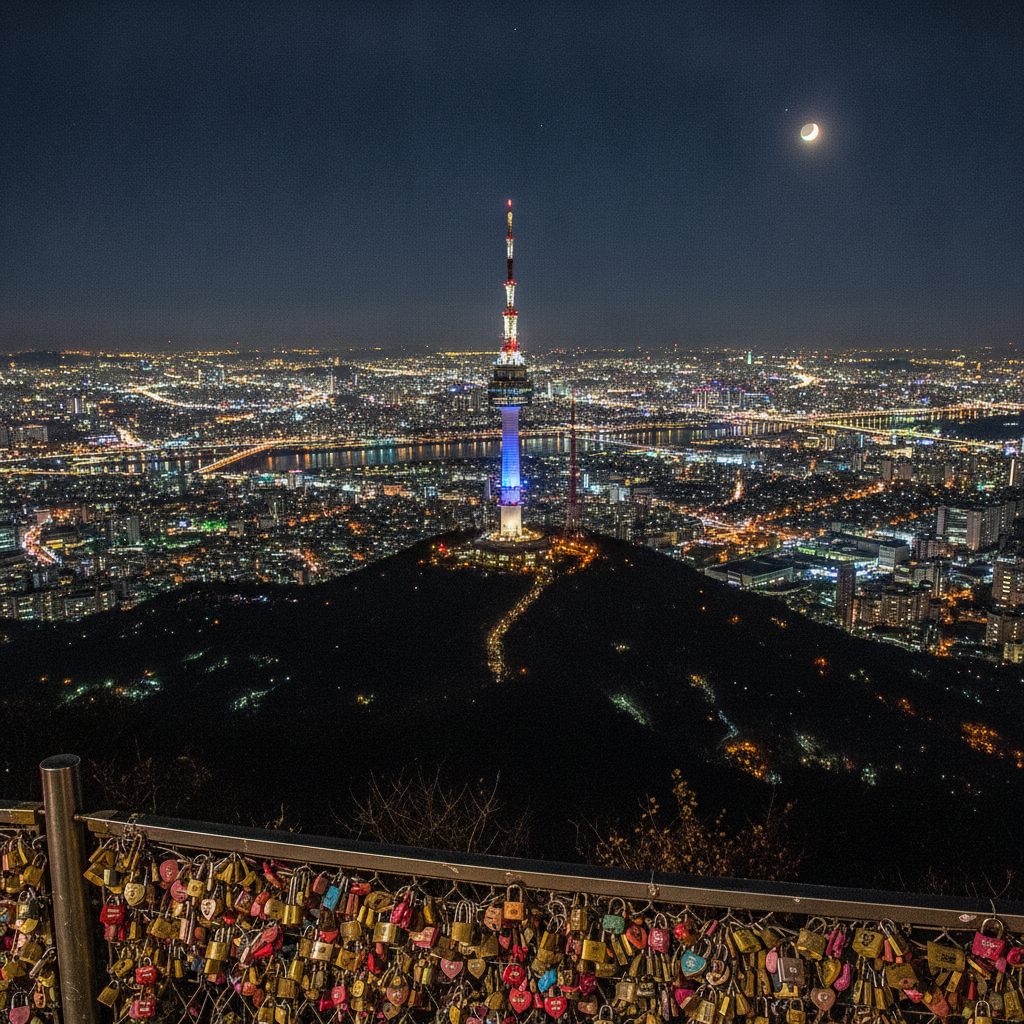
N Seoul Tower (N서울타워, Namsan-dong 2-ga, Jung-gu, Seoul — the 236-metre broadcast and observation tower at the summit of Namsan Mountain, 479.7 metres above sea level, built 1969 and opened for public viewing 1980, refurbished and rebranded as N Seoul Tower in 2005): the tower consists of a 236-metre steel lattice structure topped by observation decks, restaurants (including a rotating restaurant), and broadcast antennae; the four observation decks at different heights provide 360-degree views over the Seoul metropolitan area (population 25 million in the greater metropolitan area, the world's fourth-largest metropolitan area), with views on clear days extending to Incheon to the west, the Han River delta, the mountain ranges of Gyeonggi-do, and in exceptional visibility to Bukhansan National Park to the north; the base of the tower is covered with padlocks left by couples as 'Locks of Love' (사랑의 자물쇠) — a romantic tradition that has resulted in an extraordinary accumulation of tens of thousands of engraved padlocks on the fences and railings surrounding the tower.
- 5
Dongdaemun Design Plaza (DDP) & Fashion District
The Dongdaemun Design Plaza (동대문디자인플라자, DDP — Eulji-ro 281, Jung-gu, Seoul, completed 2014, designed by Zaha Hadid Architects in collaboration with Samoo Architects & Engineers): the DDP is the most architecturally significant building constructed in Seoul since the restoration of the palace complexes — a 86,574-square-metre complex of exhibition halls, design museums, conference facilities, and an outdoor amphitheatre enclosed in a flowing curved form sheathed in 45,133 individual aluminium panels, no two of which are exactly the same shape; the DDP sits at the centre of the Dongdaemun fashion district, the largest fashion wholesale and retail market district in Asia, with dozens of 24-hour fashion wholesale markets (including Dongdaemun Market, Doota, Migliore, and Hello APM) employing tens of thousands of workers in design, manufacturing and retail.
- 6
Cheonggyecheon Stream — Seoul's Urban Waterway Restoration
Cheonggyecheon (청계천, 'Clear Stream' — the 10.9-kilometre urban stream running through the centre of Seoul from its source near the City Hall area eastward to where it joins the Jungnangcheon river): Cheonggyecheon was historically the main waterway of the Joseon capital, used for laundry, waste disposal, and recreation; it was buried under a concrete elevated expressway in 1958-1971 as part of Seoul's industrial modernisation — and then dramatically restored in 2003-2005 in one of the most celebrated urban regeneration projects in Asian urban planning history; the stream now runs through a landscaped linear park 5-7 metres below street level, accessible by stairways from street level at regular intervals, with a pedestrian walkway alongside the stream for its entire 8-kilometre urban course; the restoration removed 5.8 kilometres of elevated expressway, the stream's flow is maintained by pumping water from the Han River.
Walk this route with audio
Stories play automatically as you reach each stop — no tapping needed.
More in seoul
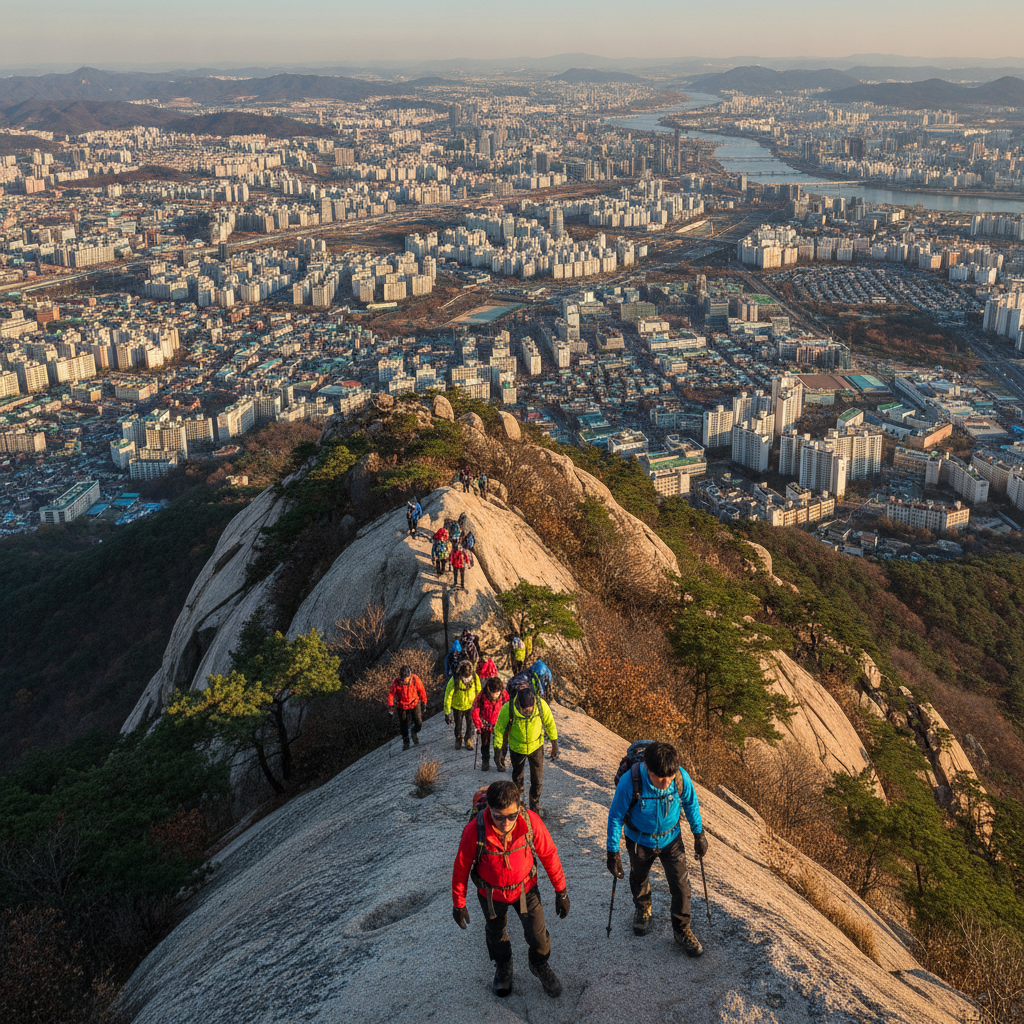
Bukhansan National Park — Granite Peaks & the Seoul City Fortress Walls
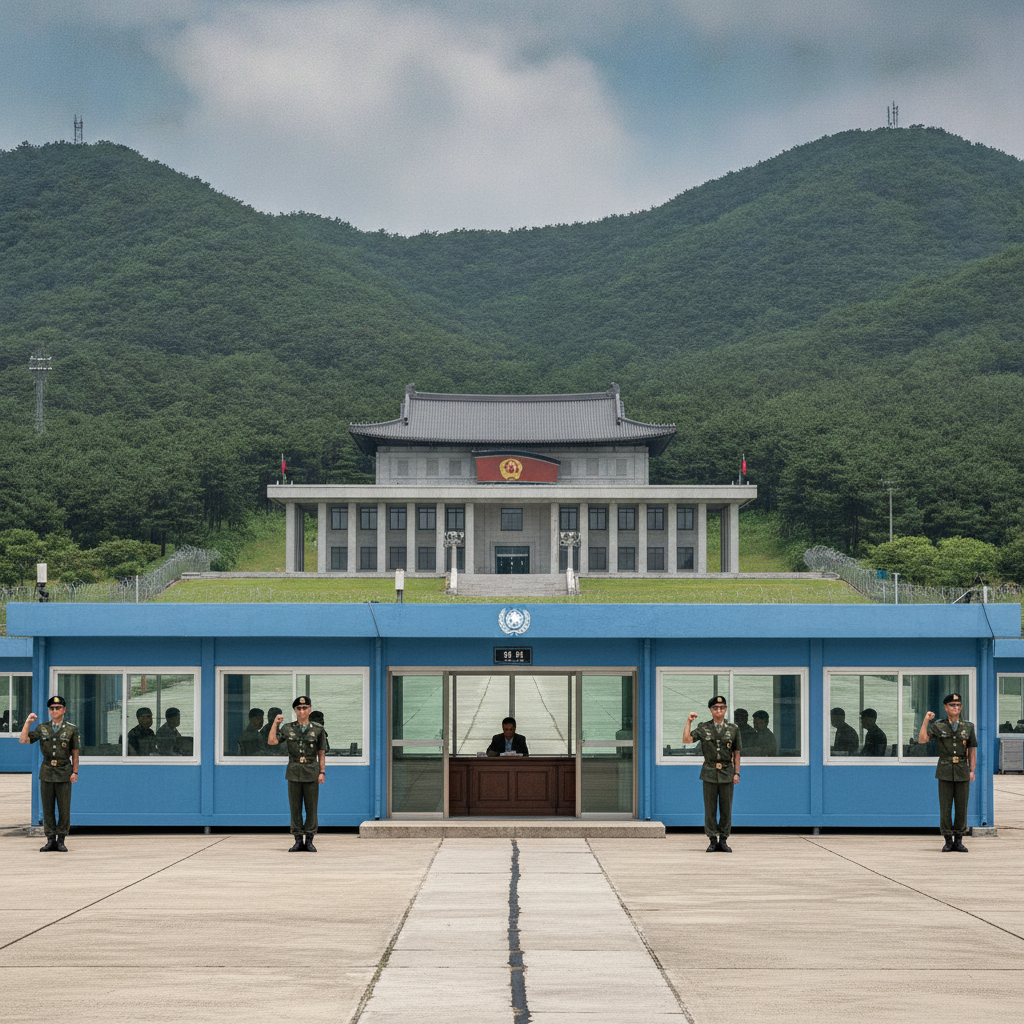
The DMZ, Panmunjom & the Joint Security Area — Korea's Divided Border
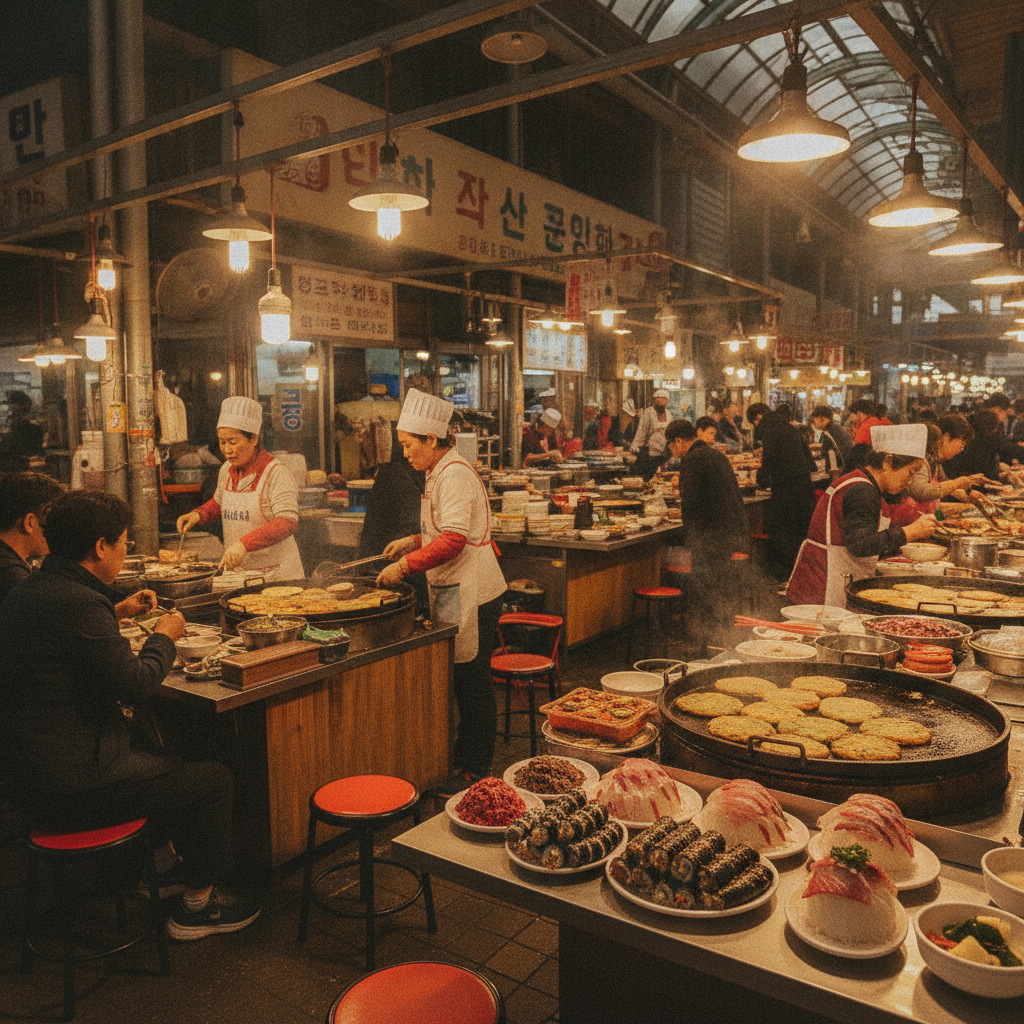
Korean Food Culture — Gwanjang Market, Bibimbap, Samgyeopsal & Banchan
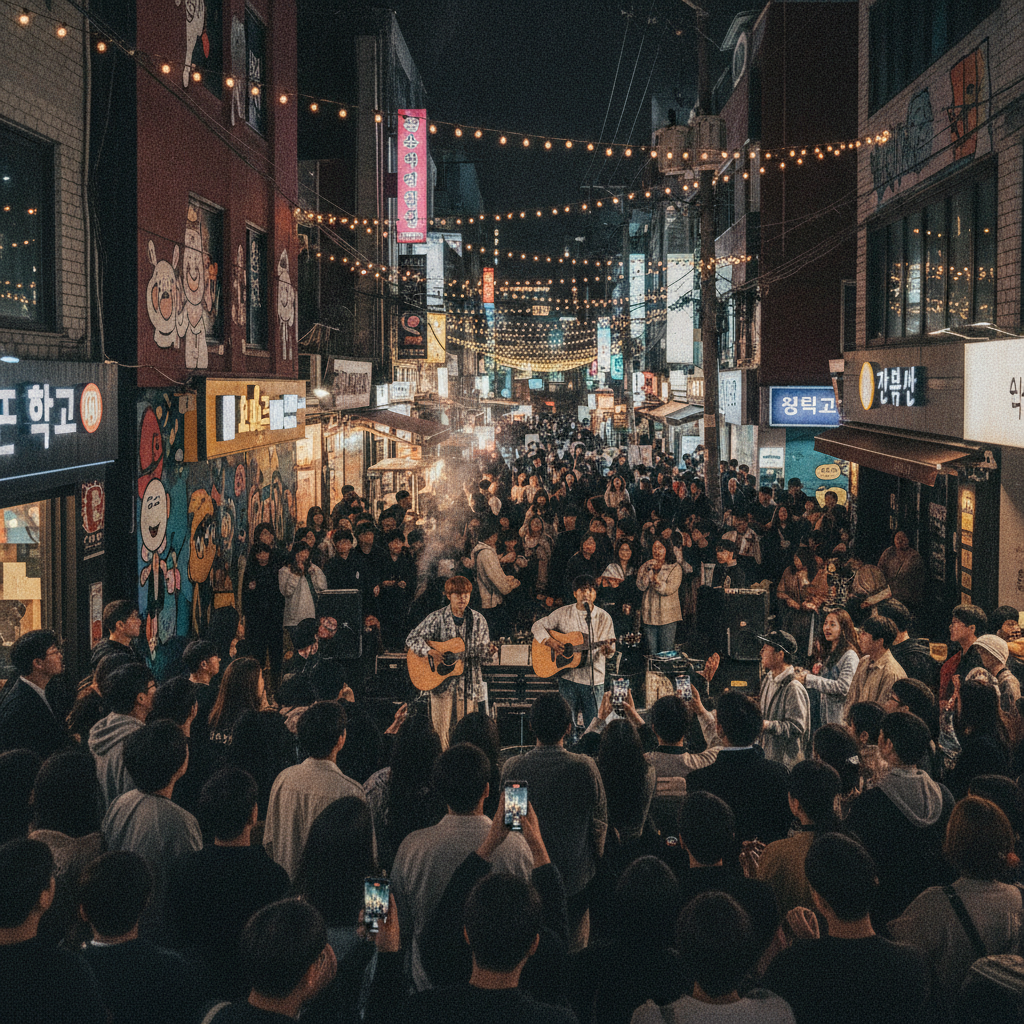
Hongdae, Sinchon & the University Districts — Street Art, Clubs & Youth Culture
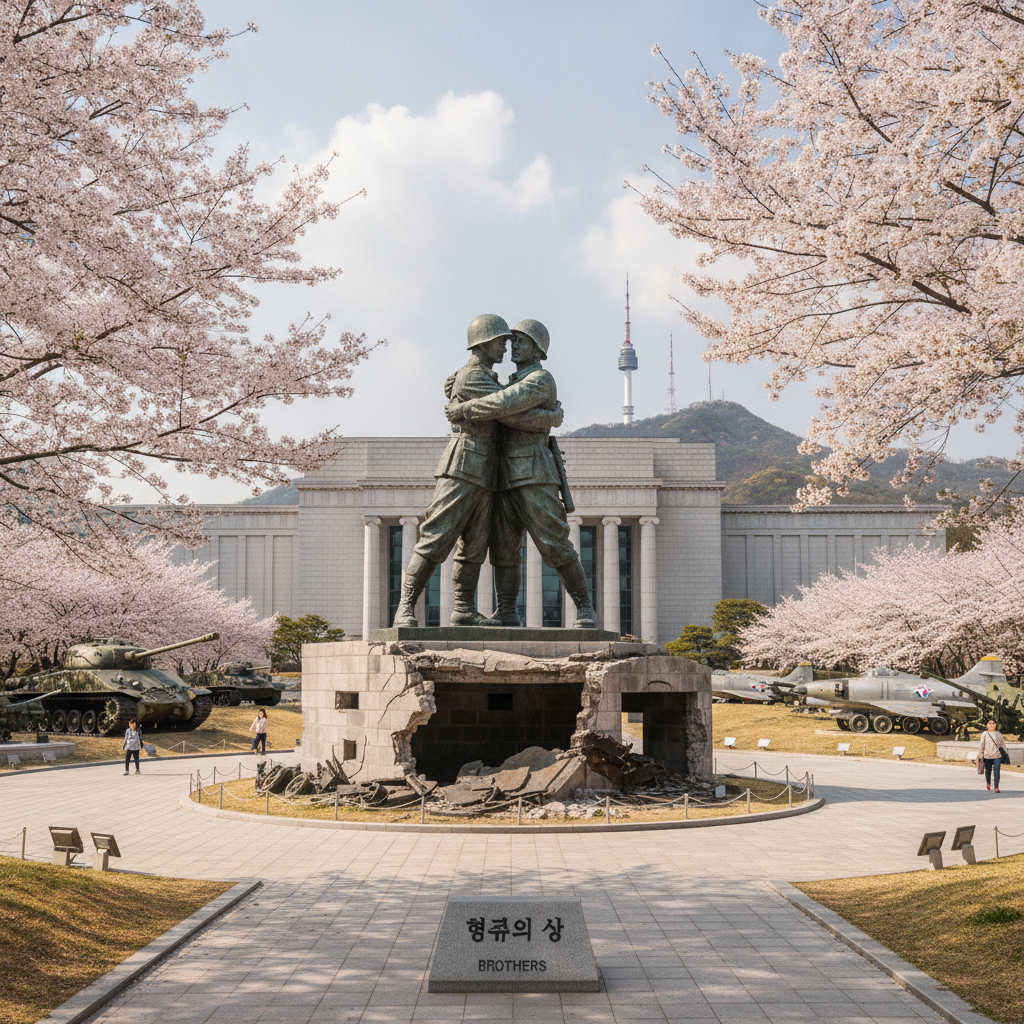
War Memorial of Korea, Yongsan & Itaewon — History & Multicultural Seoul