Gyeongbokgung Palace, Bukchon Hanok Village & Changdeokgung
The royal palaces and traditional neighbourhood of central Seoul preserve the living heritage of the Joseon dynasty (1392-1897) — from the magnificent Gyeongbokgung Palace with its ceremonial throne halls and pavilions, through the winding alleyways of Bukchon Hanok Village (where hundreds of traditional Korean houses survive in an urban village between two palaces), to the Changdeokgung Palace and its UNESCO-listed Secret Garden.
- 1
Gyeongbokgung Palace — The Palace of Shining Happiness
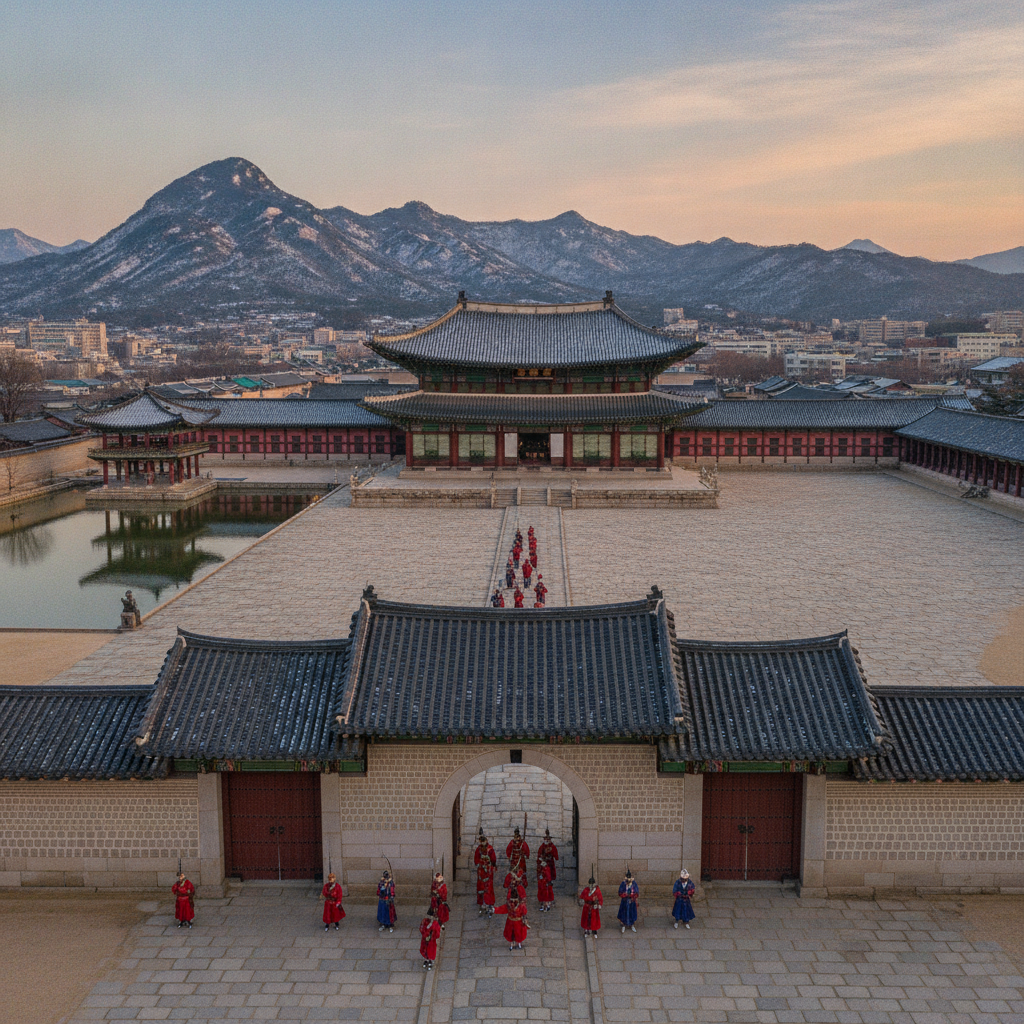
Gyeongbokgung Palace (경복궁, 'Palace Greatly Blessed by Heaven', Jongno-gu, Seoul — founded in 1395 by the first king of the Joseon dynasty, Taejo, as the primary palace of the kingdom, heavily damaged by Japanese invasions in the 1590s, abandoned for 270 years, and rebuilt 1865-1876 under the regent Heungseon Daewongun, before being systematically dismantled again during Japanese colonial rule 1910-1945): Gyeongbokgung is the largest and most formally significant of Seoul's five grand palaces and represents the architectural and spatial ideals of the Confucian court; the main gate Gwanghwamun (rebuilt 1968, restored to original alignment 2010) opens onto a broad approach that leads through Heungnyemun Gate to the main courtyard and the throne hall Geunjeongjeon (국보 제223호, National Treasure No. 223, the largest wooden throne hall in Korea, used for royal coronations, state banquets and the reception of foreign envoys), surrounded by two-story covered corridors; the palace complex also contains the Gyeonghoeru Pavilion (국보 제224호, a magnificent 2-story pavilion on an artificial lake used for royal banquets and state receptions) and the Hyangwonjeong Pavilion (a hexagonal pavilion on an island in a small pond in the northern section of the palace).
- 2
Joseon Dynasty Royal Guard Ceremony at Gwanghwamun
The Royal Guard Changing Ceremony at Gwanghwamun (수문장 교대의식 — the daily ceremonial re-enactment of the Joseon-dynasty royal guard changing ceremony performed at the main gate of Gyeongbokgung, performed three times daily except Tuesdays): the ceremony recreates the protocols and costumes of the Joseon military with performers in historically accurate reconstructions of the uniforms, weapons and banners of the royal guard of the Joseon court; the Joseon dynasty (조선왕조, 1392-1897) was the longest-lasting Confucian dynasty in Korean history, ruling the Korean peninsula for 505 years from the foundation of the capital at Seoul (then called Hanyang) to the proclamation of the Korean Empire in 1897; the Yi dynasty, as it is also known, established Seoul as the capital, built the five grand palaces and the four gates of the city wall, codified Korean law in the Joseon Legal Code (경국대전), and presided over the invention of the Korean alphabet Hangul by King Sejong the Great in 1443.
- 3
Bukchon Hanok Village — 600 Years of Korean Domestic Architecture
Bukchon Hanok Village (북촌 한옥마을, 'northern village traditional house village' — the historic residential neighbourhood occupying the ridge between Gyeongbokgung to the west and Changdeokgung to the east, in the Jongno-gu district of central Seoul): Bukchon was historically the residential neighbourhood of the high-ranking government officials (yangban) of the Joseon court — those who lived between the two main palaces were literally living at the centre of power; the approximately 900 surviving traditional Korean houses (hanok, 한옥) in Bukchon represent the largest surviving concentration of Joseon-period domestic architecture in Korea; the defining characteristics of the hanok are: the ondol underfloor heating system (heated by wood fire through channels beneath the stone and clay floor), the wooden column-and-beam structure, the curved tile roofs (giwa, 기와), and the arrangement of buildings around a central courtyard (madang, 마당); many of the hanok in Bukchon now function as guesthouses, tea houses, craft workshops, galleries and restaurants; the most photogenic views of the village are from the alleyways in the Gahoe-dong area looking south toward the Namsan tower.
- 4
Changdeokgung Palace & the Secret Garden (Huwon)
Changdeokgung Palace (창덕궁, 'Palace of Prosperous Virtue', Jongno-gu, Seoul — built in 1405 as a secondary palace, destroyed during the Japanese invasions of 1592-1598, rebuilt 1607-1613, and subsequently served as the main royal residence of the Joseon kings for nearly 270 years, the preferred residence of the last kings of the dynasty; designated UNESCO World Heritage Site in 1997): the palace is considered by Korean scholars the finest example of Joseon-period palace architecture, demonstrating the Korean principle of building in harmony with the natural landscape rather than imposing a formal geometric axis on it; the most significant element of Changdeokgung is the Huwon (후원, 'rear garden', also called the Secret Garden, Biwon, 비원) — a 78-acre naturalistic garden landscape of ponds, pavilions, halls, bridges and woodland that occupies the northern portion of the palace grounds and represents the finest example of traditional Korean garden design in existence.
- 5
Gyeonghuigung & the Joseon Palace Corridor
The Western Palace Gyeonghuigung (경희궁, 'Palace of Serene Harmony', one of the five grand palaces of Seoul, built 1616-1617 during the reign of Gwanghaegun as an alternative royal residence on the western side of central Seoul — significantly reduced in size during the Japanese colonial period (1910-1945) when a Japanese school was built on most of its grounds, with partial restoration ongoing from 1988): Gyeonghuigung is the least visited of Seoul's five palaces and offers a quieter experience of Joseon palace architecture away from the crowds at Gyeongbokgung; it is connected to the Seoul History Museum (서울역사박물관) which documents the full urban and social history of Seoul from ancient times to the present.
- 6
Insadong & Samcheong-dong — Traditional Culture & Contemporary Arts
Insadong (인사동, the traditional culture and antiques district of Seoul, stretching along Insadong-gil from the Anguk station area south to Tapgol Park, Jongno-gu) and Samcheong-dong (삼청동, the gallery district immediately east of Gyeongbokgung, running north from Gyeongbokgung station to the entrance of Bukchon): Insadong is the traditional centre of the Seoul art market, with approximately 100 galleries, antique shops, traditional craft stores, and tea houses concentrated along its narrow pedestrian street (pedestrianised on weekends) — the best place in Seoul to find traditional Korean art, ceramics, calligraphy, hanji (traditional Korean paper) products, and antiques; Samcheong-dong has developed since the 2000s as Seoul's most fashionable gallery-restaurant-café district, with numerous contemporary art galleries (including the Hakgojae Gallery and several national museum outposts) alongside cafés and boutique restaurants occupying renovated hanok and modernist buildings.
Walk this route with audio
Stories play automatically as you reach each stop — no tapping needed.
More in seoul
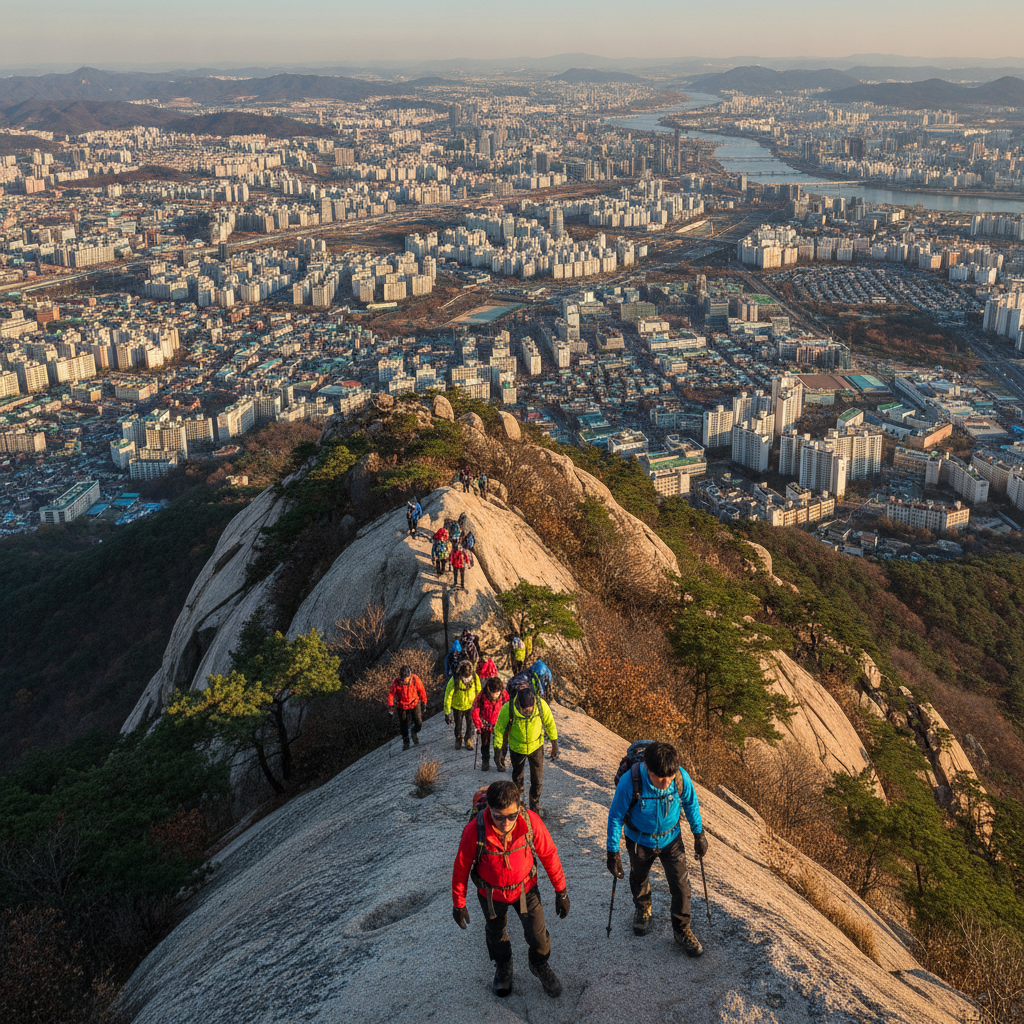
Bukhansan National Park — Granite Peaks & the Seoul City Fortress Walls
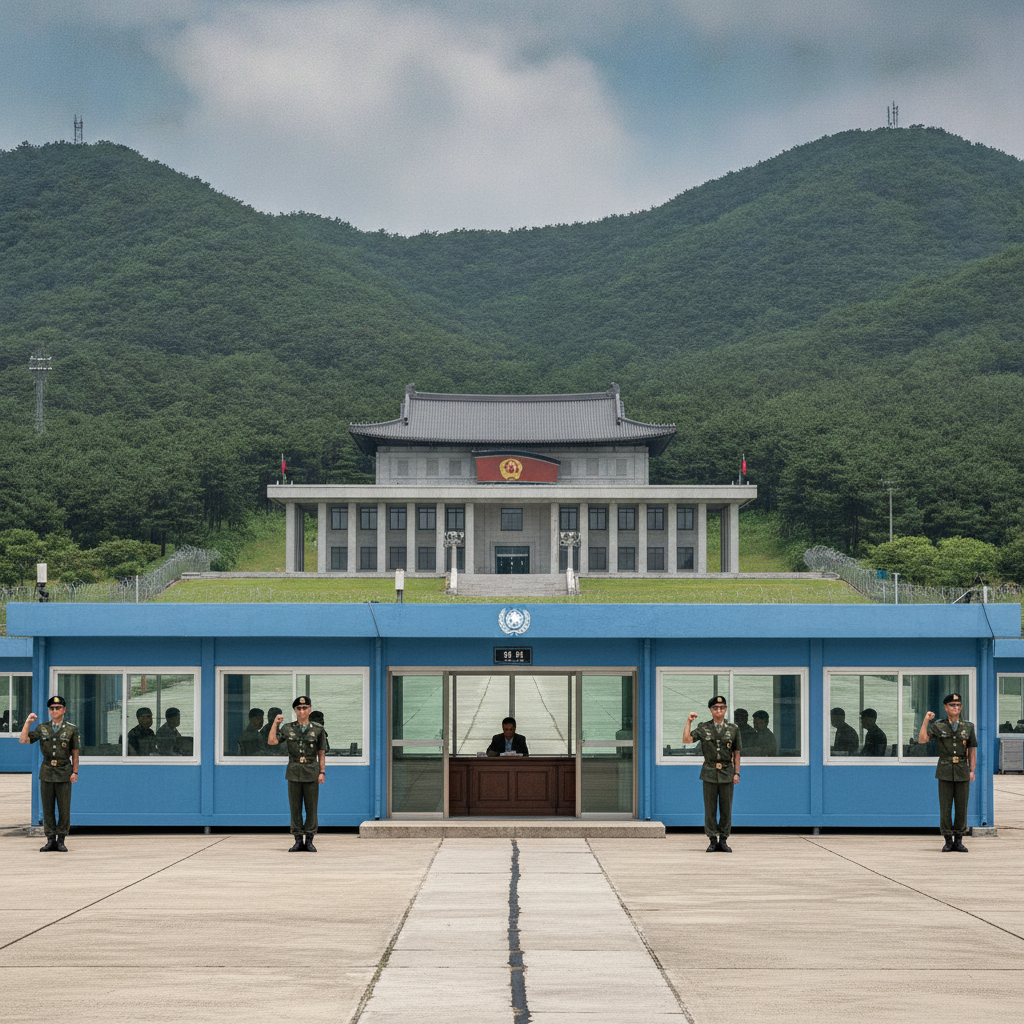
The DMZ, Panmunjom & the Joint Security Area — Korea's Divided Border
Korean Food Culture — Gwanjang Market, Bibimbap, Samgyeopsal & Banchan
Myeongdong, Namdaemun Market, N Seoul Tower & Namsan
Hongdae, Sinchon & the University Districts — Street Art, Clubs & Youth Culture