Pike Place Market, Elliott Bay & Seattle's Waterfront Soul
Seattle (the largest city in the Pacific Northwest, the seat of King County, Washington — population approximately 750,000 in the city, 4.0 million in the Greater Seattle metro area — the home of Boeing, Microsoft, Amazon, Starbucks, Costco, Nordstrom, and virtually every other major Pacific Northwest corporation): Pike Place Market and the Elliott Bay waterfront form the emotional and experiential heart of Seattle — the place where the city's character (the informal, outdoorsy, coffee-obsessed, Pacific-Northwest-proud personality of Seattle) is most visible.
- 1
Pike Place Market — America's Greatest Public Market
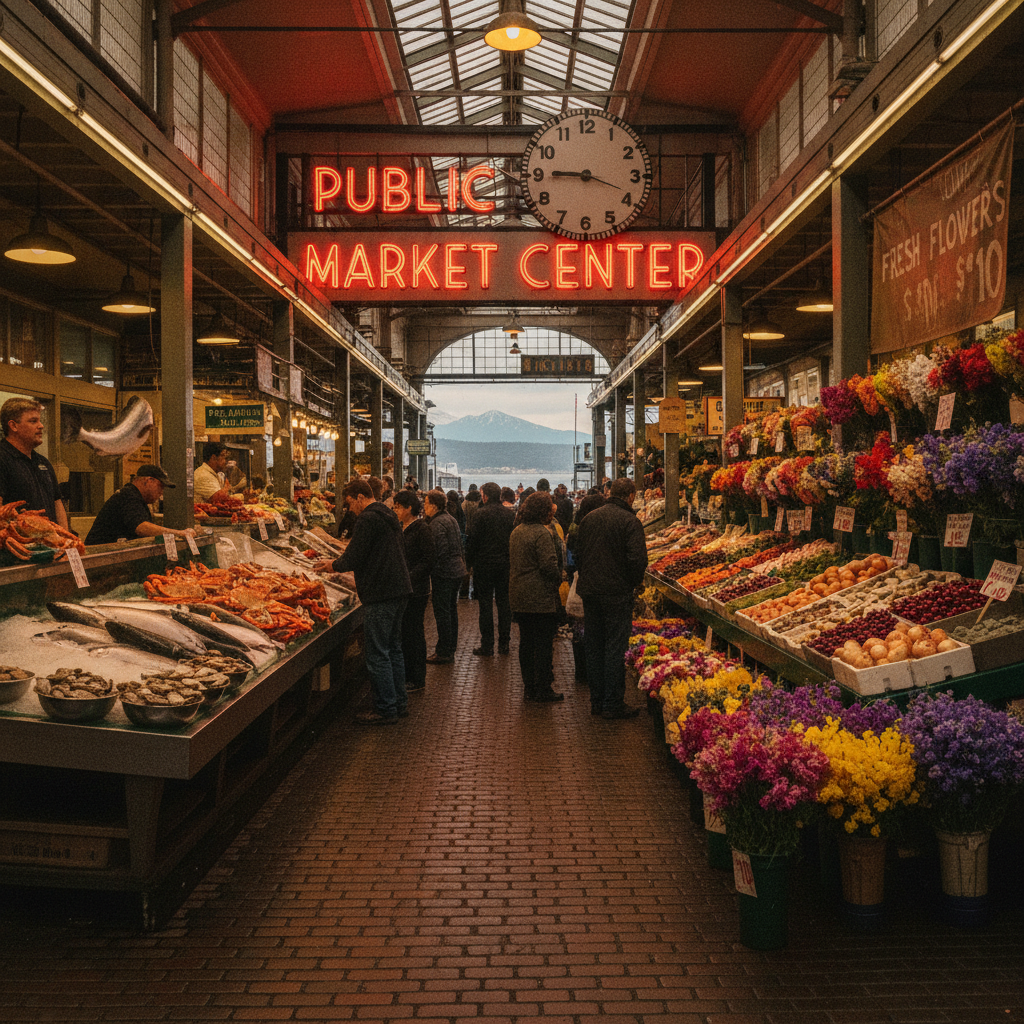
Pike Place Market (1501 Pike Place, Seattle — the continuously operating public market established August 17, 1907, the oldest such market in continuous operation in the United States): the market (which covers approximately 9 acres (3.6 hectares) of the Pike Place hillclimb between Pike Street and Western Avenue, spanning the hillside between downtown Seattle and the Elliott Bay waterfront) is famous for the Pike Place Fish Market (the fish stall that has been operated by John Yokoyama and his family since 1965, famous for the tradition of 'throwing fish' — the fishmongers toss whole salmon, Dungeness crabs, and other seafood through the air to each other and to waiting customers, a practice that began as a way of entertaining the crowds and moving product quickly from the display case to the wrapping counter, and that has become the most-watched and most-photographed commercial activity in Seattle), the Main Arcade produce stalls (the fresh Pacific Northwest produce — the Rainier cherries (the bi-coloured yellow-red cherry grown in the Yakima Valley and the slopes of the Cascade Range — available for approximately 6 weeks from late June to early August, the most coveted seasonal fruit of the Pacific Northwest), the Walla Walla sweet onions (so sweet they can be eaten raw like an apple), and the enormous variety of mushrooms foraged from the forests of western Washington), and the daily flower stalls (the remarkably cheap local flower bouquets — the Seattle area is one of the primary flower-growing regions of the western United States).
- 2
Starbucks Reserve Roastery & Seattle's Coffee Culture
Starbucks (the company that invented the American coffeehouse culture as it exists today): the original Starbucks (1912 Pike Place, Pike Place Market — the first Starbucks location, opened March 30, 1971 by three Seattle college friends (Jerry Baldwin, Zev Siegl, and Gordon Bowker), originally selling only whole-bean coffee (not prepared drinks): the current 'original' Starbucks (the retro-decorated storefront with the original brown Starbucks siren logo (the 'Starbucks Siren' — the two-tailed mermaid that is the Starbucks logo, derived from a 16th-century Norse woodcut, used in the original brown colour of the 1971 logo rather than the current green) and the constant queue of tourists) is one of the most-visited single commercial locations in Seattle; the Starbucks Reserve Roastery (1124 Pike Street, Capitol Hill — the 15,000 sq ft (1,400 m²) showcase 'roastery' that opened 2014, the first of a series of Starbucks 'Reserve Roastery' locations that serve as the premium showcase of the brand worldwide): the Seattle coffeehouse culture (the pre-Starbucks coffeehouse culture that Starbucks drew from (Mister D's, the Last Exit, and the other 1970s-1980s Seattle coffeehouses that established the 'third place' concept of the coffeehouse as a social gathering space distinct from home and work) and the post-Starbucks craft coffee movement (the Victrola Coffee, Caffe Vita, Lighthouse Coffee, and the dozens of other Seattle craft roasters that form the most sophisticated retail coffee culture in the United States)).
- 3
Elliott Bay Waterfront & the Olympic Sculpture Park
Elliott Bay Waterfront (the western face of downtown Seattle on Elliott Bay (the arm of Puget Sound immediately west of downtown Seattle) — the 3.2 km (2 mile) waterfront of piers, restaurants, and parks between Pier 91 in the north and Pier 48 in the south): the Great Wheel (the 175-foot (53-metre) observation ferris wheel on Pier 57 — the largest observation ferris wheel on the West Coast of North America, opened June 2012, each of the 42 fully enclosed gondolas capable of carrying 8 passengers for a 20-minute rotation offering views of Elliott Bay, the Seattle skyline, and on clear days the Olympic Mountains to the west and Mount Rainier to the southeast (the 4,392-metre (14,411-foot) glaciated stratovolcano that dominates the eastern skyline of Seattle on clear days)); the Olympic Sculpture Park (2901 Western Avenue — the 8.5-acre (3.4-hectare) outdoor sculpture park of the Seattle Art Museum (SAM) on the Elliott Bay waterfront, designed by Weiss/Manfredi architects and opened in 2007 on a former oil transfer facility — the park contains 20+ permanent outdoor sculptures (including Alexander Calder's 'The Eagle' (the bright red abstract steel sculpture, the dominant visual element of the park), Richard Serra's 'Wake' (the five paired and curved weathering-steel forms that create a walking corridor), and Louise Bourgeois's 'Father and Son' (the two floating granite figures in the tidal flat below the park)) and the best views of Elliott Bay and the Olympic Mountains of any public space in downtown Seattle.
- 4
Seattle Center & Space Needle — The Icon of the Pacific Northwest
Seattle Center (305 Harrison Street — the 74-acre (30-hectare) civic campus built for the 1962 World's Fair ('Century 21 Exposition'), now containing the Space Needle, the Museum of Pop Culture (MoPOP), the Chihuly Garden and Glass, the Pacific Science Center, the Key Arena (now Climate Pledge Arena), and multiple festival and performance venues): the Space Needle (the 184-metre (605-foot) observation tower and restaurant built for the 1962 World's Fair by architect Edward E. Carlson and structural engineer John Graham Jr., designed to represent a 'space age' aesthetic consistent with the exhibition's 'Century 21' theme (the year 2021 was considered the 'future' in 1962 — the tower's design was explicitly futuristic, combining a hyperbolic paraboloid disk (the 'flying saucer' top with the observation deck and rotating restaurant) with a concrete tower and the distinctive tripod base structure)): the Space Needle Skyrisers (the glass-floored observation deck added in 2018 — 'The Loupe', the rotating glass floor that allows visitors to stand on the see-through floor and look 184 metres (605 feet) straight down to the Seattle Center grounds below — the most vertigo-inducing transparent floor experience at any observation point in the world); the Museum of Pop Culture (MoPOP — 325 5th Avenue N, the museum designed by Frank Gehry (opened 2000 as the 'Experience Music Project') in the signature Gehry style (the titanium and stainless steel shards (fragments of guitars and other instruments) covering the undulating exterior surfaces, the most explicitly musical and most provocative Gehry building in existence)).
- 5
Capitol Hill & Seattle's Vibrant Arts and LGBTQ+ Scene
Capitol Hill (the neighbourhood immediately east of downtown Seattle on the First Hill — the most culturally diverse and most LGBTQ+ -identified neighbourhood in Seattle, the centre of Seattle's arts, music, and nightlife culture): the Capitol Hill neighbourhood (the hillside neighbourhood of Victorian houses, Craftsman bungalows, and early 20th century apartment buildings east of downtown Seattle on the First and Capitol Hills) is the neighbourhood most associated with Seattle's independent cultural identity — the music scene (the 'Seattle Sound' and the Capitol Hill music venues that spawned the grunge rock movement: the Crocodile (2200 2nd Avenue — the music club where Nirvana, Pearl Jam, Soundgarden, Alice in Chains, and virtually every important Seattle band of the 1990s performed before and after their major record deals, the club that was ground zero for grunge rock as a commercial phenomenon), the Neumos (925 E Pike Street), and the Chop Suey (1325 E Madison Street)): the Capitol Hill LGBTQ+ community (the most concentrated and most politically active LGBTQ+ community in the Pacific Northwest, with the highest concentration of same-sex couple households of any neighbourhood in Seattle): the Cal Anderson Park (the 7.2-acre (2.9-hectare) neighbourhood park at the centre of Capitol Hill — the park that became the location of the CHOP/CHAZ (Capitol Hill Occupied Protest/Autonomous Zone) during the 2020 Black Lives Matter protests — the most significant public space in the history of Seattle's progressive political movements).
- 6
Puget Sound Ferry — Crossing to Bainbridge Island & the Olympics
Puget Sound (the 160 km (100 mile) long estuary of multiple rivers emptying into the Strait of Juan de Fuca in northwestern Washington State — the arm of the Pacific Ocean that defines the western boundary of the Seattle metropolitan area and the central geographic feature of the Pacific Northwest): the Washington State Ferries (the state-operated ferry system that connects Seattle to the Kitsap Peninsula (Bainbridge Island and Kingston), Vashon Island, and other Puget Sound communities — the largest ferry system in the United States by number of passengers (approximately 24 million per year) and the third-largest in the world): the Bainbridge Island Ferry (the 35-minute ferry crossing from Colman Dock (Pier 52) in downtown Seattle to the Bainbridge Island Ferry Terminal — the most scenic commuter ferry ride in the United States, offering views of the Seattle skyline from the water (the best view of the Seattle skyline available to any mode of transportation — the skyline including the Space Needle, the Columbia Center (the 295-metre (967-foot) black skyscraper that is the tallest building in Seattle and the tallest building in the Pacific Northwest), and the Olympic Mountains visible beyond the city on clear days): Bainbridge Island (the 27 km² (17 sq mile) island 10 km (6 miles) west of Seattle) is the most popular day-trip destination from Seattle, combining the ferry experience with the small-town character, independent shops, and natural beauty of the island.
Walk this route with audio
Stories play automatically as you reach each stop — no tapping needed.
More in seattle
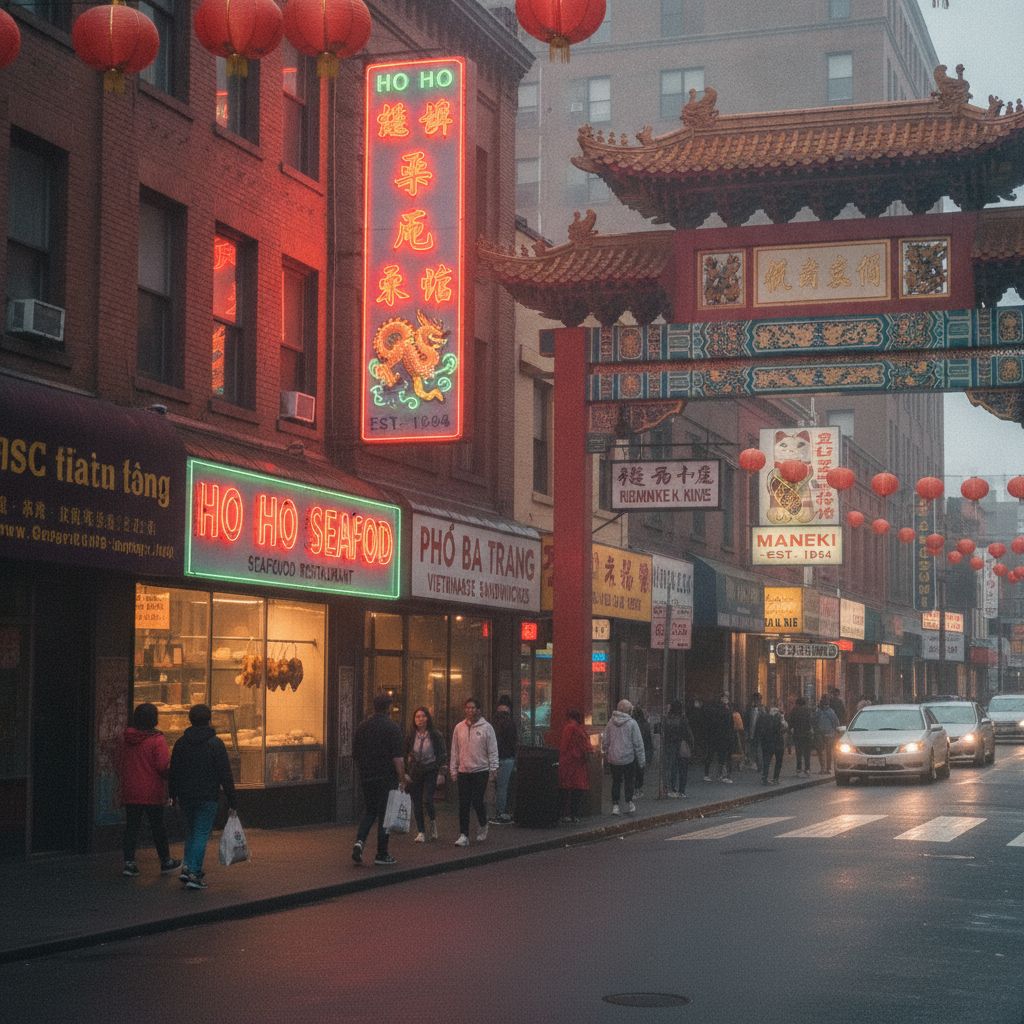
Chinatown-International District & Seattle's Asian-American Heritage
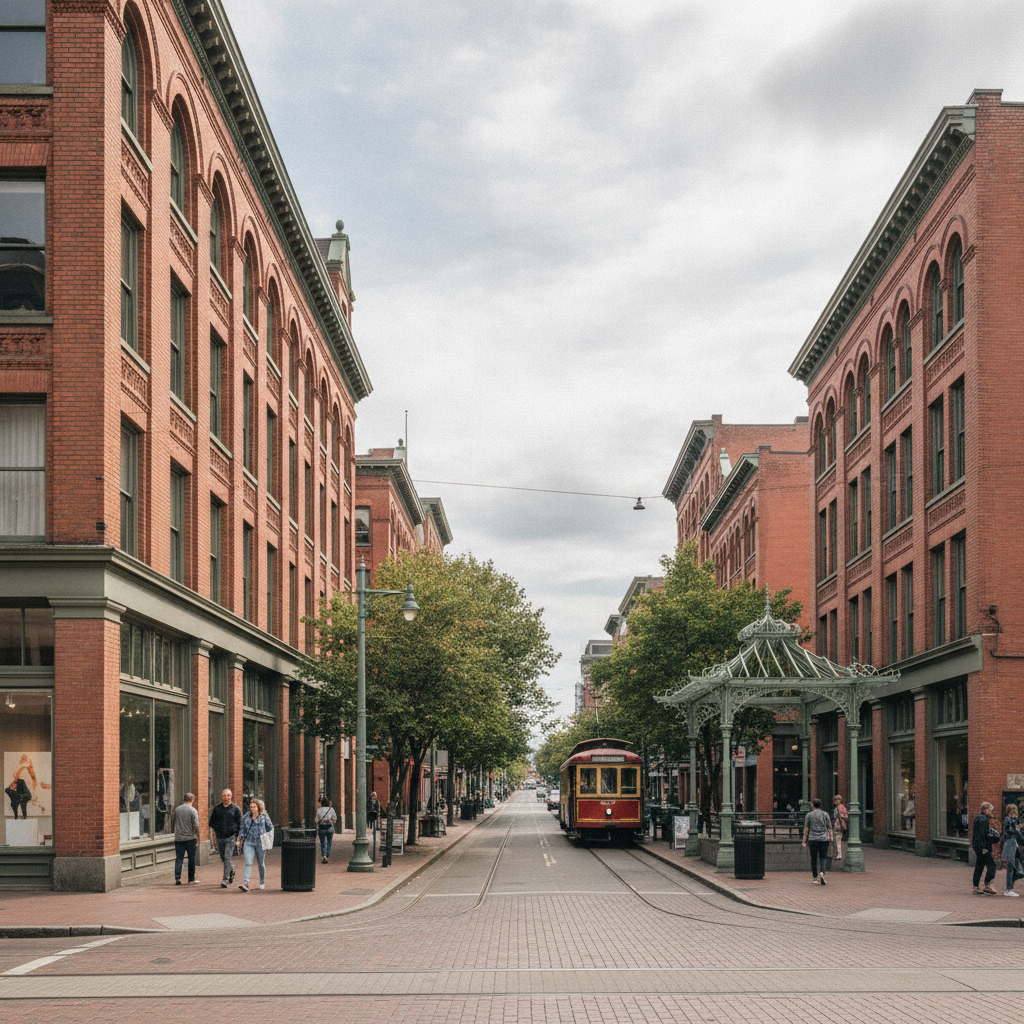
Pioneer Square, the Underground & Seattle's Gold Rush History
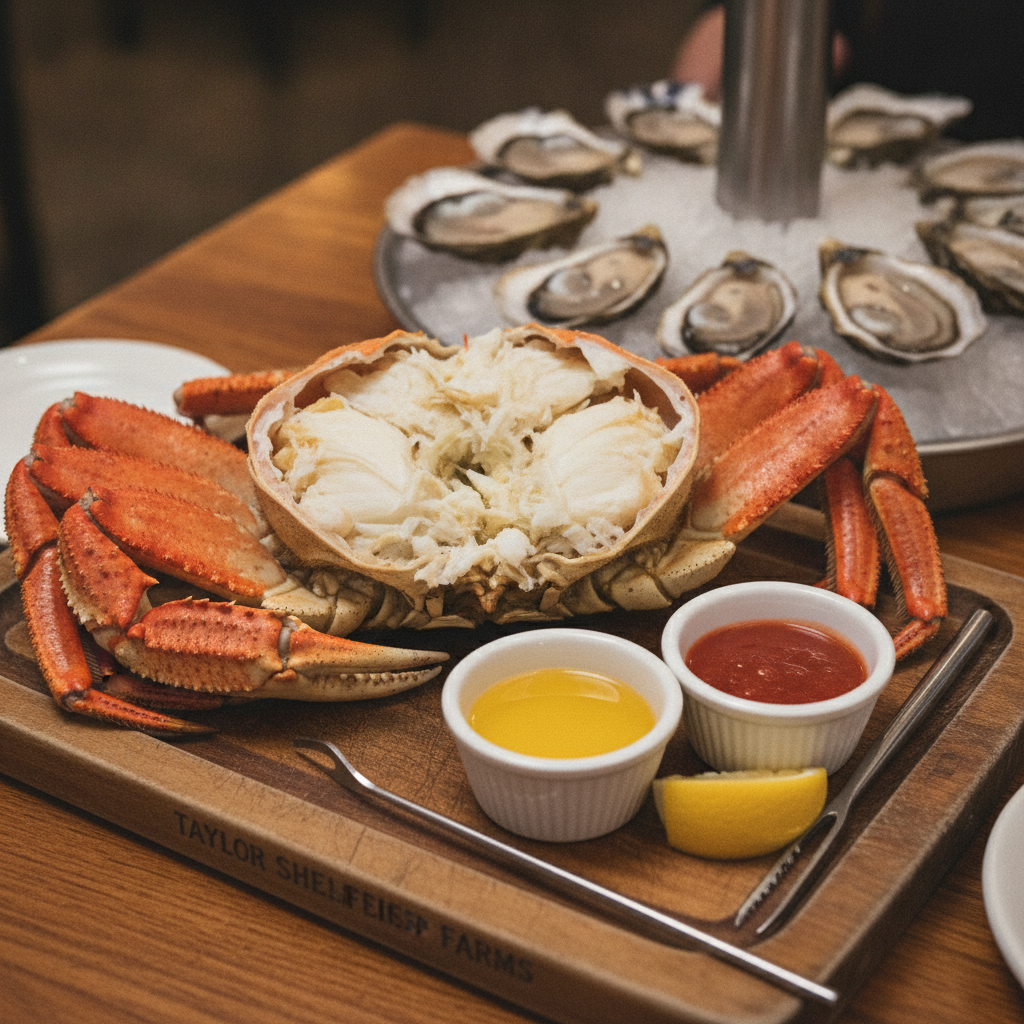
Seattle Food Scene — Pacific Seafood, Craft Beer & Farm-to-Table
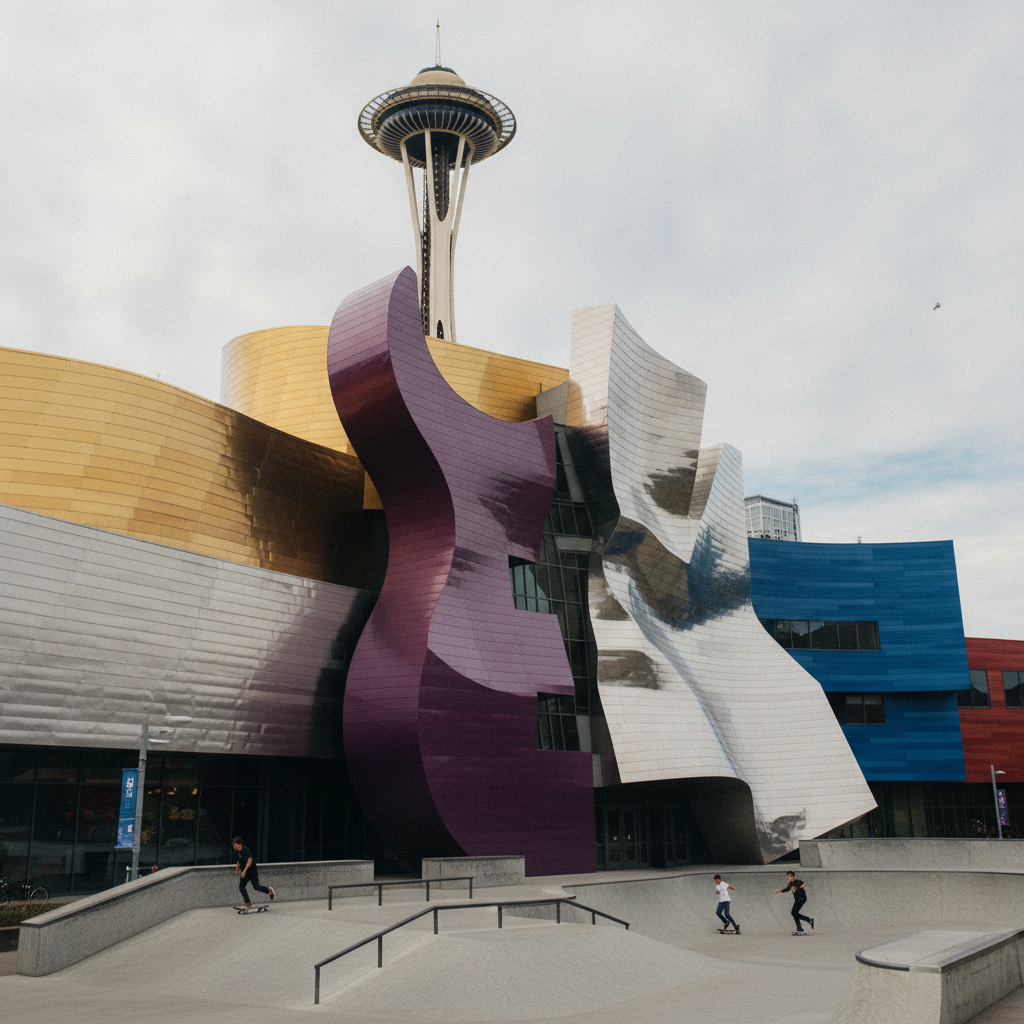
Grunge, Jimi Hendrix & Seattle's Music Legacy
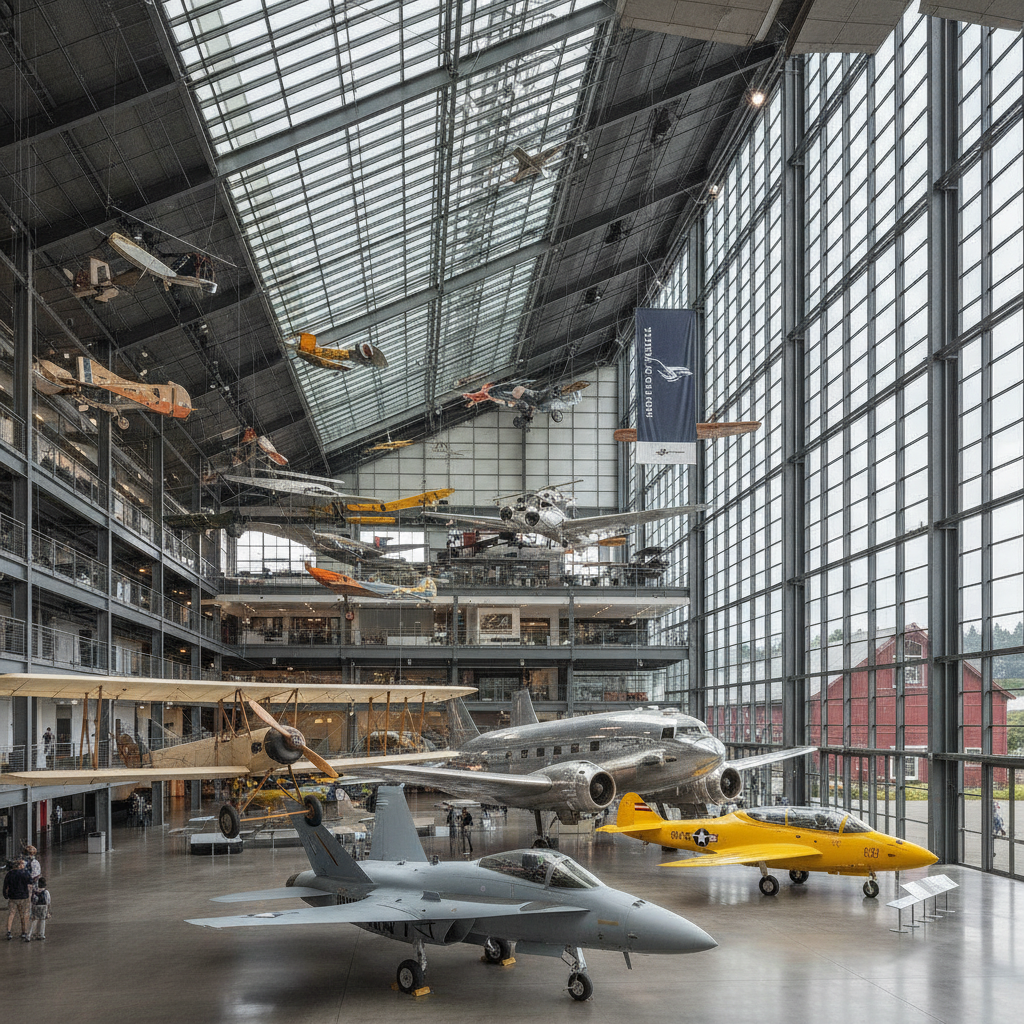
Boeing, the Museum of Flight & Seattle's Aviation Heritage