The Accidental Miso Drip That Created a Ramen Style, the Sea Urchin Whose Sweetness Peaks in August & the Summer Beer Garden That Runs the Full 1.5 Kilometres of the Park
The 1955 Aji-no-Sanpei miso accident and the corn-and-butter topping as Hokkaido's agricultural signature; Hokkaido's 25% of Japan's total seafood by weight and the Rishiri Bafun Uni as the premium label; the Jingisukan dome grill's fat-management design and the Hokkaido soft serve's 3–4% higher milk fat; the Susukino Jazz Club concentration and the ice sculpture interiors lit through transparent ice; Lake Shikotsu's 28-metre winter transparency and the Mount Usu lava dome preserved as a 2000 eruption geopark; and the Furano lavender panorama as Hokkaido's most internationally reproduced photograph.
- 1
Sapporo Ramen – The Original Miso Style
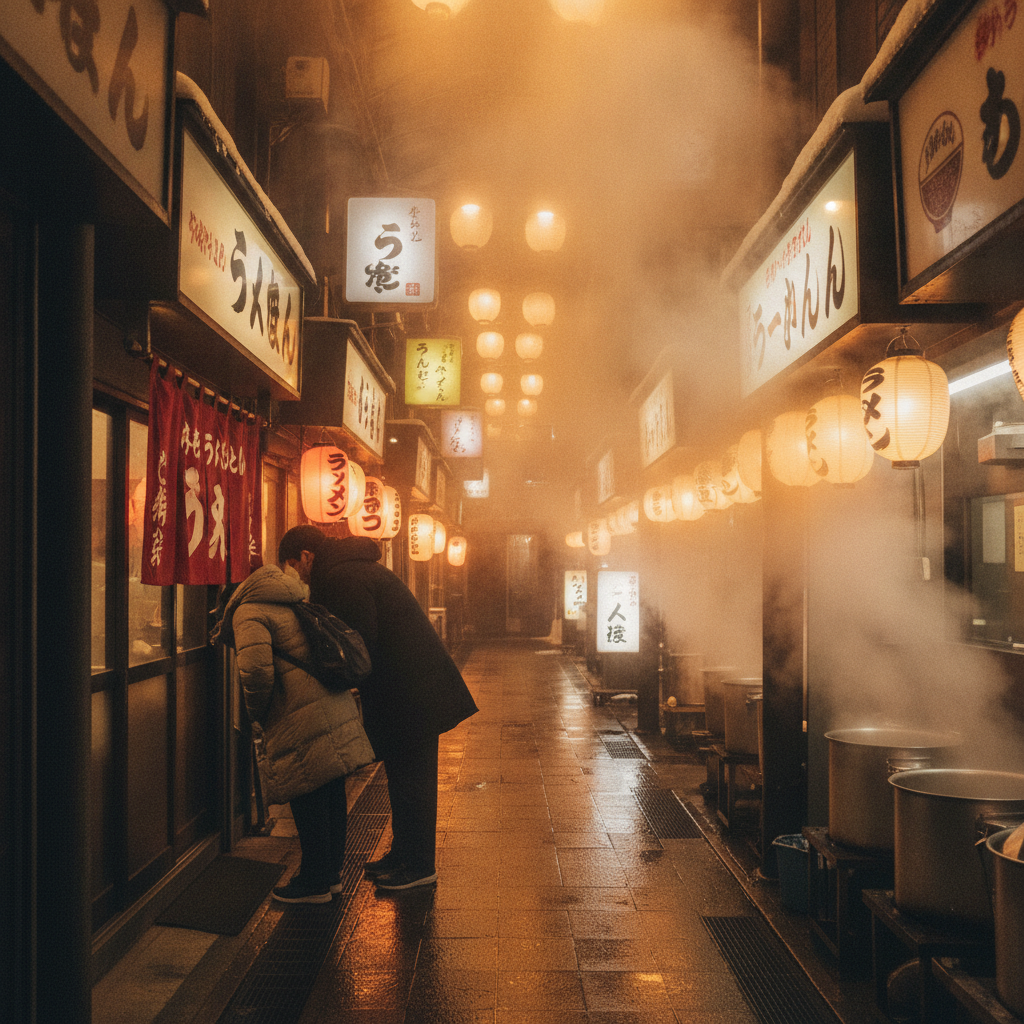
Sapporo Ramen (the miso-base ramen style originating in Sapporo in the late 1950s—the most significant regional ramen style in Japan and the style that established miso as a viable ramen soup base for the first time in Japan's ramen history): the first Sapporo miso ramen is attributed to the chef Morito Omiya at the Aji-no-Sanpei restaurant in Sapporo's Nishi Ichijo district in 1955 (the story—he accidentally dripped miso into a ramen stock pot while cooking a miso-marinated pork dish, tasted the result, and recognized the combination's potential): the restaurant is still operating and widely regarded as the birthplace of miso ramen. The Sapporo ramen characteristics (the Sapporo miso ramen as standardized by the 1950s–1960s development): the miso-based soup (the akamiso or shiro-akamiso blend), the medium-wavy noodles (the thick wavy noodle that holds the miso broth better than the straight noodle), the characteristic toppings (corn, butter, bean sprouts, bamboo shoots, and chashu pork—the corn-and-butter combination is the Hokkaido addition, reflecting the area's agricultural production). The Sapporo Ramen Yokocho (the Ramen Alley—the Nishi 3-chome ramen alley in the Susukino district; approximately 17 small ramen restaurants in a covered lane; open until 02:00; the most concentrated ramen experience in Sapporo): the alley's atmospheric cramped conditions and the soup steam create the most evocative late-night ramen ambience in Japan after Tokyo's Shinjuku Golden Gai.
- 2
Hokkaido Seafood – Crab, Uni & Salmon
Hokkaido is Japan's primary seafood producing prefecture—the cold Oyashio and Tsushima ocean currents meeting in Hokkaido's coastal waters produce the most diverse and high-volume marine food supply in Japan, accounting for approximately 25% of Japan's total seafood production by weight and a significantly higher proportion by value. The key Hokkaido seafood species: the Taraba-gani (King Crab—the largest crab in Japanese seafood, with legs reaching 1 metre span; available throughout the year but peak season October–May): Sapporo's Nijo Market and the Curb Market (Jogai Ichiba) at New Chitose Airport are the most convenient purchase points. Sea urchin (Bafun Uni (green sea urchin) and Murasaki Uni (purple sea urchin) from Hokkaido's Okhotsk Sea coast—the sweetest, least bitter sea urchin in Japan; the Rishiri Bafun Uni, harvested from the kelp beds around Rishiri Island, is the most premium label): the peak season is June–August (summer) when the roe is largest and sweetest. Ikura (the salmon roe—the salmon roe from Hokkaido's Chitose River and the other Shiretoken river systems that produce Japan's highest-quality ikura): the autumn salmon run (September–October) produces the freshest ikura. The Sapporo food market circuit: the Nijo Market (Sapporo's oldest seafood market, 5 minutes from the city center; open from 07:00; the most tourist-accessible market in Hokkaido for buying and eating fresh seafood at the stall counters); and the Sapporo Central Wholesale Market (the professional supply market that opens to the public for tours on certain days—the most impressive seafood volume in Japan outside Tokyo's Toyosu Market).
- 3
Jingisukan & Hokkaido Dairy
The two Hokkaido food identities that have no direct equivalent elsewhere in Japan: the Jingisukan lamb barbecue and the Hokkaido dairy culture. Jingisukan (the lamb and vegetables cooked on a dome-shaped cast-iron grill—the grill's dome shape allows the fat to run outward into the rim channel rather than pooling in the center; the dish is named after Genghis Khan (Jingisukan in Japanese), either because of the Mongolian connection to lamb consumption or because the Mongolians were said to cook meat on their shields (the dome shape)): Hokkaido accounts for approximately 75% of Japan's domestic lamb production, and the Jingisukan culture is deeply embedded in Hokkaido's agricultural identity. The Hokkaido dairy (Hokkaido produces approximately 50% of Japan's milk and dairy products—the cool climate and the extensive pasture of the Tokachi and Furano plains provide the conditions for Japan's most productive dairy farming): the most visible Hokkaido dairy food expressions are the Hokkaido soft serve ice cream (the milk fat content 3–4% higher than mainland soft serve; available throughout Hokkaido at farm-gate shops and convenience stores); the Hokkaido cheese (the Furano cheese and the Biei selection—the two most internationally recognised Hokkaido artisan cheese regions); and the Hokkaido butter (the Yotsuba and Snow Brand Hokkaido butters available in the fermented and cultured styles that distinguish Hokkaido butter from standard Japanese butter).
- 4
Susukino – Japan's Northernmost Entertainment District
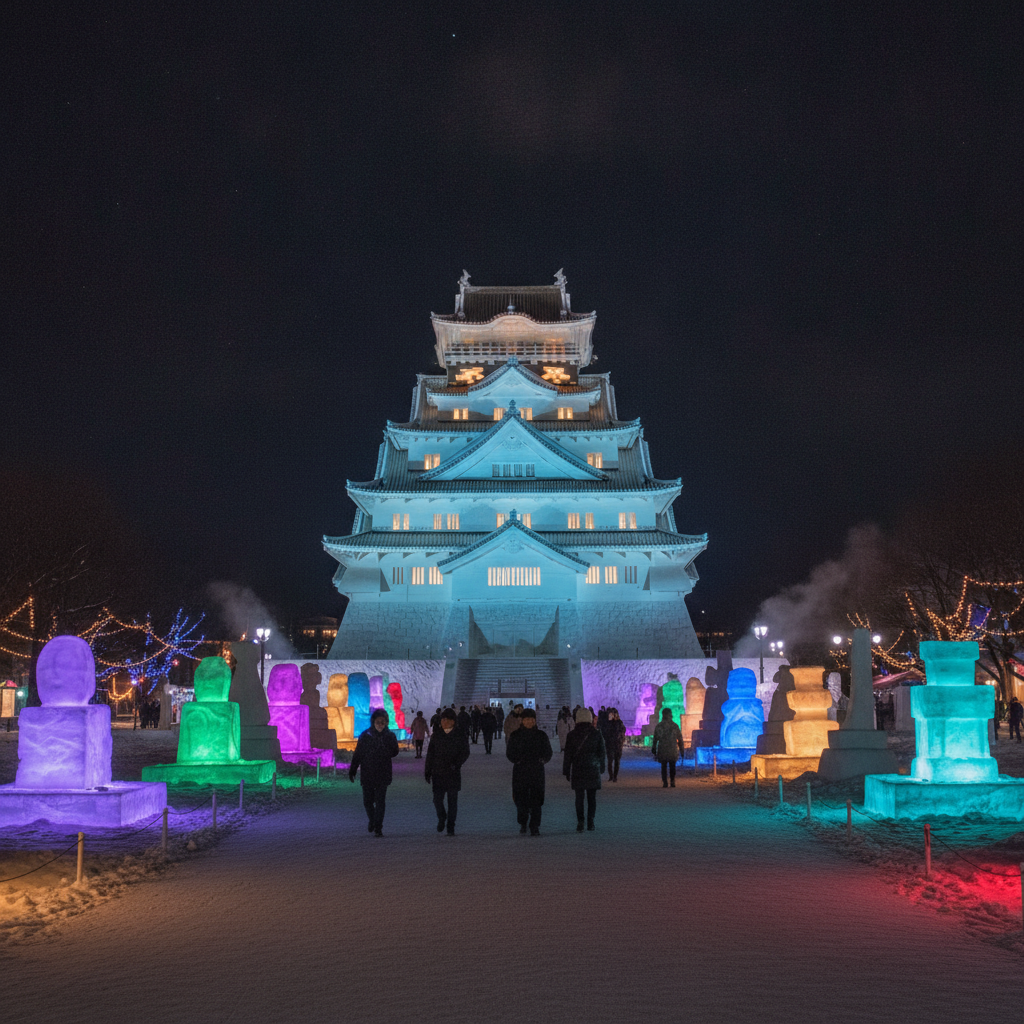
Susukino (the entertainment district at the southern end of Sapporo's central core—the neon-lit area of approximately 3,000 restaurants, bars, karaoke parlors, pachinko halls, and nightclubs concentrated in a 6-block area): the largest entertainment district in Japan north of Tokyo. The Susukino geography (the district is centred on the Susukino intersection—the junction of Kita 4-Jo and Nishi 4-Chome (south of the central grid); the area extends southward from the Susukino subway station along the main street and its parallel alleys): the Susukino ramen alley (Ramen Yokocho), the Susukino crab restaurants, and the Susukino karaoke bars form the three primary tourism-relevant nodes in the district. The Sapporo Jazz scene (the Sapporo Jazz connection—the city has one of Japan's most active jazz cultures, rooted in the American occupation-era jazz venues that developed around the Susukino entertainment district from the late 1940s; the Sapporo Jazz Forest Festival (August) is the largest outdoor jazz event in Hokkaido; the Sapporo Jazz Club concentration in the Minami 4–5-Jo area): the jazz scene provides the most culturally specific nightlife option in a city where the mainstream entertainment is primarily food and karaoke. The ice sculpture site (the Susukino Ice Festival—the ice sculpture competition held simultaneously with the Snow Festival in February: the Susukino district's ice sculptures are carved transparently so the interior LED lighting can be seen through the ice).
- 5
Hokkaido Nature from Sapporo – Toya, Shikotsu & Beyond
Hokkaido's national parks and natural landscapes accessible from Sapporo constitute the most diverse single-city day-trip nature range in Japan. Lake Toya (the caldera lake 100 km southwest of Sapporo—the UNESCO Geopark; the Mount Usu volcano active eruption in 2000 created the most complete volcanic landscape accessible to visitors in Japan (the lava dome, the volcanic fissure field, and the buried road and building ruins preserved as the 'Nishiyama Crater Trail'): 2 hours by JR Hakodate Line + Lake Toya bus, or the Donan Bus highway service from Sapporo. Lake Shikotsu (the deep caldera lake 60 km south of Sapporo—the caldera lake with the clearest water in Japan (secchi depth transparency of 20–28 metres in winter) and the most consistent temperature (the deep cold water keeps the lake from freezing in winter, making it a reliable winter landscape when most Hokkaido lakes are frozen): 1 hour from Sapporo by Chuo Bus. The Daisetsuzan National Park (the largest national park in Japan at 226,764 hectares—the Hokkaido central mountains with Japan's northernmost alpine zone (above 2,000 metres) and the most extensive backcountry hiking terrain in Japan): 2 hours from Sapporo by JR to Asahikawa + Daisetsuzan bus. The Noboribetsu Onsen (the most visited hot spring resort in Hokkaido—the Jigokudani (Hell Valley) volcanic vent area on the resort's edge, with 10 different spring types within 1 km radius): 1h20m from Sapporo by JR to Noboribetsu + bus.
- 6
Sapporo's Summer – Green Season & Outdoor Festivals
Sapporo's summer (June–August) is the season that most surprises first-time visitors expecting a cold northern city—the Hokkaido summer is warm (average July temperature 22°C, the most comfortable major Japanese city in summer), dry (Hokkaido receives its lowest precipitation in June–August when the Pacific High blocks the frontal systems that drench the main island), and green (the combination of the former agricultural experimental farms, the parks, and the street trees (Sapporo planted the largest number of street trees per citizen of any Japanese city in the 1970s urban expansion) creates the 'Garden City' atmosphere that stands in complete contrast to the winter snow city). The Sapporo Summer Festival (July 20–August 20—the festival that transformed the Odori Park event calendar from a single Snow Festival into a year-round programme: the Beer Garden (the outdoor beer garden running the full 1.5 km of Odori Park with multiple brewery tents serving draft beer with food stalls; attended by 2 million visitors over the month). The Furano Lavender (the Furano basin, 2 hours north of Sapporo by JR Furano Line—the Lavender fields of Furano (peak bloom: mid-July); the largest lavender cultivation area in Japan; the Farm Tomita lavender farm's photographs (the panoramic image of the purple lavender rows against the Daisetsuzan mountain backdrop) are the most internationally reproduced landscape photograph from Hokkaido). The Sapporo Lilac Festival (mid-May: the pre-summer event before the main summer season begins; the first outdoor festival of the Hokkaido year and the one that announces the end of winter).
Walk this route with audio
Stories play automatically as you reach each stop — no tapping needed.
More in Sapporo
The Clock Tower Ranked Japan's Most Disappointing Sight That Is Actually a Genuinely Important Building, the 90-Minute Curling Introduction & Bernstein's Festival That Brought 350 Musicians From 40 Countries
The Australian Snowboarders Who Found the Powder in 2001 & Made It Japan's Most Expensive Real Estate by 2023, the September Colour That Beats Tokyo's by 6 Weeks & the ¥200,000 Melon
The Pacific Music Festival That Bernstein Started, the Salmon Running Through Central Sapporo in October & the Powder Snow That's Decreased From 40% to 30% of Winter Days Since 1980
The City Named by Ezo Red Squirrels and Grid-Street Coordinates, Japan's First National Ainu Museum Opened in 2020 & the February Canal Candles That Run Simultaneously With the Snow Festival