The City Named by Ezo Red Squirrels and Grid-Street Coordinates, Japan's First National Ainu Museum Opened in 2020 & the February Canal Candles That Run Simultaneously With the Snow Festival
The Maruyama Shrine's 4 Meiji development deities and the Ezo red squirrel sightings on the 225-metre urban forest trail; the Okurayama jump platform's acrophobia-inducing 85-metre look down over central Sapporo; the Pioneer Village's 52 original buildings and its self-critical Ainu displacement exhibit; the Upopoy Museum's political significance as Japan's first formal acknowledgment of the Ainu as an indigenous people in law; the Otaru Canal warehouses and the Tategoshi sake tasting; and Sapporo's American grid-plan address system as Japan's most navigable city.
- 1
Maruyama Park & the Western Sapporo Circuit
Maruyama Park (the urban park on the western edge of the Sapporo city center—the 60-hectare park containing the Hokkaido Shrine (Hokkaido Jinja—the principal Shinto shrine of Hokkaido, established in 1869 as the guardian shrine for the Meiji government's Hokkaido development programme), the Mount Maruyama primitive forest (the 48-hectare primeval broadleaf forest on the Maruyama hilltop—one of the very few ancient forests surviving within a Japanese city boundary), and the Sapporo Zoo): the park is the finest urban nature space in Sapporo and the most complete example of a preserved Sapporo urban ecosystem. The Hokkaido Shrine (the Hokkaido Jinja—the Meiji government's 1869 establishment of a guardian shrine for Hokkaido: the shrine was established specifically to enshrine the deities of development (the 4 protective deities of the Meiji Hokkaido colonization programme are enshrined here—an unusual example of Shinto theology applied to a development project): the spring matsuri (the Hokkaido Jinja Matsuri, 14–16 June—the Sapporo summer festival within the Maruyama area; the most popular annual matsuri in Hokkaido, drawing 2 million visitors over 3 days). The Mount Maruyama climb (the 225-metre hilltop accessible by 20-minute walk from Maruyama Koen subway station—the most accessible semi-wild urban forest in Japan, with red squirrel (Ezorisu) sightings common along the trail): the Ezo red squirrel, endemic to Hokkaido, is the most reliably observable wild mammal in the Sapporo urban area.
- 2
Sapporo's 1972 Winter Olympics Legacy
The 1972 Sapporo Winter Olympics (the 11th Winter Olympic Games, held February 3–13, 1972—the first Winter Olympics held in Asia; 35 nations, 1,006 athletes): the Games transformed Sapporo from a regional development city into an internationally known sports destination and left a permanent infrastructure legacy that continues to shape the city. The surviving venues: the Okurayama Ski Jump Stadium (the ski jump venue for the 1972 Games—the 90-metre jump (now redesignated as the Normal Hill at 85m); the observation deck at the top of the jump accessible by chairlift (¥1,000); the view from the jump platform looking down the 85-metre drop over central Sapporo is the most acrophobia-inducing viewpoint in Sapporo and the one most recommended for the experience of scale): accessible by bus from Maruyama Bus Terminal. The Makomanai Indoor Rink (the skating arena—the largest covered skating arena in Asia when constructed in 1972; now used primarily for mass skating and speed skating events; Sapporo's most directly Olympic-legacy recreational facility). The Sapporo Olympic Museum (the museum adjacent to the Okurayama Ski Jump Stadium documenting the 1972 Games and the history of Winter Olympics): the bobsled simulator (the motion-control simulation ride replicating a bobsled descent: the most popular exhibit in the museum and the only place in Sapporo where visitors experience the physical sensation of Winter Olympic sports). The 2030 Winter Olympic bid (the Sapporo bid for the 2030 Winter Olympics was withdrawn in 2023 following public polling showing insufficient support; the 2034 bid was also withdrawn; the next Sapporo Olympic opportunity is considered 2038 or beyond).
- 3
The Hokkaido Pioneer Village & Meiji Heritage
The Hokkaido Kaitaku no Mura (Pioneer Village—the open-air museum of Meiji and Taisho-era Hokkaido buildings assembled from original structures relocated from throughout Hokkaido to a 54-hectare site on the eastern outskirts of Sapporo): the most comprehensive single-site documentation of the Meiji-era Hokkaido 'development' (kaitaku) that brought 300,000 Japanese settlers to Hokkaido between 1869 and 1900. The Pioneer Village buildings: 52 original structures including the Sapporo Chief Factory (the Meiji government's factory for western-style goods production), the Hakodate Bank branch (the architecture of the Meiji banking network that financed Hokkaido development), and the Ainu-style storage house (the tatami-based storage building used by the Japanese-Ainu mixed communities of the southern Hokkaido coast in the late Meiji period): the village's architectural range (from the western-influenced colonial architecture of the Meiji government buildings to the hybrid Japanese-Ainu structures of the farming communities) is the most architecturally diverse collection in the Kanto-and-north region. The horse-drawn tram (the tram service operating within the Pioneer Village using a restoration of the original Sapporo street tram): the most practical transport within the large village site and a functional Meiji-era transport experience. The Ainu representation in the Pioneer Village (the limited representation of Ainu culture and the Meiji-era colonial displacement of the Hokkaido Ainu as a documented historical reality within the Pioneer Village's exhibits—the most openly self-critical cultural museum exhibit about the Japanese colonization of an indigenous people in the Japanese museum system).
- 4
Sapporo's Ainu Heritage – Upopoy National Museum
The Upopoy National Ainu Museum (Upopoy—the word means 'singing together in a large group' in the Ainu language; the national museum opened in July 2020 on the shore of Lake Poroto in Shiraoi, 60 km south of Sapporo by JR): the first national-level museum dedicated to the Ainu people (the indigenous people of Hokkaido, the Kuril Islands, and Sakhalin), opened specifically on the site of a traditional Ainu village. The Ainu people: the Ainu (the indigenous population of Hokkaido prior to the 19th-century Japanese settlement programme): the Ainu language (unrelated to Japanese, Korean, or any known language family—a language isolate with approximately 10 fluent native speakers remaining as of 2026 and a revitalization programme with approximately 100 learners); the Ainu traditional practices (salmon fishing, bear ceremony (the Iyomante—the bear-sending ceremony; the most complex Ainu religious rite), weaving, and carving). The museum's significance: the Upopoy is the most important political statement in Japanese museum policy since the Hiroshima Peace Memorial Museum—the Japanese government's formal acknowledgment (in the 2019 Ainu Act) of the Ainu as an 'indigenous people' (for the first time in Japanese law) is embodied in the museum's existence. The access from Sapporo: the JR Hokkaido train from Sapporo to Shiraoi Station (50 minutes; ¥1,030); the museum is a 5-minute walk from the station. The Ainu cultural performance (the traditional music and dance performances at the Upopoy museum stage—held daily; the mukkuri jaw harp and the upopo song circle performances are the most accessible Ainu cultural expressions for visitors without language knowledge).
- 5
Otaru – Sapporo's Canal City Day Trip
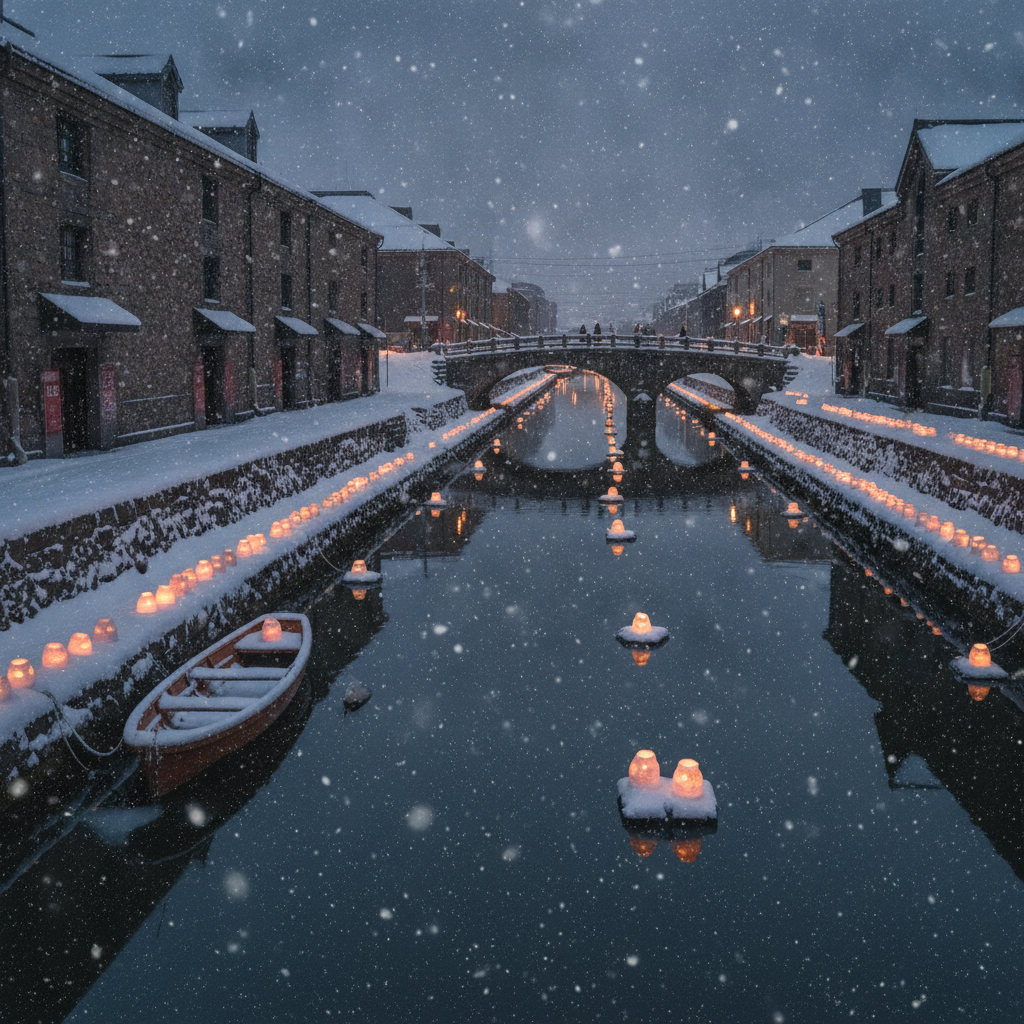
Otaru (the port city 40 km northwest of Sapporo—30 minutes by JR Hakodate Line; ¥750): the 19th-century trading port whose stone warehouses along the Otaru Canal became the most historically atmospheric waterfront in Hokkaido and one of the most visited day-trip destinations from Sapporo. The Otaru Canal (the 1.1 km stone-walled canal built in 1923 as a maritime logistics channel for Otaru's trading economy—now lined with restored warehouse buildings containing restaurants, cafes, and glass craft studios): the most romantically atmospheric walk in the Sapporo day-trip range. The Otaru glassware tradition (the Kitaichi Glass and Otaru Music Box tradition—Otaru's craft identity built around the glassblow studios and the large wind-up music box shops concentrated in the Sakaimachi Street shopping area): the Kitaichi Glass complex (the largest glass craft retail complex in Hokkaido) and the Otaru Music Box Museum are the two most visited Otaru sites after the canal. The Otaru sake (the Tanaka Sake Brewery—the historic sake brewery founded in 1899 in Otaru using Hokkaido snowmelt water; the Tategoshi (vertical-filtering) sake production method produces the distinctively clean, light Otaru sake style): the brewery tasting room is open for free tasting Tuesday–Sunday. The Otaru winter illumination (the Otaru Snow Light Path (Yuki Akari no Michi)—the February illumination event running simultaneously with the Sapporo Snow Festival: snow candles and lanterns lining the canal and side streets; the most atmospheric small-city winter light event in Japan).
- 6
Sapporo's Architecture – The Meiji Grid City
Sapporo is unique among Japanese cities in having been planned from scratch using a grid plan designed by American agricultural advisors in the 1870s—the only Japanese city with a street numbering system (the Sapporo address system of Kita/Minami (North/South) and Higashi/Nishi (East/West) coordinate numbers instead of the normal Japanese neighborhood name system): the result is the easiest city in Japan to navigate by address. The Sapporo Kaitakushi architecture (the Meiji government's Hokkaido Development Commission (Kaitakushi) buildings in central Sapporo—the Sapporo Beer Museum's red-brick brewery, the Former Hokkaido Government Building (the 'Red Brick' Building (Aka-Renga)—the 1888 government building in the American Romanesque style that is Sapporo's most recognizable non-festival landmark; open for free public access), and the former Agricultural School of Clark): the most architecturally coherent set of American-influenced Meiji government buildings in Japan. The Contemporary architecture: the new Sapporo Grand Hotel (the 1934 hotel rebuilt in 2025 as the most architecturally ambitious new hotel building in Hokkaido); the JR Tower (the 38-floor observation and hotel tower above Sapporo Station—the tallest building in Hokkaido at 173 metres; the T38 observation deck (¥740) is the best elevated viewpoint in central Sapporo). The Sapporo city garden system (the urban green space programme: Sapporo has the highest green coverage ratio of any Japanese city over 1 million population, at approximately 16% of city area—the combination of the mountain parks (Maruyama, Moiwa), the university research farms (Hokkaido University, Hokkaido Research Organization), and the urban street trees).
Walk this route with audio
Stories play automatically as you reach each stop — no tapping needed.
More in Sapporo
The Clock Tower Ranked Japan's Most Disappointing Sight That Is Actually a Genuinely Important Building, the 90-Minute Curling Introduction & Bernstein's Festival That Brought 350 Musicians From 40 Countries
The Australian Snowboarders Who Found the Powder in 2001 & Made It Japan's Most Expensive Real Estate by 2023, the September Colour That Beats Tokyo's by 6 Weeks & the ¥200,000 Melon
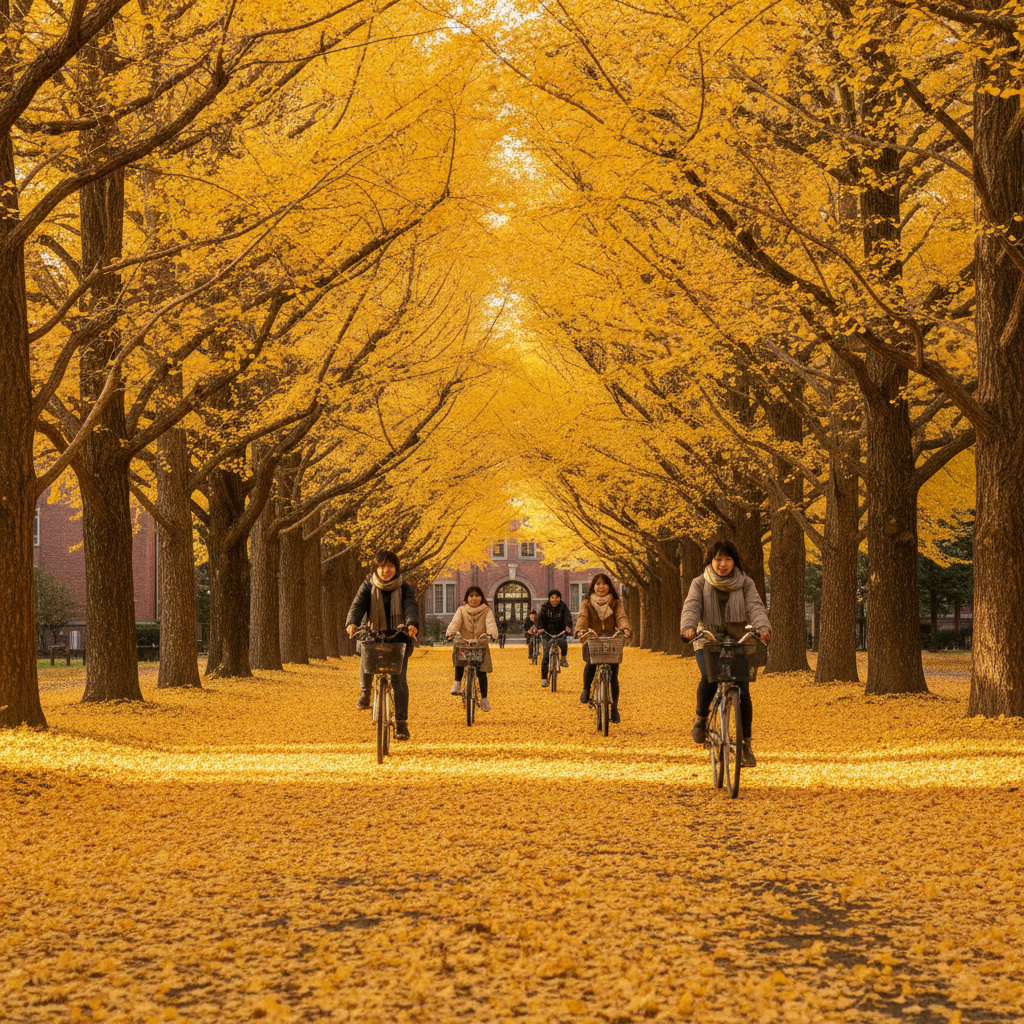
The Pacific Music Festival That Bernstein Started, the Salmon Running Through Central Sapporo in October & the Powder Snow That's Decreased From 40% to 30% of Winter Days Since 1980
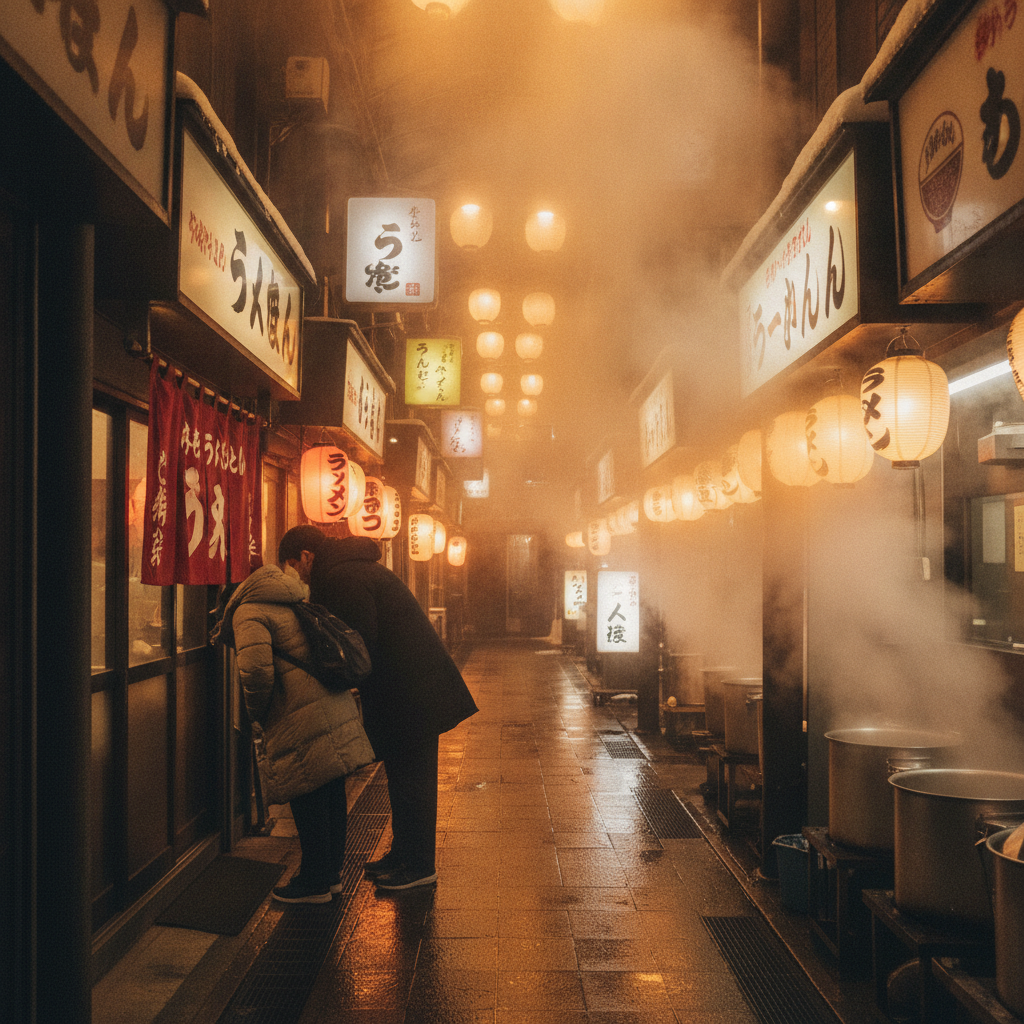
The Accidental Miso Drip That Created a Ramen Style, the Sea Urchin Whose Sweetness Peaks in August & the Summer Beer Garden That Runs the Full 1.5 Kilometres of the Park