The Australian Snowboarders Who Found the Powder in 2001 & Made It Japan's Most Expensive Real Estate by 2023, the September Colour That Beats Tokyo's by 6 Weeks & the ¥200,000 Melon
The Biei Blue Pond discovered in 2010 now as Hokkaido's most shared image and the Christmas Tree spruce alone in the potato field; Niseko's 2001–2023 transformation from domestic family resort to ¥12 million/m² luxury property driven by powder-chasing Australians then Chinese investors; Daisetsuzan's September alpine colour as Japan's earliest autumn viewing and the 5-day Grand Traverse as the country's most demanding multi-day trail; the Yubari King melon at ¥200,000 per auction pair and the Yoichi single malt as Japan's most internationally awarded whisky; and the penguin parade 600 metres through winter snow as Japan's most unexpected zoo experience.
- 1
Furano & Biei – The Hokkaido Patchwork Hills
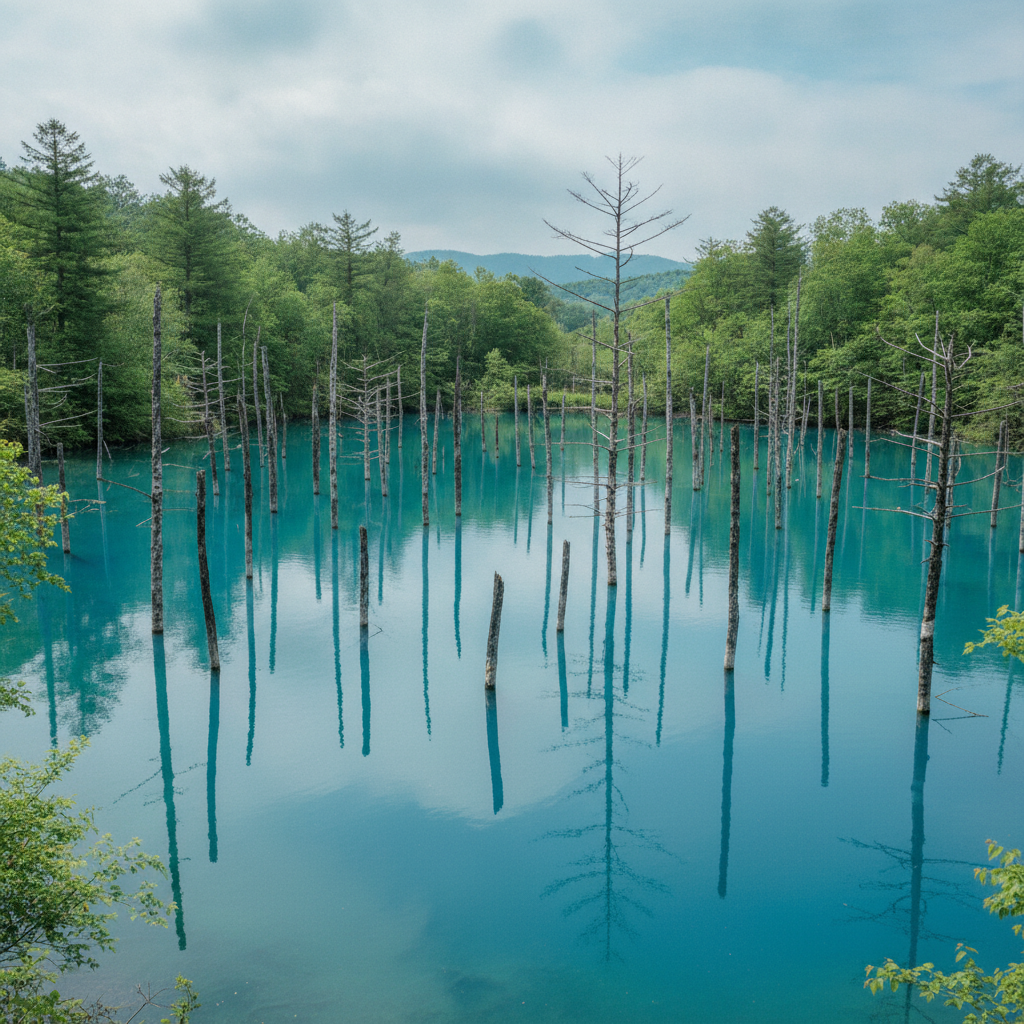
Furano and Biei (the twin agricultural plateau areas 150 km north of Sapporo—accessible by JR Furano Line from Sapporo via Takikawa (2h15m); the most photographed agricultural landscape in Japan, and among the most photographed in the world): the patchwork quilt effect of the colored field crops (lavender, sunflower, buckwheat, pumpkin, potato, and corn arranged in color blocks) against the Daisetsuzan mountain backdrop creates the landscape image most associated with Hokkaido internationally. The Furano lavender (Farm Tomita—the private lavender farm established by Tomita Tokuma in 1958 that singlehandedly revived the Hokkaido lavender industry after the 1950s collapse of domestic lavender production (the collapse was caused by cheaper synthetic lavender for perfume manufacture)): the Farm Tomita lavender panorama (the 8 varieties of lavender planted in parallel rows of increasing purple intensity with the Tokachi Mountains behind) is the most internationally reproduced landscape photograph from Japan. Biei (the hilltop agricultural town 20 km north of Furano—the Patchwork Road scenic cycling route, the Blue Pond (the Shirogane Blue Pond—the turquoise-blue pond formed by aluminum hydroxide precipitation from the Biei River spring water, discovered in 2010 and now Hokkaido's most shared social media image), and the Christmas Tree (the lone Picea jezoensis spruce surviving in the middle of a potato field—the most photographed single tree in Japan).
- 2
Niseko – Hokkaido's International Ski Resort
Niseko (the ski resort area on the slopes of Mount Annupuri (1,308 metres)—the most internationally recognised ski resort in Japan and the most visited by international visitors): the story of Niseko's transformation from a domestic Japanese family ski resort to the highest-value real estate ski market in Asia is the most dramatic tourism development story in modern Japanese economic history. The development timeline: pre-2000 (Niseko was a medium-sized domestic resort visited primarily by Sapporo families and Hokkaido University students—international visitors were essentially zero); 2000–2010 (the Australian snowboarding community discovered the Niseko powder in 2000–2001, the word spread through the Australian ski community, and Australian visitor numbers grew from approximately 5,000 in 2001 to 50,000 by 2010); 2010–2023 (the Chinese and Hong Kong luxury investment community developed Niseko into the most expensive per-square-metre resort property market in Japan—apartment prices at Grand Hirafu reaching ¥8–12 million per m²). The current Niseko (the 4-resort complex: Grand Hirafu (the largest), Hanazono (the most family-oriented), Niseko Village (the Hilton-anchored mid-mountain resort), and Annupuri (the quietest)): the Niseko All Mountain Pass (the unified lift ticket covering all 4 resorts; approximately ¥8,000–10,000/day in peak season). The Niseko non-ski season (summer Niseko—rafting on the Shiribetsu River, cycling the Mt. Yotei circuit, and the Niseko Farm stays): the growing summer programme that extends the resort's economic season beyond the December–March ski period.
- 3
Daisetsuzan – Hokkaido's Wild Heart
Daisetsuzan National Park (the largest national park in Japan at 226,764 hectares—the 'Great Snow Mountain Range' of central Hokkaido, containing Japan's northernmost high alpine zone): the least-visited major national park in Japan relative to its size and the one with the most intact wilderness. The key areas: Asahidake (the highest peak in Hokkaido at 2,290 metres—accessible by ropeway from Asahidake Onsen (2,000 JPY return); the ropeway terminus at 1,600 metres and the walking circuit to the Sugatami Pond (the crater lake at 1,750 metres with the mountain's fumarolic vents visible across the water in the clearest example of active volcanic landscape in the Hokkaido national parks)). The autumn colour (the first autumn colour in Japan occurs at Daisetsuzan in mid-September—the Hokkaido high alpine zone turns colour 4–6 weeks before the Tokyo autumn season in November; the Asahidake rope way area's mountain slope colour in mid-September is the earliest significant autumn colour viewing available in Japan). The Daisetsuzan hiking network (the 200+ km of backcountry trails connecting the volcanic peaks of the central Hokkaido range): the Grand Traverse (the 5-day route from Asahidake to Tokachidake crossing 8 significant peaks—the most physically demanding but also most rewarding multi-day trail in Japan). The onsen: the Tokachidake Onsen (the highest onsen in Hokkaido at 1,280 metres—the most remote major onsen in Hokkaido, requiring a 3-km walk from the nearest road access point; the reward is the combination of the mountain landscape and the sulfur spring water).
- 4
Sapporo's Contemporary Food Culture
Beyond the ramen and seafood traditions, Sapporo has developed a contemporary food culture that reflects both the city's agricultural supply advantages and its international exposure from the ski resort market. The Sapporo restaurant scene (the concentration of independent restaurants in the areas around Shimo-Oshima and the Susukino south end—the Hokkaido produce-focused restaurants using the direct farm-to-table connection that Sapporo's proximity to the Tokachi, Yūbari, and Furubira farming areas makes uniquely possible): the Yūbari melon (the most expensive melon in Japan—the Yūbari King brand cantaloupe grown in the Yūbari city greenhouses using the volcanic pumice soil that produces the sweetest melon in Japan; perfect-grade Yūbari Kings selling at auction for ¥200,000+ per pair): available in Sapporo restaurants and department store food halls throughout the July–August melon season. The Sapporo cheese landscape (the Hokkaido cheese revolution of the past 15 years—the emergence of artisan cheese production in Biei, Niseko, and the Tokachi area that has produced Japan's most internationally recognized cheese labels): the Sapporo department store food halls (the Isetan Sapporo and the Daimaru Sapporo basement food floors) carry the most complete selection of Hokkaido artisan cheese available in any single retail location. The Sapporo whisky (the Nikka Whisky Yoichi Distillery (2 hours from Sapporo by train + bus)—the Hokkaido whisky distillery founded in 1934 by Masataka Taketsuru (the Japanese chemist who studied Scotch whisky production in Scotland and founded the Japanese whisky industry): the Yoichi single malt is Japan's most internationally awarded whisky and the Yoichi Distillery tour is Hokkaido's most visited single-attraction day trip).
- 5
Sapporo for Families & Solo Travelers
Sapporo's visitor infrastructure is among the most family-friendly of any Japanese city, reflecting the city's domestic tourism base (approximately 75% domestic Japanese visitors) and the Snow Festival's historic role as a family event. The family programme: the Sapporo Zoo (Maruyama Koen—the zoo within the park with Ezo brown bear (Ursus arctos yesoensis—the Hokkaido subspecies of brown bear, the largest bear in Japan), the Ezo deer, the red-crowned crane (Tancho—the Japanese crane that nests in the Kushiro marshes of eastern Hokkaido), and the polar bear section (the zoo's most popular exhibit, with the Sapporo Zoo polar bears (transferred from the Asahiyama Zoo's breeding programme))). The Asahiyama Zoo (in Asahikawa, 90 minutes from Sapporo by JR—the zoo that became Japan's most visited zoo in 2006 by introducing the behavioural exhibition concept (animals shown in naturalistic behaviours rather than static displays): the penguin parade (the winter walking exercise programme where the zoo's Humboldt penguins parade 600 metres through the zoo paths in the snow under keeper supervision—the most unexpected zoo experience in Japan). The Sapporo Curling Hall (the permanent curling facility in Sapporo—the Winter Olympic sport that has found the largest recreational following in Hokkaido since the 1998 Nagano Games when Japan won its first curling medals): visitor curling sessions (¥1,500–2,000 for a 90-minute introduction) are the most accessible way to try an Olympic winter sport in Japan.
- 6
Leaving Sapporo – The Hokkaido Impression
The Sapporo experience crystallizes around a specific quality unique to Hokkaido—the combination of natural scale (the mountains, the lake districts, the wilderness parks visible within 2 hours of the city) and agricultural richness (the dairy, the seafood, the produce) that produces a physical well-being that is distinct from any other Japanese city experience. The Hokkaido scale question (the consistent observation by first-time Hokkaido visitors—almost always articulated as surprise: 'It doesn't feel like Japan'—the road widths (Hokkaido road widths are 1.5–2× wider than comparable urban roads on Honshu, reflecting the American-grid planning and the agricultural vehicle requirements), the sky (the Hokkaido sky is visibly larger than on Honshu due to the absence of the dense building fabric and the topographical openness of the plateau landscapes), and the food portion sizes (Hokkaido restaurant portions are approximately 20–30% larger than Tokyo equivalents at the same price point—the agricultural surplus culture)). The objects to bring back: the Hokkaido cheese selection (the Biei artisan cheese and the Tokachi butter individually wrapped for transport); the Sapporo Classic beer (the Hokkaido-exclusive Sapporo label, available only in Hokkaido convenience stores and airport shops—the most requested Hokkaido food souvenir among Japanese mainland visitors); and the Yubari melon jelly (the processed melon product with the authentic Yubari flavour that survives the flight home). The return reason: Hokkaido has 4 genuinely distinct seasons—each season makes Sapporo a different city.
Walk this route with audio
Stories play automatically as you reach each stop — no tapping needed.
More in Sapporo
The Clock Tower Ranked Japan's Most Disappointing Sight That Is Actually a Genuinely Important Building, the 90-Minute Curling Introduction & Bernstein's Festival That Brought 350 Musicians From 40 Countries
The Pacific Music Festival That Bernstein Started, the Salmon Running Through Central Sapporo in October & the Powder Snow That's Decreased From 40% to 30% of Winter Days Since 1980
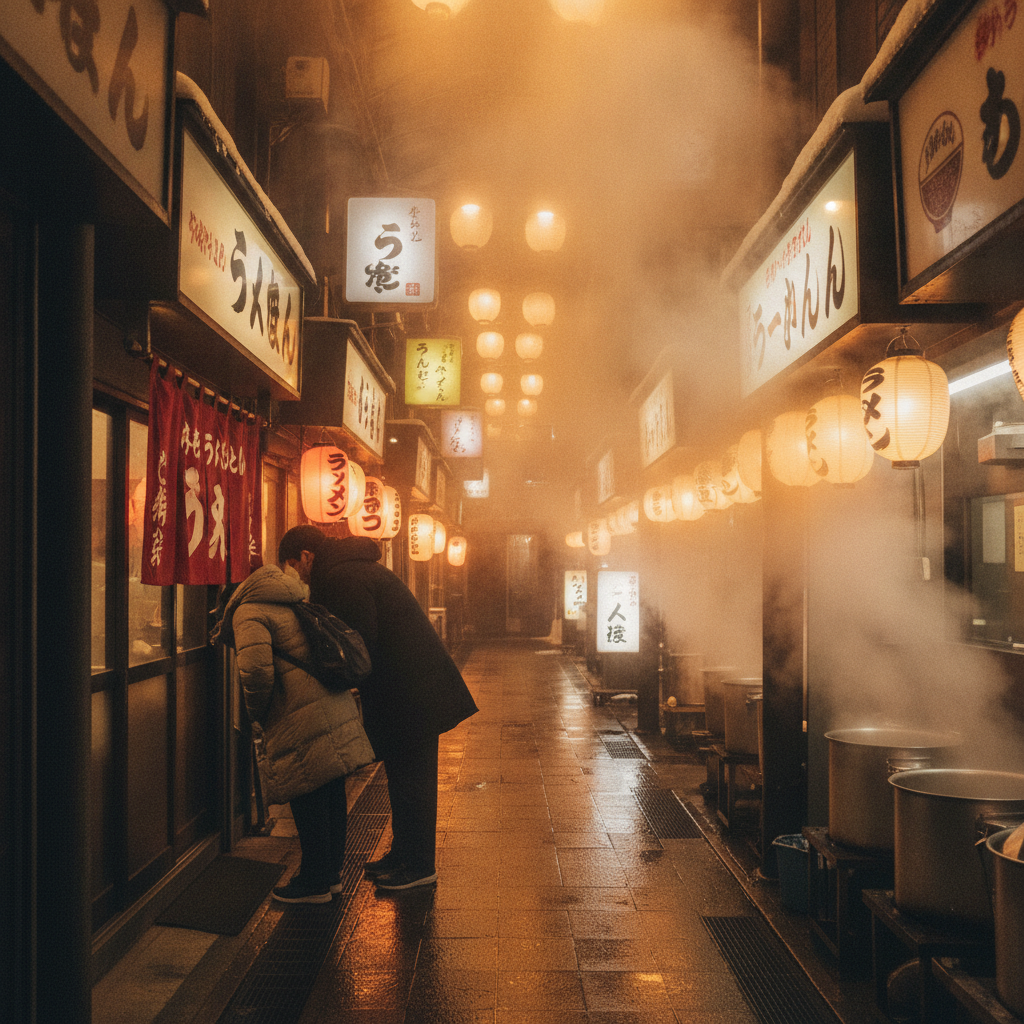
The Accidental Miso Drip That Created a Ramen Style, the Sea Urchin Whose Sweetness Peaks in August & the Summer Beer Garden That Runs the Full 1.5 Kilometres of the Park
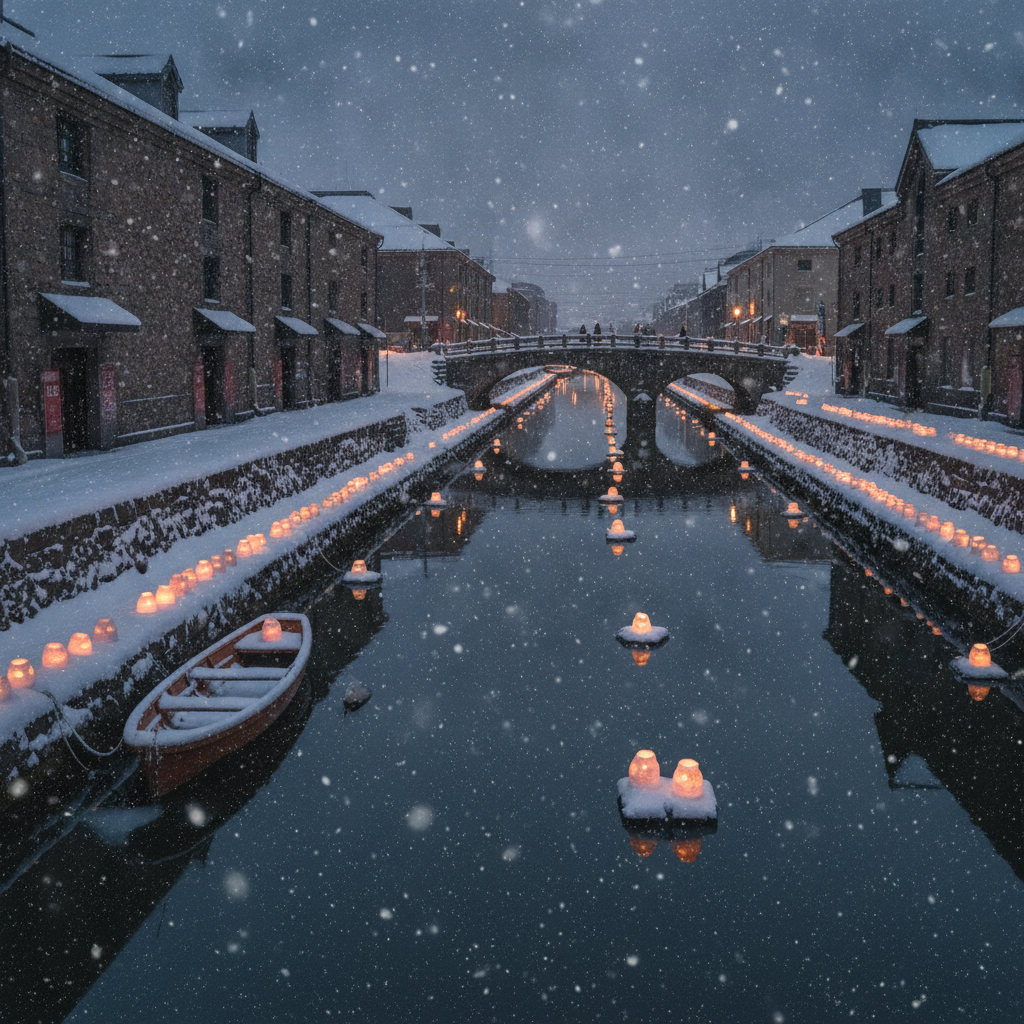
The City Named by Ezo Red Squirrels and Grid-Street Coordinates, Japan's First National Ainu Museum Opened in 2020 & the February Canal Candles That Run Simultaneously With the Snow Festival