The Pacific Music Festival That Bernstein Started, the Salmon Running Through Central Sapporo in October & the Powder Snow That's Decreased From 40% to 30% of Winter Days Since 1980
The SCARTS programme and the Minami 5-Jo 30-metre wildlife mural as the most comprehensive Hokkaido fauna portrait in public art; the Count Basie jazz club and the PMF educational festival that Bernstein personally founded in 1990; the Hokkaido Rail Pass and the 5-day driving loop from Sapporo through Akan National Park to the Kushiro Marsh red-crowned crane habitat; the Toyohira River Cherry Salmon urban run visible from the city center path in September; the 45-minute-longer Hokkaido golden hour versus Tokyo and the November 6 snow crab date as the most anticipated food event; and the 40%→30% powder frequency decline as Sapporo's most concrete climate change signal.
- 1
Sapporo's Urban Art & Design Scene
Sapporo's contemporary art and design culture is centred on several institutions that have grown significantly in the post-2015 era of increased Hokkaido connectivity. The Sapporo Cultural Arts Community SCARTS (the contemporary arts center at the Sapporo Factory complex—the performing arts, visual arts, and design programme that has become the primary platform for Hokkaido contemporary artists): the SCARTS Gallery programme (the rotating exhibitions focusing on Hokkaido artists and the design-craft intersection that is the most distinctively Sapporo contribution to contemporary Japanese art). The Sapporo Beer Museum building (the 1890 red-brick brewery building that is also Sapporo's most architecturally significant Meiji-era building and the backdrop for the most photographed beer glass in Japan): the juxtaposition of the 135-year-old industrial brick building with the contemporary tap system inside is the most atmospheric beer venue in Japan. The Street Art Sapporo (the commissioned street art programme in the Nakajima Park and Minami 4–6-Jo areas—the murals programme developed since 2018 as part of the city's creative district development strategy): the most photographed individual mural is the Hokkaido wildlife mural on the Minami 5-Jo building (the 30-metre wall mural depicting the Ezo red fox, Ezo deer, red-crowned crane, and brown bear in a continuous landscape composition—the most comprehensive Hokkaido fauna portrait in public art). The Sapporo Design Week (October—the annual design festival concentrating on Hokkaido design studios and the Sapporo fashion community): the most internationally attended Hokkaido contemporary culture event.
- 2
Sapporo's Night Scene & Music Culture
The Sapporo nightlife operates on a different rhythm than Tokyo or Osaka—the combination of the extreme winter cold (evenings in January–February regularly reach −12°C in the city center) and the indoor-focused entertainment culture produces a nightlife that is more concentrated, warmer, and more food-focused than the open-air nightlife districts of southern Japan. The Susukino district logistics (the Susukino subway station as the hub—everything within a 5-minute walk): the ramen circuit (starting at Susukino Ramen Yokocho at 22:00 after the dinner restaurants have closed), the jazz circuit (the 5 jazz clubs in the Minami 4–5-Jo area, with the Count Basie jazz club being the longest-running and most beloved), and the craft beer circuit (the 3 craft beer bars on the Susukino south side). The Sapporo music history (the city that produced one of Japan's most significant pop music exports—the band GTS (Groovy Thick Solid), and the rock duo BUCK-TICK (whose vocalist Atsushi Sakurai was from Fujioka in Gunma but recorded extensively in Sapporo)). The Sapporo Comedy scene (the M-1 Grand Prix—the national manzai comedy competition whose Hokkaido qualifiers have produced several national championship finalists from Sapporo: the local manzai culture rooted in the city's long indoor winter season when stage entertainment was the primary social activity). The Sapporo Concert Hall Kitara (the 2,003-seat concert hall in Nakajima Park—the Japan Philharmonic Orchestra's Hokkaido base and the venue for the Pacific Music Festival (PMF) in July: the PMF, founded by Leonard Bernstein in 1990, is the only educational classical music festival in Asia that Bernstein personally initiated).
- 3
Getting Around Hokkaido from Sapporo
Sapporo's position as Hokkaido's transport hub means that most Hokkaido travel begins or ends in the city. The JR Hokkaido network (the railway system covering Hokkaido's main population corridor from Hakodate to Sapporo to Asahikawa and eastward to Kushiro): the Hokkaido Rail Pass (the JR Hokkaido pass covering unlimited rides on all JR Hokkaido trains—5 days ¥20,000; 7 days ¥26,000; 10 days ¥32,000): the most cost-effective option for visitors covering Hokkaido's major destinations. The key routes: Sapporo–Hakodate (the JR Hokkaido Super Hokuto Limited Express—3h20m; ¥8,910; the route passing through the Uchiura Bay coast and the Oshima Peninsula's mountain scenery); Sapporo–Kushiro (the JR Hokkaido Ozora Limited Express—3h50m; ¥9,990; crossing the Tokachi Plain and arriving at the gateway to the Kushiro Marshland (Japan's largest wetland, 18,290 hectares, the primary habitat for the red-crowned crane (Grus japonensis—the most sacred bird in Japanese culture, found naturally only in Hokkaido as a breeding population in Japan)). The car rental alternative (self-driving Hokkaido—the most freedom-maximising way to explore Hokkaido outside the Sapporo–Hakodate corridor; international driving permit required; snow tire mandatory (leq Takizawa) from November through April; the Toyota Rent-a-Car and Times Car Rental with the most convenient Sapporo Station locations): the standard self-drive circuit (the Hokkaido 5-day driving loop: Sapporo → Furano → Akan National Park → Kushiro Marsh → Noboribetsu → Sapporo) covers the most Hokkaido landscape diversity per day of any Japanese driving circuit.
- 4
Sapporo's Demographics & Population
Sapporo (population 1.96 million—the fifth-largest city in Japan; the largest city in Japan north of the Tohoku region; the administrative center of Hokkaido Prefecture): the demographic and urban facts that distinguish Sapporo from other major Japanese cities. The age structure (Sapporo's age structure is younger than the Japanese national average—the university system (Hokkaido University and 12 other universities and colleges with a combined 100,000+ student population), the ski resort service industry, and the technology sector have attracted a higher proportion of 20–35-year-olds than comparable Japanese cities). The Sapporo growth story (the city's population grew from approximately 5,000 in 1869 to 200,000 in 1935 to 1 million in 1970 and 1.9 million today—the fastest city growth of any major Japanese urban center in the 20th century, reflecting the Hokkaido kaitaku (development) programme's long-term urbanization effect). The Sapporo economy (the economic base: agriculture-related processing, IT (the Sapporo IT Park—the technology cluster centred on the Hokkaido University and several start-up incubators), tourism (the most significant economic sector for Hokkaido Prefecture), and the defence sector (the Hokkaido Ground Self-Defense Force—the largest GSDF deployment in Japan, 21,000 personnel in Hokkaido—primarily as a northern territorial defence force and the builders of the Snow Festival sculptures). The ethnic diversity (the small but culturally significant communities of Russian descent (from the pre-war Karafuto/Sakhalin-era connection), Korean-Japanese (the pre-war colonial-era migration), and Ainu-Japanese (the indigenous-settler mixed ancestry that is rarely publicly acknowledged in census or social statistics)).
- 5
Sapporo Autumn – The Hidden Season
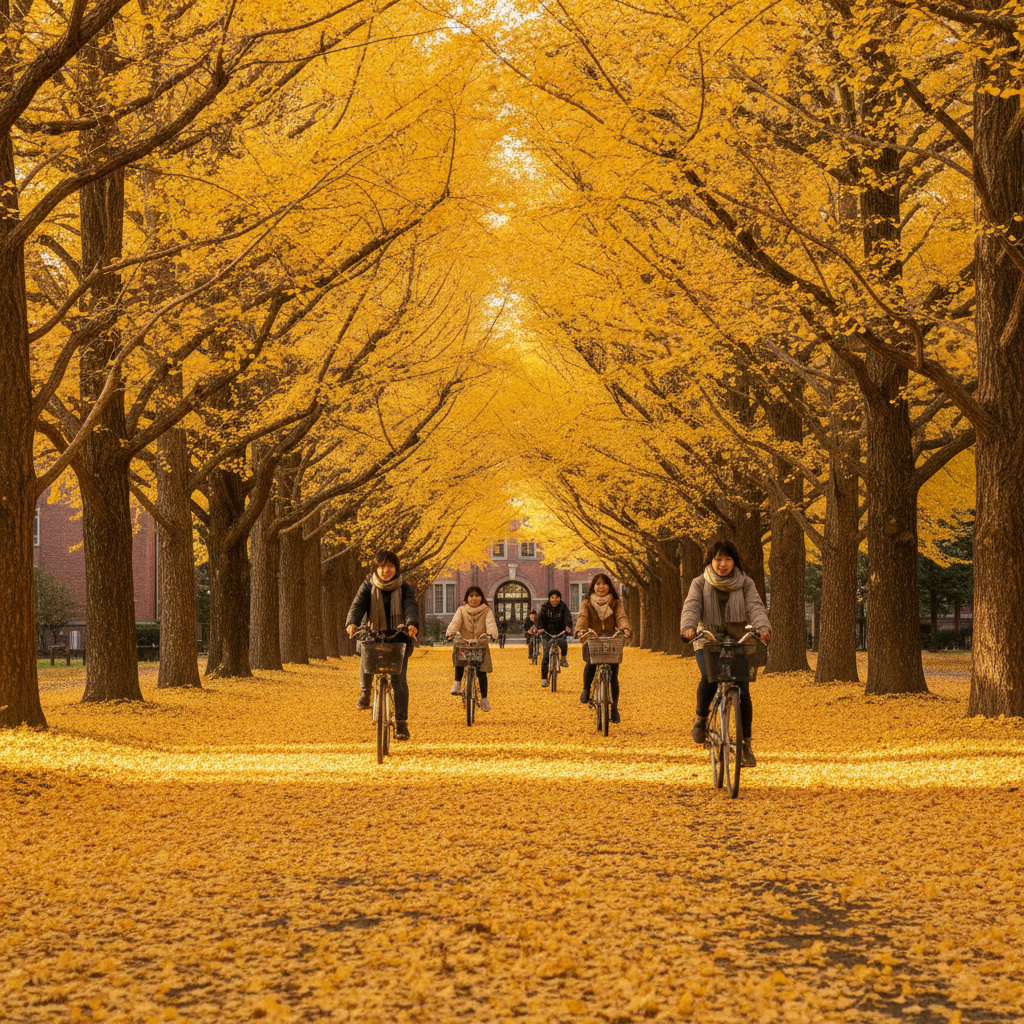
Sapporo's autumn (late September through November) is the least internationally marketed Hokkaido season but the most subtly beautiful and the least crowded of the four distinct seasonal experiences. The Sapporo autumn calendar: the Hokkaido University Ginkgo Avenue (late October: the 70-tree ginkgo avenue at peak gold—the most photographed single autumn event in Sapporo); the Maruyama Park maples (mid-October–early November—the Maruyama Koen maple and oak forest turning orange and red, with the Hokkaido Shrine's red torii gates providing the foreground); the Toyohira River salmon run (the Toyohira River flowing through central Sapporo hosts a late September–October salmon run (Sakura masu—the Cherry Salmon) visible from the riverside path between the Namboku subway line bridge and the Maruyama footbridge—the urban salmon run is the most unusual wildlife event in the Sapporo city center). The autumn food calendar: the new-harvest Yūbari melon (the late-season September melon), the matsutake mushroom (the most expensive ingredient in Japanese cooking at ¥50,000–100,000 per kg for Hokkaido specimens—available in Sapporo department store food halls in September), and the beginning of the Zuwaigani crab season on November 6 (the single most anticipated food date in the Sapporo culinary calendar). The autumn light (the Hokkaido afternoon autumn light—the golden hour in Sapporo in October lasts approximately 45 minutes longer than in Tokyo due to the latitude effect on light angle—the quality of autumn light in Sapporo is the closest in Japan to the Scandinavian quality that photographers prize).
- 6
Sapporo's Future – Technology, Climate & Resilience
Sapporo's trajectory into the 2030s is shaped by three major forces: the climate change effect on Hokkaido's signature attractions, the technology sector's growth as an alternative economic pillar, and the demographic pressure of continued population growth in a shrinking national population. The climate change impact on Hokkaido tourism (the most studied climate-tourism relationship in Japan): the Hokkaido snow season has shortened by approximately 2 weeks since 1980, and the powder snow frequency (the ultra-light <3% water content powder that defines Niseko's global reputation) has decreased from approximately 40% of snowfall days to 30% in the same period. The Sapporo IT corridor (the Hokkaido University–Sapporo IT Park development zone—the technology cluster that positions Sapporo as Japan's northern technology hub, comparable to the roles of Fukuoka in western Japan and Sendai in Tohoku): the IT sector has grown from essentially zero in 2000 to approximately 50,000 employees in 2025, becoming Sapporo's second-largest private sector employer after tourism. The resilience question (how Sapporo adapts to the dual pressures of climate change and national population decline): the city's answer has been the diversification strategy—the Spring Lavender Flight programme (the direct charter service from Sapporo to Furano during lavender peak), the Autumn Cycling tourism programme, and the Summer Beer-and-Farm cultural trail—each designed to reduce dependence on the ski season that climate change threatens most directly.
Walk this route with audio
Stories play automatically as you reach each stop — no tapping needed.
More in Sapporo
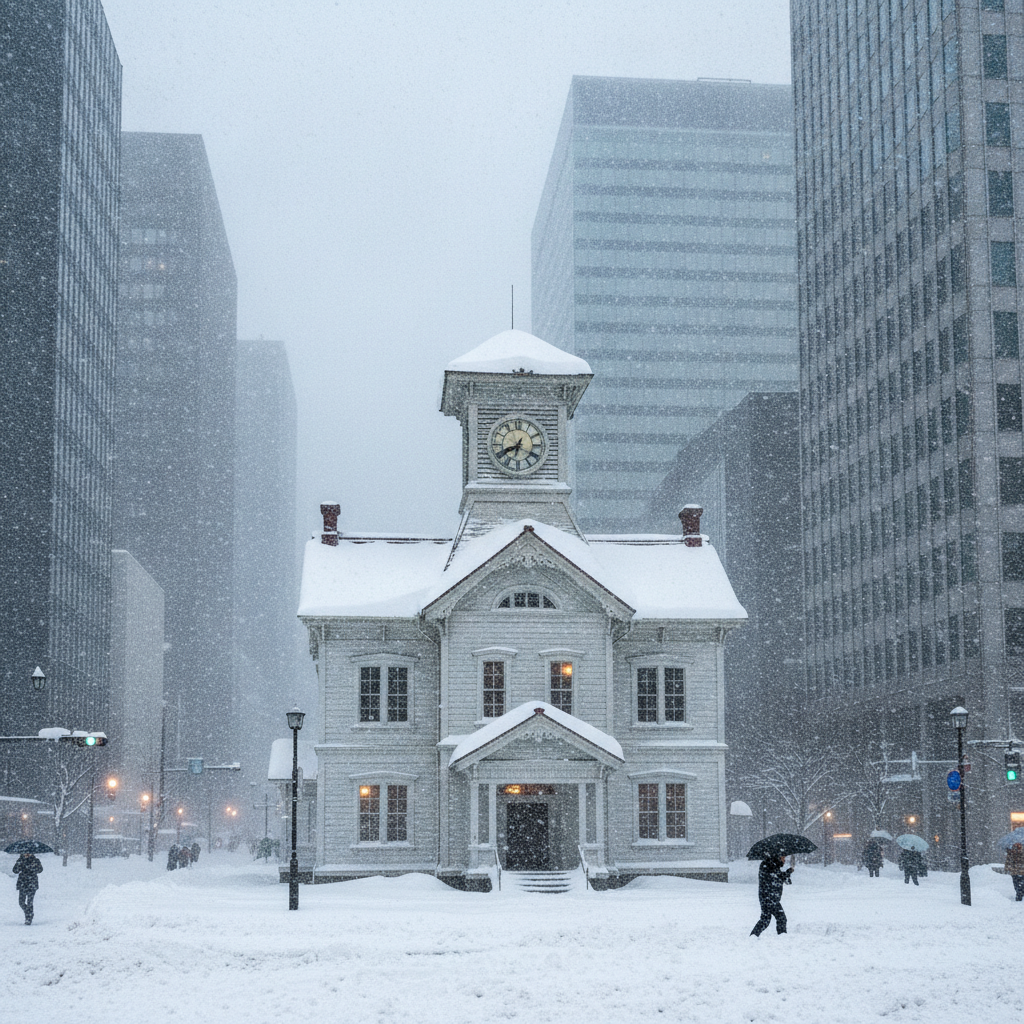
The Clock Tower Ranked Japan's Most Disappointing Sight That Is Actually a Genuinely Important Building, the 90-Minute Curling Introduction & Bernstein's Festival That Brought 350 Musicians From 40 Countries
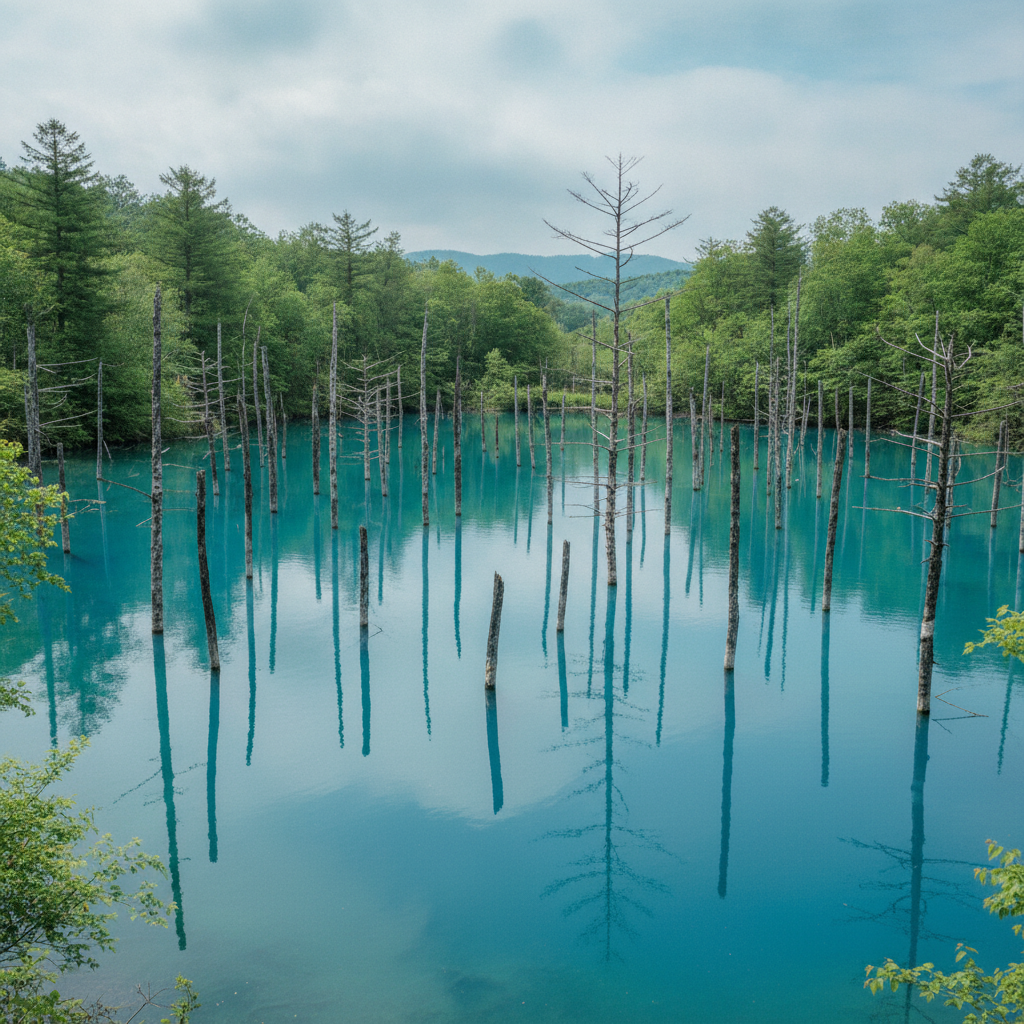
The Australian Snowboarders Who Found the Powder in 2001 & Made It Japan's Most Expensive Real Estate by 2023, the September Colour That Beats Tokyo's by 6 Weeks & the ¥200,000 Melon
The Accidental Miso Drip That Created a Ramen Style, the Sea Urchin Whose Sweetness Peaks in August & the Summer Beer Garden That Runs the Full 1.5 Kilometres of the Park
The City Named by Ezo Red Squirrels and Grid-Street Coordinates, Japan's First National Ainu Museum Opened in 2020 & the February Canal Candles That Run Simultaneously With the Snow Festival