Avenida Paulista, MASP & São Paulo's Cultural Heart
São Paulo (the largest city in Brazil and in the Southern Hemisphere — population approximately 12.3 million in the city and 22 million in the Greater São Paulo metropolitan area, the largest metropolitan area in the Southern Hemisphere and the 4th largest in the world): Avenida Paulista (the 2.8-kilometre boulevard that runs through the heart of São Paulo — the most important street in Brazil, the street that concentrates the headquarters of the largest Brazilian banks and corporations, the largest art museum in Latin America (the MASP), and the most vibrant street life in the city) is the axis around which São Paulo's cultural, financial, and social life revolves.
- 1
MASP — The Greatest Art Museum in Latin America
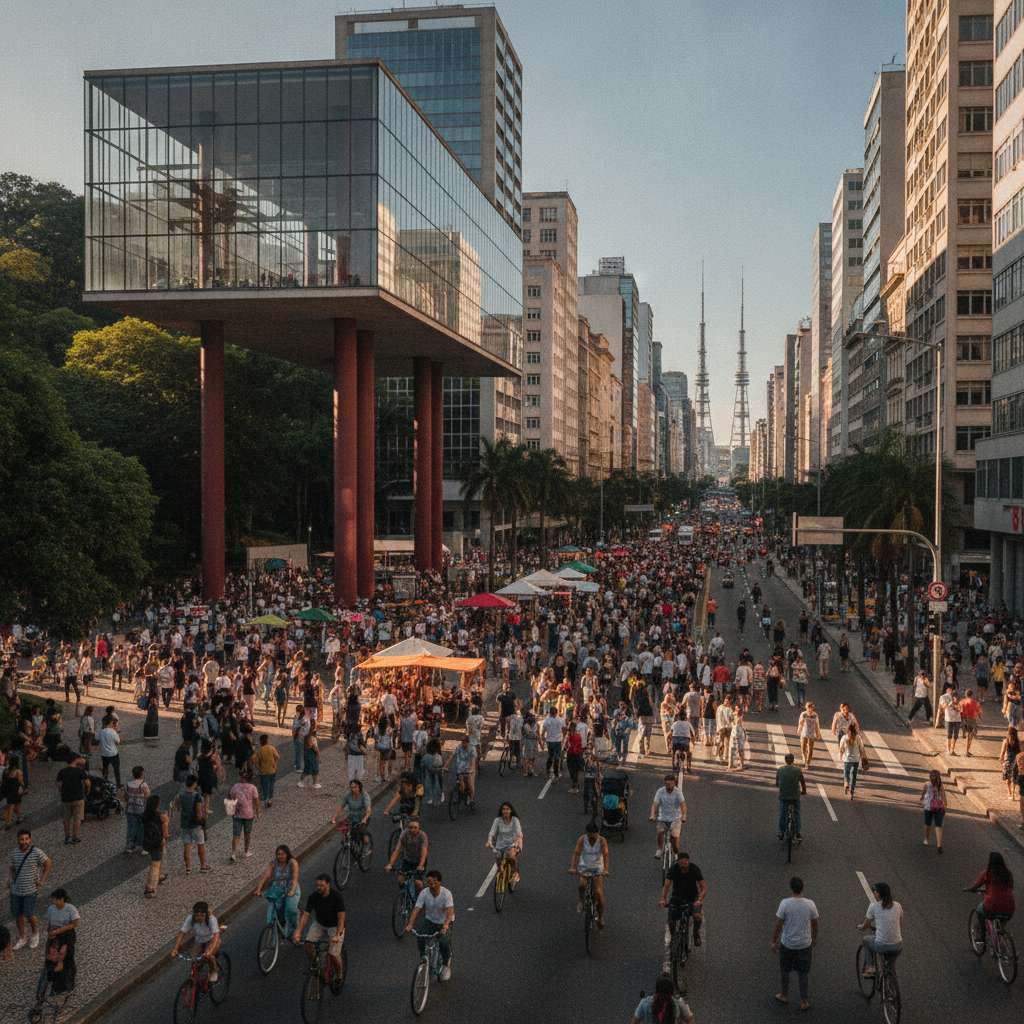
The MASP (Museu de Arte de São Paulo Assis Chateaubriand — the São Paulo Museum of Art, at Avenida Paulista 1578): the MASP building (the building designed by architect Lina Bo Bardi (1914-1992) — the Italian-Brazilian architect who is the most celebrated architect in the history of Brazilian modernism: the building (constructed 1968) that straddles Avenida Paulista on four giant red concrete pilotis (the four pillars — each 10 metres (33 feet) tall — that support the 70-metre (230-foot) long glass-and-concrete box of the museum at a height of 8 metres (26 feet) above the ground, creating the largest free-span concrete space in the world at the time of construction (the 'Belvedere' — the open plaza under the museum, used for open-air markets, antique fairs, LGBT events, and concerts): the MASP collection (the collection of approximately 8,000 works of art — the most important art collection in the Southern Hemisphere, including works by Rembrandt, Van Gogh, Botticelli, Raphael, Renoir, Monet, Picasso, and the most comprehensive collection of Brazilian art (the works of Portinari, Di Cavalcanti, Tarsila do Amaral, and other Brazilian modernist masters)): the 'crystal easels' (the original display system designed by Lina Bo Bardi for the MASP — the individual paintings mounted on transparent acrylic easels so that the visitor can see the back of the painting and the wall behind simultaneously, the system that makes the MASP collection visible from both sides and creates the most distinctive museum installation in the world).
- 2
Avenida Paulista on Sunday — Ciclofaixa & Street Culture
The Avenida Paulista on Sunday (the Sunday Ciclofaixa programme — the closing of Avenida Paulista to vehicle traffic from 9 AM to 6 PM every Sunday, transforming the 2.8-kilometre boulevard from the most trafficked commercial street in São Paulo into a pedestrian promenade and cycling path): the Sunday Paulista experience (the approximately 1 million people who use the Ciclofaixa on a sunny Sunday — the cyclists (the bicycle rental stations at multiple points along the avenue), the skateboarders (the skateboarding culture of Avenida Paulista — the skateboarders who use the open traffic lanes as an enormous skate plaza on Sunday afternoons), the street performers (the musicians, the capoeira practitioners, the fire spinners, and the food vendors who set up along the avenue every Sunday), and the families from all social classes who come to enjoy the open street): the MASP Belvedere (the free open-air market held under the MASP building on Sundays — the antique fair on the first and third Sundays of each month, the LGBT+ fair on the second Sunday, and the organic food market on the fourth Sunday): the Instituto Moreira Salles (the cultural institute housed in the former banking headquarters buildings along Avenida Paulista — the institute that mounts some of the most important photography and visual art exhibitions in Brazil): the street art (the murals on the buildings visible from the avenue — the street art that São Paulo has produced (the graffiti and spray-paint mural tradition of São Paulo (the city that is the birthplace of Brazilian graffiti art and the home of the 'pixação' (the distinctive black-paint calligraphic tagging culture of São Paulo that covers the facades of high-rise buildings with illegible but stylistically distinctive tags — a uniquely São Paulo urban art form))).
- 3
Jardins & Vila Madalena — São Paulo's Creative Neighbourhoods
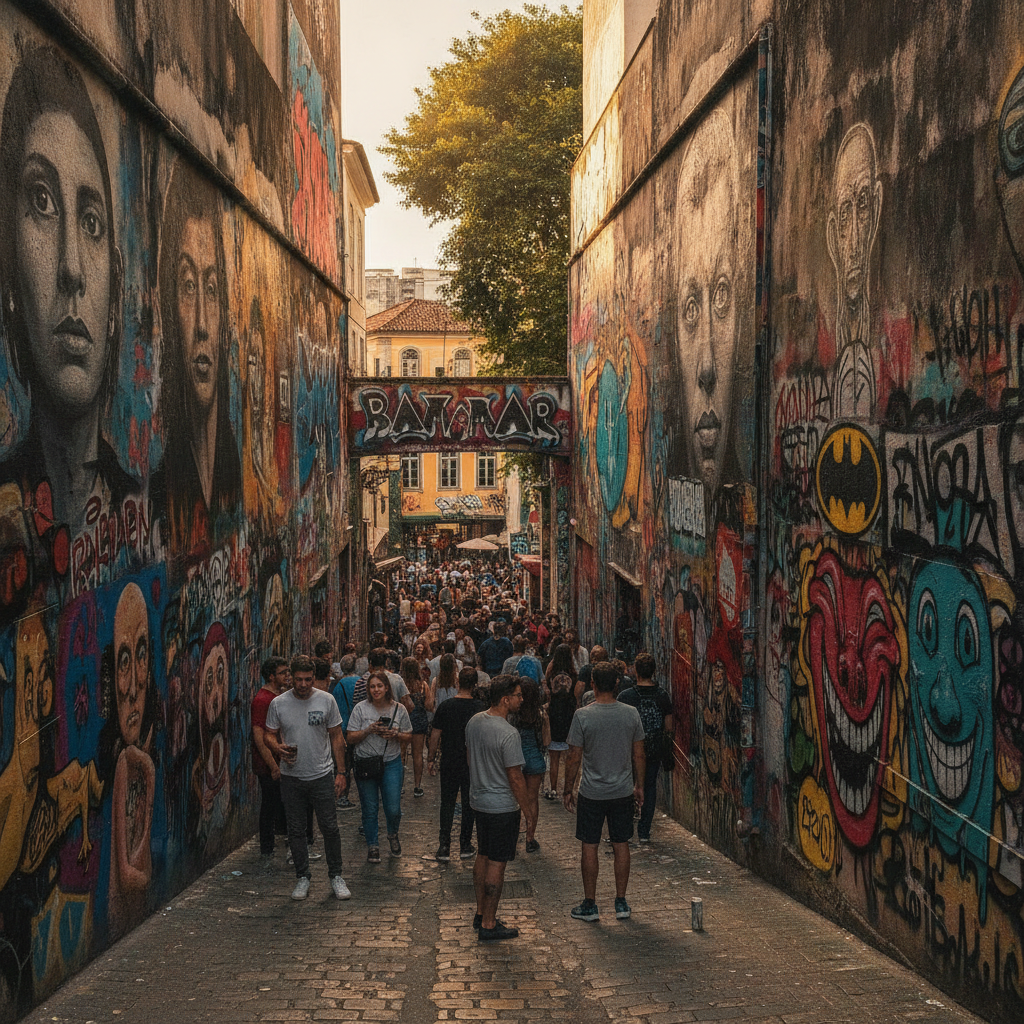
Jardins (the 'Gardens' — the cluster of upscale residential neighbourhoods south of Avenida Paulista (Jardim América, Jardim Europa, Jardim Paulista, and Jardim Paulistano) — the most fashionable and expensive residential neighbourhoods in Brazil, developed in the 1920s-1940s by the Companhia City (the British land development company that created the Jardins neighbourhood on the model of English garden cities)): the Jardins commercial streets (the Rua Oscar Freire (the luxury shopping street of Jardins — the Brazilian equivalent of the Rue du Faubourg Saint-Honoré in Paris or Rodeo Drive in Los Angeles, lined with the flagship stores of the Brazilian luxury fashion brands (the BO.BÔ boutique, the Animale flagship, the Daslu complex) and the international luxury brands (Hermès, Prada, Bottega Veneta, and Montblanc all have their Brazilian flagship stores on or near Rua Oscar Freire)): Vila Madalena (the bohemian neighbourhood 2 km west of Avenida Paulista — the neighbourhood of independent art galleries, design boutiques, bars, restaurants, and the most concentrated street art in São Paulo): the Beco do Batman ('Batman Alley' — the network of narrow alleys in Vila Madalena whose walls are covered from floor to ceiling with the large-scale graffiti murals that have made the Beco do Batman the most photographed street art destination in South America): the Bar do Binho (the neighbourhood bar that is the social heart of Vila Madalena, on the corner of Aspicuelta and Mourato Coelho Streets).
- 4
Ibirapuera Park — São Paulo's Green Heart
Ibirapuera Park (the 1.5-km² (158-hectare) urban park in the southern zone of São Paulo — the most important public park in Brazil and the most visited urban park in Latin America, with approximately 14 million visitors per year): the Ibirapuera Park landscape (the park designed by landscape architect Roberto Burle Marx (1909-1994) — the Brazilian landscape architect who is the most celebrated garden designer in the history of Latin America, the man who designed landscapes for the Copacabana promenade in Rio de Janeiro, the gardens of Brasília, and dozens of the most important public spaces in Brazil): the Ibirapuera Park cultural institutions (the cluster of cultural institutions designed by Oscar Niemeyer (1907-2012) — the most celebrated architect in the history of Brazil (the architect of Brasília, the co-designer of the United Nations Headquarters in New York (1947-1952), and the architect of dozens of the most important public buildings in Brazil): the Niemeyer buildings in Ibirapuera (the Pavilhão Lucas Nogueira Garcez (the 'Oca' — the iconic dome-shaped building used for major art exhibitions), the Pavilhão Japonês (the Japanese Pavilion, a gift from the Japanese-Brazilian community to the city of São Paulo in 1954), the Grande Marquise (the sweeping curved canopy that connects the museum buildings), the Museu de Arte Moderna de São Paulo (MAM — the Museum of Modern Art of São Paulo), and the Museu Afro Brasil (the museum of Afro-Brazilian history and culture)): the Ibirapuera Auditorium (the concert hall designed by Niemeyer and completed 2005 — the primary classical music concert venue in São Paulo).
- 5
São Paulo's Restaurant Scene — Brazil's Culinary Capital
São Paulo's restaurant scene (the food scene of the city that is the undisputed culinary capital of Brazil — the city with more restaurants per capita than any city in the Americas, with over 50,000 restaurants and food establishments in the metropolitan area, the city whose food scene encompasses the full range of Brazilian regional cuisines (the Bahian cuisine of the Northeast (the moqueca (the Bahian fish stew cooked in dendê (palm) oil and coconut milk), the acarajé (the black-eyed pea fritter fried in dendê oil, filled with dried shrimp, vatapá (the shrimp and bread paste), and caruru (the okra dish)), the Mineiro cuisine of Minas Gerais (the feijão tropeiro (the bean dish cooked with farinha (manioc flour), eggs, and pork), the pão de queijo (the cheese bread made from polvilho (manioc starch) and queijo Minas (the fresh cheese of Minas Gerais) — the national snack of Brazil, produced in its finest form in São Paulo's padarias (the Brazilian bakeries) and padelarias), the Amazonian cuisine of the North (the tacacá (the hot soup of jambu (the Amazonian herb that causes a tingling numbness in the mouth), tucupi (the fermented manioc juice), and dried shrimp), and the full range of São Paulo's own paulistano cuisine (the pizza culture (São Paulo has the largest pizza culture outside of Italy — approximately 14,000 pizzerias, with the paulistano pizza tradition of the rodízio (the all-you-can-eat pizza carousel) and the characteristic Brazilian pizza toppings (the camarão (shrimp), frango com catupiry (chicken with catupiry requeijão (cream cheese)), and the doce de leite (dulce de leche) pizza that is unique to Brazil))).
- 6
Liberdade — São Paulo's Japanese Neighbourhood
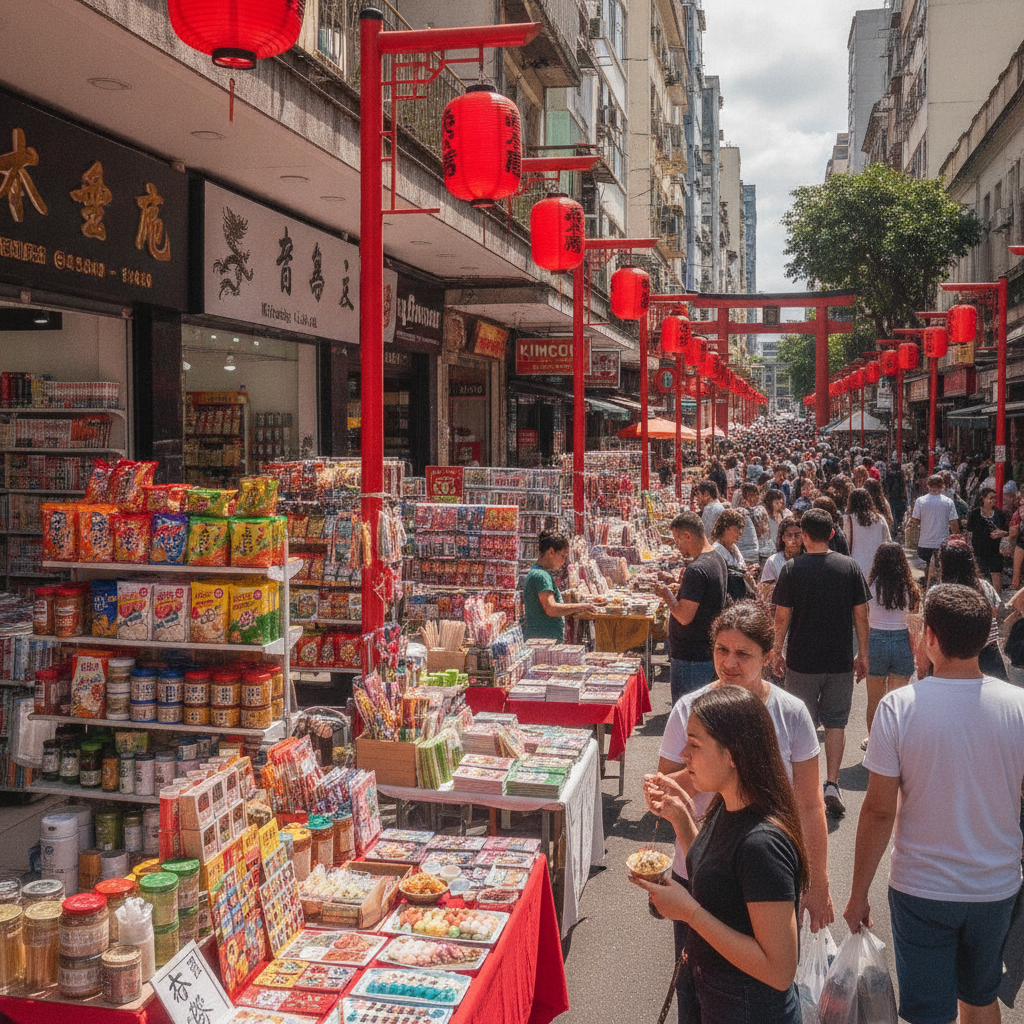
Liberdade (the neighbourhood immediately south of the Centro Histórico of São Paulo — the neighbourhood that was the heart of the Japanese-Brazilian community in São Paulo from the early 20th century and that is still the largest Japanese neighbourhood outside of Japan): the history of the Japanese-Brazilian community (the Japanese immigrants who came to Brazil beginning in 1908 under the 'kaigai dekasegi' emigration programme — the government-sponsored programme to address the labor shortage in the São Paulo coffee plantations after the end of slavery (1888) and the restriction of Italian immigration (1902) — the first shipload of Japanese immigrants (781 people) arrived in Santos on June 18, 1908 on the ship Kasato Maru — the date that is commemorated as the founding day of the Japanese-Brazilian community): the Japanese-Brazilian population (Brazil has the largest Japanese diaspora community outside of Japan — approximately 1.5 million people of Japanese descent live in Brazil, the majority in the state of São Paulo): the Liberdade neighbourhood (the Rua Galvão Bueno (the main commercial street of Liberdade, lined with Japanese and Asian restaurants, supermarkets stocked with Japanese products, Japanese book and stationery shops, and the Japanese-style red lanterns (the 'akarengachō' — the red paper lanterns that line the streets of Liberdade and are the most distinctive visual element of the neighbourhood)): the Liberdade Feira (the Sunday street market in the Praça da Liberdade — the Sunday market where the vendors sell Japanese and Asian street food (the yakisoba, the gyoza, the takoyaki, the karaage (the Japanese fried chicken), and the matcha ice cream), Japanese grocery items, and crafts from the Japanese-Brazilian community).
Walk this route with audio
Stories play automatically as you reach each stop — no tapping needed.
More in sao-paulo
Pinheiros, Vila Madalena & São Paulo's Legendary Nightlife
Samba, Carnaval & São Paulo's African-Brazilian Cultural Heritage
SP-Arte, Museums & São Paulo's World-Class Cultural Scene
São Paulo's Architecture — Modernism, Niemeyer & the Concrete Jungle
Liberdade, the Japanese Community & São Paulo's Asian Soul