Santorini Caldera Boat Tour — the Volcano, Hot Springs & Thirasia Island
The Santorini caldera (the drowned volcanic crater 12km across and 400m deep, the result of the 3,600 BCE Minoan eruption that collapsed the original cone volcano into the sea, the caldera still volcanically active — the last eruption was in 1950, the most recent earthquakes registering 5.8 magnitude in 2021) is explored by boat from the Old Port of Fira (Skala Fira) or the Ammoudi Bay port under Oia.
- 1
Nea Kameni — the Active Volcano at the Centre of the Caldera
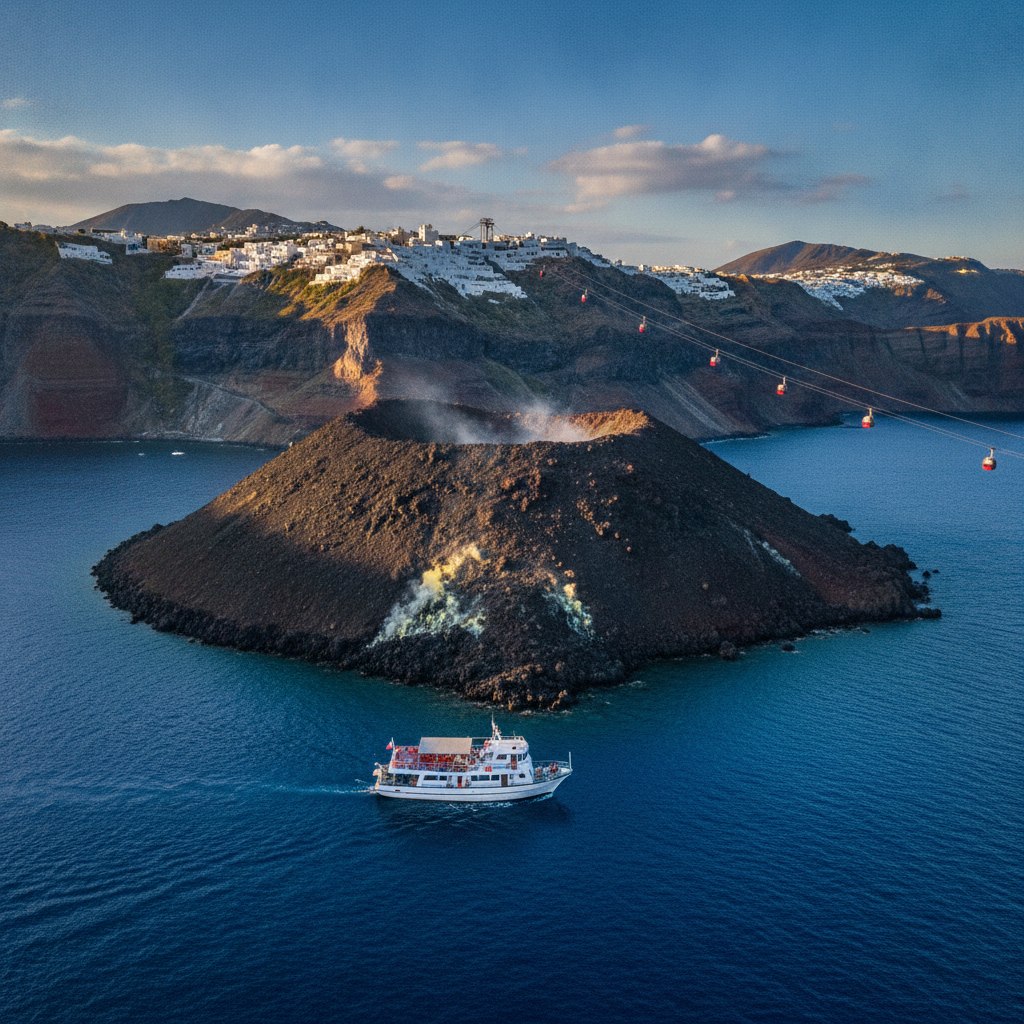
Nea Kameni (the active volcanic island in the centre of the Santorini caldera, the youngest dry land in Europe — the island emerged from the sea in 1570 AD and has been growing through successive eruptions ever since, the current summit at 127m formed by the 1950 eruption, the island accessible by caldera boat tour at €25-45 per person including Thirasia and the hot springs) is an essential counterpoint to the tourist infrastructure of the white villages above. The volcano walk (the 20-minute climb to the summit crater, the sulphurous yellow crystalline deposits around the fumaroles, the temperature 40-60 degrees Celsius on the black lava surface, the view of the entire caldera basin from the summit at 127m) and the thermal springs (the ochre-coloured hot spring water at 35 degrees Celsius at the southeast corner of Nea Kameni, the traditional jump into the sea from the boat and the swim to the spring, the water cloudy with dissolved minerals, the swimwear permanently staining yellow-brown) are the two activities on the island.
- 2
Thirasia — the Uninhabited Caldera Island
Thirasia (the second-largest island of the Santorini archipelago, the uninhabited western caldera wall, accessible by caldera boat tour, the village of Manolas on the cliff top at 200m altitude, accessible by climbing 300 steps or by donkey, population 150 permanent residents, the island largely unchanged since the 1956 earthquake that triggered the mass migration from Santorini to Athens and Australia) is the correct caldera experience for visitors wanting the pre-tourism Santorini atmosphere — the single taverna in Manolas (the only restaurant on the island, serving grilled fish and salad, the view from the cliff-top terrace directly across the caldera to Fira, the meal timed for the boat's 45-minute stop at the island) and the complete absence of tourist infrastructure (no souvenir shops, no hotel, no car hire, the island's population supporting itself from fishing and small-scale agriculture) make Thirasia the undiscovered Santorini.
- 3
Caldera Catamaran — the Sunset Sailing Circuit
The sunset catamaran sailing tour (the most popular organized activity in Santorini, departing from Vlychada Marina or Ammoudi Bay at 2-3pm, returning after sunset at 9-10pm, €90-150 per person including food and open bar, 20+ operators identifiable by their catamaran boards at the Fira tourist offices, the boats carrying 12-24 passengers, the circuit covering the southern caldera — the hot springs, Nea Kameni, the Red Beach, the White Beach, and returning via the caldera entrance for the sunset view from the water) is the most directly atmospheric way to experience the Santorini caldera — the sunset viewed from sea level looking up at the white Oia village 350m above, the scale of the caldera cliff visible only from the water, the wine glass in hand at exactly the correct angle for the Instagram photograph (the reason for 90 percent of bookings, the operators fully aware of this). The price difference between operators (€90 vs €150 for identical circuits on similar boats) is explained by the quality of the food and wine rather than the route.
- 4
Ancient Thera — the Dorian City on the Mesa Vouno Cliff
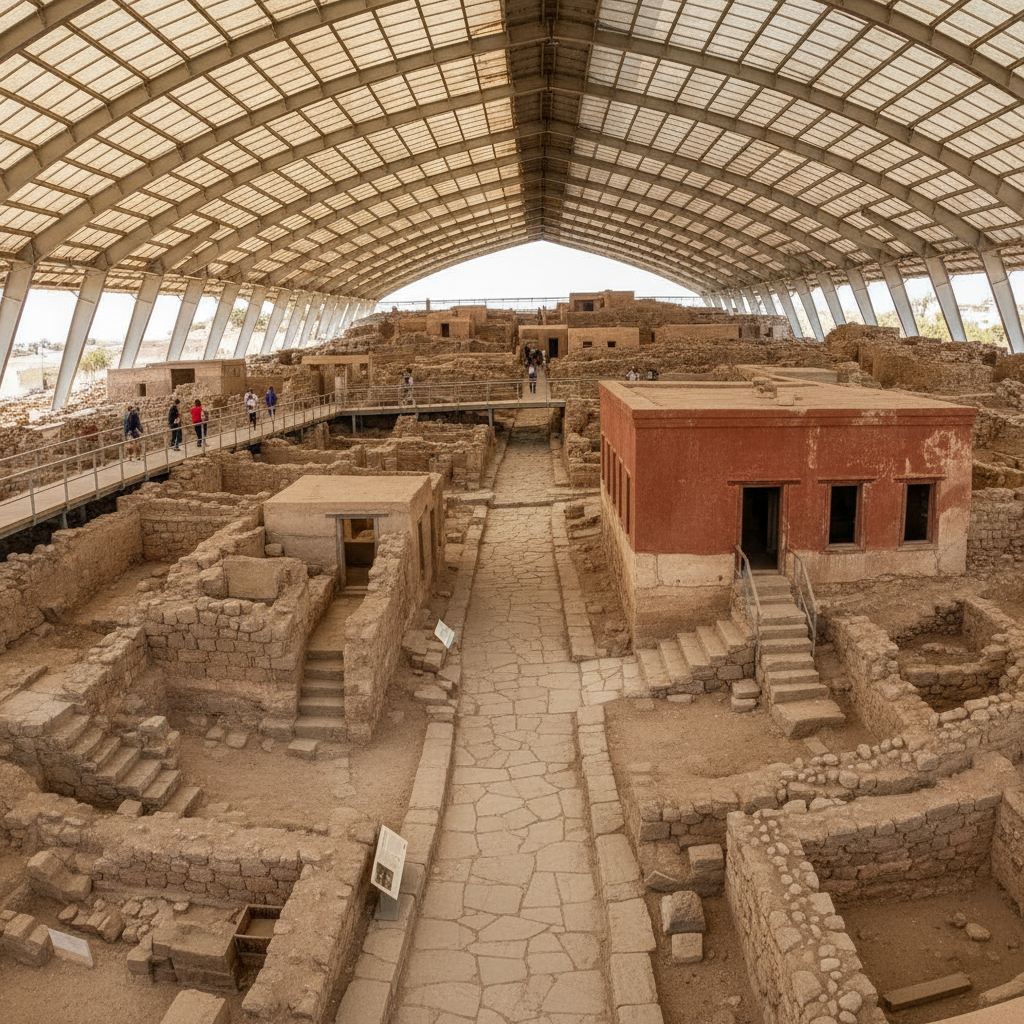
Ancient Thera (the Dorian city founded in the 9th century BCE on the Mesa Vouno ridge between Kamari and Perissa, at 369m altitude, accessible by the road from Kamari or the 350-step path from Perissa, free, open Tuesday-Sunday 8am-3pm) is the most completely excavated ancient city on Santorini — the Hellenistic and Roman street plan (the Agora, the Royal Stoa, the gymnasium, the theatre, the Temple of Apollo Karneios with the 7th-century BCE rock-cut inscriptions listing the names of gymnasts, the most legible ancient graffiti in Greece) and the rock-cut tombs (the necropolis carved into the cliff face above the Perissa approach path, the 5th-4th century BCE chamber tombs with their original grave goods removed to the Athens National Archaeological Museum) are the site's primary elements. The view from the summit ridge (the 360-degree panorama, the Aegean visible on both the eastern and western shores of the island simultaneously) is the most physically elevated viewpoint on Santorini.
- 5
Pyrgos — the Inland Village and the Santo Winery
Pyrgos (the hilltop village at the geographic centre of Santorini, population 1,500, the highest village on the island at 350m, the medieval Venetian kastro (the circular fortified village core, the traditional defensive architecture of the Cyclades, the innermost ring of houses sharing a common outer wall serving as a fortification) completely intact and accessible on foot, 10 minutes walk from the bus stop on the main island road, the village almost entirely free of tourist infrastructure despite being the most architecturally complete medieval settlement on Santorini) contains the Monastery of Profitis Ilias (the 18th-century monastery on the summit above Pyrgos, the highest point on the island at 566m, the view encompassing the entire island and on clear days the islands of Ios, Sikinos, Folegandros, and Crete visible 110km south) and the access road to the Santo Wines tasting terrace (the cooperative winery immediately below Pyrgos, the most accessible Santorini wine tasting with the caldera view terrace). The evening Pyrgos (the village's position means it catches the sunset light 30 minutes after Oia — the white walls turn gold at the same hour, with 90 percent fewer people than the Oia castle).
- 6
Santorini Accommodation — Caldera View Cave Houses
The cave houses of Santorini (the traditional Cycladic domestic architecture carved into the volcanic pumice cliffs of the caldera inner face, originally the homes of the working population who could not afford the cliff-top positions, the cave-dwelling tradition creating the vaulted ceilings, the thick insulating pumice walls maintaining 18-20 degrees year-round without air conditioning, the windows and doors the only openings — the architecture repurposed from the 1970s onwards as the most desirable hotel category in Greece) at the correct price level (the infinity pool suite in an Oia cave hotel in July-August: €800-2,500 per night, the same category in Firostefani or Imerovigli — the caldera rim villages 2-3km south of Oia — at €300-700 per night, the identical infinity pool and caldera view at 40-65 percent less) and the correct booking window (minimum 6 months in advance for July-August, 2-3 months for May-June and September). The correct alternative for non-cave-hotel budgets: the villages of Emporeio and Pyrgos (the inland Santorini villages, guesthouses at €80-150/night in season, bus access to the caldera rim, none of the caldera view but also none of the tourist density of Oia and Fira).
Walk this route with audio
Stories play automatically as you reach each stop — no tapping needed.
More in santorini
Santorini Food & Wine — Assyrtiko, Fava, Tomatokeftedes & Local Products
Oia — the Blue-Domed Village, Caldera Views & the Most Famous Sunset in Greece
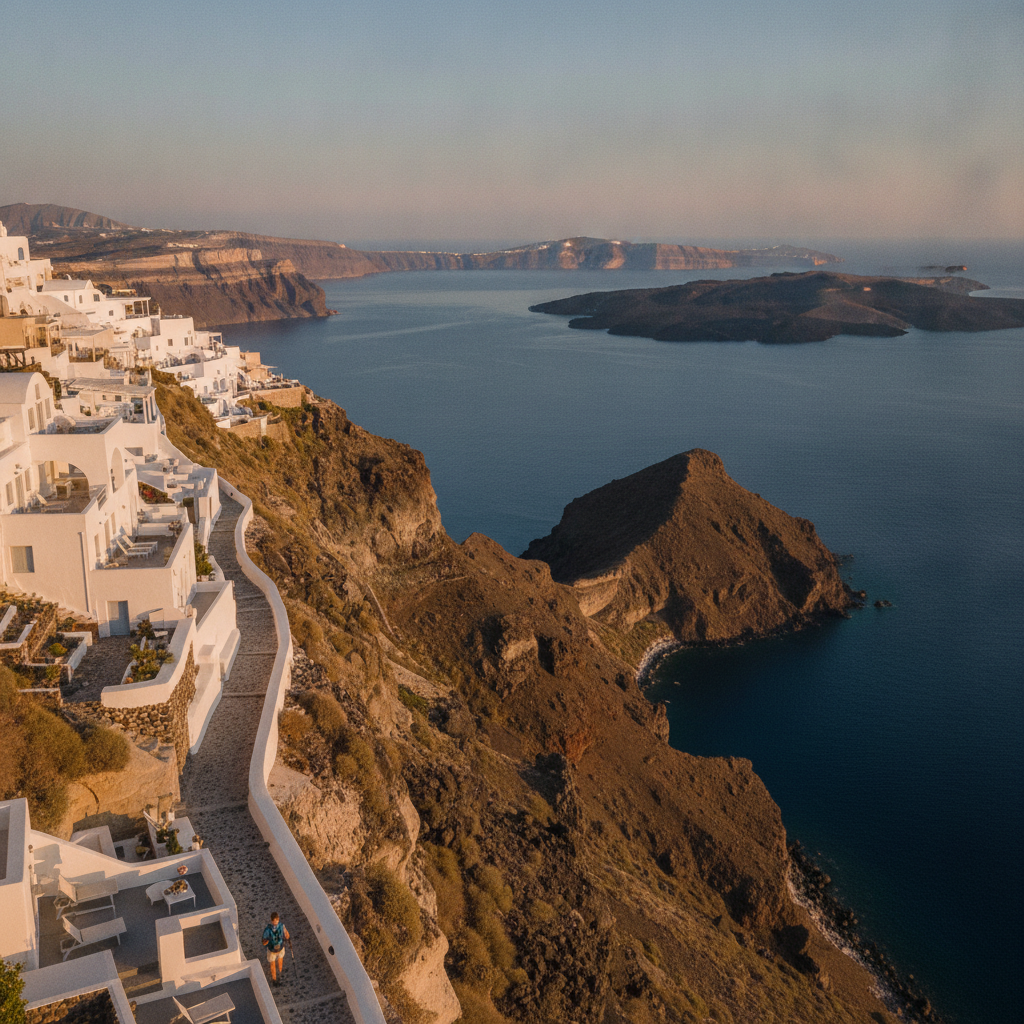
Santorini Villages & Hiking — Emporeio, Megalochori, Pyrgos & the Inland Island
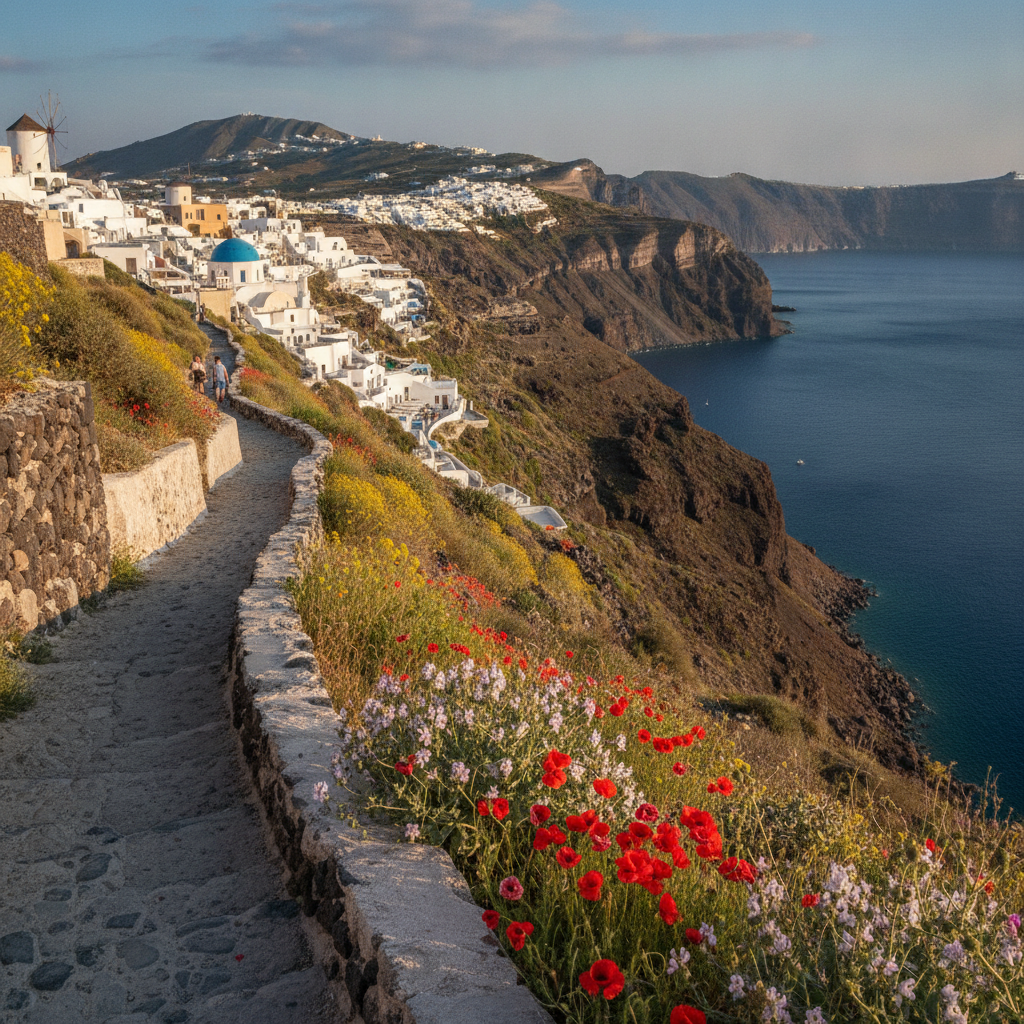
Santorini Practical Guide — When to Visit, Logistics, Beaches & the Caldera Rim Walk