Santa Fe: Colonial Ranchos, Miraculous Staircases and the World in Folk Art
Visit a 1710 colonial rancho living history museum, see the largest world folk art collection on Museum Hill, stand on the Plaza where the Santa Fe Trail ended and Spanish governors ruled, marvel at the unsupported spiral staircase in Loretto Chapel, day-trip to Taos Pueblo UNESCO site, and discover contemporary art at the Railyard District.
- 1
El Rancho de las Golondrinas
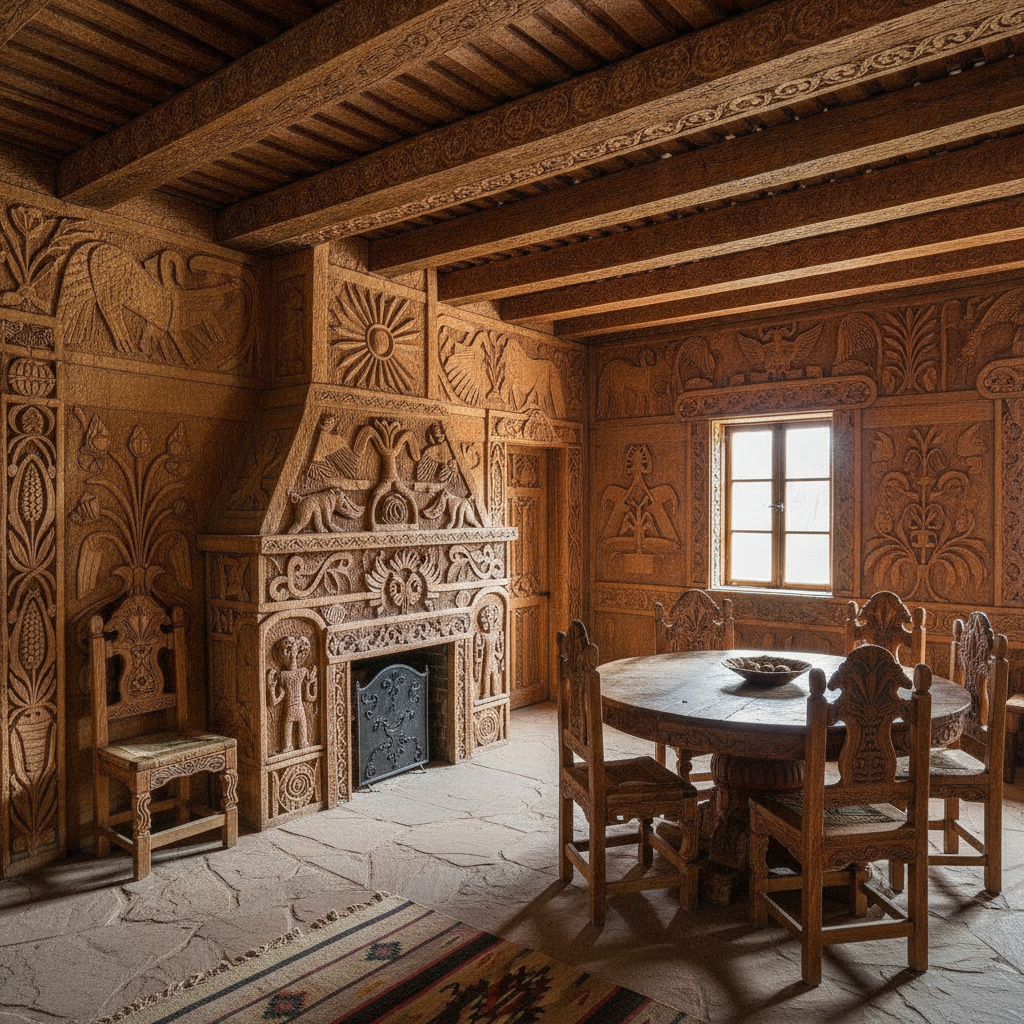
El Rancho de las Golondrinas, a living history museum on 200 acres south of Santa Fe, preserves a colonial rancho that was an official stopping point on El Camino Real during the Spanish colonial period. The property, first documented in land records from 1710, was acquired by the Curtin family in 1932 and opened as a museum in 1972. Over 30 restored colonial buildings demonstrate New Mexico agricultural and craft life from 1700 to 1900, including a working molasses mill, blacksmith forge, weaving room, and defensive torreon tower. Seasonal festivals in June and October bring the complex to life with demonstrations of traditional crafts, music, and foodways. The museum is named for the swallows, golondrinas, that have nested in its historic structures for centuries.
- 2
Museum of International Folk Art
The Museum of International Folk Art on Museum Hill, part of the New Mexico Museum system, holds the largest collection of international folk art in the world with over 130,000 objects from over 100 countries. The Girard Wing, designed by Alexander Girard who donated his personal collection of 106,000 objects in 1978, displays folk art in dense theatrical arrangements that present objects by theme rather than geographic origin. The museum holds significant collections of New Mexican santos, the painted wooden devotional figures created in the Hispanic colonial tradition, as well as toys, textiles, ceramics, and costumes representing folk art traditions from Oaxaca to Poland to Japan. The Museum Hill campus also includes the Museum of Indian Arts and Culture, the Museum of Spanish Colonial Art, and the Wheelwright Museum of the American Indian.
- 3
Santa Fe Plaza History and Governance
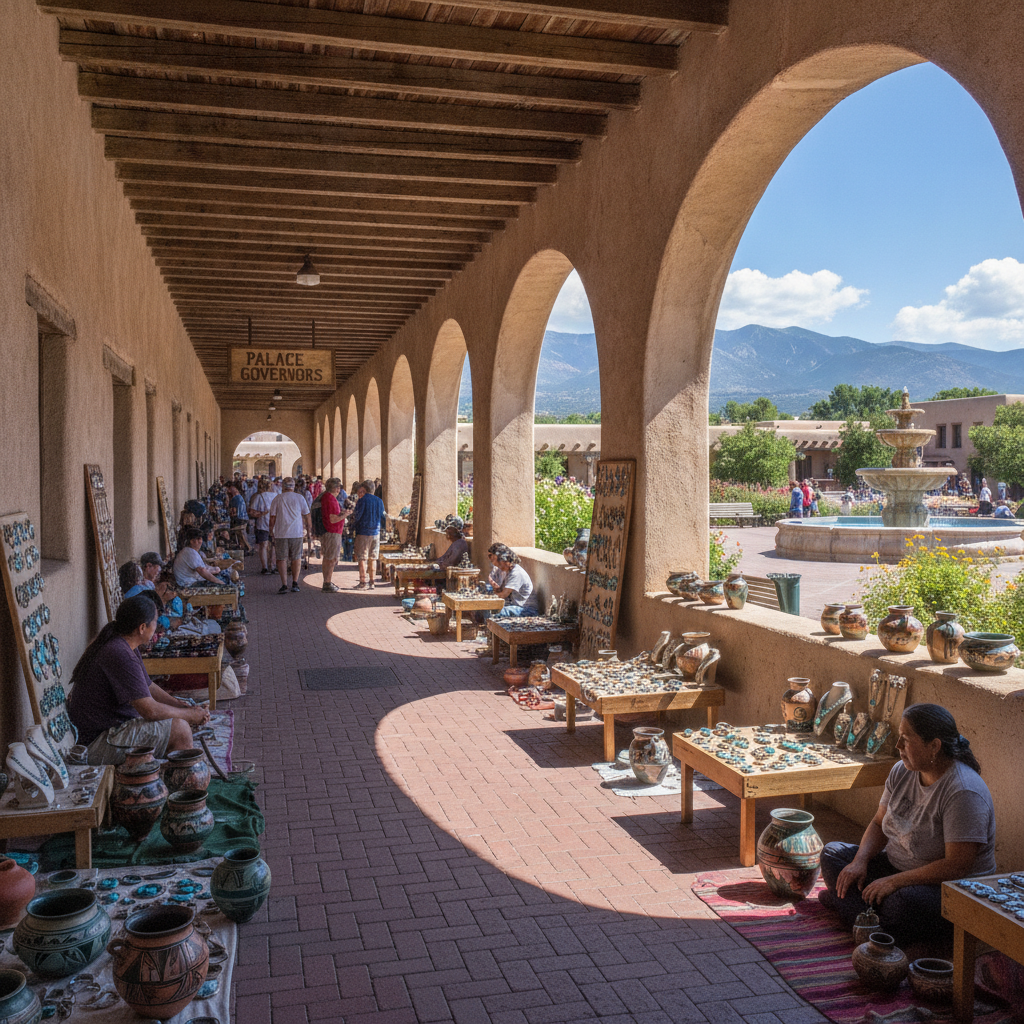
The Santa Fe Plaza has been the center of community life in the oldest continuously occupied European-founded capital city in the United States since the Spanish colonial government laid it out in 1610 following guidelines from the Laws of the Indies urban planning code issued by the Spanish Crown in 1573. The Plaza was the terminus of the Santa Fe Trail, the commerce route from Missouri, after 1821. The Palace of the Governors on the north side of the Plaza, built in 1610 and the oldest continually occupied public building in the United States, has housed Spanish, Pueblo, Mexican, Confederate, and American territorial governors. The Palace portal is used by licensed Native American artisans to sell jewelry and crafts directly on the portal walk, a program administered by the New Mexico Museum since 1936.
- 4
Loretto Chapel and Miraculous Staircase
The Loretto Chapel at 207 Old Santa Fe Trail, completed in 1878 for the Sisters of Loretto by French architect Antoine Mouly in Gothic Revival style modeled on the Sainte-Chapelle in Paris, contains a double helix wooden staircase that makes two complete turns without a central support column, relying entirely on wooden joinery. The Sisters prayed a novena to St. Joseph for a solution to reaching the choir loft when the chapel was completed without stairs, and a mysterious carpenter appeared, built the staircase over several months, and disappeared without collecting payment. The carpenter identity has never been established and the staircase construction defied the structural understanding of the time, making it a persistent object of devotion and tourism. The chapel is no longer active as a place of worship and operates as a museum and wedding venue.
- 5
Taos Pueblo Day Trip
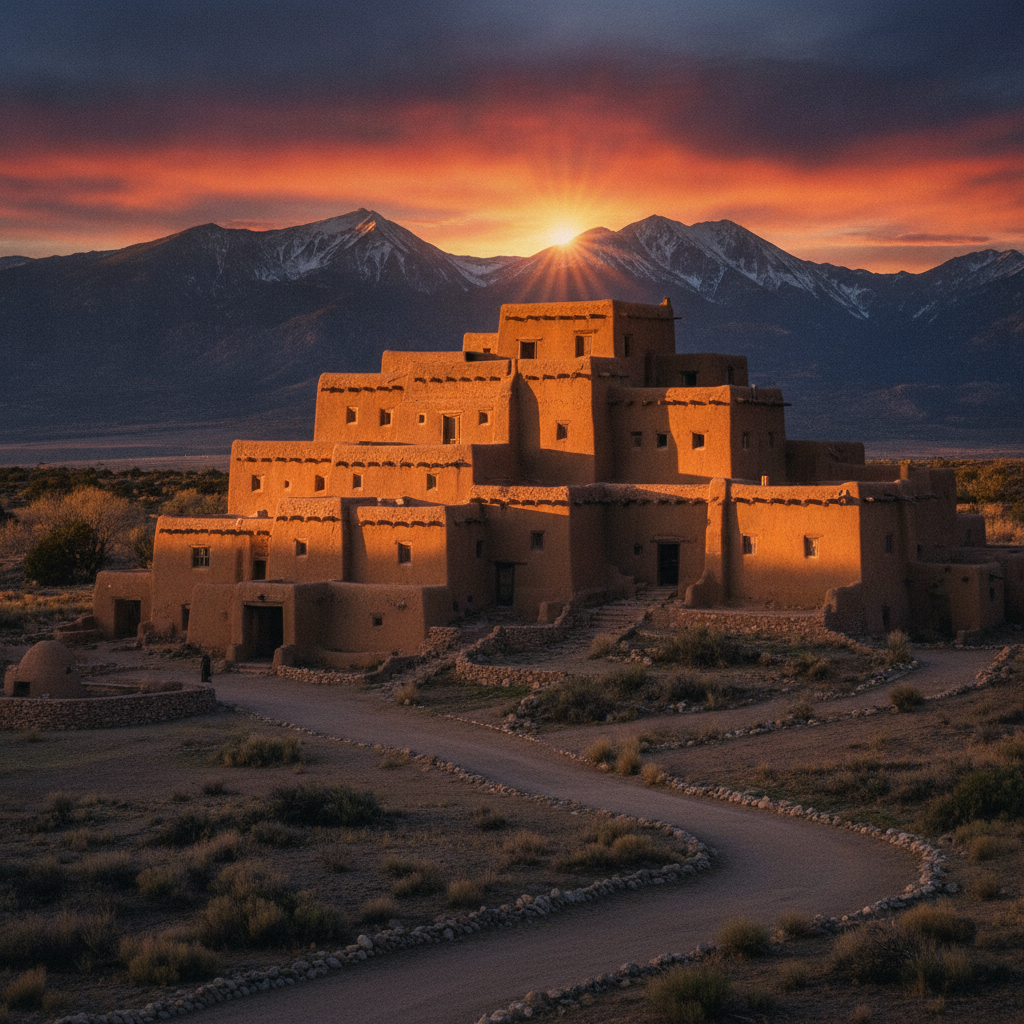
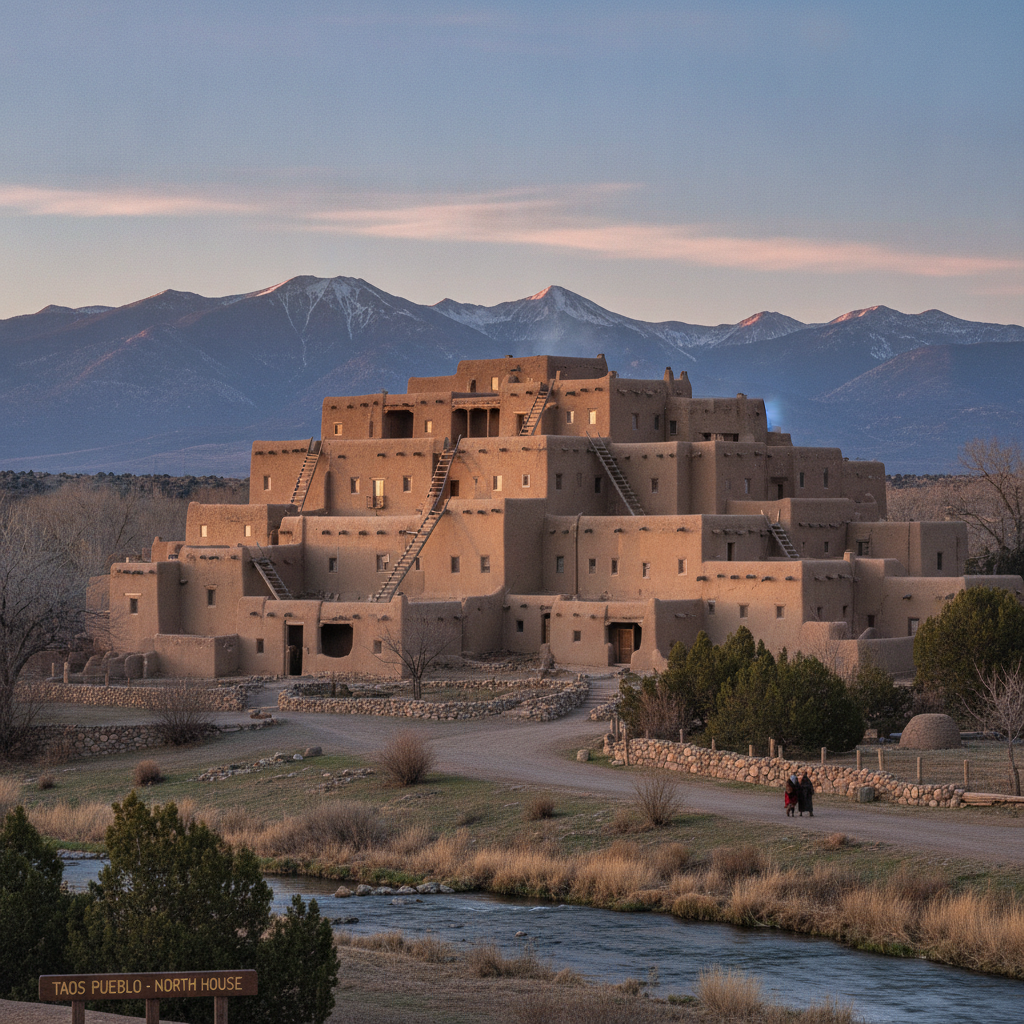
Taos Pueblo, 70 miles north of Santa Fe, is a UNESCO World Heritage Site and National Historic Landmark representing one of the oldest continuously inhabited communities in North America, with the current multi-story adobe structure dating to between 1000 and 1450 AD. The pueblo north house, Hlauuma, is a five-story structure built without electricity or running water that approximately 150 people still use as a primary residence. The pueblo has maintained its traditional governance structure through annual elections of a tribal council. Taos Pueblo has fiercely defended its land rights, most famously through the decades-long campaign to recover Blue Lake in the Taos Mountains, a sacred site taken by the federal government in 1906 and returned in 1970 through landmark legislation. The pueblo charges admission for visitors and photography fees.
- 6
Railyard Arts District and Contemporary Santa Fe
The Railyard Arts District in the Guadalupe neighborhood, centered on the historic 1880s Atchison Topeka and Santa Fe Railway depot and freight facilities, has been redeveloped since 2008 as a mixed-use area combining the Railyard Park, the Santa Fe Farmers Market, SITE Santa Fe contemporary art space, and independent studios and galleries. SITE Santa Fe, founded in 1995, presents international contemporary art biennial exhibitions that bring Santa Fe into dialogue with the global art world beyond the Native American and Hispanic traditions that define Canyon Road. The Farmers Market, operating year-round under a permanent pavilion, is the largest in New Mexico. The Railyard development was designed by landscape architect Ken Smith and represents the most significant urban planning project in Santa Fe since the colonial period.
Walk this route with audio
Stories play automatically as you reach each stop — no tapping needed.
More in Santa Fe
Santa Fe: Roswell, Chaco Culture, Turquoise Trail, Billy the Kid, Farm-to-Table Dining, and City Demographics
Santa Fe: Pueblo Revolt, Taos Pueblo, High Road, Santa Fe Opera, and Adobe Architecture
Santa Fe: SITE Santa Fe, Nuclear Heritage, Santa Fe Trail, O'Keeffe at Abiquiu, Acequia Culture, and Economy
Santa Fe: Plaza, Canyon Road, O'Keeffe, Loretto Chapel, Bandelier, and New Mexican Cuisine