Basque Culture, Euskara & the Ancient Identity of San Sebastián
The Basque people (the 'Euskaldunak' — the speakers of the Basque language, the indigenous people of the Basque Country: the people of the most ancient culture in Western Europe, the people whose language 'Euskara' is a linguistic isolate (unrelated to any other known language in the world) and whose origins remain one of the greatest puzzles of European prehistory) and their extraordinary culture — the language, the pelota, the txoko, the music, and the political identity — are inseparable from the experience of San Sebastián.
- 1
Euskara — The Language of the Ancient Basque People
Euskara (the 'Basque language' — the language of the Basque people, the linguistic isolate (the language with no known relationship to any other language, living or dead) that is the oldest surviving language in Western Europe): the language (Euskara — the language spoken by approximately 750,000 people (as of 2021) in the Basque Country (the 'Euskal Herria' — the Basque homeland: the seven provinces straddling the Franco-Spanish border in the western Pyrenees: Bizkaia, Gipuzkoa, Araba/Álava, Nafarroa/Navarre on the Spanish side, and Lapurdi, Nafarroa Beherea, and Zuberoa on the French side)): the origin (the origin of Euskara — the language with no known relatives in any language family, the language whose origin is one of the most debated questions in European linguistics: the pre-Indo-European hypothesis (Euskara as a survival from the pre-Indo-European languages of Europe, the languages spoken in Europe before the Indo-European migrations of approximately 3,500-4,000 years ago) being the most widely accepted theory): the revival (the revival of Euskara — the language that was suppressed during the Franco dictatorship (1939-1975) and that has been in a process of revival since the democratic transition of 1975-1978: the standardized form of Euskara ('Batua' — the 'unified' Basque, the standardized written form of the language adopted in 1968 by the Royal Academy of the Basque Language ('Euskaltzaindia')) that is now the official language of the Basque Autonomous Community alongside Spanish, taught in the 'ikastola' (the Basque-medium schools) and used in the Basque Government administration, the media, and the cultural life of the Basque Country)): the San Sebastián Basque signage (the bilingual signage of San Sebastián — the city officially called 'Donostia-San Sebastián' (the Basque name 'Donostia' deriving from the medieval Latin 'Dominus Sebastianus' — 'Lord Sebastian', the patron saint of the city), the bilingual street signs and the official signage in both Basque and Spanish that is the most visible expression of the bilingual character of the Basque Autonomous Community).
- 2
Pelota Vasca & Jai Alai — The Fastest Sport in the World
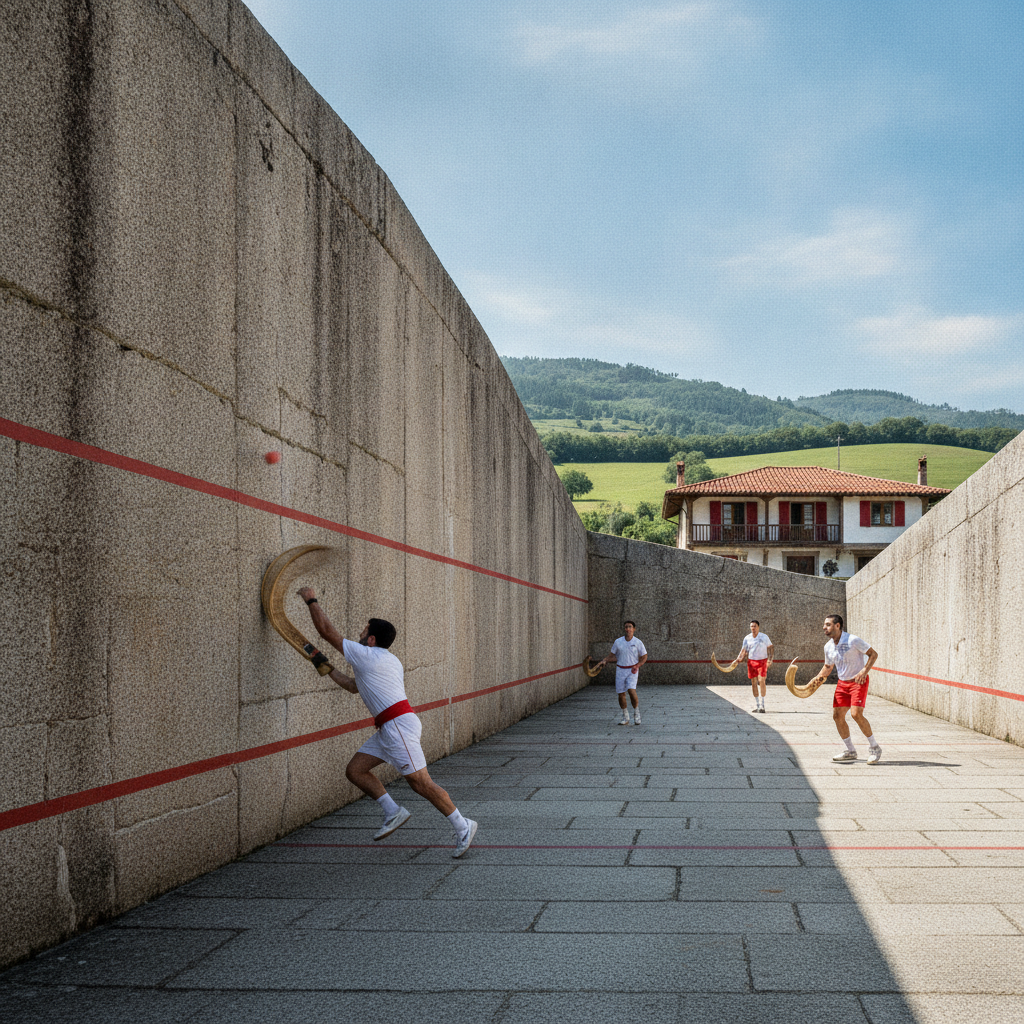
Pelota Vasca (the 'Basque Ball' — the traditional Basque ball sport, the sport that is the defining sport of the Basque Country and one of the most spectacular and the most technically demanding ball sports in the world): the sport (the pelota vasca — the ball sport played on the 'frontón' (the three-walled court), with the ball ('pelota') struck against the front wall ('frontis') with the hand ('a mano'), the wooden bat ('paleta'), or the 'cesta punta' (the long wicker basket ('cesta') strapped to the wrist of the player — the implement that allows the ball to be caught and hurled at speeds of up to 302 km/h (188 mph), making the cesta punta version of pelota (also known as 'jai alai') the fastest ball sport in the world): the 'jai alai' (the 'jai alai' — the Basque term for the cesta punta version of pelota, meaning 'merry festival' in Basque: the form of pelota that was exported from the Basque Country to Cuba, Florida, and the Philippines in the late 19th and early 20th centuries (where it became a popular gambling spectator sport known as 'jai alai' and was played in the 'jai alai frontons' of Miami, Tampa, Havana, and Manila)): the traditional pelota (the 'pelota a mano' — the traditional hand-pelota form, played with the bare hand (or a glove) on the outdoor stone-walled frontón, the most widespread form of pelota in the villages of the Basque Country): the frontones of San Sebastián (the pelota courts of San Sebastián — the 'Galarreta frontón', the covered frontons of the Parte Vieja neighbourhood, and the outdoor village frontons ('frontones de caseríos') in the rural Basque villages around San Sebastián).
- 3
Basque Nationalism & the Political Identity of San Sebastián
Basque nationalism (the 'abertzalismo' — the Basque nationalist political movement, the movement for the political independence or self-determination of the Basque Country ('Euskal Herria')): the Basque Nationalist Party (the 'Partido Nacionalista Vasco' (PNV) — the 'Basque Nationalist Party' founded in 1895 by Sabino Arana Goiri (1865-1903), the Bilbao lawyer and writer who formulated the ideology of Basque nationalism based on the distinctiveness of the Basque race ('Euskaldun' — the 'possessor of Euskara'), the Catholic faith, and the traditional Basque laws ('Fueros' — the medieval charters that granted the Basque provinces a high degree of autonomy within the Kingdom of Castile and later the Kingdom of Spain)): ETA (the 'Euskadi Ta Askatasuna' ('ETA' — 'Basque Homeland and Liberty') — the Basque nationalist organization that conducted the armed campaign for Basque independence from 1959 to 2018 (the organization that killed 853 people in its 59-year campaign, the most lethal terrorist organization in post-war Western Europe): the San Sebastián context (the San Sebastián/Donostia context of Basque politics — the city where the Basque nationalist parties consistently win the majority of the votes in the municipal and regional elections (the PNV and the 'Bildu' coalition (the left-wing Basque nationalist coalition) together commanding approximately 60-70% of the vote in San Sebastián in the 2010s-2020s) and where the political murals and the Basque flag ('Ikurriña' — the red and green Basque flag with the white cross and the white saltire) are a constant presence in the public space).
- 4
Getaria, Hondarribia & the Basque Coast Villages
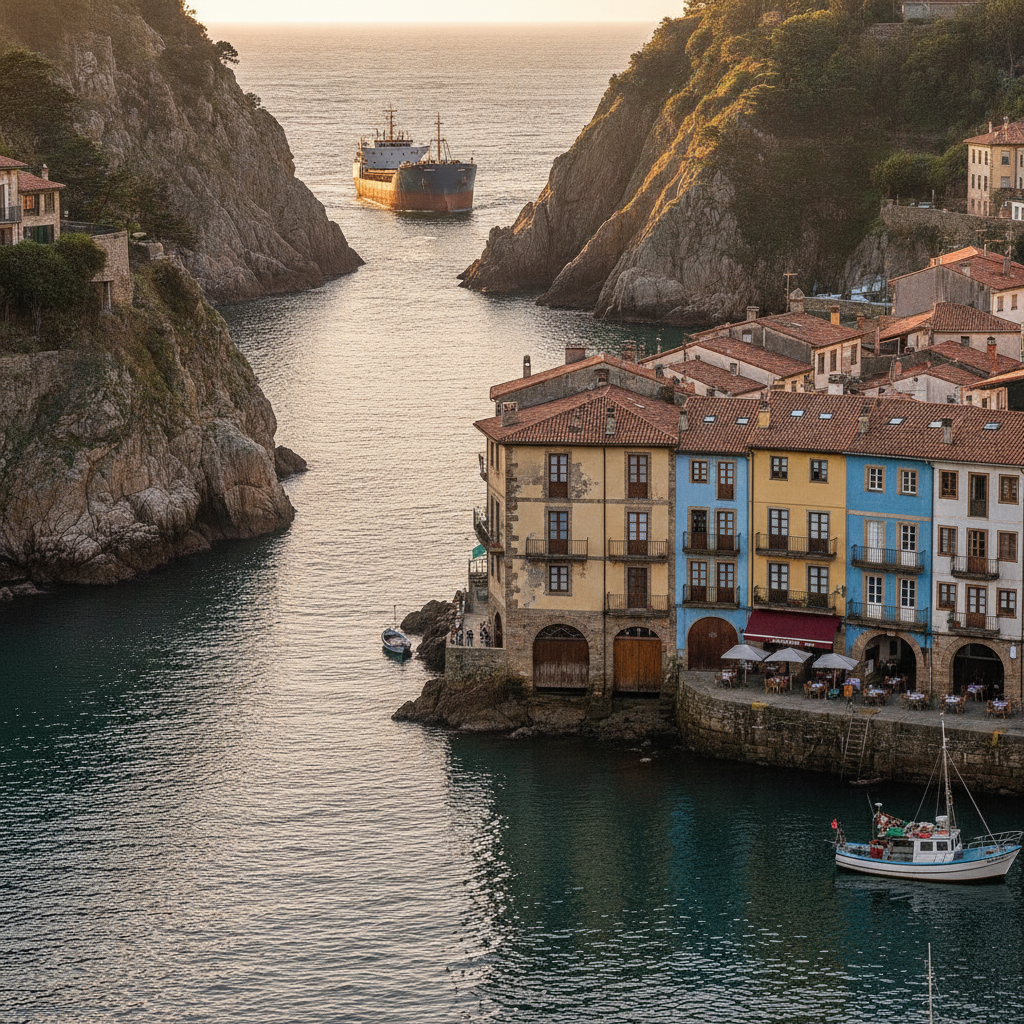
The Basque Coast villages around San Sebastián (the fishing villages of the Gipuzkoa coast between San Sebastián and the French border): Getaria (the fishing village 22 km west of San Sebastián — the village that is the centre of the Getariako Txakolina wine appellation (the most important Txakoli wine area), the birthplace of Juan Sebastián de Elcano (1476-1526) (the Basque navigator who completed the first circumnavigation of the globe in 1522, the captain who brought the 'Victoria' back to Seville after Magellan was killed in the Philippines in 1521), and the location of the Museo Cristóbal Balenciaga (the museum dedicated to the Getaria-born fashion designer Cristóbal Balenciaga (1895-1972) — one of the most important fashion designers of the 20th century, the designer who was called 'the master of us all' by Christian Dior, the founder of the Spanish luxury fashion house 'Balenciaga' that remains one of the most prestigious fashion brands in the world): Hondarribia (the 'Fuenterrabía' in Spanish — the medieval fortified town at the mouth of the Río Bidasoa, 22 km east of San Sebastián on the French border: the town with the best-preserved medieval fortifications in the Basque Country (the 16th-century city walls, the historic gate, and the medieval town centre of the 'Alde Zaharra' — the 'Old Town'), the town that faces the French city of Hendaye across the Bidasoa estuary (the international border between Spain and France at this point), and the beautiful beach of 'Playa de Hondarribia' (the 2 km beach on the Bidasoa estuary between the old town and the airport)).
- 5
San Sebastián to Bilbao — The Guggenheim & the Basque Capital
Bilbao (the city 102 km west of San Sebastián, accessible in 1 hour by the AP-8 motorway or in 1 hour 20 minutes by bus — the largest city in the Basque Country (population approximately 350,000 in the city and 1 million in the metropolitan area), the economic capital of the Basque Country and the home of the most famous art museum of the 20th century): the Guggenheim Bilbao (the 'Museo Guggenheim Bilbao' — the contemporary art museum on the Nervión River in Bilbao, designed by the Canadian-American architect Frank Gehry (b.1929) and opened in 1997, the building that is the most celebrated work of architecture of the late 20th century and the building that is credited with transforming Bilbao from a declining industrial city into a major international cultural destination (the 'Bilbao Effect' — the term used in urban planning to describe the transformation of a city's image and economy through investment in a single iconic cultural building)): the 'titanium fish scales' (the Guggenheim Bilbao building — the sinuous, organic building clad in 33,000 titanium tiles ('scales') that reflect the light of the Nervión River and that change colour with the changing light (from golden in the morning to silver-grey in the overcast Basque afternoon), the building whose flowing curves reference the industrial heritage of the Bilbao shipyards and the movement of water): the Casco Viejo (the 'Old Town' of Bilbao — the compact medieval city centre on the east bank of the Nervión, the 'Siete Calles' (the 'Seven Streets' — the seven streets that formed the original medieval grid of Bilbao) with the pintxos bars, the café culture, and the historic market of the 'Mercado de la Ribera' (the largest covered market in Spain)).
- 6
San Sebastián Jazz Festival — The Sound of the Basque Summer
The Jazzaldia (the 'San Sebastián Jazz Festival' — the annual jazz festival held in San Sebastián in the third week of July, one of the most celebrated jazz festivals in Europe and one of the oldest jazz festivals in Spain): the festival (the Jazzaldia — founded in 1966 by the Hotel Londres director Pachi Salaberri (the first jazz festival in Spain, the festival that began as a single evening of jazz in the Plaza de la Trinidad in the Parte Vieja), the festival that has grown to become a 5-day event attracting international audiences and world-class jazz performers): the Plaza de la Trinidad (the main outdoor stage of the Jazzaldia — the free outdoor concerts on the Plaza de la Trinidad in the Parte Vieja, the square that fills with the San Sebastián music lovers and the festival visitors who watch the jazz performances for free in the open air): the paid venues (the paid concert venues of the Jazzaldia — the Kursaal auditorium (the principal indoor venue for the major jazz concerts), the Victoria Eugenia Theatre (the grand 19th-century theatre in the Ensanche), and the outdoor stages at the Zurriola beach): the artists (the artists who have performed at the Jazzaldia — the list including Miles Davis, Dizzy Gillespie, Dave Brubeck, Ella Fitzgerald, Count Basie, Chet Baker, John Coltrane, Thelonious Monk, Nina Simone, Herbie Hancock, and virtually every major jazz artist of the second half of the 20th century): the Basque jazz scene (the Basque jazz scene — the vibrant local jazz tradition of the Basque Country that feeds into the international festival: the Basque jazz musicians (the pianist Iñaki Salvador, the guitarist Javier Colina, and the saxophonist Perico Sambeat) who have emerged from the San Sebastián jazz scene to achieve international recognition).
Walk this route with audio
Stories play automatically as you reach each stop — no tapping needed.
More in san-sebastian
Pasajes Harbour, Hondarribia & the Basque Border Coast
Sagardotegi, Basque Cider Houses & Seasonal Traditions
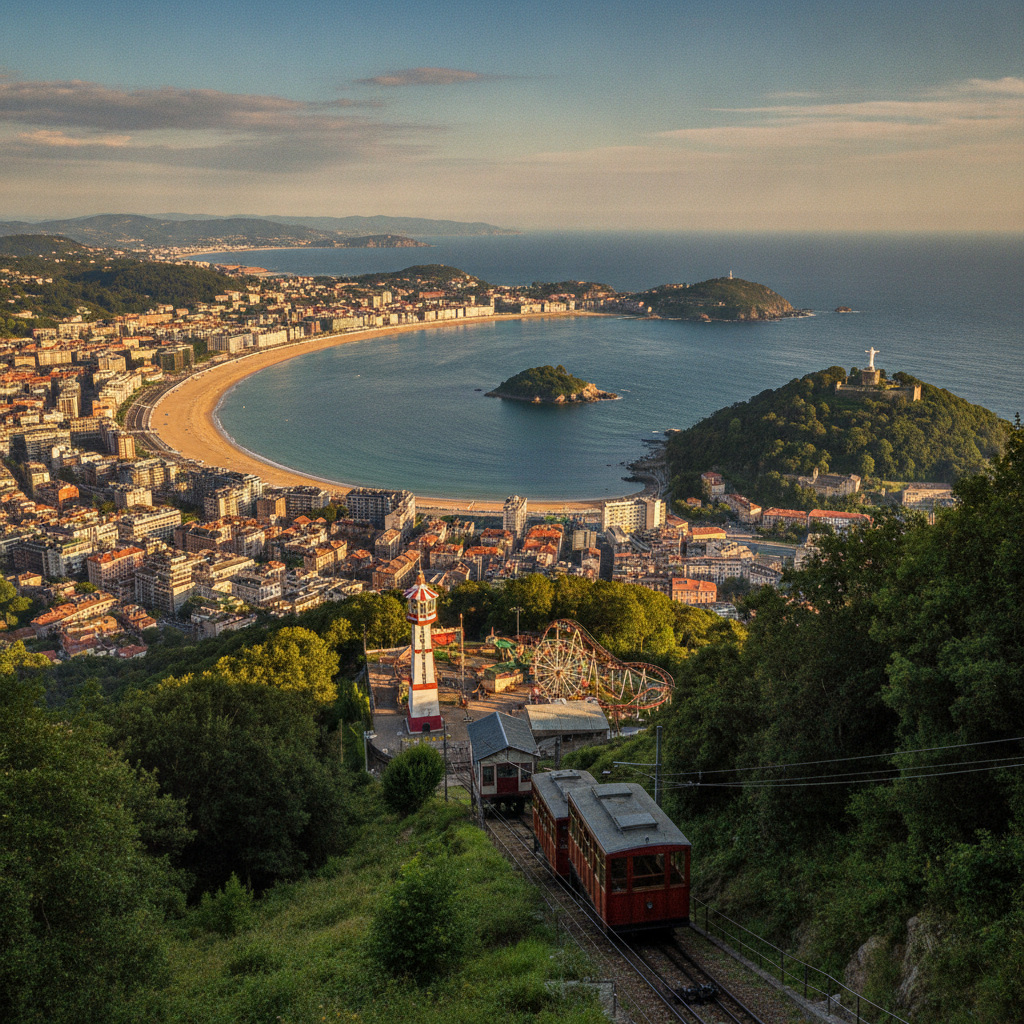
Monte Igueldo, Monte Urgull & San Sebastián's Panoramic Views
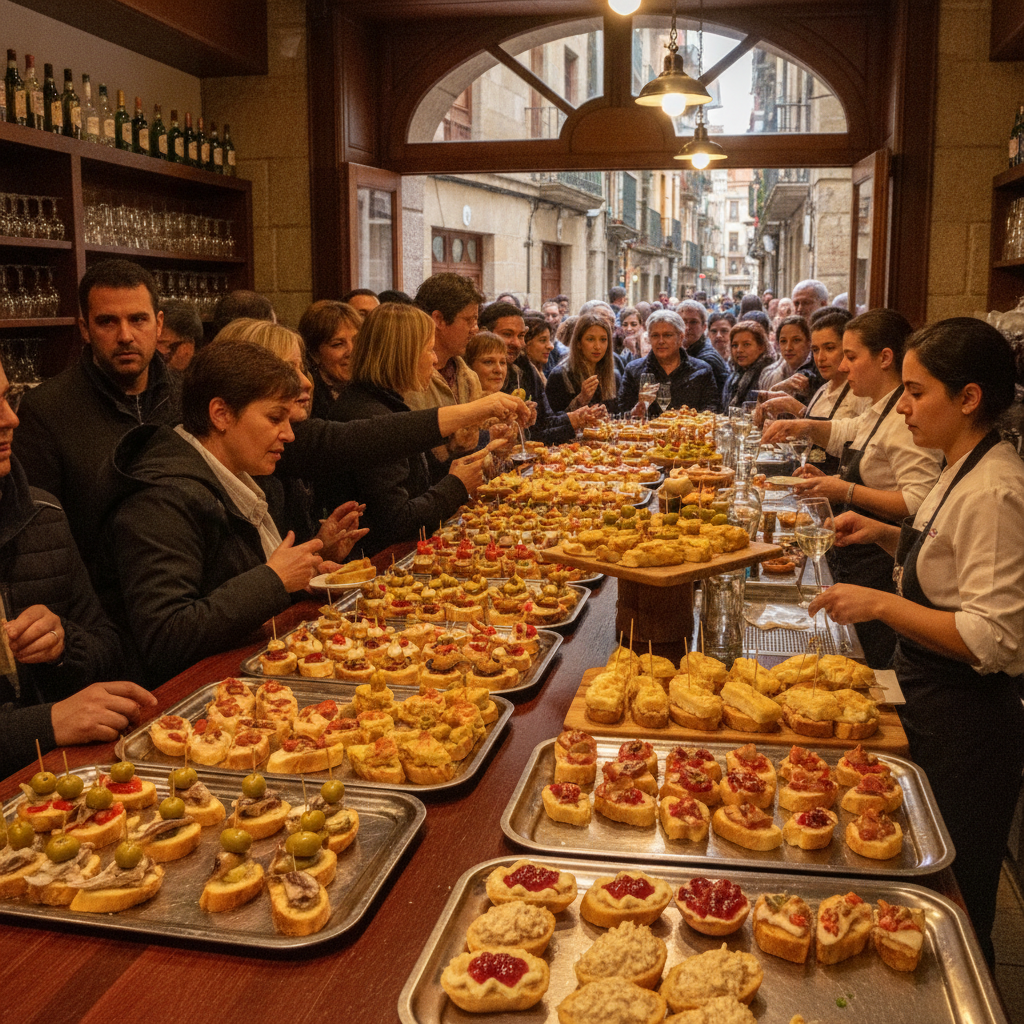
Pintxos, Old Town & San Sebastián's World-Class Gastronomy
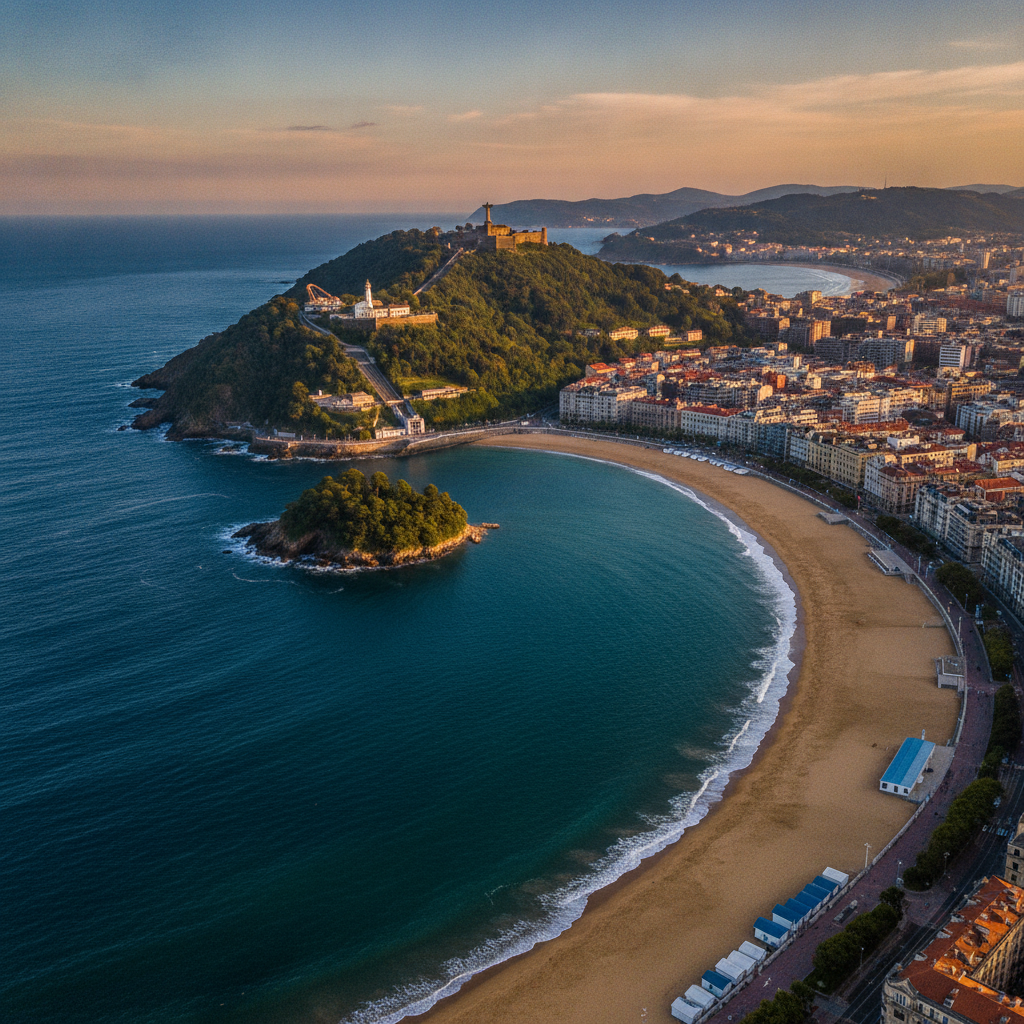
La Concha Beach, Belle Époque Promenade & San Sebastián Elegance