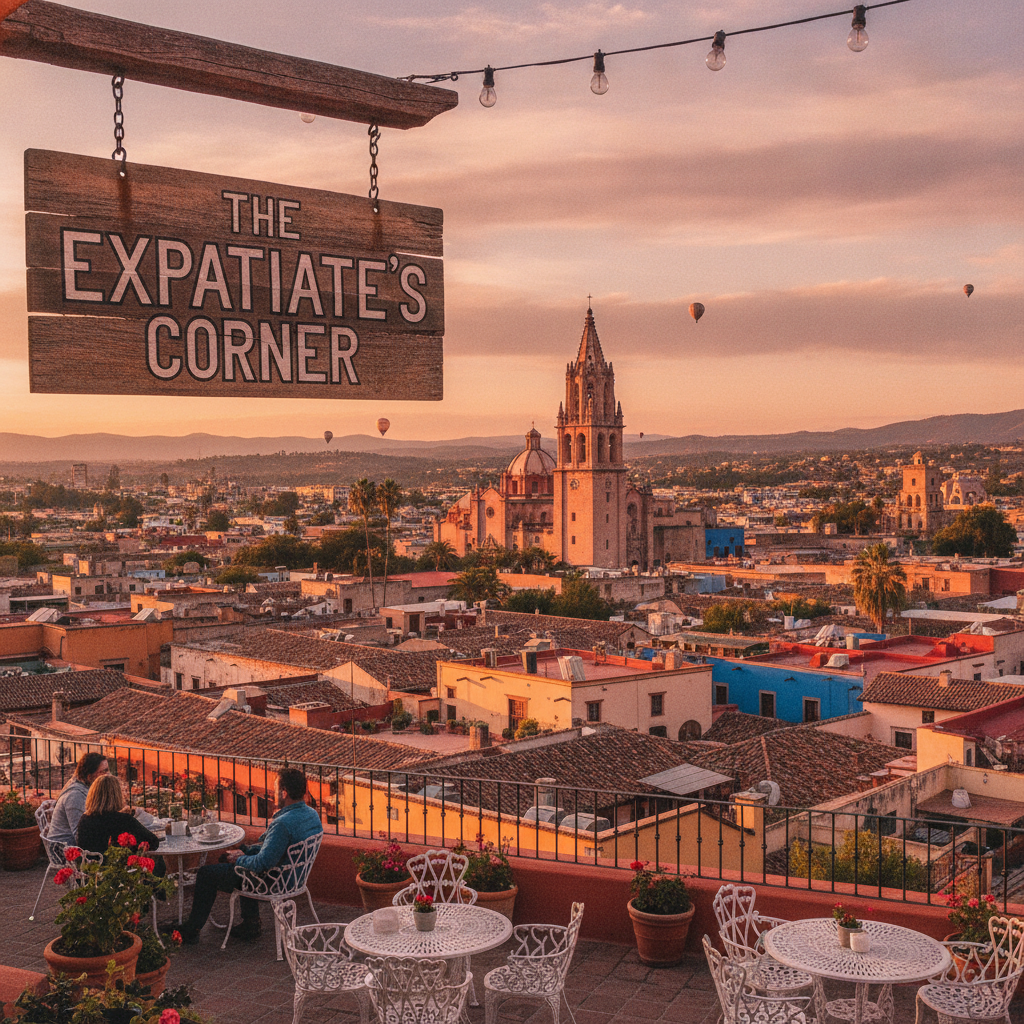
San Miguel de Allende: The Colonial City That Was Named Best City in the World Seven Times, That Saved Itself from Demolition by Attracting American Art Students in 1938, and Whose Pink Gothic Church Was Designed by an Indigenous Mason Who Had Never Been to Europe
San Miguel de Allende, the Bajio colonial city of 170,000 in the state of Guanajuato at 1,900 metres elevation, has been voted the best city in the world by Conde Nast Traveler readers more times than any other city in Mexico, a recognition that simultaneously captures something real about the quality of the urban environment — the intact colonial grid, the temperate climate, the active cultural scene, the excellent restaurants — and completely misrepresents who lives there and for whom the city was built. The city was saved from demolition in 1938 when a group of American veterans of the Second World War used the GI Bill to enroll in the Instituto Allende art school that had just opened in a former hacienda, creating the American artistic colony that made San Miguel famous in the United States and eventually attracted the expatriate and tourist infrastructure that now generates 40 percent of the city's economic activity and 100 percent of its international visibility. The Parroquia de San Miguel Arcangel, the pink neo-Gothic parish church whose spires dominate every photograph of the city, was designed around 1880 by the indigenous stonemason Zeferino Gutierrez who had no formal architectural training and who reportedly sketched his design after studying postcards of European Gothic cathedrals, scaling and adapting the Gothic forms in a version that architectural historians call Indian Gothic or vernacular neo-Gothic and that residents universally describe as the most beautiful church in Mexico even when European visitors point out that the proportions are not quite Gothic. The warm springs of Atotonilco 15 kilometres from the city, the sanctuary known as the Sistine Chapel of Mexico for its interior walls entirely covered in folk art religious paintings, and the dramatic semi-arid landscape of the Laja River valley provide the context that the colonial city sits within.
- 1
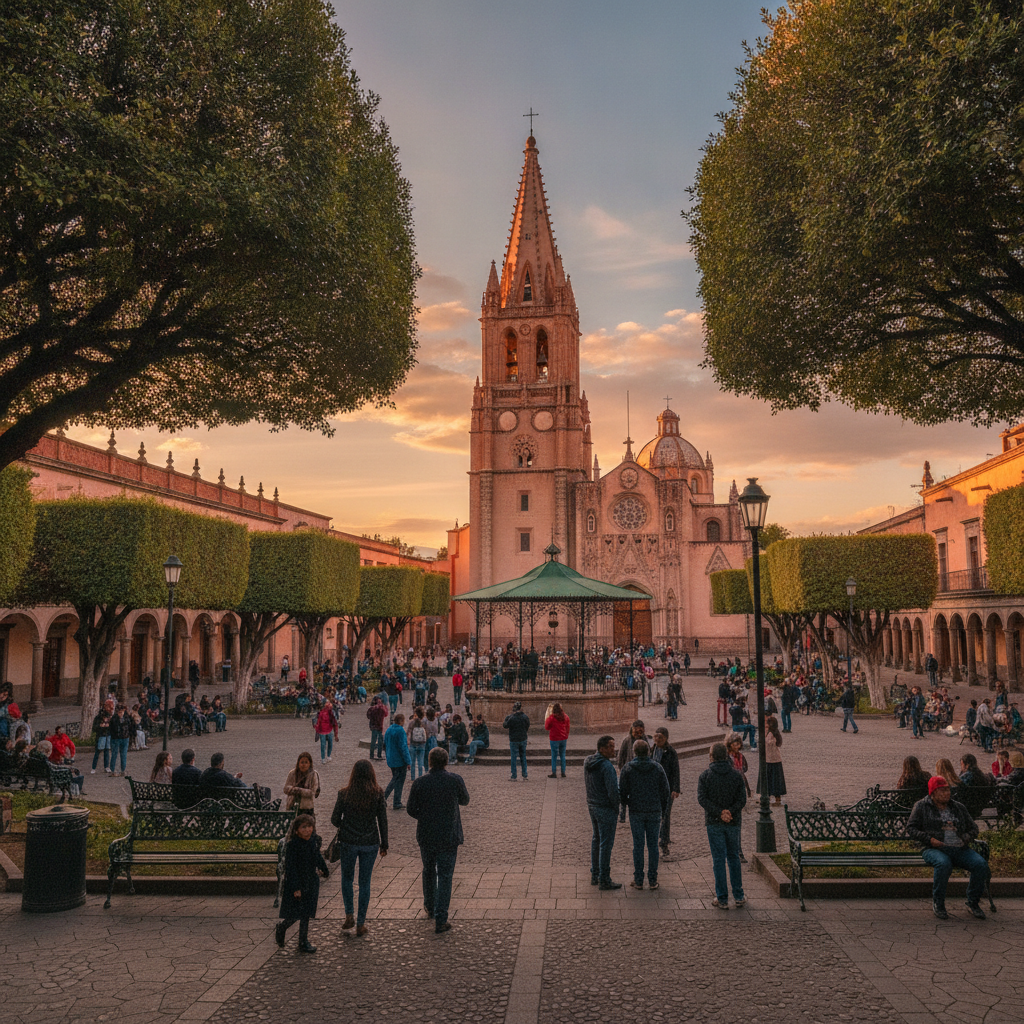
Parroquia de San Miguel and the Jardin
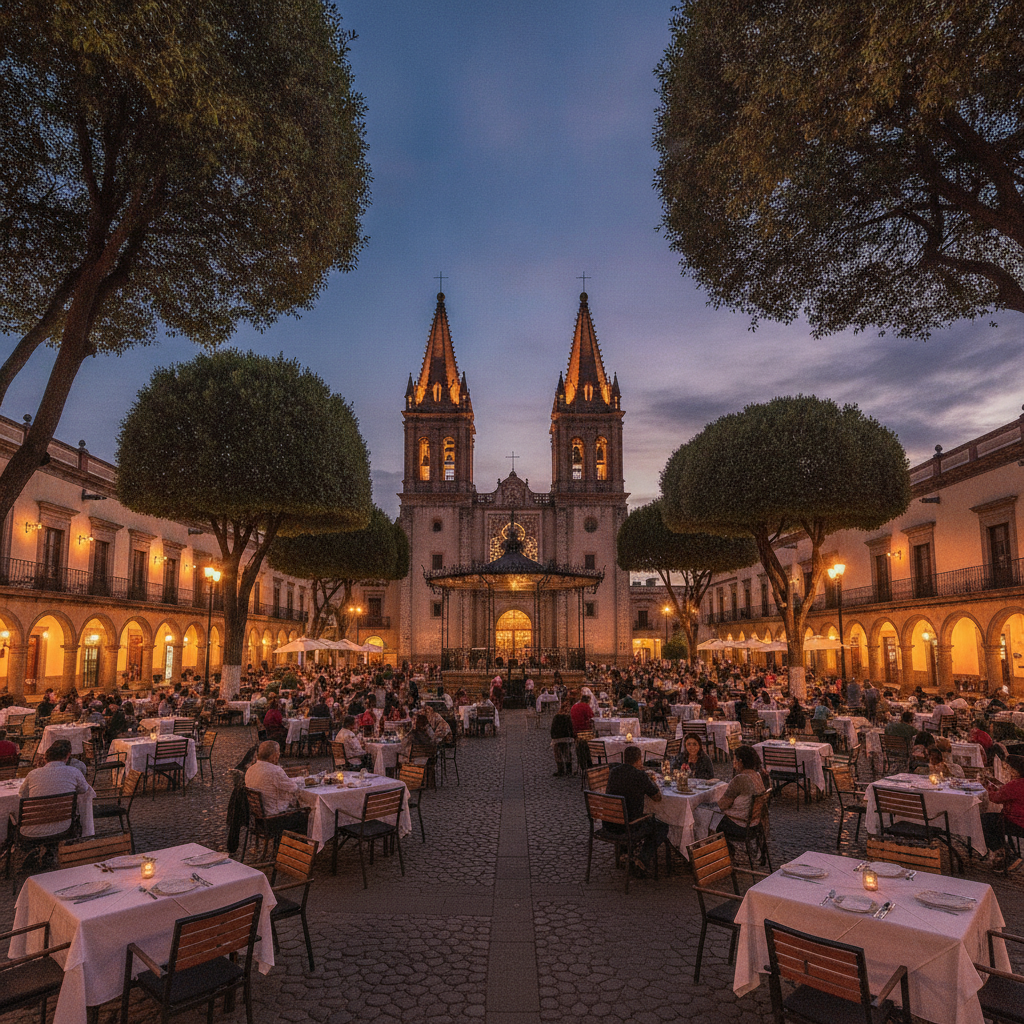
The Parroquia de San Miguel Arcangel, whose pink neo-Gothic facade with spires reaching 50 metres above the Jardin Principal defines the visual identity of San Miguel de Allende in every photograph, postcard, and travel magazine spread, was redesigned in the 1880s by Zeferino Gutierrez, an indigenous Purépecha stonemason from the state of Michoacan who had no architectural education and who reportedly designed the new facade by studying photographs of European Gothic cathedrals sent by letter from correspondents in Belgium and France, scaling up the Gothic elements to fit the colonial church tower bases that already existed while inventing connections and proportions that have no strict Gothic precedent. The result, which architectural historians designate variously as Indian Gothic, naive neo-Gothic, or folk historicism, is one of the most recognized and beloved church facades in Mexico despite or because of its deviation from the European Gothic canon: the pink tezontle stone surface, the asymmetric towers of slightly different heights, and the medieval-tinged ornamentation combine to create an image that looks simultaneously European and unmistakably Mexican. The Jardin Principal, the central garden plaza surrounded by portal arcades with cafes and restaurants, colonial government buildings, and the Parroquia facade, is the most photographed public square in Mexico outside of Mexico City's Zocalo and provides the outdoor living room where San Miguel social life has always been conducted: evening promenades, Sunday family gatherings, political events, and the globalized cafe culture of the expatriate-inflected tourism economy coexist in the same space that has been the social center of the city since its founding in the 16th century.
- 2
Instituto Allende and American Artistic Colony
The Instituto Allende, the fine arts school established in 1938 in a former hacienda estate three blocks from the Jardin by the Mexican artist Stirling Dickinson and the Espinoza family, was the original institution that drew the American veterans who used the GI Bill to study art in Mexico after World War Two, creating the San Miguel expatriate artistic colony that made the city known to North American artists, writers, and eventually tourists in the 1940s and 1950s before spreading through the American travel media infrastructure to the broader middle-class traveler market in the 1970s and 1980s. The GI Bill, the 1944 Servicemen Readjustment Act that paid for education and vocational training for US military veterans, allowed students to use the benefit for foreign educational institutions, making enrollment at the Instituto Allende financially accessible to veterans who would not otherwise have been able to afford international education. The American artistic colony that formed around the Instituto Allende included painters, sculptors, photographers, and writers who established studios, opened galleries, and created the social infrastructure of the expatriate artistic community that persisted through the subsequent decades as new generations of North American artists, retirees, and eventually digital nomads arrived to join it. The Instituto Allende, now part of the Universidad de Guanajuato, continues to operate as an art school in the same hacienda property, offering studio arts, Spanish language, and cultural programs that attract students from the US and internationally. The Casa de la Cultura Banamex in a colonial building near the Jardin was the primary gallery and exhibition space of the city's commercial art market before the conversion of the industrial building Fabrica La Aurora to an art gallery complex.
- 3
Fabrica La Aurora and Contemporary Art
Fabrica La Aurora, the former textile factory built in 1902 at the eastern edge of the San Miguel historic center that operated as a wool textile mill until the mid-20th century and was converted in 2003 to a complex of galleries, studios, antique dealers, and restaurants, is the primary contemporary art market venue in San Miguel and the most complete adaptive reuse of an industrial heritage building in Guanajuato state. The original factory infrastructure — the brick vault ceilings, the large windows, the industrial floor space, the central atrium courtyard — provides the gallery and studio spaces for approximately 30 galleries and dealers selling painting, sculpture, photography, ceramic, and furniture from Mexican and international artists to the premium tourist market that San Miguel attracts. The Fabrica La Aurora art market, open daily with peak activity on weekends when tour groups from Mexico City and the Bajio cities arrive, has established San Miguel as the primary location in Mexico for the sale of fine art to the international tourist and collector market, with prices ranging from a few hundred to tens of thousands of dollars and a clientele that includes serious collectors alongside decorative buyers. The adjacent Ignacio Ramirez Cultural Center, a federal government cultural space in a former convent building, provides free public cultural programming including exhibitions, concerts, and educational events that serve the resident population rather than the tourist market.
- 4
Atotonilco Sanctuary and Hot Springs
The Santuario de Jesus Nazareno de Atotonilco, a pilgrimage sanctuary 15 kilometres north of San Miguel de Allende on the road to Dolores Hidalgo, is called the Sistine Chapel of Mexico for the comprehensive program of religious folk art paintings that cover virtually every surface of the interior — walls, vaults, arches, pilasters, and dome surfaces — with scenes from the life of Christ, the Virgin, and the saints painted in a popular devotional style by the artist Antonio Martinez de Pocasangre between 1740 and 1765, creating one of the most extraordinary interiors of popular religious art in the Americas. The sanctuary was the departure point for Miguel Hidalgo's march from Dolores to Guanajuato in 1810, when Hidalgo paused at Atotonilco to take the banner of the Virgin of Guadalupe as the standard of the independence army, making the sanctuary the physical origin point of the Mexican War of Independence. The hot springs of Atotonilco, the thermal water sources that give the village its Nahuatl name meaning place of hot waters, were used by the indigenous population before the colonial period and are now developed into a series of thermal spa operations ranging from simple community pools to resort spa facilities. The thermal water emerges at temperatures between 37 and 45 Celsius from volcanic springs in the semi-arid landscape north of San Miguel and is sulfurous and mineral-rich in character. The route from San Miguel to Atotonilco through the semi-arid scrub landscape of the Laja River valley with its cactus and agave vegetation provides the most direct visual encounter with the natural environment that surrounds the city beyond the colonial streets.
- 5
El Charco del Ingenio Botanical Garden
El Charco del Ingenio, the ecological reserve and botanical garden 2 kilometres from the San Miguel historic center established in 1991 through the joint initiative of the Mexican civil society organization El Charco del Ingenio and the San Miguel municipal government, covers 70 hectares of semi-arid habitat in the Laja River canyon above the San Miguel reservoir and contains the most significant collection of Mexican cacti and succulents in a botanical garden in the country, with over 1,500 plant species including rare and endangered Mexican succulent species rescued from habitats threatened by urban development and agricultural conversion. The canyon landscape of El Charco, where the basalt rock walls of the Laja River canyon create a dramatic setting for the cactus gardens, bird observation areas, and the artificial lake that provides water for the reserve, is the primary natural hiking and wildlife observation destination for San Miguel residents and visitors who want an alternative to the colonial city streets. The bird population of El Charco includes over 100 species, with raptors including the red-tailed hawk and the peregrine falcon nesting on the canyon walls and hummingbirds concentrated around the flowering cactus and agave plants. The indigenous plant collection includes the cardon columnar cactus reaching 10 metres, the prickly pear in multiple species, the barrel cactus, and the agave tequilana along with wild agave species of the Bajio region. The reserve is one of the few protected natural areas in the Guanajuato highlands and serves as an urban green lung for a city whose tourism growth continues to consume surrounding agricultural land.
- 6
San Miguel de Allende Independence History
San Miguel de Allende, the city originally called San Miguel el Grande that was renamed in honor of Ignacio Allende after Mexican independence, is one of the two most historically significant cities in the Mexican War of Independence, with Dolores Hidalgo 50 kilometres to the north being the other, because Ignacio Allende, the creole military officer who conspired with Hidalgo and Josefa Ortiz de Dominguez to organize the independence uprising, was born in San Miguel in 1769. Allende, whose family house on the Jardin Principal is now the city museum, organized the Bajio conspiratorial network with Hidalgo and was the military planner of the uprising before Hidalgo moved the date forward from December 1810 to September 16, 1810, when the Queretaro corregidor Juan Dominguez and his wife Josefa warned the conspirators that the Spanish authorities had discovered the plot. Allende was executed with Hidalgo in Chihuahua in July 1811 after the initial phase of the independence movement was suppressed by the Spanish military, and both leaders were decapitated with their heads displayed in the Alhondiga de Granaditas in Guanajuato for the following decade as a warning to independence sympathizers. The Allende house museum on the Jardin and the historical documentation of the independence conspiracy in the San Miguel archives provide the most direct access to the Independence period history for visitors who want to understand why the city is named what it is and why the Mexican government designated it along with Dolores Hidalgo and Guanajuato as the primary sites of national independence commemoration.
Walk this route with audio
Stories play automatically as you reach each stop — no tapping needed.
More in San Miguel de Allende
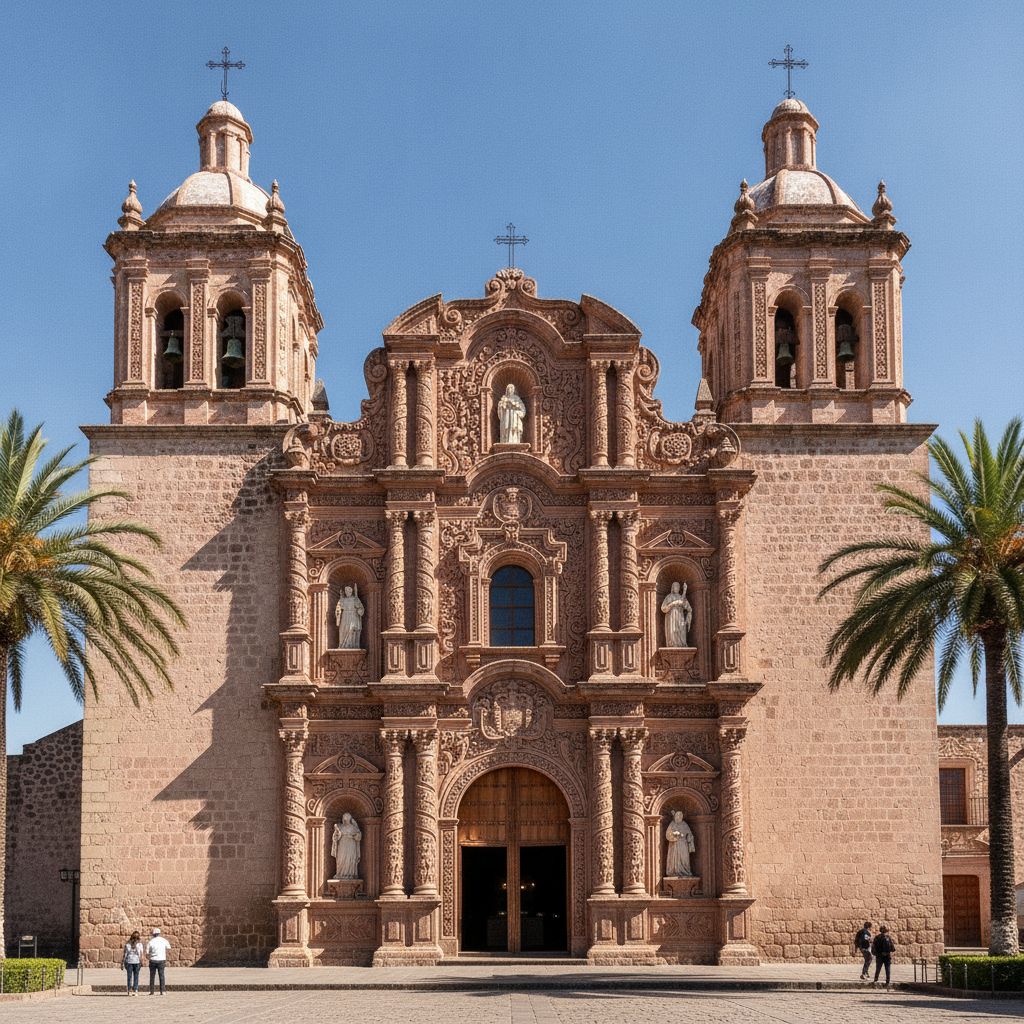
San Miguel de Allende Colonial Architecture Baroque Churches and the Oratorio de San Felipe Neri: Walking the Streets of a UNESCO World Heritage Site Whose Every Cobblestone Was Laid by Otomi and Chichimec Labor
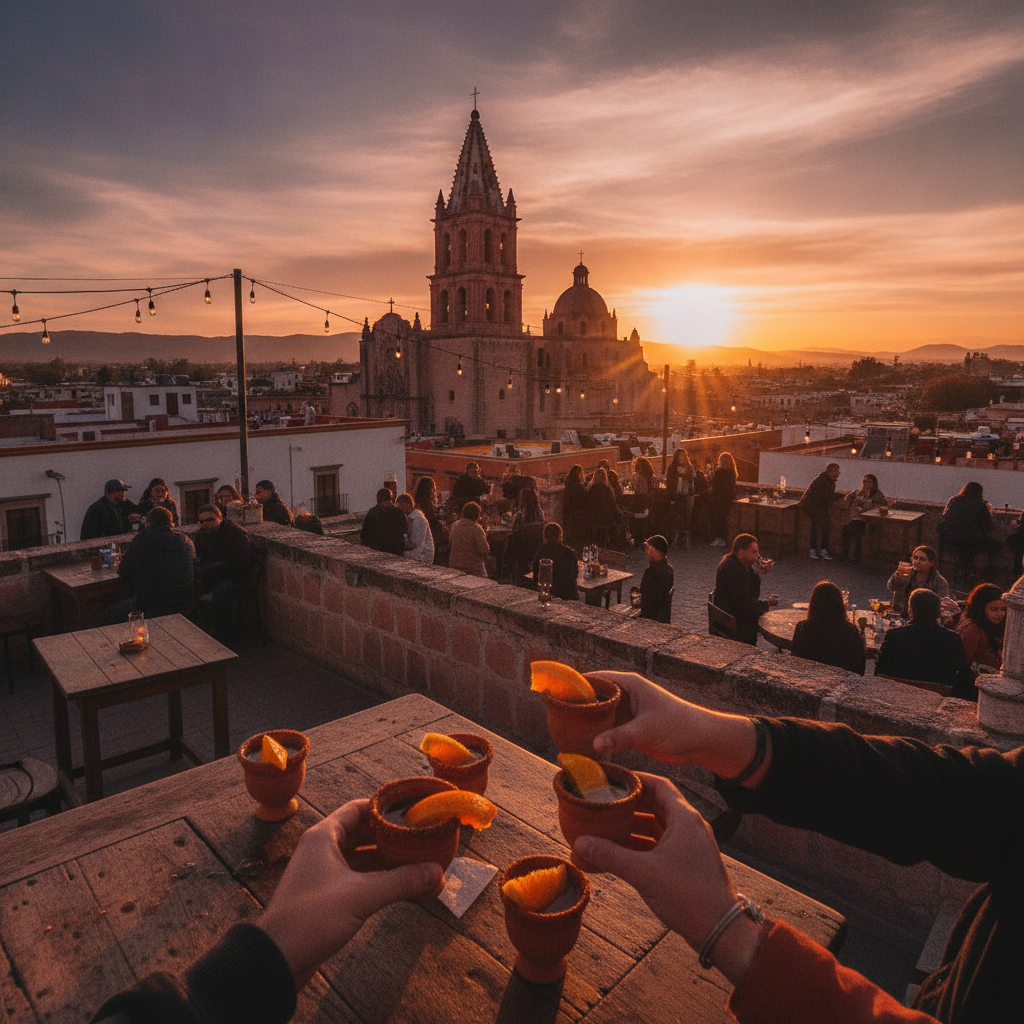
San Miguel de Allende Food Scene and Mezcal Bars: How a City of 170,000 Has More World-Class Restaurants Per Capita Than Any City in Mexico and Why the Vendors in the Tuesday Market Are the Better Story
San Miguel de Allende Practical Guide: Getting There Climate When to Visit Neighborhoods Safety Healthcare Language and Living with the Dual Economy of the Most Expensive Colonial City in Mexico
Semana Santa Processions Festivals and the Indigenous Chichimec Raids That Nearly Ended San Miguel de Allende Before It Began: History From the 1542 Founding Through the War of Independence
San Miguel de Allende Cuisine Bajio Flavors Enchiladas Mineras Carnitas Markets and the Farm to Table Revolution in a Colonial Kitchen Where Three Centuries of Tradition Meet Contemporary Mexican Gastronomy