Puerto Rico: Political Status, Hurricane Maria, Boricua Identity, Fania Records, and Regueton World Domination
The political and cultural context of San Juan encompasses the unresolved Commonwealth status debate, the catastrophic Hurricane Maria and its federal response, the Puerto Rican cultural identity of the Boricua tradition, the Fania Records salsa revolution, and the global dominance of Bad Bunny and the regueton generation.
- 1
Puerto Rico Status: The Commonwealth Question
Puerto Rico's status as a US Commonwealth, Unincorporated Territory, or Estado Libre Asociado, in which Puerto Ricans are US citizens but cannot vote for US President, have no voting representation in Congress, and are subject to federal law while receiving different treatment in federal programs, is the defining political question of the island and has been the subject of six referendums since 1967 with varying results. The status debate divides Puerto Rican society between statehood, independence, and the status quo camps.
- 2
Hurricane Maria: The 2017 Catastrophe
Hurricane Maria struck Puerto Rico on September 20, 2017, as a Category 4 storm and caused the worst natural disaster in Puerto Rico's modern history, destroying the power grid, killing an estimated 3,000 people in the immediate and aftermath periods, and causing an estimated $90 billion in damage that has required a decade-long reconstruction program. The inadequacy of the federal government response to the Puerto Rico disaster revealed the consequences of the island's ambiguous political status in determining the allocation of recovery resources.
- 3
Puerto Rican Identity: Boricua Culture
The Puerto Rican cultural identity, expressed in the concept of boricua, the indigenous Taino name for the island, integrates the Spanish colonial heritage, the African enslaved peoples tradition, the Taino indigenous roots, and the 20th-century American influence in a cultural synthesis that is distinctively Caribbean and simultaneously American. The Puerto Rican identity is most concentrated in the diaspora communities of New York, Florida, and Chicago, where the distance from the island has intensified the cultural maintenance.
- 4
Fania Records and the Salsa Revolution
Fania Records, founded in New York in 1964 by Johnny Pacheco and Jerry Masucci, was the most important Latin music label in history, signing Willie Colon, Celia Cruz, Ruben Blades, Hector Lavoe, and the core of the Fania All Stars who created the salsa sound that defined Latin New York in the 1970s and that spread through the Caribbean and Latin America to become the most globally recognized Latin popular music genre. Most of the Fania artists were Puerto Rican New Yorkers.
- 5
Regueton: The Puerto Rico Export
Regueton, the urban rhythm that emerged from the underground clubs and sound systems of San Juan in the 1990s, combining Jamaican dancehall rhythms with Spanish rap lyrics in the dembow pattern, became through the commercial breakthrough of Daddy Yankee's Gasolina in 2004 the most globally successful Latin music genre of the 21st century. The contemporary regueton artists Bad Bunny, J Balvin, and Ozuna have made the genre the most streamed music form in the Spanish-speaking world.
- 6
La Perla: The Neighborhood Below the Walls
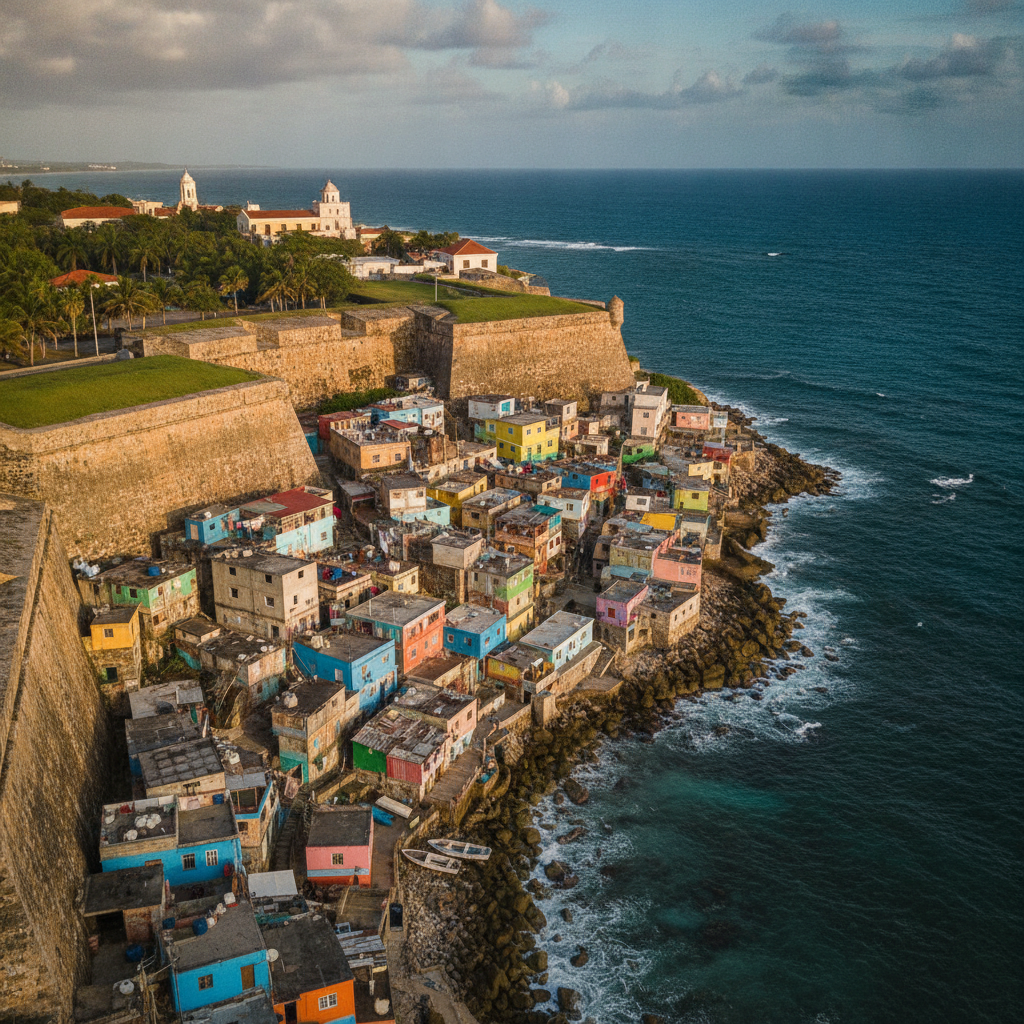
La Perla, the informal settlement built on the narrow shelf between the Old San Juan city walls and the Atlantic Ocean and historically excluded from the fortified city, became one of the most internationally known urban neighborhoods in the world when Bad Bunny filmed his Mia music video in its colorful alleyways. La Perla's reputation for danger and its extraordinary visual character of pastel-colored houses under the colonial fortification walls represents the complexity of the San Juan urban social geography.
Walk this route with audio
Stories play automatically as you reach each stop — no tapping needed.
More in San Juan
San Juan Historic Institutions: El Capitolio, La Fortaleza Governor's Mansion, Casa Blanca, and the Waterfront Promenade
San Juan: Old City Cobblestones, El Morro Fortress, Salsa Music Origins, and El Yunque Rainforest
Puerto Rico Nature: El Yunque Waterfall, Puerto Rican Parrot Recovery, Coqui Frog Chorus, Taino Rock Art, and the Arecibo Observatory Legacy
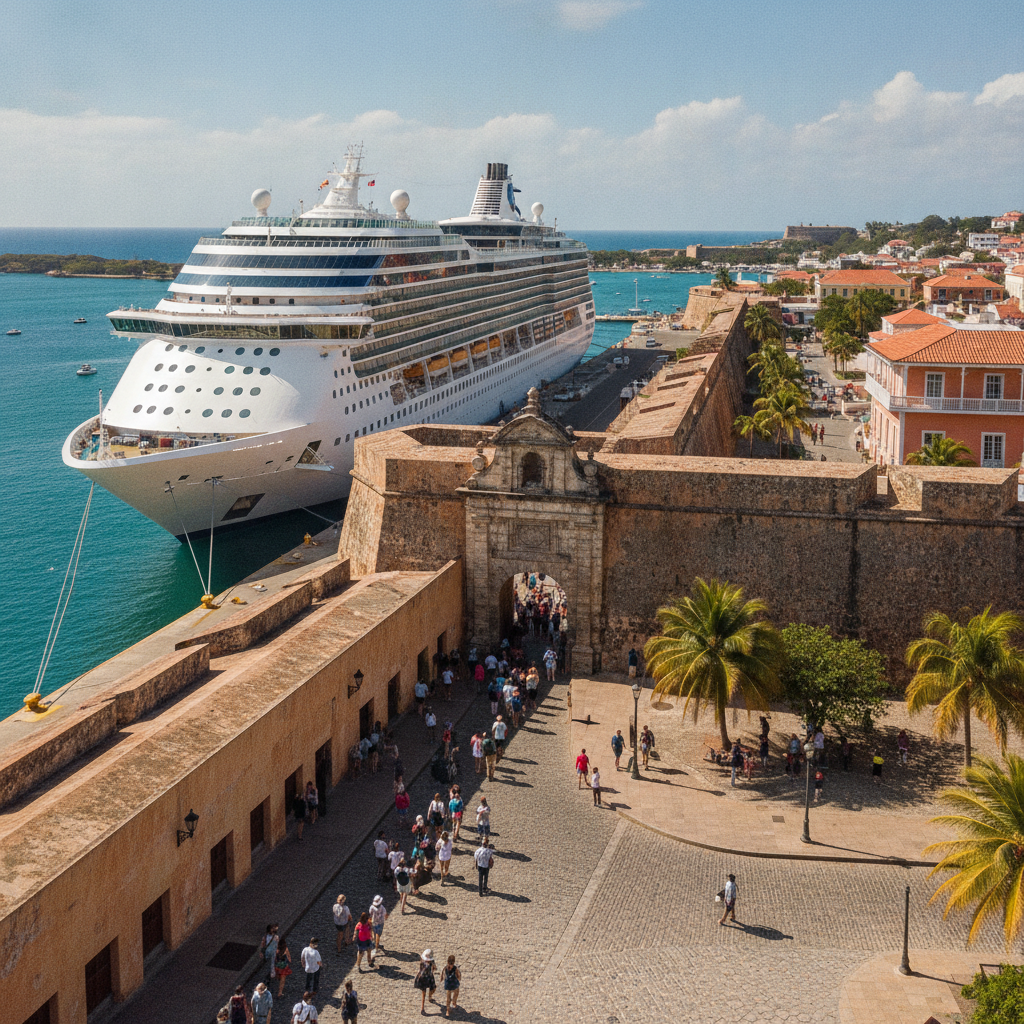
San Juan Infrastructure and Economy: Caribbean Crossroads Airport, Cruise Port, Act 60 Digital Nomads, Puerto Rican Rum, and Santurce Street Art
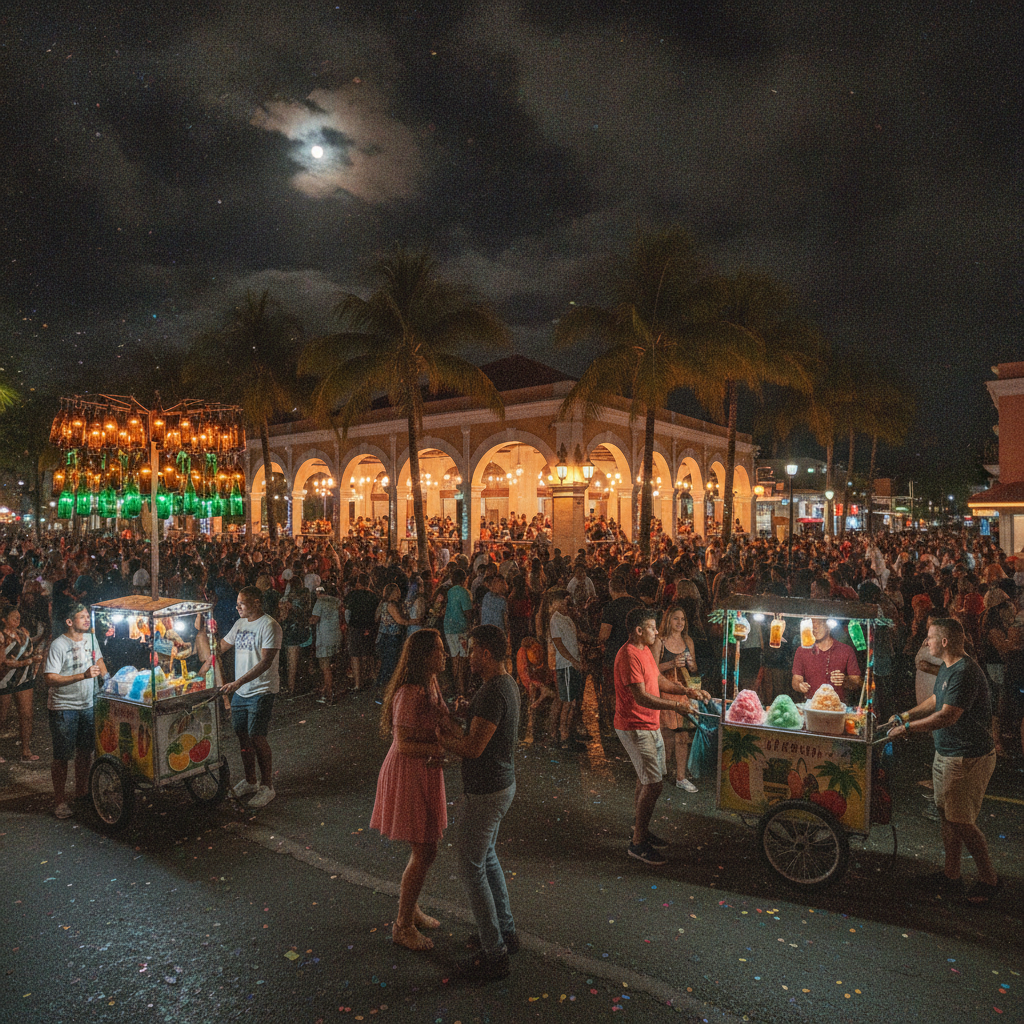
San Juan Food and Culture: Mofongo, La Mallorca Breakfast, Santurce Arts District, Piragua, and the Pinones Beach Food