Costa Rica History: Coffee Republic, 1948 Civil War, and the Abolition of the Army
Costa Rica stands apart from its Central American neighbors through a history shaped by smallholder coffee farming, the absence of a large indigenous labor force that prevented the plantation economy, and the 1948 decision to abolish the armed forces. The country has been a functioning democracy for most of the twentieth century in a region defined by military coups and civil conflict. This route traces the historical forces that produced this exceptionalism, from the colonial period to the environmental constitution of 1994.
- 1
Colonial Period: Marginal Province and the Absence of Indigenous Labor
Costa Rica was the poorest and most isolated province of the Spanish colonial system in Central America. The indigenous population was small and largely destroyed by disease within a century of contact, leaving no large labor force for plantation agriculture. Spanish settlers had to work their own land, creating a smallholder farming culture that did not develop the sharp class stratification of Guatemala, El Salvador, or Nicaragua. The relative equality of the colonial period is cited by historians as the structural origin of the more egalitarian social character that distinguishes Costa Rica from its neighbors, though this narrative has been contested as an idealized national myth.
- 2
The Coffee Oligarchy and the Liberal State 1840 to 1940
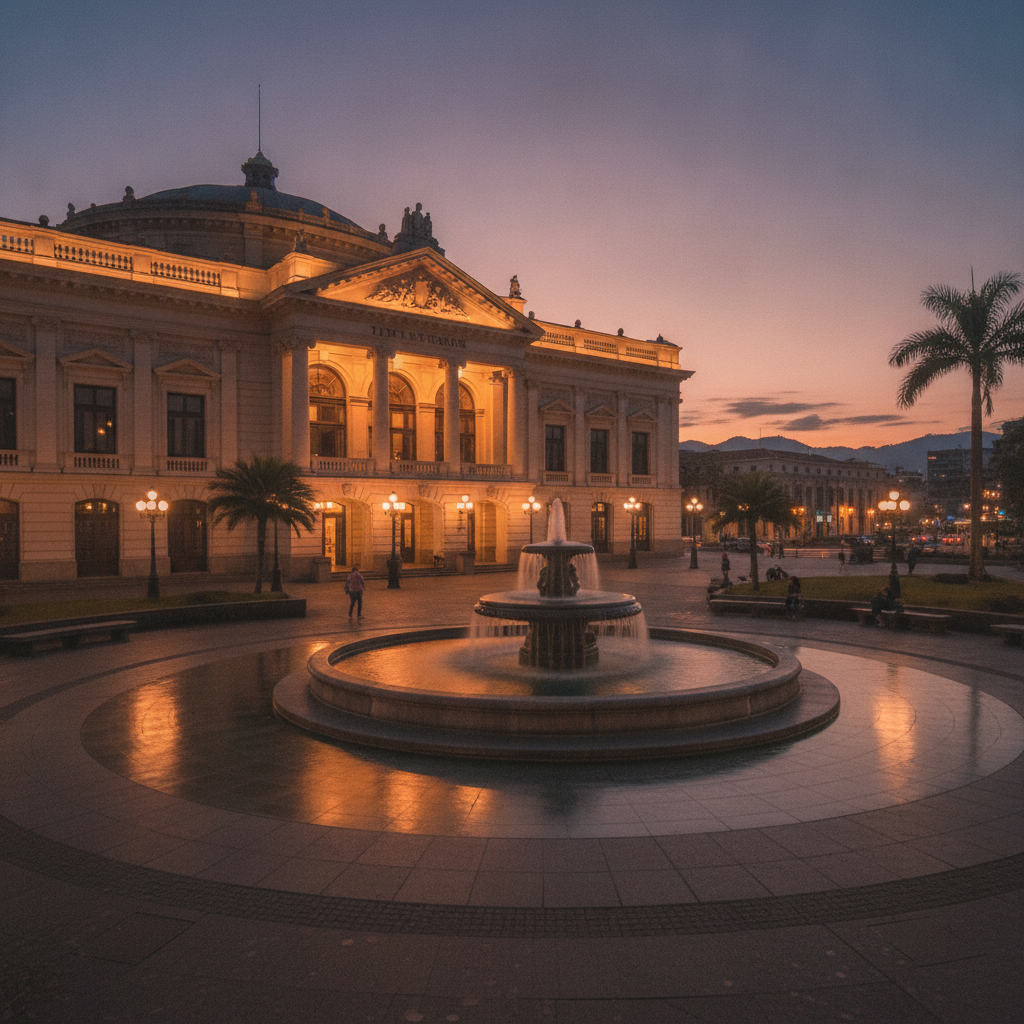
Coffee cultivation expanded from the 1840s and created Costa Ricas first wealthy class, the cafetalero families who controlled export and processing. The liberal state built on coffee revenues funded public education, including the University of Costa Rica founded in 1843, and constructed the institutional infrastructure that later supported democratic stability. The Teatro Nacional is the most visible monument to this era. The coffee oligarchy was less militarized than its Central American equivalents, and political competition was channeled through elections rather than coups with some notable exceptions. The banana enclave economy on the Caribbean coast introduced by United Fruit from the 1870s created a separate, more conflictual labor geography.
- 3
The 1948 Civil War and Jose Figueres Ferrer
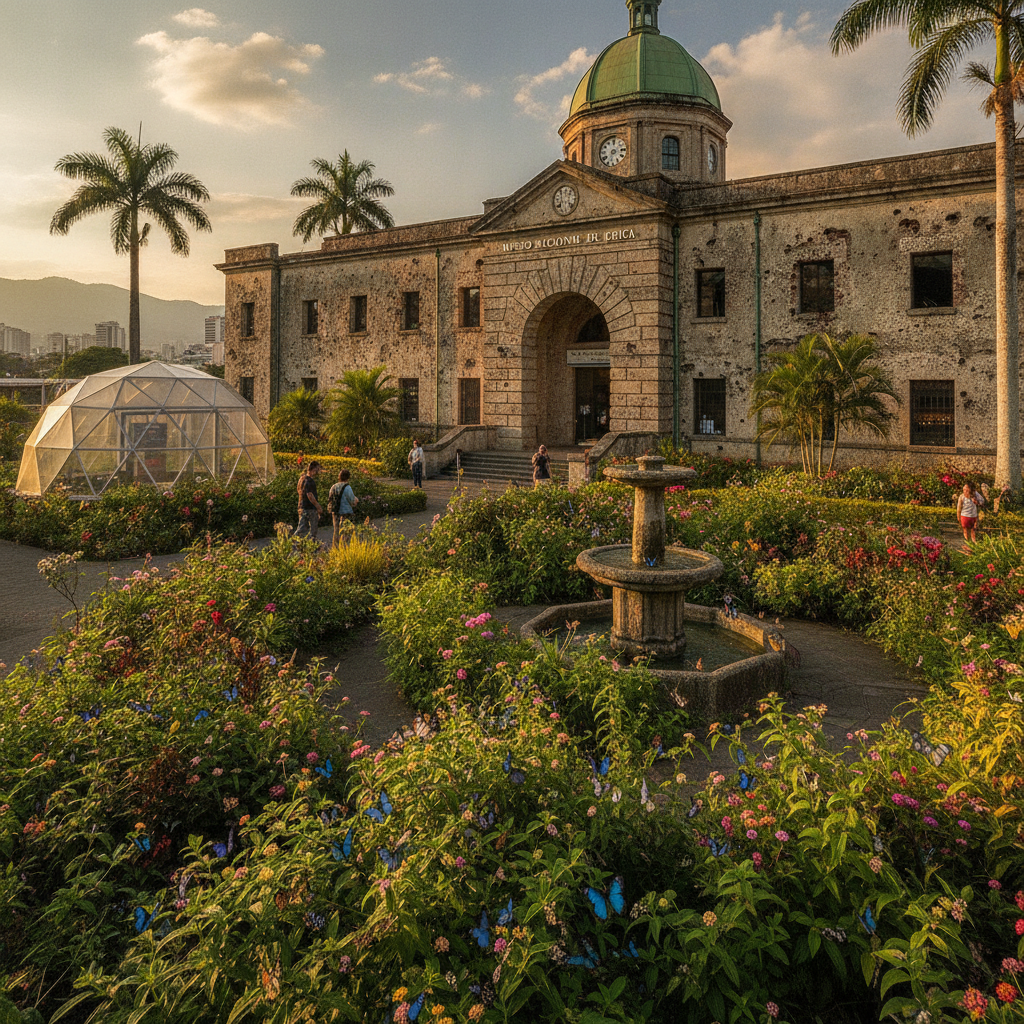
The forty-four-day civil war of 1948 is the defining event of modern Costa Rican history. When the electoral results giving the opposition candidate Otilio Ulate the presidency were annulled by a government-controlled congress, Jose Figueres Ferrer led an armed uprising that prevailed after six weeks of fighting with around 2,000 dead. Figueres then made the extraordinary decision to abolish the standing army and transfer the military budget to education, codifying the decision in the 1949 constitution. The Cuartel Bellavista barracks where the army was formally dissolved is now the Museo Nacional. The decision was ideologically motivated and also strategic: an army was a permanent coup risk.
- 4
The 1949 Constitution and the Welfare State
The constitution promulgated by Figueres after the civil war established the institutional framework that still governs Costa Rica. Universal healthcare through the CCSS (Caja Costarricense de Seguro Social), free public education through the university level, nationalization of banking, and the electoral tribunal as an independent fourth branch of government were all embedded in the founding document. The social investment that followed produced dramatic improvements in life expectancy, literacy, and infant mortality over the following decades. By the 1980s Costa Rica had demographic indicators comparable to much wealthier countries, a result attributed directly to the constitutional welfare commitments.
- 5
The 1980s Debt Crisis and Structural Adjustment
The debt crisis that swept Latin America in the 1980s hit Costa Rica severely. The government defaulted on external debt in 1981 and entered an extended negotiation with the IMF and World Bank that produced structural adjustment programs reducing public spending and privatizing state enterprises. The social infrastructure built under the 1949 constitution was partially dismantled, and inequality increased through the 1990s and 2000s. The tension between the universal welfare model and the neoliberal reform agenda remains unresolved, expressed in recurring debates over CCSS funding, public university budgets, and the role of foreign investment in the economy.
- 6
Environmental Constitution and the Ecotourism Economy
Costa Rica adopted pioneering environmental legislation through the 1990s, establishing a system of national parks and biological reserves covering roughly 25 percent of national territory and developing the policy and payments-for-ecosystem-services framework that became a global model for conservation economics. The abolition of army spending was redirected into conservation infrastructure as well as education and health. The ecotourism economy that emerged from this policy environment became the primary driver of foreign exchange earnings, transforming the national identity from a coffee republic to the global reference point for sustainable development, a branding that has shaped international perception more than any other factor.
Walk this route with audio
Stories play automatically as you reach each stop — no tapping needed.
More in San Jose

San Jose Practical Guide: Getting Around, Neighborhoods, Safety, and Living Costs

San Jose Arts, Music, and the Contemporary Cultural Scene
Costa Rican Food Culture: Gallo Pinto, Sodas, Coffee, and the Farm-to-Table Revolution

San Jose as Base: Volcanoes, Cloud Forests, and the Central Valley Day Trip Circuit
San Jose Costa Rica: Gold Museum, Barrio Amon, Teatro Nacional, and the Meseta Central