Costa Rican Food Culture: Gallo Pinto, Sodas, Coffee, and the Farm-to-Table Revolution
Costa Rican cuisine is built on a small set of foundational ingredients: black beans, rice, plantains, corn, and the produce of the Meseta Central volcanic highlands. The soda, a small family-run lunch counter, is the primary institution of everyday eating. This route traces food culture from the traditional casado and gallo pinto served in Mercado Central sodas to the specialty coffee estates of the Central Valley and the contemporary restaurant scene that has made San Jose a regional culinary destination.
- 1
Gallo Pinto and the National Breakfast Identity
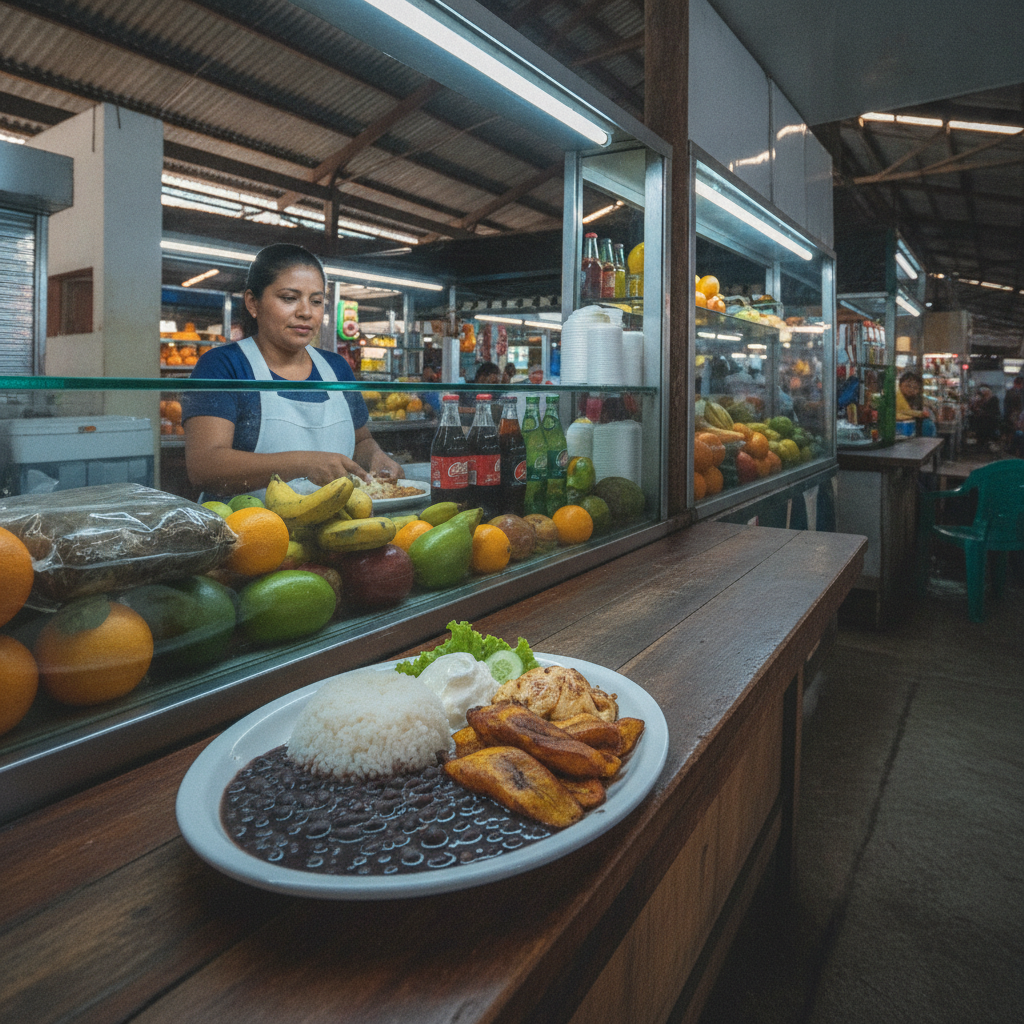
Gallo pinto, rice and black beans cooked together with Salsa Lizano and cilantro, is the defining national dish and the standard breakfast across all economic levels. The dish is eaten with eggs, sour cream (natilla), and fried plantains in the typical Costa Rican breakfast plate available at every soda from pre-dawn. The ingredient ratios and the specific use of Salsa Lizano, a Worcestershire-adjacent condiment manufactured by a Costa Rican company since 1920, distinguish gallo pinto from the rice-and-beans preparations of neighboring countries. The debate over whether Costa Rica or Nicaragua invented the dish is unresolved and occasionally heated.
- 2
Mercado Central Sodas: The Lunch Counter Economy
The sodas inside and surrounding the Mercado Central offer the most direct access to everyday Costa Rican food at everyday Costa Rican prices. The casado, meaning married, is the standard lunch plate combining rice, black beans, a protein, salad, and fried plantains for under 3,000 colones. Olla de carne, a vegetable and beef broth, and sopa negra, black bean soup with a poached egg, are the traditional soups. The market sodas operate on a pre-pandemic diner model: counter seating, fast service, and food cooked in quantities calibrated to the lunch rush. The experience is entirely distinct from the tourist restaurant economy.
- 3
Specialty Coffee: The Central Valley Estate Experience
Costa Rica produces some of the world's highest-rated arabica coffee from the volcanic highlands of the Central Valley, Tarrazu, and Tres Rios regions. The country has progressively moved toward single-origin, micro-lot production, and several estates near San Jose offer farm visits combining a tour of the cultivation and processing operation with cupping sessions. The beneficio, or coffee processing mill, where the cherry is pulped, fermented, washed, and dried, is the key installation in understanding how the flavor of the final cup is shaped. San Jose has also developed a strong third-wave cafe scene using beans from these nearby estates.
- 4
Chifrijo, Ceviche, and the Cantina Food Tradition
The chifrijo, a bar snack of rice, beans, chicharrones (fried pork), and pico de gallo typically served in a glass, was invented at a San Jose cantina in the 1990s and has become the definitive Costa Rican pub food. The Caribbean coast ceviche tradition, using fresh sea bass, lime, and culantro coyote (a broad-leaf variety of cilantro), differs from the Pacific-style preparations found in the capital but has influenced restaurant menus across the city. Cantinas in Barrio Mexico and near the bus terminals serve these foods alongside Imperial beer to a clientele that is entirely local and almost entirely male in the most traditional establishments.
- 5
Contemporary Costa Rican Cuisine and the Farm-to-Table Scene
A generation of Costa Rican chefs trained abroad has returned to work with the exceptional produce of the highlands, creating a contemporary restaurant scene that builds on traditional ingredients while using modern techniques. Restaurants in Barrio Escalante lead this movement, working with small highland farms producing heirloom corn, purple sweet potatoes, heart of palm from sustainable sources, and the extraordinary tropical fruits of both coasts. The culinary identity question, what is authentically Costa Rican versus what is international technique applied to local ingredients, is active in the industry.
- 6
Tropical Fruit Markets and the Ferias del Agricultor
The Feria del Agricultor, a weekly farmers market operating on Saturday mornings in multiple San Jose locations, is the best access point for the full range of Costa Rican tropical produce. Maranon (cashew fruit), cas (wild guava), mamon chino (rambutan), jocotes, pejibaye palm fruit, and the range of plantain varieties all appear at prices far below supermarket cost. The feria model was established by the government in the 1970s to create a direct sale channel between small highland farmers and urban consumers. It remains the primary fresh food supply chain for a large portion of the San Jose population outside the supermarket system.
Walk this route with audio
Stories play automatically as you reach each stop — no tapping needed.
More in San Jose

San Jose Practical Guide: Getting Around, Neighborhoods, Safety, and Living Costs

San Jose Arts, Music, and the Contemporary Cultural Scene
Costa Rica History: Coffee Republic, 1948 Civil War, and the Abolition of the Army

San Jose as Base: Volcanoes, Cloud Forests, and the Central Valley Day Trip Circuit
San Jose Costa Rica: Gold Museum, Barrio Amon, Teatro Nacional, and the Meseta Central