Costa Rica Economy: Microchips, Pineapples, and the Transition from Coffee Republic
Costa Rica has one of the most unusual economic profiles in Latin America: a country of five million people that exports microchips, medical devices, and precision instruments alongside pineapples, bananas, and coffee. The high-tech export economy that emerged after Intel established a plant in 1997 transformed the country from an agricultural exporter to a diversified middle-income economy. This route examines the economic forces shaping San Jose and Costa Rica, from the legacy of the coffee oligarchy to the free-trade zone model and the tourism economy.
- 1
Coffee Legacy and the Agricultural Export Foundation
Coffee remains both an economic driver and a cultural identity marker despite having been displaced from its dominant position. Costa Rica produces around 90,000 metric tons of green coffee annually, focusing on high-altitude arabica varieties from the Tarrazu, Central Valley, and Tres Rios regions. The country banned robusta cultivation in 1989 to protect quality positioning, a regulatory intervention unusual in global coffee markets. The farm size structure remains relatively small by comparison with Brazilian or Colombian production, with many smallholders selling to cooperatives. The CoopeTarrazu cooperative, representing 2,500 small farms, is among the most recognized producer cooperatives in the specialty coffee world.
- 2
Intel and the Free Trade Zone Model
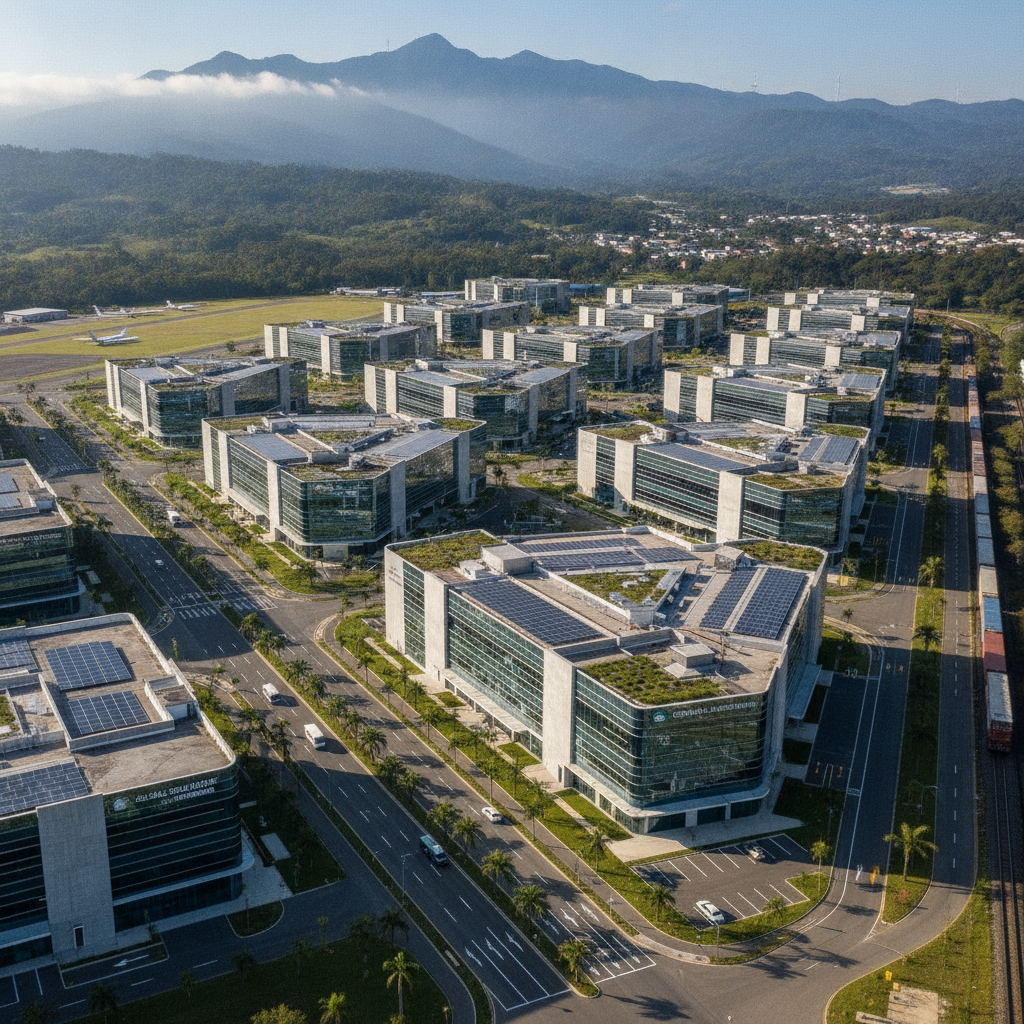
Intel opened a semiconductor assembly and testing plant in Costa Rica in 1997 following government incentives channeled through the free trade zone (zona franca) model. At peak, the plant represented over twenty percent of total Costa Rican exports. Intel restructured its Costa Rica operations in 2014, shifting away from chip manufacturing, but the investment had already catalyzed the development of a medical device manufacturing cluster and a back-office services sector. The free trade zones concentrate in the San Jose metropolitan area and along the Inter-American Highway and operate under special tax and customs regimes that have attracted over 300 multinationals. The model is frequently discussed in international development economics as both a success case and a cautionary example of dependency on foreign investment decisions.
- 3
Medical Devices and the High-Tech Export Cluster
Medical device manufacturing is now the single largest goods export category from Costa Rica, worth over 4 billion USD annually. Companies including Boston Scientific, Baxter, and Allergan operate manufacturing facilities in the free trade zones, producing stents, catheters, surgical equipment, and contact lenses. The sector employs tens of thousands of Costa Ricans in technical manufacturing roles, creating a skilled workforce that has attracted additional investment. The human capital driver is the public education system, which produces graduates with technical skills that compete in the global manufacturing supply chain. San Jose, as the center of the free trade zone cluster, is the direct beneficiary of this economic structure.
- 4
Pineapple, Banana, and the Agricultural Labor Question
Pineapple has become Costa Ricas most exported fresh fruit, with production concentrated in the Caribbean lowlands around the Los Chiles and Sarapiqui regions. The pineapple expansion has been controversial: the monoculture requires heavy bromacil herbicide use that has contaminated drinking water in surrounding communities, deforested lowland areas, and relied on migrant Nicaraguan labor working under exploitative conditions. The banana export economy, concentrated on the Caribbean coast and dominated by Chiquita and Dole, has a longer history of labor conflict and environmental dispute. These agricultural export sectors represent the other face of the Costa Rica brand that does not appear in the ecotourism narrative.
- 5
Tourism Economy: The Largest Foreign Exchange Earner
Tourism generates more foreign exchange for Costa Rica than any other sector, over 4 billion USD annually pre-pandemic. The tourism economy is concentrated on the Pacific coast beaches, the cloud forest lodges, and the volcano parks, but San Jose captures a portion through accommodation, airport services, and the cultural visitor segment. The ecotourism brand developed in the 1990s has proven highly durable and premium: Costa Rica consistently captures higher spending per visitor than comparable tropical destinations because the marketing positions the country as a responsible, high-quality experience rather than a mass market destination. The challenge is that this positioning coexists with the agricultural and industrial practices that undercut the environmental claims.
- 6
Inequality, Nicaraguan Migration, and the Labor Market
Costa Rica has attracted significant Nicaraguan migration driven by the economic and political conditions in Nicaragua. An estimated 400,000 to 500,000 Nicaraguans live in Costa Rica, approximately ten percent of the population, concentrated in agricultural labor, domestic service, construction, and the informal economy. The migration pattern creates a segmented labor market where Costa Rican citizens occupy formal sector jobs with social security coverage while Nicaraguan migrants often work in informal conditions without protections. The social tension around this migration is real and periodically erupts in political debate. Income inequality in Costa Rica, as measured by the Gini coefficient, has been increasing since the 1990s structural adjustment period despite the universal services framework.
Walk this route with audio
Stories play automatically as you reach each stop — no tapping needed.
More in San Jose

San Jose Practical Guide: Getting Around, Neighborhoods, Safety, and Living Costs

San Jose Arts, Music, and the Contemporary Cultural Scene
Costa Rican Food Culture: Gallo Pinto, Sodas, Coffee, and the Farm-to-Table Revolution
Costa Rica History: Coffee Republic, 1948 Civil War, and the Abolition of the Army

San Jose as Base: Volcanoes, Cloud Forests, and the Central Valley Day Trip Circuit