The 313 CE Sogdian Letters Found in a Dunhuang Watchtower as the World's Oldest Dated Paper Documents, the 2022 SCO Summit With Putin Xi and Modi at the New Samarkand Congress Center & Navruz Sumalak Cooked for 24 Hours in Communal Cauldrons
The Ancient Letters (313-314 CE Sogdian merchant correspondence found near Dunhuang in 1907) as the world's oldest dated paper documents; the September 2022 SCO summit at Samarkand attended by Putin, Xi Jinping, and Modi; Navruz sumalak cooked communally for 24 hours by neighborhood women with the cooking ritual more important than the eating; Muhammad Shaybani defeating Babur twice at Samarkand (1500-1501) forcing his withdrawal to India where he founded the Mughal dynasty; the Panjikent murals showing Rustam epic scenes 300 years before Ferdowsi compiled the Shahnameh; and the Registan blue-hour 20-minute window when the turquoise tiles match the sky.
- 1
The Sogdian Merchants – Silk Road Middlemen of History
The Sogdian merchant network (the civilization of the ancient Zarafshan oasis cities—Samarkand, Bukhara, Panjikent—whose merchants dominated the overland Silk Road trade between China and the Mediterranean from approximately 200 BCE to 800 CE): the Silk Road trade history. The Sogdian civilization (the Sogdians were an Iranian-speaking people who inhabited the Zerafshan and Kashkadarya river valleys; they were the dominant long-distance merchants of the ancient Silk Road, operating trading colonies (sogdian: kangar) across the Silk Road network from Antioch to Dunhuang—the Sogdian merchant letters (the Ancient Letters—7 letters written in Sogdian on paper, dating to 313–314 CE, found in a watchtower near Dunhuang in 1907) are the oldest dated letters on paper and describe the disruption of trade routes by war): the trade goods (the Sogdians traded eastward: glassware, gold, silver, wine, horses, and woolen textiles from the Mediterranean and Iran; westward: Chinese silk (the primary commodity), paper, porcelain, and spices): the cultural transmission (the Sogdian merchants were the primary vehicle for the westward transmission of Buddhism from India to China and the eastward transmission of Christianity (Nestorian) and Zoroastrianism—the murals at Panjikent (50 km east of Samarkand) depict Sogdian merchants performing religious rituals at both Zoroastrian fire temples and Buddhist stupas): the collapse (the Arab conquest of Sogdia (712 CE) and the subsequent Islamization of the merchant class ended the distinct Sogdian identity within 200 years).
- 2
Samarkand's Modern Transformation – Hotels, Rail & Tourism Boom
The modern Samarkand (the contemporary transformation of the ancient city under Uzbekistan's tourism-led economic development strategy): the modern city guide. The Afrosiyob railway (the Afrosiyob high-speed train (the Spanish Talgo-250 trainset operating on the Tashkent-Samarkand-Bukhara corridor)—the train service opened in 2011 at a cost of USD 1.7 billion: the Tashkent-Samarkand journey (325 km, 2h10m at maximum speed 250 km/h) reduced travel time from 3h30m (conventional train) and opened Samarkand to day-trip tourism from Tashkent for the first time): the tourism growth (Samarkand received 1.2 million tourists in 2019 (pre-COVID), 2.3 million in 2023—the largest single-city tourism growth in Central Asia): the new hotel development (the Samarkand hotel market expanded from 80 hotels in 2017 to 240 hotels in 2024—the new luxury segment: the Wyndham Samarkand (opened 2022, the first international luxury chain hotel in Samarkand, 200 rooms, USD 150–250/night); the Silk Road Samarkand Tourist Complex (the USD 1.5 billion development under construction 3 km north of the Registan, including a 1,000-room hotel complex, an international congress center, and a replica Silk Road bazaar planned for 2025 completion)): the Samarkand International Forum (the Uzbek government hosts the annual Shanghai Cooperation Organisation-affiliated Samarkand International Forum at the new congress center—the September 2022 SCO summit was held in Samarkand, attended by Putin, Modi, Xi Jinping, and 12 other heads of state).
- 3
Navruz in Samarkand – The Persian New Year Celebrations
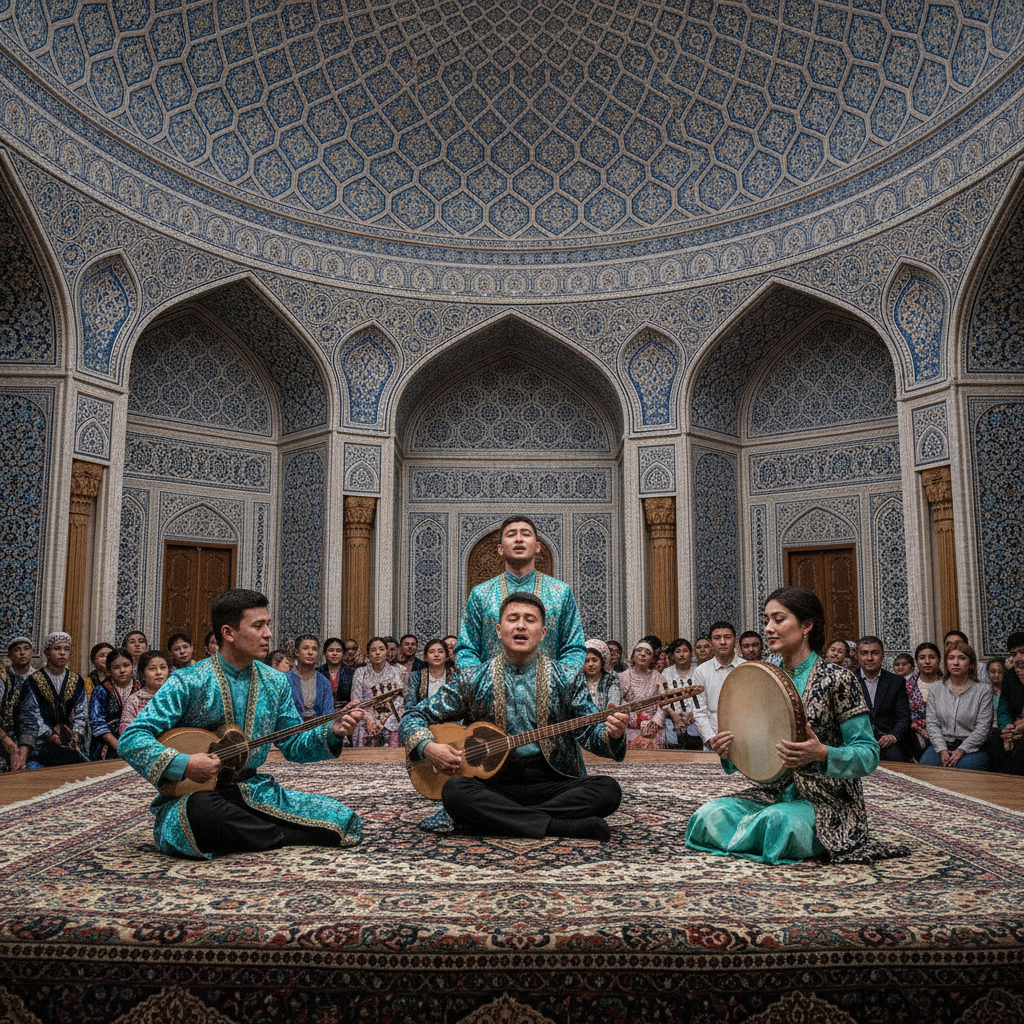
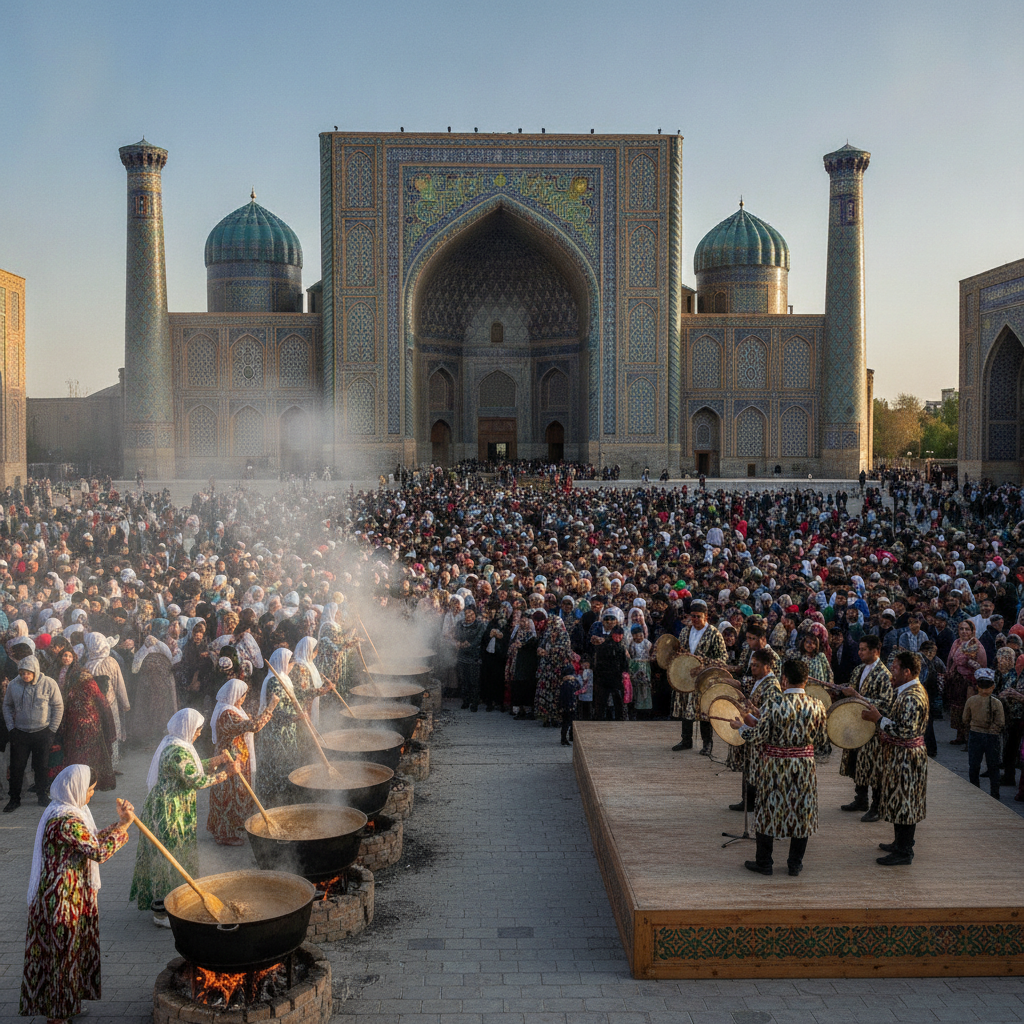
The Navruz celebration in Samarkand (the Spring New Year festival (Nowruz—'New Day' in Persian) on March 21 (the spring equinox)—the most important annual festival in Uzbekistan and the occasion for Samarkand's largest and most visually spectacular public celebrations): the festival guide. The history (Navruz is a pre-Islamic Zoroastrian festival of approximately 3,000 years continuous observance—the spring equinox was the New Year in the Zoroastrian calendar used across the Persian, Sogdian, and Parthian empires; the Islamic conquest of the 8th century CE attempted to suppress the festival but failed to eliminate it, and Navruz survived as the principal popular festival across the Persian cultural sphere): the Samarkand Navruz program (the Registan is the primary venue for Navruz celebrations—the 3-day festival (March 21–23) at the Registan square includes: the sumalak cooking ceremony (the communal preparation of sumalak—a paste made from sprouted wheat cooked for 24 hours in massive communal cauldrons by neighborhood women—the primary ritual food of Navruz symbolizing renewal); the Navruz concert (music and dance performances on the Registan stage including Shashmaqam—the classical music tradition of Uzbekistan and Tajikistan); the Navruz bazaar (temporary market in the Registan square with traditional foods, crafts, and games)): the sumanak symbolism (the sumalak paste is never tasted until the communal cooking is complete—the 24-hour communal cooking is itself the ritual, not the eating).
- 4
The Bukharan Khanate – Samarkand Under the Shaybanids
The Shaybanid and Bukharan Khanate period in Samarkand (the post-Timurid history of the city from 1500 to 1868—the period when Samarkand lost its imperial status and became a secondary city in the Bukharan Emirate): the historical guide. The Shaybanid conquest (the Uzbek Khan Muhammad Shaybani defeated the last Timurid ruler Babur at the Battle of Samarkand in 1500 and 1501—Babur (who later founded the Mughal dynasty in India) lost Samarkand twice to the Shaybanids and eventually withdrew permanently to Kabul (1504) and then to India): the capital shift (the Shaybanid and subsequent Ashtarkhanid rulers shifted the capital of the Uzbek khanate from Samarkand to Bukhara in the 1550s—the shift reflected the greater security of Bukhara (further from the Kazakh steppe border) and the more politically reliable Bukharan religious establishment: Samarkand declined from an estimated 75,000 inhabitants (1500) to approximately 20,000 (1700) during the Bukharan khanate period): the Sher-Dor and Tilya-Kori construction (the two later madrasas of the Registan ensemble—the Sher-Dor (1619–1636) and Tilya-Kori (1646–1660)—were built during the Bukharan Khanate period by the Samarkand governor Yalangtush Bahadur, representing the last major monumental construction in Samarkand before the Russian conquest): the Russian conquest (the Russian Imperial Army under General Konstantin Kaufman captured Samarkand in May 1868 without significant resistance—the Bukharan Emir recognized Russian suzerainty and ceded Samarkand and the Zarafshan Valley).
- 5
Panjikent – The Sogdian Pompeii Day Trip
The Panjikent day trip (the ancient Sogdian city of Panjikent 60 km east of Samarkand in Tajikistan—the best-preserved Sogdian urban site in the world and often called the Pompeii of Central Asia): the Panjikent heritage guide. The archaeological site (the ancient city of Panjikent (founded approximately 5th century CE, abandoned 722 CE following the Arab conquest) covers 13 hectares on a plateau above the Zarafshan River in modern Tajikistan—the site has been continuously excavated by Russian and Tajik archaeologists since 1946 and has yielded the most complete picture of pre-Islamic Sogdian urban life available): the Panjikent murals (the most significant finds: the palace and merchant-house murals of 5th–8th century CE Sogdian figurative painting—the subjects include: the mythological scenes (the Rustam epics from the Persian epic tradition—the Shahnameh precursors painted 300 years before Ferdowsi compiled the Shahnameh); the banquet scenes (Sogdian merchants feasting with musicians); the battle scenes (cavalry combat in the Sasanian military style)): the Hermitage connection (the finest Panjikent murals were removed during Soviet excavations and are now in the Hermitage Museum in St. Petersburg—the on-site museum at Panjikent displays the original architectural context with reproductions): the border crossing (the Panjikent day trip from Samarkand requires crossing the Uzbek-Tajik border at Jartepa/Khudoydod—the crossing is open to foreign tourists with proper Uzbek and Tajik visas; the border crossing typically takes 30–60 minutes).
- 6
Samarkand Itinerary – Three Days in the Timurid Capital
The Samarkand 3-day itinerary (the optimal day-by-day plan for first-time visitors covering all major monuments and experiences in logical sequence): the itinerary guide. Day 1 (the monuments day): Morning (06:00) — the Registan at dawn before tour groups (photograph from the center of the square in the horizontal morning light); 07:30 — breakfast at the Samarkand Hotel courtyard restaurant (the yogurt with dried apricot and lepeshka); 09:00 — Gur-e-Amir mausoleum (the least crowded window before 10:00); 11:00 — Bibi-Khanym Mosque (the midday heat is tolerable in the shaded courtyard); 12:30 — Siab Bazaar lunch (lepeshka + samsa + green tea at the bazaar chaikhana); 14:00 — Shah-i-Zinda (the afternoon light best for tilework); 17:00 — Registan return (the afternoon light on the Sher-Dor facade); 21:00 — Registan sound-and-light show (May–September only). Day 2 (the history and craft day): 09:00 — Afrosiyab archaeological museum; 11:00 — Konigil paper mill (hands-on); 14:00 — Yodgorlik Silk Factory; 16:00 — Ulugbek Observatory; 19:00 — dinner at Nargiz restaurant (the most reliably good traditional Uzbek restaurant in Samarkand, on Rudaki Street, USD 15–20/person). Day 3 (the Shahrisabz day trip): 09:00 — shared taxi to Shahrisabz; 10:30 — Ak-Saray Palace ruins; 12:00 — Kok-Gumbaz Mosque; 13:30 — lunch in Shahrisabz old bazaar; 15:00 — return to Samarkand; 18:00 — Registan for the final blue-hour window.
Walk this route with audio
Stories play automatically as you reach each stop — no tapping needed.
More in Samarkand

Uzbekistan Circuit: Bukhara, Khiva, Tashkent, and the Most Comprehensively Silk Road Single Central Asian Heritage Country
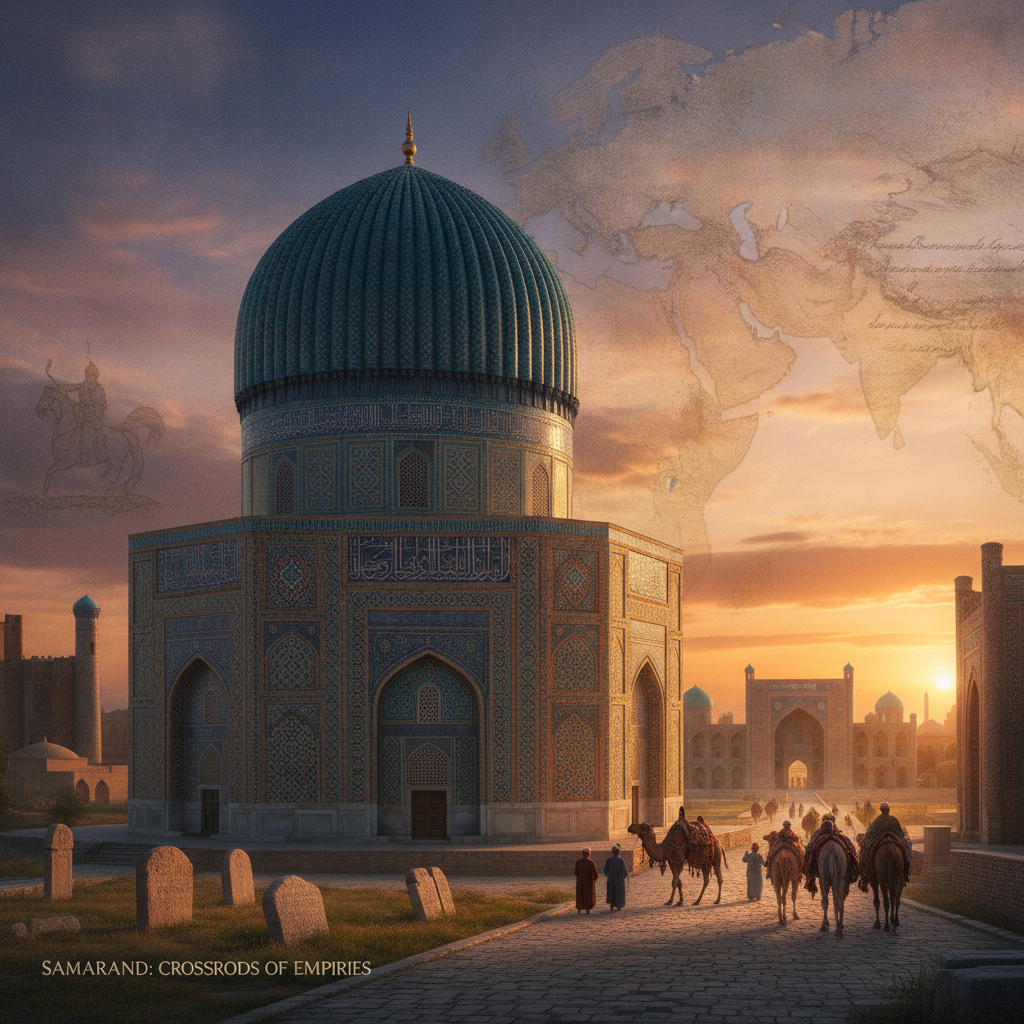
Samarkand History: Tamerlane, the Timurid Empire, the Silk Road Trade, Alexander the Great, and the Most Historically Layered Single Central Asian City
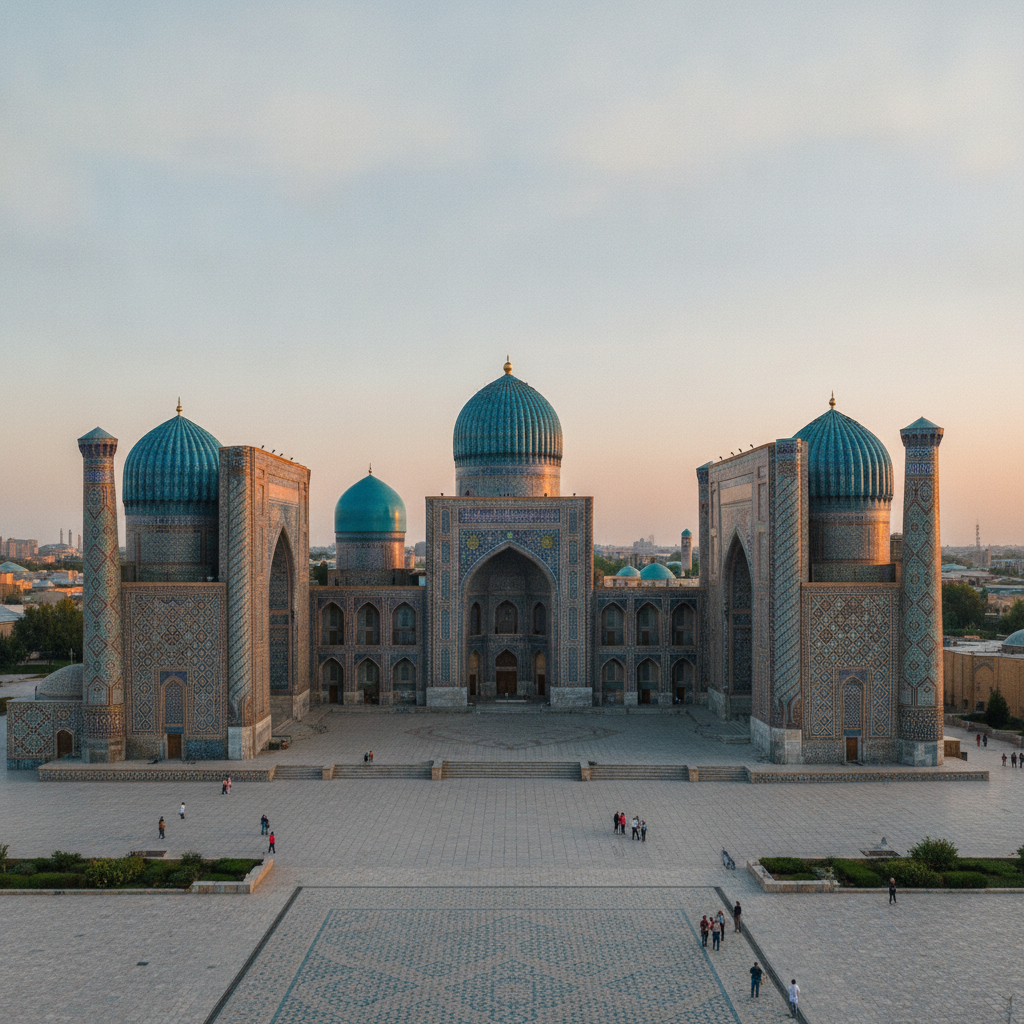
Samarkand Essential: The Registan, Shah-i-Zinda, Gur-e-Amir, Bibi-Khanym, and the Most Magnificently Tiled Single Silk Road City

Samarkand Science: Ulugh Beg, the Medieval Observatory, Islamic Astronomy, and the Most Scientifically Consequential Single Central Asian Ruler
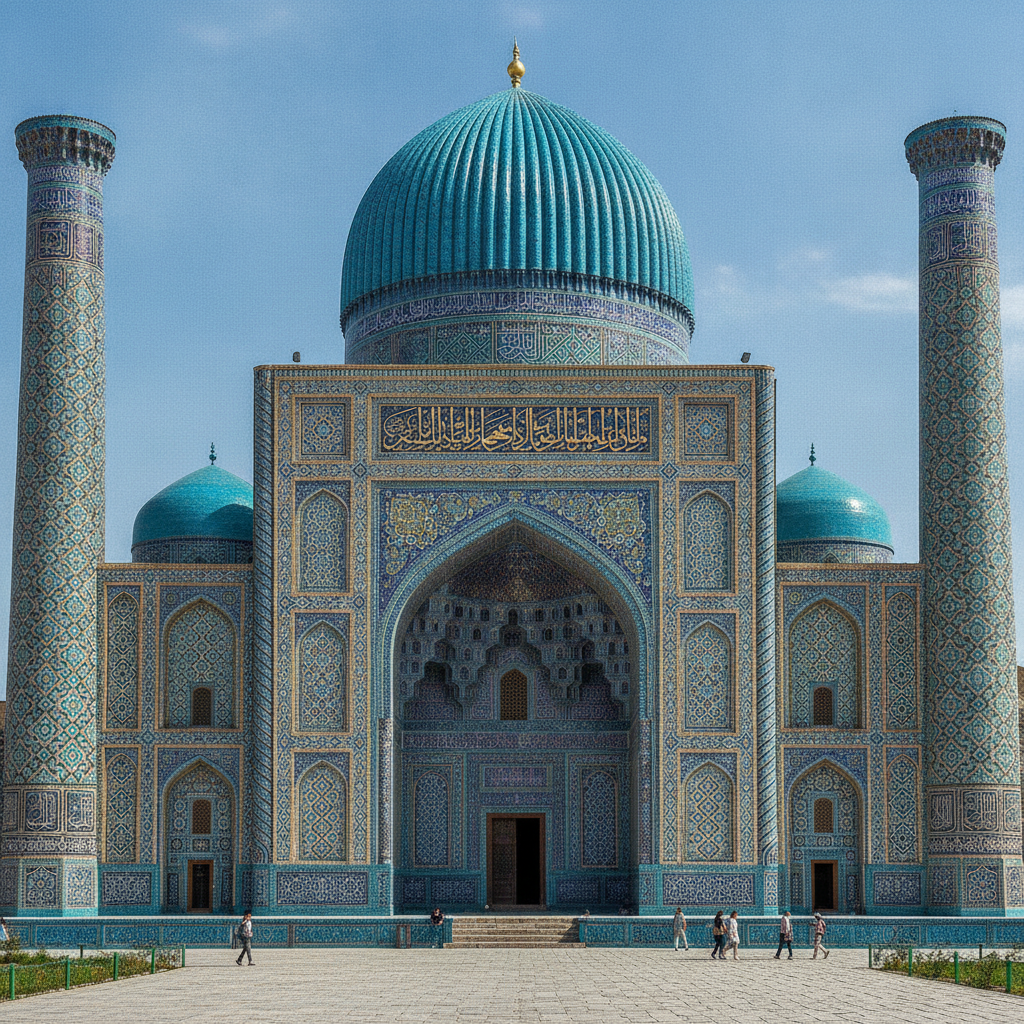
Samarkand Architecture: The Timurid Tilework, the Madrasas, the Dome Engineering, and the Most Comprehensively Blue-Tiled Single Islamic Heritage