The Six Maqams of Shashmaqam Each Running 3-4 Hours, the 1% Copper Oxide Concentration That Gives Timurid Turquoise Its Exact Shade & the Complete 2-Day Samarkand Experience Achievable for USD 35
The Shashmaqam six-maqam system with each complete maqam lasting 3-4 hours inscribed on UNESCO Intangible Heritage in 2008 for both Uzbekistan and Tajikistan; 1-3% copper oxide concentration producing the exact turquoise of the Registan tilework; recent Soviet restoration tiles distinguishable by brighter saturation from the 600-year oxidation fading; Ibn Sina visiting Samarkand circa 1002-1005 CE during his journey to Gurganj, his Canon of Medicine dominating European medical education for 500 years; the Urgut Sunday bazaar selling suzani at 30-50% below Samarkand prices; and the complete 2-day Samarkand experience for USD 35-45 total.
- 1
Samarkand's Shashmaqam – The Classical Music Tradition
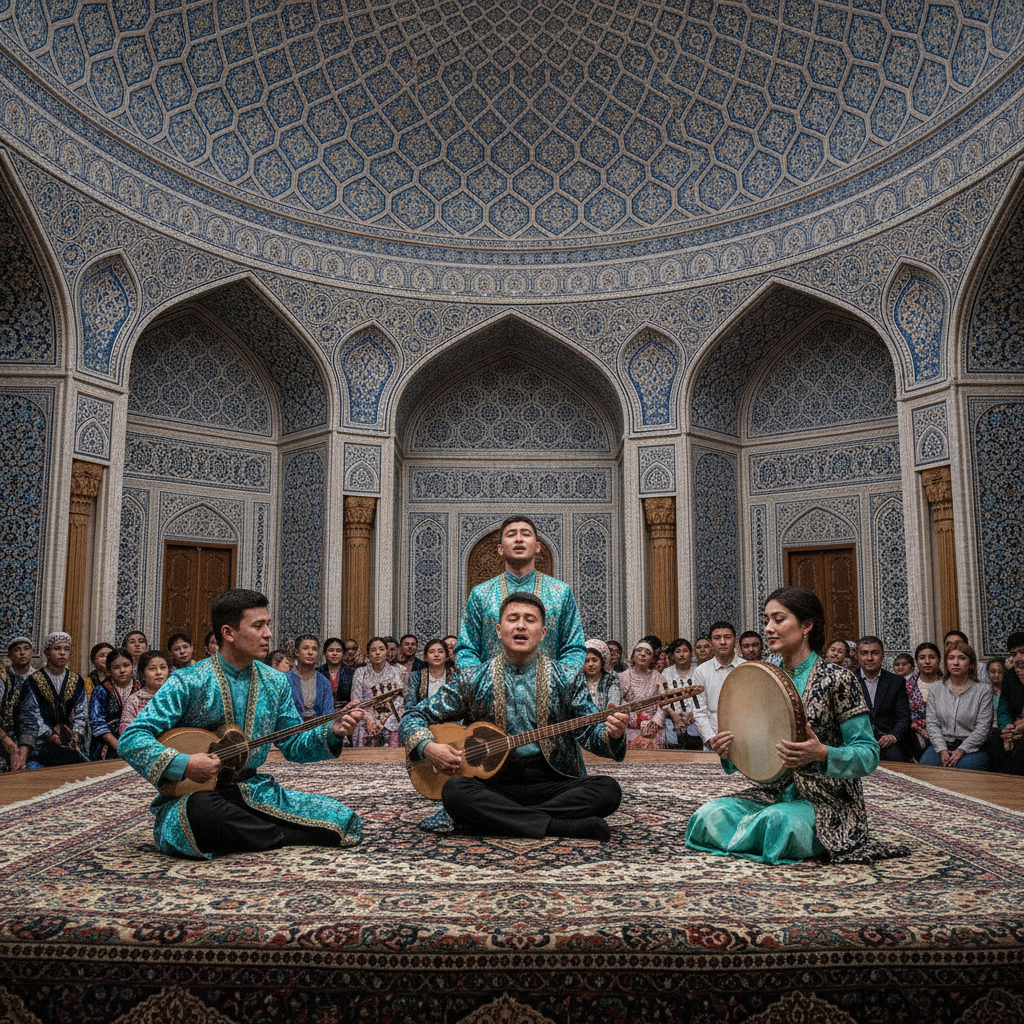
The Shashmaqam musical tradition (شش مقام—'Six Maqams' in Tajik/Persian—the classical music system of Uzbekistan and Tajikistan, developed in Samarkand and Bukhara between the 15th and 19th centuries): the music heritage guide. The structure (the Shashmaqam is a suite-based musical system organized into 6 principal maqams (modal scales): Buzruk, Rost, Navo, Dugoh, Segoh, and Iraq—each maqam is a complete performance lasting 3–4 hours and consisting of a fixed sequence of vocal and instrumental pieces (mushkilot—the instrumental introduction; sarakhbor—the principal vocal cycle; ufar—the rhythmic dance section)): the instruments (the Shashmaqam is performed on: the tanbur (the long-necked plucked lute with 3 strings tuned in fifths—the primary melodic instrument of the Shashmaqam); the doira (the circular frame drum with metal rings—the primary rhythmic instrument); the ghijak (the spike fiddle—the bowed melody instrument); the dutar (the two-string long-necked lute played in a faster, more percussive style than the tanbur)): the UNESCO status (Shashmaqam was inscribed on the UNESCO Intangible Cultural Heritage List in 2008—the inscription recognized both Uzbekistan and Tajikistan as custodian nations of the tradition): the Samarkand performance venues (the Navruz Palace concert hall on Universitetskiy Boulevard: regular Shashmaqam concerts Friday and Saturday 19:00 (USD 10–15 entry); the Registan courtyard (the Tilya-Kori courtyard hosts outdoor performances during the summer festival season May–September).
- 2
The Blue Tiles of Samarkand – Color, Chemistry & Meaning
The chemistry and symbolism of the Timurid turquoise (the physical and cultural explanation of the defining color of Samarkand's monumental landscape): the color heritage guide. The chemistry of turquoise glaze (the turquoise color of the Registan and Shah-i-Zinda tilework results from copper oxide (CuO) dissolved in a silica-based alkaline glaze (a mixture of quartz sand, plant ash soda flux, and lead oxide)—the copper concentration determines the color intensity: 1–3% CuO produces turquoise; 3–5% CuO produces darker blue-green; the firing temperature (900–1,050°C in a reducing atmosphere) shifts the color toward the blue-green turquoise spectrum): the ultramarine (the deeper blue in the Timurid tilework results from cobalt oxide (CoO) imported via Afghanistan (the Kashan cobalt deposits in Iran) and from lapis lazuli-derived cobalt compounds—the cobalt blue is substantially more expensive to produce than the copper turquoise, making it the prestige color in Timurid decorative arts): the symbolic meaning (in the Persian and Central Asian Islamic tradition, the turquoise color (Persian: feiroozeh—literally 'victory stone') represents the sky, paradise (jannat), and divine protection—the association with the sky makes it the ideal color for dome exteriors visible against the Uzbek blue sky): the fading patterns (the original 14th-century tilework has slightly faded from the oxidation of copper in the glaze over 600 years—the recent Soviet and post-Soviet replacements are distinguishable by their brighter, more saturated turquoise color, making it possible to date restoration work by eye).
- 3
Budget Samarkand – Stretching Every Dollar on the Silk Road
The Samarkand budget travel guide (the practical guide for visiting Samarkand on a tight budget—the city is one of the most affordable UNESCO heritage destinations in the world): the budget handbook. The budget accommodation (the cheapest legitimate accommodation in Samarkand: the Silk Road Hostel (USD 10–12/dorm bed, 5-minute walk from Registan—the best-located hostel in Samarkand); Guesthouse Bahodir (USD 20–25/private room with breakfast—a traditional Uzbek courtyard house in the old city mahalla, family-run, highly rated)): the budget food (the Siab Bazaar is the cheapest food in Samarkand: the samsa at the bakery stalls (USD 0.30 each—three samsa is a filling lunch); the non (lepeshka) at the Siab Bazaar bakeries (USD 0.20 each); the plov at the Samarkand Plov Center (USD 1.50–2.00 for a full portion with tea)—a complete Samarkand lunch for USD 3–4 is entirely achievable): the free attractions (the exterior views of all monuments are free—the Registan exterior is accessible from the square without tickets; the Shah-i-Zinda lower section (before the ticket gate) is accessible free; the Afrosiyab archaeological site (the mound itself, without the museum) is accessible without a fee): the Samarkand Card value (the Samarkand Card at USD 15 covers all 4 major paid sites (Registan, Gur-e-Amir, Shah-i-Zinda, Bibi-Khanym)—individual tickets for the same sites total USD 22; the card represents 32% savings): the total budget (a complete 2-day Samarkand experience—hostel, Samarkand Card, all meals, transport—is achievable for USD 35–45 total).
- 4
The Zarafshan Valley Silk Villages – A Rural Day Trip
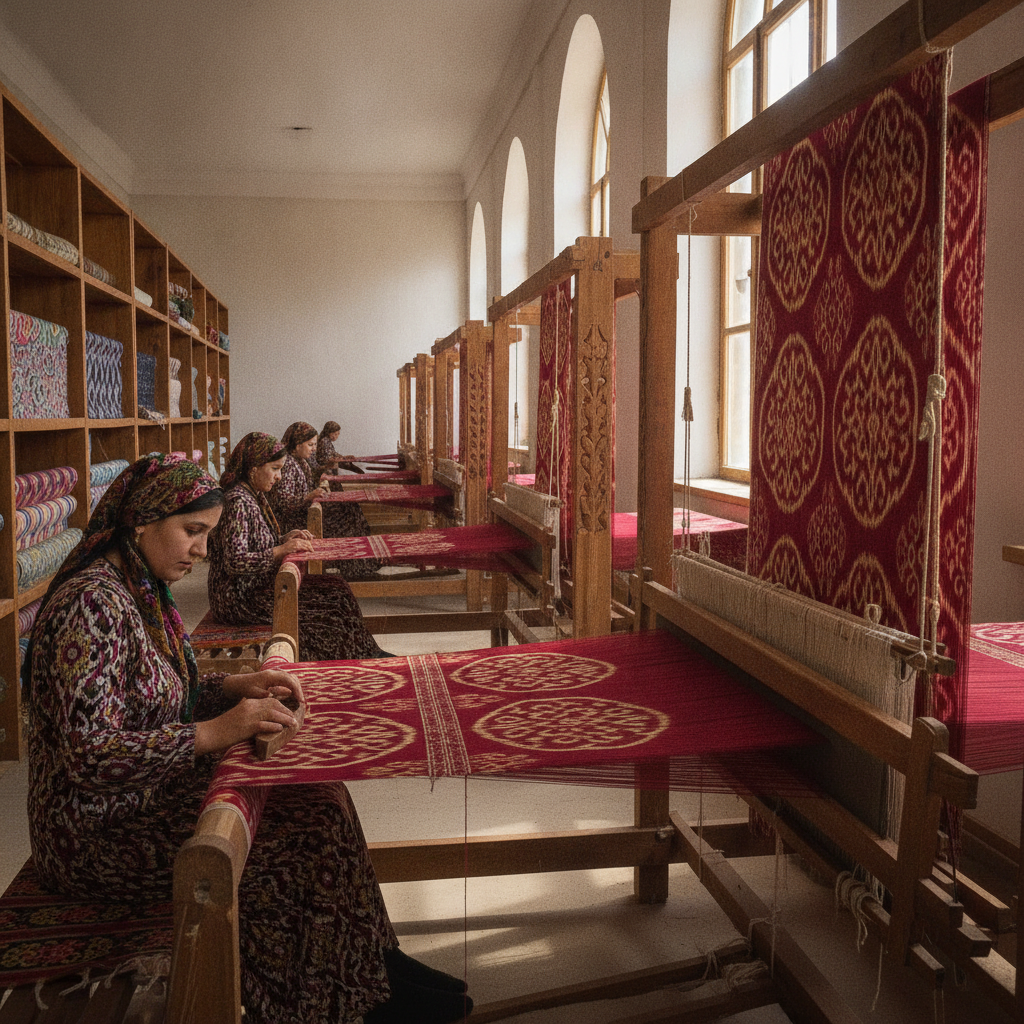
The Zarafshan Valley silk village day trip (the villages between Samarkand and Panjikent producing traditional silk and ikat textiles in a working agricultural setting): the rural heritage guide. The silk farming villages (the villages of the Zarafshan Valley 20–50 km east of Samarkand maintain the traditional integrated silk economy: mulberry grove cultivation, silkworm (Bombyx mori) rearing (April–June and August–September—two cocoon harvests annually), cocoon collection and silk thread reeling, and hand-loom ikat weaving): the Urgut village (Urgut—45 km southeast of Samarkand—the largest handicraft village in the Samarkand region (population 50,000): the Urgut Sunday bazaar (the weekly bazaar held every Sunday in Urgut is the most authentic large-scale rural bazaar accessible from Samarkand—the suzani section of the Urgut bazaar sells locally produced embroidery at 30–50% below Samarkand tourist-market prices; the dried-fruit and agricultural section sells the local Samarkand uruk apricot directly from family orchards): the Kattakurgan reservoir (the water reservoir 60 km northwest of Samarkand—the largest recreational water body accessible from the city; the reservoir beach area (Kattakurgan plazhi) is the Samarkand region's primary outdoor swimming and picnic venue (May–September); the reservoir is fed by the Zarafshan River and produces the local carp (Cyprinus carpio) that is a Samarkand restaurant specialty—the grilled carp with pomegranate and walnut sauce at the lakeside restaurants is a distinctive regional dish).
- 5
Ibn Sina & Samarkand – Medieval Islamic Science
The medieval Islamic science connection of Samarkand (the city's role in the history of Islamic medicine and natural philosophy—including the connection to Ibn Sina (Avicenna), the most influential medical authority of the medieval world): the history of science guide. Ibn Sina (Abu Ali al-Husayn ibn Abd Allah ibn Sina (980–1037 CE)—known in the Latin West as Avicenna—the philosopher and physician born in the village of Afshona near Bukhara who became the dominant authority in Islamic and European medicine for 600 years): the Samarkand connection (Ibn Sina visited Samarkand as a young scholar around 1002–1005 CE during his journey from Bukhara to the Khorazmian court at Gurganj—the short stay is documented in his autobiography (Sira) where he describes consulting the library of the Samarkand jurist Abu Mansur al-Qamarri): the Canon of Medicine (the Kitab al-Qanun fi al-Tibb (the Canon of Medicine)—composed primarily in Hamadan and Isfahan (not Samarkand)—was the dominant medical textbook in both the Islamic world and European universities from the 12th to 17th century CE; translated into Latin by Gerard of Cremona in 1187, it was the primary medical authority at Paris, Bologna, and Oxford for 500 years): the Samarkand Timurid medical tradition (the Timurid court of Samarkand maintained a tradition of Ibn Sina scholarship—Ulugbek's court included the physician Burhanuddin Nafis who wrote the most important Timurid-era commentary on the Canon): the contemporary link (the Samarkand State Medical University (founded 1930) is named after Ibn Sina and remains one of the primary medical training institutions in Central Asia).
- 6
Leaving Samarkand – The Afrosiyob Train & Onward Connections
The Samarkand departure guide (the practical connections from Samarkand to the next destinations on the Uzbekistan circuit—and the experience of the Afrosiyob high-speed train itself): the departure handbook. The Afrosiyob experience (the Afrosiyob train (the Spanish Talgo-250 trainset—the same platform as the Renfe Alvia operating in Spain): the Samarkand train station (the Samarkand Vokzal—built 1888 during the Russian Imperial period, renovated 2011—the original Russian Imperial station building is still partially visible beneath the Soviet-era extension): the onboard experience (the Afrosiyob 2nd-class (economy) coach: fully reclining seats, 2+2 configuration, air-conditioned; the onboard food trolley sells samsa, mineral water, and Uzbek tea): the Tashkent connection (Samarkand to Tashkent: 4× daily departures (07:00, 10:00, 15:00, 18:00), 2h10m, USD 10–15 economy / USD 20–25 business): the Bukhara connection (Samarkand to Bukhara: 3× daily departures (09:00, 13:00, 17:00), 1h30m, USD 8–12 economy—the most comfortable overland connection between the two cities): the overland Tajikistan option (the shared taxi from Samarkand to Dushanbe (the Tajik capital) via Panjikent: 6h, USD 25–30 per seat—the most scenic overland route from Samarkand, crossing the Zarafshan Valley and the Anzob Pass (3,372m) through the Tajik highlands): the flight connections (the Samarkand International Airport serves Tashkent (45 min, 10× daily), Istanbul (4h, daily via Turkish Airlines), and Dubai (4h, daily via FlyDubai)—the airport is 5 km north of the Registan (taxi USD 5–8)).
Walk this route with audio
Stories play automatically as you reach each stop — no tapping needed.
More in Samarkand

Uzbekistan Circuit: Bukhara, Khiva, Tashkent, and the Most Comprehensively Silk Road Single Central Asian Heritage Country
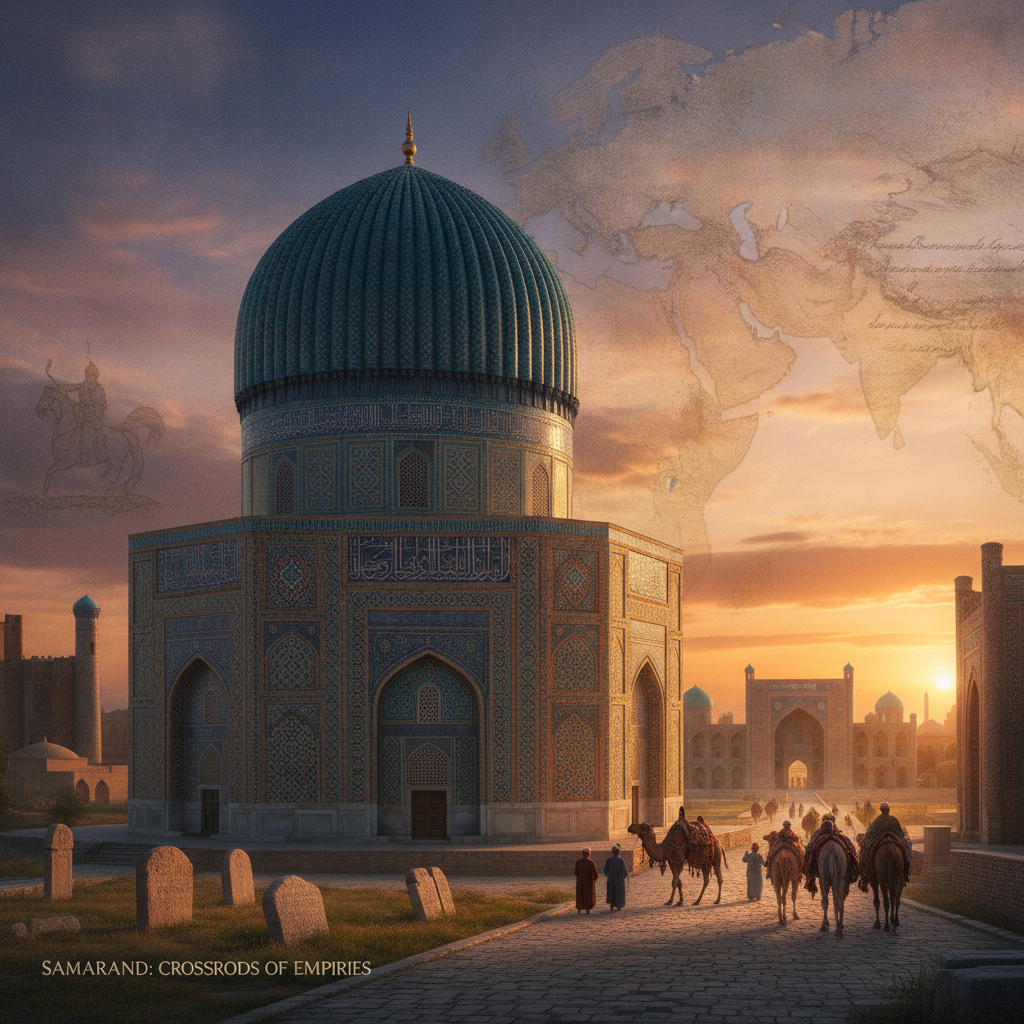
Samarkand History: Tamerlane, the Timurid Empire, the Silk Road Trade, Alexander the Great, and the Most Historically Layered Single Central Asian City
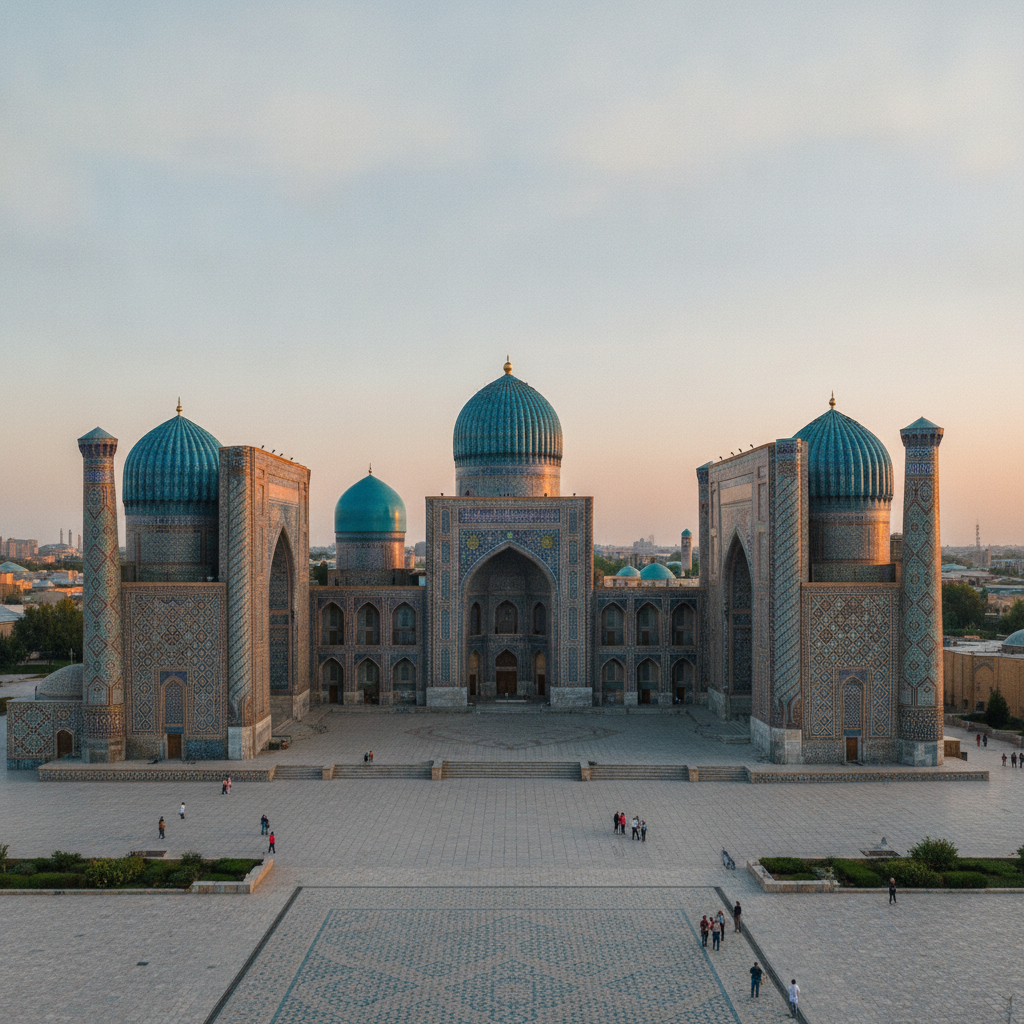
Samarkand Essential: The Registan, Shah-i-Zinda, Gur-e-Amir, Bibi-Khanym, and the Most Magnificently Tiled Single Silk Road City

Samarkand Science: Ulugh Beg, the Medieval Observatory, Islamic Astronomy, and the Most Scientifically Consequential Single Central Asian Ruler
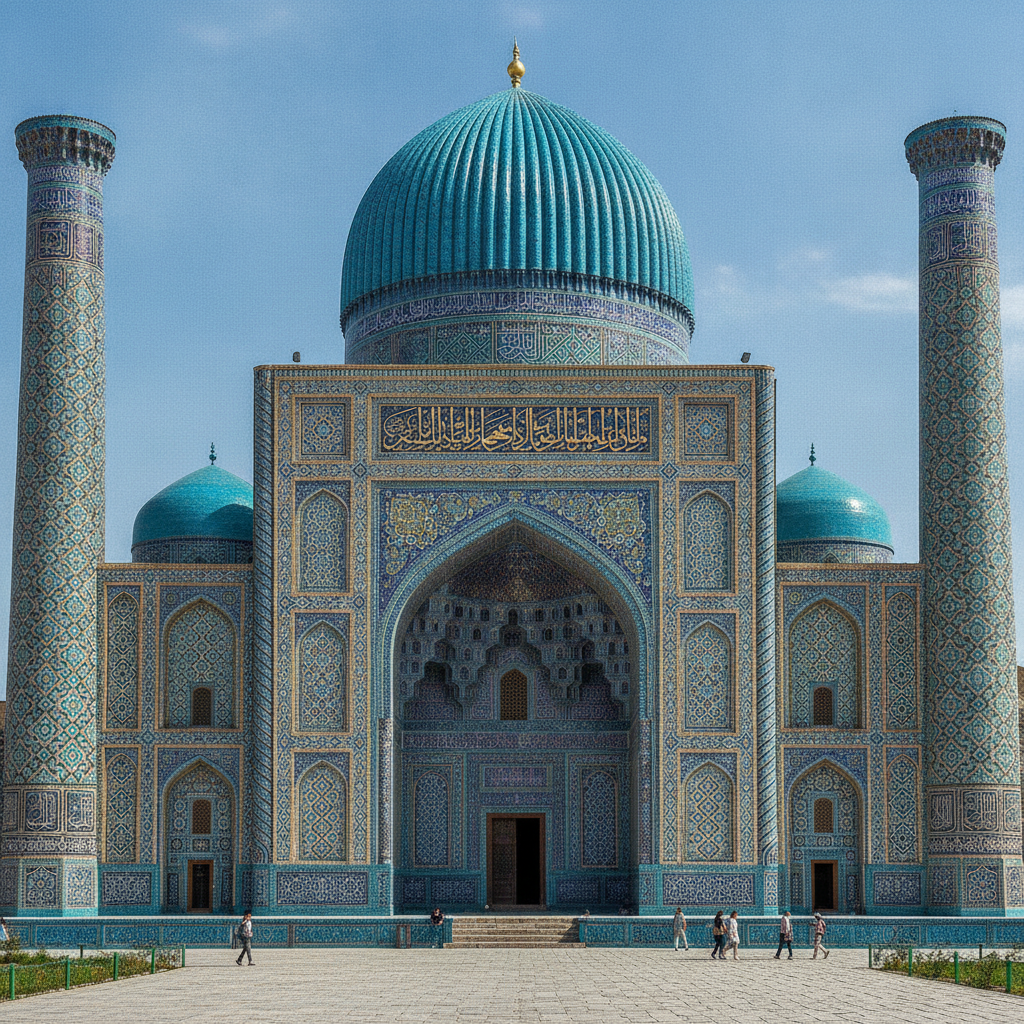
Samarkand Architecture: The Timurid Tilework, the Madrasas, the Dome Engineering, and the Most Comprehensively Blue-Tiled Single Islamic Heritage