Alexander the Great Killed His Best Friend Cleitus in a Drunken Rage at a Feast in Marakanda in 328 BCE & the Zarafshan Valley Irrigation Canals Still Running After 2,500 Years
Alexander killing Cleitus the Black with a sarissa at a Marakanda feast in 328 BCE after Cleitus mocked his divine pretensions; the Zarafshan Valley ariq irrigation canals running continuously for 2,500 years since the Achaemenid period; the Samarkand suzani multiple-embroiderer panel assembly technique that explains slight color variation in antique pieces; the Devzira rice from Fergana that absorbs more oil without going mushy; James Elroy Flecker's 1913 Golden Road to Samarkand speech; and the blue-hour 20-minute window when the Registan sky matches the turquoise tile glaze.
- 1
Alexander the Great in Samarkand – Marakanda 329 BCE
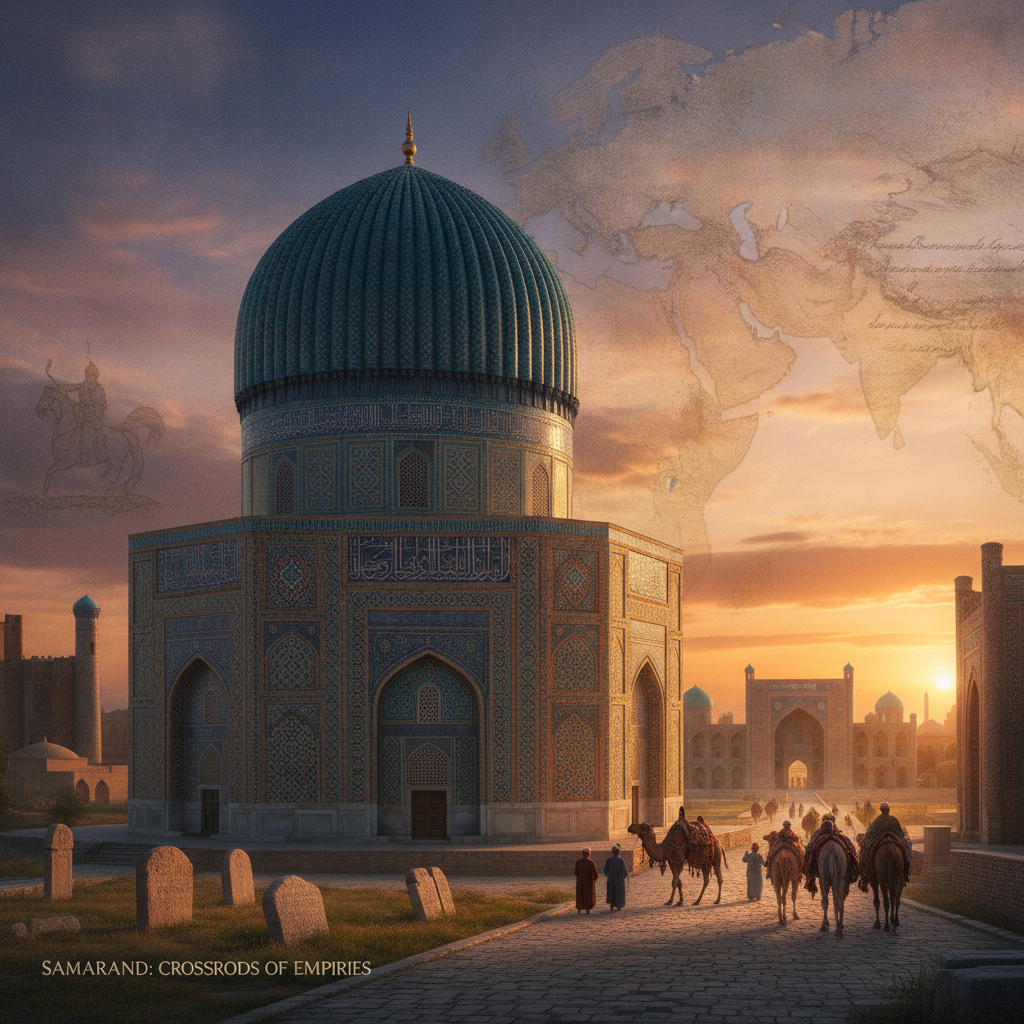
Alexander the Great and Samarkand (the historical connection between the Macedonian conqueror and the Sogdian capital of Marakanda—the event that first brought the city into recorded Western history): the Alexander trail. The conquest (Alexander the Great arrived at Marakanda in 329 BCE during his Bactrian campaign (the 4th year of his Persian conquest): the city was the capital of the Sogdian satrap and had been a Achaemenid Persian administrative center since the reign of Cyrus the Great (550–530 BCE)—Alexander captured the city without a major siege, as the Sogdian garrison withdrew to the citadel): the Spitamenes revolt (the Sogdian noble Spitamenes led a guerrilla resistance against Alexander from Marakanda that lasted 2 years (328–327 BCE) and inflicted several major defeats on Macedonian forces—Alexander killed approximately 2,000 Macedonian soldiers in the ambushes in the Zarafshan Valley): the murder of Cleitus (the most notorious incident of Alexander's campaign: the feast in Marakanda (328 BCE) at which Alexander killed his companion and childhood friend Cleitus the Black in a drunken argument—Cleitus had mocked Alexander's divine pretensions and Alexander impaled him with a sarissa in a rage): the Roxana marriage (Alexander married the Bactrian princess Roxana (the daughter of the Bactrian chieftain Oxyartes) in a ceremony held near Marakanda in 327 BCE—Roxana later gave birth to Alexander IV, who succeeded Alexander after his death).
- 2
Samarkand's Suzani Workshops – The Embroidery Capital
The suzani embroidery workshops of Samarkand (the city that produced the most refined tradition of Central Asian suzani embroidery—the large-format silk-on-cotton embroidered textiles used as wedding gifts, wall hangings, and dowry items): the craft workshop guide. The Samarkand suzani tradition (the Samarkand suzani is distinguished by its solar medallion composition—large circular medallions (the 'sun' motif) radiating from a central point in silk chain-stitch and satin-stitch embroidery on undyed cotton or silk ground—the primary motifs: the pomegranate (anar—fertility); the rosette (oy—moon); and the crescent-and-star): the technique (the Samarkand suzani is embroidered by multiple women working simultaneously on individual panels of approximately 25cm width—each woman embroiders her assigned panel at home, and the panels are assembled and joined when complete; this explains the characteristic slight color variation between panels of antique suzani—the thread lots were never perfectly matched between individual embroiderers): the cooperative workshops (the Badal Craft Center on Universitetskiy Boulevard—the primary collective workshop in Samarkand where 40+ embroiderers work in a single space and sell directly to visitors; the Yodgorlik Silk Factory—the combined silk-weaving and suzani workshop 3 km east of the Registan, where visitors can observe the complete process from cocoon to finished textile): the authentication (see Tashkent suzani guide for the reverse-inspection technique).
- 3
The Samarkand Food Scene – From Plov to Samsa
The Samarkand food guide (the cuisine of the most culinarily distinctive city in Uzbekistan—the Samarkand plov tradition and the local specialties that differ from Tashkent): the restaurant and food guide. The Samarkand plov (the Samarkand plov (osh) differs from the Tashkent plov in two respects: the Samarkand plov is cooked in a round-bottomed kazan (the traditional cast-iron cauldron) over a wood fire (rather than the gas-fired flat-bottomed kazan of Tashkent restaurants) and uses the local Devzira rice (the short-grain brownish-pink rice grown in the Fergana Valley, which has a harder texture than the ordinary Uzbek rice and absorbs more oil without becoming mushy): the best plov address (Samarkand Plov Center on Registan Street—open 08:00–14:00 daily (plov is a morning and midday dish in Uzbek tradition); the Samarkand Hotel plov courtyard—Friday plov is the traditional weekly communal plov in Samarkand, prepared from 7am in communal courtyard kitchens)): the samsa (the Samarkand samsa (the triangular pastry filled with minced lamb and onion, baked in the tandoor)—the Samarkand samsa is larger and more heavily spiced with cumin than the Tashkent version): the dolma (the Samarkand dolma (grape-leaf-wrapped rice-and-lamb parcels) is a Samarkand specialty with Sogdian-era precedents): the non-kabob-non circuit (the classic Samarkand lunch: lepeshka from the Siab Bazaar + lamb kabob from the Registan area kebab stalls + green tea at any chaikhana).
- 4
The Zarafshan River Valley – Samarkand's Agricultural Hinterland
The Zarafshan River Valley (the oasis system that sustains Samarkand—the 877km river that originates in the Pamir-Alai mountains in Tajikistan and disappears into the Kyzylkum Desert before reaching the Amu Darya): the landscape and ecology guide. The river system (the Zarafshan (Зарафшон—'Gold-Scattering' in Tajik—named for the alluvial gold particles washed from the Pamir mountains) provides 95% of Samarkand's water supply via the ancient canal (ariq) irrigation network: the canal system (the ariq irrigation canals of the Samarkand oasis are the oldest continuously operated irrigation infrastructure in Central Asia—some main canals were constructed during the Achaemenid period (6th–4th century BCE) and have been in continuous use for 2,500 years): the mulberry groves (the Zarafshan Valley is lined with white mulberry trees (Morus alba) planted since the 7th century CE for silk cocoon production—the mulberry groves along the secondary irrigation canals are the dominant visual feature of the Samarkand agricultural landscape: the leaf harvest season (May–June) is when silk farming households gather leaves daily to feed the Bombyx mori silkworms): the apricot orchards (the Zarafshan Valley produces the most highly regarded dried apricots (uruk) in Uzbekistan—the Samarkand uruk (sun-dried without sulfur, leaving the fruit dark brown rather than orange) is sweeter and less acidic than the sulfur-dried Turkish export variety and is sold at the Siab Bazaar dried-fruit section at USD 3–5/kg).
- 5
Samarkand in Literature & Cinema – From Marco Polo to Vikram Seth
The literary and cultural history of Samarkand (the city that has generated more imaginative Western literary interest than any other Central Asian city): the literary-cultural guide. The pre-modern sources (Marco Polo passed near Samarkand in 1271 on his journey east and describes the city as 'a noble city adorned with beautiful gardens and surrounded by a plain in which are produced all the fruits that man can desire' (from Il Milione)—Marco Polo did not enter the city (which was recovering from Mongol destruction at the time) but reported on it from merchants): the Timurid literary culture (the Timurid court of Samarkand in the 15th century produced the greatest flowering of Persian and Turkic literature in Central Asia—Alisher Navoi (1441–1501) established Chagatai Turkic as a literary language at the Herat court; the Baburnama (the memoirs of Babur, Timur's great-great-grandson who founded the Mughal dynasty) contains detailed descriptions of Samarkand that are the most vivid contemporary account of the Timurid capital): the modern literary presence (James Elroy Flecker's 1913 play Hassan contains the famous 'Golden Road to Samarkand' speech ('We are the pilgrims, master; we shall go always a little further...'); Vikram Seth's 1983 verse travelogue From Heaven Lake passes through Samarkand; Edgar Allan Poe references Samarkand in Tamerlane (1827)—the city's name functions in Western literature as the ultimate signifier of romantic inaccessibility).
- 6
Photography in Samarkand – Light, Angles & Timing
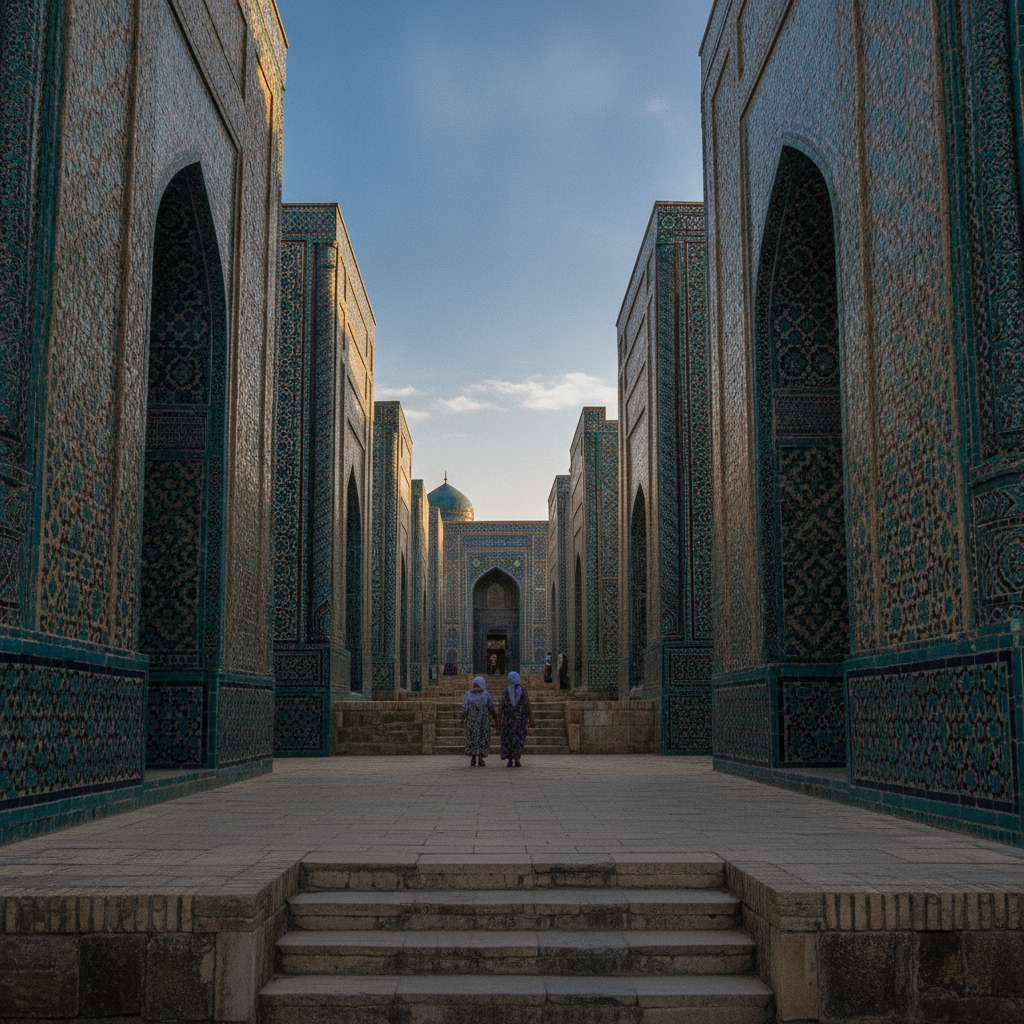
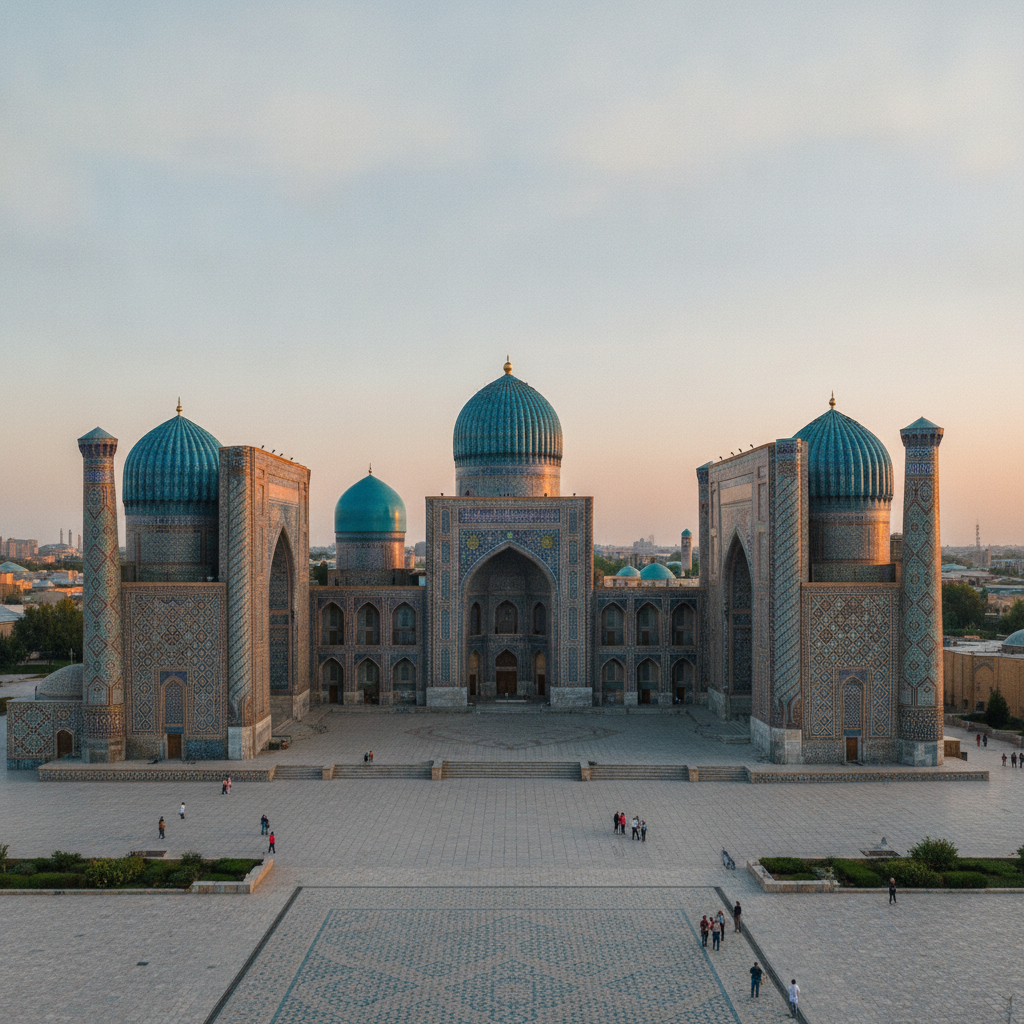
The Samarkand photography guide (the practical guide to photographing the most visually spectacular architectural ensemble in Central Asia): the photographer's guide. The Registan light (the Registan square faces east-west—the western madrasa (Ulugbek) receives direct front lighting from 06:00–10:00; the eastern madrasa (Sher-Dor) receives direct front lighting from 15:00–19:00; neither is frontally lit at midday, making midday the worst time to photograph both simultaneously from the center of the square—the optimal composition from the center of the square is at the golden hours (06:00–07:30 and 17:00–18:30)): the drone regulations (Samarkand is a UNESCO World Heritage Site—drone photography is prohibited within the historic city boundary without a permit from the Uzbekistan Ministry of Culture; the permit requires 10 business days to obtain): the Shah-i-Zinda angles (the Shah-i-Zinda avenue is oriented north-south—the afternoon (14:00–17:00) light enters from the southwest and illuminates the tilework of the western-facing mausoleum facades; the avenue is narrow (4m) so full-length mausoleum shots require a wide-angle lens (24mm equivalent or wider)): the Gur-e-Amir dome (the best elevated view of the Gur-e-Amir dome is from the roof of the adjacent Rukhabad mausoleum—permission required from the site manager (USD 5 informal fee)): the blue-hour window (the Registan tilework photographs best in the 20-minute window after astronomical sunset when the sky matches the turquoise of the tile glaze).
Walk this route with audio
Stories play automatically as you reach each stop — no tapping needed.
More in Samarkand

Uzbekistan Circuit: Bukhara, Khiva, Tashkent, and the Most Comprehensively Silk Road Single Central Asian Heritage Country
Samarkand History: Tamerlane, the Timurid Empire, the Silk Road Trade, Alexander the Great, and the Most Historically Layered Single Central Asian City
Samarkand Essential: The Registan, Shah-i-Zinda, Gur-e-Amir, Bibi-Khanym, and the Most Magnificently Tiled Single Silk Road City

Samarkand Science: Ulugh Beg, the Medieval Observatory, Islamic Astronomy, and the Most Scientifically Consequential Single Central Asian Ruler
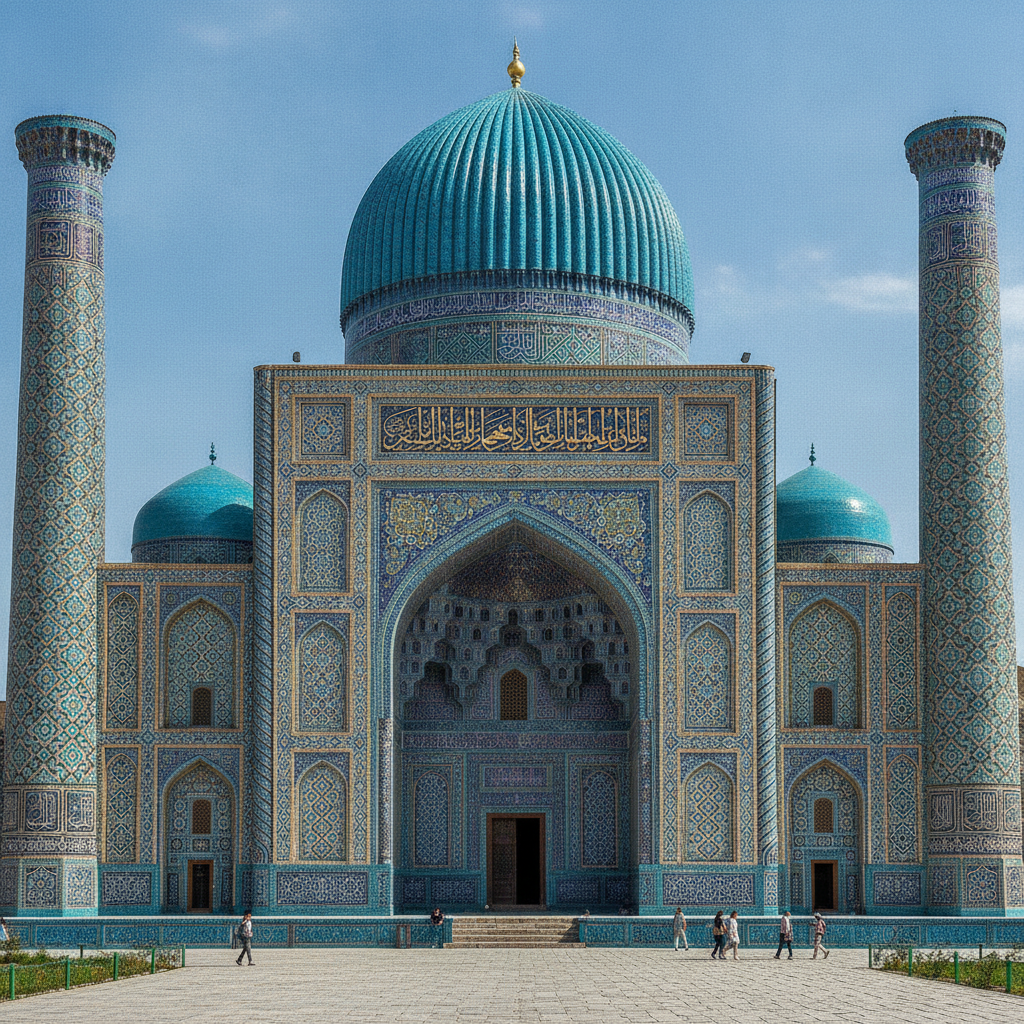
Samarkand Architecture: The Timurid Tilework, the Madrasas, the Dome Engineering, and the Most Comprehensively Blue-Tiled Single Islamic Heritage