Salzburg Art and Museums — the Museum der Moderne, Salzburg Museum & the Rupertinum
Salzburg's museum landscape extends well beyond Mozart — the Museum der Moderne on the Mönchsberg cliff, the Salzburg Museum in the Neue Residenz, and the Rupertinum in the Old Town form the core of the city's contemporary and historical art circuit.
- 1
Museum der Moderne Mönchsberg — Contemporary Art on the Cliff
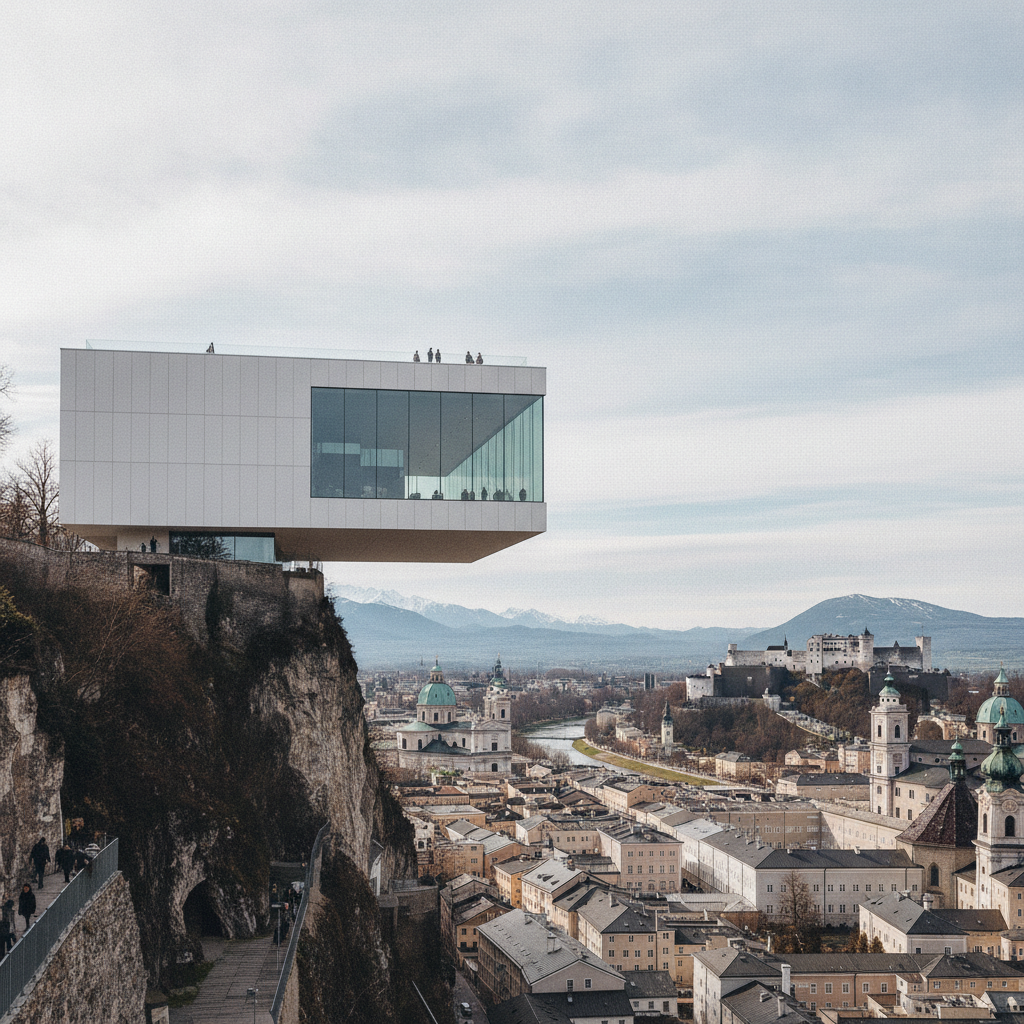
Museum der Moderne Mönchsberg (Mönchsberg 32, the contemporary art museum on the cliff above the Salzburg Old Town, the building designed by Friedrich Hoff Zwink Architects and opened 2004, the white cube on the cliff edge the defining contemporary architectural gesture in Salzburg, €12 adults, Wednesday-Monday 10am-6pm, Thursday until 8pm, accessible by the Mönchsberg lift at Gstättengasse 13 for €4 or on foot via the Richterhöhe path in 20 minutes): the collection (the international contemporary art from the 1960s to the present, the rotating exhibitions of 3-4 major shows per year — the museum the primary venue for contemporary art in Salzburg with 4 exhibition floors, the permanent collection holdings in the international conceptual and post-war Austrian art traditions, the Austrian artists represented including Maria Lassnig, Arnulf Rainer, and the Viennese Actionists documentation), the museum cafe-restaurant (the Mönchsberg 32 restaurant on the terrace, the most dramatically positioned restaurant in Salzburg at the cliff edge with the direct view of the Old Town, €15-25 per main course, the terrace open from 10am for coffee and lunch), and the cliff-top walk (the 2km walk along the Mönchsberg plateau from the Museum der Moderne to the Bürgerwehr watchtower, the plateau walk the finest elevated promenade in Salzburg, the views of the city and the Alps changing at every turn above the tree-line, free, always accessible from the Museum lift station).
- 2
The Salzburg Museum — the City's Historical Collection
Salzburg Museum (Mozartplatz 1, the Neue Residenz building, the state museum of the city of Salzburg, the most comprehensive collection of Salzburg history and art in a single institution, €9 adults, Tuesday-Sunday 9am-5pm): the permanent exhibition (the Salzburg exhibition on 3 floors: the geology and the natural history of the Salzburg region from the Tethys Sea seabed through the Alpine formation to the present, the prehistoric and the Celtic settlement of the Salzburg basin — the Celts established a major trading settlement on the site of Salzburg by 600 BCE, the Roman Juvavum — the Roman name for Salzburg — the provincial town of 15,000 on the Roman Alpenstraße trading route, and the ecclesiastical history of the Prince-Archbishops from the founding Archbishop St. Rupert in 696 CE to the secularisation of 1803 — the 9-century arc of Salzburg as an independent clerical state the most distinctive historical narrative available at this museum), the Gallery of the Prince-Archbishops (the portraits and the art commissions of the 25 Prince-Archbishops of Salzburg, the most complete documentation of the Prince-Archbishop institution in any single Salzburg museum, the portrait of Wolf Dietrich von Raitenau — the Archbishop who commissioned the Old Town Baroque rebuilding 1587-1612 — the most significant single portrait in the collection) and the Panorama of Salzburg 1829 (the Johann Michael Sattler panoramic painting of 1829 — the 26m circumference circular painting depicting the complete Salzburg city as seen from the Kapuzinerberg in 1829, the most precise single topographic document of the early 19th century city, displayed in the Panorama Museum at Residenzplatz 9 adjacent to the main museum, the additional €4 entry).
- 3
The Rupertinum Gallery — Old Masters and Austrian Moderns
Rupertinum (Wiener-Philharmoniker-Gasse 9, the gallery in the Old Town palazzo, the second gallery of the Museum der Moderne group, €8 adults or included in the combined ticket with the Mönchsberg museum at €15, Wednesday-Monday 10am-5pm): the collection (the graphic art and the printmaking collection the strongest component — the Rupertinum holds one of the most extensive collections of works on paper in Austria, the Expressionist and the early 20th-century print collections the primary strength, the Oskar Kokoschka archive the most significant single artist holding, the Kokoschka connection to Salzburg through the Kokoschka Prize awarded at the Salzburg Summer Academy), the Oskar Kokoschka (the Summer Academy in Salzburg — the International Summer Academy of Fine Arts founded by Kokoschka at the Hohensalzburg Fortress in 1953, the school the most historically significant summer art school in central Europe, the annual sessions July-August at the fortress running since 1953 with 800+ students annually at the Kokoschka Prize ceremony, the school the reason for the Kokoschka Archive location in Salzburg) and the Salzburg Summer Academy (the Internationale Sommerakademie für Bildende Kunst, Hohensalzburg Fortress, the 8-week summer art school with 5,000 students over the 8 weeks in July-August, the courses in painting, sculpture, printmaking, and the new media taught by the international faculty in the fortress studios, the most complete artist community experience available in the Austrian Alps in summer, the courses at summacademie.at, the open studios at the fortress on the final weekend of the session).
- 4
The Stift Nonnberg and the Sound of Music Connections
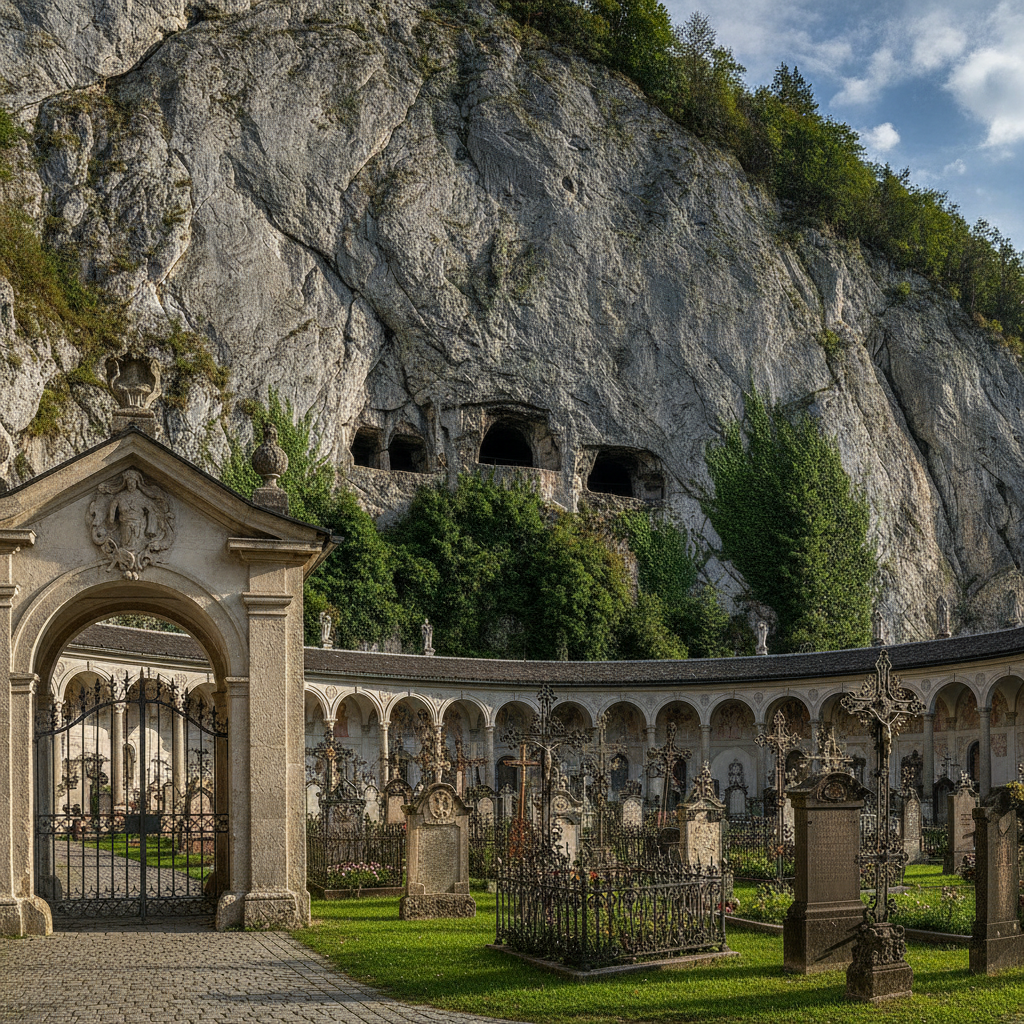
Stift Nonnberg (Nonnberggasse 2, the Benedictine convent on the Festungsberg rock below the Hohensalzburg Fortress, the oldest continuously inhabited convent in the German-speaking world, founded 714 CE by St. Rupert, the convent where Maria Augusta Kutschera — the real Maria Trapp — was a novice before leaving to become a governess to the Trapp family children, the convent free, accessible daily 7am-dusk, the interior of the Romanesque church with the late Gothic winged altarpiece the most important art work in the convent): the Sound of Music reality (the real story of the Trapp Family Singers: the real Maria Trapp was born 1905 and entered the convent as a novice 1926, she left in 1926 to become a governess to one child of Georg von Trapp — not 7 — the family escaping Austria in 1938 by train to Italy, not climbing the Alps on foot as in the film, the real von Trapp villa the Villa Trapp in the Aigen district 3km from the Old Town — now a private hotel at Trapp-Strasse 34, the villa not the Leopoldskron Palace which was used as the interior filming location), the Leopoldskron Palace (the 18th-century Baroque palace on the Leopoldskroner Weiher lake 2km south of the Old Town, built 1736 by Archbishop Leopold Anton von Firmian, the palace the interior filming location for the Trapp family villa in The Sound of Music — the lake-terrace scene shot here, the palace now the private campus of the Salzburg Global Seminar, not open to the public for individual visits, the exterior viewable from the lake shore path accessible on foot from the Hellbrunn bus stop) and St. Peter's Cemetery (the Petersfriedhof behind the St. Peter's Church in the Old Town, the cemetery from 400 CE, the most historic cemetery in the Austrian-speaking world, the catacombs carved into the Mönchsberg cliff behind the cemetery, €2 entry for the catacombs, the cemetery one of the Sound of Music filming locations for the escape scene).
- 5
The Hellbrunn Palace and the Trick Fountains
Schloss Hellbrunn (Fürstenweg 37, 4km south of the Old Town, accessible by bus 25 from the Mirabellplatz in 20 minutes or by bicycle on the Salzach River path in 30 minutes, the pleasure palace built 1613-1615 by Archbishop Markus Sittikus as the summer residence and entertainment venue, the palace never used as a permanent residence but the greatest garden entertainment complex in Baroque Austria, €14.50 adults, daily 9am-5:30pm in summer): the trick fountains (the Wasserspiele — the 18 trick fountains and water features in the formal garden, the most elaborate surviving Baroque water-trick garden in existence — the dining table where the Archbishop's guests were seated and then drenched by the jets hidden in the stone chairs, the water-powered mechanical figures, the Neptune grotto with the water jets triggered by the garden guides, the tour the most entertaining and most surprising garden experience in Austria, the guides controlling the jets manually — the visitor will get wet, the waterproof jacket the correct garment for the Hellbrunn garden tour), the Mechanical Theatre (the Maschinensystem, the 1752 water-powered mechanical theatre in the hill behind the garden — 141 mechanical figures animated by a single water wheel, the most complex surviving 18th-century automaton theatre in the world, the theatre included in the Hellbrunn ticket), the Zoo Salzburg (the Salzburg Zoo on the Hellbrunn grounds, the most naturally landscaped zoo in Austria with the Alpine fauna — the brown bears, the wolves, the lynx, the chamois — and the tropical fauna in the modern enclosures, €14.50 adults, included in the Hellbrunn combined ticket, daily 9am-6pm in summer) and the Open Air Stage (the Stone Theatre at Hellbrunn, the oldest purpose-built open-air stage north of the Alps built 1614 in the natural rock amphitheatre, the venue for the productions of the Salzburg Festival when the Domplatz is rained out, the most historically significant theatre garden in Austria).
- 6
Salzburg's Jewish History and the Second World War
Salzburg Jewish history (the Jewish community of Salzburg the smallest of the major Austrian cities — the Jews expelled from Salzburg 1498 by Archbishop Leonard von Keutschach and not permitted to return until the 19th century, the community rebuilt from the 1860s to the 276 Jews recorded in the 1934 census): the November 1938 Pogrom in Salzburg (the Novemberpogrom — Kristallnacht — in Salzburg on November 9-10 1938, the single Salzburg synagogue at Lasserstraße 8 burned and destroyed, the Jewish community businesses destroyed, 70 Salzburg Jews arrested and sent to Dachau concentration camp, the Memorial by Alfred Kubin and Karl Prantl at the site of the destroyed synagogue the primary physical memorial to the Salzburg Jewish community), the Salzburg Mahnmal (the contemporary memorial at Waagplatz in the Old Town, the 2010 memorial by the artist Andreas Kugler — the 281 stumbling stones embedded in the Salzburg streets, the Stolpersteine — the brass cobblestones inscribed with the names and fates of the Salzburg Jewish victims of the Nazi persecution, the most distributed memorial form in Salzburg, the stones locatable by the Stolpersteine map at the Salzburg Museum), the Dachau connection (the 70 Salzburg Jewish men arrested in November 1938 sent to the Dachau concentration camp 80km north in Germany, the Dachau concentration camp accessible from Salzburg by train in 90 minutes via Munich as the most historically significant day-trip destination for visitors interested in the full Austrian Nazi history, the Dachau memorial site open daily 9am-5pm, free admission) and the American occupation (Salzburg occupied by the US Army from May 5 1945, the US Zone of occupation including Salzburg until the Austrian State Treaty of 1955, the Hotel Bristol on the Makartplatz the US military headquarters 1945-1955 — the Salzburg Festival revived under US occupation auspices in 1945 as the first postwar cultural event in Austria, the festival the primary American cultural policy instrument in the Austrian occupation zone).
Walk this route with audio
Stories play automatically as you reach each stop — no tapping needed.
More in salzburg
Salzburg Mozart — the Mozarteum Foundation, Mozart Museums & the Complete Musical Legacy
Salzburg — the Hohensalzburg Fortress, Mozart's Birthplace & the Sound of Music City
Salzburg Practical — Seasons, the Mozart Week, Christmas Market & Getting Around
Salzburg Day Trips — the Salzkammergut Lakes, Hallstatt & the Austrian Alpine Landscape