Salzburg Day Trips — the Salzkammergut Lakes, Hallstatt & the Austrian Alpine Landscape
The Salzkammergut lake district east of Salzburg is the most visited Alpine lake landscape in Austria — the Wolfgangsee, the Attersee, and the Hallstättersee with their mountain reflections and historic villages are accessible in under 2 hours from Salzburg.
- 1
Hallstatt — the World's Most Photographed Village
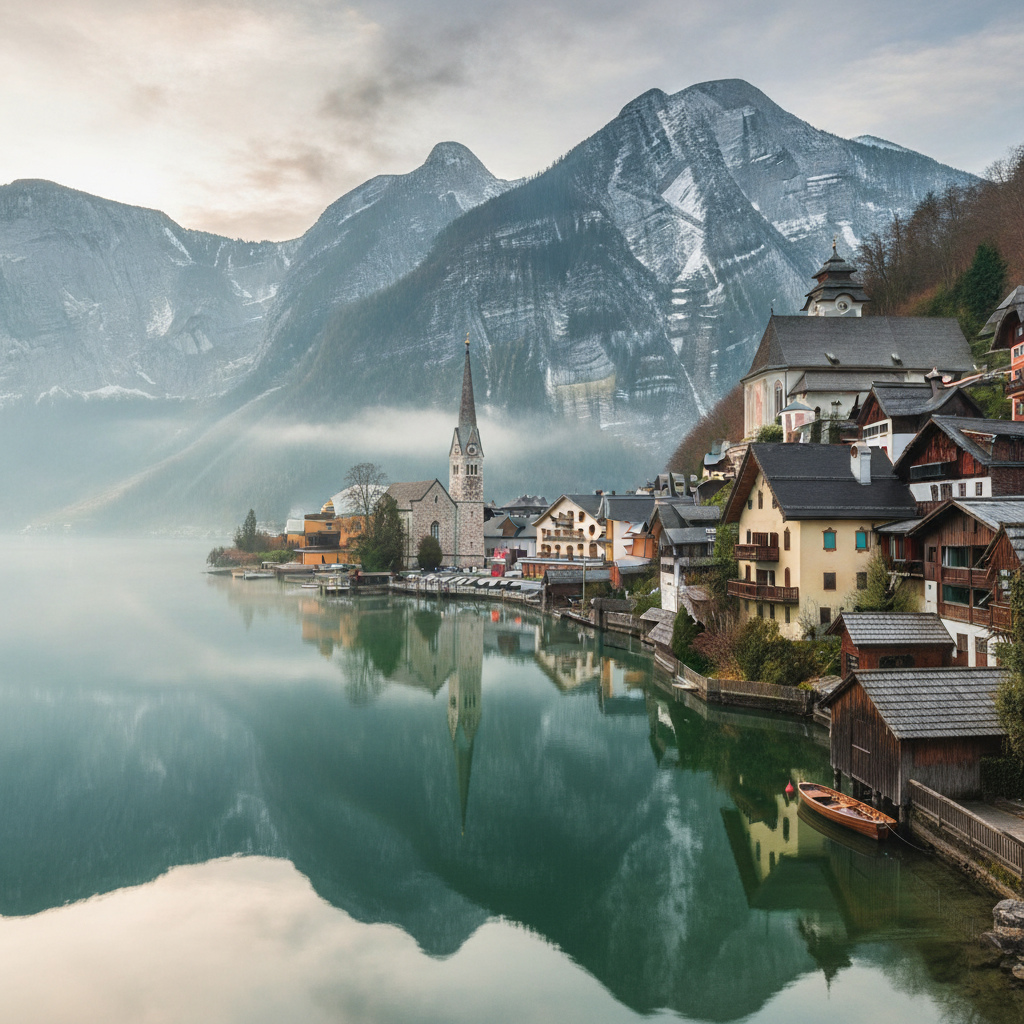
Hallstatt (the UNESCO World Heritage village on the Hallstättersee lake in the Salzkammergut district, 80km east of Salzburg accessible by train to Hallstatt station then ferry across the lake in 10 minutes, 2.5 hours total from Salzburg, the most photographed village in Austria and one of the most photographed in the world — the image of the painted houses descending to the lake with the Alps behind duplicated identically in a full-scale replica village in Guangdong Province, China in 2012 — the original available at €0 entry for the village and the lake shore, the Hallstatt salt mine and the Skywalk the paid attractions): the Hallstatt salt mine (the Hallstatt Salzwelten, the world's oldest salt mine in continuous operation — the salt extraction dated by archaeology to at least 1500 BCE, the Hallstatt culture — the Early Iron Age culture of central Europe 800-500 BCE — named for the archaeological finds at this site, the mine tours daily 9am-4:30pm from the top of the funicular, €35 adults including the funicular and the mine tour, the 2-hour underground tour the most complete prehistoric mining experience in Europe, the museum at the mine entrance the most complete Bronze and Iron Age archaeological collection in Austria), the village lake walk (the lake promenade the most popular free activity in Hallstatt, the 800m walk from the ferry pier to the Lahn beach with the direct views of the Dachstein glacier, the photographic position on the lake bridge at the north end of the village giving the canonical Hallstatt image — the painted houses reflected in the still water) and the Hallstatt Skywalk (the glass platform 350m above the village, accessible by funicular and 10-minute walk, €12 adults, the panoramic view of the village, the lake, and the Dachstein Alps).
- 2
Wolfgangsee and the St. Wolfgang White Horse Inn
Wolfgangsee (the lake 50km east of Salzburg, accessible by bus 150 from the Salzburg central station in 90 minutes at €8 return, the lake the setting for the operetta 'Im weißen Rössl am Wolfgangsee' — 'White Horse Inn' — the 1930 Ralph Benatzky operetta set at the famous lakeside inn in St. Wolfgang, the lake the most romantic of the Salzkammergut lakes for the Viennese visitors who have been coming here since the 19th century): St. Wolfgang (the village on the north shore of the lake, the most visited of the Wolfgangsee villages, the 'Weißes Rössl' — the White Horse Inn — still operating as a hotel and the primary operetta location at the lakeside, the pilgrimage church of St. Wolfgang with the Michael Pacher altarpiece of 1481 — the most important late Gothic carved altarpiece in Austria, the 12m folding altarpiece the finest example of the international Gothic style in wood carving, free, open daily 8am-7pm), the Schafberg mountain railway (the rack railway from St. Wolfgang to the Schafberg summit at 1,783m, the most scenic mountain railway in the Austrian Alps — the Schafberg the mountain where the opening sequence of 'The Sound of Music' was filmed, the summit view taking in the Wolfgangsee, the Attersee, the Mondsee, and the Salzburg Alps on a clear day, the rack railway running April-October, €36 adults return, the vintage steam locomotive on selected services the most atmospheric option) and the lake swimming (the Wolfgangsee water temperature reaching 24-26 degrees in July-August, the warmest of the major Salzkammergut lakes, the free municipal beaches at Strobl and Ried the most accessible for visitors).
- 3
Berchtesgaden and the Eagle's Nest
Berchtesgaden (the German town 25km south of Salzburg across the Austrian-German border, accessible by bus 840 from the Salzburg central station in 1 hour at €10 return, the town in the German Berchtesgadener Land enclave surrounded by Austrian territory): the Kehlsteinhaus — the Eagle's Nest (the mountain retreat built 1937-1938 for Adolf Hitler's 50th birthday on the 1,834m Kehlstein summit, the building used by Hitler only 14 times but the most internationally known building in Germany after the Reichstag — the red marble fireplace a gift from Mussolini, the 124m elevator shaft cut through the mountain from the tunnel level to the building interior, the views of the Bavarian Alps and the Berchtesgaden valley from the mountain terrace the most dramatic accessible in the German Alps, accessible May-October by the special bus from the Kehlstein bus stop in Berchtesgaden — no private vehicles allowed on the Kehlsteinstraße — €19.50 return bus including the elevator, the access the most logistically constrained of any major tourist attraction in Germany but the visit the most historically layered), the Berchtesgaden Salt Mine (the Salzbergwerk at Bergwerkstrasse 83, the salt mine with the underground salt lake and the boat crossing — the most visitor-oriented salt mine in the Alps, the mine tour including the traditional salt mine costume, the slide descent into the mine, and the illuminated underground lake cruise at €24 adults, the most theatrical underground experience in Bavaria) and the Königssee (the lake in the national park 5km south of Berchtesgaden, the most dramatic Alpine lake in Germany — the vertical rock walls rising 2,700m directly from the water, the electric-powered tourist boats the only allowed vessel on the lake, €21 adults return to the St. Bartholomä church on the lake, the boat echo demonstration at the St. Bartholomä rock wall the most unusual lake attraction in the German Alps).
- 4
Salzburg's Baroque Architecture — Fischer von Erlach and the Prince-Archbishops
Salzburg Baroque (the most concentrated Baroque architectural ensemble north of the Alps, created by the Prince-Archbishops of Salzburg — the ecclesiastical rulers who used architecture as political propaganda for their absolute power — and the architects Johann Bernhard Fischer von Erlach and his son Joseph Emanuel Fischer von Erlach, the architects who developed the Austrian Baroque as the synthesis of the Italian and the French traditions): the Archbishop's Residenz (Residenzplatz 1, the palace of the Prince-Archbishops, the principal secular Baroque building in Salzburg, the 15 State Rooms open to visitors including the Conference Room — where the negotiations between Napoleon and Austria were held in 1809 — the Audience Hall with the Martino Altomonte ceiling frescoes, and the Residenz Gallery with the Dutch and Flemish paintings of the 17th century — the most important art collection in Salzburg — €13 adults, daily 10am-5pm), the Dreifaltigkeitskirche (the Trinity Church, Dreifaltigkeitsgasse 14 in the New Town, the 1694 Fischer von Erlach church, the first major building by the architect, the concave facade the defining Baroque church gesture in Salzburg), the Kollegienkirche (the Collegiate Church, Universitätsplatz, the 1707 Fischer von Erlach masterpiece, the most harmonious Baroque church exterior in Salzburg) and the Salzburg Schloss Hellbrunn (the pleasure palace 4km south of the centre, built 1613-1615 by Archbishop Markus Sittikus — the trick fountains, the mechanical theatre, and the open-air stage the principle attractions, €14.50 adults, the trick fountains the most elaborate and the most childishly amusing aristocratic garden folly in Austria, the mechanical singing bird theatre the most technically sophisticated 17th-century automaton theatre in existence).
- 5
Salzburg Food — Mozartkugeln, Nockerl and the Gasthaus Tradition
Salzburg food culture (the Austrian culinary tradition adapted to the Alpine setting — the Salzburger Nockerl the most famous local specialty, the Wiener Schnitzel in the Salzburg mountain cooking context, the Austrian coffee house culture the social institution parallel to the operetta and the Mozart concerts): Salzburger Nockerl (the signature dessert of Salzburg — the baked meringue soufflé in the form of three mountain peaks representing the three hills of Salzburg — the Mönchsberg, the Festungsberg, and the Kapuzinerberg — made from the egg whites, the sugar, the egg yolks, and the flour, baked until golden in the large oval pan, served immediately at the table as the soufflé collapses in 4-5 minutes, the dessert for 2-4 people at €16-22 at the Salzburg Weinkeller at Residenzplatz 1 or the Café Zaunkönig at Münzgasse 2, the most quintessentially Salzburg food experience), the Bärenwirt (Mülner Hauptstraße 8, the oldest Gasthaus in Salzburg with the license since 1663, the most traditional Austrian main course menu in the city — the Wiener Schnitzel at €18, the tafelspitz at €22, the gröstel hash at €14, the correct address for the visitor wanting the authentic Austrian tavern experience in a historic building), the Augustiner Bräustübl (Augustinergasse 4, the Augustinian monastery brewery restaurant — the largest beer garden in Austria at 1,600 seats inside and 1,400 outside in summer, the monastery beer brewed on site since 1621, the most atmospheric Salzburg eating and drinking experience, the system: buy the ceramic mug at the counter, bring it to the beer station, fill it yourself from the gravity tap, the beer at €5 per litre, the food from the self-service market stalls, the most democratic and most authentic Salzburg institution, open Monday-Friday 3-11pm, Saturday-Sunday 2:30-11pm) and the Austrian wines (the Styrian white wines — the Sauvignon Blanc and the Welschriesling of the Austrian wine regions accessible at the Salzburg wine bars at €5-8 per glass, the most underrated European wine at the lowest price point per quality).
- 6
The Salzkammergut — the Complete Lake District
The Salzkammergut (the Austrian lake district east of Salzburg, the 76 lakes in the mountainous landscape of the Salzkammergut the most complete Alpine lake landscape in central Europe, the district accessible from Salzburg by the Salzkammergut rail network): the Mondsee (the nearest Salzkammergut lake to Salzburg at 25km, accessible by bus in 45 minutes at €5 return, the village of Mondsee at the lake head — the Basilika of Mondsee the church where the Sound of Music wedding was filmed, the free entry giving the only direct access to the film location — the lake the most rapidly warming of the major Salzkammergut lakes, reaching 26 degrees in July-August), the Attersee (the largest of the Salzkammergut lakes at 46 square km, 50km east of Salzburg, the lake where Gustav Klimt painted his Attersee series — the 12 paintings of the lake surfaces among the most prized Klimt works, the Klimt memorial room at the Kammer castle visible from the lake boat), the Bad Ischl (the imperial summer residence of Emperor Franz Joseph I — the town where the Emperor spent his annual summer hunting retreat, the Kaiservilla at Jainzen 38 the imperial summer palace, €16 adults May-October, the town also the birthplace of the operetta — the Lehár Festival in Bad Ischl the most important operetta festival in Austria, leharf estival.at for the July-August programme at €40-100) and the Wolfgangsee and Hallstatt (as described separately — the circuit of all four major Salzkammergut lakes a 2-day driving or a 3-day rail-and-bus itinerary from Salzburg, the Austrian Lake District the most rewarding day-trip destination from the city for visitors spending 3+ nights).
Walk this route with audio
Stories play automatically as you reach each stop — no tapping needed.
More in salzburg
Salzburg Mozart — the Mozarteum Foundation, Mozart Museums & the Complete Musical Legacy
Salzburg — the Hohensalzburg Fortress, Mozart's Birthplace & the Sound of Music City
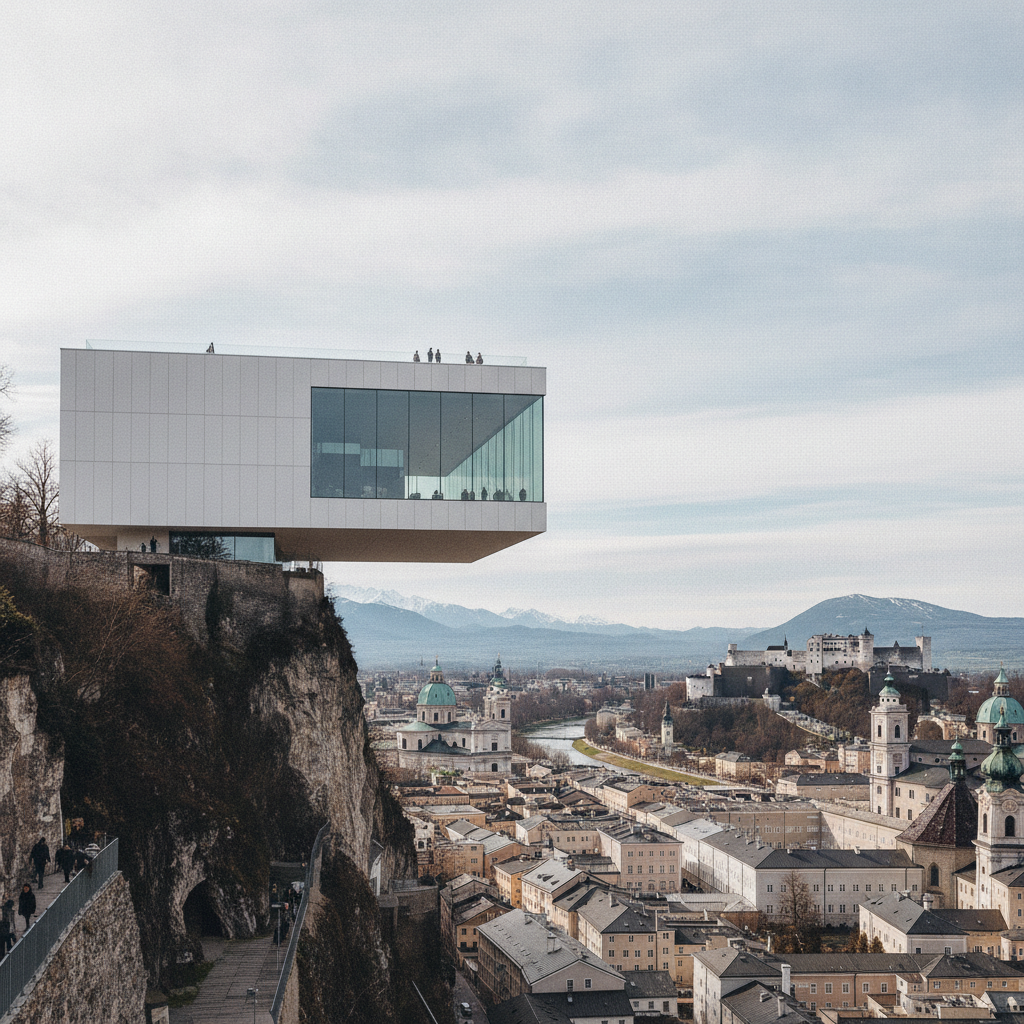
Salzburg Art and Museums — the Museum der Moderne, Salzburg Museum & the Rupertinum
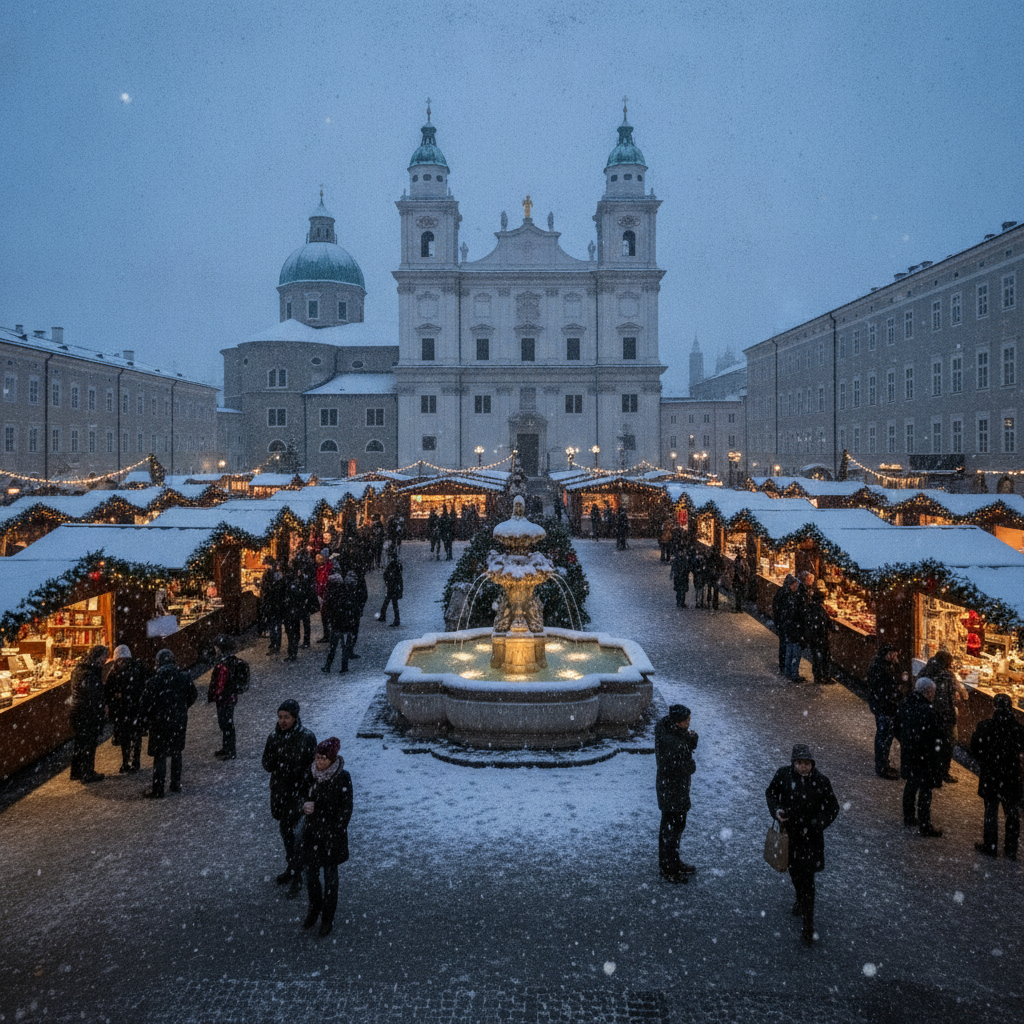
Salzburg Practical — Seasons, the Mozart Week, Christmas Market & Getting Around