Salvador Museums and Art: Orixá Sculptures, Afro-Brazilian Heritage, Colonial Baroque, and Jorge Amado
The cultural institutions of Salvador include the orixá sculptures of the Dique do Tororo, the Carybe panels of the Museu Afro-Brasileiro, the colonial baroque silver treasury, the modernist MAMB on the bay, and the literary world of Jorge Amado that gave Bahia its international identity.
- 1
Dique do Tororo: The Orixas in the Urban Lake
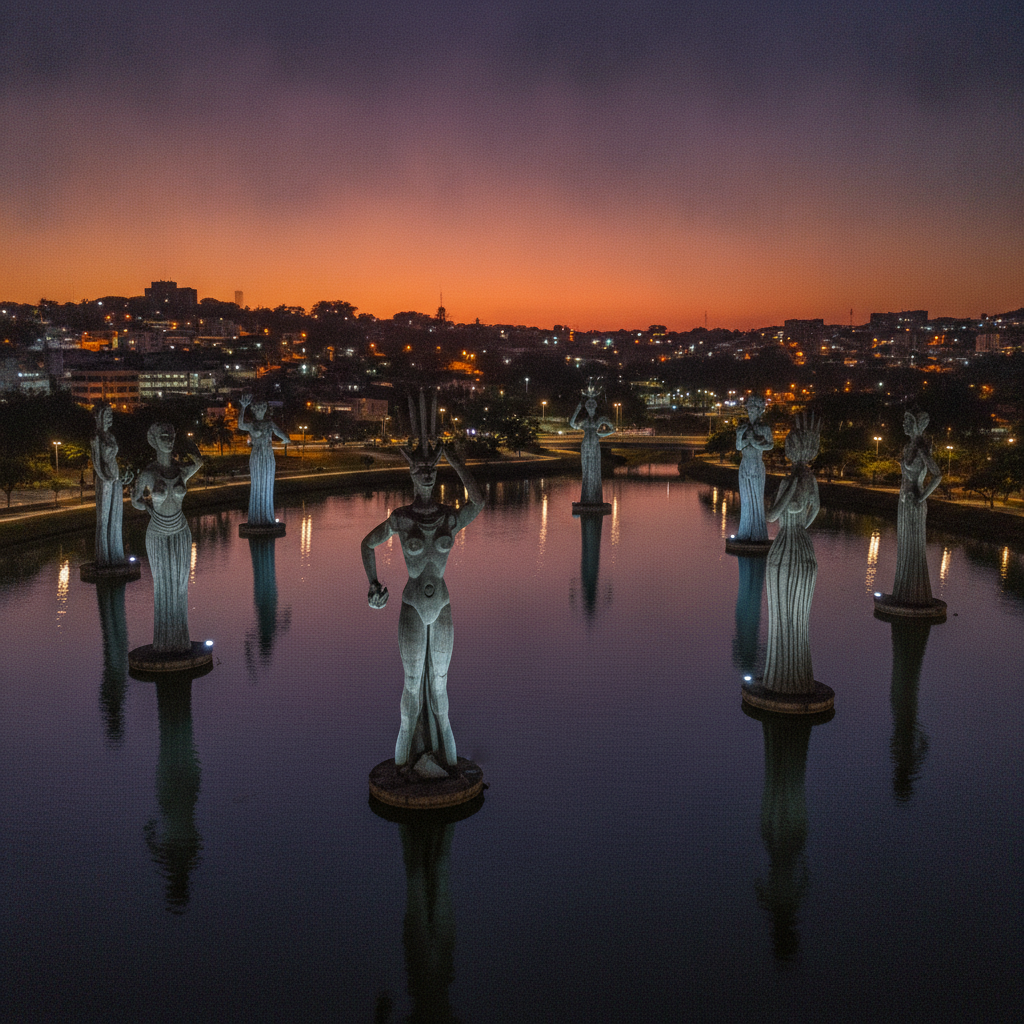
The Dique do Tororo, the urban lake in the center of Salvador, was enhanced in 1998 with the installation of eight giant sculptures of Candomble orixas emerging from the water, one of the most dramatic public art installations in Brazil and a statement about the role of Afro-Brazilian spiritual culture in the public identity of the city. The lakeside promenade is a popular jogging and leisure space that has been transformed by the orixá sculptures into a sacred landscape.
- 2
Museu Afro-Brasileiro: The Carybe Panels
The Museu Afro-Brasileiro in the former Faculty of Medicine building adjacent to the Terreiro de Jesus in Pelourinho houses the most important collection documenting the African heritage in Brazil, centered on the magnificent carved wooden panels of all 27 Candomble orixas created by the Argentine-born Bahian artist Carybe, whose work documented and celebrated the Afro-Brazilian religious and cultural tradition over six decades of residence in Salvador.
- 3
Museu de Arte Sacra: The Baroque Silver Treasury
The Museu de Arte Sacra de Bahia in the former Carmelite convent in the historic center is the finest collection of colonial baroque religious art in Brazil, with thousands of gold and silver liturgical objects, paintings, and wooden sculptures that document the wealth extracted from the sugar and slavery economy of the colonial Bahia captaincy and invested in the production of religious objects of extraordinary craftsmanship.
- 4
Solar do Unhao: MAMB on the Bay
The Museu de Arte Moderna da Bahia in the Solar do Unhao, a restored 17th-century estate on the lower city waterfront with views across the Baia de Todos os Santos, is one of the finest modern art museums in Brazil and the venue for the annual summer cinema in the open air on the colonial courtyard. The building itself, restored by Lina Bo Bardi in the 1960s, is one of the most important works of Brazilian modernist architecture.
- 5
Lina Bo Bardi and the SESC Pompeia Influence
Lina Bo Bardi, the Italian-born architect who became one of the most important Brazilian architects of the 20th century, worked extensively in Salvador before designing the SESC Pompeia in Sao Paulo. Her work in Bahia, including the MAMB restoration and the influence of Afro-Brazilian material culture on her aesthetic, is the most important chapter of her development as a distinctly Brazilian architect.
- 6
Jorge Amado Country: Literature and the Bahia Identity
Jorge Amado, the Bahia novelist whose works Gabriela Cravo e Canela, Dona Flor e Seus Dois Maridos, and Tenda dos Milagres brought the Afro-Brazilian culture of Salvador and the Bahia interior to an international readership of millions, created the literary identity of Bahia as a sensual, racially mixed, Candomble-infused society that shaped the self-image of the city as much as its architectural heritage. The Fundacao Jorge Amado in Pelourinho documents the author's life and work.
Walk this route with audio
Stories play automatically as you reach each stop — no tapping needed.
More in Salvador
Salvador History: Slavery, the Colonial Capital, the Reconcavo Plantation Zone, and the Afro-Brazilian Legacy
Salvador Practical Guide: Upper and Lower City, Carnival Planning, Neighborhoods, and the Bahia Coast Route
Salvador Day Trips: Chapada Diamantina, Whale Sharks at Praia do Forte, Morro de Sao Paulo, and the Irmandade da Boa Morte
Salvador: Barra Lighthouse, Quilombo Communities, Afro-Brazilian Fashion, and the Bahian Night Culture
Salvador: Pelourinho, Candomble, Capoeira, and the African Cultural Capital of the Americas