Campo de' Fiori, the Jewish Ghetto & Trastevere: Rome's Most Lived-In Neighborhoods
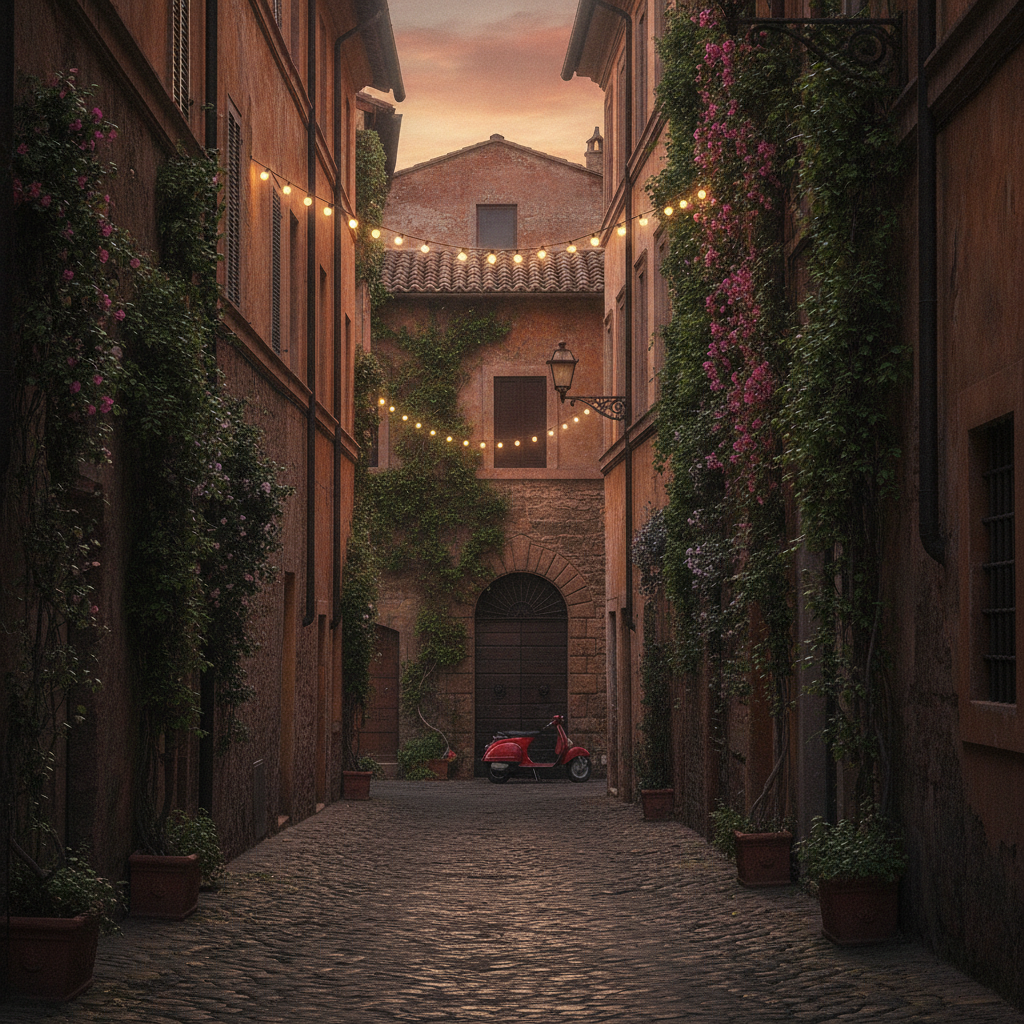
On the left bank of the Tiber, south of the main tourist circuit, lie Rome's two most atmospheric ancient neighborhoods: the Jewish Ghetto—one of the oldest continuously inhabited Jewish communities in the world (established 161 BC, walled off in 1555, the wall finally demolished in 1888)—and Trastevere ('across the Tiber'), Rome's best-preserved medieval neighborhood, a labyrinth of narrow lanes, ivy-draped walls, and ancient churches where working-class Romans lived for centuries and where the city's social life is now concentrated on summer evenings.
- 1
Campo de' Fiori — The Square Where Giordano Bruno Was Burned
Campo de' Fiori ('Field of Flowers')—now one of Rome's most popular market squares, hosting a morning fruit, vegetable, and flower market daily except Sundays, and transforming into a bar-and-restaurant social hub in the evenings—was from the medieval period through the 17th century the site of public executions in Rome. The hooded bronze statue at the center of the square is Giordano Bruno, the Dominican friar and philosopher who was burned at the stake here on February 17, 1600, on charges of heresy (his crimes included heliocentrism, the infinite universe, and the transmigration of souls—positions now understood as early modern science). The statue (1889, sculptor Ettore Ferrari) was the first monument in unified Italy deliberately placed to face the Vatican. The surrounding streets (particularly Via dei Baullari and Via del Pellegrino) contain many of Rome's best independent food shops, wine bars (enoteche), and restaurants.
- 2
The Jewish Ghetto — Two Thousand Years of Roman Jewish History
The Jewish community of Rome is the oldest in Europe: Jews arrived in Rome as early as the 2nd century BC (as merchants and diplomats), and the community has been continuously present since then—predating Christianity, predating the destruction of the Temple in Jerusalem (70 AD), surviving the Roman Empire, the Middle Ages, the Black Death, the Inquisition, and (barely) the Nazi occupation of 1943–44. The Ghetto was created by Pope Paul IV in 1555 (confining the Jewish population to a small area near the Tiber), walls and gates demolished in 1888 after Italian unification. The heart of the former Ghetto is the area around Via del Portico d'Ottavia, Piazza Mattei (with the Turtle Fountain, 1581, Giacomo della Porta/Taddeo Landini), and the Synagogue (1904, visible from across the Tiber). The Great Synagogue of Rome (open to visitors with advance booking; includes a museum) contains one of Rome's finest early 20th-century interiors and tells the story of the Roman Jewish community. A plaque-lined street nearby commemorates the 1,023 Roman Jews deported to Auschwitz on October 16, 1943, of whom only 15 returned.
- 3
Portico d'Ottavia — The Ancient Gateway of the Ghetto
The Portico d'Ottavia, built by Augustus in 23 BC and dedicated to his sister Octavia, was a monumental colonnade enclosing the temples of Jupiter Stator and Juno Regina. The structure was partially demolished in 442 AD to build a fish market (the medieval market stall brackets are still visible on the surviving columns); the gateway became the entry arch of the Jewish Ghetto in 1555 and is now the symbol of the neighborhood. The portico stands at the intersection of two millennia of Roman history: the ancient temples, the medieval market, the 16th-century Ghetto, the 19th-century demolition of the walls. Immediately adjacent is the church of Sant'Angelo in Pescheria (the 'Saint Angel in the Fish Market'), built inside the ancient portico in the 8th century, which was the compulsory Sunday sermon church for the Jewish community (Jews were forced to attend proselytizing sermons here for 300 years).
- 4
Tiber Island — The Island Hospital
The Tiber Island (Isola Tiberina) is one of the smallest inhabited islands in the world (270 meters long, 67 meters wide) and the only island in the Tiber within the city of Rome. It has been continuously occupied for at least 2,700 years. In ancient times it housed a temple to Aesculapius (the god of medicine), establishing a medical tradition that continues today: the Fatebenefratelli Hospital, founded in 1584 and still operating on the island, is one of Rome's principal trauma centers. The island is connected to both banks by bridges (the Ponte Fabricio, 62 BC, is the oldest surviving bridge in Rome). The church of San Bartolomeo all'Isola (10th century, rebuilt multiple times) stands over the site of the ancient temple. In summer, the island hosts the Cinema all'Aperto, an outdoor film festival. A walk across both bridges provides excellent views of Trastevere and the Ghetto.
- 5
Santa Maria in Trastevere — Rome's Most Beautiful Medieval Church
Santa Maria in Trastevere, traditionally claimed to be the first church in Rome publicly dedicated to the Virgin Mary (the current structure dates largely from the 12th century), contains the most beautiful medieval mosaic cycle in any Roman church: the apse mosaics of Pietro Cavallini (c. 1290), depicting the Life of the Virgin, are among the finest works of the pre-Renaissance period in Italy and were a crucial influence on Giotto. The church façade mosaics (12th century) depict a row of women carrying lamps in front of the Virgin—thought to represent the wise and foolish virgins of the parable. The interior, with its ancient granite columns (taken from the Baths of Caracalla), marble floor, and gilded ceiling (17th century), is one of the most atmospheric in Rome. The church gives its name to the Piazza di Santa Maria in Trastevere, which is the social and geographic heart of the Trastevere neighborhood—the square to sit in the evening, the square where the aperitivo begins.
- 6
Gianicolo — The Highest Viewpoint Over Rome
The Gianicolo (Janiculum Hill), the long ridge west of Trastevere, is not one of Rome's famous seven hills (it lies outside the Aurelian Wall and the traditional city boundary) but offers the finest panoramic view of Rome from any publicly accessible location: the terrace at the summit commands an unobstructed 180-degree view from the Alban Hills in the south to Monte Mario in the north, taking in St. Peter's dome, the Capitoline Hill, the Palatine Hill, the Janiculum itself. The hill is associated with Garibaldi: the statue of Garibaldi on horseback at the summit and the equestrian statue of Anita Garibaldi (his wife, who fought and died with him in the defense of the Roman Republic in 1849) are two of the most important monuments of the Risorgimento. A cannon is fired at noon every day from the Gianicolo by the Italian Army (a tradition dating to 1847)—the sound is audible across much of Rome. The walk up through the Trastevere neighborhood to the hill is part of the experience.
Walk this route with audio
Stories play automatically as you reach each stop — no tapping needed.
More in rome
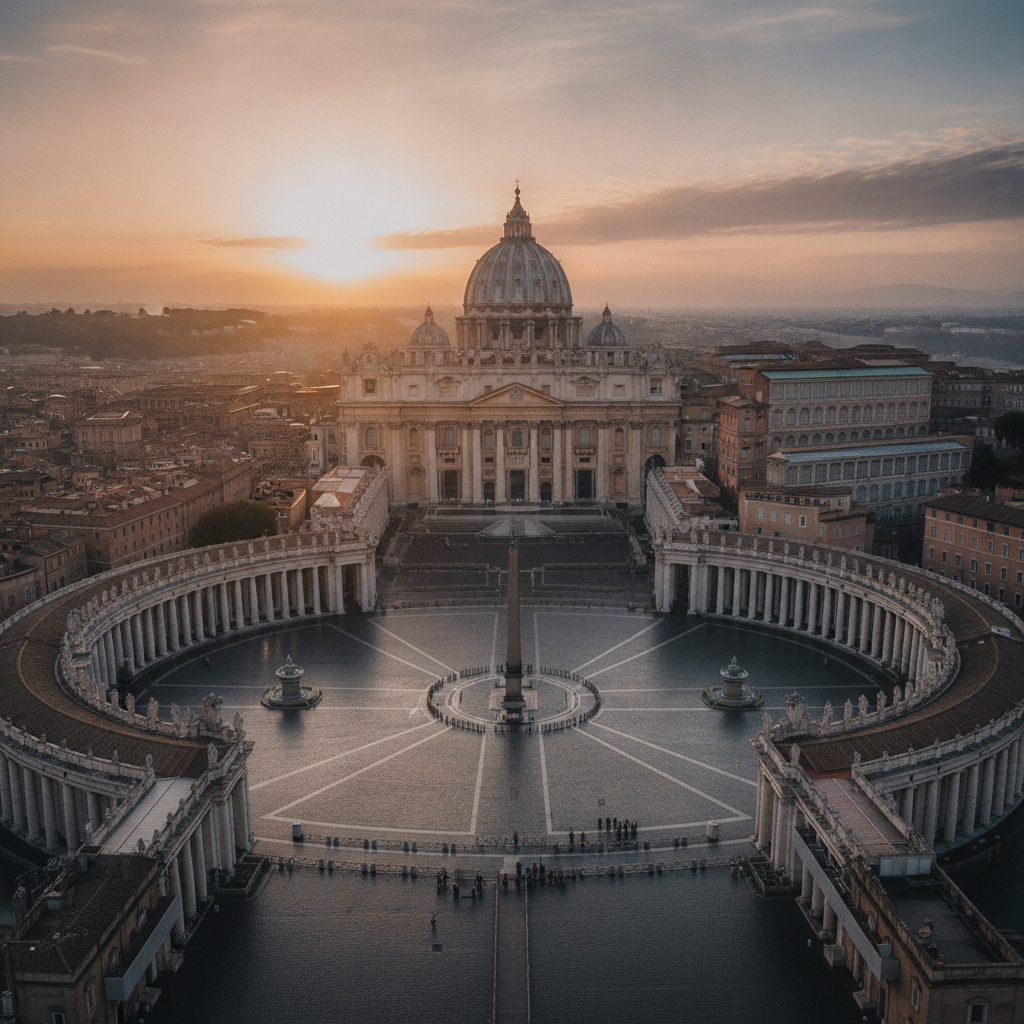
The Vatican, St. Peter's Basilica & Castel Sant'Angelo: The Heart of Christendom from River to Dome
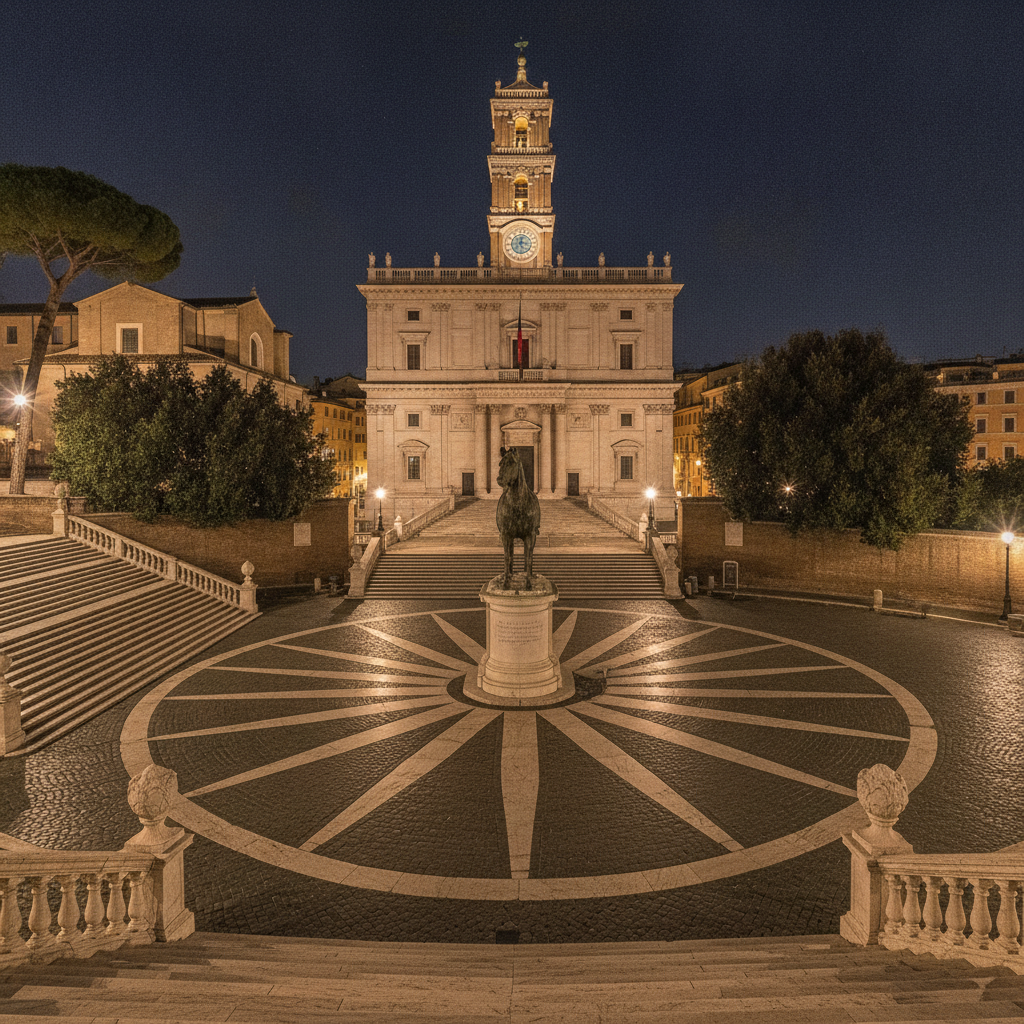
The Capitoline Hill, Trajan's Markets & the Monti Neighborhood: Between Rome's Ancient Power and its Liveliest Quarter
The Appian Way & the Catacombs: Rome's Ancient Road to the Dead
The Aventine Hill, the Knights' Keyhole & Testaccio: Rome's Best-Kept Secrets
Quirinal Palace, Via Veneto & Capuchin Crypt: From Baroque Power to Dolce Vita Glamour