Piazza Navona, the Pantheon & the Trevi Fountain: The Baroque Heart of Rome
The triangle formed by Piazza Navona, the Pantheon, and the Trevi Fountain is the densest concentration of architectural masterworks in any city in the world. Within walking distance of each other: the most perfect building in Western architecture (the Pantheon), the most theatrical public space in baroque Rome (Piazza Navona), the most extravagant fountain in any city (the Trevi), and the most fashionable district of Baroque Rome (the area around the Spanish Steps and Piazza del Popolo). This route traces the route from the Baroque to the Neoclassical, from the stadium-turned-piazza to the ancient temple, from the coin-throwing crowds to the gardens of the Pincian Hill.
1. Piazza Navona — Rome's Greatest Baroque Stage
- 1
Piazza Navona — Rome's Greatest Baroque Stage
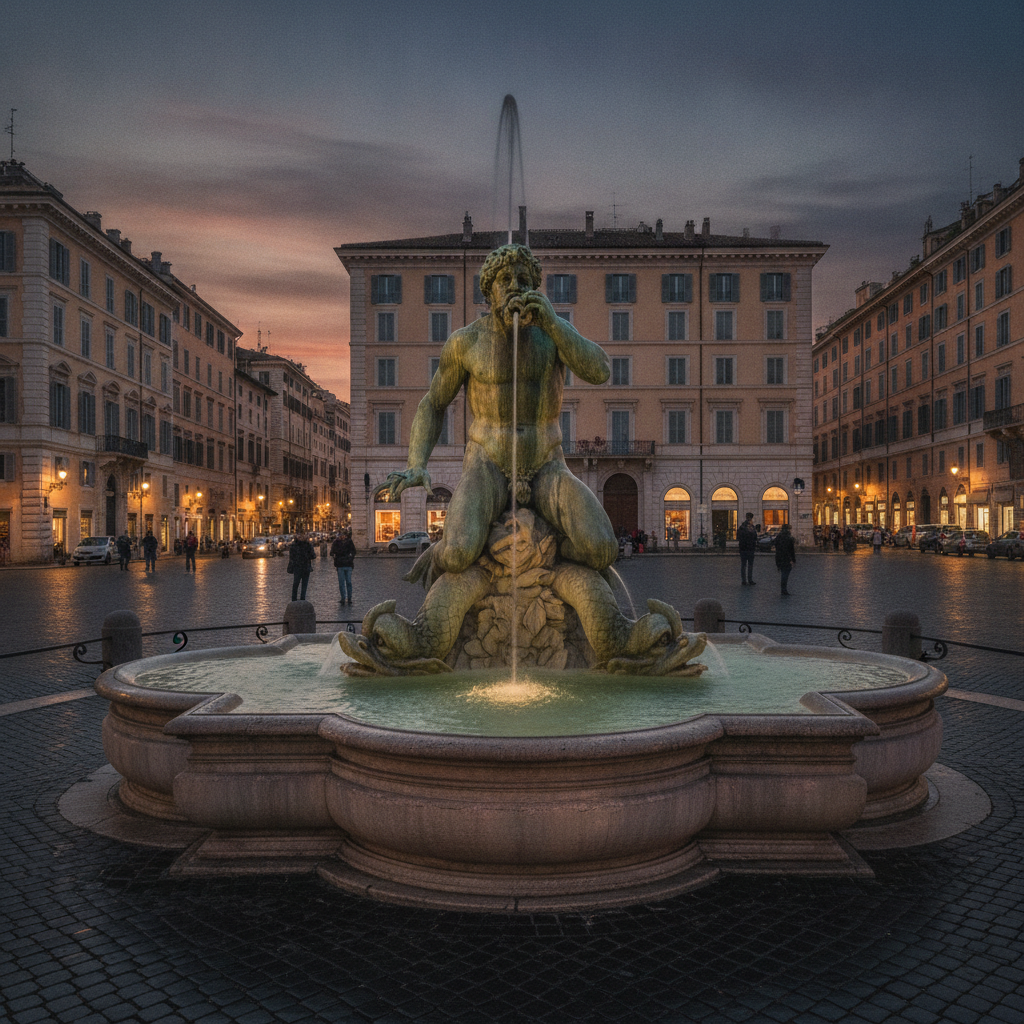
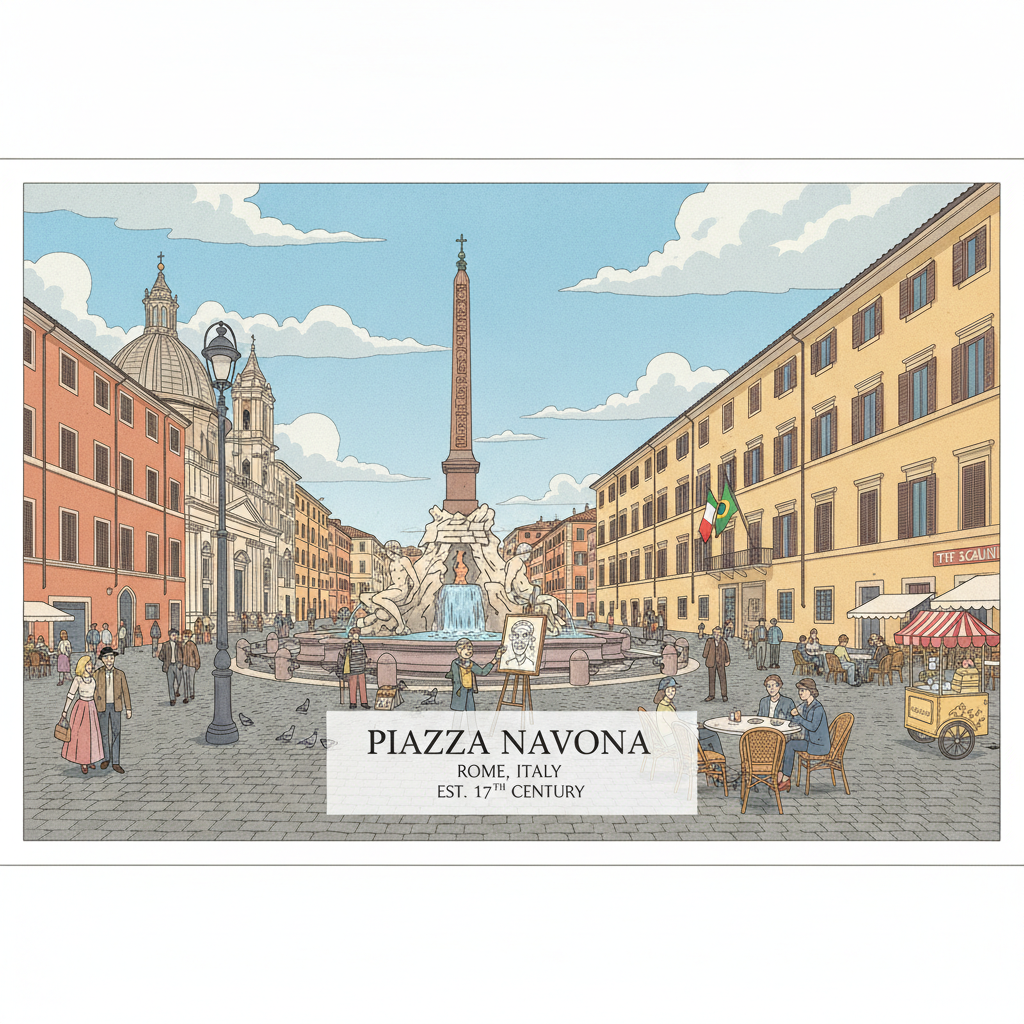
Piazza Navona follows the exact footprint of the Stadium of Domitian (completed 86 AD, capacity 30,000), which explains its distinctive elongated oval shape. The stadium's outer walls were incorporated into the surrounding medieval buildings; the original seating cavea is now the basement of the palaces and apartments that ring the piazza. The square contains three fountains, of which Bernini's Fountain of the Four Rivers (1651) at the center is the defining monument: an Egyptian obelisk (genuine, from the Circus of Maxentius) balanced on a hollow travertine rock pierced with openings through which the four allegorical river figures (Nile, Ganges, Danube, Río de la Plata) are visible. The design was a commission from Pope Innocent X Pamphilj, whose family palace (Palazzo Pamphilj, now the Brazilian Embassy) fronts the piazza. The facade of Sant'Agnese in Agone church, designed by Borromini (Bernini's great rival), provides a concave baroque backdrop. The piazza is most atmospheric in the evening when street artists and cafés are active; it fills with ice and a skating rink in winter.
- 2
The Pantheon — The Most Perfect Building in the World
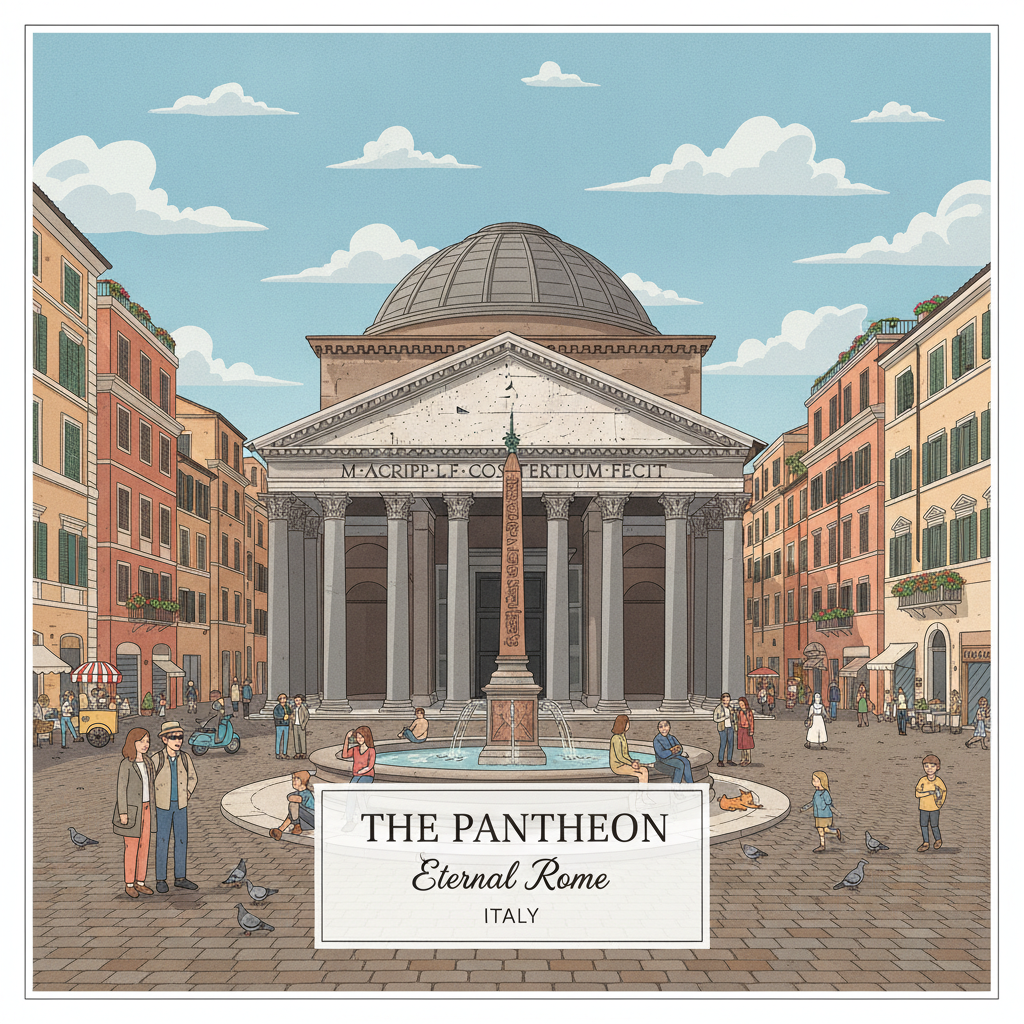
The Pantheon (built 118–125 AD by Emperor Hadrian, on the site of an earlier structure built by Agrippa in 27 BC—hence the inscription 'M.AGRIPPA.L.F.COS.TERTIUM.FECIT' on the portico that misled scholars for centuries) is the best-preserved ancient building in Rome and, many would argue, the most perfect building in Western architecture. The dome—43.3 meters in interior diameter, exactly equal to its height from floor to the oculus—remains the largest unreinforced concrete dome in the world, having held this record for nearly 1,900 years. The oculus (the circular opening at the dome's apex, 8.7 meters in diameter) is the building's only light source; a drain in the floor handles the rain that enters. The building was converted to a Christian church (Santa Maria ad Martyres) in 609 AD, which is the primary reason for its survival. The interior contains the tombs of Raphael (1520) and two Italian kings. Entry was free until 2023; there is now a modest charge and a booking system. The Piazza della Rotonda in front of the Pantheon contains another Egyptian obelisk (set on a Bernini base in 1711) and is one of Rome's most popular gathering spots.
- 3
The Trevi Fountain — Rome's Most Extravagant Water Theatre
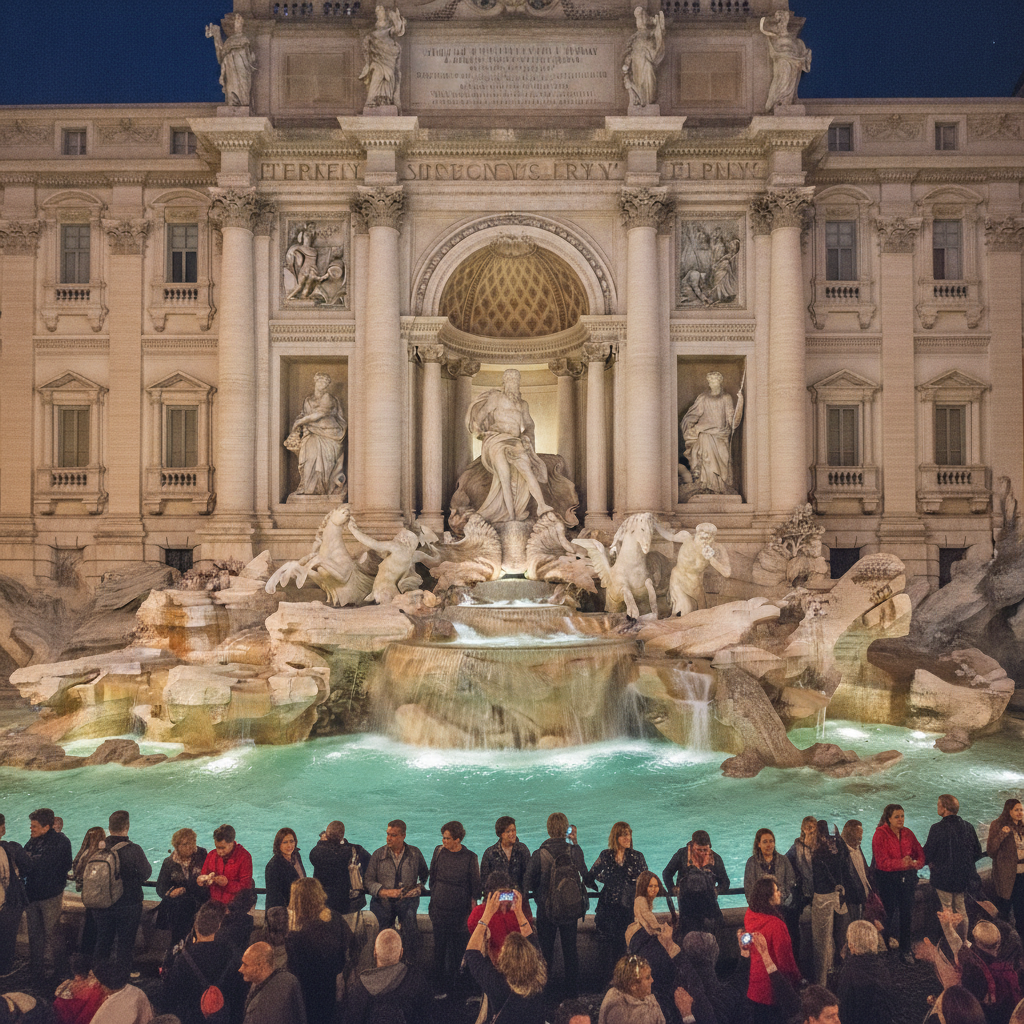
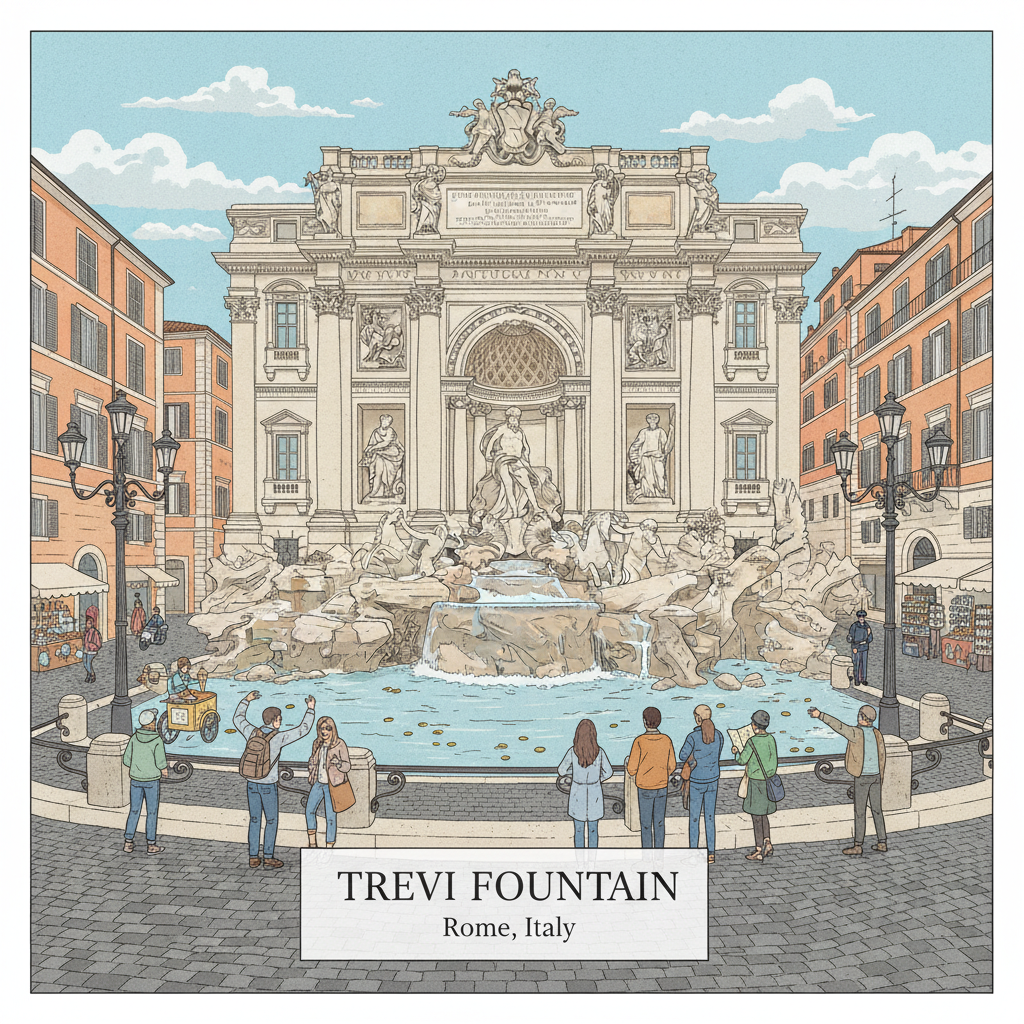
The Trevi Fountain (Fontana di Trevi), completed in 1762 by Nicola Salvi after Pope Clement XII's competition of 1730, is the terminal monument of one of Rome's ancient aqueducts (the Aqua Virgo, built 19 BC, which still supplies the fountain's water today). It is the largest Baroque fountain in Rome (26 meters high, 49 meters wide) and one of the most recognized monuments in the world. The sculptural program: Neptune (god of the sea) stands at the center in a shell-shaped chariot pulled by two sea horses (one calm, one wild, representing the sea's moods), guided by two Tritons, against a backdrop of the Palazzo Poli's triumphal arch facade. The tradition of throwing a coin into the fountain with the right hand over the left shoulder to guarantee a return to Rome was popularized by the 1954 film Three Coins in the Fountain; approximately 3,000 euros are now thrown in daily, collected by the city and donated to a charity feeding the poor. The fountain is best seen at night when it is lit; the square (tiny by Roman standards) is always extremely crowded.
- 4
The Spanish Steps — The Most Famous Staircase in the World
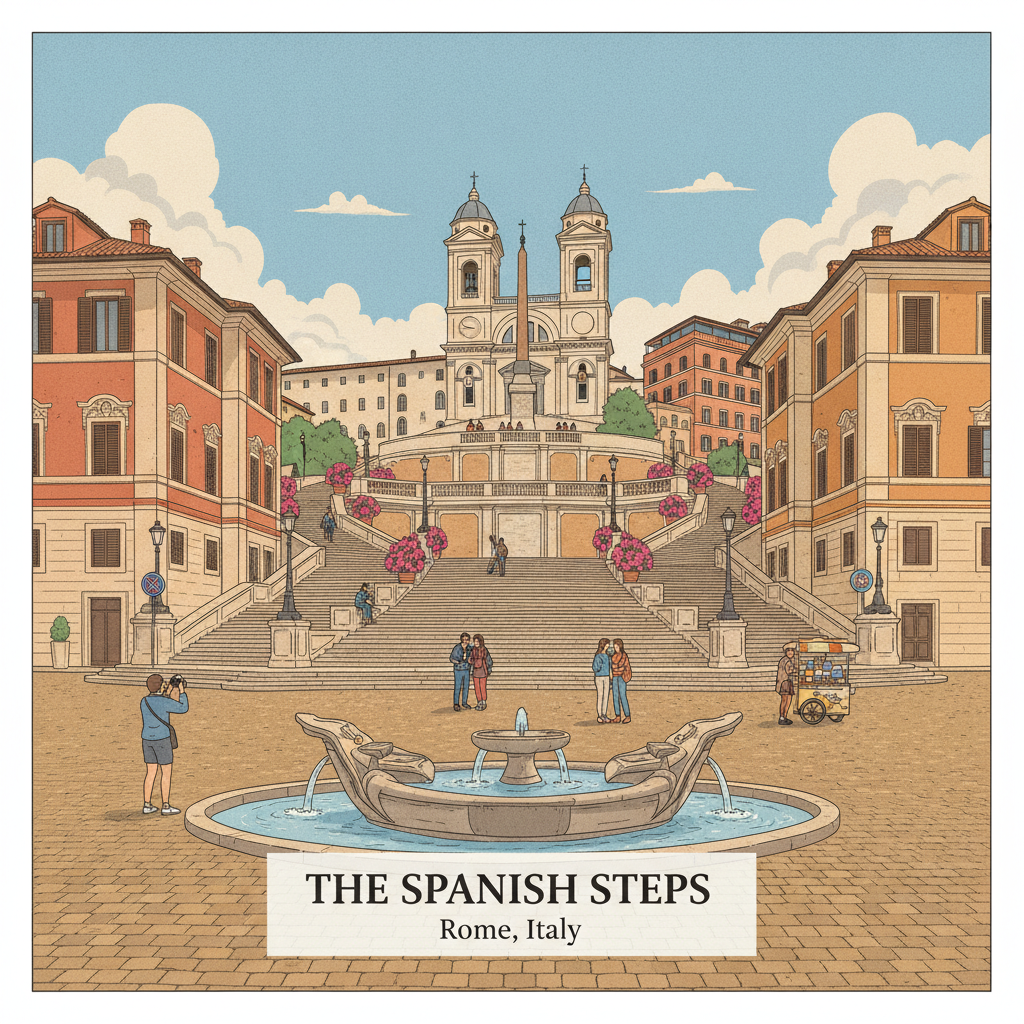
The Spanish Steps (Scalinata di Trinità dei Monti), built 1723–1725 by Francesco de Sanctis to connect the Bourbon Spanish Embassy to the Holy See (in the Palazzo di Spagna at the foot) with the French-owned church of Trinità dei Monti at the top, are the widest stairway in Europe (135 steps, 12 landings, total width approximately 25 meters) and are almost certainly the most photographed staircase in the world. The design was the subject of an architectural competition (France and the Holy See both wanted to dominate the commission; the compromise was to give it to a Roman architect); the graceful double-curved design is a masterwork of 18th-century urban scenography. The Piazza di Spagna at the base contains the Fontana della Barcaccia (1627, by Pietro Bernini and his son Gian Lorenzo), a low boat-shaped fountain whose design was dictated by the unusually low pressure of the Aqua Virgo at this point. Keats died in the building immediately to the right of the Steps in 1821; his room is now a small museum. Sitting on the steps was prohibited in 2019 with fines of up to €400.
- 5
Piazza del Popolo — The Great Northern Gateway
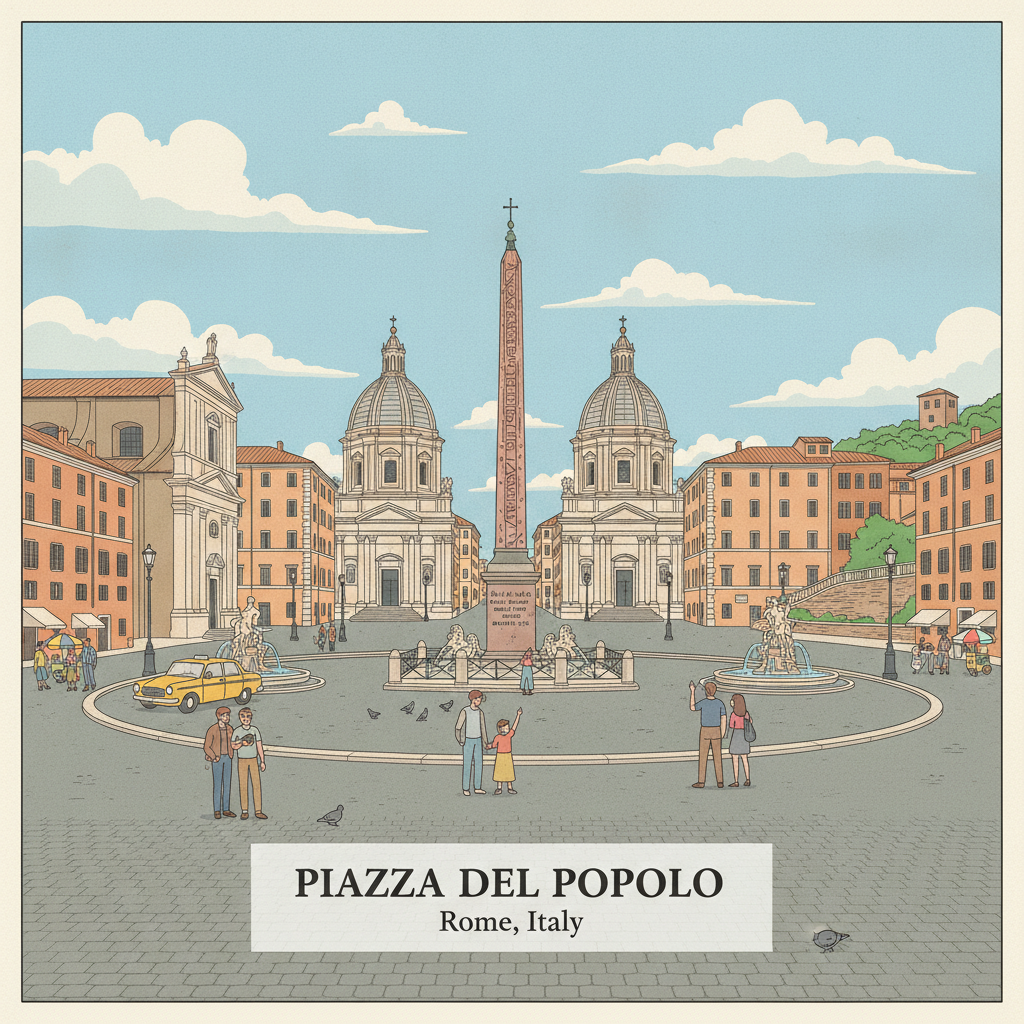
Piazza del Popolo ('People's Square') was the main northern entrance to Rome from the Via Flaminia for most of Rome's history; arriving travelers from the north entered the city through the Porta del Popolo (the gate in the Aurelian Wall, now visible on the north side of the piazza). The square was redesigned in its current neo-Classical oval form by Giuseppe Valadier between 1811 and 1822 (under French rule; Napoleon had commissioned the redesign). At the center stands the tallest obelisk in Rome (36 meters, brought from Heliopolis by Augustus in 10 BC to celebrate his conquest of Egypt and originally placed in the Circus Maximus; moved here by Sixtus V in 1589). On the south side, flanking the Via del Corso, stand two Baroque churches (Santa Maria dei Miracoli and Santa Maria in Montesanto, 17th century) designed to appear identical from the square but are actually slightly different due to the irregular plot shapes. The large church on the north side, Santa Maria del Popolo, contains two Caravaggio paintings (Conversion of St. Paul and Crucifixion of St. Peter, 1600–01) in the Cerasi Chapel—among the most important paintings in Rome and usually viewable for free.
- 6
The Pincian Hill — The Terrace Above Rome
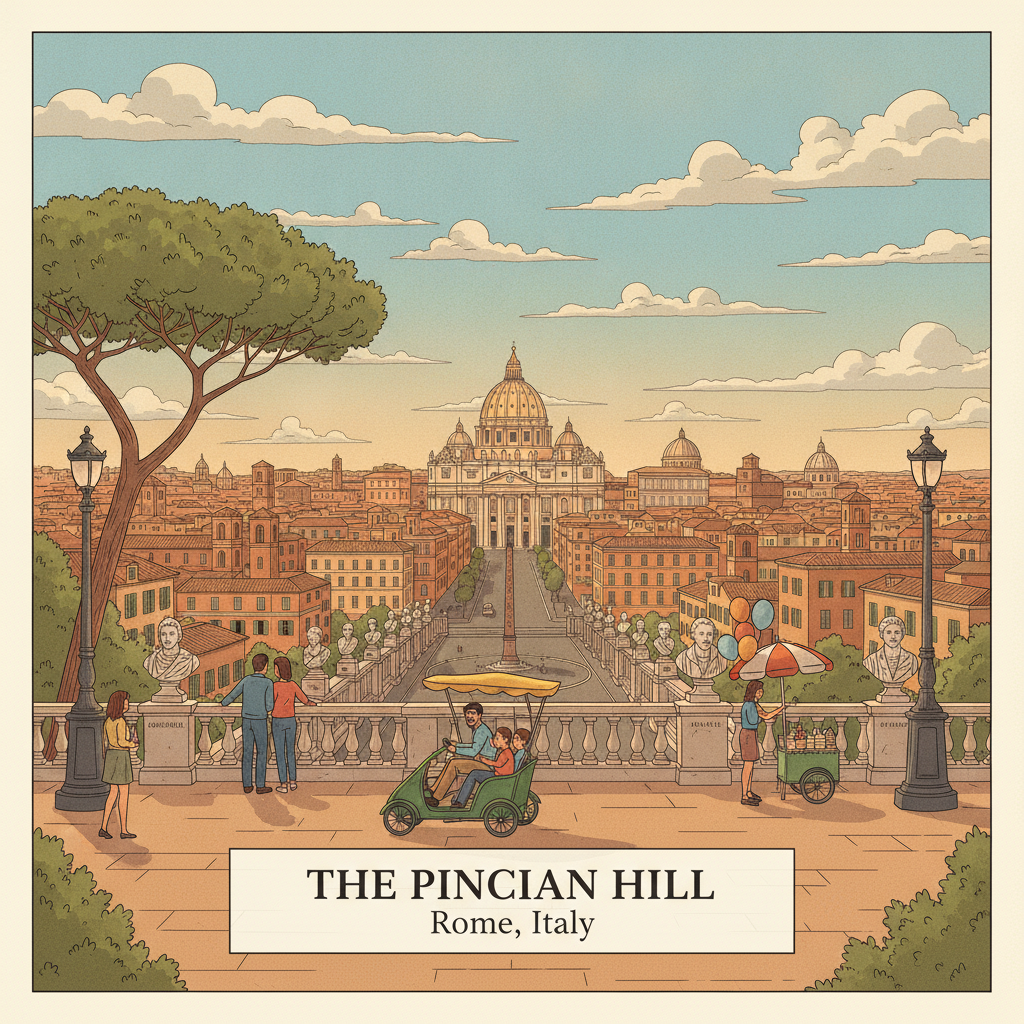
The Pincian Hill (Colle Pincio), the only one of Rome's traditional hills not included in the ancient city's administrative divisions, overlooks Piazza del Popolo from the east and offers the finest view of the square and of Rome's skyline—including the domes of St. Peter's, the Pantheon, Sant'Andrea della Valle, and numerous others. The hilltop gardens (the Villa Borghese gardens extend from the Pincio to the north) were laid out in their current form by Giuseppe Valadier as part of his Piazza del Popolo redesign and are a popular destination for Romans and tourists alike. The Pincio contains a gallery of busts of famous Italians (200+ busts of historical figures) along its main avenue—a 19th-century patriotic project to celebrate Italian cultural history. The terrace itself (the Terrazza del Pincio) is best visited at sunset, when the view of Rome's roofline turning gold is one of the finest in the city.
Walk this route with audio
Stories play automatically as you reach each stop — no tapping needed.
More in rome
Campo de' Fiori, the Jewish Ghetto & Trastevere: Rome's Most Lived-In Neighborhoods
The Vatican, St. Peter's Basilica & Castel Sant'Angelo: The Heart of Christendom from River to Dome
The Capitoline Hill, Trajan's Markets & the Monti Neighborhood: Between Rome's Ancient Power and its Liveliest Quarter
The Appian Way & the Catacombs: Rome's Ancient Road to the Dead
The Aventine Hill, the Knights' Keyhole & Testaccio: Rome's Best-Kept Secrets