Riyadh's Transformation: Riyadh Season's 15 Million Visitors, Women Driving Since 2018 & NEOM's $500 Billion Line
Understand Saudi Arabia's extraordinary pace of change—Riyadh Season's 15 million visitors at 7,500 events (officially the world's largest entertainment festival), women gaining the right to drive, travel, and hold passports in a three-year burst from 2016–2019, the Ritz-Carlton where 200 Saudi princes and businessmen were detained in 2017's anti-corruption purge, and NEOM's 170 km mirrored-wall city 'The Line' — the most controversial urban project in history.
- 1
Riyadh Season & Saudi Entertainment Revolution
Riyadh Season—an annual entertainment festival running October through February—is officially the world's largest cultural and entertainment event by attendance: 15+ million visitors, 7,500+ events, 14 entertainment zones across the city including the JAX entertainment district (in former military warehouses), the Riyadh Boulevard, the Winter Wonderland, and the F1 Saudi Arabian Grand Prix paddock entertainment complex in Jeddah (coordinated with Riyadh Season). The 2023 season generated SAR 35 billion (€8.5 billion) in economic activity.
- 2
Saudi Arabia's Cultural Heritage Sites
Saudi Arabia has 7 UNESCO World Heritage Sites—more than most Arab countries. Al Ula's Hegra (2008), Diriyah's At-Turaif District (2010), the Historic Jeddah (Al-Balad, 2014), the Rock Art of the Hail Region (2015), Ahsa Oasis (2018), Hima Rock Art Area (2020), and the Uruq Bani Ma'arid Protected Area (2023). This diversity—Nabataean, early Islamic, pre-Islamic rock art, and natural heritage—establishes Saudi Arabia as one of the Arabian Peninsula's most archaeologically significant countries, despite being among the last to open to international tourism.
- 3
Riyadh's Museum Scene – Beyond the National Museum
Riyadh's museum landscape has expanded rapidly since 2016. The King Abdulaziz Historical Centre (containing the National Museum, Murabba Palace, and King Abdulaziz Library) is the main cluster. The Riyadh Art public art programme has installed 30+ major public artworks throughout the city. The King Fahad Cultural Centre stages classical music and theatre. Upcoming: the museum district planned for the King Salman Park (one of the world's largest urban parks, under construction in northern Riyadh at 13.4 km²—more than twice the size of New York's Central Park).
- 4
Women in Saudi Arabia – A Decade of Transformation
The transformation of women's rights in Saudi Arabia since 2016 has been one of the fastest social changes in any country in the modern era. Women may now drive (2018), attend sports events (2018), travel independently without male guardian permission (2019), hold passports independently (2019), and register births and marriages in their own names. Female participation in the workforce has risen from 17% in 2017 to 33% in 2023. These changes coexist with continued restrictions (male guardian system not fully abolished for marriage and some legal processes) and the imprisonment of several of the women's rights activists who campaigned for these changes.
- 5
Riyadh's Luxury Hotels & NEOM
Riyadh's hotel scene has expanded dramatically since Vision 2030—the Four Seasons Hotel Riyadh (in the Kingdom Centre Tower), the Ritz-Carlton Riyadh (in a palace complex used for the 2017 corruption crackdown), and the Rosewood Riyadh are the leading luxury properties. NEOM—the $500 billion futuristic city project in northwestern Saudi Arabia, including the 170 km long mirrored-wall city 'The Line'—is the most ambitious (and controversial) urban development project in human history. The Line's first section is planned to open in 2030; its full completion is projected for 2045.
- 6
Saudi-Israeli Normalisation & Geopolitics
Riyadh is the diplomatic and geopolitical centre of the Arab world's largest economy. Saudi Arabia has pursued normalisation of relations with Israel (the 'Abraham Accords' framework), which would transform Middle Eastern geopolitics—a Saudi-Israeli deal would likely bring in the largest remaining Arab economy not at peace with Israel. The October 7 Hamas attack and Gaza war (2023–present) has complicated these negotiations. Saudi Arabia's oil production decisions through OPEC+ directly affect global energy prices; the kingdom's relationship with the United States (the bedrock strategic alliance since 1945) has been under stress during the Biden administration.
Walk this route with audio
Stories play automatically as you reach each stop — no tapping needed.
More in Riyadh
Riyadh Essentials: The Fortress That Founded a Kingdom, Norman Foster's Tower & Vision 2030
Riyadh Culture: The Diriyah Biennale, the Saudi Entertainment Season, the Arts Scene, and the Most Culturally Transformed Single Gulf Capital
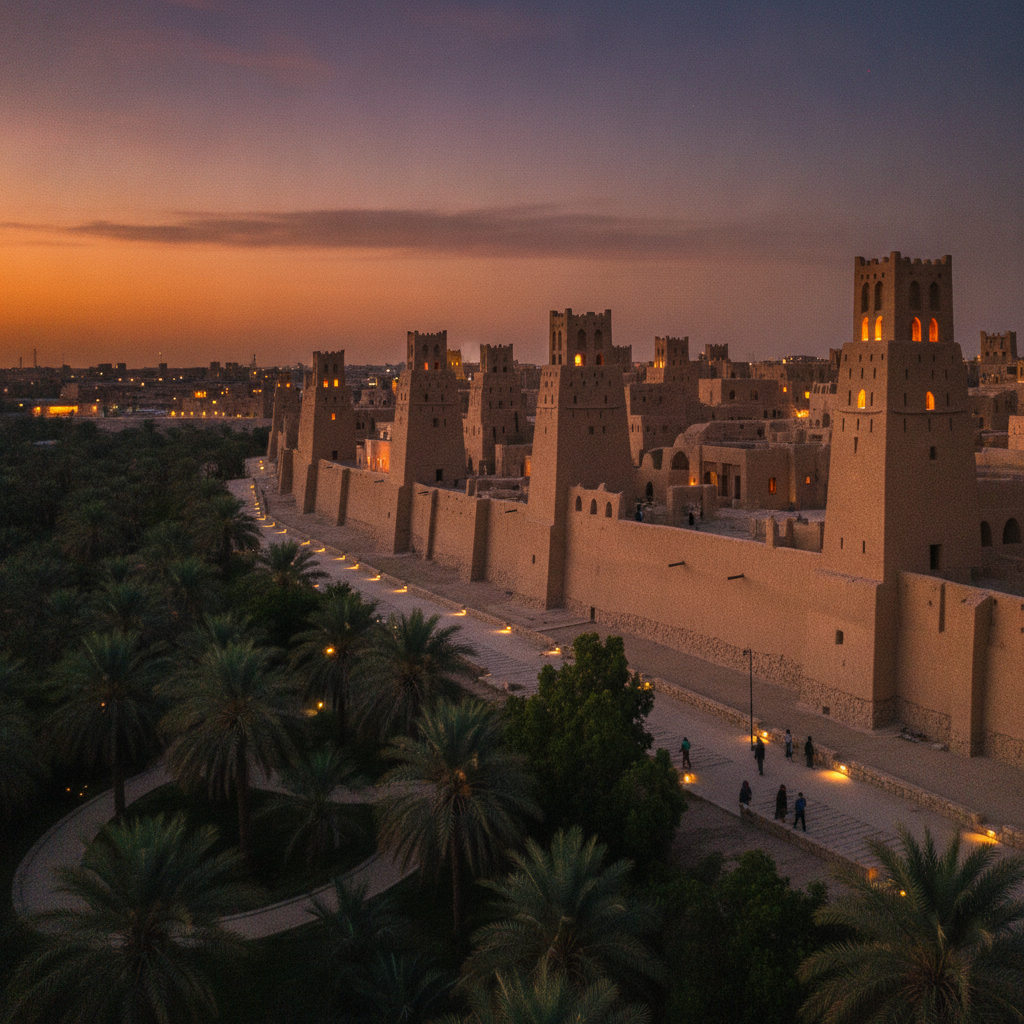
Riyadh's New Identity: Third-Wave Coffee Ceremony, Najdi Architecture Restored & LIV Golf Politics
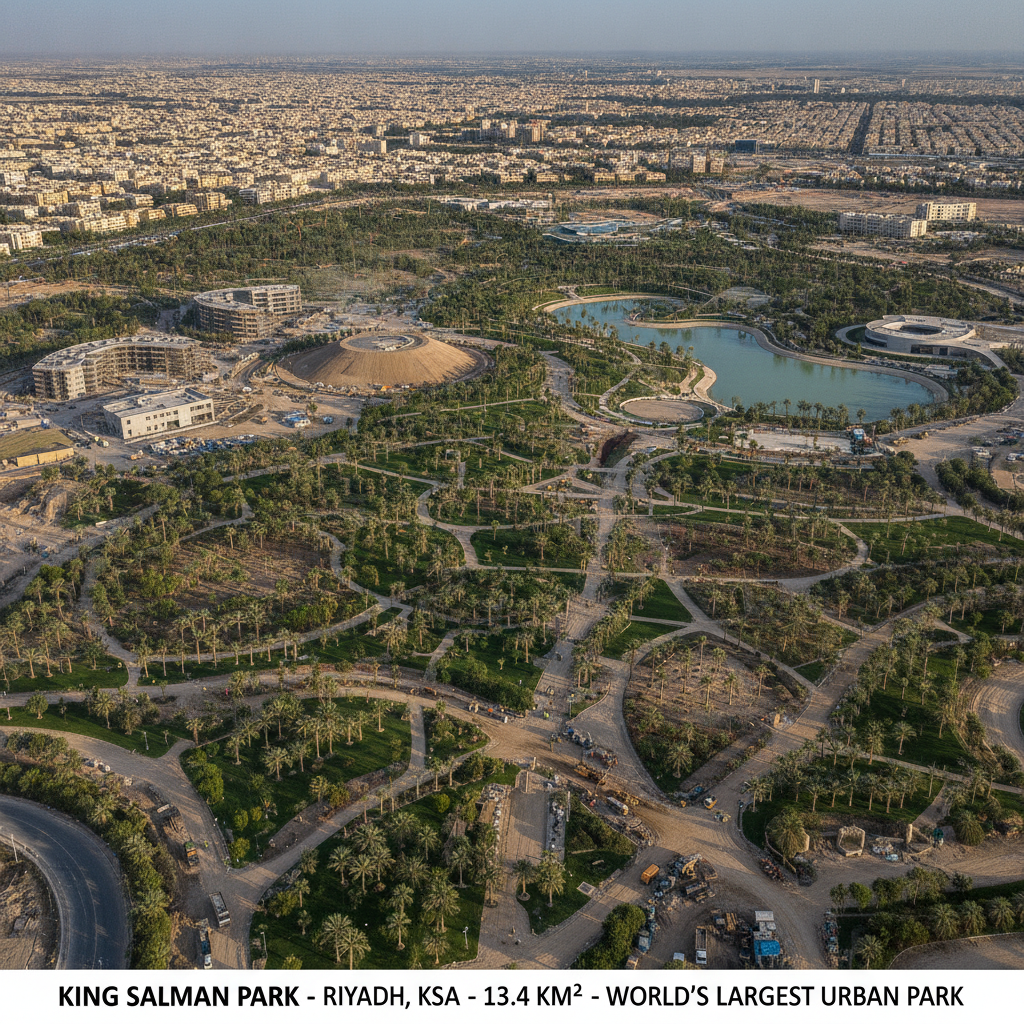
Riyadh Planning Guide: World's Largest Urban Park, $22 Billion Metro & the 4-Day Itinerary
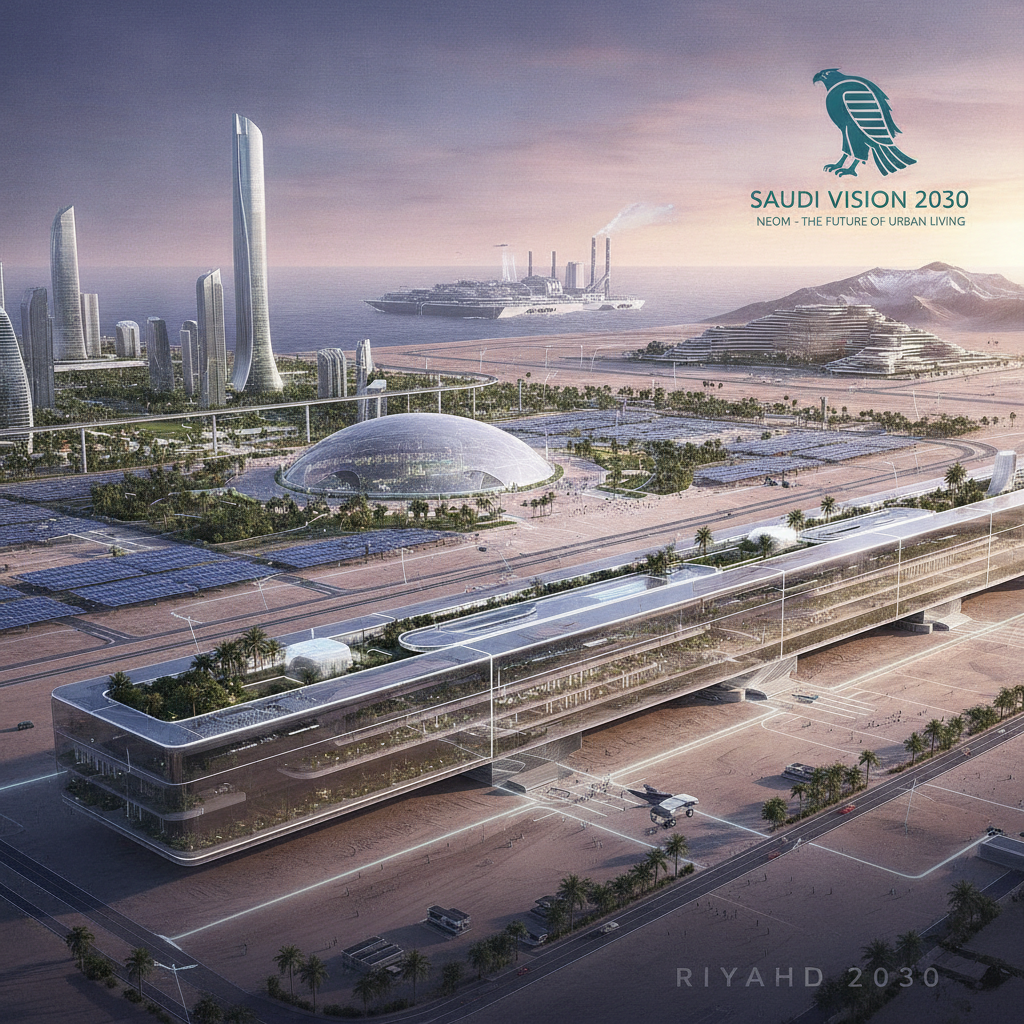
Riyadh Future: NEOM, the Saudi Futurist Projects, the Most Ambitious Single Urban Development Plans, and the Most Consequentially Transforming Single Gulf State