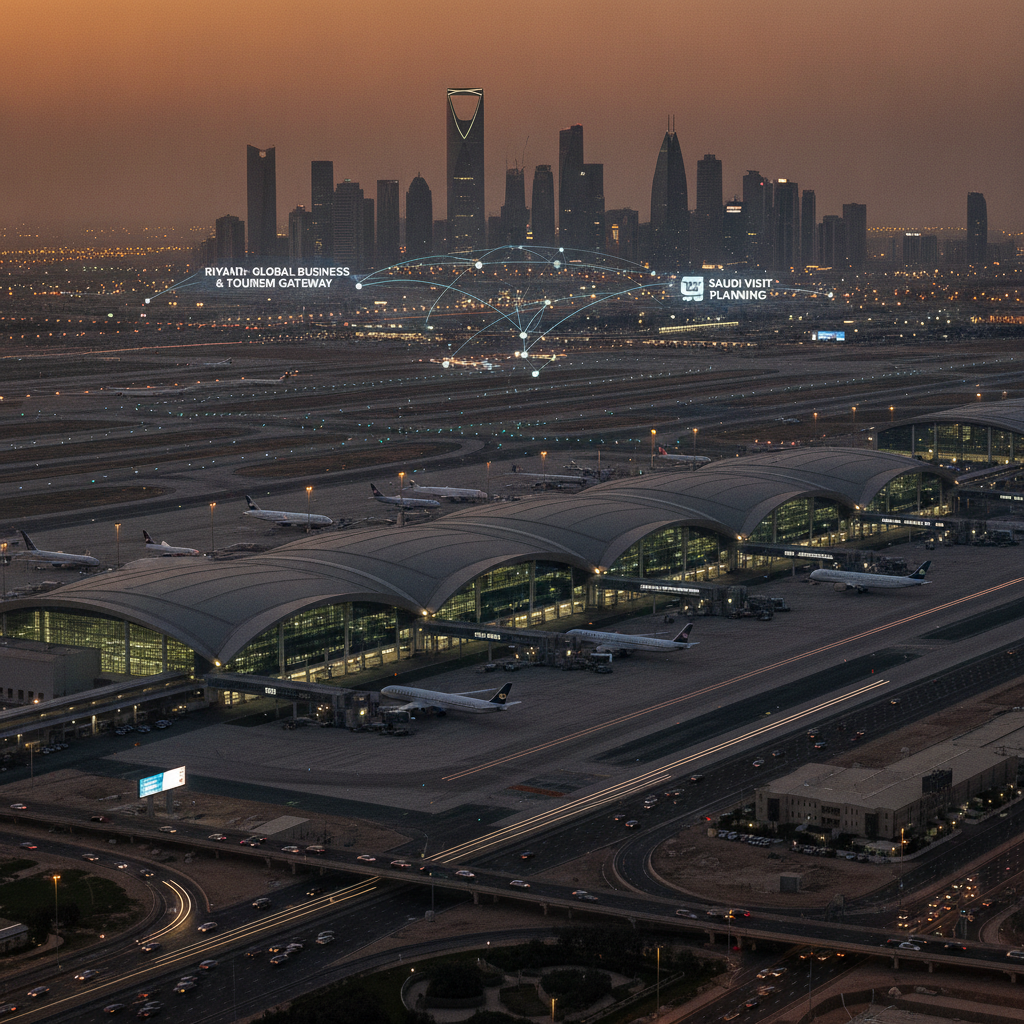
Beyond Riyadh: UNESCO Diriyah, the Edge of the World Escarpment & Nabataean Tombs at Al Ula
Explore Saudi Arabia from Riyadh—UNESCO Diriyah where the Al Saud family's mud-brick palace is being restored after Ottoman destruction in 1818, the Edge of the World cliff where the plateau drops 300 metres to infinite Nafud desert, Al Ula's 111 Nabataean rock tombs (like Petra but undiscovered by tourism until 2019), and the Asir Mountains' green monsoon landscape at 2,200 metres where summer temperatures reach a pleasant 22°C.
- 1
Diriyah – The UNESCO Birthplace of the Saudi State
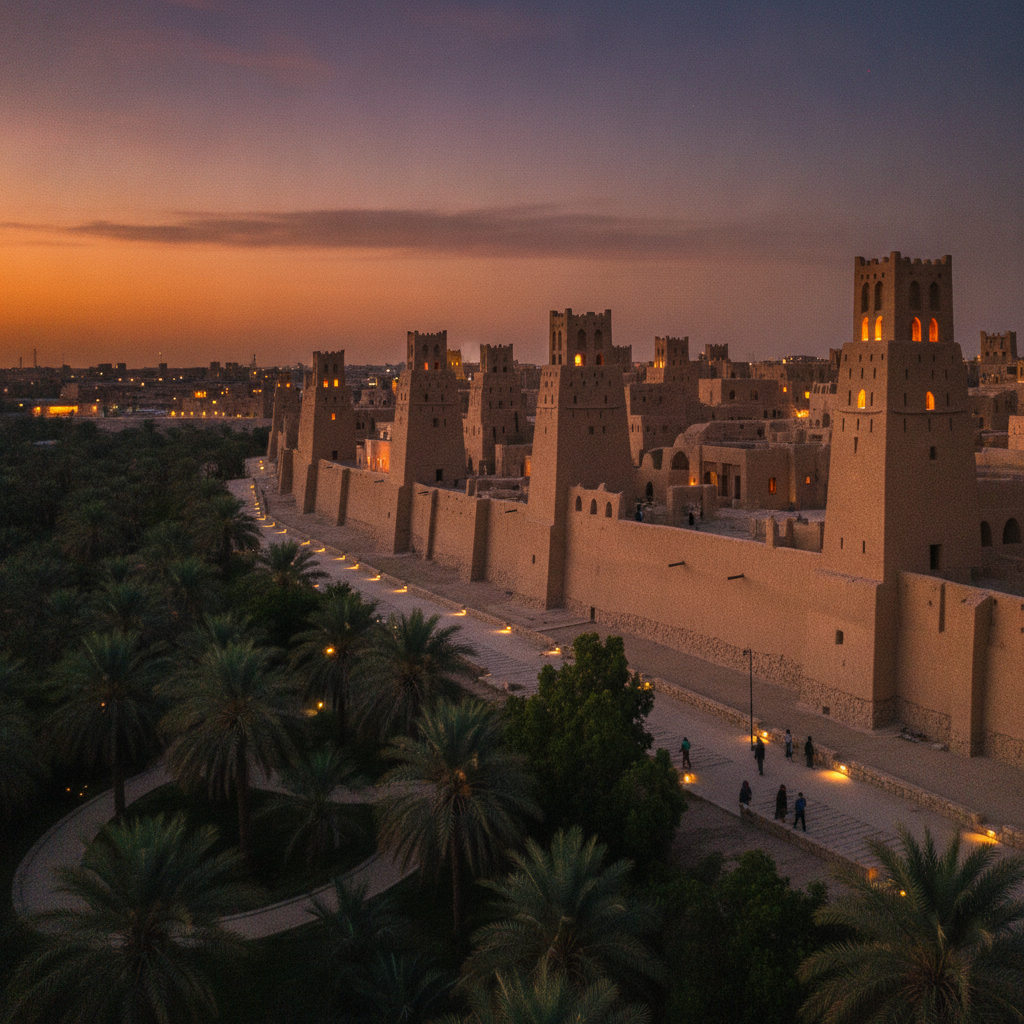
Diriyah—the original home of the Al Saud family and the capital of the First Saudi State (1744–1818), 15 km northwest of central Riyadh—is a UNESCO World Heritage Site (2010) and the most significant historical site in Saudi Arabia. The At-Turaif District (the royal quarter of old Diriyah, built in traditional Najdi mud-brick architecture) was destroyed by Ottoman forces in 1818 and is now being restored as an open-air heritage city. The Diriyah Gate Authority has invested $20+ billion in the site's development as a tourism destination.
- 2
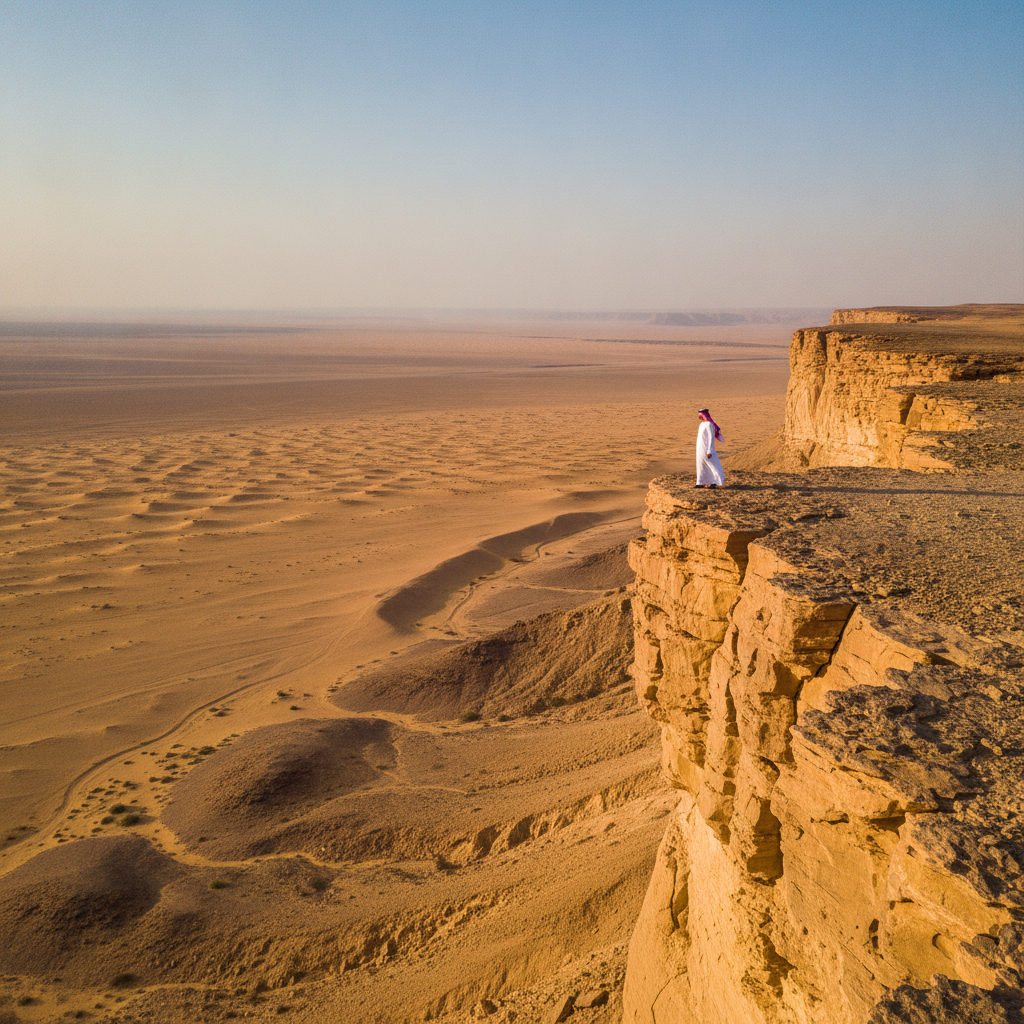
Edge of the World (Jebel Fihrayn)
The 'Edge of the World' (Jebel Fihrayn)—an escarpment 90 km northwest of Riyadh where the Tuwaiq Mountain plateau drops 300 metres to the flat Nafud desert below—is Riyadh's most dramatic natural landscape. The rim offers views of seemingly infinite desert extending to the horizon. The site is reached by a 4WD track (accessible with a standard SUV); the final 2 km walk to the cliff edge takes 20 minutes. Sunrise and sunset at the Edge of the World are among the most spectacular natural experiences in Arabia.
- 3
Al Ula – The Ancient Arabian Wonders
Al Ula, 900 km northwest of Riyadh, is Saudi Arabia's most extraordinary heritage site—the Hegra (Mada'in Salih) archaeological site contains 111 Nabataean tombs carved into sandstone monoliths, comparable to Petra but almost unknown internationally before Saudi Arabia opened to tourism in 2019. Al Ula is now accessible by direct flight from Riyadh (2 hours); the broader Al Ula valley contains Dadan (ancient Lihyanite capital), the village of Al Ula old town, and the extraordinary Elephant Rock (Jabal AlFil) sandstone formation.
- 4
Abha & the Asir Mountains
Abha, 800 km southwest of Riyadh in the Asir Mountains, is Saudi Arabia's most climatically distinct city—at 2,200 metres altitude, the city has a temperate climate (18–28°C in summer) and receives monsoon rains creating green mountain landscapes entirely unlike the rest of the kingdom. The Asir National Park (4,500 km²) contains the region's terraced agriculture, traditional Asiri mudhif houses painted in geometric patterns, and the cable car to Jebel Soudah (3,015 m—Saudi Arabia's highest peak). Abha is a popular Saudi domestic tourism destination, far less known internationally.
- 5
Saudi Cuisine – Kabsa, Saleeg & Mutabbaq
Saudi cuisine centres on rice and lamb prepared with spices from the Indian Ocean trade routes—kabsa (saffron-spiced rice with roasted lamb, the national dish, originating in the Hejaz region) and saleeg (white rice cooked in broth with caramelised onions, from the Hejaz). Mutabbaq (stuffed pancake filled with egg, meat, and vegetables) is a popular street snack. Qahwa (Arabic coffee, bitter and cardamom-spiced) and dates are the ubiquitous hospitality offering. Saudi food is primarily a home cooking tradition; Riyadh's restaurant scene features Lebanese, Turkish, and Indian food more prominently than Saudi.
- 6
Practical Guide – Visa, Dress Code & Getting Around
Saudi Arabia introduced the tourist e-visa in 2019 (€120 for most nationalities, valid 1 year multiple entry). Women no longer need a male guardian (mahram) to travel in Saudi Arabia and can drive independently. Dress code for women is modest dress (not mandatory abaya since 2019, but shoulders and knees covered recommended); for men, shorts are acceptable in most areas. Alcohol is completely prohibited nationwide—there is no exception for hotels or licensed venues (unlike UAE). Riyadh's metro (6 lines, opened 2024) is the new backbone of city transport. Summer heat (June–September, 40–50°C) makes outdoor activity impossible.
Walk this route with audio
Stories play automatically as you reach each stop — no tapping needed.
More in Riyadh
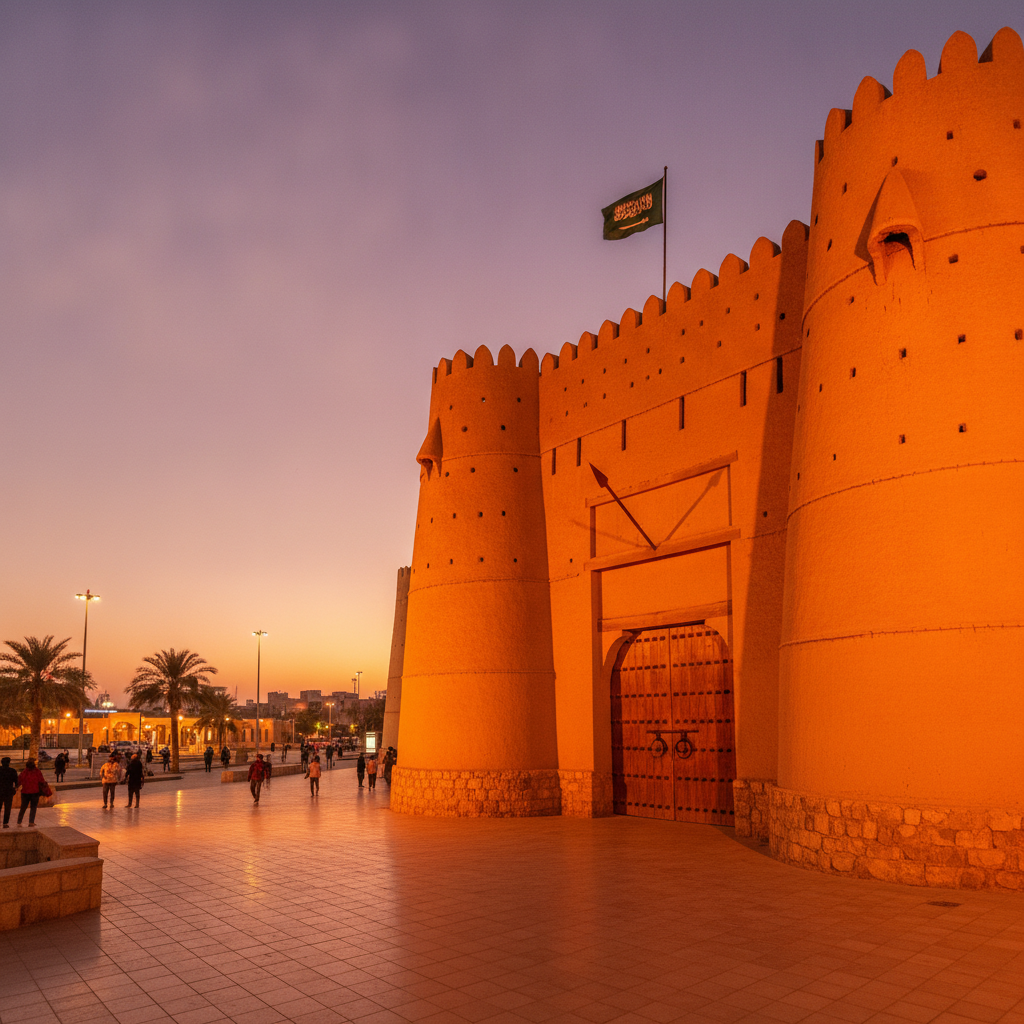
Riyadh Essentials: The Fortress That Founded a Kingdom, Norman Foster's Tower & Vision 2030
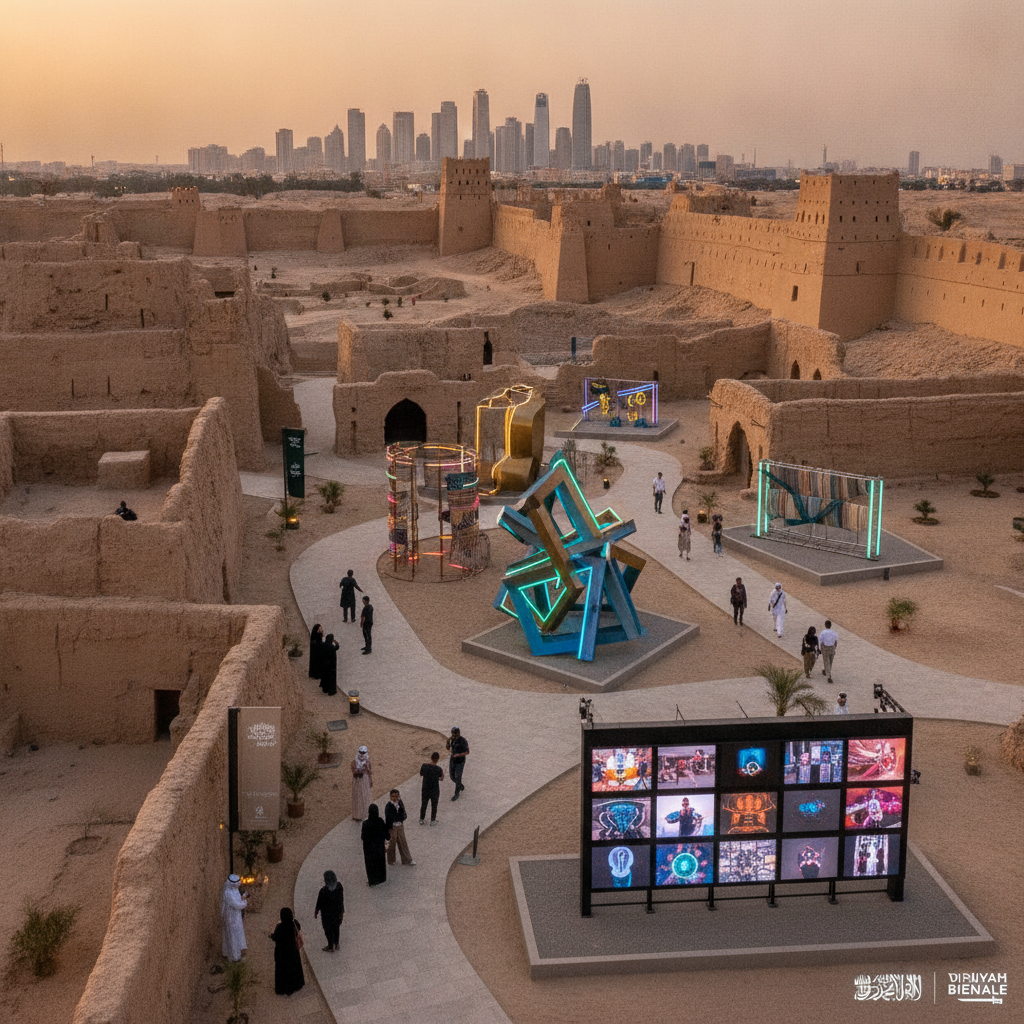
Riyadh Culture: The Diriyah Biennale, the Saudi Entertainment Season, the Arts Scene, and the Most Culturally Transformed Single Gulf Capital
Riyadh's New Identity: Third-Wave Coffee Ceremony, Najdi Architecture Restored & LIV Golf Politics
Riyadh Planning Guide: World's Largest Urban Park, $22 Billion Metro & the 4-Day Itinerary
Riyadh Future: NEOM, the Saudi Futurist Projects, the Most Ambitious Single Urban Development Plans, and the Most Consequentially Transforming Single Gulf State