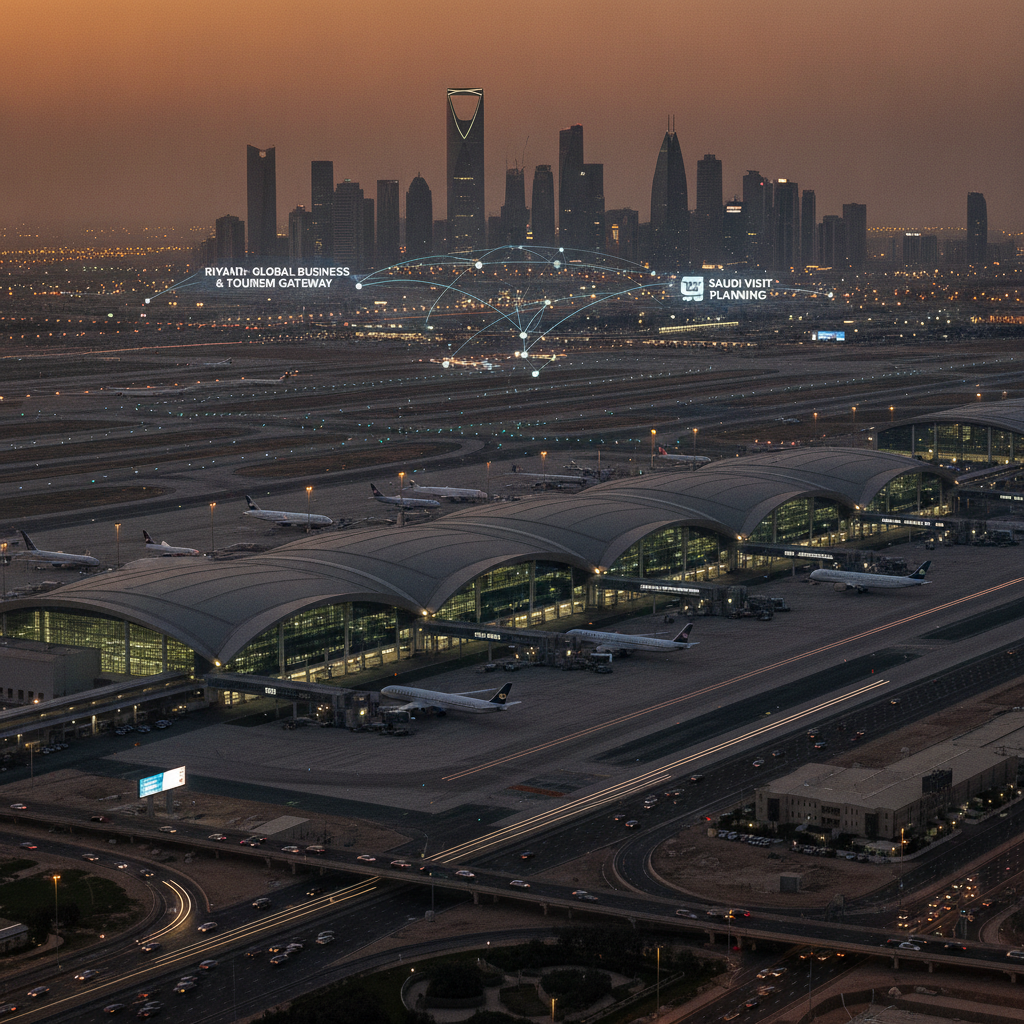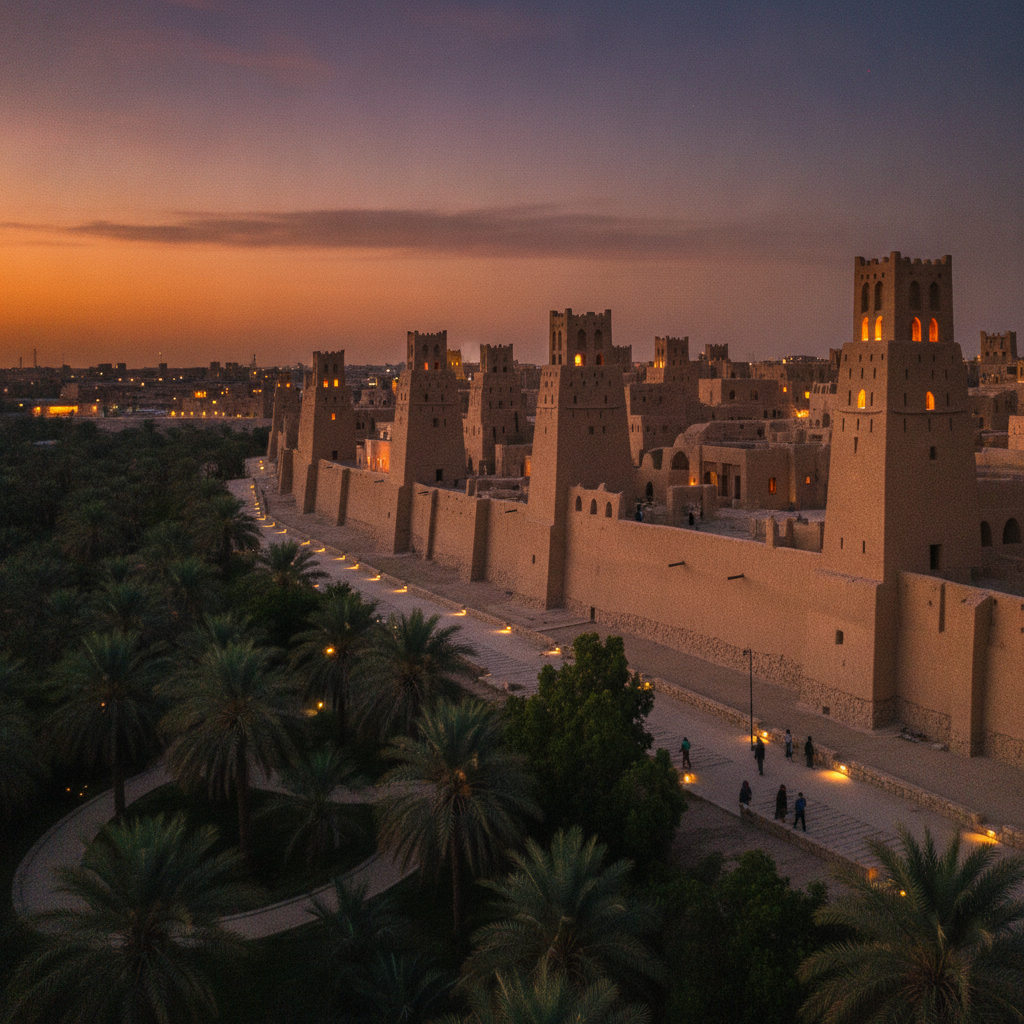
Riyadh's New Identity: Third-Wave Coffee Ceremony, Najdi Architecture Restored & LIV Golf Politics
Explore Riyadh's cultural layers—the qahwa Arabic coffee ceremony where refusing the bitter cardamom brew is a social breach, Diriyah's mud-brick Najdi towers nearly lost to oil-era demolition and now a $20 billion UNESCO restoration, Najd Village restaurant serving traditional Najdi food in a reconstructed village, the world's fastest Formula 1 street circuit in Jeddah, and Crown Prince MBS simultaneously allowing women to drive and ordering the murder of a Washington Post journalist.
- 1
Riyadh's Art & Design Scene – Nora & Basmala
Riyadh's contemporary art scene has emerged rapidly since 2016. The Nora bint Abdulrahman University (the world's largest women's university, 52,000 students) operates a significant arts programme; the Basmala art space near Al Dira is a leading contemporary gallery. The Saudi Art Council runs the Riyadh Art programme—public art installations throughout the city by Saudi and international artists. The JAX District (former industrial warehouses converted to creative spaces) is now the city's creative hub, housing galleries, studios, and the Saudi Film Festival.
- 2
Saudi Coffee Culture & Qahwa Ceremony
The Arabic coffee ceremony (majlis)—serving qahwa (bitter, cardamom-spiced, pale yellow coffee) with dates in a formal sitting—is the cornerstone of Saudi hospitality. A guest refusing qahwa in a Saudi home is a significant social breach. The traditional dallah (long-spouted coffee pot) is the most iconic Saudi design object and appears on the Saudi riyal banknote. The contemporary coffee scene in Riyadh has evolved into one of the most sophisticated in the Middle East—third-wave specialty coffee shops (Monk, Khobar Street Coffee) attract a young, educated Saudi clientele.
- 3
Traditional Najdi Architecture
Najd—the central Arabian plateau on which Riyadh sits—has a distinctive vernacular architecture: multi-storey mud-brick towers with crenellated parapets, interior courtyard plans, and carved plaster decoration. This architecture was almost entirely demolished during Riyadh's oil-era development (1970s–1990s); Diriyah's restoration is the primary surviving example. The Murabba Palace (1936, Ibn Saud's Riyadh home) and the Qasr al-Hokm (the historic palace of the governor of Riyadh) are the only significant original buildings within the modern city.
- 4
Riyadh's Restaurant Scene – From Mutabbaq to Modern Saudi
Riyadh's restaurant scene has transformed since Vision 2030 unlocked mixed-gender dining (previously restricted), concert venues, and entertainment districts. The Al Nakheel and Al Worood districts concentrate established upmarket dining. Lebanese cuisine (Leila, Balad Al Sham) remains dominant in the Gulf-Arabic restaurant category; Turkish restaurants are popular. Saudi cuisine appears at Bait Mutabbaq (traditional Jeddawi pastries) and the Najd Village restaurant (traditional Najdi food in a reconstructed village setting)—the best single introduction to Saudi food culture in Riyadh.
- 5
Riyadh Formula E & Sports Events
Riyadh hosts the Saudi Arabian Formula 1 Grand Prix in Jeddah (since 2021, street circuit—the fastest Formula 1 street circuit in the world at 252 km/h average speed) and the Riyadh Formula E circuit (electric street racing, January). The Saudi Vision 2030 sports strategy includes: ownership of the PGA Tour partnership, LIV Golf (Saudi-backed league), boxing world title fights (Anthony Joshua vs Andy Ruiz Jr in Riyadh, 2019), and the 2034 FIFA World Cup (awarded to Saudi Arabia). Saudi sports investment has become one of the most contentious topics in global sport.
- 6
MBS & Saudi Arabia's Political Transformation
Crown Prince Mohammed bin Salman (MBS)—effective ruler of Saudi Arabia since 2017—represents the most consequential shift in Saudi governance since Ibn Saud unified the kingdom. MBS has simultaneously liberalised social policy (entertainment, women's rights, tourism) and concentrated political power. The 2017 Ritz-Carlton anti-corruption purge (200+ princes and businessmen detained), the 2018 murder of journalist Jamal Khashoggi (ordered by MBS according to US intelligence), and the Yemen War (Saudi-led intervention since 2015) define the complexity of his rule. Saudi Arabia's post-oil future depends on whether Vision 2030 succeeds in transforming the economy.
Walk this route with audio
Stories play automatically as you reach each stop — no tapping needed.
More in Riyadh
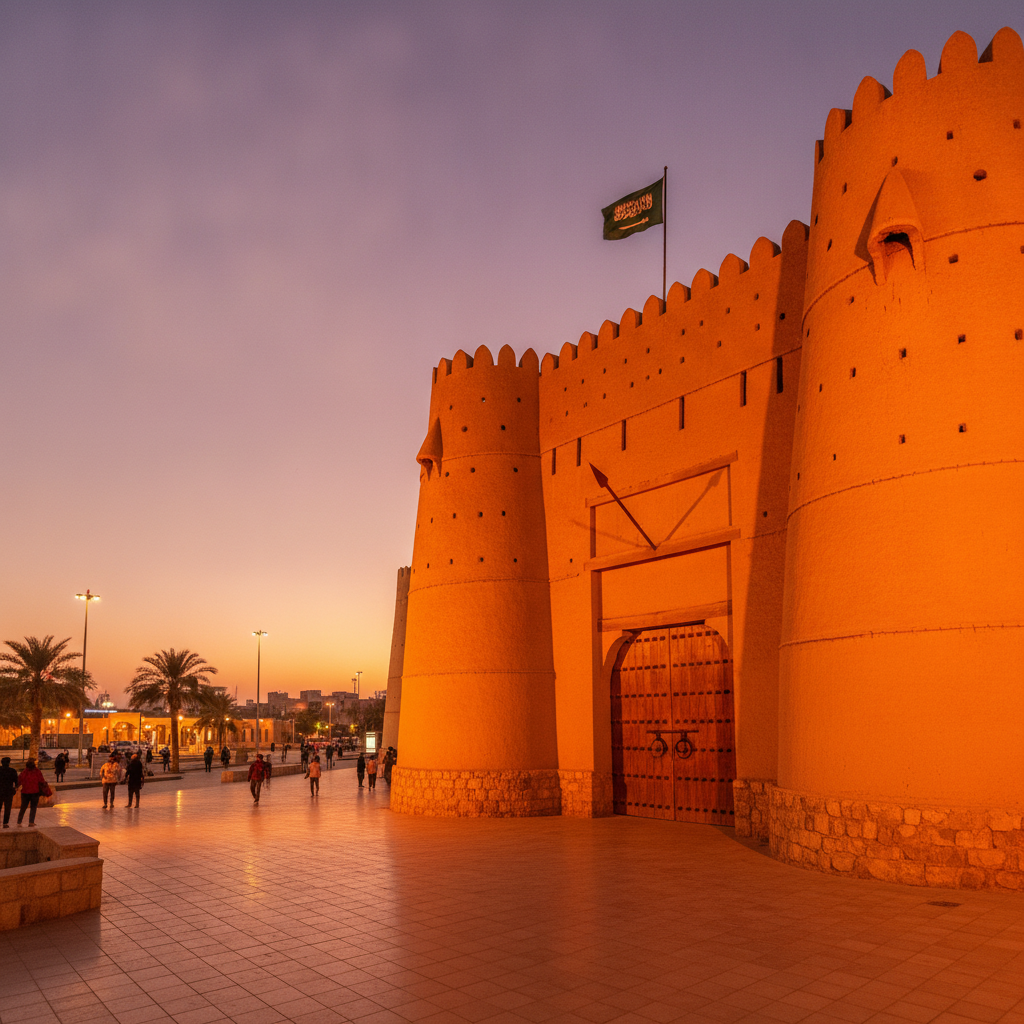
Riyadh Essentials: The Fortress That Founded a Kingdom, Norman Foster's Tower & Vision 2030
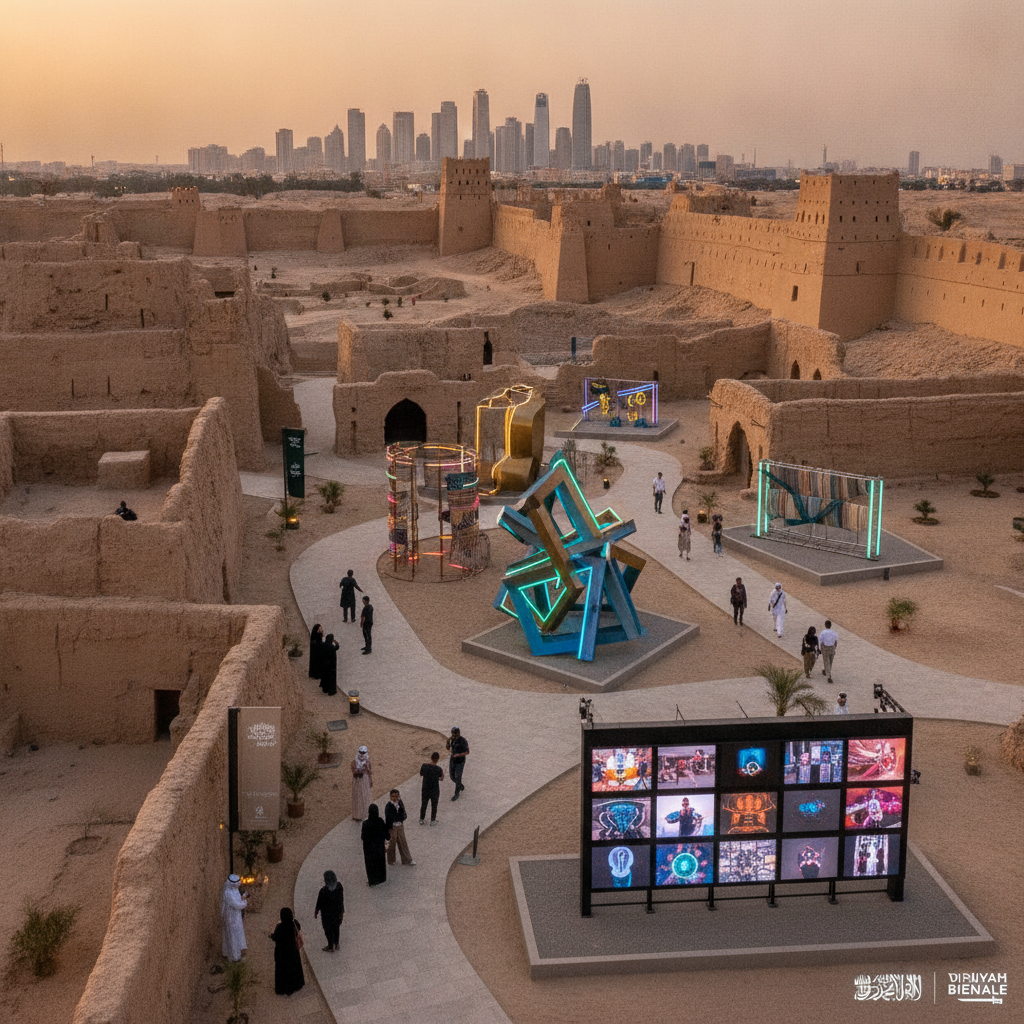
Riyadh Culture: The Diriyah Biennale, the Saudi Entertainment Season, the Arts Scene, and the Most Culturally Transformed Single Gulf Capital
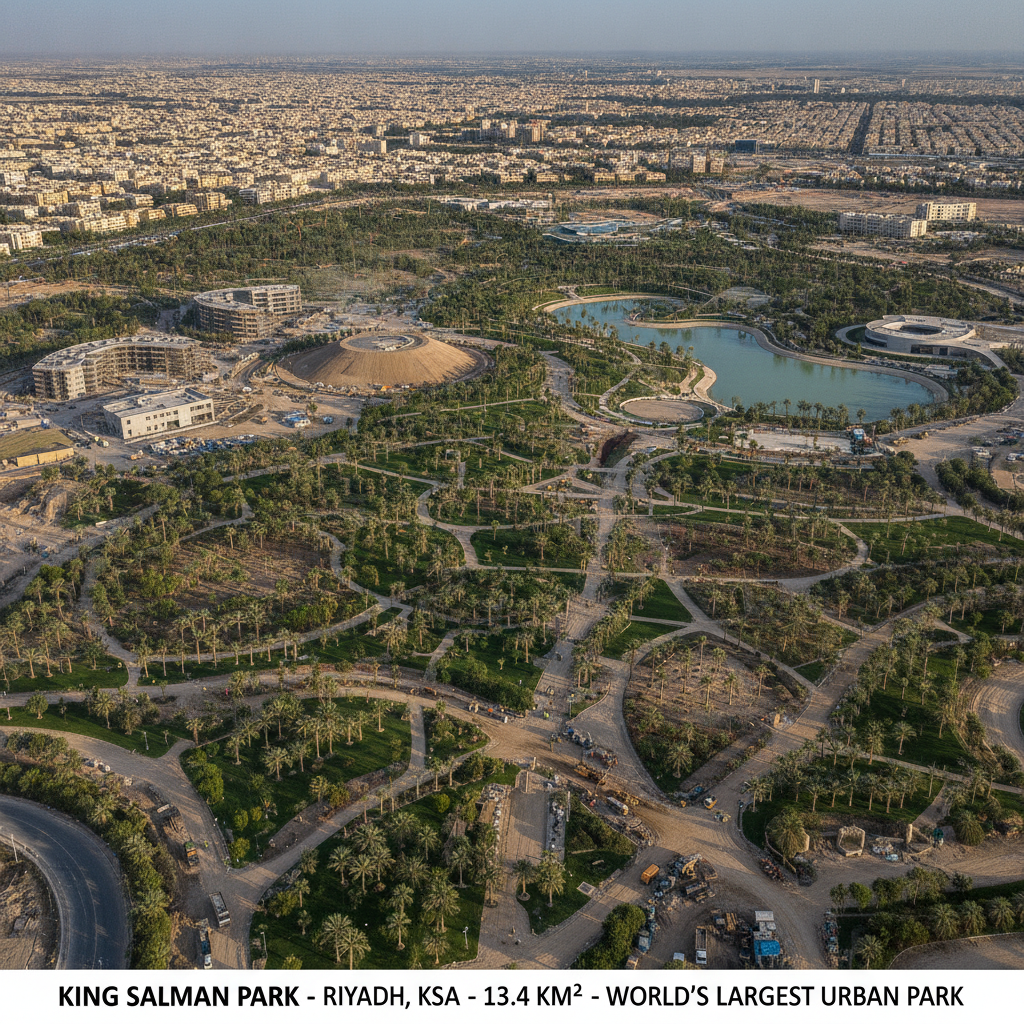
Riyadh Planning Guide: World's Largest Urban Park, $22 Billion Metro & the 4-Day Itinerary
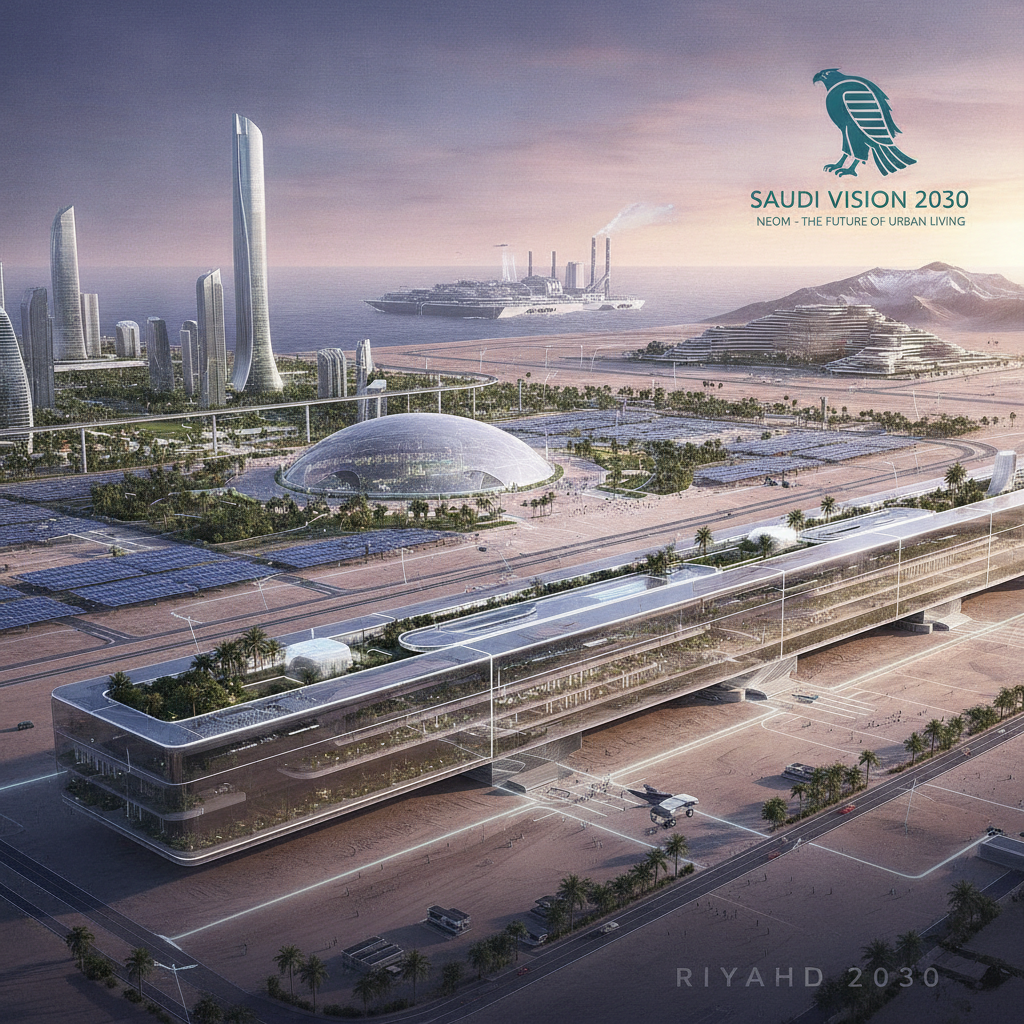
Riyadh Future: NEOM, the Saudi Futurist Projects, the Most Ambitious Single Urban Development Plans, and the Most Consequentially Transforming Single Gulf State
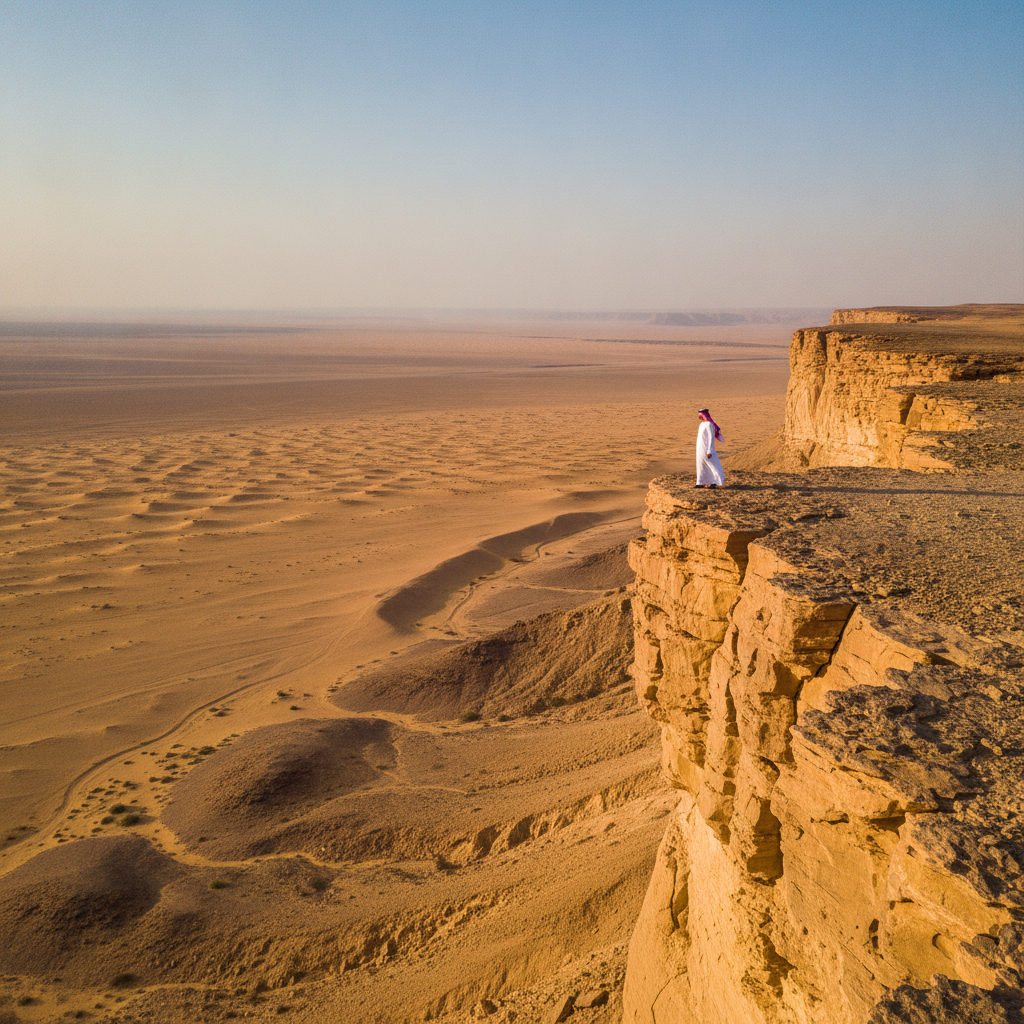
Beyond Riyadh: UNESCO Diriyah, the Edge of the World Escarpment & Nabataean Tombs at Al Ula