Christ the Redeemer, Corcovado Mountain & the Tijuca Forest
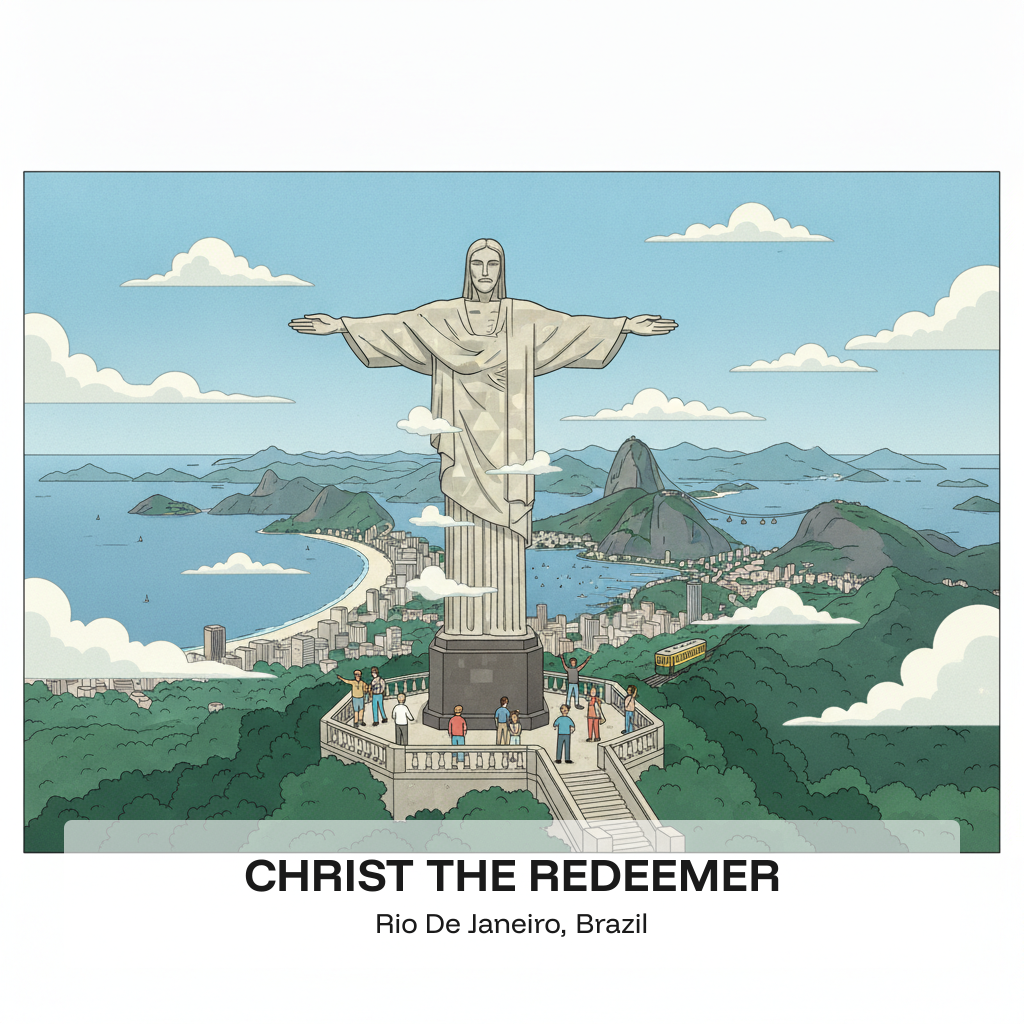
Christ the Redeemer (Cristo Redentor — the Art Deco statue of Jesus Christ on the 710-metre summit of Corcovado mountain, overlooking the city of Rio de Janeiro, completed October 12, 1931, designed by sculptor Paul Landowski and engineer Heitor da Silva Costa, 38 metres tall including the 8-metre pedestal, 28 metres wide at the outstretched arms, weighing 635 tonnes, clad in 6 million soapstone tiles — one of the Seven Wonders of the Modern World and the most recognizable monument in South America) stands at the heart of Tijuca National Park — the largest urban rainforest in the world.
1. Christ the Redeemer — One of the Seven Wonders of the Modern World
- 1
Christ the Redeemer — One of the Seven Wonders of the Modern World
Christ the Redeemer (Cristo Redentor — at the summit of Corcovado, 710 metres, accessible by the Corcovado cog railway (Trem do Corcovado, built 1884, 3.8 km from Cosme Velho station) or by road and minibus from the Paineiras parking area): the statue was conceived in 1921 by the Rio Catholic Circle, designed by Brazilian engineer Heitor da Silva Costa with the sculpture by French-Polish sculptor Paul Landowski (who also made the heads, while the body was produced in Brazil), and built 1926-1931 from reinforced concrete with an outer cladding of approximately 6 million triangular soapstone tiles sourced from quarries in the state of Minas Gerais; the statue was elected one of the New Seven Wonders of the World in a global poll in 2007; the views from the viewing terraces at the feet of the statue (one of the finest panoramic viewpoints in the world) encompass Guanabara Bay, the Sugarloaf Mountain, the entire South Zone beach neighborhoods of Ipanema, Leblon, and Copacabana, the Rodrigo de Freitas lagoon, and the city centre with its skyscrapers and the old port; the statue is frequently surrounded by cloud and mist, which dramatically enhances the sense of the figure emerging from the sky.
- 2
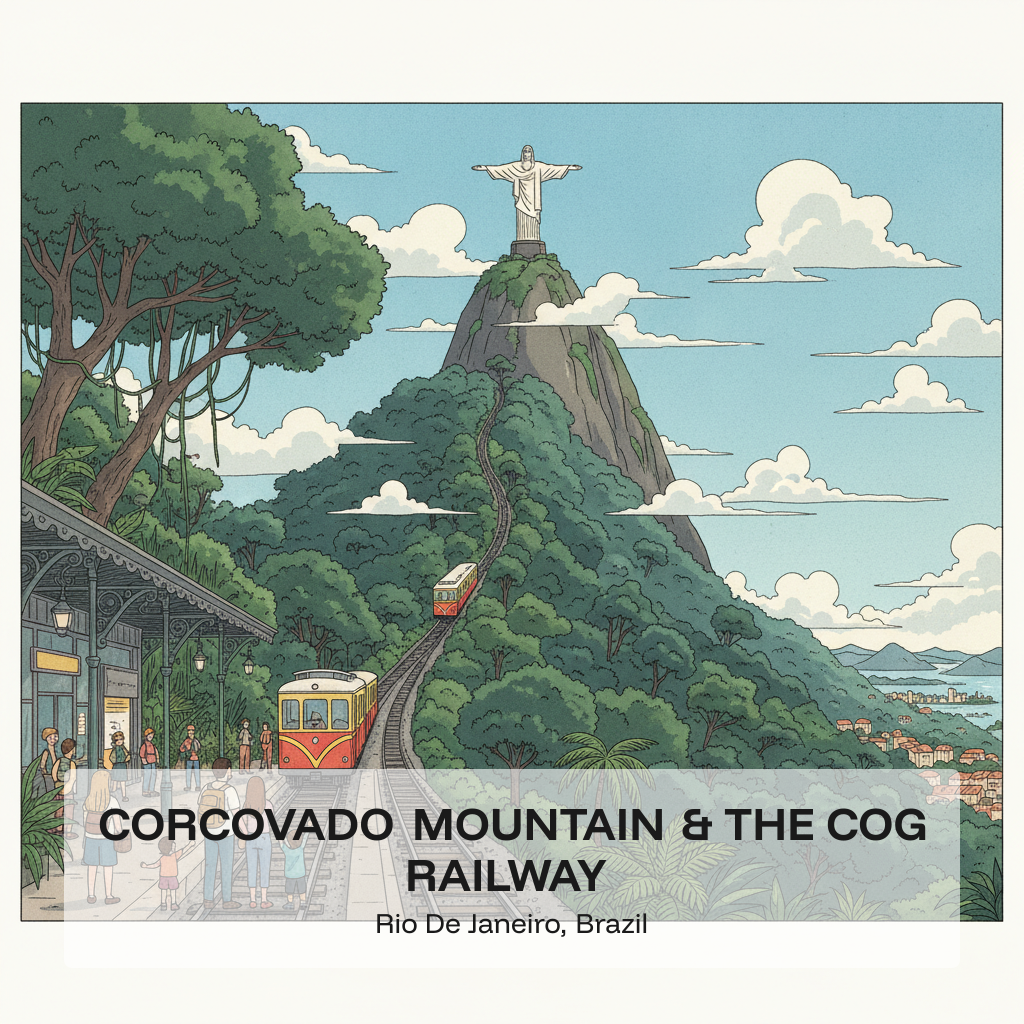
Corcovado Mountain & the Cog Railway
Corcovado (the 710-metre granite peak forming part of the Tijuca National Park, in the Serra da Carioca ridge that forms the backdrop to the southern neighborhoods of Rio de Janeiro — the name 'Corcovado' means 'hunchback' in Portuguese, referring to the distinctive profile of the peak): the Corcovado Rack Railway (Trem do Corcovado — built 1884, operated by Bonde de Ouro company, the train departs from the Cosme Velho station at the base of the mountain and climbs 3.8 km to the summit station at 710 metres, taking approximately 20 minutes) was one of the earliest mountain railways in South America and provides both the most convenient access to the Christ statue and a remarkable engineering journey through the dense Atlantic Forest of the Tijuca National Park; the railway has been continuously operated since 1884 and has carried over 60 million visitors to the summit.
- 3
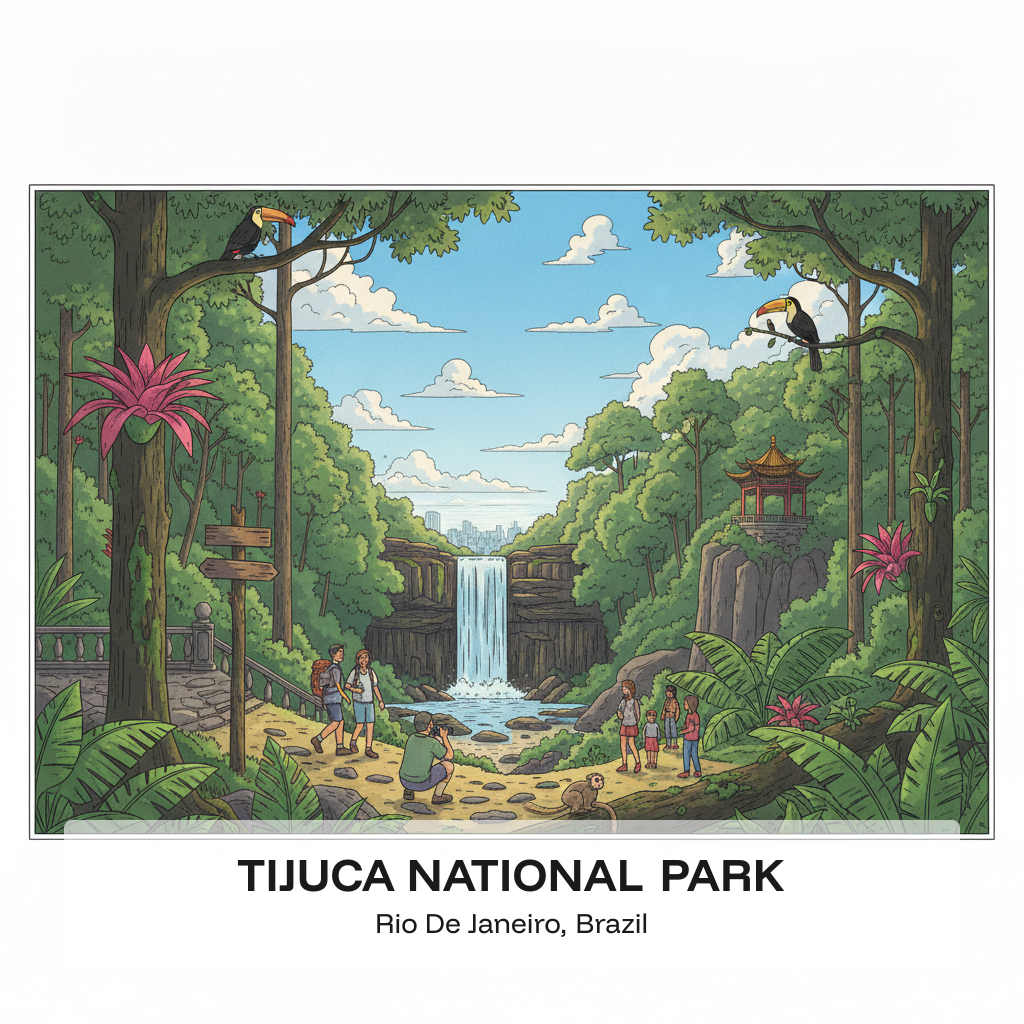
Tijuca National Park — Largest Urban Forest in the World
Tijuca National Park (Parque Nacional da Tijuca — 39 square kilometres of Atlantic Forest within the city limits of Rio de Janeiro, the largest urban tropical rainforest in the world): the Tijuca forest was almost entirely cleared in the 18th-19th century for coffee and sugar plantations; the reforestation of the area was ordered by Emperor Pedro II (r. 1841-1889) from 1861 onwards, making the Tijuca forest the world's largest successfully replanted urban forest — an environmental achievement without parallel; the park now contains more than 100 species of mammals, over 200 species of birds, and at least 2,000 plant species (including hundreds of species of tree ferns and bromeliads); significant landmarks within the park (beyond Christ the Redeemer) include the Vista Chinesa (Chinese Lookout — a Chinese-style pavilion at 415 metres offering views over the Guanabara Bay), the Mesa do Imperador (Emperor's Table — the belvedere where Emperor Pedro II picnicked), and the Cascatinha Taunay (the 35-metre waterfall near the park headquarters).
- 4
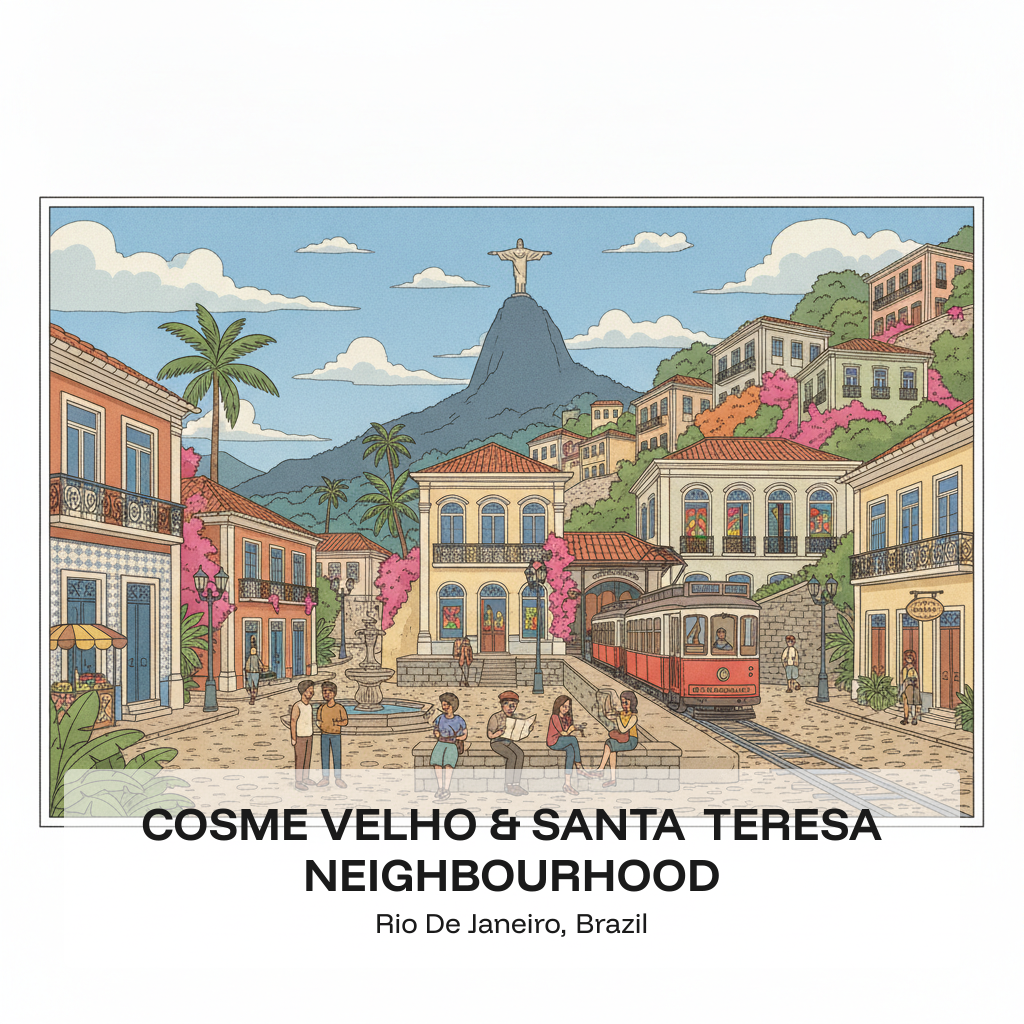
Cosme Velho & Santa Teresa Neighbourhood
Cosme Velho (the quiet, leafy neighbourhood at the base of Corcovado, where the rack railway station is located — one of the most attractive residential districts in Rio, with 19th-century houses, the Museu Internacional de Arte Naïf do Brasil (MIAN — the world's largest collection of naive art, with approximately 8,000 works from 130 countries) and the Largo do Boticário (a cobblestone square of 19th-century colonial houses preserved in neocolonial style, one of the most perfectly preserved corners of old Rio)) and Santa Teresa (the hilltop bohemian neighbourhood overlooking the city centre, accessible by the historic bonde tram): Santa Teresa was settled in the 18th century, developed as an elegant hillside suburb in the 19th century, and became Rio's bohemian artistic and intellectual quarter in the 20th century, with its cobblestone streets, colonial mansions converted to artists' studios, ateliers, and boutique hotels, and its concentration of art galleries, craft workshops, and distinctive restaurants.
- 5
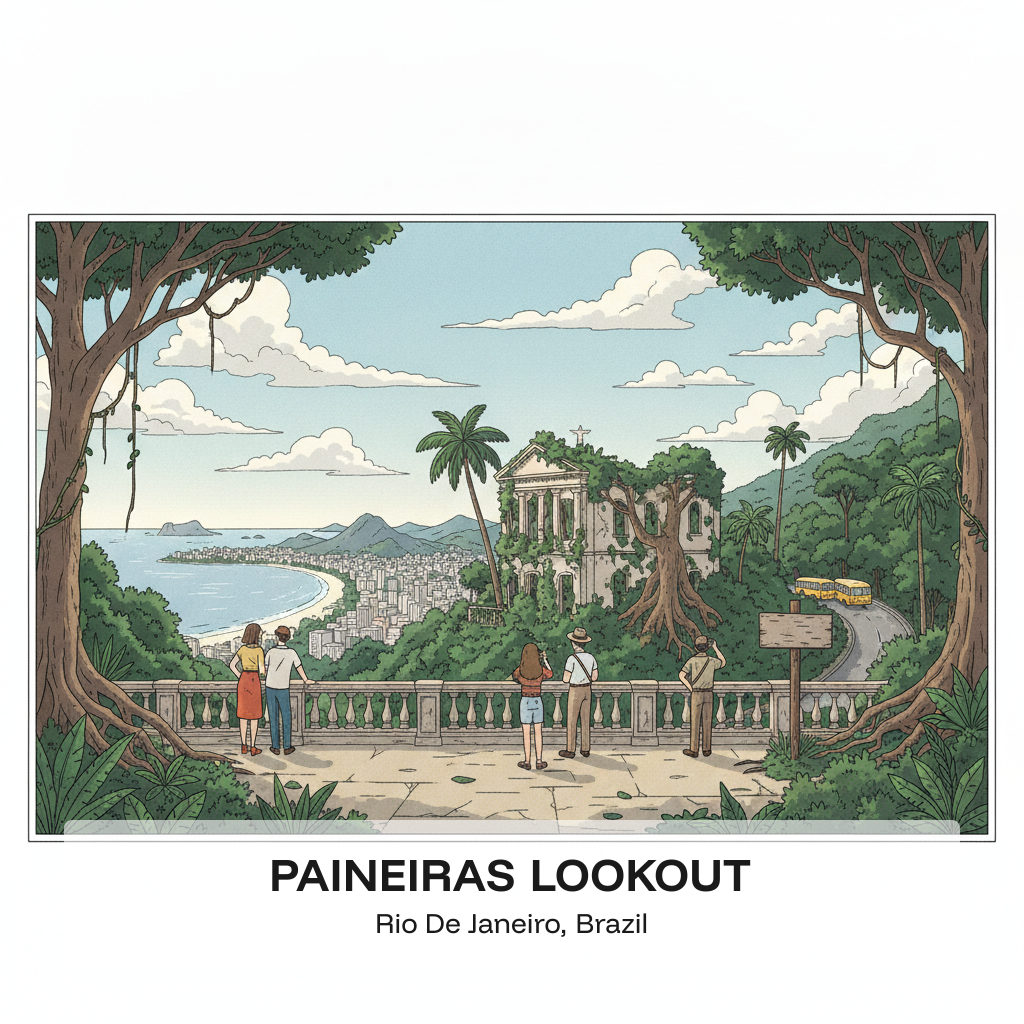
Paineiras Lookout — The View South Over the City
Paineiras (the area on the slopes of Corcovado at approximately 300 metres, accessible by road from the Cosme Velho area and used as the departure point for the minibuses to the Christ statue when the cog railway is at capacity): the Paineiras Hotel (now abandoned, built 1890 as a grand mountain hotel for Rio's elite and operating through the mid-20th century) is one of the most atmospherically ruinous buildings in Rio, with its overgrown terraces and crumbling neoclassical facade visible from the road; the Paineiras Lookout (Mirante das Paineiras) provides an intermediate panoramic view over the city from the mountain slopes, a first indication of the extraordinary scale of the Corcovado panorama that awaits at the summit; the forest at the Paineiras level is some of the densest in the Tijuca National Park, with enormous tropical trees forming a dense canopy over the winding road.
- 6
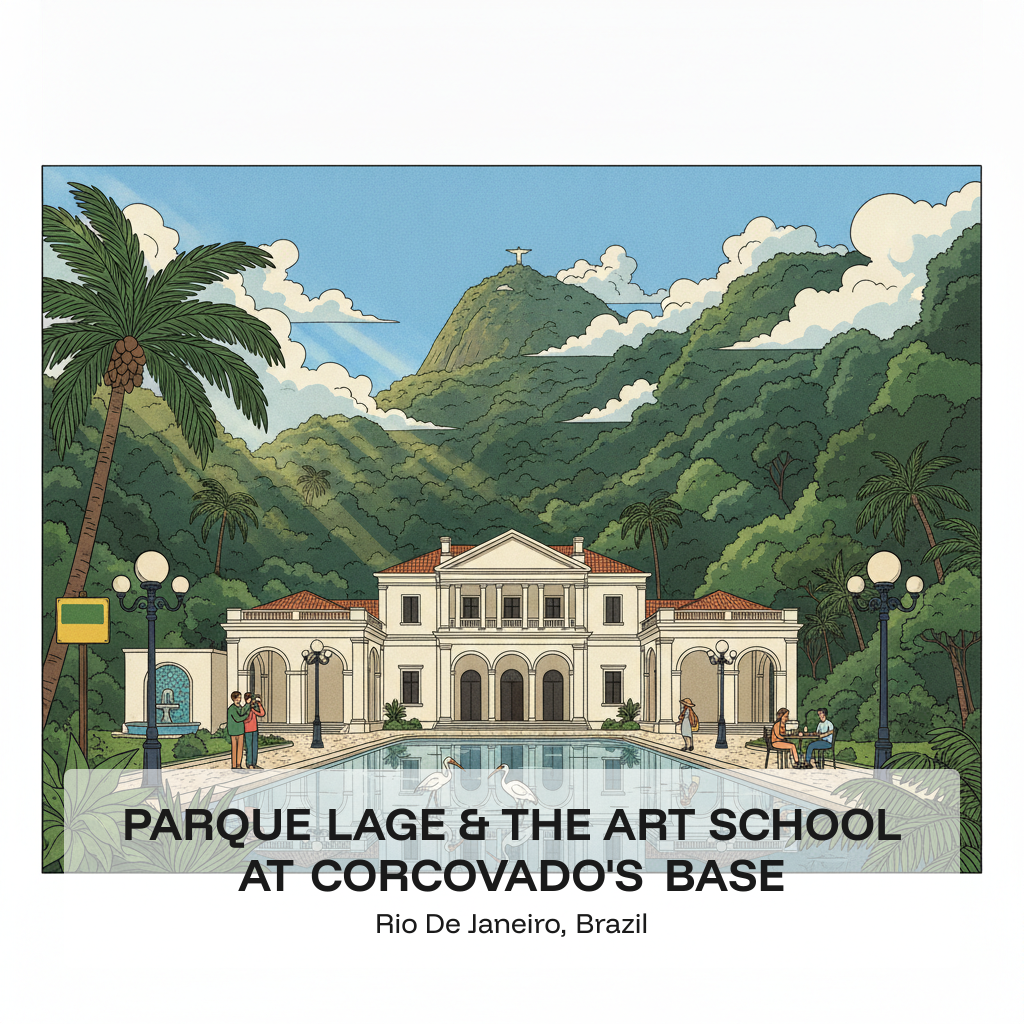
Parque Lage & the Art School at Corcovado's Base
Parque Lage (Rua Jardim Botânico 414, at the foot of Corcovado in the Jardim Botânico neighbourhood — the 52-hectare public park surrounding the Lage Mansion (Escola de Artes Visuais do Parque Lage), the former palace of industrialist Henrique Lage and his wife, the Italian opera singer Gabriella Besanzoni, donated to the city and converted to an art school in 1975): the park (forest trails, ponds, and streams leading directly into the Tijuca National Park above) is one of the most atmospheric public green spaces in Rio, with the neoclassical mansion reflected in its large ornamental pool, the café in the mansion courtyard (a popular meeting point and photography location), and the immediate trail access to the Corcovado mountain paths through the Atlantic Forest; the Escola de Artes Visuais (Visual Arts School) hosts contemporary art exhibitions, residencies, and performances throughout the year, making Parque Lage simultaneously a nature destination, art venue, and community gathering space.
Walk this route with audio
Stories play automatically as you reach each stop — no tapping needed.