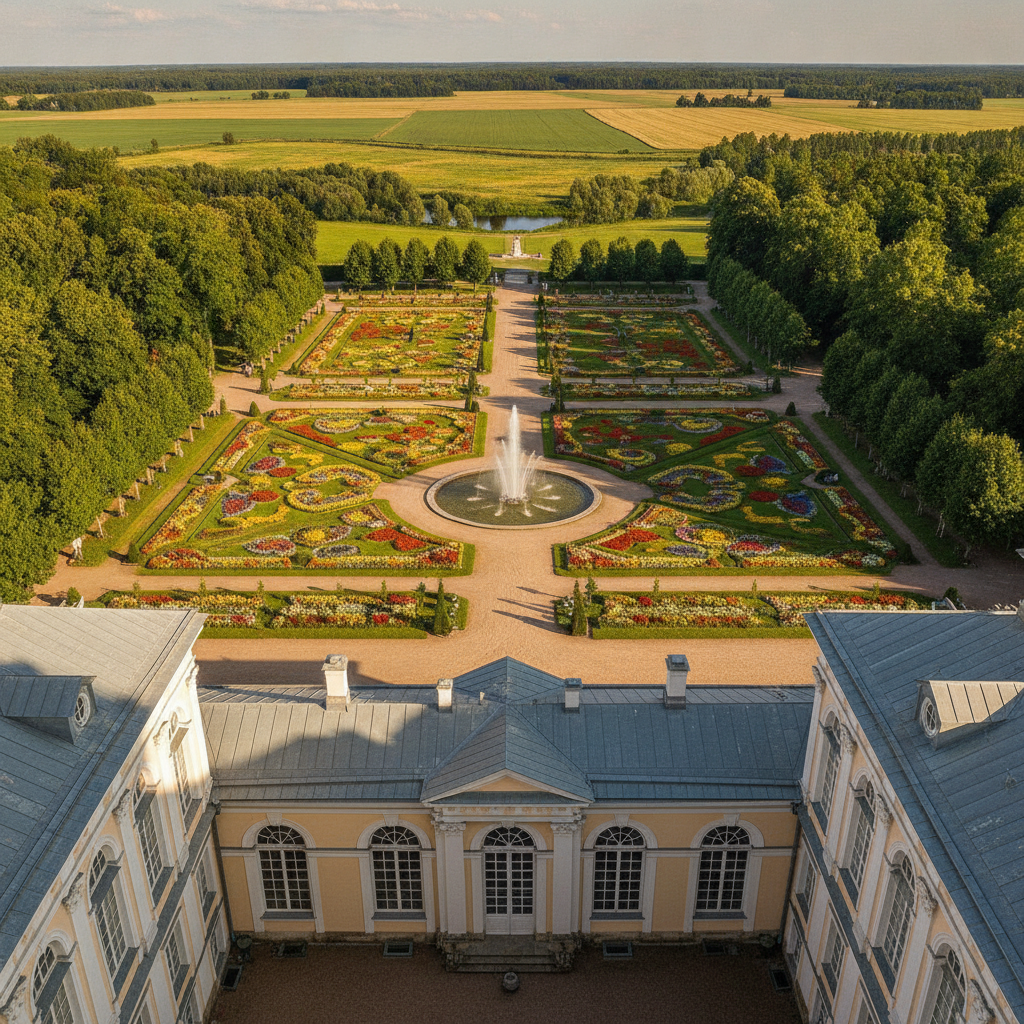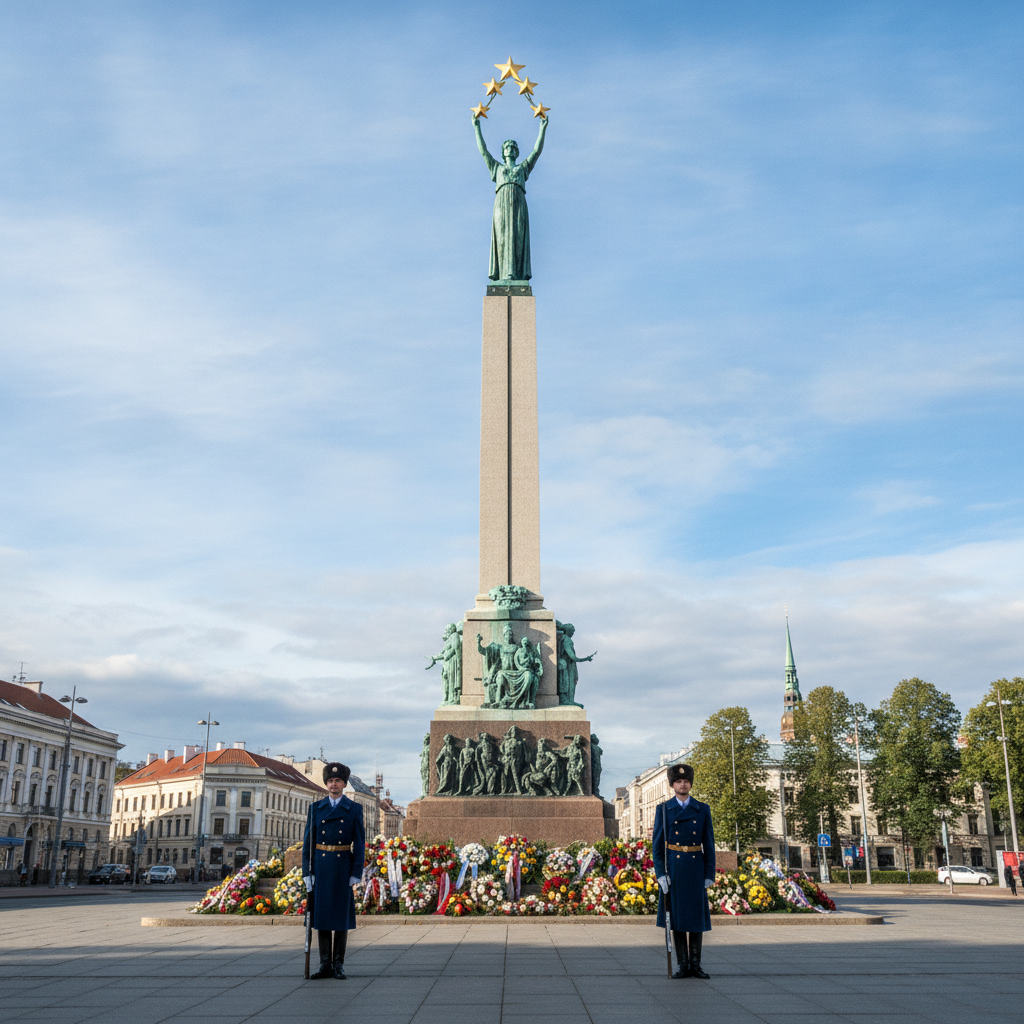
Riga — the Freedom Monument, Latvian Identity & the Museum of the Occupation
Latvia's history of independence, occupation, and restoration is concentrated in the Riga city centre — the Freedom Monument (the symbol of Latvian statehood since 1935), the Museum of the Occupation, and the national cultural institutions all within 500m of each other.
- 1
The Freedom Monument — the Symbol of Latvian Statehood
The Freedom Monument (Brīvības piemineklis, Brīvības bulvāris at Raiņa bulvāris, the 42m granite obelisk topped by the copper figure of 'Milda' — the personification of Latvia raising three gold stars representing the three Latvian historical regions — designed by the sculptor Kārlis Zāle and the architect Ernests Štālbergs, built 1931-1935 through a national fundraising campaign, the most important civic monument in Latvia): the changing of the guard (the Latvian Army honour guard changed every hour from 9am to 6pm daily, the ceremony the most formal expression of Latvian statehood in public space, free to observe, the guard in the full dress uniform of the Latvian National Armed Forces), the monument's survival (the Freedom Monument survived the Soviet occupation 1940-1991 without demolition — the Soviet authorities initially planning to replace it with a statue of Stalin, the plan abandoned for reasons of public order when the Latvian population's attachment to the monument became clear, instead the monument surrounded by flower beds and quietly de-emphasized, the Latvians continuing to lay flowers at the base clandestinely throughout the Soviet period, the monument rehabilitated immediately upon independence in 1991), and the monument surroundings (the Esplanade Park to the north — the formal park with the Art Museum Latvia in the Jugendstil building, €7 adults, Tuesday-Sunday 10am-6pm — and the Bastejkalns hill to the west — the landscaped mound above the former city moat, the most relaxed park in central Riga).
- 2
The Latvian Occupation Museum
The Museum of the Occupation of Latvia (Latvijas Okupācijas muzejs, Rātslaukums 1 in the Old Town, the museum presenting the history of the Soviet and Nazi occupations of Latvia 1940-1991, free, open Tuesday-Sunday 11am-6pm, the museum funded by the Latvian diaspora in North America — the 150,000 Latvians who fled to the West during the 1944 Soviet re-occupation, the diaspora community maintaining the museum since 1993): the essential exhibits (the deportation records — Latvia lost 25 percent of its pre-war population to the Soviet and Nazi occupation actions: the Soviet deportation of June 14 1941 in which 15,424 Latvians were deported to Siberia in a single night, the subsequent deportation of March 1949 in which 42,149 Latvians — 5 percent of the remaining population — were deported in 3 days, the largest single deportation from any Baltic state, the individual deportee records searchable in the museum database — the Holocaust in Latvia: 70,000 Latvian Jews murdered in the Rumbula Forest in November-December 1941, the largest mass murder in Latvia's history, documented in the museum), the 1991 independence barricades (the physical objects from the January 1991 barricades built around the Latvian Parliament building to resist the Soviet military units, the most tense week of the Baltic independence restoration), and the personal testimonies (the video archive of survivor accounts in Latvian, Russian, German, and English, the most emotionally direct component of the museum).
- 3
The Latvian National Opera and Culture Institutions
The Latvian National Opera (Latvijas Nacionālā opera un balets, Aspazijas bulvāris 3, the neo-Baroque opera house built 1863 — originally the Riga City Theatre, converted to the Latvian National Opera in 1919 upon independence — the building the most architecturally imposing cultural institution in Latvia, the interior restored 1995 in the original 1863 decorative scheme — the gold and white auditorium with 1,025 seats, the crystal chandeliers, the painted ceiling — the opera company performing the full traditional opera and ballet repertoire, tickets €10-60 at opera.lv, the most cost-effective opera ticket in Europe for equivalent production quality): the opera programme (the season September-May with approximately 200 performances, the summer season July-August with 20-30 performances, the most important Latvian opera premieres: the works of the composer Jāzeps Vītols — Latvia's most significant classical composer — and the annual staging of Latvian national operas the core of the programme) and the adjacent cultural institutions (the Latvian National Theatre on Kronvalda bulvāris 2 — the 1902 building in the National Romantic style, the theatre performing in Latvian with subtitles, the Latvian plays of Raiņa — the national poet whose name the street carries — performed most seasons; the Latvia Concert Hall on Amatu iela 6 — the contemporary venue for the Latvian National Symphony Orchestra, tickets €8-30).
- 4
The Latvian Ethnographic Open Air Museum
The Latvian Ethnographic Open Air Museum (Latvijas Etnogrāfiskais brīvdabas muzejs, Brīvības gatve 440, 8km northeast of the city centre, bus 1 from the Old Town in 30 minutes, the largest open-air museum in the Baltic states — 118 historic buildings relocated from the Latvian countryside and forests, the buildings spanning the 17th-20th centuries, the farmsteads and mills and fishing villages of all four historical Latvian regions reconstructed in the forest setting, €5 adults, May-October daily 10am-5pm, the single most important museum for understanding Latvian rural life): the essential buildings (the 17th-century Kurzeme farmstead with the original thatched roof and the traditional Latvian chimney-less smoke sauna — the pirts, the central institution of Latvian rural life — operational on Sunday afternoons May-September at €20 per session, the fishermen's village from the Latvian seacoast with the traditional net-drying frames and the smoke-house, the Latvian Lutheran country church of 1704 still used for Sunday services in season), the craft demonstrations (the weavers at the traditional loom, the blacksmiths at the forge, the basket weavers — demonstrations daily in summer, the craft products purchasable at the museum shop at below-market prices), and the Latvian food at the museum canteen (the grey peas with bacon, the rye bread, the Latvian farmer cheese, the kvass, the most authentic traditional Latvian lunch available in the Riga area).
- 5
Jūrmala — the Baltic Riviera by Train
Jūrmala (the resort town 25km west of Riga on the Baltic Sea, the train from Riga Central Station to Majori or Dubulti in 30 minutes at €1.50 return, the most popular day trip from Riga, the town comprising a 26km string of beach resorts on the Baltic Sea barrier peninsula between the Lielupe River and the Gulf of Riga): the Jūrmala beach (the white sand beach on the Gulf of Riga — the sheltered gulf location making the water warmer and calmer than the open Baltic — the beach accessible free at all points, the beach umbrella and sunchair rental available at €3-5 per day, the sea temperature reaching 20-22 degrees in July-August, the beach width 40-80m at low water, the most popular beach in Latvia since the 19th century), the Jūrmala villas (the wooden Art Nouveau and National Romantic summer villas built 1890-1940 by the Riga bourgeoisie, the most complete collection of wooden resort architecture in Northern Europe — the carved wooden balconies, the tower rooms, the wraparound verandas of the villa streets running perpendicular to the beach, the most atmospheric aspect of the Jūrmala townscape), and the Majori main street (Jomas iela, the pedestrian street with the cafes and restaurants and the amber shops, the amber the most purchased Latvian souvenir — the Baltic amber of 40-55 million years old, the fossilized pine resin washed up on the Baltic beach after storms, the amber jewelry at €20-200 in the Jūrmala shops).
- 6
Riga Practical — Getting Around, Seasons & the Riga Card
Riga practical information: access (the Riga Airport 13km southwest of the Old Town, bus 22 to the city centre in 30 minutes at €2, taxi at €15-20, airBaltic the Latvian national carrier with direct flights from 70+ European cities, Ryanair, easyJet, and Wizz Air all serving Riga with budget connections from the UK, Germany, Scandinavia, and the Mediterranean), city transport (the tram, trolleybus, and bus network, the single-trip ticket at €1.15 or the 24-hour card at €5, purchased on the vehicle by contactless card or at the e-ticket machines, the trams the most useful — line 6 from the Old Town to the Central Market, line 11 from the Central Market to the National Library across the river), seasons (summer June-August, temperatures 20-25 degrees, white nights with sun setting after 10pm in June, the Riga beach life and the outdoor restaurant terraces at full capacity; winter November-February, temperatures -5 to 2 degrees, the Christmas market at the Dome Square from November 25, the most romantic Christmas market in the Baltic states, the Old Town in the early December darkness the most atmospheric condition for the medieval architecture), the Riga Card (the 24-hour tourist card at €30, the 48-hour at €40, the 72-hour at €50, covering all public transport and the entry fees at 50+ museums and attractions — worthwhile for visitors planning 3+ museums per day, available at the Riga tourist information offices at the airport and the Town Hall Square).
Walk this route with audio
Stories play automatically as you reach each stop — no tapping needed.
More in riga
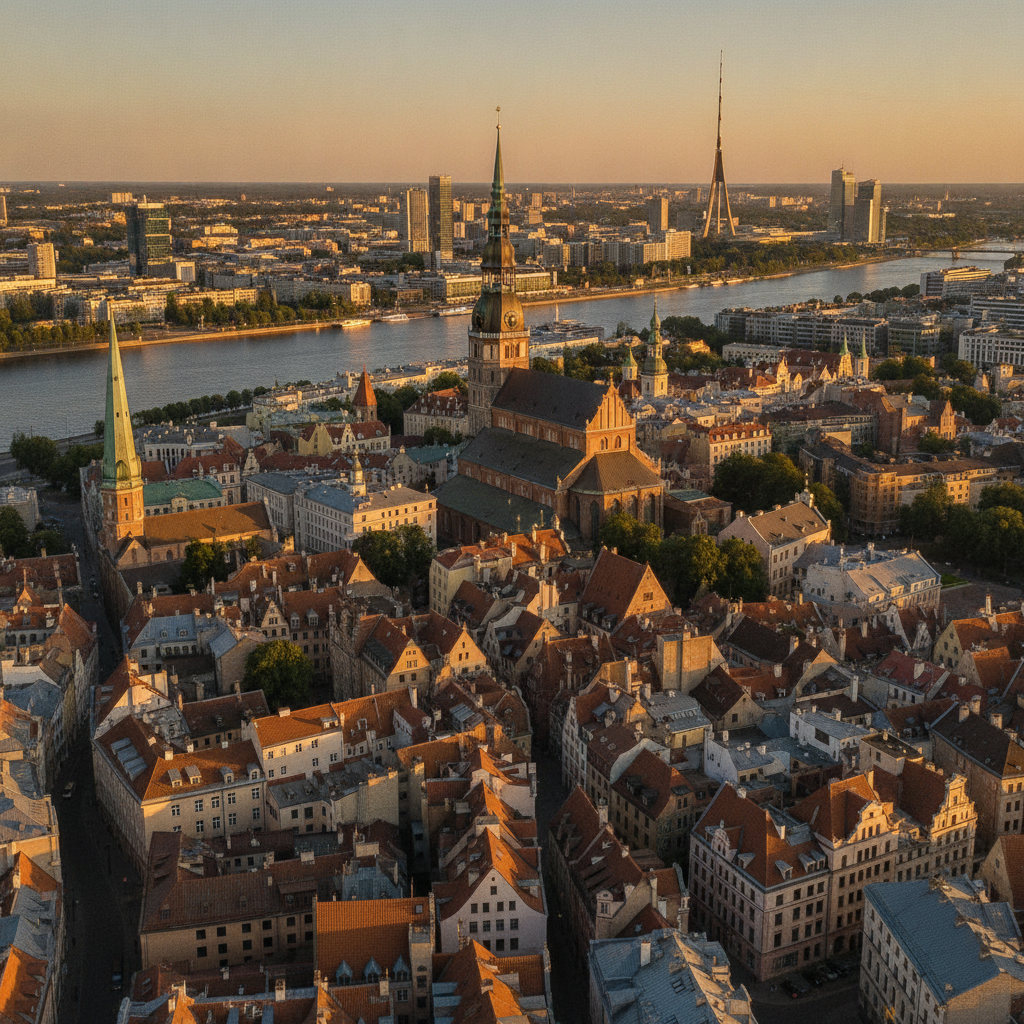
Riga Old Town — Dom Cathedral, the House of Blackheads & the Largest Art Nouveau District in Europe
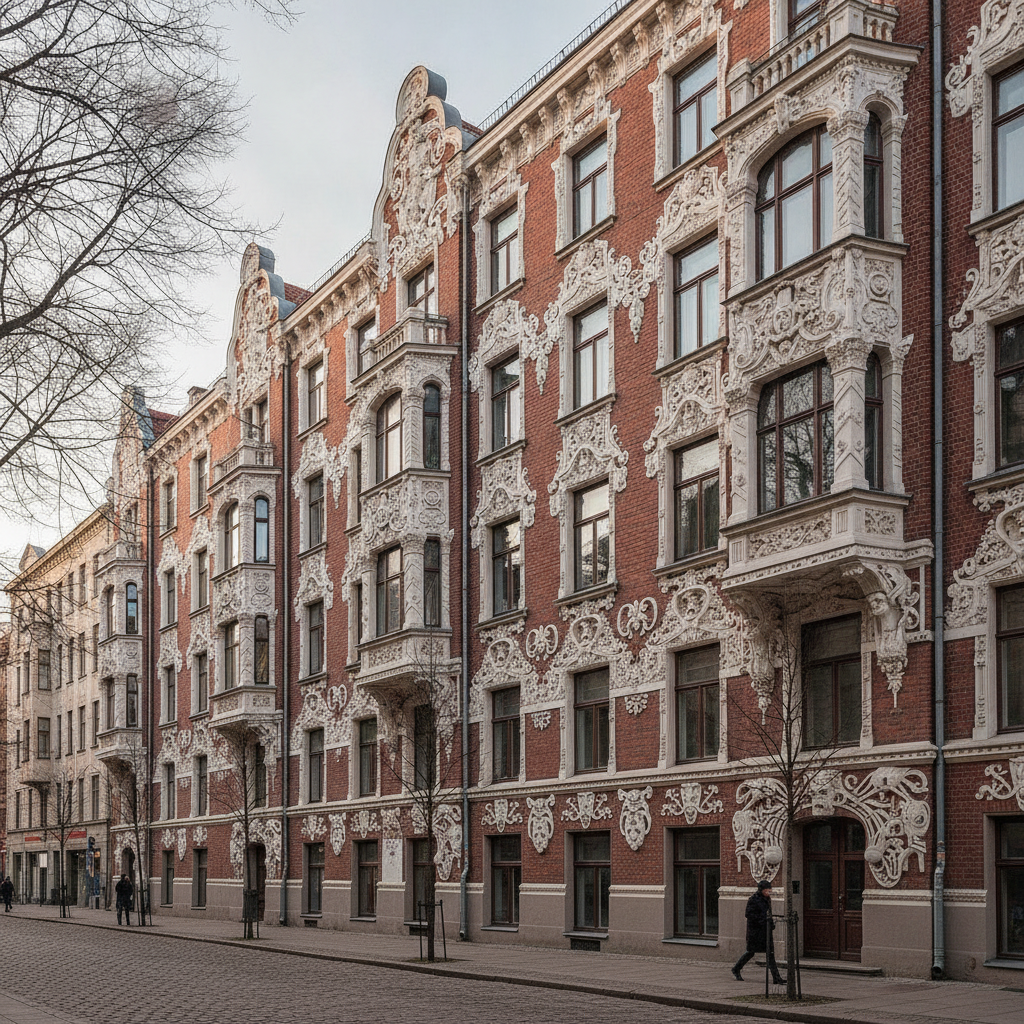
Riga Art Nouveau — Alberta Street, Mikhail Eisenstein & the World's Jugendstil Capital
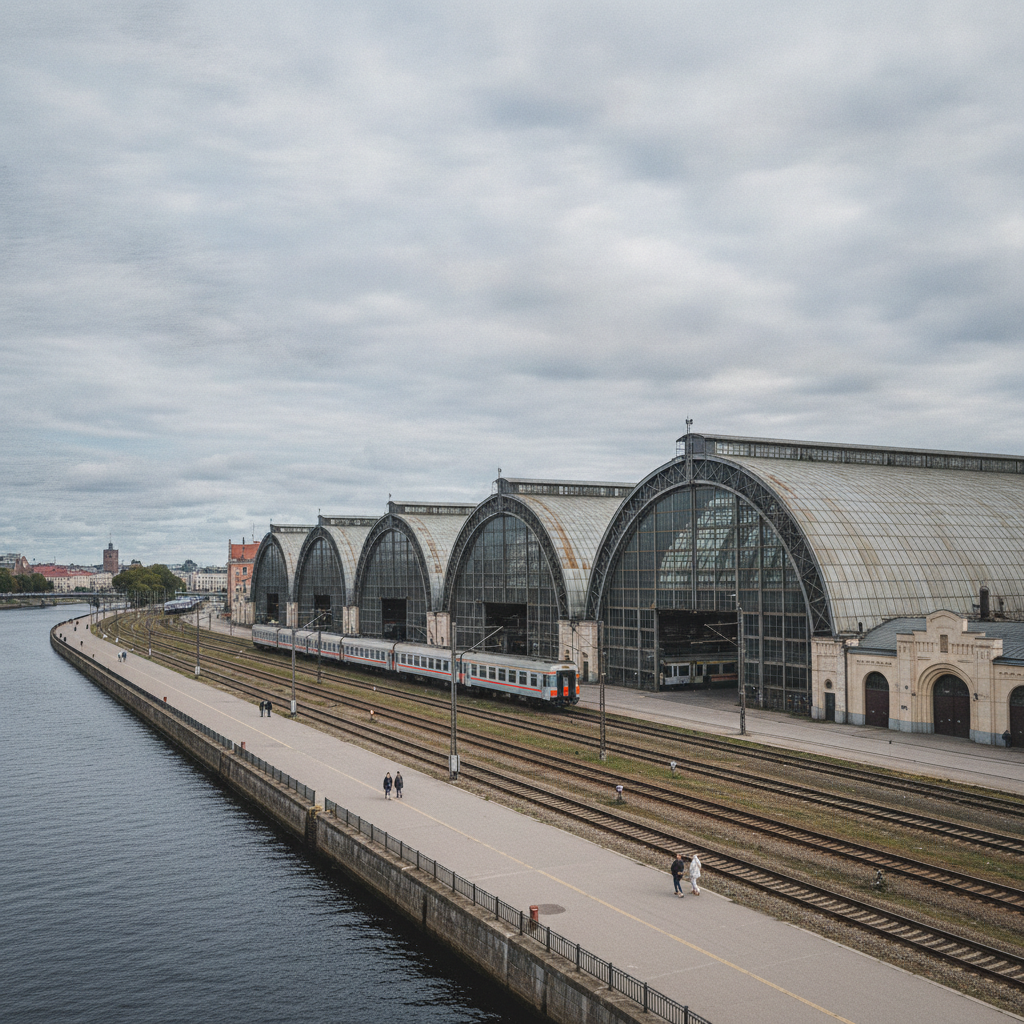
Riga Central Market & Latvian Cuisine — the Zeppelin Hangars, Grey Peas & Baltic Food Tradition
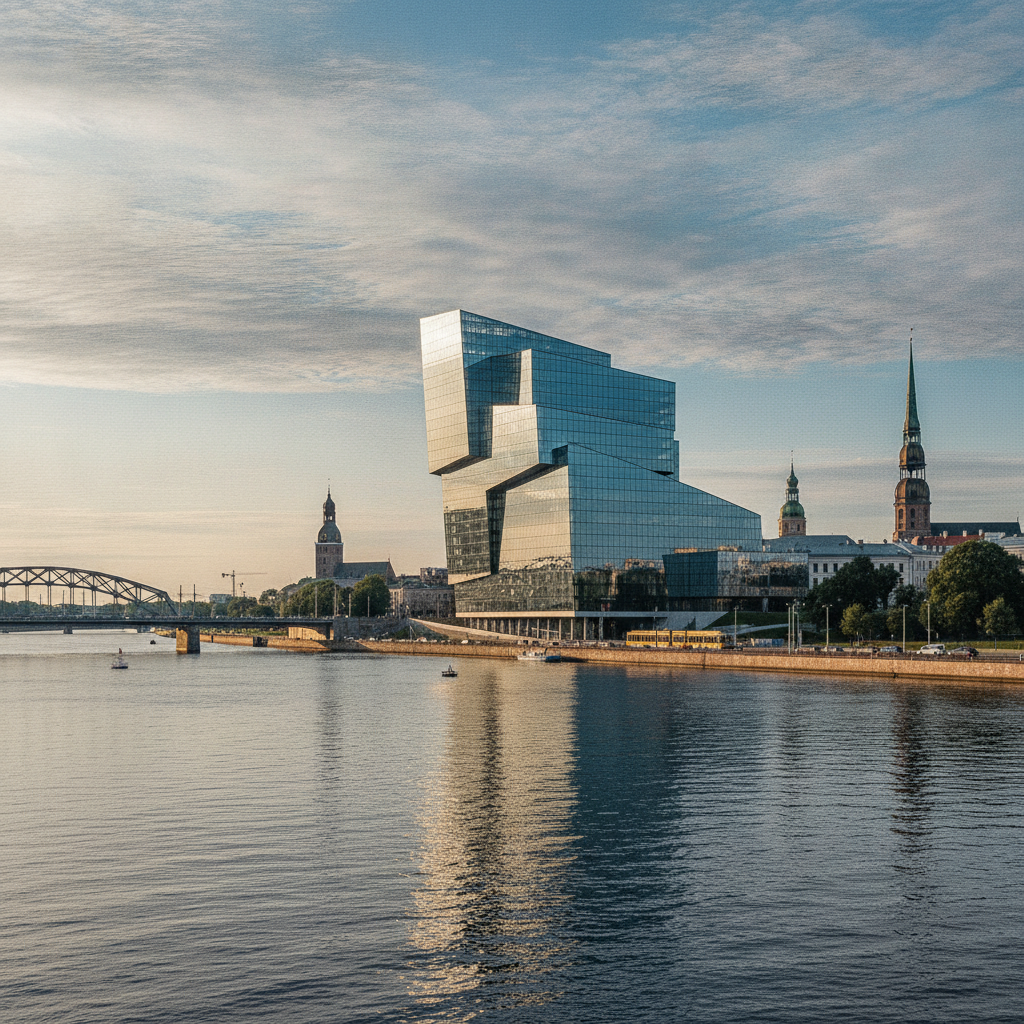
Riga & the Daugava River — the National Library, Pārdaugava & the Latvian Song and Dance Festival