Reykjavik — Hallgrímskirkja, the Old Harbour & the World's Northernmost Capital
Reykjavik (the capital of Iceland, population 130,000 in the city proper and 230,000 in the greater metropolitan area — two thirds of the entire Icelandic population — the northernmost capital city in the world at 64°N latitude, founded 874 CE by the Norse settler Ingólfur Arnarson, the site chosen for the hot springs that give the city its name — Reykjavik meaning 'Smoky Bay' for the steam rising from the geothermal vents, the city powered 100 percent by geothermal and hydroelectric energy since 2007) is the smallest national capital in Europe and the gateway to the Icelandic landscape.
1. Hallgrímskirkja — the Landmark Church
- 1
Hallgrímskirkja — the Landmark Church
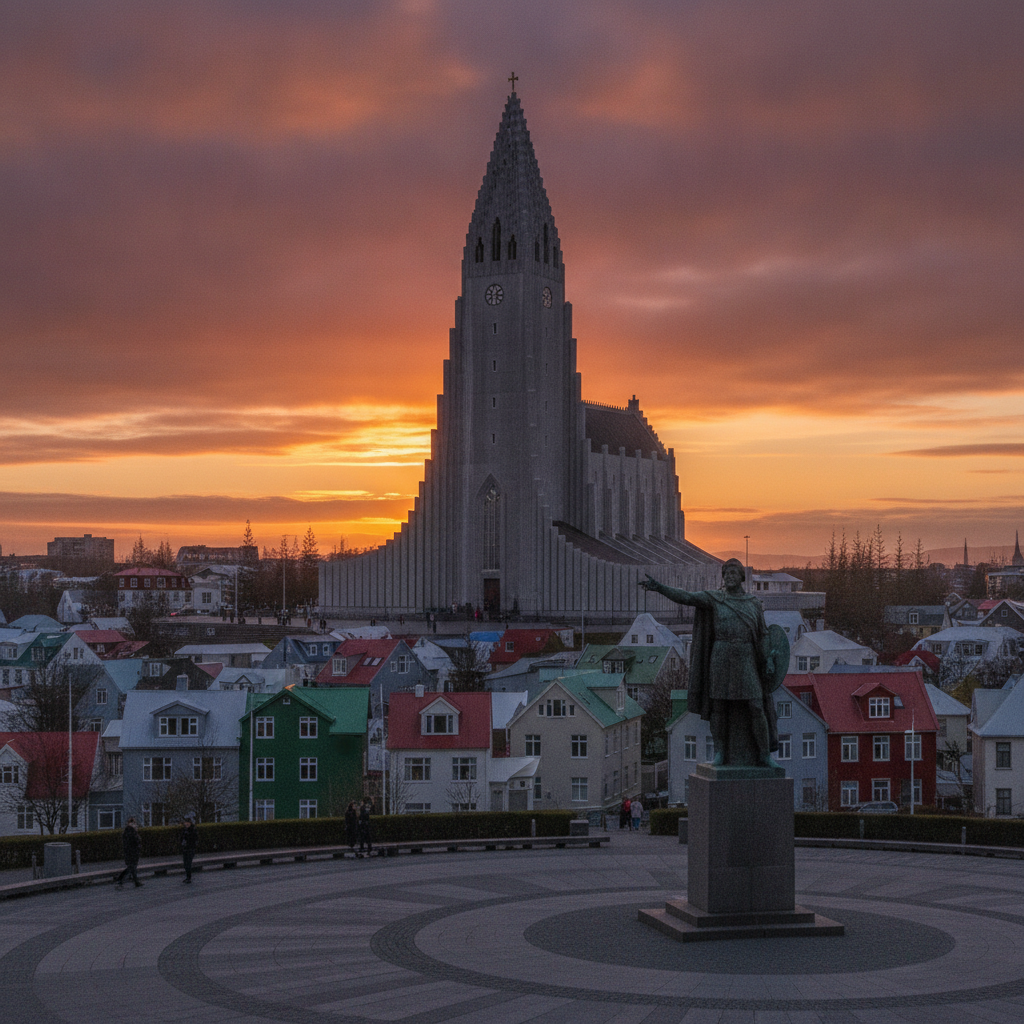
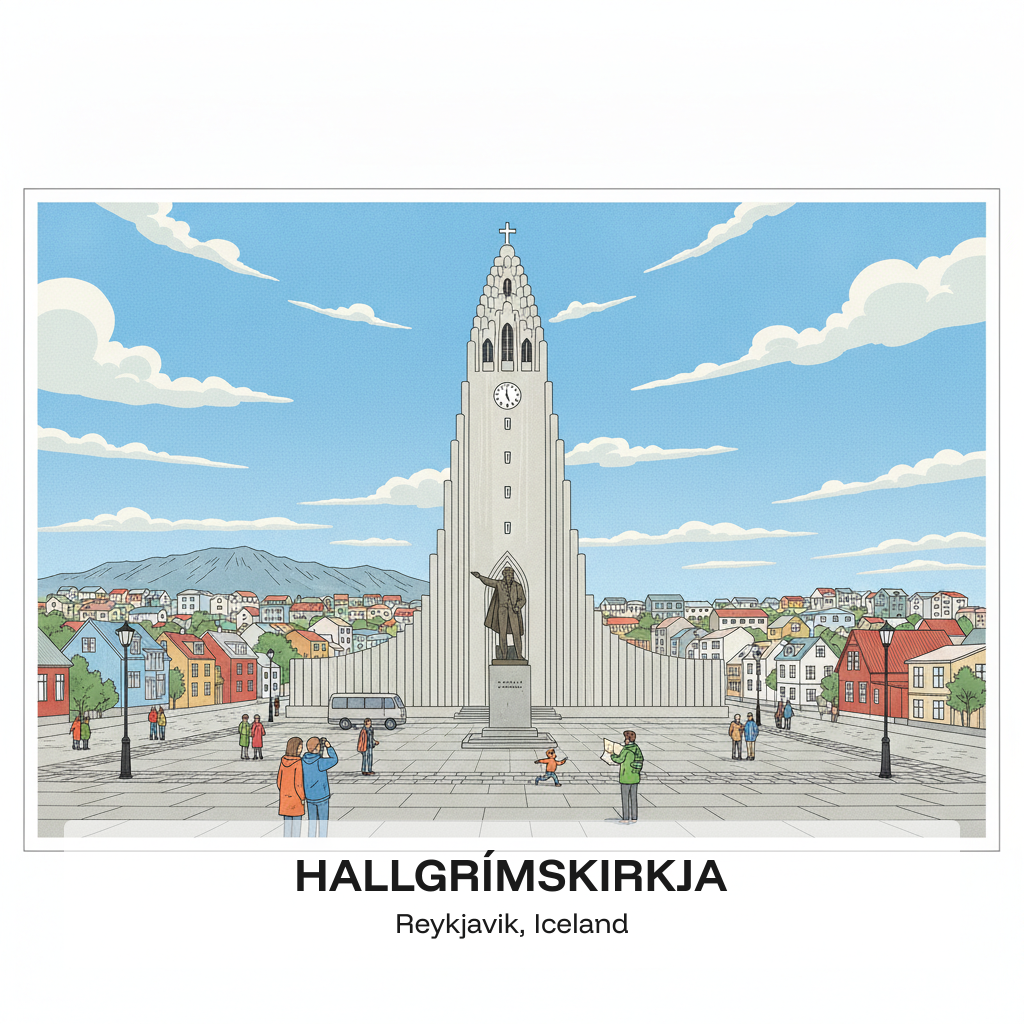
Hallgrímskirkja (Skólavörðustígur, the Lutheran church of the Reykjavik parish, 74.5m tall, the tallest structure in Iceland and the most visited tourist attraction in Reykjavik, the church designed by the state architect Guðjón Samúelsson in 1937 — the design inspired by the basalt column formations of Svartifoss and Aldeyjarfoss waterfalls, the hexagonal basalt columns the dominant geological feature of the Icelandic volcanic landscape, the church built 1945-1986, the 38 years of construction due to the ambitious scale and the limited resources of mid-century Iceland): the tower (the 74.5m concrete tower, the lift to the observation deck at 73m — €9 adults, daily 9am-9pm in summer, 9am-5pm in winter — the panoramic view of the Reykjavik cityscape, the harbour, the Esja mountain, and the Snæfellsjökull glacier 100km to the north on clear days, the best single panorama in Reykjavik), the interior (the Lutheran simplicity of the nave — the white walls, the minimal decoration, the Baroque organ of 1992 by Johannes Klais — 5,275 pipes, 72 registers — the most impressive musical instrument in Iceland, the daily organ concerts announced at the church website, free with church entry €0 during opening hours 9am-5pm daily, the observation lift €9 separate), and the Leifur Eiríksson statue (the bronze monument at the church plaza, a gift from the United States in 1930 for the 1,000th anniversary of the Althing, the explorer posed facing west toward the continent he reached c.1000 CE, approximately 500 years before Columbus).
- 2
Harpa Concert Hall — the Icelandic Architectural Icon
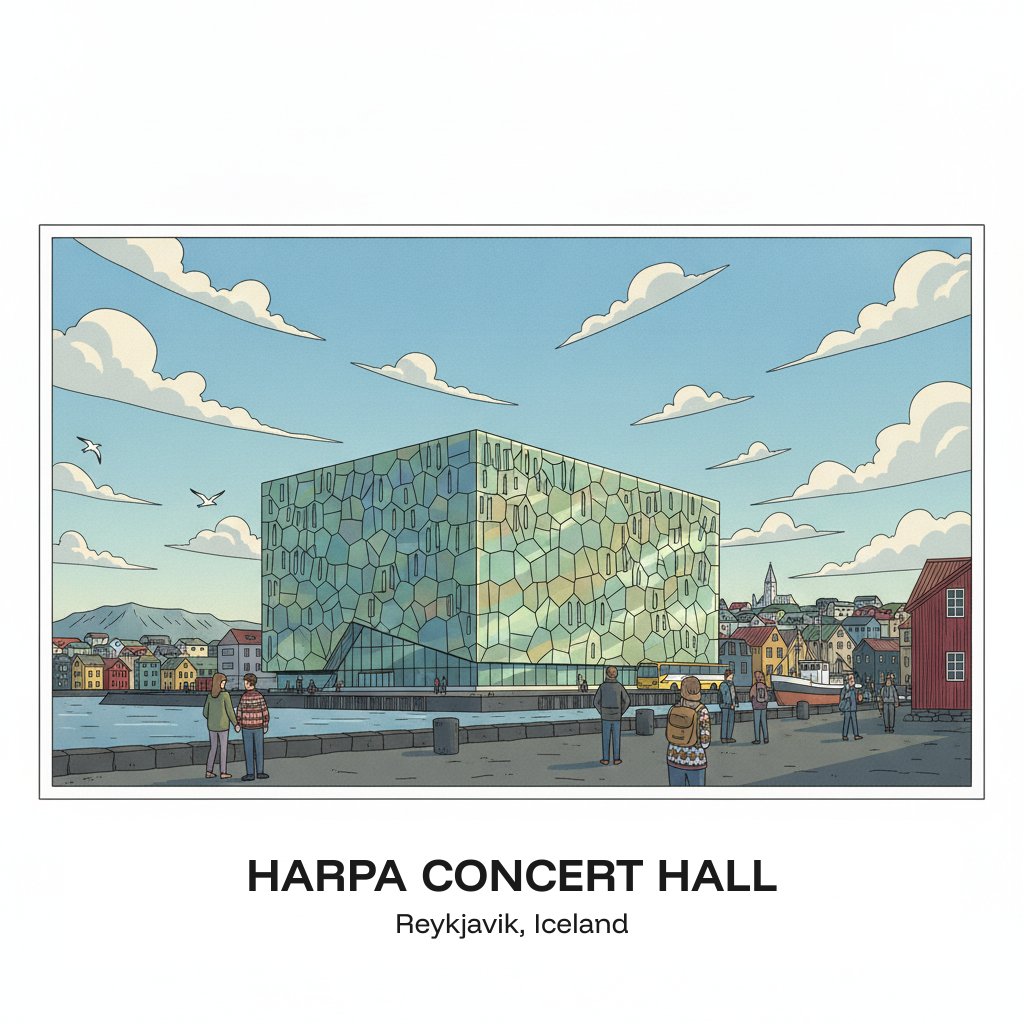
Harpa (Austurbakki 2, the Reykjavik Concert Hall and Conference Centre, opened 2011, the most architecturally significant new building in Iceland — the glass facade designed by the Icelandic artist Ólafur Elíasson in collaboration with the architectural firm Henning Larsen, the facade composed of the irregular geometric glass panels in the quasi-brick pattern — each panel a different size, the steel hexagonal frames connecting in the honeycomb arrangement, the facade changing colour with the light conditions and the time of day, the interior reflecting the Icelandic volcanic landscape in the colour transitions, the building awarded the Mies van der Rohe Prize 2013 — the most prestigious European architecture award — the building the first structure to receive the prize since the competition was extended to include non-EU European countries, free to enter and walk through the public spaces, the concert programme at harpa.is, tickets €15-60): the building context (the Harpa standing at the Old Harbour immediately south of the harbour, the building the surviving fragment of a larger harbour redevelopment that was halted by the 2008 Icelandic financial collapse — the kreppan — the collapse that destroyed 40 percent of the Icelandic banking system in 48 hours in October 2008, the largest banking collapse relative to the size of the national economy in world history), the Icelandic Symphony Orchestra (the resident orchestra at Harpa, the ISÓ performing September-June, the concert programme the highest quality classical music available in Iceland, the opening night concert in September the most attended cultural event in Reykjavik annually).
- 3
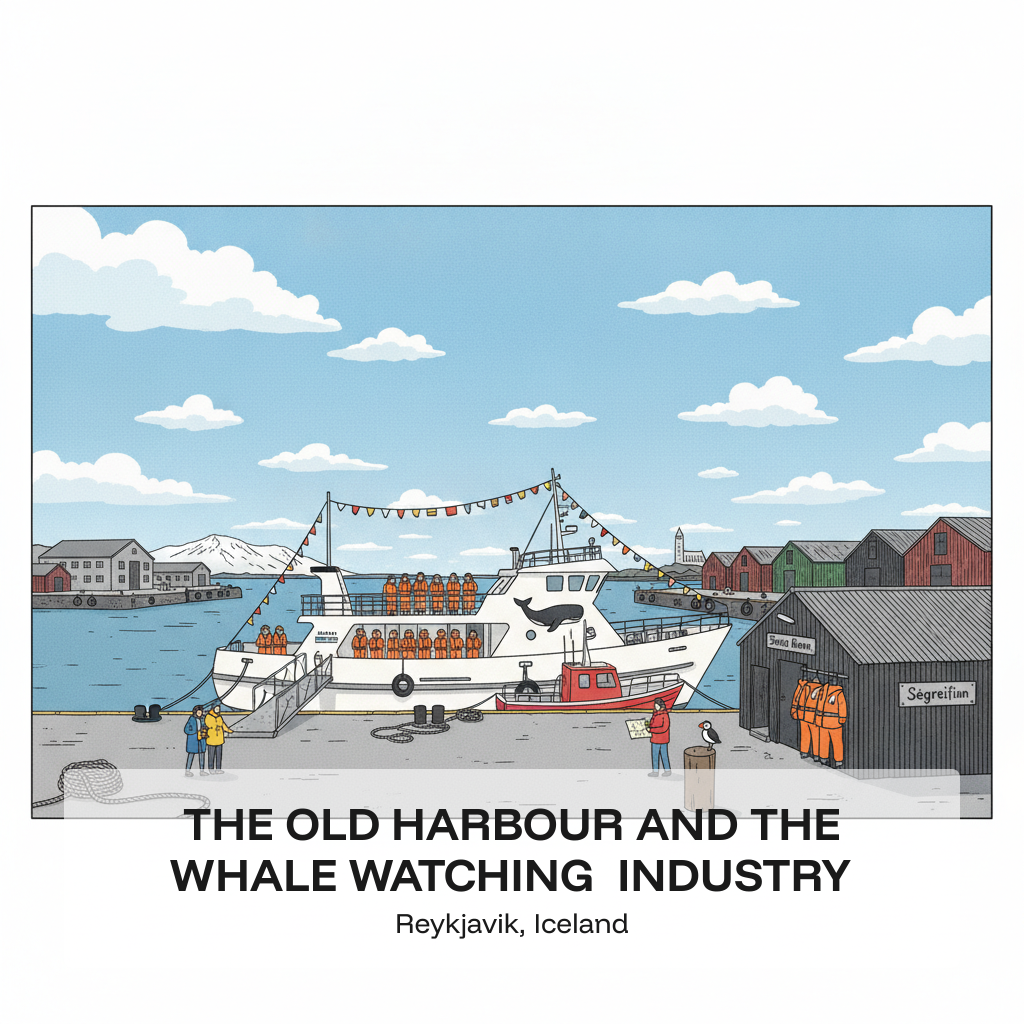
The Old Harbour and the Whale Watching Industry
The Old Harbour (Gamla höfnin, the original harbour basin at the foot of the Reykjavik city centre, the harbour the economic base of Iceland from the 18th-century Danish fishing monopoly through the 20th-century herring and cod fisheries that made Iceland one of the wealthiest countries in the world per capita — the cod wars with Britain 1950s-1970s the most internationally prominent expression of Icelandic maritime sovereignty, the Old Harbour now primarily a tourist and recreational harbour with the whale watching and puffin watching boats the primary activity): the whale watching boats (the 10+ operators at the Old Harbour offering 3-hour whale watching excursions into the Faxaflói bay, the season May-September, prices at €70-90 per adult, the departures from the Ægisgarður pier at the Old Harbour at 9am, 1pm, and 5pm, the species encountered: minke whales — the most common at 70 percent sighting rate — humpback whales, white-beaked dolphins, and harbour porpoises, the orca — killer whale — sightings rare but possible, the puffin observation trips the more reliably bird-focused alternative at €40-50 per person), the harbour restaurants (the Sægreifinn — the Sea Baron, Geirsgata 8, the fish soup and the lobster soup in plastic cups at the small harbour-side restaurant, the langoustine soup the most cost-effective luxury food in Reykjavik at €5-7 per cup, the most locally recommended affordable lunch in the city, open daily 11:30am-6pm) and the Maritime Museum (Grandagarður 8, the Icelandic maritime history from the Viking longships through the 19th-century herring stations to the 1970s cod wars, €9 adults, Tuesday-Sunday 10am-5pm).
- 4
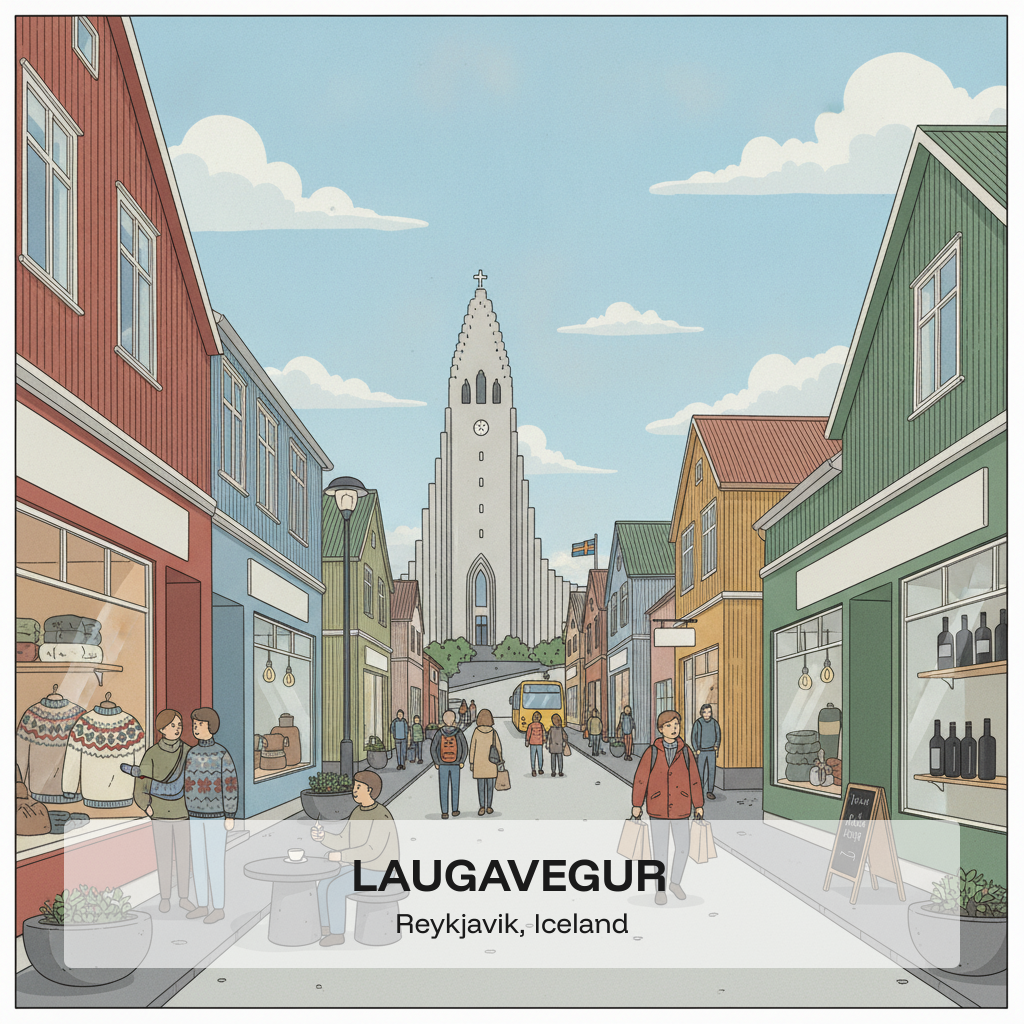
Laugavegur — the Main Shopping Street
Laugavegur (the main commercial street of Reykjavik, the 1km stretch from Hlemmur bus terminal to Bankastræti, the street of the independent shops, the cafes, the restaurants, the bars, and the international fashion brands: the street named for the laundry path — laugavegur means 'hot springs road' — the route used by the Reykjavik women to walk to the Laugardalur geothermal pools to do their laundry before the indoor plumbing arrived in the 20th century): the Icelandic wool shops (the lopapeysa — the traditional Icelandic wool sweater in the yoke pattern, the most distinctively Icelandic product, the pattern incorporating the eight-petalled rose motif of the traditional Icelandic weaving — available at the Handknitting Association of Iceland at Skólavörðustígur 19, the cooperative selling only hand-knitted Icelandic sweaters by the member knitters, the price €100-200 for the authentic handmade garment versus €40-60 for the machine-made versions at the tourist shops, the handmade sweater distinguishable by the slight colour irregularities and the unique pattern variation), the Viking-themed tourist shops (the Laugavegur and the Skólavörðustígur side street the concentration of the Icelandic tourist retail — the lava salt, the Icelandic schnapps — brennivín, the 'Black Death' caraway aquavit — the dried fish — harðfiskur, the crunchy wind-dried Arctic haddock, the most traditional Icelandic protein snack — and the Nordic design objects) and the Reykjavik café culture (the Reykjavik specialty coffee scene the most developed in the North Atlantic — the Reykjavik Roasters at Kárastígur 1 the founding roastery, the Kaffismidjan at Hallveigarstígur 1 the second oldest, the Stofan café at Vesturgata 3 the most relaxed neighbourhood café in the old town, all within 500m of Laugavegur).
- 5
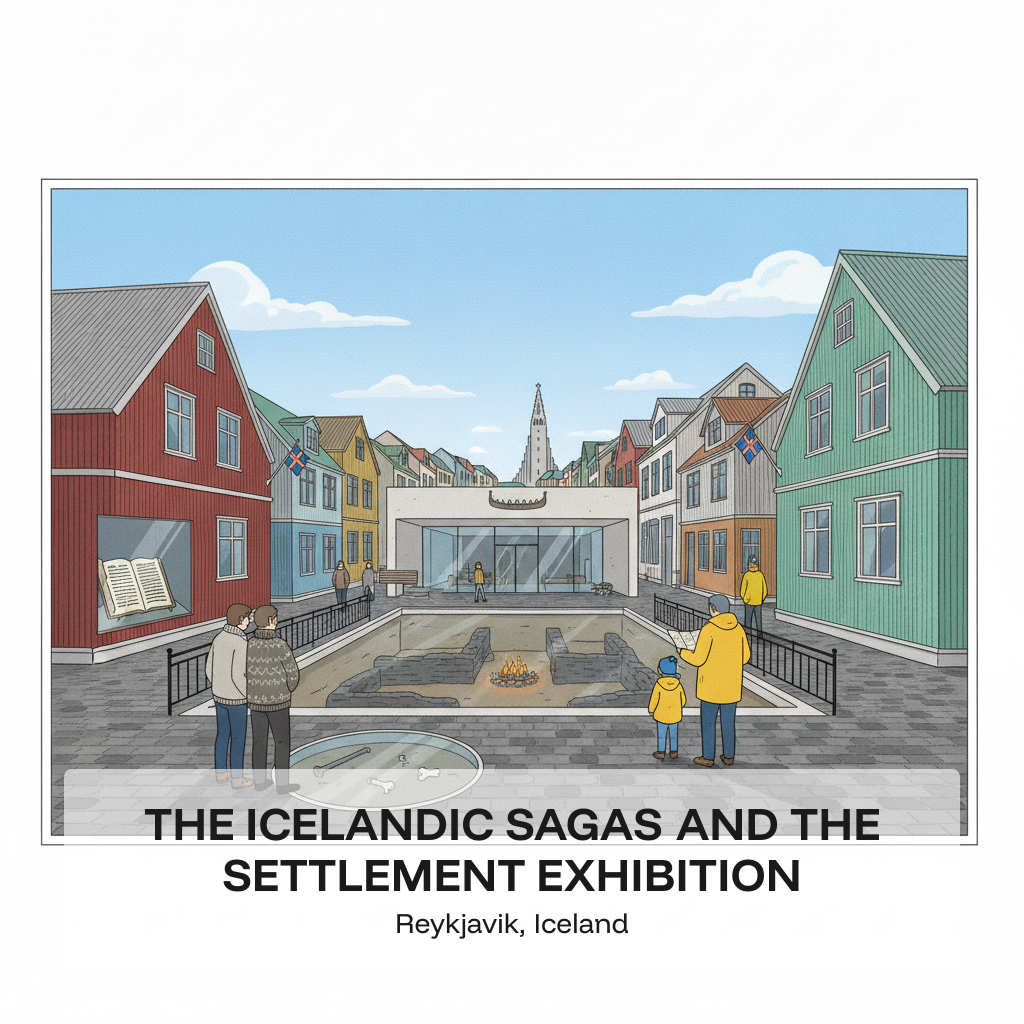
The Icelandic Sagas and the Settlement Exhibition
The Settlement Exhibition (Þjóðmenningarhúsið, Aðalstræti 16, the museum built around the excavated longhouse of the oldest identified Norse settler in Reykjavik — the farmhouse carbon-dated to 871 CE ±2 years, making it the oldest identified human habitation in Iceland — the museum built over the excavation site with the excavated walls visible through the glass floor, €12 adults, daily 9am-6pm): the exhibition (the longhouse walls — the turf-and-stone construction of the Viking Age farmhouse, the hearth in the centre, the sleeping platforms along the walls, the construction identical to the longhouses of Norway and the Faroe Islands of the same period, the carbonized barley grains the evidence of grain cultivation in the house, the finds including the iron rivets of the Viking ship — suggesting the settler arrived by longship — the animal bone fragments, and the personal objects of the household), the Icelandic Sagas (the Old Norse prose narratives written in Iceland 1200-1400 CE describing the Viking Age settlements, the feuds, the Althing assemblies, and the voyages to Greenland and North America — the most important body of medieval Nordic literature, the Njáls saga and the Egils saga the most internationally studied, the Vinland Sagas — Eiríks saga rauða and Grœnlendinga saga — the primary historical documents for the Norse discovery of North America c.1000 CE, the complete sagas in English translation available at the Reykjavik bookshops at €20-30 per volume) and the National Museum (the companion to the Settlement Exhibition at Suðurgata 41, the complete Icelandic history from the settlement to the present, €15 adults, Tuesday-Sunday 10am-5pm, the medieval church artefacts and the 13th-century wooden bishop's seat the most important objects).
- 6
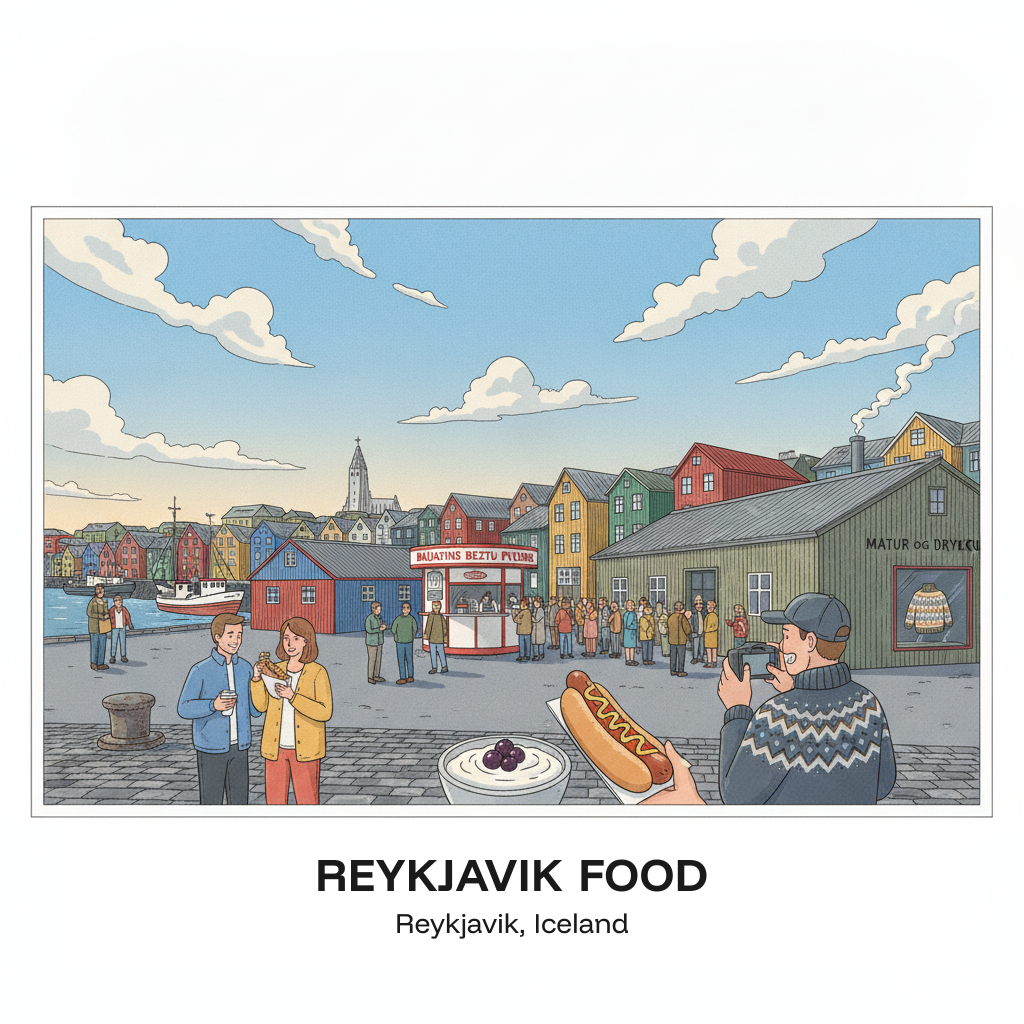
Reykjavik Food — Skyr, Lamb and the Hot Dog Tradition
Icelandic food culture (the cuisine of the Norse settlers adapted to the North Atlantic ingredients — the Arctic lamb, the North Atlantic fish, the dairy products of the Icelandic cow, the Arctic char of the Icelandic rivers, and the geothermal-baked bread — the Icelandic food the most directly expressive of the volcanic landscape in any European cuisine): skyr (the Icelandic dairy product, cultured from skimmed milk to the thick consistency of Greek yoghurt but technically a fresh cheese, the protein content higher than any other dairy product at 11g per 100g, the fat content near zero, the flavour mildly sour and clean, the product produced in Iceland continuously since the Viking Age, the modern production distributed by the MS dairy cooperative, the skyr available at every Icelandic supermarket, the correct consumption with the Icelandic blueberries — bilberries — in the summer or the crowberries — krækiber — in the autumn, the Reykjavik bars and cafes serving the skyr smoothie and the skyr pancakes at €5-8 per serving), the Icelandic hot dog (the pylsur, the hot dog at the Bæjarins Beztu Pylsur stall — 'The Best Hot Dog in Town', Tryggvagata 1 at the Old Harbour, the stall operating since 1937, the single hot dog at €3.50 served with the raw onion, the remoulade, the sweet brown mustard, and the fried onion — the most consumed fast food in Iceland, the stall visited by Bill Clinton in 1994 making the international reputation, the queue at the stall the most reliable indicator of Reykjavik's status as a mass tourism destination — 20 people at 10am is normal in season) and the New Icelandic kitchen (the Dill restaurant at Hverfisgata 12 — the only Michelin-starred restaurant in Iceland, the seasonal tasting menu of Icelandic ingredients at €130 per person, the most internationally recognized Icelandic restaurant — and the Matur og Drykkur at Grandagarður 2 in the Old Harbour, the traditional Icelandic ingredients in contemporary preparations at €30-45 per main).
Walk this route with audio
Stories play automatically as you reach each stop — no tapping needed.
More in reykjavik
Reykjavik Summer — the Midnight Sun, Puffins, Whale Watching & the Westman Islands
Reykjavik Geothermal & Volcanoes — the Perlan, Laugardalur Hot Springs & Iceland's Volcanic System
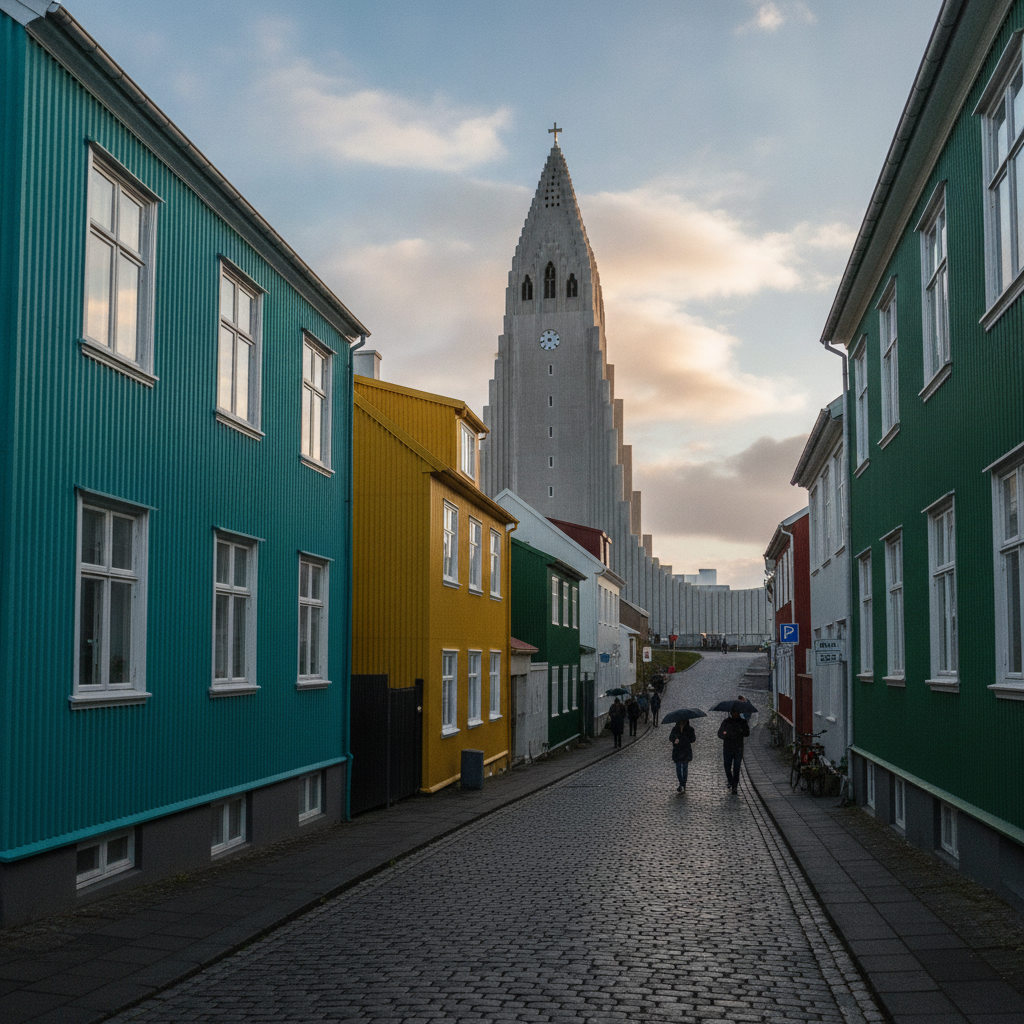
Reykjavik Culture — the Icelandic Sagas, Skyr, the Music Scene & the Coloured Old Town Houses
Reykjavik Day Trips — the Golden Circle, Northern Lights & Iceland's Most Iconic Landscapes