Reykjavik Geothermal & Volcanoes — the Perlan, Laugardalur Hot Springs & Iceland's Volcanic System
Iceland sits directly on the Mid-Atlantic Ridge — the tectonic boundary where the North American and Eurasian plates are separating — making it the most volcanically active country in Europe and the global model for geothermal energy. Reykjavik runs entirely on geothermal heat.
- 1
The Perlan — the Hot Water Tanks and the Science Museum
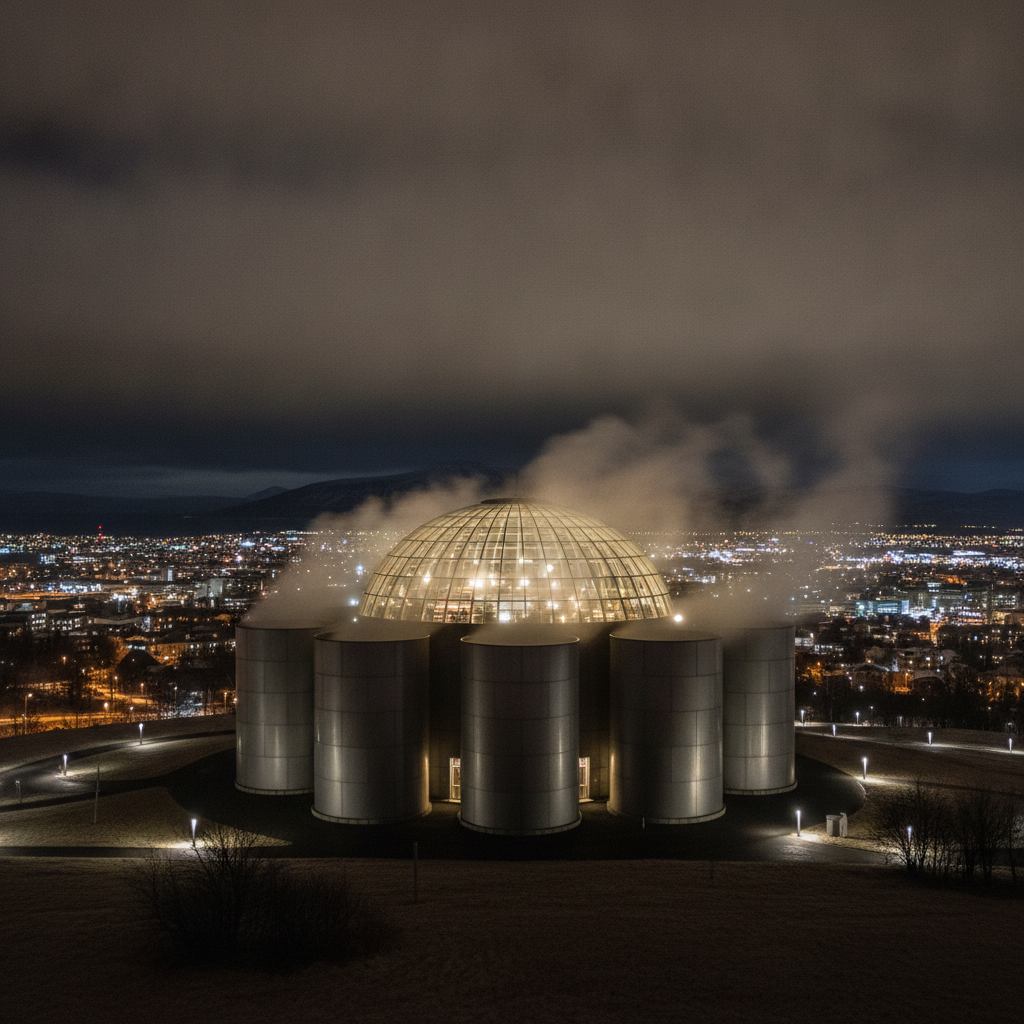
Perlan (the Reykjavik geothermal infrastructure and science museum, Öskjuhlíð hill 2km southeast of the city centre, accessible by bus 18 in 15 minutes or by the free Perlan shuttle from the Reykjavik city centre, €16 adults for the permanent exhibitions and the observation deck, open daily 9am-10pm): the hot water tanks (the six 4-million-litre steel tanks storing the geothermal water at 85 degrees that heats the entire Reykjavik district heating system — the tanks the literal energy infrastructure of the city, the oldest installed 1939, the newest 1991, the tanks together holding 24 million litres of 85-degree geothermal water drawn from the Nesjavellir and the Hellisheiði geothermal power stations 20km south of the city, the tanks the reason Reykjavik tap water smells faintly of sulphur — the sulphur dissolved in the geothermal water — and why every Reykjavik hot tap produces hot water instantaneously: the entire city water system maintained at 85 degrees), the Wonders of Iceland museum (the permanent exhibition inside the Perlan covering the Icelandic natural phenomena: the indoor real-ice glacier tunnel, the Northern Lights planetarium show — €5 additional entry for the 20-minute aurora simulation, the most accessible indoor Northern Lights experience in Iceland — the earthquake simulator, the volcano exhibit, and the observation deck on top of the tanks with the 360-degree panorama of the Reykjavik cityscape, the best panoramic view in the city after the Hallgrímskirkja tower) and the revolving restaurant (the Perlan revolving restaurant on the glass dome level above the tanks, the most panoramic restaurant in Iceland, the dinner reservations at perlan.is).
- 2
Laugardalur — the Geothermal Valley
Laugardalur (the valley 3km east of the city centre, accessible by bus 14 or 15 in 10 minutes, the valley of the original Reykjavik hot springs — the Laugur springs used for laundry from the earliest settlement until 1930 when the geothermal district heating connected the city, the springs the reason for the settlement of Reykjavik at this location, the valley now the sports and recreation district of the city with the largest public swimming complex in Iceland): Laugardalslaug (the Reykjavik main public geothermal swimming pool complex, Sundlaugavegur 30a, the 50m outdoor heated pool at 28 degrees, the hot pots at 38, 40, and 44 degrees, the steam room and the cold pool — the €8 adult entry the most cost-effective leisure activity in Reykjavik, open Monday-Friday 6:30am-10pm, Saturday-Sunday 8am-10pm, the outdoor hot pots the correct experience for the visitor seeking the authentic Icelandic public bathing culture — the Reykjavik residents using the public pools as the social institution that the pub serves in Northern Europe, the conversations in the hot pots between strangers the normal social interaction, the pools the most democratic public space in Iceland), the Botanical Garden (the garden adjacent to the pool complex, the Icelandic plants and the Arctic species in the collection, the midnight sun conditions making the plants grow unusually rapidly in the long summer days, the garden free, open daily, the most relaxed green space in Reykjavik for picnicking in the summer) and the Húsdýragarðurinn zoo (the Reykjavik zoo immediately south of the pool complex, the collection of Icelandic farm animals and the Arctic wildlife — the Arctic fox, the reindeer, the Icelandic horse, and the seals — €15 adults, the most family-oriented attraction in Reykjavik).
- 3
Iceland's Volcanic System — Living on the Ring of Fire
Iceland's volcanism (the island sitting directly on the Mid-Atlantic Ridge, the most active part of the global rift system, Iceland experiencing a volcanic eruption on average every 4-5 years, the 130+ volcanic mountains the surface expression of the magmatic systems beneath — the Krafla system in the north, the Grímsvötn under the Vatnajökull in the centre, the Katla under the Mýrdalsjökull in the south, and the Reykjanes Peninsula system 50km from Reykjavik, all active): the 2010 Eyjafjallajökull eruption (the sub-glacial eruption that began March 20 2010 in the Fimmvörðuháls pass and escalated to the summit crater eruption of April 14, the ash plume reaching 9km altitude, the ash cloud shutting European airspace for 6 days — 100,000 flights cancelled, 10 million passengers stranded — the most extensive disruption to European aviation since World War II, the eruption revealing the continental vulnerability to the Icelandic volcanic systems that most Europeans had previously assumed irrelevant to their lives), the 2021-2023 Fagradalsfjall eruptions (the eruptions on the Reykjanes Peninsula 40km from Reykjavik, the first eruptions on the Reykjanes Peninsula in 800 years, the lava flowing from the summit of the Fagradalsfjall mountain into the Geldingadalur valley, the eruption the first in history to be actively hiked to in real-time by visitors — the 7km trail from the Grindavík road to the eruption site the most dramatic hike in recent Icelandic history, the lava flowing to within 1km of the Blue Lagoon in the 2022 and 2023 events), and the Grindavík eruptions of 2023-2024 (the eruptions that forced the evacuation of the Grindavík town of 3,500 people in November 2023, the first time a populated area was directly threatened by the Reykjanes system, the ongoing volcanic activity making the Reykjanes Peninsula the most actively monitored volcanic zone in Europe in 2024).
- 4
Geothermal Energy — Iceland's Sustainable Power
Icelandic geothermal energy (the most complete geothermal power system in the world — Iceland generating 30 percent of its total electricity and 90 percent of its space and water heating from geothermal energy, making Iceland the world leader in geothermal energy use per capita by a factor of 10 over any other country): the Nesjavellir geothermal power plant (the plant 30km southeast of Reykjavik in the Þingvellir National Park vicinity, the largest geothermal plant in Iceland, producing 120MW of electrical power and 1,800 litres per second of hot water at 83 degrees for the Reykjavik district heating system, the plant tours available by pre-booking at ON Power — Orkuveita Reykjavíkur — at €20 adults, the 1-hour tour the most complete explanation of the geothermal drilling and energy extraction process available in Iceland, the access road into the Þingvellir volcanic zone the most dramatic approach to a power plant in the world), the Hellisheiði geothermal plant (the second major plant south of Reykjavik, the plant the site of the ON Power geothermal museum — free with the plant tour — and the CarbFix carbon capture project, the world-first commercial-scale project that injects CO2 dissolved in water into the basalt rock where it mineralizes to calcite within 2 years — the most promising technology for permanent geological CO2 sequestration, the project showing Iceland's approach to the next stage of geothermal power: zero-emissions energy with active carbon drawdown) and the broader renewable energy context (Iceland generating 100 percent of its electricity from geothermal and hydroelectric sources since 2007, the country the global model for the transition to renewable energy despite the high energy intensity of the Icelandic aluminium smelting industry which consumes 70 percent of the total electricity production).
- 5
The Icelandic Horse — the Viking Breed
The Icelandic horse (Íslenski hesturinn, the horse breed brought to Iceland by the Norse settlers in 874-930 CE, the breed isolated on the island for 1,100 years with no new horse imports allowed since 982 CE — the longest genetic isolation of any horse breed in the world, the horses small — 130-145cm at the withers — but exceptionally strong for their size, the breed the only horse in the world with 5 gaits: the walk, the trot, the canter, the tölt — the smooth 4-beat running walk unique to the breed — and the flying pace — the two-beat gait reaching 50km/hour, the fastest gait in the Icelandic horse): the horse farms near Reykjavik (the Íshestar riding company at Hafnarfjörður 12km from Reykjavik the most established tour operator, the 1-hour introductory ride including the tölt demonstration at €70 per person, the full-day ride to the geothermal area at €130, the family-oriented option with the horse petting and the short ride at €40 per family, the booking at ishestar.is), the Landsmót horse show (the biennial Icelandic national horse show held in alternate years at different locations around Iceland, the largest equestrian event in Iceland, the showmanship, the tölt, and the pace competitions the primary events, the atmosphere the most authentically Icelandic of any large event — the participation of the Icelandic farming community in full Icelandic riding costume, the program of Icelandic music and food alongside the competition, the next show dates at landsmot.is) and the horse in the Icelandic economy (the 80,000 Icelandic horses — more horses than farms in Iceland, the horse export the largest Icelandic agricultural export, horses exported to Germany, the Netherlands, and the United States for the tölt competitions).
- 6
Reykjavik Practical — Prices, Transport and the Smartphone Economy
Reykjavik practical guide: the cost of Iceland (the most expensive country in Europe for visitors — the restaurant meal €30-60 per main course, the beer €10-12 per pint, the hotel room €150-300 per night in the main season, the petrol €2.20 per litre, the campsite €15-25 per person per night — the expense the primary deterrent and the primary topic of conversation among visitors, the correct strategy: supermarket self-catering — the Bonus supermarket chain the cheapest in Iceland, the Bonus distinctive for the yellow-on-pink piggy bank logo — at €3-5 per meal versus €20-40 restaurant prices, the savings the difference between affordable and unaffordable Iceland for the budget visitor, the Bonus at Laugavegur 59 the most convenient for city centre visitors), the Reykjavik transport (the Strætó bus system at €2.70 per trip — cash not accepted, card payment only on the vehicle or the Strætó app — the city centre walkable and the main attractions within 2km of the bus terminal at Hlemmur, taxis at €15-20 for city trips at the fixed Reykjavik taxi rate), the midnight sun sleep strategy (the blackout curtains in all Reykjavik hotels standard from May to August, the additional eye mask and earplugs the correct personal equipment for light-sensitive sleepers) and the Icelandic weather (the most changeable in Europe — the Reykjavik saying 'if you don't like the weather, wait 5 minutes' — the correct clothing system the waterproof outer layer, the insulating middle layer, and the breathable base layer regardless of the season, the summer temperature 10-15 degrees on average, the wind chill the primary challenge in the exposed locations, the waterproof hiking boots the single most useful item of clothing for the Iceland visitor in all seasons).
Walk this route with audio
Stories play automatically as you reach each stop — no tapping needed.
More in reykjavik
Reykjavik Summer — the Midnight Sun, Puffins, Whale Watching & the Westman Islands
Reykjavik — Hallgrímskirkja, the Old Harbour & the World's Northernmost Capital
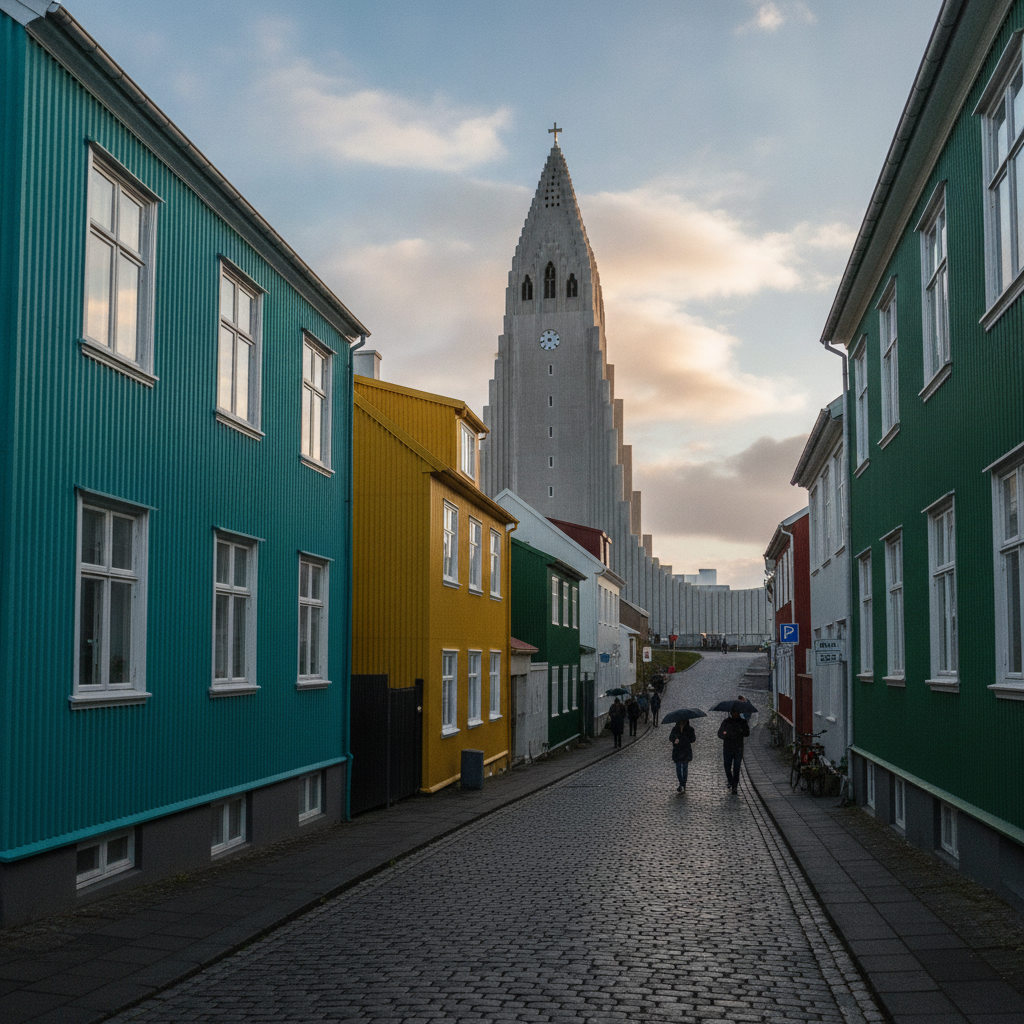
Reykjavik Culture — the Icelandic Sagas, Skyr, the Music Scene & the Coloured Old Town Houses
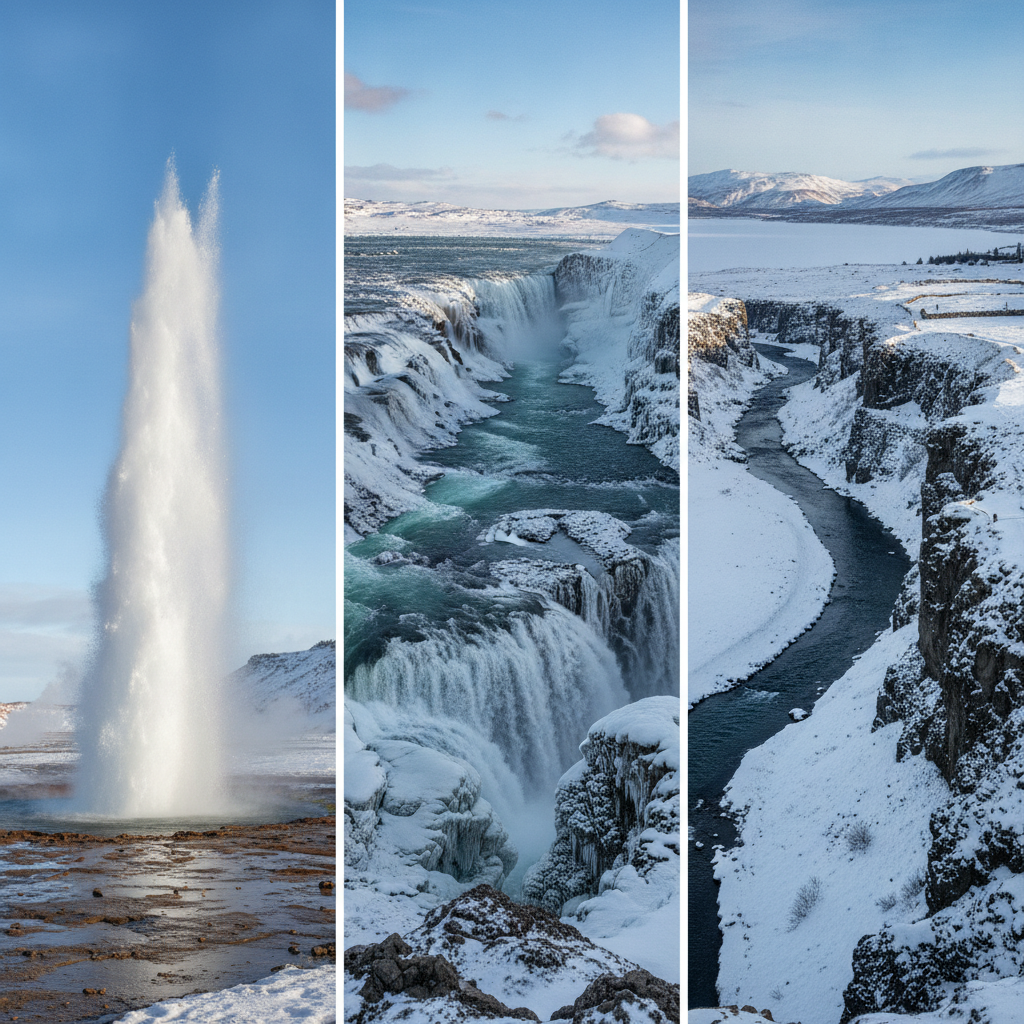
Reykjavik Day Trips — the Golden Circle, Northern Lights & Iceland's Most Iconic Landscapes