Quito Food Culture: Locro, Ceviche de Sierra, and the Central Market
Quito food culture reflects the highlands of Ecuador, with a cuisine built on potatoes, corn, quinoa, and a variety of stews and soups that have adapted Spanish colonial techniques to indigenous Andean ingredients. The city food economy runs from the street stalls of the Mercado Central to the upscale Nuevo Andino restaurants that have elevated traditional ingredients into international fine dining. Ecuador position as both highland Andean and Pacific coastal nation means both freshwater and Pacific seafood appear on Quito menus, and the proximity to the Amazon basin introduces jungle ingredients including palm hearts and exotic fruits. This route covers the essential Quito food experiences.
- 1
Locro de Papa: The Andean Potato Soup That Defines Quito Cooking
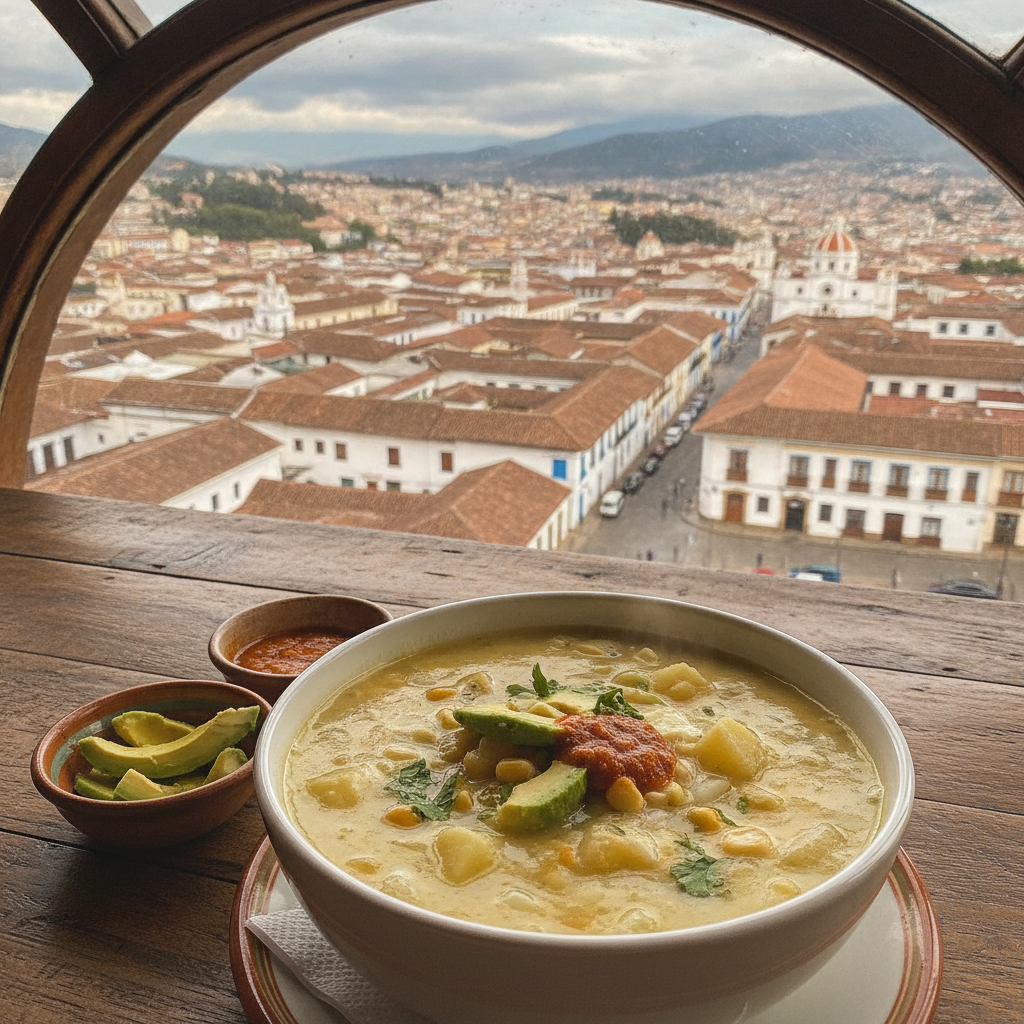
Locro de papa, a thick potato soup made with cream and fresh cheese and typically garnished with sliced avocado and aji chili, is the signature dish of the Quito highlands and one of the most consumed everyday dishes in the city. The soup is based on the papa chola, a yellow-fleshed potato variety grown in the Andean highlands that has a higher starch content and different flavor from lowland potato varieties. The recipe varies between families and restaurants in its ratio of potato to liquid and the inclusion of additional ingredients such as corn, squash, or meat; the simplest versions contain only potato, cheese, cream, and seasoning. Locro is served at comedores throughout the historic center, in the Central Market, and as an opening course in upscale restaurants that have elevated the highland tradition.
- 2
Mercado Central: The Food Market of the Historic District
The Mercado Central in the historic center of Quito is the primary covered food market serving the old city, with stalls selling fresh produce, meat, fish, prepared foods, and the market comedores that offer the most economical cooked meals in the city center. The market operates from early morning through the afternoon and is most active from 7 AM to 1 PM when the freshest produce and the market lunches are at their best. The comedor section offers a fixed lunch menu at approximately 2 to 3 dollars including soup, a main course of rice, beans, and protein, a small salad, and a juice. The market building itself is a mid-20th century structure with the characteristic covered arcade organization of Andean markets, its internal organization by product type making navigation intuitive after a single visit.
- 3
Ceviche Serrano and Coastal Seafood in the Capital
Although Quito is a highland city 300 kilometers from the Pacific coast, ceviche and other seafood preparations from the coast are widely available, reflecting the integration of highland and coastal culinary traditions in the national capital. The Ecuadorian ceviche tradition differs from Peruvian ceviche in its use of a tomato-based rather than citrus-only marinade; the shrimp ceviche served throughout Ecuador is a cooked preparation where the seafood is briefly cooked before marinating, unlike the raw-cure technique of Peruvian tiradito. The coastal city of Guayaquil has its own street food traditions that appear in Quito restaurants: encebollado, a tuna and yuca soup with pickled onion, is a popular hangover cure served from early morning at informal street stalls. Encocado, a coconut milk seafood stew from the Ecuadorian coast, appears on menus throughout the capital.
- 4
Nuevo Andino Cuisine: Elevated Highland Cooking at Quito Restaurants
The Nuevo Andino cooking movement that developed in Lima and spread through South America has a strong Quito manifestation, with several upscale restaurants elevating indigenous Andean ingredients including quinoa, kiwicha, mashua, and numerous native potato varieties into fine dining preparations. The Restaurante Zazu and the hotels of the Mariscal neighborhood have developed tasting menus combining these ingredients with classical French and contemporary technique. Ecuadorian biodiversity provides extraordinary raw material: the country has 4,000 native potato varieties, dozens of corn types, multiple quinoa cultivars, and access to both Andean and Amazon ingredients including palm hearts, jungle herbs, and freshwater fish from the upper Amazon tributaries. The fine dining scene in Quito has grown significantly since 2010 as Ecuadorian chefs trained abroad returned to work with national ingredients.
- 5
Ecuador Chocolate: From Cacao Nacional to Fine Bar
Ecuador is one of the world premier cacao-producing countries, and the variety known as Nacional or Arriba is prized by international chocolatiers for its distinctive floral flavor profile. The cacao is grown primarily in the coastal lowlands and the Amazonian foothills, but the chocolate manufacturing and specialty retail has concentrated in Quito and Guayaquil. Several artisan chocolate producers in Quito operate factory tours and retail shops selling single-origin bars made from beans sourced from specific farms and growing regions within Ecuador. The Republica del Cacao brand, the most internationally distributed Ecuadorian fine chocolate, has its main retail presence in the Mariscal neighborhood and the Quito airport. The tasting of cacao percentage and origin in a structured chocolate tasting is increasingly available as a tourist activity from Quito as the specialty chocolate sector grows.
- 6
Chicha, Naranjilla, and Quito Local Drinks
The traditional drink chicha, made from fermented corn or other starch crops, has been consumed in the Andes for thousands of years and remains present in highland communities though its consumption has declined in urban settings. Chicha de jora, made from sprouted corn that has been cooked and fermented, is the most traditional variety and is made and consumed at indigenous community celebrations. Naranjilla, a sour fruit native to the Andes with a unique flavor combining citrus and tomato elements, is one of the most distinctive Ecuadorian juices and is served fresh throughout Quito in the mornings. Colada morada, a thick hot drink made from purple corn, fruit, and spices, is traditional to the Dia de los Difuntos celebrations in early November and appears seasonally in bakeries and homes. Canelazos, a warm drink mixing aguardiente sugarcane spirit, cinnamon water, and naranjilla juice, is the standard cold-night warming drink served in highland bars and homes.
Walk this route with audio
Stories play automatically as you reach each stop — no tapping needed.
More in Quito
Quito History: From Inca Conquest to Independence and the Modern Republic
Quito Birdwatching: Andean Specialties from the City Limits

Quito Day Trips: The Avenue of the Volcanoes and Andean Markets

Quito to Galapagos: Planning the Journey to the Enchanted Islands
Quito Arts, Music, and Contemporary Culture