Quebec City: Where Churchill and Roosevelt Planned D-Day, Why the City Has 60000 People and the Entire British Colonies Had 1.5 Million and What Kebec Actually Means
Book the shoulder season in May or September to get 40 percent lower hotel rates while the Old Quebec walls look the same as peak summer, sleep in the convent where Augustinian nuns treated wounded soldiers from the 1759 battle the night after it ended, navigate the most francophone major city in North America where your French pronunciation will be corrected gently and your attempt will be rewarded immediately, drive 200 kilometres to watch 900 resident belugas feed where the cold Saguenay fjord meets the St. Lawrence at the site of the first Canadian trading post built in 1600, understand that Quebec itself is an Algonquin word meaning where the river narrows and that Cartier arrived to a village called Stadacona in 1535, and grasp why New France fell by noting that 60,000 French colonists were defending a continent against 1.5 million British colonists and France sent soldiers instead of settlers.
- 1
Quebec City Practical Travel Guide
Quebec City is compact and walkable within Old Quebec, with Upper Town and Lower Town connected by the funicular, the Breakneck Stairs, and several other stairways cut into the cliff face. The main visitor accommodation districts are Upper Town along the Rue Saint-Louis for luxury hotels and the Rue Saint-Jean for mid-range, and Lower Town in Petit-Champlain for boutique properties. The Jean Lesage International Airport is 12 kilometres west of Old Quebec with taxi and bus connections taking 20 to 30 minutes. The city is accessible by VIA Rail train from Montreal in 3 hours and by highway in 2.5 hours. The Quebec City Card provides transit and museum access. The best travel times are July for the Summer Festival, February for Winter Carnival, and late September to mid-October for fall foliage on Ile d Orleans and in Charlevoix, when the maple and birch forests turn red, orange, and gold against the St. Lawrence River backdrop. Summer weekends in Old Quebec are crowded with day visitors from Montreal and New England. The shoulder seasons of May to June and September to October offer full services with reduced crowds and hotel rates 30 to 40 percent below peak season.
- 2
Quebec City Hotel History and Accommodation
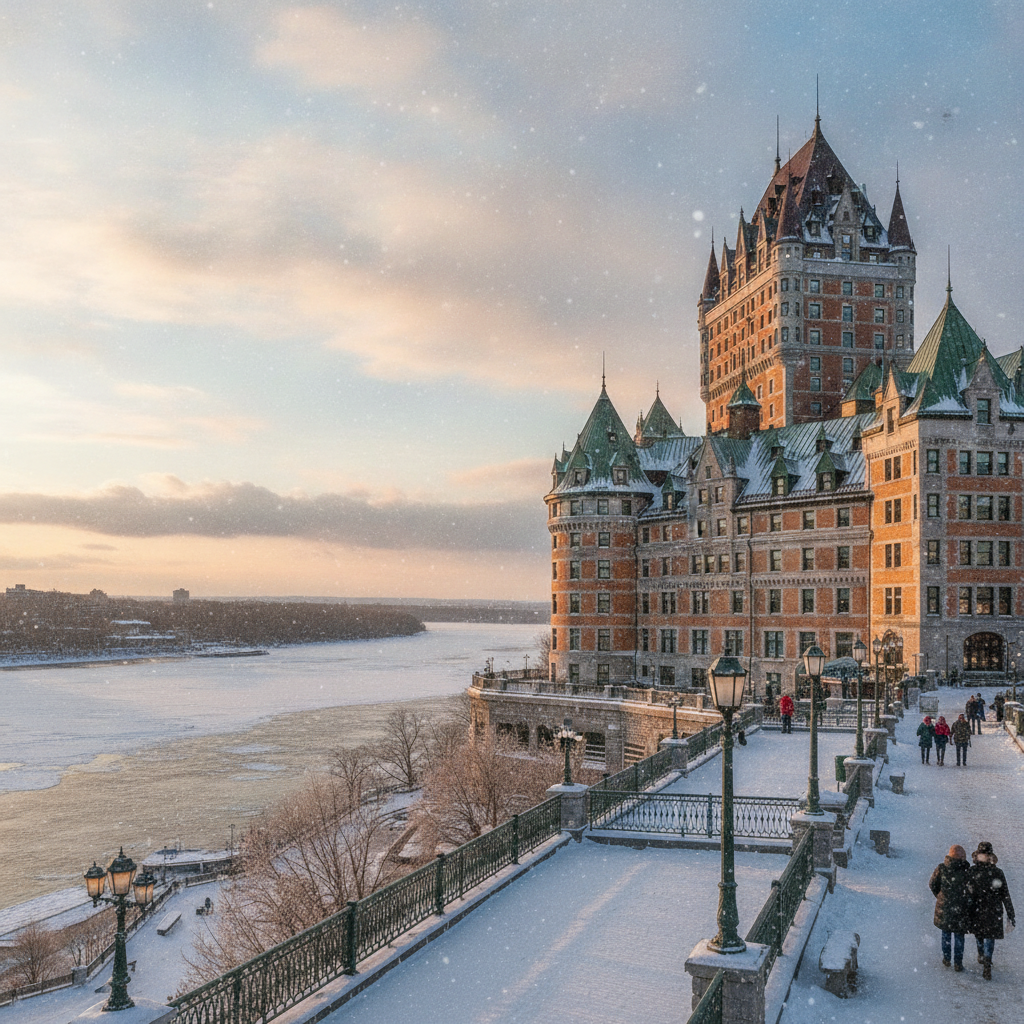
The accommodation landscape of Quebec City is anchored by the Fairmont Le Chateau Frontenac, which despite its iconic status is not the most expensive hotel in the city but is certainly the most famous, with 611 rooms, several restaurants, a spa, and a pool inside the chateau towers. The hotel hosted the Quebec Conference of 1943 and 1944 where Winston Churchill and Franklin Roosevelt planned Operation Overlord and the postwar international order. The Auberge Saint-Antoine in Lower Town, built on and around an 18th-century archaeological site where the hotel preserved artifacts from the site in the lobby and public spaces, is considered the most design-forward hotel in Quebec City. The monastery hotel conversions of Quebec City, where former religious institutions have been converted to boutique properties, represent a distinctive accommodation category: the Hotel du Monastere des Augustines near the Plains of Abraham occupies a convent where Augustinian nuns cared for the wounded of the Plains of Abraham battle in 1759 and still offers wellness retreats in the cloister spaces. Bed and breakfast accommodation in stone houses within the walls is widely available at competitive prices.
- 3
Quebec City Language Experience for Visitors
Quebec City is the most francophone major city in North America, where English is rarely heard on the street in residential areas and where staff in shops and restaurants typically open in French before switching to English for evident non-francophones. The linguistic environment is not hostile but is genuinely French-first in a way that Montreal, more bilingual and cosmopolitan, is not. Learning a few French phrases is more practically useful in Quebec City than almost anywhere else in North America. The accent of Quebec City French, the Quebecois accent, is among the most distinctive regional accents in the French-speaking world, differing substantially from Parisian French in vowel sounds, vocabulary, and grammatical constructions in ways that reflect the 400-year separation from France and the influence of Indigenous languages and English contact. The Quebecois use of joual, a working-class dialect with specific vocabulary and pronunciation markers, is considered a marker of authentic local identity and a source of pride rather than shame since the Quiet Revolution asserted cultural confidence. Visitors who attempt French are received warmly and code-switching between languages is natural and unforced in tourist contexts.
- 4
Saguenay Fjord Day Trip
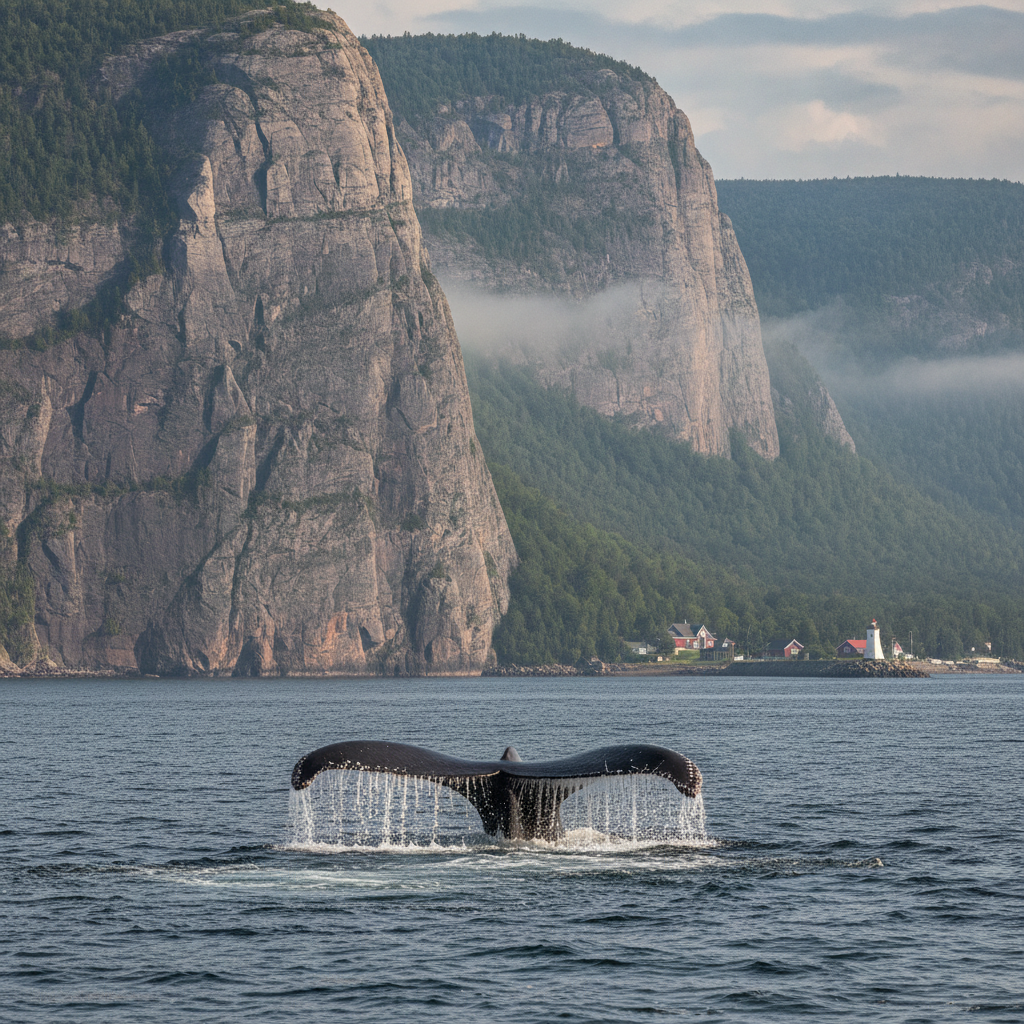
The Saguenay Fjord, a 100-kilometre glacially carved inlet entering the St. Lawrence from the north at Tadoussac, 200 kilometres northeast of Quebec City, is one of the most dramatic landscapes in eastern Canada and the site of the best whale watching on the Atlantic coast of North America, with Minke whales, fin whales, humpback whales, and the resident beluga whale population of approximately 900 animals using the confluence of cold deep Saguenay water and nutrient-rich St. Lawrence water as a feeding ground from June through October. Tadoussac, where the Saguenay meets the St. Lawrence, was the site of the first permanent trading post in Canada, established by Pierre Chauvin in 1600, eight years before Champlains settlement at Quebec. The pink granite cliffs of the Saguenay Fjord rise to 400 metres above the water and are accessible by cruise boat, kayak, or the Saguenay Fjord National Park trail system on both shores. The Jose Marial Chevalier beluga research station at Tadoussac has studied the St. Lawrence beluga population continuously since 1974. The drive from Quebec City to Tadoussac via Route 138 on the north shore passes through Charlevoix and is considered one of the most scenic drives in Canada.
- 5
Quebec City First Nations Languages and Place Names
The place names of the Quebec City region are largely derived from Indigenous languages, particularly Algonquin and Iroquoian languages, preserved in the French and English names of rivers, regions, and geographic features. Quebec itself derives from the Algonquin word kebec, meaning where the river narrows, an accurate geographic description of the St. Lawrence narrows at Cap Diamant. Stadacona, the St. Lawrence Iroquoian village that occupied the site of present-day Quebec City when Cartier arrived in 1535, left its name primarily in modern French Quebec place name scholarship rather than in current usage. The Montagnais-Innu people, the primary Algonquin-speaking First Nation of the Quebec City hinterland at the time of French contact, called themselves the Innu, meaning the people, a name the French rendered as Montagnais, meaning mountain people. The Innu language, still spoken by approximately 11,000 people in communities along the north shore of the St. Lawrence and in Labrador, is unrelated to French and belongs to the Algonquin language family. The survival of Indigenous place names in Quebec, preserved through French colonial practice of recording geographic names phonetically from Indigenous informants, provides a linguistic record of pre-contact geography.
- 6
Quebec City New France Colonial Society
New France at its demographic peak in 1759 had a European population of approximately 60,000 people, concentrated along the St. Lawrence River from Quebec City to Montreal, making it dramatically less populated than the British colonies to the south which numbered over 1.5 million. The small population of New France relative to the British colonies was a strategic vulnerability recognized by French administrators who repeatedly requested more settlers from France, receiving instead mostly soldiers and administrators. The habitants, the farming class who cleared land along the St. Lawrence in the distinctive long lot system where farms ran in narrow strips perpendicular to the river to maximize river frontage for water access and community, developed a distinctive culture of autonomy, oral tradition, and seasonal rhythm centered on the Catholic parish as social institution. The seigneurial system of land tenure, where large landowners held grants from the Crown and collected dues from tenant habitants, was abolished in 1854 but shaped settlement patterns visible today in the aerial geography of Quebec farms. The census of New France conducted regularly from 1666, the first systematic census of any North American colony, provides remarkable demographic detail about colonial society.
Walk this route with audio
Stories play automatically as you reach each stop — no tapping needed.
More in Quebec City
Quebec City: The Bridge That Collapsed Twice and Invented Professional Engineering Ethics, the Navy Battle That Really Ended New France and Beaver Hats That Built a City
Quebec City: The Battle That Lasted 15 Minutes But Changed a Continent, the World Largest Winter Carnival and the Tech Quarter Built Under a Chateau
Quebec City: A Bateau Pulled from Under a Building, the Narrowest Sovereignty Referendum in Democratic History and a Language Law That Changed a City
Quebec City: A Meteorite Crater That Made a Wine Region, the Ice Hotel That Melted Every Spring and the Scurvy Cure That Europe Forgot for 200 Years
Quebec City: The First University in Canada Founded 1663, Why the Ice Canoe Race Depends on a Freezing River That Freezes Less Every Decade and What 4.5 Million Tourists Do to a City of 800000