Quebec City: The Battle That Lasted 15 Minutes But Changed a Continent, the World Largest Winter Carnival and the Tech Quarter Built Under a Chateau
Walk the plateau where a 15-minute battle in 1759 killed both commanders and transferred New France to Britain, then come back in February when 100,000 people a day fill the same ground for the worlds largest winter carnival with ice canoe races across floes in a tidal river, eat tourtiere and pull maple taffy off snow in March at a sugar shack on an island where the same families have farmed for four centuries, cross the ferry whose water level view of the chateau is better than any vantage on land, visit the 1813 jail turned English-language library archive serving a 2-percent English minority community that has maintained its institutions for 260 years, then walk fifteen minutes to Saint-Roch where Ubisoft built Assassins Creed Odyssey and a parking garage roof became the neighborhood park.
- 1
Plains of Abraham Battlefield Park
The Plains of Abraham, the plateau west of the Citadel where the British forces under General James Wolfe defeated the French under the Marquis de Montcalm in a 15-minute battle on September 13, 1759, is now a 100-hectare urban national park managed by the National Battlefields Commission, making it one of the most historically significant parklands in North America used simultaneously as a summer festival ground, jogging path, cross-country ski trail, and snowshoeing area. Both commanders died of wounds from the battle: Wolfe died on the battlefield and Montcalm died of his wounds the following morning, the only battle in history where both opposing commanders died from the same engagement. The Plains of Abraham Museum in the Cartier-Brebeuf National Historic Site interprets the battle, the subsequent British administration of New France, and the complex cultural negotiations that followed. The park hosts major summer concerts including the FEQ (Festival d International d Ete de Quebec) which brings 100,000 daily attendees to the Plains.
- 2
Quebec Winter Carnival
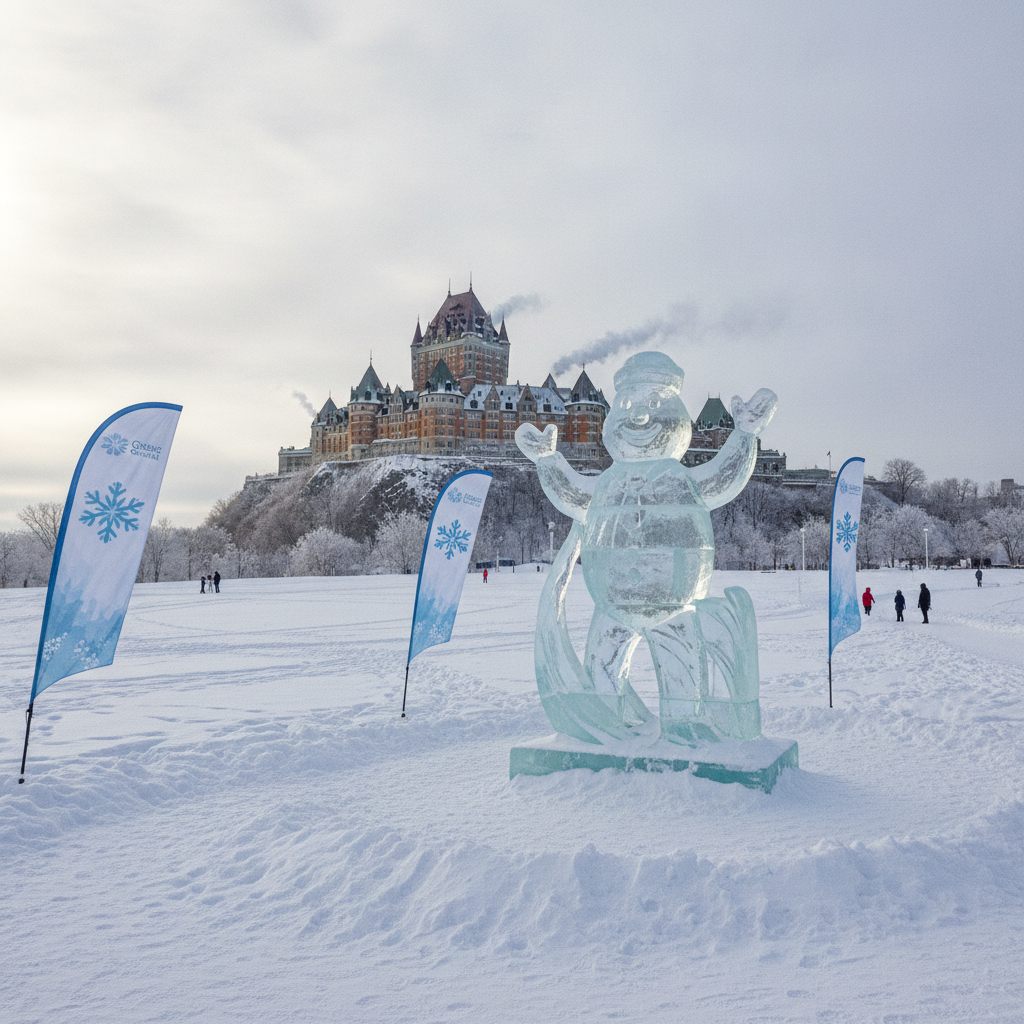
The Quebec Winter Carnival, held each February since 1955 and considered the largest winter carnival in the world, transforms Old Quebec into a festival celebrating winter as a pleasure rather than a hardship with events including ice sculpture competitions, night parades, the ice canoe race across the St. Lawrence River between ice floes, international snow bathing competitions, and the famous outdoor dance parties called guignolees. The carnival mascot Bonhomme Carnaval, a snowman in a red tuque and woven sash, is considered the international symbol of Quebec and makes official appearances at events throughout the ten-day festival. The ice canoe race across the St. Lawrence is the most physically demanding event, requiring teams of five to paddle and drag their canoe through alternating open water and ice floe fields between the south shore and Old Quebec. Temperatures during Carnival average minus 12 Celsius. The Carnaval du Quebec was the inspiration for carnivals in cities including Minneapolis, Ottawa, and Winnipeg that have adopted similar winter celebration formats.
- 3
Quebec City Food Culture and Sugar Shacks
Quebec City food culture is anchored in a specific canon of Quebecois dishes that originated in habitant farmhouse cooking of the 17th and 18th centuries: tourtiere, a spiced meat pie with pork or game; poutine, the combination of french fries, fresh cheese curds, and hot gravy invented in the 1950s in the Centre-du-Quebec region; cretons, a spiced pork fat spread eaten on toast; and the sugar shack tradition of erable, or maple, season eating that takes place each March and April when rising temperatures cause sap to flow in the maple forests of Quebec. The cabane a sucre, or sugar shack, experience involves traveling to a maple farm where guests eat a traditional meal of ham, eggs, baked beans, sausage, and pancakes poured with fresh warm maple syrup, and pull tire sur neige, maple taffy poured hot onto packed snow and rolled on a stick as it cools. Quebec City has several sugar shacks accessible day-trip distance including those on Ile d Orleans. The Vieux-Quebec restaurant scene has evolved to include internationally acclaimed restaurants like Restaurant Laurie Raphael while remaining grounded in Quebecois ingredient traditions.
- 4
Quebec City Saint Lawrence River and Ferry
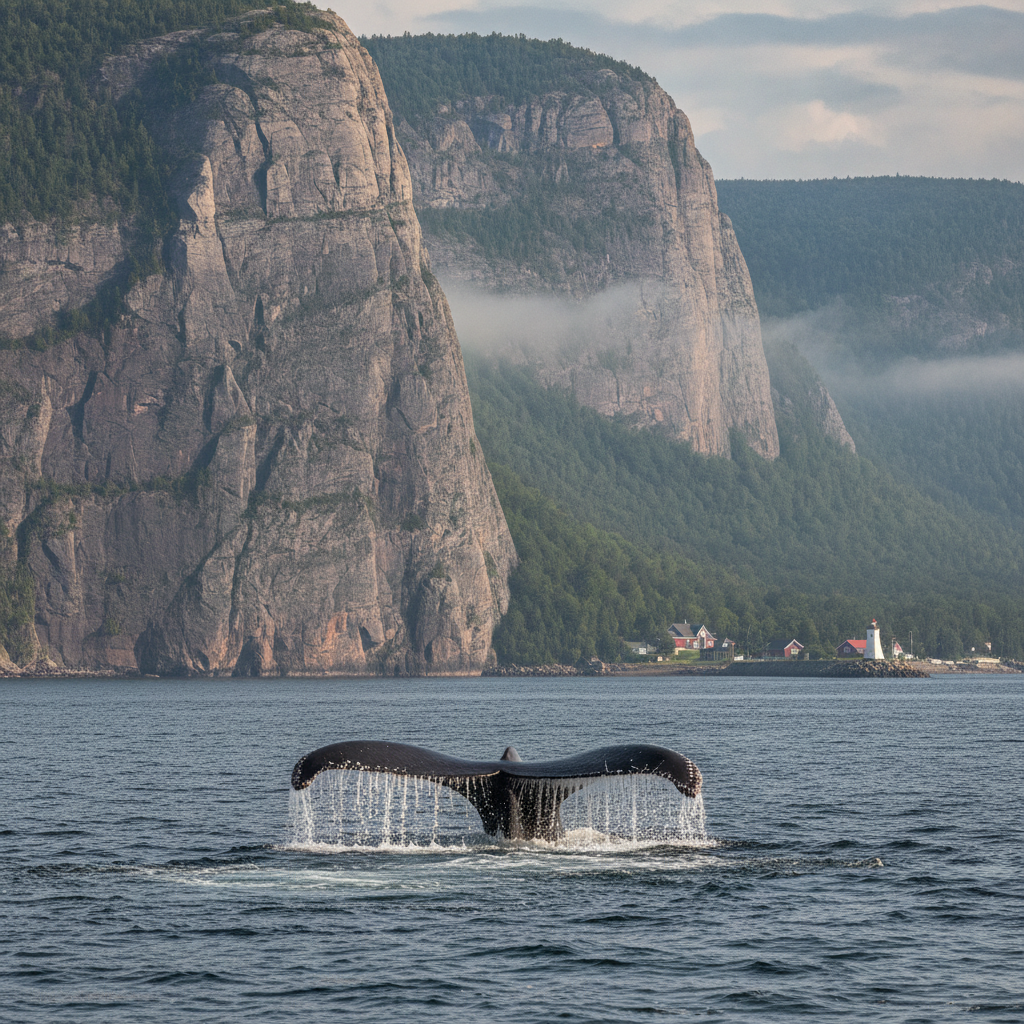
The St. Lawrence River at Quebec City narrows to approximately 1 kilometre between Cap Diamant and the south shore, making this the natural geographic choke point that determined the city was the key to controlling all of New France, since any ship heading upriver to Montreal had to pass this narrows. Samuel de Champlain chose the site for this strategic reason in 1608. The river at Quebec is still tidal and still runs with fresh water mixed with sea water from the Atlantic 1,200 kilometres downstream. The Quebec-Levis ferry crosses the narrows continuously from 6am to 2am for foot passengers and vehicles, offering the best views of the Chateau Frontenac and fortifications from water level. The Levis shore, directly across from Old Quebec, offers the most iconic photography angle on the city. The river freezes partially in winter, requiring icebreaker assistance for commercial shipping, and creates the ice floe conditions used in the Winter Carnival ice canoe race. Beluga whales from the Saguenay population occasionally appear in the river near Quebec City in summer, though the primary whale-watching area is 150 kilometres downstream near Tadoussac.
- 5
Quebec City English History and Morrin Centre
The Morrin Centre in Old Quebec occupies the former Quebec City jail and Protestant college, a stone building completed in 1813 that served as the main prison for Lower Canada and the site of public hangings before its conversion to the Quebec Literary and Historical Society library in 1868. The library collection of 13,000 volumes dating from the 16th century onwards represents the most significant English-language library archive in Quebec. The Morrin Centre is now the primary cultural institution serving the English-speaking minority community of Quebec City, which numbers around 2 percent of the city population and traces continuous presence to the British military officers and merchants who arrived after 1759. The literary society was founded in 1824 by Lord Dalhousie, then governor general of Canada. The building also contains the original prison cells in the basement, preserved as a heritage space. The English-speaking community of Quebec City, though small, has maintained a distinct institutional infrastructure including schools, hospitals, and cultural organizations for 260 years through the various political and linguistic transformations of Quebec society.
- 6
Quartier Saint-Roch and Modern Quebec City
The Saint-Roch quarter of Lower Town Quebec City, once the commercial and working-class heart of the city that declined through postwar suburbanization and industrial shutdown to near-abandonment by the 1980s, was revitalized through a city-led investment strategy beginning in the 1990s that relocated government offices and a Laval University campus there, catalyzing private investment in restaurants, bars, galleries, and technology companies that transformed Saint-Roch into the creative economy center of Quebec City by 2010. The revitalization is considered a model of urban renewal because it used anchor institutional investment rather than gentrification displacement as its primary tool. The Saint-Roch public garden covering the roof of a parking garage is a year-round animated public space. The technology sector in Quebec City, centered on video game companies including Ubisoft Quebec which developed Assassins Creed Odyssey, employs over 10,000 people and has made the city one of the primary game development centers in North America. The contrast between tourist-facing Old Quebec and the working contemporary city of Saint-Roch is essential to understanding Quebec City as a living metropolitan area rather than a preserved museum quarter.
Walk this route with audio
Stories play automatically as you reach each stop — no tapping needed.
More in Quebec City
Quebec City: The Bridge That Collapsed Twice and Invented Professional Engineering Ethics, the Navy Battle That Really Ended New France and Beaver Hats That Built a City
Quebec City: A Bateau Pulled from Under a Building, the Narrowest Sovereignty Referendum in Democratic History and a Language Law That Changed a City
Quebec City: A Meteorite Crater That Made a Wine Region, the Ice Hotel That Melted Every Spring and the Scurvy Cure That Europe Forgot for 200 Years
Quebec City: The First University in Canada Founded 1663, Why the Ice Canoe Race Depends on a Freezing River That Freezes Less Every Decade and What 4.5 Million Tourists Do to a City of 800000
Quebec City: The Most Photographed Hotel on Earth, Only Walled City in North America and Stairs Climbed by Pilgrims for 350 Years