Quebec City: The Most Photographed Hotel on Earth, Only Walled City in North America and Stairs Climbed by Pilgrims for 350 Years
Stand on the Dufferin Terrace before the Guinness-certified most photographed hotel on earth whose CPR owners built it specifically to fill transcontinental train seats, walk the only intact city walls in North America north of Mexico where a 15-minute battle in 1759 ended French rule of a continent, see Montmorency Falls that Samuel de Champlain noted in 1608 and that are 30 metres taller than Niagara, find the oldest stone church in North America still holding Mass at Place Royale where Champlain landed, cross the bridge to an island where the same surnames have farmed since 1650, and climb on your knees the stairs where 1.5 million pilgrims arrive each year at North America oldest pilgrimage destination.





1. Chateau Frontenac and the Dufferin Terrace
- 1
Chateau Frontenac and the Dufferin Terrace
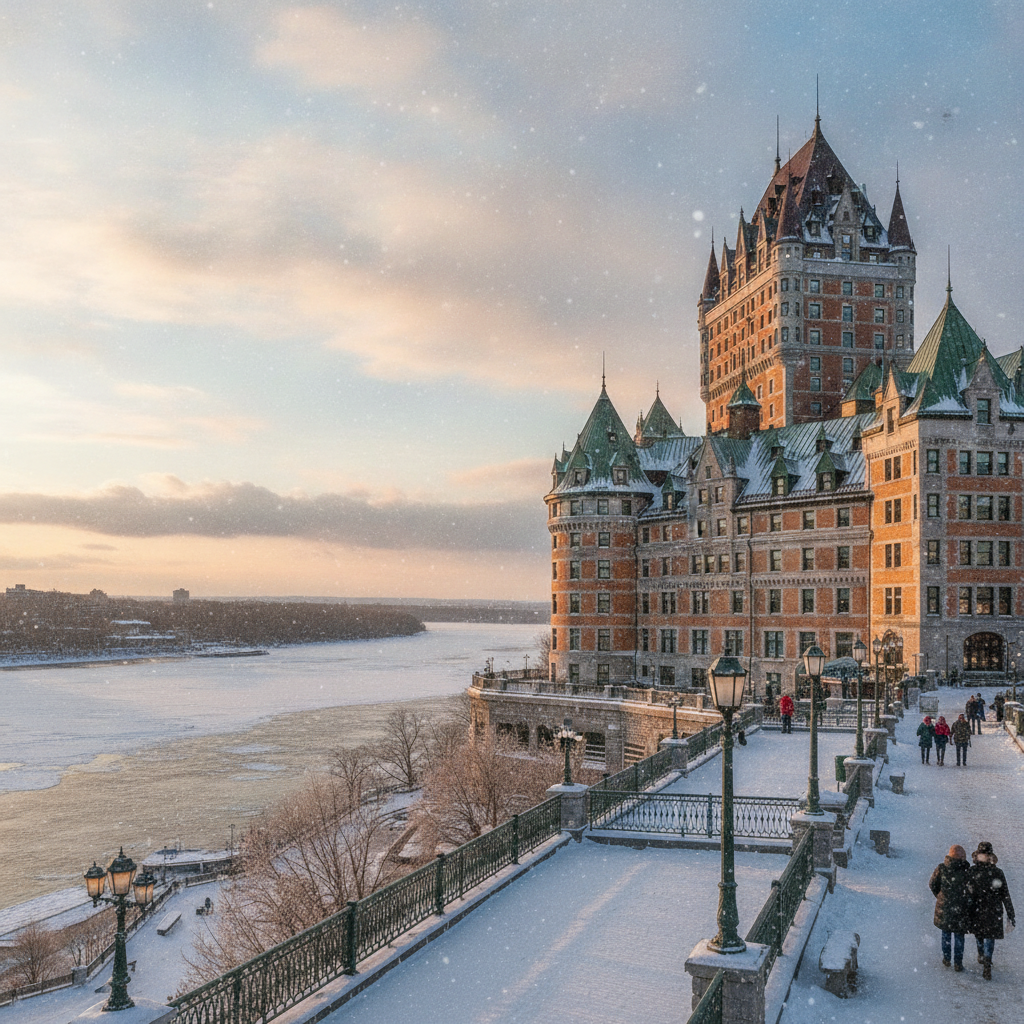
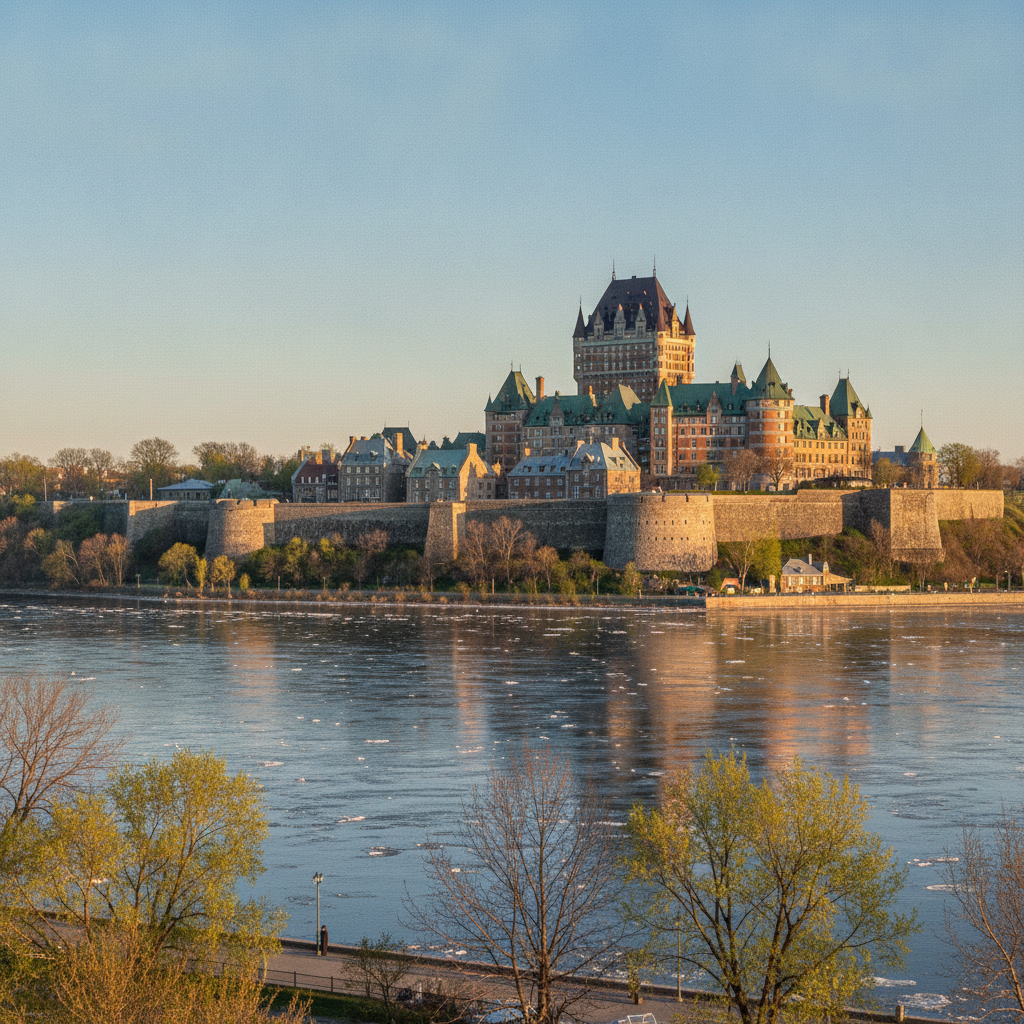
The Chateau Frontenac, opened in 1893 by the Canadian Pacific Railway and designed by architect Bruce Price in a French Renaissance chateau style, is recognized by Guinness World Records as the most photographed hotel in the world, a claim based on the extraordinary frequency with which its copper-green turrets and stone towers appear in tourism imagery from across the St. Lawrence River and Plains of Abraham. The hotel was built by the CPR as part of a strategy to generate passenger traffic on its transcontinental railway by creating aspirational destination hotels across Canada. The Dufferin Terrace, a 671-metre elevated wooden boardwalk running along the cliff edge beside the chateau, was built in 1838 and expanded in 1879, offering panoramic views of the St. Lawrence River and the south shore 90 metres below. The terrace is used for toboggan slides in winter, when a 300-metre ice slide operates beside the chateau as part of Quebec Winter Carnival traditions dating to 1894.
- 2
Old Quebec Fortifications and Citadel
Quebec City is the only fortified city north of Mexico in North America, with its 4.6-kilometre ring of stone walls still largely intact around Upper Town after more than 350 years of construction and modification beginning with French fortifications in the 1690s under the direction of engineer Josue Dubois Berthelot de Beaucours. The Citadel, a star-shaped fortress built by the British between 1820 and 1850 on the Cap Diamant promontory above the St. Lawrence, houses the Royal 22nd Regiment, the only French-speaking regular force regiment in the Canadian Army, which has performed the Changing of the Guard ceremony every summer morning at 10am since 1928. The fortifications were recognized as a UNESCO World Heritage Site in 1985, one of only two entire urban areas in the Americas to hold this designation alongside Old Havana. The 1759 Battle of the Plains of Abraham, lasting only 15 minutes but deciding the fate of New France, occurred just west of the current Citadel walls.
- 3
Montmorency Falls
Montmorency Falls, 12 kilometres east of Old Quebec at the mouth of the Montmorency River where it meets the St. Lawrence, stands 83 metres tall, 30 metres higher than Niagara Falls, making it the highest waterfall in the province of Quebec and a site that has astonished visitors since Samuel de Champlain described it in 1608. The falls are fed primarily by snowmelt and spring rainfall, making the volume greatest in May and June. In winter, spray from the falls accumulates into a cone of ice that can reach 30 metres in height at the base, called the pain de sucre, or sugarloaf, which Quebec City residents have climbed recreationally since at least the 1800s. A suspension bridge 84 metres above the gorge allows visitors to cross directly over the falls. The Manoir Montmorency, a Victorian manor house converted to a restaurant and visitors centre at the top of the falls, occupies the site where the Duke of Kent, father of Queen Victoria, lived during his posting to Quebec in the 1790s.
- 4
Place Royale and Lower Town
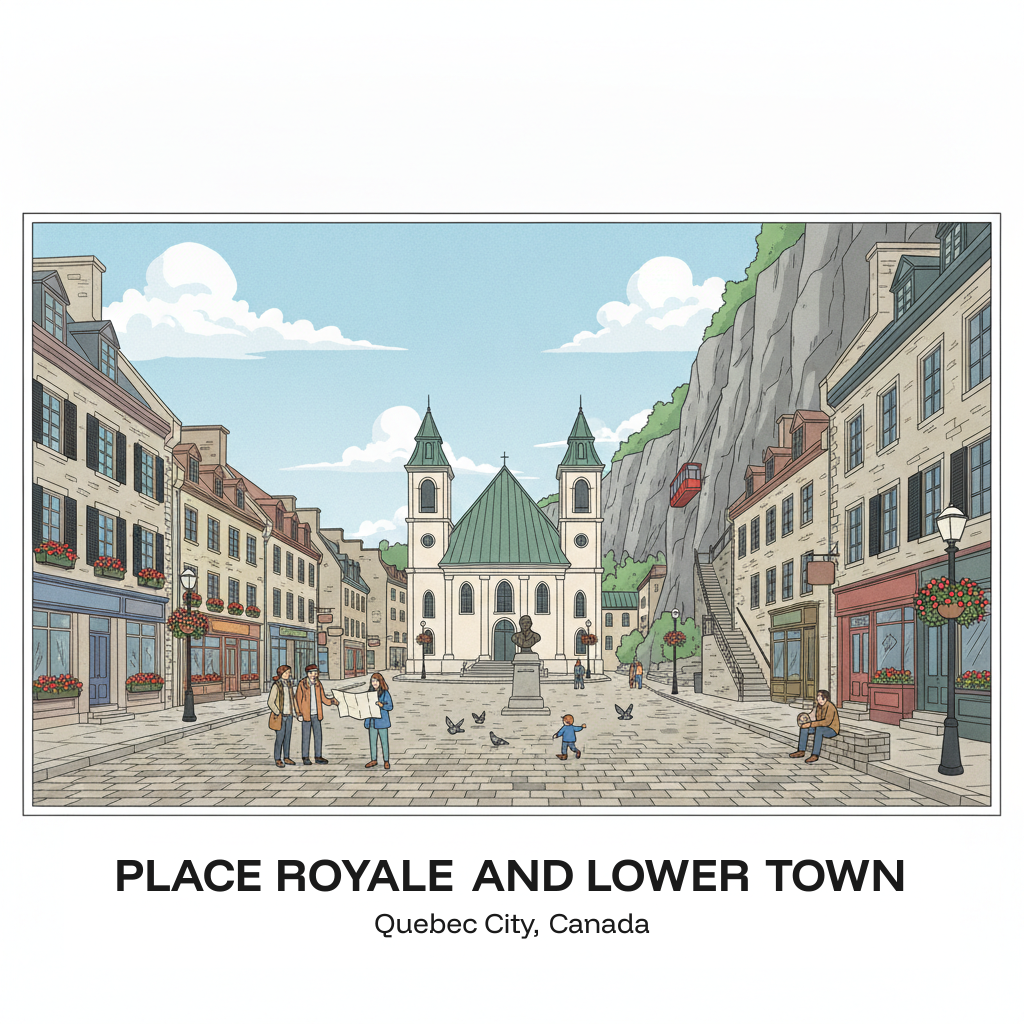
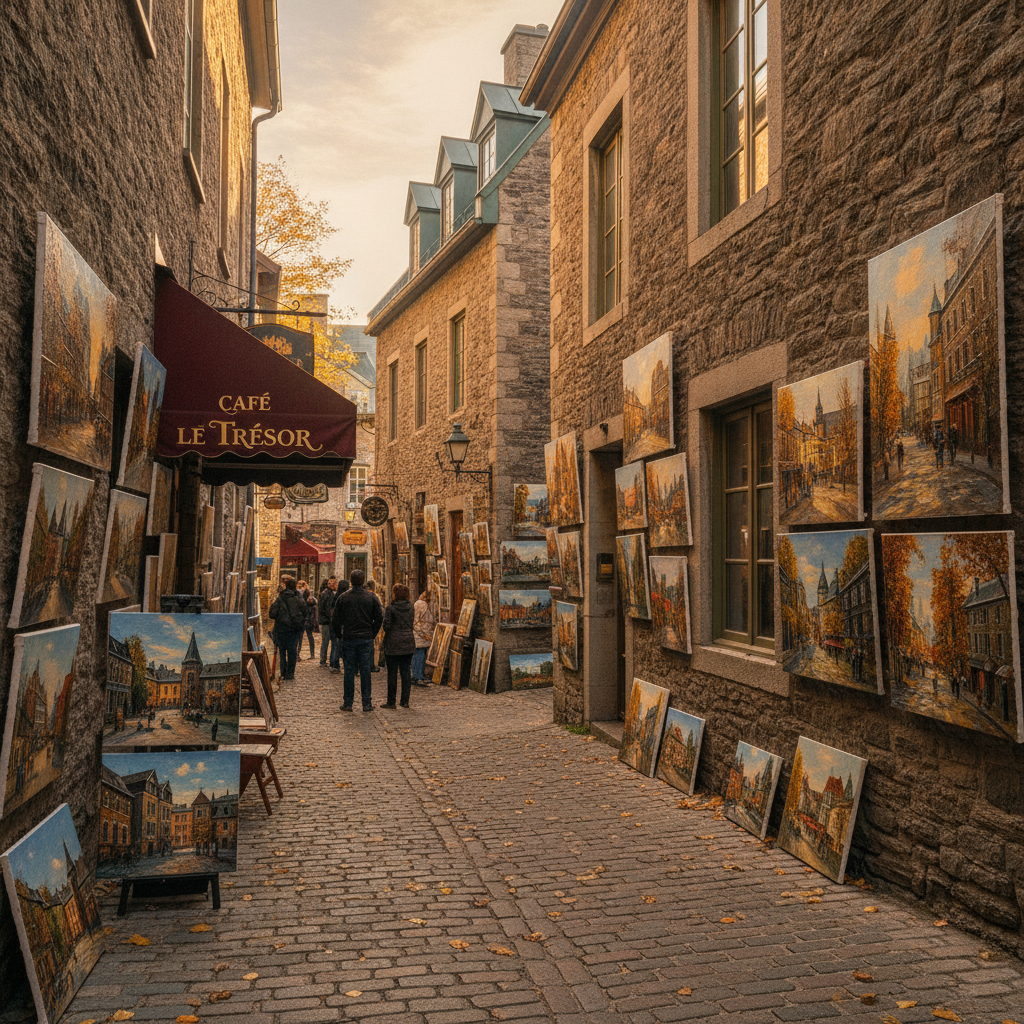
Place Royale in the Lower Town of Quebec City is the site of the first permanent French settlement in Canada, where Samuel de Champlain established his Habitation in 1608 on a flat area at the base of the Cap Diamant cliff between the cliff and the St. Lawrence River. The square was the commercial and social heart of New France from the 17th century through the British conquest of 1759. The Notre-Dame-des-Victoires church at the center of Place Royale, built in 1688, is the oldest stone church in North America still in active use. The Lower Town was connected to the Upper Town by the Breakneck Stairs, a staircase built in the 1890s that has 59 steps descending the cliff face, and by the funicular built in 1879, making it one of the oldest funiculars in North America. The Quartier Petit-Champlain, a pedestrian shopping street adjacent to Place Royale with buildings dating to the 1680s, is regularly cited as the most charming commercial street in North America.
- 5
Ile d Orleans Quebec
Ile d Orleans, a 34-kilometre island in the St. Lawrence River immediately east of Quebec City reached by a single bridge built in 1935, is sometimes called the cradle of French civilization in North America because its population of approximately 7,000 people includes many families who have lived on the island for 300 to 400 years with surnames like Gosselin, Morin, Drouin, and Cote appearing continuously in parish records since the mid-1600s. The island produces strawberries, apples, black currants, wine, artisan cheeses, and maple products that are sold from roadside stands and farm shops lining the circuit road around its perimeter. The six parishes along the island road each have a heritage church and village center. Ile d Orleans was designated a cultural landscape heritage area by the Quebec government in 1970, preventing subdivision and commercial development. Felix Leclerc, considered the father of Quebec chanson, lived on Ile d Orleans from 1970 until his death in 1988, and the island hosts a music festival in his honor each summer.
- 6
Sainte-Anne-de-Beaupre Shrine
The Basilica of Sainte-Anne-de-Beaupre, 35 kilometres northeast of Quebec City on the north shore of the St. Lawrence, is the oldest pilgrimage site in North America, with a tradition of miraculous healing attributed to Saint Anne dating to 1658 when Breton sailors who survived a shipwreck near the site donated three stones to build the first chapel. The current basilica, completed in 1926 in a French Romanesque style with twin 91-metre spires visible from the St. Lawrence River, can accommodate 10,000 pilgrims and attracts over 1.5 million visitors annually. The crutches, canes, and braces abandoned by pilgrims who reported healing after prayer fill two large columns at the entrance to the nave, a tradition that has continued for over 350 years. The Scala Santa, a reproduction of the sacred stairs in Rome said to be those climbed by Jesus before his crucifixion, stands beside the basilica where pilgrims ascend on their knees. The pilgrimage is heaviest around July 26, the feast day of Saint Anne.
Walk this route with audio
Stories play automatically as you reach each stop — no tapping needed.
More in Quebec City
Quebec City: The Bridge That Collapsed Twice and Invented Professional Engineering Ethics, the Navy Battle That Really Ended New France and Beaver Hats That Built a City

Quebec City: The Battle That Lasted 15 Minutes But Changed a Continent, the World Largest Winter Carnival and the Tech Quarter Built Under a Chateau
Quebec City: A Bateau Pulled from Under a Building, the Narrowest Sovereignty Referendum in Democratic History and a Language Law That Changed a City
Quebec City: A Meteorite Crater That Made a Wine Region, the Ice Hotel That Melted Every Spring and the Scurvy Cure That Europe Forgot for 200 Years
Quebec City: The First University in Canada Founded 1663, Why the Ice Canoe Race Depends on a Freezing River That Freezes Less Every Decade and What 4.5 Million Tourists Do to a City of 800000