Puebla Convents Churches and the Religious Architecture of a City Built by Angels Where 72 Colonial Churches Represent the Most Complete Ecclesiastical Cityscape in Mexico
Puebla was conceived and built as a model Christian city, and the density of its colonial religious architecture reflects that founding ambition: 72 colonial churches survive in the historic center, representing every major religious order that operated in New Spain and every major period of colonial baroque architectural development from the severe Herreran style of the 16th century to the most elaborate churrigueresque of the 18th century. The scale of the ecclesiastical investment in Puebla reflects the city's status as the second most important city in New Spain and the center of the most active evangelization program in the Americas: the Franciscans, Dominicans, Augustinians, Carmelites, Jesuits, Bethlehemites, Mercy order, and the secular clergy all built major church and convent complexes within the first century of the city's existence, creating the architectural density that UNESCO recognized in 1987. The Biblioteca Palafoxiana, the 17th-century library of Bishop Juan de Palafox y Mendoza, represents the intellectual dimension of this ecclesiastical investment: Palafox brought 5,000 volumes of his personal library to Puebla, established the library as a public resource open to all citizens, and used the book collection as the foundation for the educational mission of the colonial church. The ex-convent of San Francisco, one of the largest Franciscan complexes built in the Americas, covers an entire city block adjacent to the church of San Francisco de Asis whose churrigueresque facade in glazed brick and Talavera tile is the most unusual church exterior in Puebla, combining the ceramic tile tradition with the stone carving of the baroque program in a way that no other Mexican church replicates. The convent tradition of Puebla was suppressed by the Reform Laws of 1855 and the subsequent nationalization of church property under Juarez, which converted the convent buildings to government offices, barracks, schools, and eventually the museums and cultural centers that occupy them today.
- 1
San Francisco Church and the Franciscan Complex
The Church of San Francisco de Asis and its adjacent ex-convent complex, located on 14 Oriente street three blocks east of the Zocalo, is the oldest religious complex in Puebla, with the Franciscan order having established their first mission building on the site in 1535 within four years of the city's founding. The facade of San Francisco church is the most visually distinctive in Puebla, constructed in glazed brick with Talavera tile ornament and blue-and-white tile insets creating a pattern of Islamic-inspired geometric design that reflects the mudéjar tradition of Spanish craftsmen who combined the Islamic decorative vocabulary with the Christian architectural program. The interior of San Francisco preserves the chapel of the first Mexican-born saint, Felipe de Jesus, who was martyred in Japan in 1597 and canonized in 1862, with the chapel containing the relics and the iconographic program of the first indigenous martyr of New Spain. The ex-convent complex of San Francisco, one of the largest in the Americas, covers the full city block behind the church and housed hundreds of friars during its peak operation in the 17th century. The building now serves multiple municipal and state government functions while the cloister and church remain in religious use. The underground passages connecting the San Francisco complex to other colonial religious buildings in the historic center, a network documented in historical sources but only partially excavated by modern archaeologists, represent the subterranean dimension of the Puebla ecclesiastical infrastructure that operated during the colonial period to connect the convents for the movement of personnel and supplies without traversing the public streets.
- 2
Church of Santo Domingo and the Rosary Chapel Interior
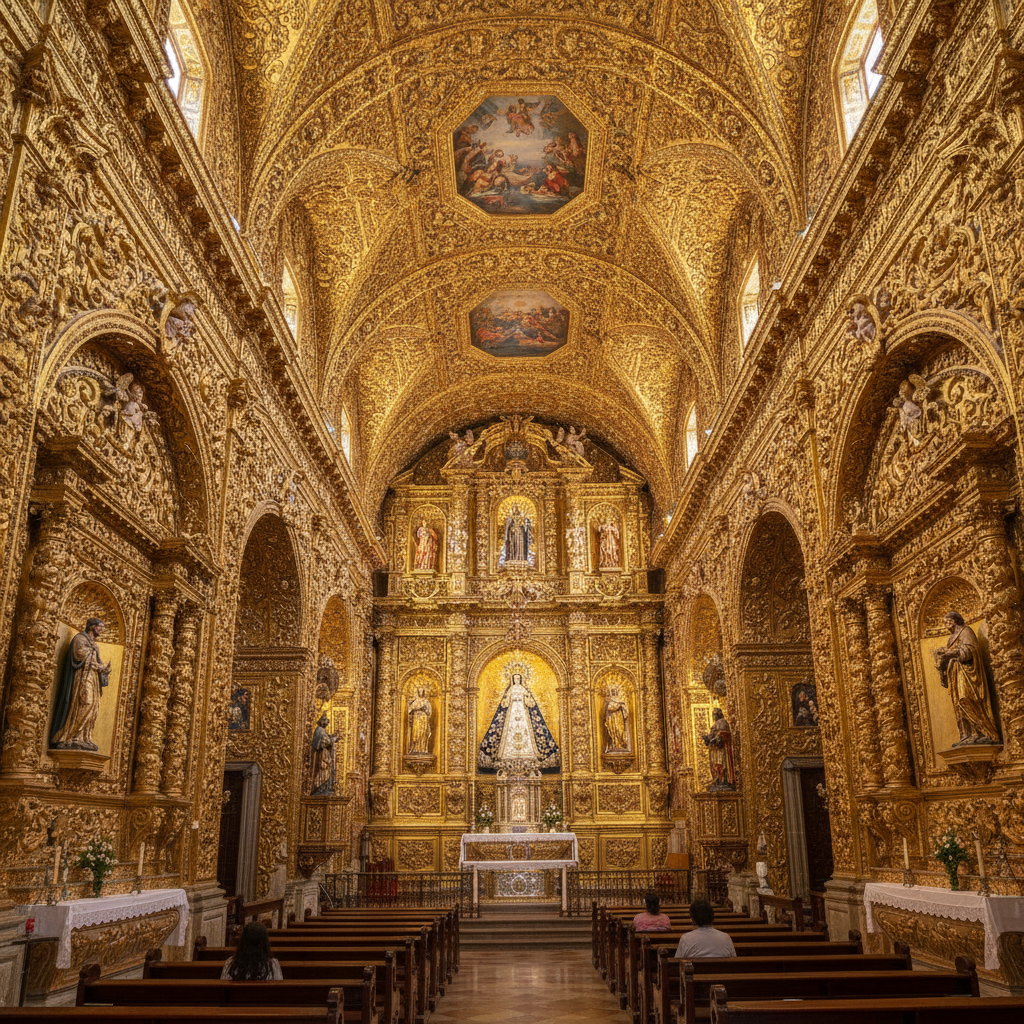
The Church of Santo Domingo, the Dominican order church on 5 de Mayo street two blocks north of the Zocalo, presents the finest collection of colonial period painting and sculptural decoration of any single church in Puebla, with the main chapel altarpieces representing the 17th-century Puebla school of painting at its most accomplished and the Capilla del Rosario providing the supreme example of Mexican Baroque decorative art. The Capilla del Rosario, built between 1650 and 1690 on the south side of the nave of Santo Domingo, concentrates in a space of approximately 200 square metres the total decorative ambition of the Poblano baroque tradition: gilded plaster relief covering every surface, painted oil-on-tile panels depicting the mysteries of the rosary, alabaster windows filtering the light, carved stone framing the niches, and the figure of the Virgin of the Rosary enthroned at the altar in a visual environment that the completion inscription described as eighth wonder of the world. The gilded plaster technique of the Capilla del Rosario, called yesería or estucado and applied by indigenous craftsmen who had adapted the Spanish tradition to the Mexican materials and aesthetic, involves building up layers of gypsum plaster over a wooden armature, carving the surface to create the three-dimensional relief, and then applying gold leaf to the carved surface in a process that took 40 years of continuous work to complete the chapel. The Dominican order has maintained the Capilla del Rosario as an active chapel with masses and devotional services since its completion in 1690, meaning that the gold and plaster decoration has been subject to the candle smoke, incense, and humidity of continuous liturgical use for more than 330 years, requiring periodic restoration to maintain the integrity of the original surface.
- 3
Biblioteca Palafoxiana and Colonial Intellectual Life
The Biblioteca Palafoxiana, established in 1646 by Bishop Juan de Palafox y Mendoza in the rooms adjacent to the cathedral choir and opened to the public as Mexico's first public library, is the oldest functioning public library in the Americas and the most significant colonial-period library interior surviving in Mexico, preserved with its 17th-century carved wood shelving, Talavera tile floor, vaulted ceiling, and the collection of 45,000 volumes donated or acquired by the bishop and his successors over the three centuries of the library's operation. Palafox y Mendoza was the most significant ecclesiastical figure in 17th-century New Spain, serving simultaneously as bishop of Puebla and viceroy of New Spain in 1642, and his intellectual ambition and prolific writing produced a library collection that included first editions of European Enlightenment texts, indigenous language dictionaries and grammars, scientific treatises, theological works, and the colonial manuscript recipe books and chronicles that are among the most valuable documentary sources for colonial Mexican history. The library building, constructed in Puebla's characteristic colonial style with the blue and white Talavera tile dados, the painted canvas ceiling panels, and the baroque carved wood shelving that holds the collection in its original organizational structure, is a UNESCO Memory of the World documentary heritage site. The rare book collection of the Palafoxiana includes incunabula, the first printed books produced in Europe before 1501, colonial-era manuscripts in Nahuatl and other indigenous languages, and the first books printed in New Spain from the Juan Pablos press of the 1540s. The library is open to visitors and operates an active research program for scholars of colonial Mexican history, linguistics, and the history of science.
- 4
Templo de la Compania de Jesus and Jesuit Architecture
The Templo de la Compania de Jesus, the former Jesuit church on Palafox y Mendoza street adjacent to the Biblioteca Palafoxiana, is the most prominent Jesuit architectural monument in Puebla, whose 18th-century baroque facade in the pink cantera stone of the Puebla volcanic geology presents the churrigueresque ornament program that the Jesuit order favored in their colonial Mexican churches. The Jesuits arrived in Puebla in 1578 and quickly became the dominant educational order in the city, establishing the Colegio del Espiritu Santo, the precursor of the current state university, and maintaining the intellectual and educational leadership of the colonial capital until their expulsion from New Spain in 1767 by the Bourbon crown that found the order's ultramontane loyalty to Rome threatening to royal authority. The expulsion of the Jesuits in 1767 was carried out in a single night across New Spain, with the Jesuits removed from their colleges, churches, and missions and shipped to Europe, leaving behind the institutional infrastructure of colonial education that the secular clergy and eventually the Mexican state inherited. The Sacristia de la Compania, the former sacristy of the Jesuit church that has been converted to a restaurant serving traditional Puebla cuisine, offers the dining experience of eating in a 17th-century vaulted room decorated with colonial period paintings in a setting that no modern restaurant design could replicate. The adjacent Casa del Dean, a 16th-century secular mansion with the oldest surviving mural paintings in the Americas on its interior walls, represents the domestic architectural scale of the colonial Puebla elite who built their private residences adjacent to the major churches.
- 5
Ex-Convent of Santa Monica and Clandestine Convents
The Ex-Convent of Santa Monica, the Augustinian convent on 18 Poniente street in the Puebla historic center, operated as a hidden convent for 77 years after the Reform Laws of 1857 required all convents to disband, with the 20 to 30 nuns of the community concealing their religious life behind an ordinary house facade, using underground passages to receive communion and confession from a sympathetic priest, and continuing the convent rule in secret until the convent was discovered by the government in 1934. The story of the clandestine convent of Santa Monica, documented in the museum that now occupies the building, is one of the most extraordinary episodes in Mexican religious history, demonstrating the depth of commitment of the Puebla religious community to maintaining the conventual life against the secular Reform program. The convent collection preserved through the clandestine period includes colonial period paintings, religious sculptures, vestments, and the material culture of the conventual life that would have been confiscated or destroyed if the Reform authorities had found the community earlier. The Ex-Convent de la Concepcion, the Ex-Convent del Carmen, and the Ex-Convent de San Jeronimo represent the other major colonial convent complexes in Puebla that have been converted to cultural uses since the Reform suppression, with the museum of popular art, the state archives, and the cultural center of the BUAP university occupying buildings whose architecture and scale document the institutional ambition of the colonial convent economy. The connection between the convent institutions and the Puebla culinary tradition is preserved in the convent sweets tradition, with the Dulceria de Celaya in Mexico City carrying the Puebla convent sweet recipes that the reform suppression dispersed from the convent kitchens to the secular confectionery market.
- 6
Puebla Religious Festivals and the Living Church Tradition
Puebla maintains the most complete annual calendar of Catholic religious festivals in Mexico, reflecting the city's ecclesiastical heritage and the continuity of popular religious practice in a city whose identity has been defined by its churches since its foundation in 1531. The feast of San Sebastian in January, the Carnival in February, the processions of Semana Santa in Holy Week, the feast of San Francisco in October, and the celebration of Our Lady of the Rosary in the Capilla del Rosario every first Sunday of October are the major fixed festivals of the Puebla religious calendar, each associated with the specific neighborhood or fraternity that organizes the celebration. The Semana Santa of Puebla, while less internationally publicized than the celebrations of San Miguel de Allende or the Tarahumara communities, is one of the most liturgically complete in Mexico, with the brotherhood processions through the historic center streets on Thursday and Friday evenings drawing the full participation of the Puebla population in a community religious observance that connects the colonial tradition to the contemporary city. The patron saint festivals of the 72 Puebla historic center churches, each celebrated on its feast day with mass, fireworks, music, and the street food of the neighborhood, constitute a year-round calendar of neighborhood religious events that the urban renewal of the tourist economy has not yet displaced. The Christmas posadas, the nine-night candlelit procession tradition from December 16 to 24, are particularly elaborate in the Barrio de San Antonio and the Barrio del Artista neighborhoods, where the colonial house doorways are lit with paper lanterns and the community gathers in the street for the posada song and the piñata that have been the Mexican Christmas tradition since the colonial Augustinian missionaries introduced them in the 16th century.
Walk this route with audio
Stories play automatically as you reach each stop — no tapping needed.
More in Puebla
Puebla Cathedral Capilla del Rosario Talavera Tiles Mole Poblano Cholula Pyramid and the City That Was Founded by Angels and Destroyed by the Volcano That Still Watches Over It
Puebla Contemporary City Art Scene Emerging Neighborhoods Barrio Chino and How a 500 Year Old Heritage City Is Reinventing Itself as a Creative Capital for the 21st Century Mexican Middle Class
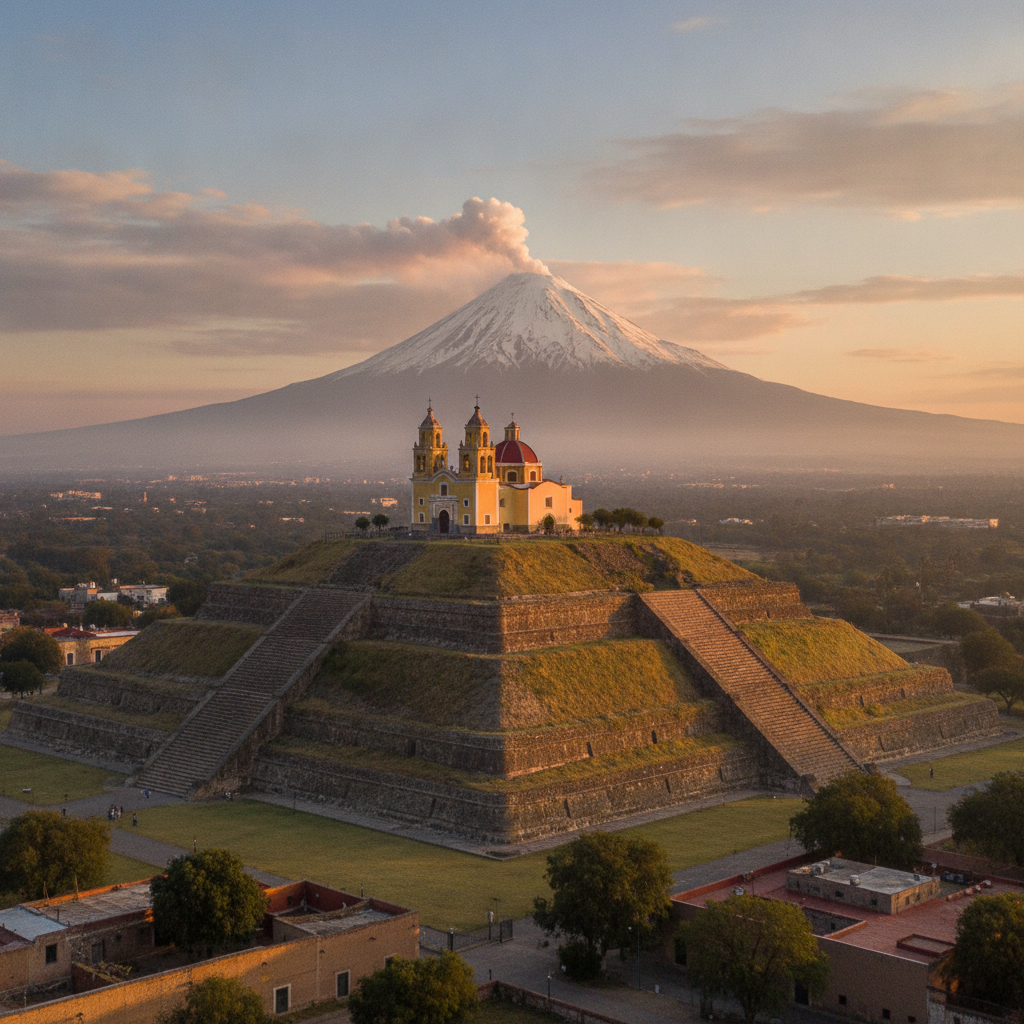
Puebla Pre-Hispanic Heritage Tlaxcala the Huejotzingo Codex Cholula as the Sacred City of Quetzalcoatl and the Indigenous Alliance That Made the Spanish Conquest of the Aztec Empire Possible
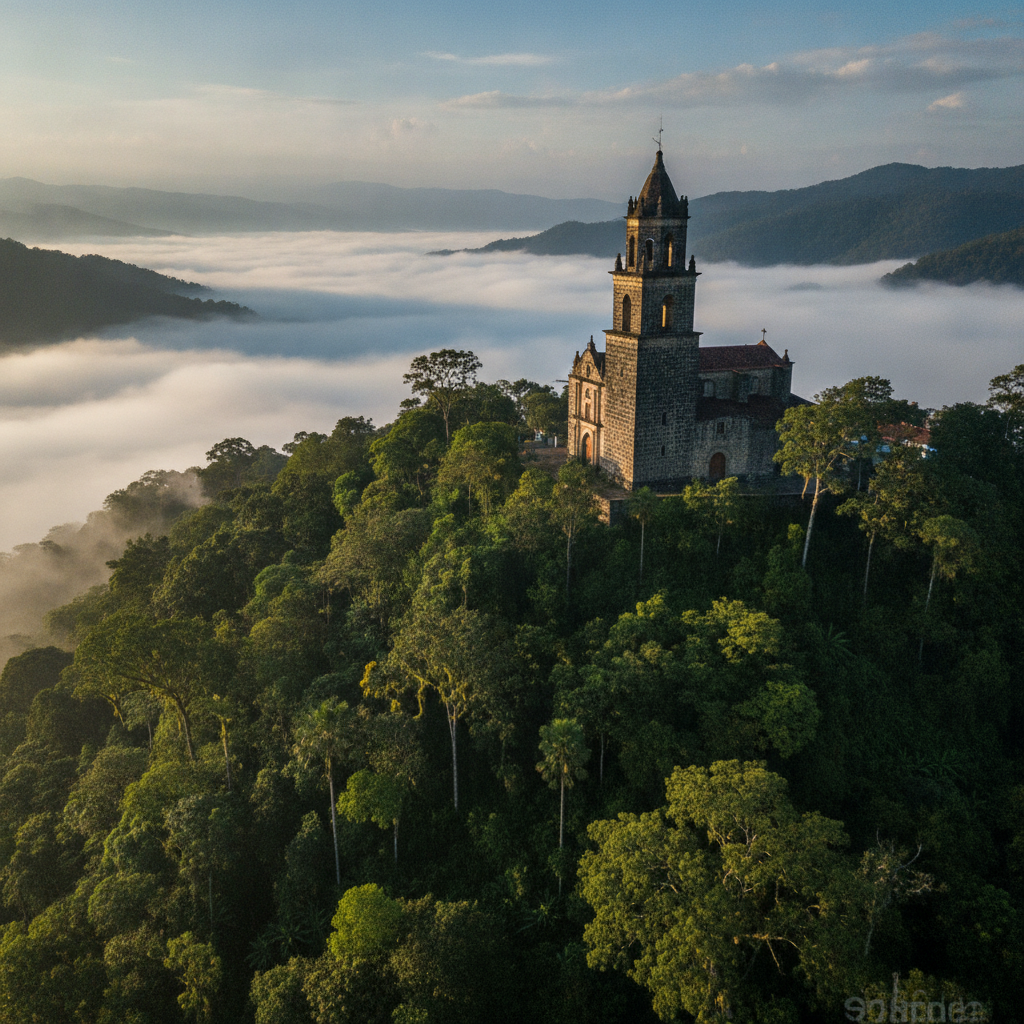
Puebla Day Trips Cuetzalan Cloud Forest Izucar de Matamoros Matamoros Tlaxiaco and the Sierra Norte de Puebla Where Indigenous Communities Maintain a Living Culture in Mexico's Most Biodiverse Mountain Range
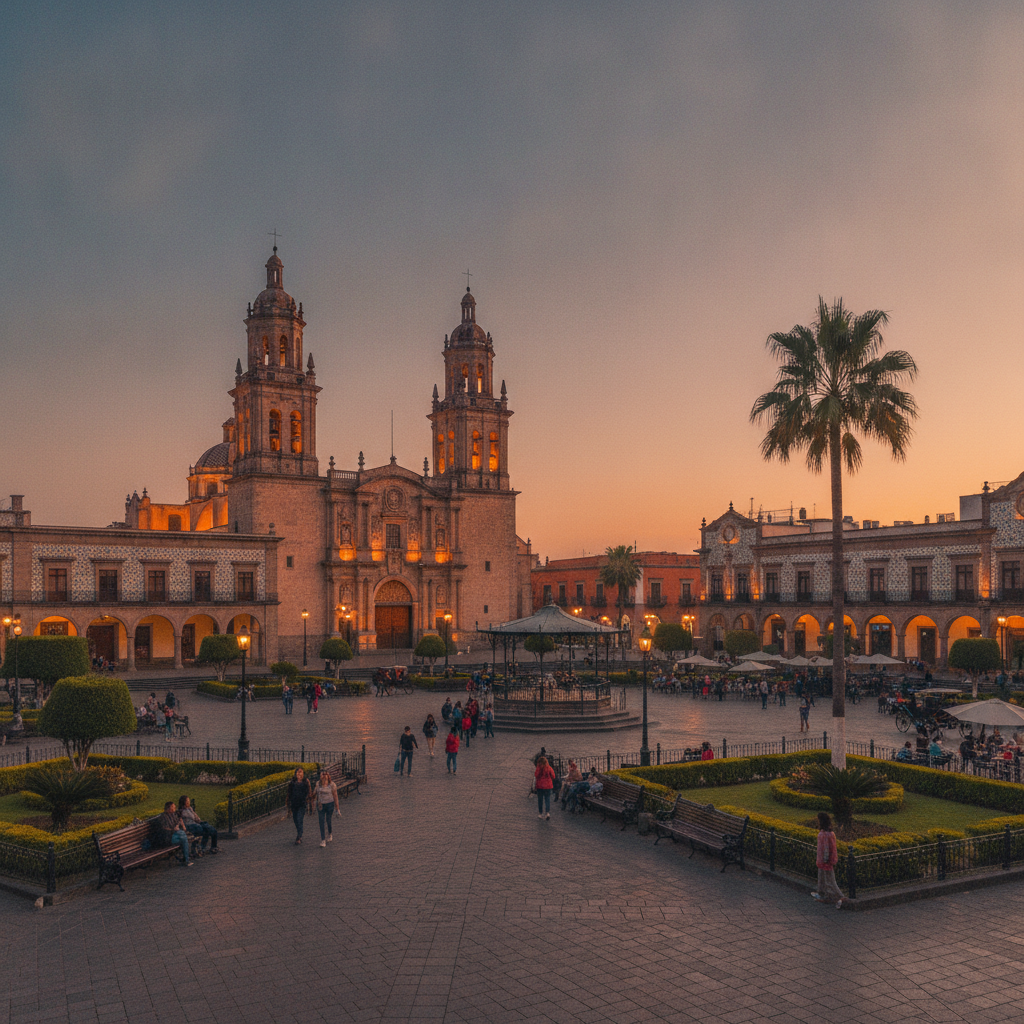
Puebla Practical Guide Transport Safety Climate Neighborhoods Hotels and How to Eat and Move Through a UNESCO Colonial City That Is Also a Metropolitan Area of Three Million People With Heavy Traffic