Puebla Cathedral Capilla del Rosario Talavera Tiles Mole Poblano Cholula Pyramid and the City That Was Founded by Angels and Destroyed by the Volcano That Still Watches Over It
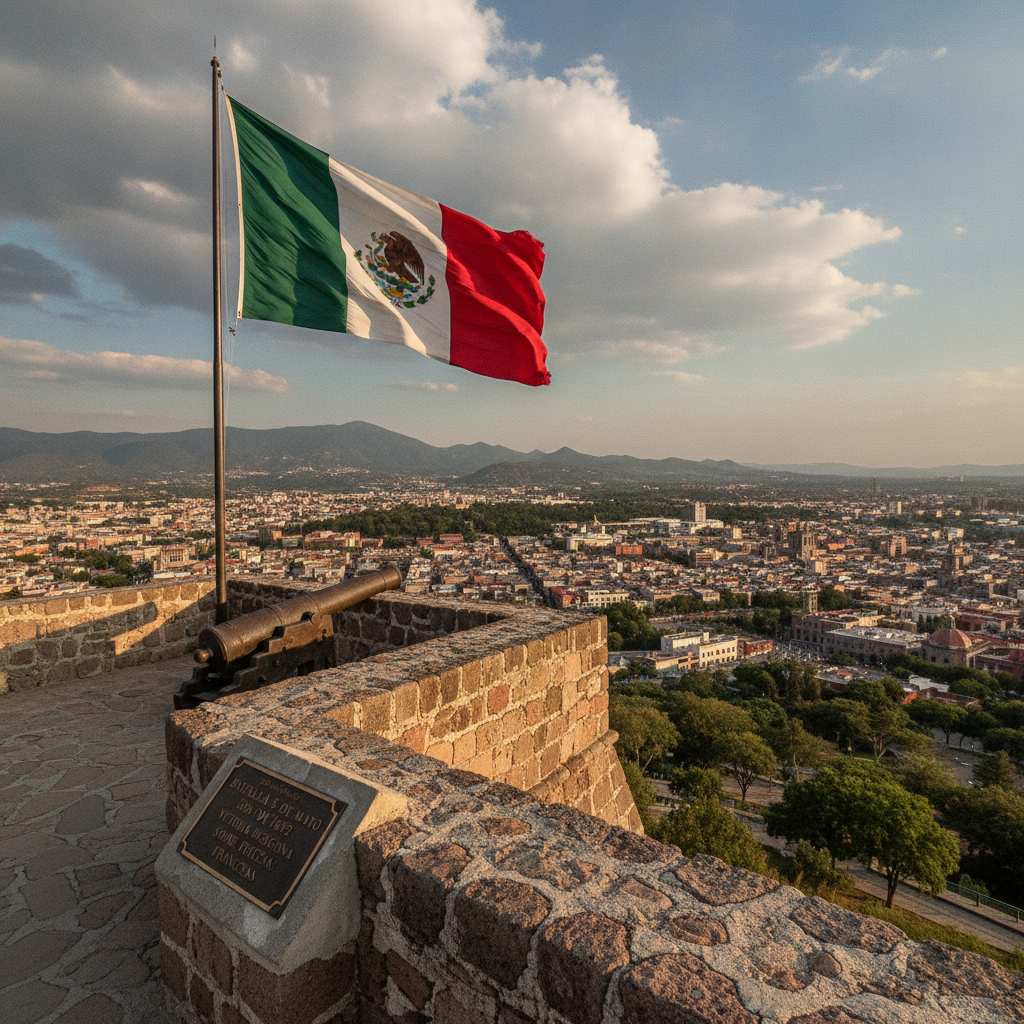
Puebla de los Angeles was founded in 1531 without a prior indigenous settlement, designed from the beginning as a model colonial city on the grid of the Laws of the Indies, placed on the high valley between the active volcano Popocatepetl to the southwest and the dormant La Malinche to the north, on the road between the Gulf Coast port of Veracruz and the colonial capital of Mexico City. The city's official name contains the legend of its founding: the angels, it was said, descended in the night to mark out the city grid with ropes of light while the first settlers slept, a founding myth that expressed the colonial ambition of building the ideal Christian city in the New World. Puebla became one of the wealthiest cities in colonial New Spain through the combination of strategic location on the Veracruz-Mexico City trade route, the development of the Talavera ceramic industry using the local clay deposits and the techniques of the Spanish and Chinese ceramic traditions that the Manila Galleon trade introduced, and the culinary creativity that produced mole poblano, arguably the most complex sauce in Mexican cuisine, credited to the nuns of the Convent of Santa Catalina who created it for a feast honoring the viceroy by combining dried chiles, chocolate, and dozens of other ingredients. The Capilla del Rosario in the church of Santo Domingo, completed in 1690, is considered the most important example of Mexican baroque art in existence, a side chapel whose every surface from floor to ceiling is covered in gilded plaster, painted tiles, oil paintings, and carved stone in a totality of decorative ambition that Spanish critics described as the eighth wonder of the world. Popocatepetl, at 5,426 metres the second-highest peak in Mexico and one of the most active volcanoes in North America, periodically emits ash columns visible from the Puebla streets and is the most dramatic natural backdrop of any Mexican city.
- 1
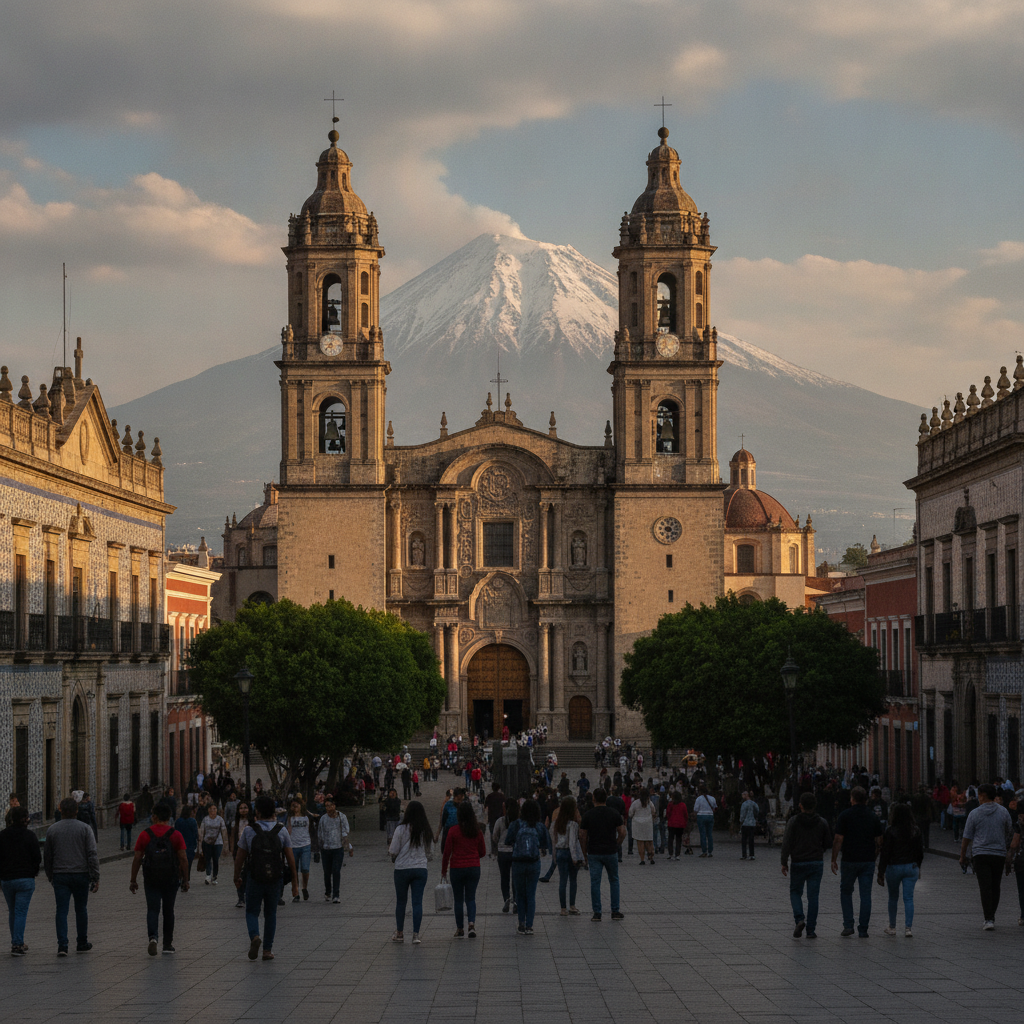
Puebla Cathedral and the Zocalo
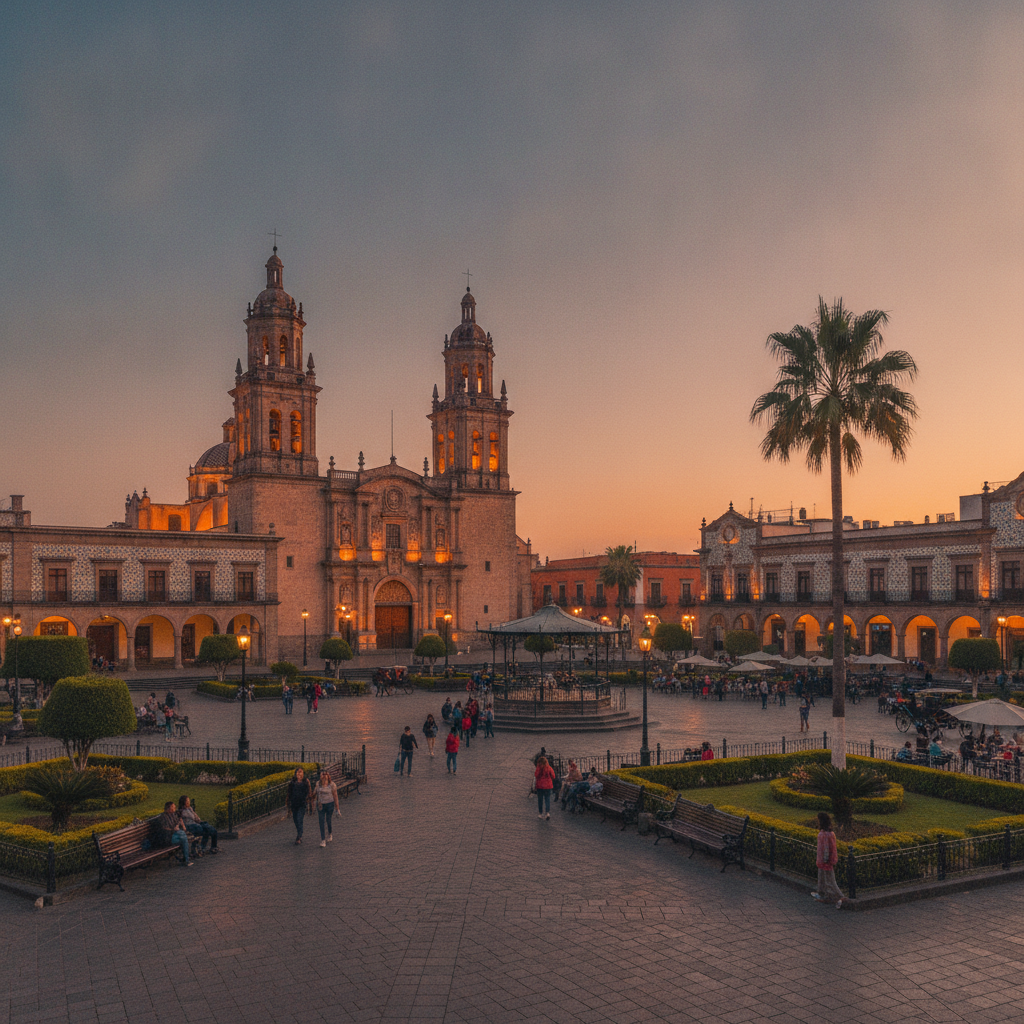
The Cathedral of the Immaculate Conception of Puebla, fronting the Zocalo on the south side of the main plaza, is the second-largest cathedral in Mexico after Mexico City and one of the most important examples of Mexican colonial architecture, constructed between 1575 and 1649 with a facade that blends the Herreran architectural style of Philip II's El Escorial with the local baroque ornamentation that Puebla craftsmen developed during the construction process. The two bell towers of the Puebla cathedral, at 69 metres the tallest in Mexico, frame the Baroque facade of the principal entrance and dominate the skyline of the historic center, visible from the surrounding hills and from the approaches to the city on the Mexico City and Veracruz highways. The interior of the Puebla cathedral, designed as a neoclassical renovation of the original baroque structure by the Manuel Tolsa in the early 19th century, presents the polished Talavera tile floors, the Tolsa-designed baldachin over the main altar, and the choir stalls of inlaid wood that were executed by the most skilled craftsmen of the colonial capital and brought to Puebla during the 1797 renovation. The Zocalo of Puebla, the main plaza bordered by the cathedral on the south, the municipal palace on the north, and the arcade-fronted commercial buildings on the east and west, is the social center of a city that has maintained the colonial urban tradition of the evening paseo, in which the population circles the plaza on foot, the street food vendors light their stalls at dusk, and the bandstand provides the musical accompaniment to the social performance. The UNESCO World Heritage designation of the Puebla historic center in 1987 recognized the completeness and scale of the colonial urban ensemble, the largest intact colonial city center in Mexico.
- 2
Capilla del Rosario and Mexican Baroque Art
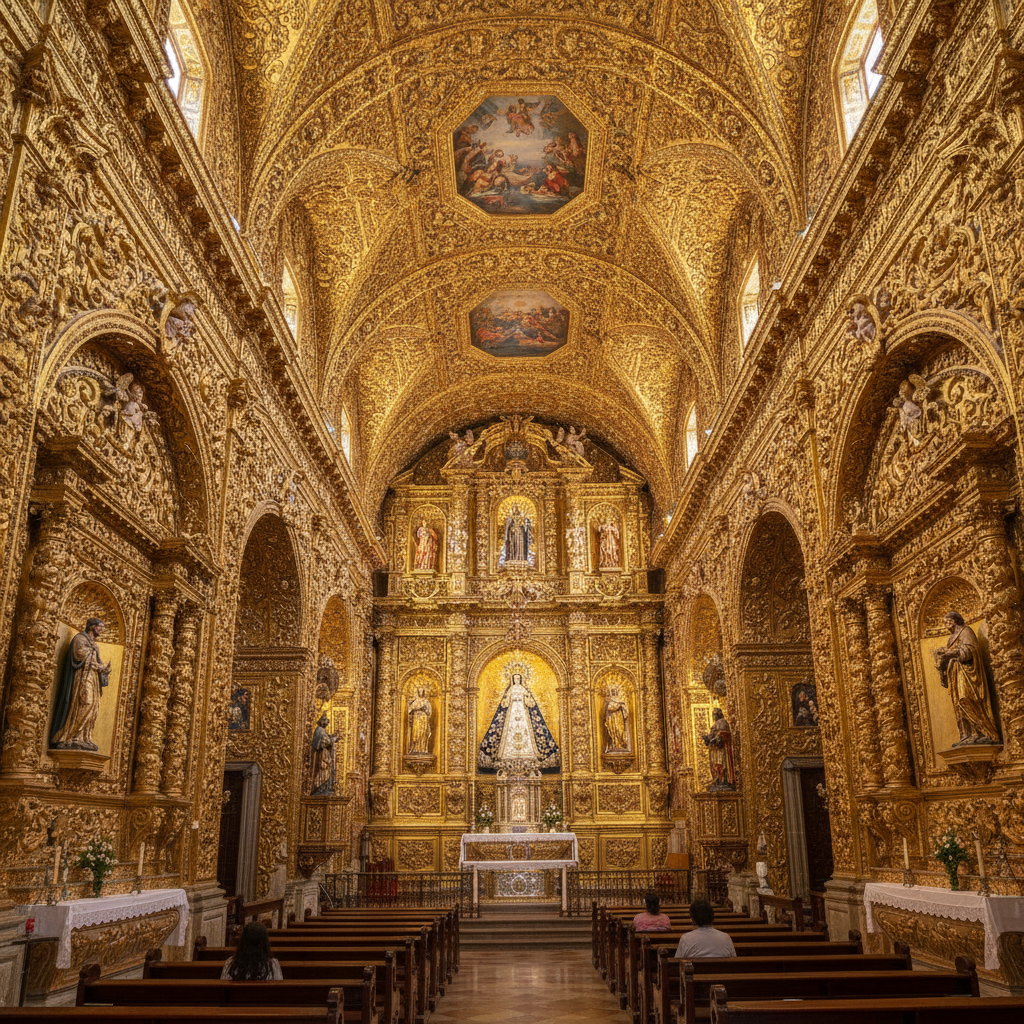
The Capilla del Rosario, the side chapel of the Church of Santo Domingo completed in 1690, is the supreme achievement of Mexican Baroque art, a space of approximately 15 by 12 metres whose every surface from the Talavera tile floor to the gilded vault is covered in a continuous decorative program of carved and gilded plaster relief, oil paintings on tile, alabaster windows that filter the light into a warm amber glow, carved stone framing the altarpieces, and the figure of the Virgin of the Rosary enthroned at the center of the composition in a visual environment that the Mexican aesthetic calls tequitqui: the confluence of European artistic form and indigenous Mexican execution. The chapel was constructed over 40 years by the Dominican order using the accumulated wealth of the Puebla colonial economy, employing the full range of craft traditions that Puebla had developed: the Talavera tile workers, the gilded plaster artisans who used a technique of building up layers of gesso and then carving the surface to create the three-dimensional relief, the oil painters of the Puebla school, and the marble and stone carvers who framed the composition. The scale and ambition of the Capilla del Rosario chapel, described by the Spanish prelate who consecrated it in 1690 as the eighth wonder of the world, reflects the Puebla colonial elite's determination to demonstrate that the New World could produce religious art equal to anything in Europe. The chapel is still in active liturgical use by the Dominican order, meaning that visitors enter a functioning religious space rather than a museum, and that the devotional intent of the decoration is maintained alongside its heritage significance. The photographs of the Capilla del Rosario, with the gilded vault and the throne of the Virgin at the altar end, are among the most circulated images of Mexican colonial art internationally.
- 3
Talavera de Puebla Ceramic Tradition
Talavera de Puebla, the polychrome ceramic tradition of the city whose production has been documented since the early 17th century, is one of the most distinctive craft traditions in Mexico, producing the blue-and-white and polychrome decorated tiles, tableware, figurines, and architectural elements that have defined the visual character of Poblano colonial architecture. The Talavera tradition combines the techniques of the Spanish Talavera de la Reina tin-glazed earthenware tradition, brought to Puebla by potters from Talavera de la Reina in the 16th century, with influences from the Chinese porcelain tradition introduced through the Manila Galleon trade and the local clay traditions of the indigenous Puebla potters, creating a hybrid tradition whose blue-and-white aesthetic reflects all three influences simultaneously. The Denominacion de Origen for Talavera de Puebla, established in 1995, defines the production zone, the clay sources, the glaze composition, and the hand-decoration techniques that distinguish authentic Talavera from the mass-produced imitations made in Dolores Hidalgo and other centers. The authentic Talavera workshops of Puebla, including Uriarte Talavera (founded 1824, the oldest operating workshop) and Talavera de la Reyna, offer tours of the production process from clay preparation through decoration and firing, demonstrating the hand-painting technique that distinguishes each piece as a unique artwork. The Talavera tiles that cover the facades of the colonial buildings of Puebla historic center, particularly the Barrio del Artista streets and the Casa del Dean, constitute an open-air museum of the tradition in its most significant architectural application.
- 4
Cholula Great Pyramid and the 365 Churches Legend
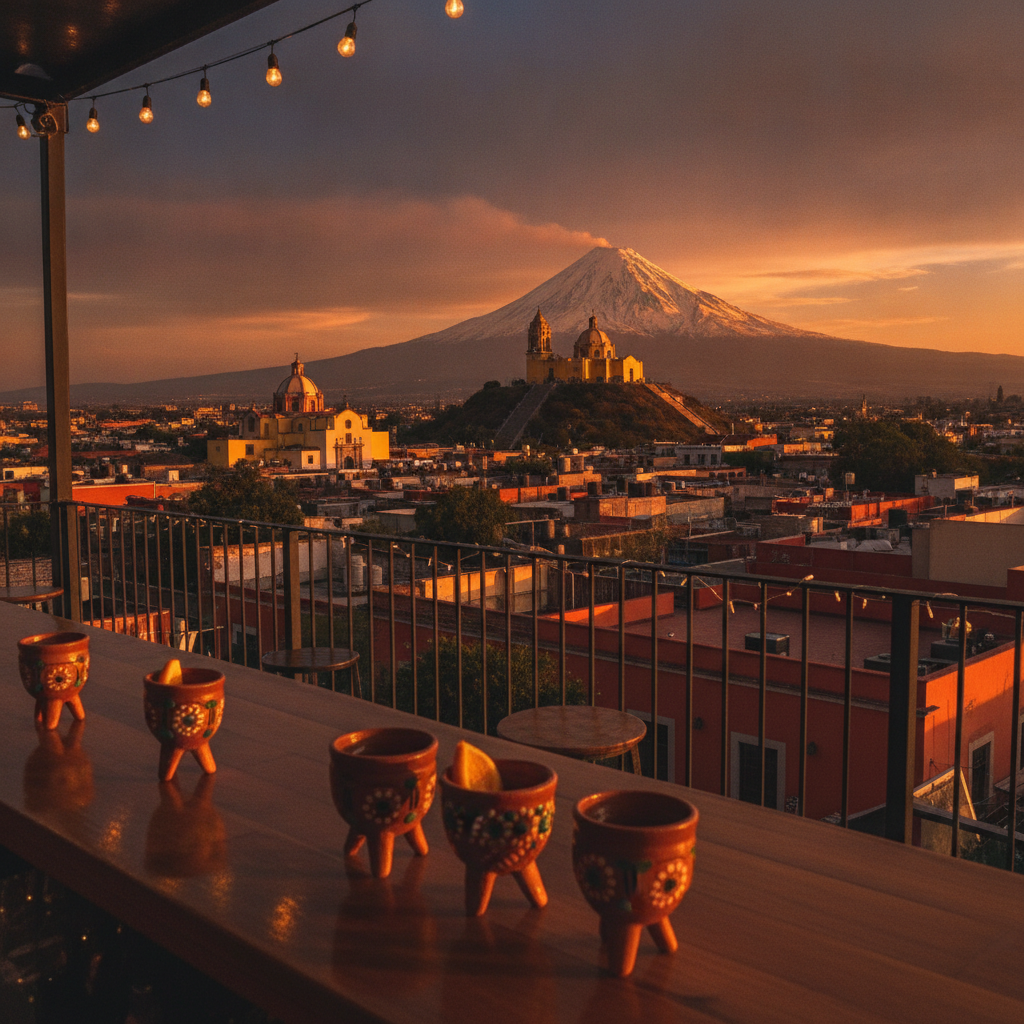
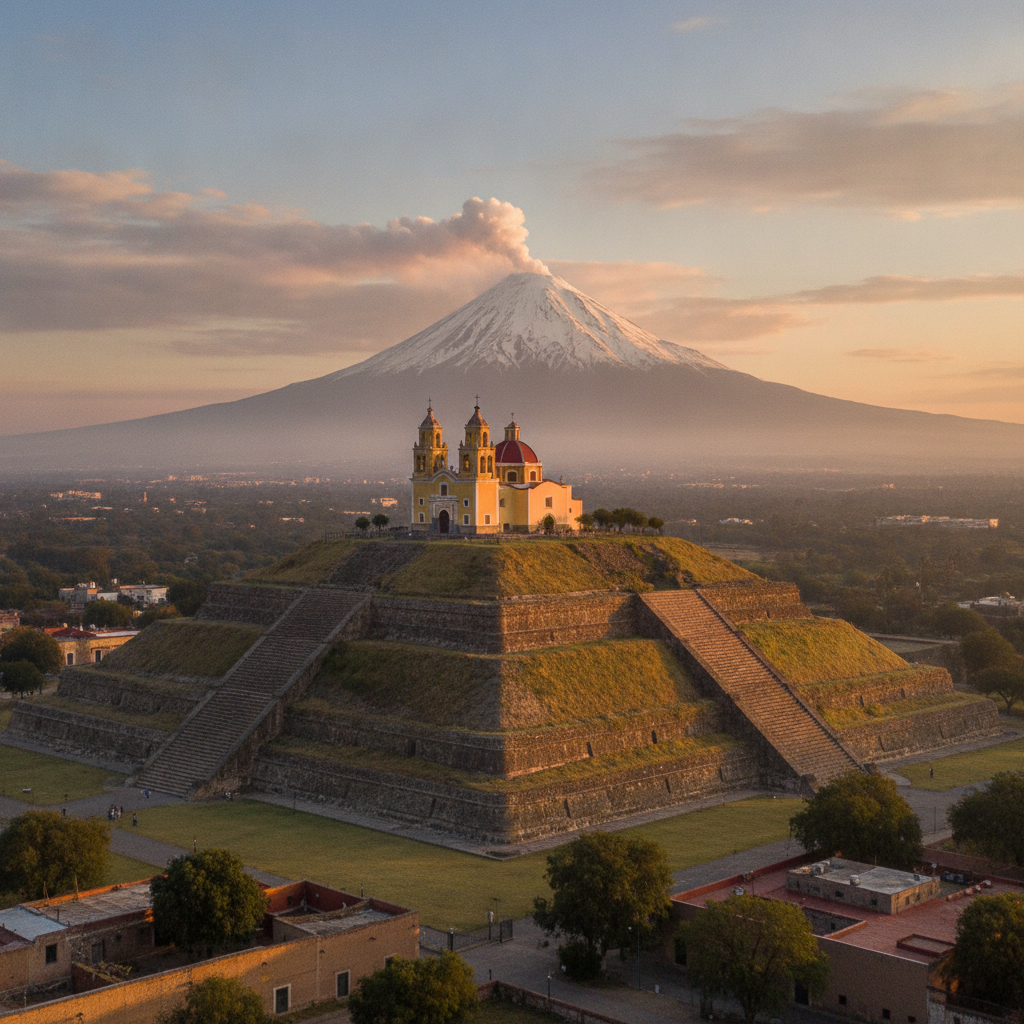
Cholula, 12 kilometres west of Puebla on the road to Mexico City, is the site of the Great Pyramid of Cholula, the largest pyramid by volume in the world, an Aztec-period structure built over a sequence of four earlier pyramids spanning the pre-Hispanic period from approximately 300 BCE to 900 CE, whose mass of 4.45 million cubic metres exceeds the Great Pyramid of Giza, though the Cholula structure is less dramatically visible because the Spanish colonial church of Nuestra Senora de los Remedios was built on its summit in 1594, making the pyramid appear from a distance as a natural hill with a church on top. The discovery that the hill was actually a pyramid began with INAH excavations in the early 20th century, and the 8 kilometres of excavated tunnels through the pyramid interior allow visitors to walk through the successive construction phases and understand the building sequence of a structure that was repeatedly enlarged over a millennium. The legend that Cholula has 365 churches, one for each day of the year, is arithmetically impossible but emotionally accurate: the Spanish colonial program of church construction in Cholula, which had been the second-largest city in pre-Hispanic Mesoamerica and the center of the cult of Quetzalcoatl, was particularly intense, with the colonial administration building churches on every significant pre-Hispanic sacred site to physically overwrite the indigenous religious landscape with Christianity. The actual number of colonial churches in the Cholula municipal area is approximately 40, still an extraordinary density for a small city, and the Cholula skyline of church towers rising from the flat plain around the pyramid hill is one of the most distinctive visual environments in Mexico. The rooftop bars and cafes of the San Andres Cholula zocalo area, with views of the pyramid hill church and the Popocatepetl volcano simultaneously, are the social hub of the young Poblano population on weekends.
- 5
Mole Poblano and Puebla Gastronomy
Mole poblano, the complex chile and chocolate sauce of Puebla that is considered the national dish of Mexico by many culinary authorities, was created according to tradition by the nuns of the Convent of Santa Catalina in the 17th century for a feast honoring the visiting Viceroy, when the convent was struggling to produce a dish worthy of the occasion and combined the available ingredients - multiple dried chiles, chocolate from Oaxaca, bread, plantain, nuts, seeds, spices, and turkey - into a sauce of extraordinary complexity that the viceroy declared to be the finest thing he had ever eaten. The preparation of authentic mole poblano involves toasting and rehydrating six or more varieties of dried chile, separately toasting and grinding the nuts and seeds, caramelizing the plantain and bread, incorporating the Mexican chocolate and the spice blend, and cooking the combined paste in lard before adding the broth and the turkey or chicken that the sauce will accompany, a process that takes two to three days in a traditional kitchen and that is still performed this way for the major festivals and family celebrations of Puebla. The chile en nogada, Puebla's patriotic dish served in August and September when the pomegranate and walnut are in season, consists of a roasted poblano chile stuffed with a picadillo of meat, dried fruits, and spices, covered in the white nogada walnut cream sauce and garnished with pomegranate seeds and parsley, presenting the three colors of the Mexican flag. The cemita, the Puebla street sandwich on a sesame roll with pork milanesa or other filling, chipotles, avocado, and the papalo herb specific to the Puebla culinary tradition, is the essential Puebla street food, sold from the cemita stalls of the Mercado El Alto and the street vendors of the historic center.
- 6
Popocatepetl Volcano and the Puebla Landscape
Popocatepetl, the active stratovolcano at 5,426 metres that anchors the southern horizon of Puebla from every elevated point in the city, is the most dramatic and dangerous natural feature of the Puebla environment, an active volcano that has been in a state of continuous low-level eruptive activity since 1994, periodically producing ash emissions that deposit volcanic dust on the Puebla streets and requiring flight cancellations at the Puebla airport when the ash column reaches sufficient altitude. The Aztec name Popocatepetl means smoking mountain, and the volcanic legend of Aztec lovers Popocatepetl and Iztaccihuatl, the Sleeping Woman, the dormant volcano visible to the north of Popo, is the pre-Hispanic mythology that the Puebla and Mexico City populations maintain as the romantic narrative of the mountain pair that watches over central Mexico. The Paso de Cortes, the mountain pass between Popocatepetl and Iztaccihuatl at 3,600 metres elevation, is the route that Hernan Cortes used in November 1519 on his march from Veracruz to Tenochtitlan, and is now accessible by road to the CENAPRED monitoring station and the base camps for mountaineering expeditions on Iztaccihuatl, which unlike Popocatepetl is climbable. The Iztaccihuatl-Popocatepetl National Park and Biosphere Reserve, protecting the high-altitude ecosystems of both volcanoes, contains the highest conifer forests in North America, alpine meadows, and glaciers on Iztaccihuatl that have retreated significantly in the 21st century. The CENAPRED volcanic monitoring network, which operates the Popocatepetl seismic and gas emission monitoring system, publishes daily volcanic activity bulletins that Puebla residents consult with the same casual awareness that coastal residents develop for hurricane season forecasts.
Walk this route with audio
Stories play automatically as you reach each stop — no tapping needed.
More in Puebla
Puebla Contemporary City Art Scene Emerging Neighborhoods Barrio Chino and How a 500 Year Old Heritage City Is Reinventing Itself as a Creative Capital for the 21st Century Mexican Middle Class
Puebla Pre-Hispanic Heritage Tlaxcala the Huejotzingo Codex Cholula as the Sacred City of Quetzalcoatl and the Indigenous Alliance That Made the Spanish Conquest of the Aztec Empire Possible
Puebla Day Trips Cuetzalan Cloud Forest Izucar de Matamoros Matamoros Tlaxiaco and the Sierra Norte de Puebla Where Indigenous Communities Maintain a Living Culture in Mexico's Most Biodiverse Mountain Range
Puebla Practical Guide Transport Safety Climate Neighborhoods Hotels and How to Eat and Move Through a UNESCO Colonial City That Is Also a Metropolitan Area of Three Million People With Heavy Traffic
Puebla Convents Churches and the Religious Architecture of a City Built by Angels Where 72 Colonial Churches Represent the Most Complete Ecclesiastical Cityscape in Mexico