Ribeira, the Douro & Porto's UNESCO Waterfront
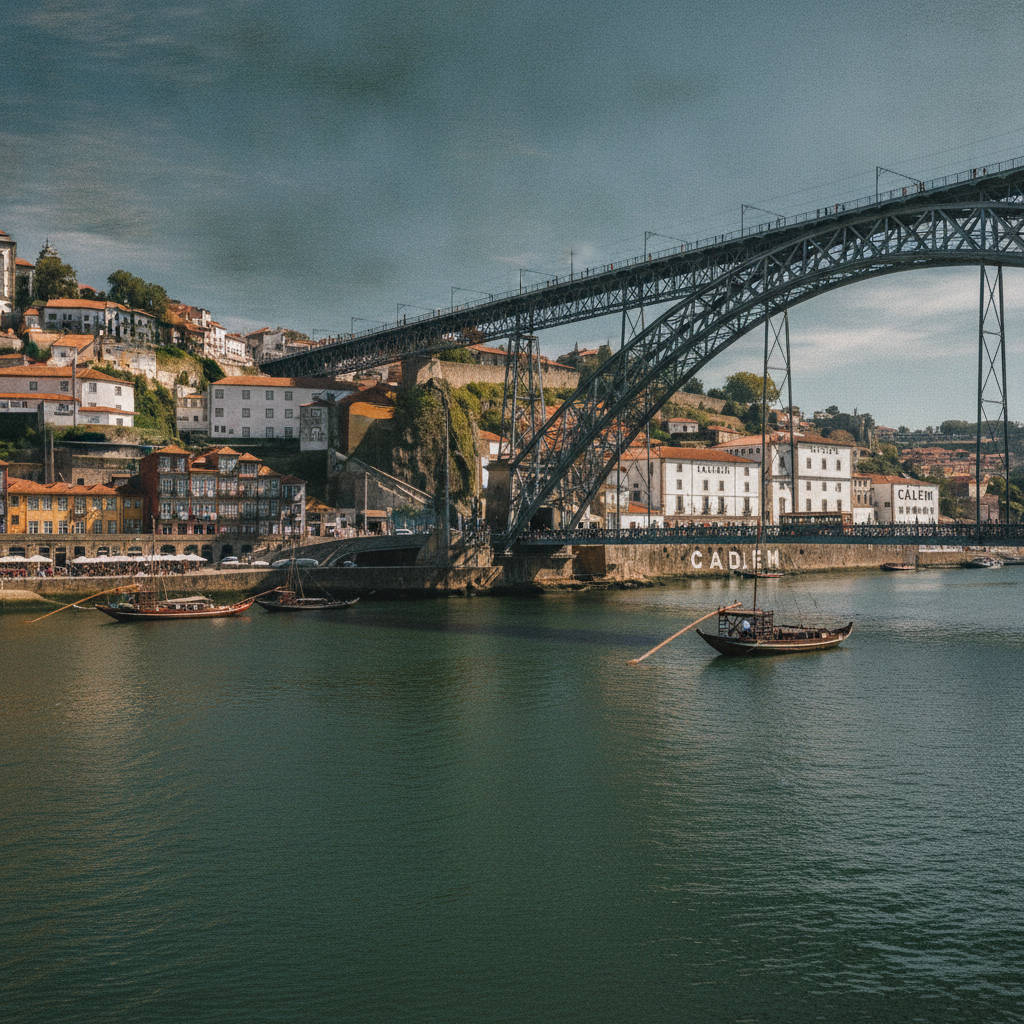
Porto (the second largest city in Portugal, population approximately 240,000 in the city and 1.7 million in the metropolitan area — known as 'the city that works' in contrast to Lisbon's 'the city that plays'): the Ribeira (the historic waterfront quarter of Porto — the UNESCO World Heritage Site (designated 1996) on the north bank of the Douro River) and the Dom Luís I Bridge (the 1886 iron arch bridge connecting Porto to Vila Nova de Gaia, the home of the Port wine lodges) are the iconic heart of Porto.
- 1
The Ribeira — Porto's UNESCO Waterfront Quarter
The Ribeira (the historic riverside quarter of Porto — the UNESCO World Heritage Site designated in 1996 as part of the 'Historic Centre of Porto, Luiz I Bridge and Monastery of Serra do Pilar' World Heritage Site): the history (the Ribeira — the original waterfront settlement of Porto, the quarter that grew around the medieval port where the wine and the goods of the Douro Valley were loaded onto the 'barcos rabelos' (the flat-bottomed boats that transported the wine downstream from the Douro Valley to the lodges of Gaia) and the ships of the Atlantic trade): the streetscape (the narrow, steep streets of the Ribeira — the 'ruas' that run perpendicular to the Douro, climbing steeply from the waterfront to the upper town: the Rua da Ribeira (the riverside street at the water's edge), the Praça da Ribeira (the small square on the waterfront with the cube sculpture at the centre — the medieval square that was the commercial heart of medieval Porto), and the narrow 'travessas' (the cross-streets) that connect the riverside to the upper streets): the buildings (the tall, narrow medieval buildings of the Ribeira — the buildings that are 5-6 storeys tall and only 4-5 metres (13-16 feet) wide (the characteristic 'casa do Porto' — the Porto townhouse type), with the coloured facades (the azulejo tiles, the stone, the rendered plaster painted in the strong colours of the Porto building tradition) and the cast-iron balconies): the Praça da Ribeira (the 'Ribeira Square' — the main square of the Ribeira waterfront, the small cobblestone square where the café terraces fill with tourists and Porto residents watching the Dom Luís I Bridge and the Douro River).
- 2
Dom Luís I Bridge — Porto's Iron Icon
The Ponte Dom Luís I (the 'Dom Luís I Bridge' — the double-deck metal arch bridge spanning the Douro River between Porto and Vila Nova de Gaia, built 1881-1886 by Théophile Seyrig (a Belgian engineer, pupil of Gustave Eiffel), the most recognizable landmark of Porto): the bridge (the Dom Luís I Bridge — the double-deck iron arch bridge (the arch span of 172 metres (564 feet) and the total length of the upper deck of 395 metres (1,296 feet)), the upper deck at 45 metres (148 feet) above the Douro (now used by the Porto Metro (the Linha D — the yellow metro line) and pedestrians) and the lower deck at river level (used by road traffic and pedestrians)): the view from the bridge (the views from the Dom Luís I Bridge — the most celebrated views in Porto: from the upper deck, the panoramic view of the two cities of Porto (north) and Vila Nova de Gaia (south) with the Douro River below, the Ribeira quarter of Porto visible to the left and the wine lodge facades of Gaia visible to the right; from the lower deck, the view of the Ribeira waterfront and the Dom Luís I arch above): the Gustave Eiffel connection (the common misconception that the Dom Luís I Bridge was designed by Gustave Eiffel — the bridge was designed by Eiffel's pupil Théophile Seyrig, not by Eiffel himself (Eiffel designed the earlier Douro Bridge (the 'Ponte Maria Pia' — the railway bridge upstream from the Dom Luís I Bridge, built 1877, now a protected monument but no longer in use)): the Metro on the bridge (the Porto Metro (the Linha D metro line) that runs on the upper deck of the Dom Luís I Bridge, crossing between Porto and Gaia — the metro line that offers the easiest and most dramatic route for tourists to cross the Douro and reach the Port wine lodges of Vila Nova de Gaia).
- 3
Port Wine & Vila Nova de Gaia
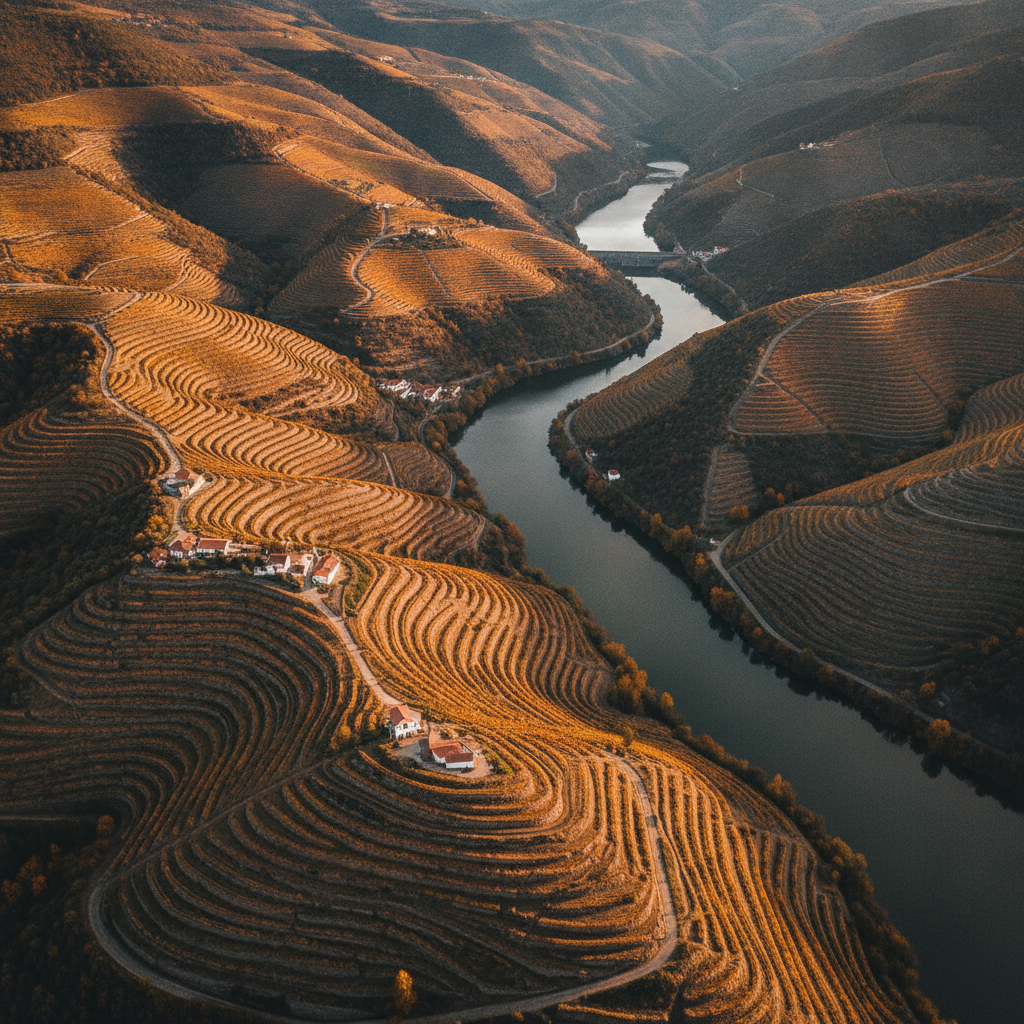
Port wine (the 'Vinho do Porto' — the fortified wine produced in the Douro Valley of northern Portugal, the most famous wine of Portugal and one of the most famous fortified wines in the world): the Port wine history (Port wine developed in the late 17th century when British wine merchants, unable to import French wine due to the Anglo-French wars, turned to the wines of the Douro Valley — the merchants adding the brandy (the 'aguardente') to the wine to preserve it during the sea voyage from Porto to England, creating the fortified wine style that became 'Port'): the Douro Valley (the 'Alto Douro Wine Region' — the UNESCO World Heritage Site terraced vine landscape of the Douro Valley, 100 km (62 miles) east of Porto, the landscape of the steep schist terraces planted with the indigenous Portuguese grape varieties (the Touriga Nacional, the Tinta Roriz/Tempranillo, the Touriga Franca) from which all Port wine is made): the Vila Nova de Gaia lodges (the Port wine lodges of Vila Nova de Gaia — the 'caves' (the wine cellars/lodges) on the south bank of the Douro in Gaia where the Port wine is aged, the most important lodge brands (the Taylor Fladgate (founded 1692 — the oldest of the Port wine lodges), the Graham's (founded 1820), the Sandeman (founded 1790 — the lodge famous for the 'Don' trademark, the cloaked figure with the wide-brimmed hat), the Ramos Pinto (founded 1880), the Cálem (founded 1859 — the most visited lodge), and the Cockburn's (founded 1815))): the lodge experience (the Port wine lodge experience in Gaia — the tour of the lodge (the wine cellar with the oak barrels of ageing Port, the guide explaining the different styles of Port (the Ruby (the young, fruit-forward Port), the Tawny (the aged, oxidized Port), the Vintage (the finest quality Port from a single exceptional year)), the tasting (the tasting of 2-4 different Port wines, including the 10-year Tawny and the Vintage Port)).
- 4
São Bento Railway Station & Porto's Azulejo Tradition
The Estação de São Bento (the 'São Bento Railway Station' — the Porto city centre railway station at the Praça de Almeida Garrett, the station famous for the extraordinary interior azulejo (the painted tin-glazed ceramic tile) panels that cover the walls of the main hall): the azulejo panels (the 20,000 azulejo tiles in the great hall of the São Bento station, painted by the artist Jorge Colaço (1868-1942) between 1905 and 1916, depicting scenes from the history of Portugal (the 'Batalha de Valdevez' (the Battle of Valdevez of 1140, the medieval battle between the Portuguese and the Leonese armies that established the independence of Portugal), the 'Conquista de Ceuta' (the conquest of Ceuta in 1415 — the first major Portuguese overseas conquest, the beginning of the Portuguese maritime expansion), and the scenes of the rural life of northern Portugal (the harvest, the pilgrimage, and the folk festivals)): the azulejo tradition (the Portuguese tradition of the azulejo tile — the tin-glazed ceramic tile (from the Arabic 'az-zulayj' — the 'polished stone') that covers the facades, the church interiors, the railway stations, and the palace walls of Portugal, the distinctive aesthetic that makes Portugal the most tile-adorned country in the world): the Museu Nacional do Azulejo (the National Tile Museum in Lisbon — the museum that traces the 500-year history of the Portuguese azulejo from its Moorish origins (the geometric patterns) through the 16th-17th century Flemish-influenced figurative style to the 18th-century 'blue and white' period (the Grand Panels — the large-scale narrative scenes in the blue-and-white azulejo style) and the 19th-20th century revival).
- 5
Livraria Lello — One of the World's Most Beautiful Bookshops
A Livraria Lello (the 'Lello Bookshop' — the bookshop at Rua das Carmelitas 144 in the historic centre of Porto, consistently ranked as one of the most beautiful bookshops in the world): the building (the Livraria Lello building — the 1906 neo-Gothic facade by the architect Xavier Esteves, the interior (the two-floor bookshop interior with the extraordinary carved wooden Neo-Gothic decoration, the red helical staircase (the 'escadaria' — the central spiral staircase of the Lello, the most photographed element of the bookshop, the staircase that rises from the ground floor to the first floor in a single sweeping curve), the stained glass ceiling (the Art Nouveau stained glass ceiling of the Livraria Lello — the skylight of coloured glass with the motto 'Decus in Labore' ('Honour in Work') that illuminates the bookshop from above)): J. K. Rowling (the most famous connection of the Livraria Lello — the British author J. K. Rowling (b.1965), who taught English in Porto from 1991 to 1993 and who is said to have visited the Livraria Lello regularly during her time in Porto — the bookshop is popularly believed to have inspired the Flourish and Blotts bookshop in the Harry Potter series (the literary connection that has driven a massive increase in visitors to the Livraria Lello since the mid-2000s)): the entrance fee (the Livraria Lello entrance ticket (€8 as of 2024, redeemable against book purchases) — introduced in 2015 to manage the crowds of tourists that had made it difficult for the bookshop to operate as an actual bookshop: the queue (the queue of visitors outside the Livraria Lello on any day of the year — one of the longest queues in Porto).
- 6
Francesinha — Porto's Legendary Sandwich
The francesinha (the 'little Frenchie' — the iconic Porto sandwich, the most famous dish of Porto cuisine and one of the most celebrated regional dishes of Portuguese gastronomy): the sandwich (the francesinha — the sandwich consisting of the thick slices of white bread ('pão de forma') filled with the wet-cured ham ('fiambre'), the 'linguiça' (the smoked pork sausage), the 'salchicha' (the fresh pork sausage), and the 'bife' (the slice of steak — occasionally substituted with the slices of roast pork) — the sandwich assembled and then covered with the sliced 'queijo fundido' (the melted cheese — the slices of processed cheese that melt to cover the entire top of the sandwich) and then drenched in the 'molho da francesinha' (the 'francesinha sauce' — the rich, spicy tomato and beer-based sauce that is the essential element of the francesinha and the element that is the most closely guarded secret of each Porto café (every Porto café that serves the francesinha has its own proprietary sauce recipe)): the francesinha history (the francesinha invented in the 1950s-1960s by Daniel David Silva — a Portuguese emigrant who had worked in France and Belgium (where he was inspired by the 'croque-monsieur' and the Belgian 'croque madame' sandwiches) and who adapted these to the Porto taste by replacing the French béchamel with the rich tomato-beer sauce): the best francesinhas (the Porto cafés famous for the finest francesinhas — the 'Café Santiago' (Rua de Passos Manuel 226 — the most famous francesinha restaurant in Porto, with the queue out the door at lunch and dinner), the 'A Regaleira' (Rua do Bonjardim 86 — the traditional Porto café with the longest history of serving the francesinha), and the 'Bufete Fase' (the hidden gem café that many Porto residents consider to serve the finest francesinha sauce)).
Walk this route with audio
Stories play automatically as you reach each stop — no tapping needed.
More in porto
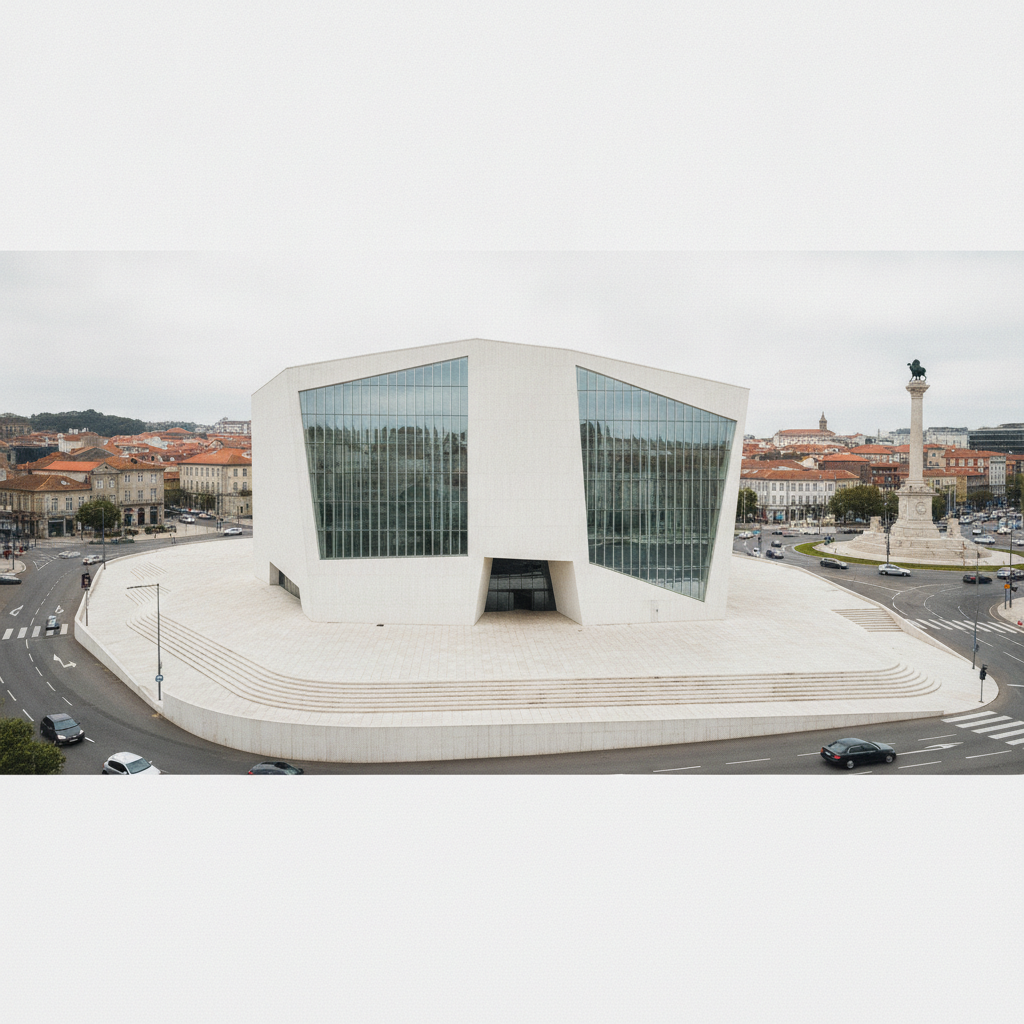
Casa da Música, Serralves & Porto's Contemporary Culture
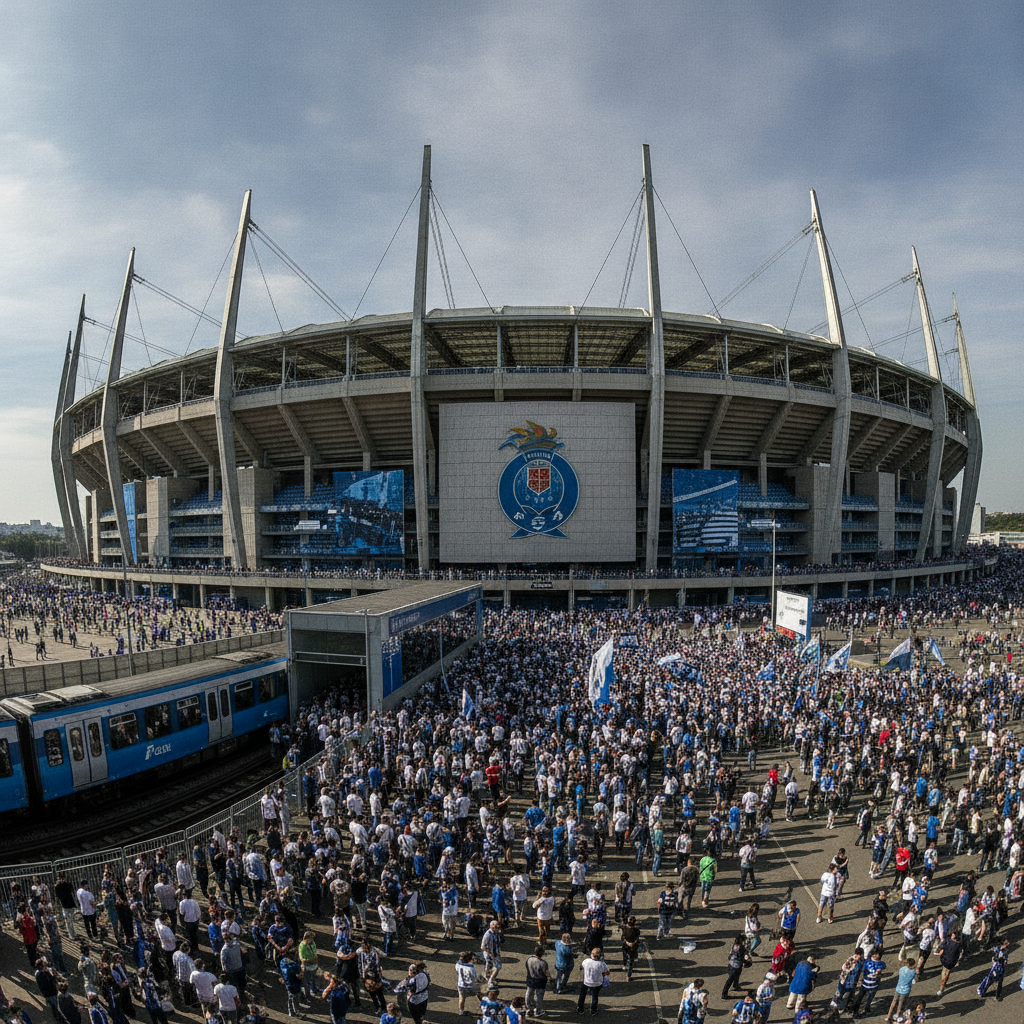
FC Porto, Estádio do Dragão & Portuguese Football Culture
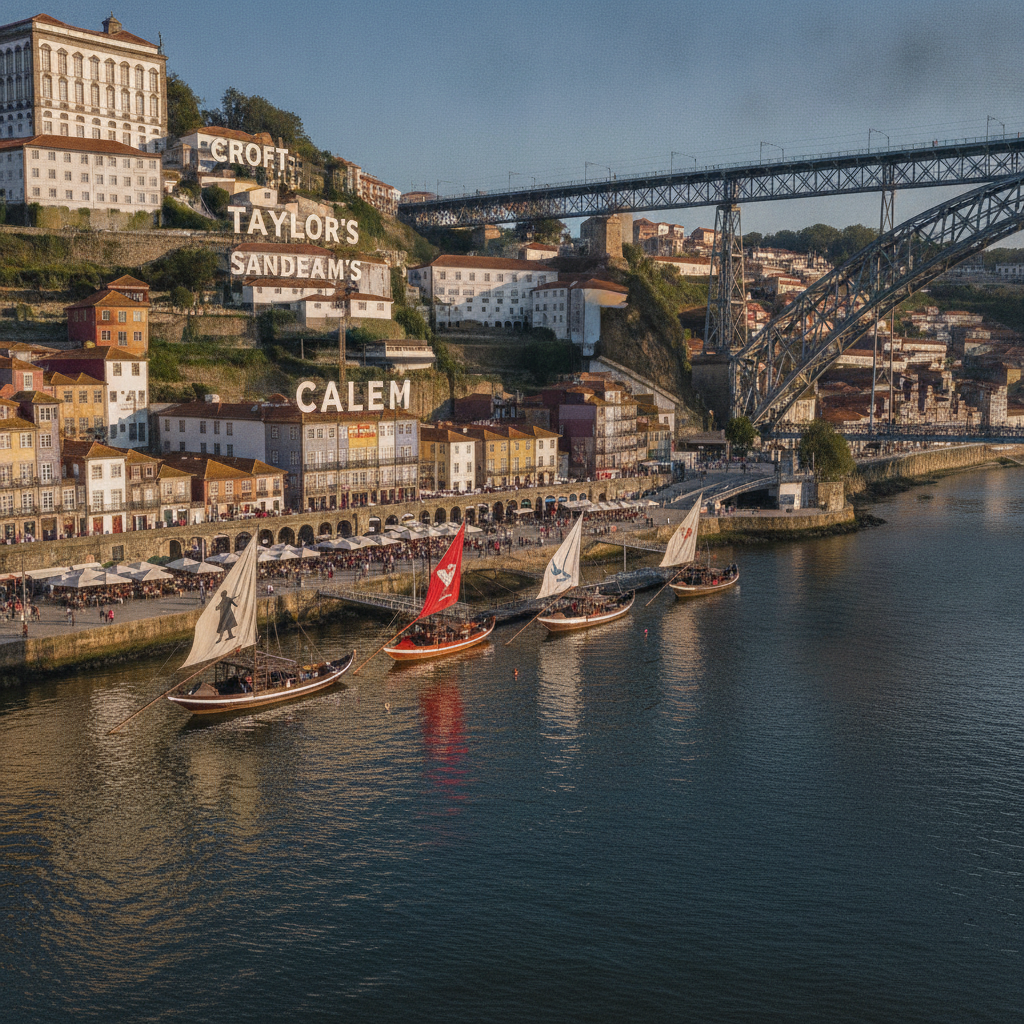
Vila Nova de Gaia, Port Wine Lodges & Tastings
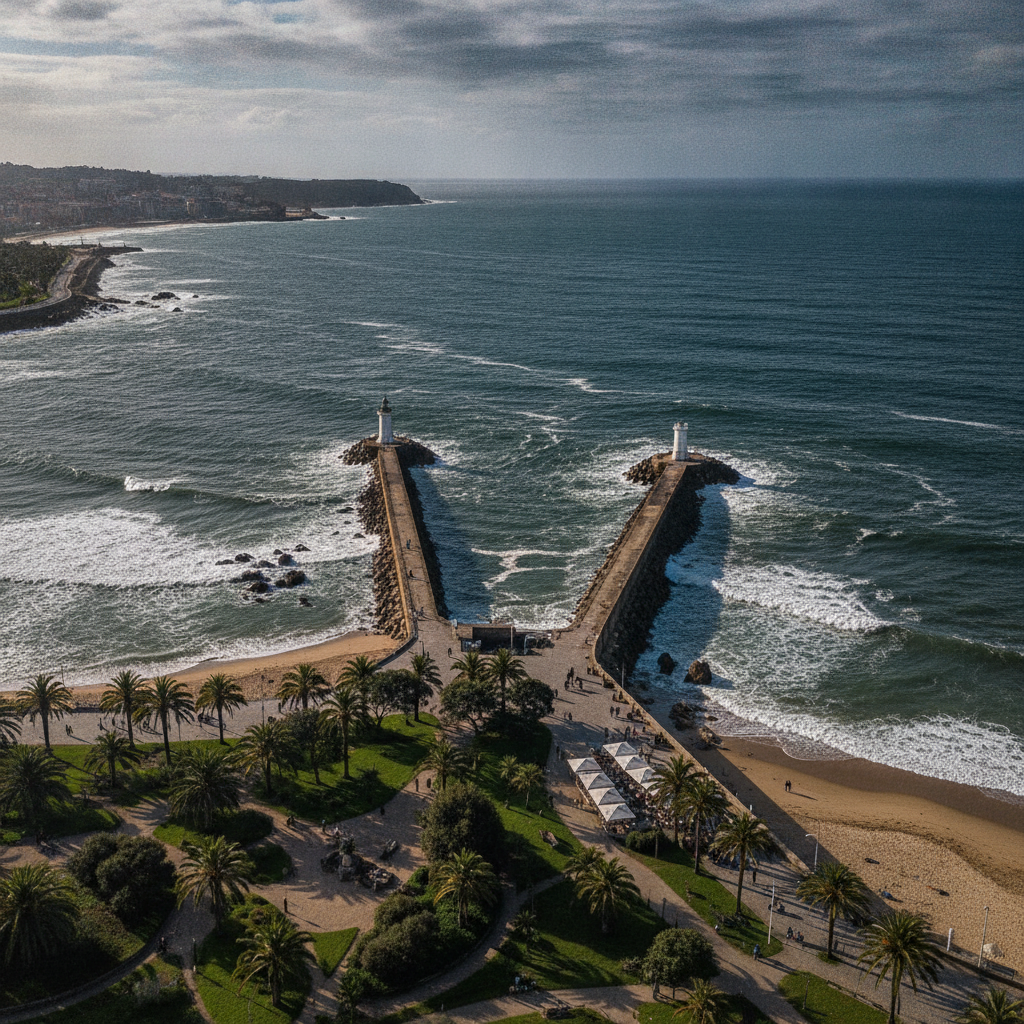
Foz do Douro, Atlantic Coast & Porto's Ocean Neighbourhood
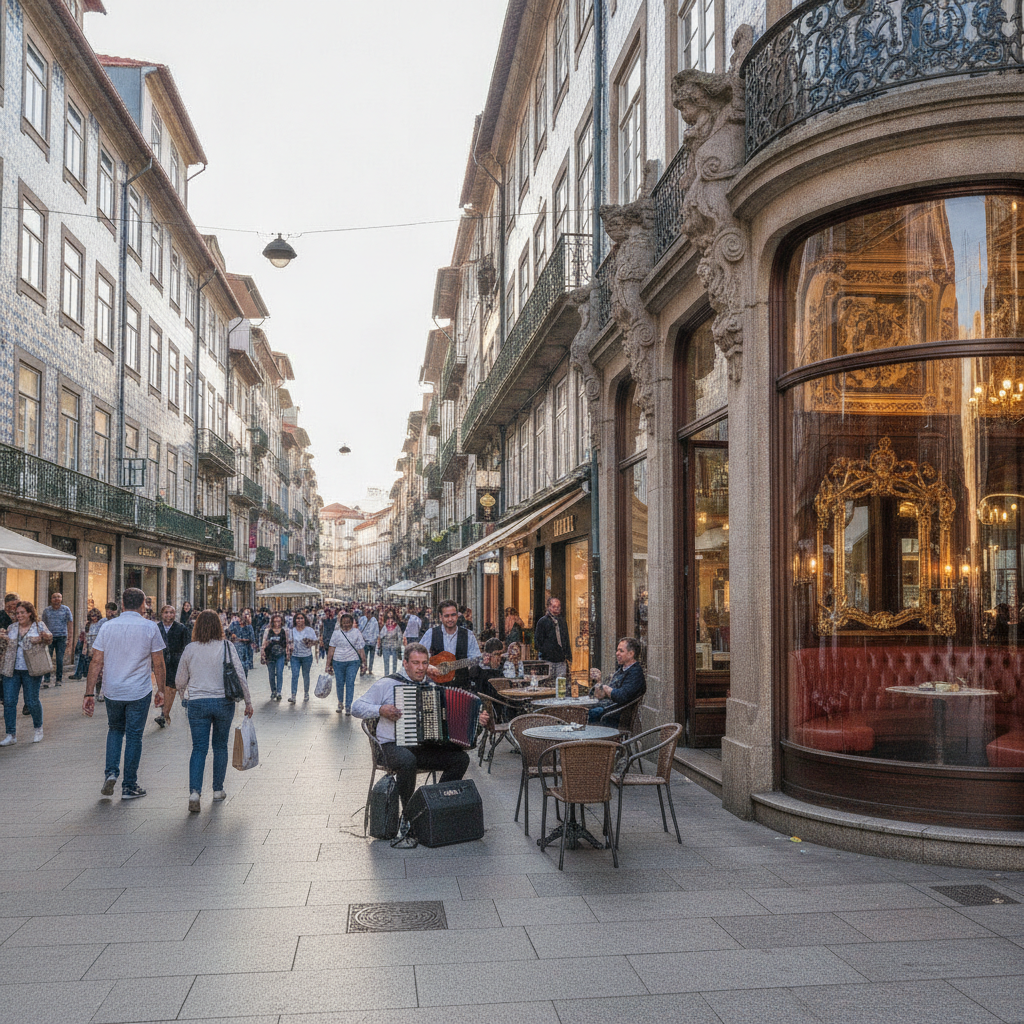
Rua de Santa Catarina, Café Majestic & Porto's Shopping Heart