Rio Grande do Sul Beyond Porto Alegre: Pelotas Mansions, the Lagoa dos Patos, Pampa Frontier, and the Summer Beaches
The destinations accessible from Porto Alegre span the 19th-century charque aristocracy mansions of Pelotas, the largest lagoon in South America, the open pampa frontier near the Uruguay border, and the summer beach circuit of the Litoral Norte Gaucho.
- 1
Pelotas: The Charque Capital
Pelotas, 250 kilometers south of Porto Alegre on the Lagoa dos Patos, is the historic center of the charque dried beef industry that supplied the Rio de Janeiro and Bahia slave populations in the 19th century and made Rio Grande do Sul the most economically significant province in the 19th-century Brazilian empire. The 19th-century mansion houses of the Pelotas charque aristocracy, now being restored as heritage sites, are the finest urban neoclassical ensemble in the south of Brazil.
- 2
Rio Grande and the Lagoa dos Patos
The city of Rio Grande at the mouth of the Lagoa dos Patos, the largest lagoon in South America at 9,800 square kilometers, is the principal port of Rio Grande do Sul and the access point for the fishing and shipping economy of the southern state. The Lagoa dos Patos, which connects to the ocean through the narrow channel at Rio Grande, supports the largest artisanal fishing fleet in Brazil.
- 3
Bon Jesus: The Nordestinoconnection
Bom Jesus in the Serra Gaucha highlands, where the annual winter pilgrimage to the shrine of Bom Jesus draws hundreds of thousands of pilgrims from throughout the state, is one of the most important Catholic pilgrimage sites in the south of Brazil and a demonstration of the religious tradition of the Italian immigrant communities of the highlands that has integrated with the local indigenous and mestizo Catholic popular culture.
- 4
Camaqua: The Pampa Frontier
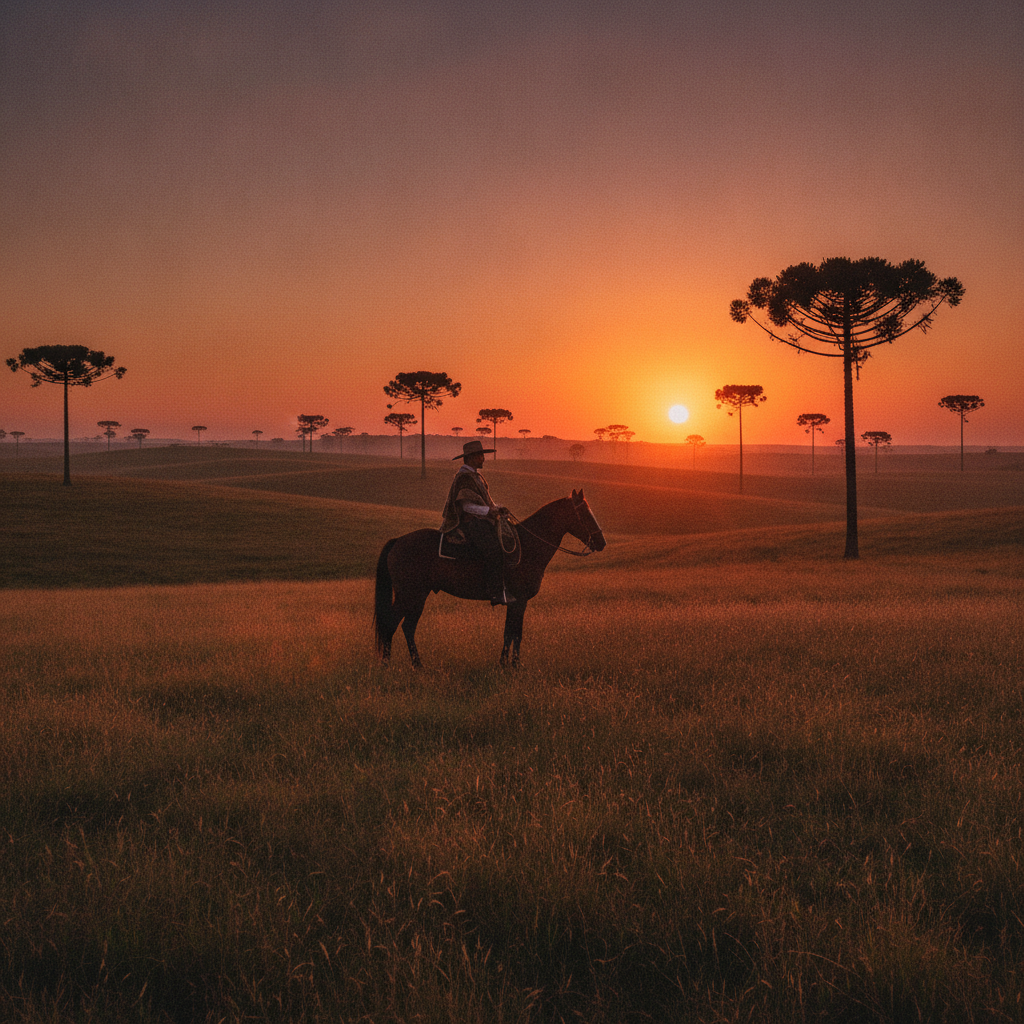
The Camaqua municipality in the Campanha region of Rio Grande do Sul, in the open cattle-ranching pampa near the Uruguay border, represents the southern frontier landscape of the gaucho culture: the open grassland with the scattered araucaria pine trees of the highland zones, the estancias of the traditional cattle-ranching families, and the border culture of the triple frontier area where Brazil, Uruguay, and Argentina converge.
- 5
Santa Maria: The Military City
Santa Maria in the center of Rio Grande do Sul, a military and university city of 260,000 inhabitants, is the site of the Boate Kiss fire of 2013 in which 242 young people died in Brazil's worst nightclub fire, an event that prompted significant Brazilian legislation on public venue safety and is commemorated in an annual ceremony attended by thousands. Santa Maria also hosts the largest Catholic university in the south of Brazil.
- 6
Litoral Norte Gaucho: The Summer Beach Circuit
The Litoral Norte Gaucho, the beach coast north of Porto Alegre toward the Santa Catarina border, including Torres, Tramandai, Imbé, and the Lagoa dos Quadros area, is the primary summer beach destination for the Porto Alegre middle class who fill the holiday apartments of the northern beaches from December to February. Torres, with the basalt rock formations on the beach and the dolphin watching excursions, is the most visited destination on the north coast.
Walk this route with audio
Stories play automatically as you reach each stop — no tapping needed.
More in Porto Alegre
Serra Gaucha Highlights: Gramado Christmas, Bento Goncalves Harvest, Canela Waterfall, and Pelotas Candy
Porto Alegre: Gaucho Culture, Chimarrao, the Mercado Publico, and the Serra Gaucha Highlands
Porto Alegre Contemporary Life: Tech Economy, Italian Caxias do Sul, Gaucho Music, and the 2024 Flood Recovery
Porto Alegre History: The World Social Forum, the Gaucho Derby, the Farroupilha Revolution, and the 2024 Floods
Porto Alegre Food: Churrasco, Serra Gaucha Wine, Chimarrao, and the Gaucho Comfort Food Tradition