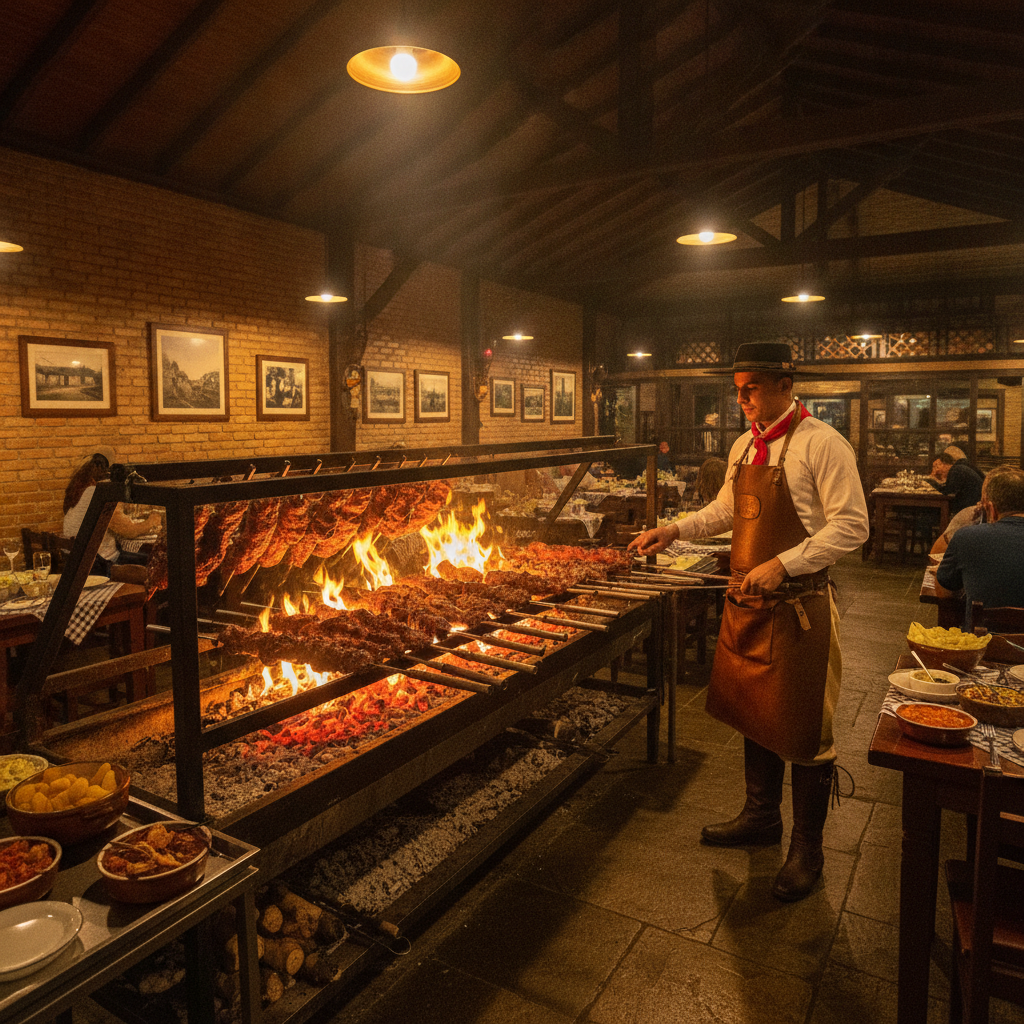
Porto Alegre Food: Churrasco, Serra Gaucha Wine, Chimarrao, and the Gaucho Comfort Food Tradition
The food culture of Porto Alegre and Rio Grande do Sul is the most meat-centered and the most European-influenced of any Brazilian state, with the technical churrasco tradition, the Serra Gaucha wine appellations, the chimarrao mate ritual, and the German-Italian comfort food of the highland immigrants.
- 1
Churrasco: The Gaucho Barbecue
The Rio Grande do Sul churrasco, which differs from the rest of Brazil in its emphasis on salt-only seasoning, the indirect heat technique of the churrasqueira, and the slow cooking of the whole cuts of beef, lamb, and pork over wood coals, is the most technically refined and internationally recognized Brazilian barbecue tradition and the source of the rodizio restaurant concept that has spread the Brazilian barbecue globally. The finest churrasco experience in Porto Alegre is at the traditional churrascaria rather than the tourist-oriented rodizio chain.
- 2
Beef Culture: The Pampas Heritage
The beef culture of Rio Grande do Sul derives from the open pampa grassland that covers the southern half of the state, where the cattle ranching economy was established in the 18th century by the Portuguese military estates and maintained through the 19th and 20th centuries in the large fazendas that still define the landscape of the Campanha region. The quality of the Rio Grande do Sul beef, argued by gaúchos to be superior to all other Brazilian regional beef, is attributable to the pampa grass diet and the cold-season temperatures.
- 3
Wine: The Serra Gaucha Terroir
The Serra Gaucha wine region, centered on Bento Gonçalves, is the largest wine-producing region in Brazil and produces the widest range of varietals from the Italian immigrant grape varieties brought to the highlands in the 1870s, including Moscato, Prosecco, Merlot, and the Tannat grape that has become the signature Brazilian red. The Vale dos Vinhedos valley west of Bento Gonçalves is the first demarcated wine appellation in Brazil.
- 4
Espeto de Gato: The Street Snack
The espeto de gato, the grilled meat on a stick sold at the Porto Alegre street stalls and the Bixiga neighborhood kiosks, is one of the most distinctive street food experiences of the city and a demonstration of the gaucho culture of informal public meat consumption that permeates the food life of Rio Grande do Sul. The name, which translates as cat on a stick, is of course ironic: the espeto is typically chicken heart or beef with chimichurri.
- 5
Arroz Carreteiro: The Wagon Driver Rice
Arroz carreteiro, the rice cooked with charque dried beef, onion, and garlic that was the primary food of the carreteiro wagon drivers who transported goods across the Rio Grande do Sul pampa in the 19th century, is the comfort food of the gaucho tradition and is served in homes and in simple restaurants throughout the state as an everyday meal of great depth and economy.
- 6
Sagu: The German Dessert
Sagu, the tapioca pearl pudding served in red wine sauce that was brought by German immigrants to the Rio Grande do Sul highlands and has become the signature dessert of the Serra Gaucha cuisine, is one of the most distinctive Brazilian regional desserts in its combination of the tropical manioc starch with the European wine sauce and the cold-climate highland tradition that makes a warming dessert appropriate even in the subtropical summer.
Walk this route with audio
Stories play automatically as you reach each stop — no tapping needed.
More in Porto Alegre

Serra Gaucha Highlights: Gramado Christmas, Bento Goncalves Harvest, Canela Waterfall, and Pelotas Candy

Porto Alegre: Gaucho Culture, Chimarrao, the Mercado Publico, and the Serra Gaucha Highlands

Porto Alegre Contemporary Life: Tech Economy, Italian Caxias do Sul, Gaucho Music, and the 2024 Flood Recovery

Porto Alegre History: The World Social Forum, the Gaucho Derby, the Farroupilha Revolution, and the 2024 Floods

Rio Grande do Sul Beyond Porto Alegre: Pelotas Mansions, the Lagoa dos Patos, Pampa Frontier, and the Summer Beaches